Can Kea Parrots Pass A Virtual Reality Test?
See how six computer-savvy kea parrots fared when challenged with a series of tasks that were either entirely physical, entirely virtual, or a mixture of both.





See how six computer-savvy kea parrots fared when challenged with a series of tasks that were either entirely physical, entirely virtual, or a mixture of both.

In this free webinar episode of The Grey Way, Lisa Bono, CPBC, will offer tips and tricks for keeping your birds safe and sane during the upcoming holiday season. Sign up and tune in Friday, November 5, 2021!

Researchers at the Tanimbar Goffin Lab, located in Indonesia, noticed that some wild cockatoos were able to extract seeds from fruit found on the ground. When they brought the fruit back to their lab for their captive cockatoos, they observed the birds making their own tools to access and eat the fruits’ best parts. Learn how these smart ‘toos created their own three-part utensil set.

Lafeber’s latest Conservation Spotlight takes us to Bolivia, where CIESA-the Endangered Species Research Center is working toward establishing a breeding program to reintroduce blue-throated macaws back to the protected area of Gran Mojos–Loreto.

In this free webinar episode of The Grey Way, Lisa Bono, CPBC, will offer tips and tricks for keeping your bird’s environment clean and healthy. Sign up and tune in Friday, October 1, 2021!
A partially beak-less Kea parrot in New Zealand, affectionately referred to as Bruce, appears to know the importance of self-care. Ground-breaking scientific observation has shown that this special alpine parrot has taught himself to use tools, namely pebbles, for grooming.

Since 1999, The Macaw Society (formally called the Tambopata Research Project) at the Texas A&M College of Veterinary Medicine and Biomedical Sciences has been dedicated to the study of macaws in the wild, with 40 scientific papers and counting. The Macaw Society’s “foster chick” program is one way it helps increase wild macaw numbers by assigning otherwise neglected chicks to foster macaw parents.

Lafeber’s latest Conservation Spotlight takes us to Africa, where conservationists are surveying the population distribution of lovebirds, as well as helping their numbers grow with the help of nest boxes.
A new Lego build kit gives bird lovers the opportunity to create their own Kākāpō parrot. A Lego designer and passionate supporter of the threatened Kākāpō parrot and wanted to create awareness by offering the special build.

Recent research in Australia shows that trash cans are more like large foraging toys to sulphur-crested cockatoos. When Richard Major of the Australian Museum happened up a cockatoo using its feet and beak to ply open a garbage can, he sent a video of the ‘toos’ feat to fellow scientists, which sparked an in-depth study to determine if genetics is the engine of this behavior, or if it is a learned process. The results were even more surprising than anyone could have imagined.

Lafeber’s latest Conservation Spotlight takes us to Australia’s Kangaroo Island, where glossy black cockatoos are still struggling to recover from the devastating 2019-2020 bushfires that raged through their natural habitat.
This parrot deserves a party! A scarlet macaw, aptly referred to as Old Man, recently celebrated his 74th birthday!
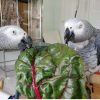
Parrots, like people, have their individualized tastes in food. This includes their own interpretations of what constitutes fresh produce, as well as the order in which food should be eaten. In her latest blog, Dr. Irene Pepperberg dishes on African greys Athena and Griffin’s specific food preferences.
In his “featherscape” series, photographer James Henderson offers a unique close-up of feathers as he finds perfection in the imperfect parts of a feather.

Once upon a time, kea parrots lived among humans in lower altitudes. However, they ultimately settled in New Zealand’s mountainous habitat, namely because it was an area least disturbed by human activity. Discover how researchers recently came to this conclusion.

What happens when a red-tailed hawk family builds a nest on a New York City photographer’s balcony? We get an up-close look at birds’ incredible ability to persevere in urban environments.
Adam Dhalla, from Vancouver, B.C., isn’t your typical video-gaming teen. He’s a passionate birder who wants to introduce birding to his peers. He did just that by creating a mobile gaming app available for download on smartphones that gives players the opportunity to virtually traverse the globe in search of birds and learn more about them.

Rio’s last wild macaw, affectionately named Juliet, is looking for love by visiting the zoo’s aviary.

In this webinar episode of The Grey Way, Lisa discusses the options when planning a trip. How to choose a qualified bird sitter or boarding facility? Is taking your Grey with you an option? Preparing your Grey for a road trip or air travel?
Brett Peppe is the author and Licensed Professional Counselor behind the well-received children’s book, “Penelope the Powerful Parrot.” The book is designed to help those impacted by the COVID-19 pandemic and other potential traumas.

To combat declining wild bird populations, some cities are making their landscapes more bird-friendly.

This month’s parrot conservation spotlight highlights ongoing work to protect the Congo African grey in Nigeria and the Democratic Republic of Congo (DRC).

Meet the Ayam Cemani, an all-black chicken native to Indonesia’s island of Java. See why this rare bird is considered by many to be the most magnificent breed of chicken in the world.

The Wild Parrots of Telegraph Hill by Judy Irving (released in 2003) is a touching documentary that features the relationship between Mark Bittner and a flock of feral parrots that he feeds and interacts with within the Telegraph Hill area of San Francisco. In this special webinar, Mark will talk about the film and give us an update on his life, as well as give us an update on the feral parrot flock. Tune in on Friday, May 7!

Wisdom the Laysan albatross is unique in more ways than one. She is the oldest known wild bird, having been banded by biologists in 1956. What makes her even more remarkable is that she has recently hatched and is rearing another chick!

Thinking of adopting an African grey parrot? Don’t miss your chance to learn about the way of the grey with Lisa Bono, CPBC, a certified parrot behavior consultant specializing in African grey parrots. This free interactive webinar is on April 9.

Lafeber’s latest Conservation Spotlight takes us to Indonesia, where The Indonesian Parrot Project (IPP) has spent the past 20 years supporting conservation efforts for many parrot species, including Moluccan cockatoos, Eclectus, various other cockatoos, great-billed parrots, and lorikeets.

An injured beak can severely impact a parrot’s health—a missing beak can put a parrot in peril. Fortunately, this wild parrot got a second chance at life with the help of Paulo Roberto Martins Nunziata and veterinarian Maria Ângela Panelli Marchió of the Renascer ACN animal rehabilitation center in Brazil.

If you live in Australia, it’s not unusual to spot native parrot species foraging in your yard. New South Wales resident Jayde Parrey, for one, is used to seeing rainbow lorikeets, but one member of a recent flock of 20 parrots certainly stood out for it was an unusually colored rainbow lorikeet. Learn more about this special lorikeet.

Dr. Echols will give us an update on the Grey Parrot Anatomy Project, which aims to create an accurate physical and digital anatomy reference of the African grey parrot.

In this live webinar, Chris Davis will share a behavior case or problem and then field viewers’ behavior-related questions.

Wild parrot conservation groups are working hard to protect a wide diversity of parrot species. Lafeber is committed to helping as well with our Global Parrot conservation grant. This month’s spotlight takes us to Bolivia, South America, where the Conservación del Loro Boliviano Foundation is fighting to save macaws and other parrot species.

There’s birding, and then there’s an extreme form of birding referred to as “twitching,” where enthusiasts are willing to brave the elements, the costs and other obstacles to catch a glimpse of a rare bird in the wild. Learn the story behind the “twitchers” name and the lengths they are willing to go to see a feathered beauty in nature.

A starling murmuration is a sight to behold. Those lucky to stumble upon a murmuration are witness to an aerial ballet of thousands of birds moving in unison, individual birds blending into a moving mass that appears to morph into different shapes.

In this live webinar, Chris Davis will share a behavior case or problem and then field viewers’ behavior-related questions.

In her latest blog, Dr. Irene Pepperberg dishes on how our feathered companions rely on their humans to not only provide the essentials such as food and water, but, in a broader aspect, a sense of security.

A new study affirms what many of us bird enthusiasts already sense—wild birds give us an emotional boost. Seeing and hearing the variety of birds in our neighborhoods can make us happier, especially when we choose to engage with them by offering food and creating a safe and inviting habitat to visit.

A new year is upon us, and with that comes new motivations for the 12 months ahead. We can use this time to think of ways we can make our lives and the lives of our feathered friends more enriched, less stressful, and healthier.

The tiny saw-whet owl rescued from the 75-foot-tall Norway spruce tree that was brought from upstate New York to Manhattan’s Rockefeller Center takes flight after being treated at a wildlife rehabilitation facility.
Dr. Irene Pepperberg gives us an update on how she is forging ahead despite that challenges posed by COVID-related social distancing requirements and the shutdown of her cognitive behavior research lab on the Harvard campus.

Add “birds” to your Google News alert topics–or simply search the word “bird” or “parrot” in Google to see what’s going on in the world of birds. Here are some recent “birds in the news” stories worth checking out.

Dogs get their day, cats do too. Now it’s our feathered companions turn—September 17 is National Pet Bird Day. It’s time to celebrate our birdie family members—here are some fun ideas to get you started!
Join us for a free interactive webinar on Friday, September 18. Dr. Stephanie Lamb discusses common and hidden household dangers and steps to take to keep your bird out of harm’s way.
A parrot’s penchant for chewing things up is nothing new. Think of all the cardboard and/or wood items your bird has destroyed throughout your time together! What is new is a famed artist turning a parrot’s “masterpiece of destruction” into museum-quality sculptures. Joseph Havel, whose works have been exhibited in prestigious galleries around the world, looked no further than his African grey companion, Hannah, to create a collection of pieces that are now on display at a gallery in Houston. Learn how this collaborative effort between an artist and parrot came to be.
Biggy Pop is not your average cockatoo. This ‘too’s companion is Rock and Roll Hall of Fame inductee Iggy Pop, frontman for the influential punk band The Stooges. A fan of both Iggy Pop the rocker and Biggy Pop the bird recently reached out to the duo to see if they’d help bring awareness to Australia’s plight in the aftermath of devastating fires that wiped out an estimated three billion animals, including 180 million birds.

The effects of light pollution—being exposed to artificial light at night—is shown to disrupt our circadian rhythms and potentially wreak havoc on our sleep-wake cycles. Artificial light also affects wildlife in ways many of us might never have imagined. See how city lights can interfere with the lives of wild birds’ and even affect their migratory patterns.

Many companion parrots enjoy spending time outdoors when the weather is nice as much as we do. What’s more, exposure to natural sunlight can be great for your pet bird’s mental and physical health. However, before bringing your feathered friend outside, some important safety precautions are in order. Follow these recommendations to ensure your bird is safe while enjoying the Great Outdoors.
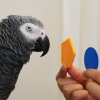
Dr. Pepperberg revisits a study done decades ago with Alex the African grey that has received renewed interest with recent studies done with children — how well do individuals understand the concept of same-different?
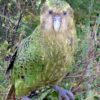
Sirocco, the personable and friendly kakapo parrot, is back in the spotlight. New Zealand’s national treasure and face of conservation is social media star, with 235,000 followers and counting.

Your bird depends on you for their care, which includes feeding nutritious foods, providing optimum housing and offering plenty of enrichment. Another important part of being a good bird steward is being prepared for vet visits.
Mumbai-based musician Jatin Talukdar had two unexpected admirers when he began to play guitar and whistle out his window — two wild parrots.

What makes the perfect bird room? Find out how one woman fulfilled a childhood dream and created a wonderful space for her companion birds.

Do you know what to do if you find a baby bird? Should you leave it alone? Is it safe to bring it home? Find the answers to these important questions and more by tuning in on Friday, June 5!
Understanding our birds instinctive and their learned behaviors and knowing how to work with them can serve us well in avoiding behavior issues. A “cute” behavior that may have encouraged by the caregiver in the beginning, can become a learned behavior that is adapted by the parrot that leads to negative consequences.

An ambitious conservation project to help save the grey-breasted parakeet saw its first success with the hatching of three nestlings in 2010, which has now led to 130 hatchings per year! See what the secret to their success has been and where this colorful parakeet might be headed in terms of its population status in the wild.

An increasing number of people have taken up birding as a way to feel connected with the world around us and expand their knowledge of nature. Now is the perfect time to become a birder. Many top bird-centric organizations are making it easier than ever for families to learn birding basics.

We give our babies names, but do parrots also “name” their young by using distinct chirps specific to an individual chick? One scientist decided to listen more closely to what might really be going on when birds chatter. He constructed nests in Venezuela and recorded the peeps of green-rumped parrotlets. The results suggest that parrot parents give their chicks individual names.

Dr. Irene Pepperberg fills us in on how African greys Griffin and Athena, as well as she and her staff, are handling their “new normal,” albeit hopefully a temporary one. She also dishes on how they found some creative ways to celebrate two big milestones — the birds’ birthdays!

Life with a pet bird companion can certainly be a life of adventure. You have a feathered friend with the intelligence, and often the mischievousness, of a young child. A pet that might be inclined to talk back, or perform aerobatic feats around your furniture and furnishings. Your bird might be a snuggle buddy who shows affection by gently preening your hair or brow. Intermixed with all that love and shenanigans comes everything in between — especially the unexpected. Here’s a snapshot of what some bird stewards wish they knew before getting a pet bird.
Join us for a live, interactive webinar hosted by Laura Doering, former editor of Bird Talk magazine and Birds USA magazine. Our special guest Stephanie Lamb, DVM, DABVP (Avian Practice) will discuss the COVID-19 pandemic, how it pertains to pet birds, and how we can keep our pets safe and healthy.