Birds are everywhere. Of course they are. Look up to the skies and see flocks of them on their way to a better place. They’re in your yards and gardens, giving you heart-fluttering moments as you find a favorite that comes visiting. They’re in books, artwork, jewelry, action photos, and movies. And the serious exotic bird enthusiast gets to personally interact with a beautiful parrot as an integral part of a family. Now you get an extra opportunity to expand and test your already incredible bird knowledge with a bird-centric board game. Check out Wingspan!
Wingspan is a board game that wants you to become an avid bird enthusiast (as if you’re not already!) and strive to attract a wide, co-habiting array of birds to your wildlife preserve. Since it’s a game, you are in competition with the other players in Wingspan, who are also trying to do the same — getting the birds to go to THEIR wildlife preserve and aviary instead of yours. The end goal is to gain the top number of accumulated points, acquired by shrewd playing skills. The typical length of a game is four competitive rounds, played in approximately an hour’s worth of time.
Birds Are In The Cards
Wingspan itself is a beautiful collection of 170 detailed cards of selected birds, 42 playable extra cards to assist you in your advancement, assorted games pieces like colorful bird eggs, food tokens, five painted wooden player dice and a bird house dice tower to help randomize the dice in play, five player mats, a goal mat, scorepads with two degrees of difficulty (front and back), and more.
Each of the cards portrays a bird in beautiful drawn artwork, with statistics, point values, and advantages listed. The game is played by drawing and discarding cards as you advance through the world as ornithologists, researchers, collectors, and bird-watchers. Correct and well-thought out use of food tokens helps to improve the chances of getting birds to become attracted to your aviary and preserve with the hope of higher numbers. You use the miniature egg pieces as an indication of eggs laid for your attracted birds.
More To Explore In Wingspan
Of course, the game play is much more complex than mere bird selection. You want them to choose your preserve. This write-up is intended as an alert to something that might appeal to the dedicated bird fan, especially those who are fans of an intricate and busy gaming environment. Explicit details of gameplay are for you to discover and to enjoy.
Since its release in March of 2019, sales have been above expectations. Currently, the game publisher is on its third run of Wingspan. Wingspan is a published game by Stonemaier Games. It was pitched to them by Elizabeth Hargrave, a “geeky” birding enthusiast who uses a strong system of evolving gameplay with accuracy drawn from the Cornell Lab of Ornithology’s eBird databases as well as other intensive resources. There are available card updates for previous releases that add to and correct mistakes found.
Facebook has a burgeoning community of Wingspan players, over 5,000 enthusiasts of the game thus far. There, you can find help with gameplay, provide unique strategies, or otherwise communicate with a range of fans. If you’re interested in Wingspan, go to its website for a clearer look, especially if you want a copy of the game for yourself. There’s even a YouTube video of actual Wingspan gameplay.
For many companion bird enthusiasts, one of the extreme thrills they experience is the fact that small groups of birds talk (or mimic). It doesn’t take long for some species to pick up on a word, sound, or phrase. After it has learned, well…it is something you are likely to hear often. It’s quite fun to not only amuse yourself with their innate ability to mimic words with amazing precision, but it’s more likely enjoyable to show off what your pet bird can say. In today’s world, that often translates to the myriad of YouTube videos seen across the popular platform. But exactly, how does the able bird talk? What’s the science of it?
No Lips, No Problem
Birds do not possess lips to help them form words properly. They depend on a different ability to produce proper formation, the use of vibrating independent membranes. While birds have a larynx, its use is different in a bird than a human. We use our larynx as tool that allow for the pitch and volume of words being formed. Birds, however, do not have their vocal folds in their larynx. Instead, the vocal folds used to vocalize are found in what is known as the syrinx. The syrinx is located below the larynx, at the lower end of the trachea (wind pipe). With this internal part, birds can produce a range of sounds much as we do. They produce pitch and volume by changing the pressure of the forced air from lungs into the syrinx, and exercising the muscles of the syrinx.
While all birds use the syrinx to create wide varieties of bird songs, the parrots, including parakeets (budgies) ravens, mynah birds, and crows are able to produce exact sounds – like phrases and words. In fact, birds can vibrate the outer membranes of their syrinx to produce more than one sound at the same time. Why? Because the two sides of the syrinx in a bird can be controlled independently.
The lyrebird is so good at recreating source sounds that it can mimic the motorized sound of a camera shutter. People with birds that “talk” often observe their own birds to change some things up when repeating learned words and phrases. Not long ago, a parrot was able to recreate the exchanges between a victim and perpetrator at a domestic murder scene that helped to implicate the responsible individual. Amazingly, dialect and enunciations of words can be flawlessly mimicked by a bird able to do the trick.
According to Irene Pepperberg, a prominent and well-respected avian expert, the reasoning behind parrots willingly learning to vocalize words and phrases is the need to become a part of the “flock,” or, in a more proper sense, a part of the family that is forming around it. People become an integral part of the bird’s “flock.” The mimicked speech is an important form of interaction between the bird and the human elements of its flock. However, birds likely have zero idea of any of what they’re mimicking actually means. They’re just simply doing what nature has equipped them to do, and that is to stay focused and alert. To do that, they need to become a strong member of the flock, whatever that is to them.
This ability to mimic speech makes us feel close to a pet parrot as it feels like they have complete understanding, and are, therefore, communicating with us. And while the differences are night and day between the human and the parrot (or other mimicking-able bird) as to what is going on, the shared experiences are quite endearing. As a result, bird owners have a unique bond with their birds. All in all, it’s a beautiful part of the experience.
Tobacco is bad for birds (and humans and dogs and cats and … well, everyone!). I thought I would take this opportunity to point out some specifics, though, so those who do smoke can do their best to keep their feathered friends safe.
Please keep in mind that other inhaled substances, such as marijuana and vaping products, are equally bad for birds.
3 Dangers Of Tobacco Cigarettes
First, there is the smoke itself. Birds have very sensitive respiratory systems because their system of lung sacs does not filter toxins the way our lungs do. We know how deadly nonstick coatings are for birds, for this very reason. Birds also breathe much faster than we do, so their exposure to smoke can be greater. There was a reason miners took canaries into the coalmines! If you must smoke, it is best to smoke outside and away from any air intake that could bring the smoke indoors.
Another big concern with smoking is the nicotine that gets on the furniture, walls, and every surface exposed to the smoke, including companion animals. Even if you smoke outdoors, nicotine gets on your hands and clothing. Birds exposed to nicotine can develop dingy, dirty, greasy feathers, whether directly from smoke or from handling by someone with nicotine on their hands. When the bird preens its feathers, it ingests nicotine, which is poisonous. Because nicotine cannot be easily removed from feathers, some birds resort to plucking. Nicotine on the feet causes dermatitis. If you have to smoke, be sure to scrub your hands and any exposed skin with soap and water prior to handling your birds.
Make sure you dispose of all cigarette butts far away from where a curious beak can get at them. Even a small butt can contain up to 25% of the nicotine in a whole cigarette, and birds that swallow nicotine often die rapidly, within 15 to 30 minutes. Signs of nicotine poisoning include twitching, excitability, salivating, vomiting, seizures, collapse, and death.
Never Use Electronic-Cigarettes Around Birds
The newest tobacco product danger is e-cigarettes, which are used for vaping. Liquid-containing nicotine and an assortment of other chemicals is put in a chamber that is heated, giving off a vapor that is inhaled. Touted as safer than smoking cigarettes, the jury is still out on this. In addition to the direct toxicity of nicotine, vaping solutions may also contain antifreeze components, formaldehyde, and at least two dozen other toxic chemicals. Vaping around your birds can be just as dangerous as smoking around them. In addition, the nicotine solution is far more concentrated than the nicotine in cigarettes, so if your bird were to swallow any of it, there is a high risk of rapid death. Simply put, do not vape around your birds.
Keep Matches Out Of Reach
Finally, a word about matches. Modern safety matches have tips coated with potassium chlorate, sulfur, starch, and a few other ingredients. The striking surface has red phosphorus, which causes a small explosion when the match head is struck on it. We all know birds love to chew on wood, so a match laying around, either before or after being ignited, can look just like a toy to a bird. Ingestion can cause acute poisoning and death, so be sure to store unused matches out of birds’ reach, and keep used matches far away from birds. Better yet, run them under cold water and then throw them in the garbage.
People use matches for many reasons, not just smoking, so all you nonsmokers out there take care also! Some people leave matches out in bathrooms (no, they do not neutralize the smell, they just mask it) and forget the matches are there and easily accessible to a wandering bird, so be sure to keep them safely contained.
If you have friends or family that smoke, these rules apply to them too. Make sure people who smoke do not handle your birds until they are thoroughly scrubbed up!
“Does your parrot smoke? If you do, the answer is yes.” — Elizabeth Opperman, Parrot Examiner (8/6/2011)
As we breathe and roam this vast planet, many of us contemplate our sense of purpose. Many books have been written, many lectures and speeches have been spoken, and many dreams have been dreamt, all to help us achieve an acceptable reason in our varied existence on Earth. Some of us never really find our reasons but nonetheless live out satisfying lives filled with laughter, enjoyment, and yes, sometimes sadness. But sometimes, some people take extraordinary steps to validate a life that many of us might consider a beautiful gift. Many of those extraordinary works end up being celebrated long after they’ve been performed, sometimes for an eternity. With those inspiring acts of beauty and intent, we as a communal world of hope find our collective existence wonderfully improved upon. The following story of Al Larson, AKA “Bluebird Man,” underscores a successful attempt to help stem a declining bluebird population in his home state of Idaho.
Birth Of The Bluebird Nest Box Plan
Larson read a copy of “National Geographic” magazine with one particular article standing out. The article described how building nest houses could have a positive impact on the rapidly disappearing bluebird population. With a dependency on dead or near dead trees for nests due to easy access to previously made cavities in such trees, the bluebirds were finding that their nest locations of choice were disappearing for several reasons. With Larson’s fateful read of the article, he began to put together a plan of building nest boxes for the struggling species, at least in southern Idaho.
Bluebirds Benefit From Decades Of Nest Boxes
Almost 40 years ago, at the age of 60, Larson decided to help the bluebirds in his region by making and installing a small collection of basic, easy-to-produce, plain rectangular boxes on fence posts, trees, and other spots along travels routes he knew. Larson had already had a keen interest in birds, which only served to fuel his desire to help the bluebird thrive. The rest of his endeavors led to an expansion of his plan, and an historical interaction that deserved to be chronicled and remembered for ages.
Larson, now 97, is a tireless full-time protector and advocate of the bluebird. He admits to monitoring well over 300 assembled and installed nest boxes along what is known as miles and miles of “bluebird trails” that span five counties. In his summer travels to each box, he checks on the state of each box as well as checking each box for an actual nesting and eggs. The birds begin their mating and nesting rituals in April, and the summer months are relegated to the nurturing growth of baby birds essentially adding to the population.
The Bluebird Man Legacy
In the almost 40 years that Al Larson has been building, placing, replacing, and monitoring his boxes, he has become somewhat of a bluebird expert, all by personal observation and data collection. As a result of Larson’s heavily involved participation, it is said that the population of the bluebirds has noticeably increased. But as time is a consumer, it’s easily recognized that this project is one that will need to be carried forward into the next generation — and other generations to follow — if the appreciable gains made by Larson are to be built upon and extended. To that end, Larson personally conducts small “hands-on” classes to entice possible future torch bearers.
An award-winning short documentary called “The Bluebird Man” was filmed in 2014 and details Larson’s commitment. You can follow the film’s Facebook page here.
For many, music is as necessary part of the day as the air is to breathe. It has many intended effects but is usually sought after for a calming effect. Much has been written on the quality of music for pets. But birds especially seem to take to it with a similar zest that humans do. And although the intents and purposes of such bird attraction to music can be reflected by birdsong for pairing and communication, it’s evident that birds do respond to music, perhaps appreciably. If you, as a bird owner, or as a backyard bird enthusiast, find that your birds are positively responding to music, then this article is definitely for you.
In a recent study, two parrots were given access to designed selectable jukeboxes allowing for the playback of songs. The purpose was to discover if a bird had a preference that they’d return to if given opportunities. For this study, the two parrots used touch screens to choose songs that they preferred. As a result, the birds chose their own favorites some 1,400 times between them within the span of a month. (After writing this information within a previous article, I received responses asking where such a jukebox might be available, hence the motivation to write this article.)
Some owners have Echo (and the cheaper Echo Dot), which are now called Alexa, from Amazon as a service device designed to do a variety of informational and enabled chores. Others have Google Home devices. Both Apple and Microsoft have AI assistants via software that have yet to be ported to a device like Alexa or Home, but they’re likely coming in the near future. Owners of birds with an ability to mimic human voices have found a few of these magnificent and intelligent birds developing a knack to use these devices. And stories are abounding. In fact, one parrot can call his owner, while others have ordered items from Amazon. One of the interesting uses of Alexa that some birds have accustomed to is the ability to playback music at their whim.
The nice thing about the newer and more versatile Alexa and Home devices are their ability to playback a requested track. If you already know your bird has a favorite song (or ten), then a set of simple training exercises could encourage your bird to “ask” Alexa or Home to playback their favorites by request. Of course, you’d have to subscribe to one of the music streaming services (Amazon Music, YouTube Music, Tidal, Spotify, Apple Music, Google Play, and Pandora Premium). But in time, your bird could possess the ability to musically entertain themselves by music for as long as they wish with what songs they seem to prefer. (For those concerned that their birds might order products, there are safeguards that can be accessed to prevent unauthorized purchases by your ornery loved one(s).)
With a little research and exploration, you should be able to find more than enough information and resources to set up a parrot-friendly music service that — with some training — could provide your bird with enjoyable music preferences for as long as he or she remains interested in the ability to select music. As technology advances, it’s probable that some enterprising entrepreneur might even create a specific unit just for this purpose. Rocco, the UK African Grey Parrot has famously learned how to use Alexa to his advantages. He’s ordered food items, a kettle, and light bulbs, among other things. But Rocco has also used Alexa to playback some of his favorite songs, especially those by the Foo Fighters, and Kings of Leon. Rocco likes his tunes fast and rockin’!
For backyard birders who prefer to cultivate a sustainable habitat for birds, experimentation and well-placed weather-proof Bluetooth speakers can provide a stream of soothing selections at low-sound levels. Of course, you wouldn’t want to disrupt neighbors with blaring “We Will Rock You”-like tunes. But calming classical music played very low might be a good thing. Experimentation is a key to success in this endeavor.
Griffin put to the test in Dr. Pepperberg’s lab. Courtesy of Dr. Irene Pepperberg
I’m often asked in interviews if my parrots really know what they are saying. My usual response is to provide solid scientific evidence that they couldn’t answer correctly otherwise. I might describe how I used to show Alex, and now can show Griffin, a particular object, and how each bird would correctly respond to several questions about it—for example, “Blue” to “What color?”, “Four-corner” to “What shape?”, “Wood” to “What matter?” and “Block” to “What toy?”
Or, for Alex, who also knew concepts of same/different, I would relate how I could show him, for example, two keys, one green and one red, and ask, “What’s different?” to which he’d reply, “Color”, then “What color bigger?” and he’d give the correct color, and finally I could ask “How many?” and he would state “Two.” Both birds had to be able to recognize the correspondence between each label and each of the separate questions in order to make each appropriate response, even though all their responses were to the same objects—the objects themselves obviously could not be a simple cue to say one particular thing. Sometimes, however, I wish I could have used some anecdotal evidence instead, because the anecdotes, although not very scientific, are a lot more fun to relate.
When A Parrot’s Use of Words Is Very Clever, But….
One example occurred awhile back when Griffin did not want to climb [get on a human hand] for one of the students. This particular student is terrific; however, he happens to be working on a project that Griffin does not like very much. Thus, whenever the student asks Griffin to “Climb,” Griffin figures that he’s going to be made to work on this difficult task. The other day, the student asked several times, and each time Griffin put his head down, gave the student the famous Grey parrot slitty-eye’ look, and refused with his squeaky “Nuh.” The student persisted. Finally, Griffin walked to the other side of his cage, looked directly at a different student, put his foot up, and very, very clearly said “Come here!”
Then there was the time that Alex kept stating “Want grape,” but then also kept refusing the lovely green one that the student was offering. Finally, he gave her a look that could only be interpreted as frustrated, and belted out “urp-ul”…the utterance that, at the time, he was using for the label purple. She got the message, and I had to go to the grocery store the next morning for the appropriate item.
Another time, Alex stated “Want corn,” and this time the student wanted him to give the color. She kept asking “What color?” and he kept stating, over and over, “Want corn!” Finally, he looked her right in the eye and told her “I’m gonna go away”… and turned around and walked to the back top of his cage! That particular incident was caught on tape, as the BBC was filming the whole interaction.
Courtesy of Dr. Irene Pepperberg
Recently, Griffin very deliberately misunderstood a student. The student was working on a task in which Griffin had to respond with the color of either the bigger or smaller of two cups, depending on the question the student posed. The answer in this case was “Rose,” and Griffin mumbled it pretty badly. He, however, figured he was correct, and immediately said “Wanna nut” to get his reward. The student wasn’t going to let him get away with a mumbled answer, so she said “You’re right, but talk clearly…say better.” To which Griffin replied “Want.a.nut!” with perfect diction! It was quite difficult not to reward this behavior with a laugh.
Clearly, the anecdotes represent single incidents, incidents that we can’t reproduce in order to get statistical significance—the gold standard of any scientific research. I can’t present these anecdotes in a scientific report or a conference presentation; my colleagues would—rightfully—argue that these instances could have happened by chance, given all the hours of interactions between humans and birds in my laboratory. I believe, however, that these anecdotes provide interesting insights into how the mind of a parrot may work. And, sometimes, anecdotes can inspire the design of our scientific studies, as when we decided to study addition after Alex gave some evidence that he was summing the number of clicks that we were using to train Griffin on numerical concepts (see Pepperberg, 2006).
Pepperberg, I.M. (2006a) Grey parrot (Psittacus erithacus) numerical abilities: addition and further experiments on a zero-like concept. Journal of Comparative Psychology, 120, 1–11.
Science and medical technology have made vast improvements over the last decade. Human lives have been changed for the better as our understanding of how the body works increases and better tools are developed to help implement new and innovative discoveries. There is no doubt that advancing medical technology increases our own life spans immeasurably. As we come to greater knowledge, we’re also beginning to translate that better care to our animal kingdom. We’ve seen birds and other creatures benefit from new 3D printing technologies, as well as a number of procedural improvements. Recently, a medical first for an ailing parrot was performed by performing risky but necessary brain surgery. This procedure is currently the first ever performed on a bird.
The kakapo parrot is already classified as a critically endangered species, with a 2018 population assessment of only 149 birds. However, new survival technology employed by conservationists has resulted in 2019 being a banner year for the bird. It is said that 200 eggs were laid and of those, more than 50 chicks have already hatched as of March. One of those chicks was found to have a life-threatening skull deformity when a lump was discovered on the skull. The team that closely monitors these birds in their wild habitats acquired the baby bird when it became old enough to separate it and flew it to a New Zealand hospital for a groundbreaking brain surgery.
Life-Saving Operation
Veterinarians from Massey University discovered that the lump was, in fact, the bird’s brain as it herniated against a thin layer of tissue as its only protection. Using known medical procedures, the veterinarian team from several institutions determined that the skull had not fused properly and immediate surgery was essential to the bird living beyond a young age. The team encountered a problem when they were unable to get the herniated tissue back into the skull. A mesh was then applied and fixed to the skull, which served the purpose of reducing the swell. After a time, the team sutured the bird’s skin over the mesh to complete the procedure. The operation was deemed a success and baby Espy was saved by an alert team and a highly skilled staff of veterinarians.
As with all new medical procedures, this surgery will become the precedent for new and future technologies and studies. This is a thrilling and wondrous moment for all birds that might require such brain surgeries even if the issue might be a different one than Espy’s event. As we moved through this still fairly young century, an enlightened and brave world of avian science can move toward providing much needed and urgent care for our birds that might require them. Espy’s successful surgery might even open doors for other animals in the event a potentially life-threatening event might arise. With necessary support and encouragement, every living thing has an equal chance at a new lease on life.
We have every hope and expectation that Espy will grow to be a full adult and produce generations of new kakapo parrots. If the kakapo population expands further, some thanks to the brave teams that healed Espy will be in order.
You can read the Massey University press statement and catch a glimpse of Espy here.
Word went out from a bird club about a tragic case of dog vs. bird. A 30-year-old, double yellow-headed Amazon had played regularly with the family dog, without incident. The bird was allowed to roam the floors freely and walked up to the dog’s food dish. The bird, being a bird, nipped the dog on the nose. The dog, being a dog, instinctively responded by grabbing the bird by the wing and ripping it off in front of the owner. The bird was rushed to the vet, but had to be euthanized. Now the owner will have to live with the horror of watching her beloved bird being killed by her dog. She said they had always played together fine without incident before.
Avian veterinarian Dr. Clare Fahy reported a similar incident with a cockatiel that was rushed to them after having its wing torn off by a dog. Amazingly that bird survived, albeit wingless, with the chest cavity sewn shut. A letter posted to George Sommers’ column, “From the parrot’s beak” tells of how they lost their “dear sweet” white-capped Pionus. A friend was watching their birds while they were away. The friend has dogs and was asked not to have the birds out of their cages when the dogs were in the house. The friend thought she could just run through the kitchen to upstairs with her shepherd mix. The Pionus was startled and took flight. The dog snatched the bird out of the air and killed her instantly.
Avian veterinarian Dr. Stephanie Lamb tells the story of a yellow-naped Amazon that lived in a home with four other birds and three rescue dogs of various breeds. The dogs normally did not have contact with the birds, but one night the owner let the birds out to play on their cages. The phone rang, and she left the birds “for just a second.”One dog snuck into the room and grabbed the Amazon right off of the cage.The owner rushed him to the vet, but he had died by the time they got there. There was a huge hole punctured in his stomach.
Dr. Lamb reports another case of an African grey parrot who lived with a chow chow breed of dog. The chow chow was always trying to get to the bird, and one year earlier had grabbed the bird through the cage and punctured the bird’s eye, blinding it in that eye. This time, the bird was walking around the floor and got grabbed by the dog again.The bird suffered multiple puncture wounds on the face and into the sinus cavities. The beak had a severe, lengthwise fracture down the center.The bird had to have a prosthesis placed on the beak and stayed in the hospital in intensive care for five days on numerous medications and oxygen support. The bird did survive and went home, but the recovery time was greater than two months. No word on whether the owner still allows the dog to be around the bird.
Dr. Lamb described a third case of an Eclectus that had had numerous encounters with a medium-sized dog. They “played” together, but it had escalated numerous times, causing puncture wounds, beak fractures, internal bleeding, and nerve damage. Dr. Lamb has advised the owners time and time again not to let them “play.” She said that she fears that one day the bird is going to get killed
Dangers Of Complacency
Maybe you’re sitting there reading this and horrified. Maybe you’re telling yourself that those cases are exceptions, and that your dog/cat would never harm your bird. They’ve “grown up” together. Your dog/cat is very docile and wouldn’t hurt a flea. Your bird has a beak and it can defend itself. Your bird is fully flighted and can always fly away. Your dog/cat is afraid of your bird. The list of why it’s OK for your dog/cat (or other animal) to play with your bird goes on and on. Except it’s not OK.It’s never OK.
The Internet abounds with videos of birds playing with dogs and cats. We’ve all seen them. We’ve probably thought how adorable they looked together, all the while telling ourselves that it was dangerous. But how dangerous is it? The stories above are not exceptions to a rule. They are the rule. Dogs and cats (and some other family pets, especially ferrets) are predators. They may be domesticated, but their predatory instinct is always there, either overtly or lurking just below the surface. If an otherwise friendly dog or cat is annoyed by a bird, such as by a nip on the nose (and what bird doesn’t occasionally nip?), it might lash out. It’s not going to stop and think, “Oh yeah, this is my buddy. I’d better not hurt him.”
In dog/cat vs. bird, the bird usually loses. Yes, the bird has a beak, but it’s not like they’ve set out to have a fight with their “weapons” at the ready. Once the dog or cat has struck, it can be game over for the bird. Even friendly dogs and cats can injure birds by overexuberant play or even stepping on a bird, so injury doesn’t just result from hostile behavior.
Also keep in mind that something as simple as a scratch from a dog or especially a cat can be fatal to a bird. Dog and cat bites, licks, and scratches can transmit a deadly organism called Pasteurella multocida. Not just to birds, but to you too! When outdoor cats “play” with a bird (or other animal) outside and the animal escapes, it frequently dies of this infection. So even if your docile cat just licks your bird, it can have deadly consequences.
But, you’re thinking, my dog/cat has never harmed my bird in all the years they’ve been together. That’s what the owner of the Amazon was saying too. Just because something has never happened before is no guarantee that it will never happen in the future. You’ve cooked with Teflon all these years and your bird is still alive (until Aunt Mabel calls you and you lose all track of time as the pan slowly burns on the stove, killing your birds). That stock has risen every year since you’ve owned it (until the CFO gets caught embezzling funds and the stock crashes).You don’t need to put ID tags on your dog because she’s never run out of the house before (until you open the door for the mail carrier and a squirrel runs by outside).
It’s called an accident. It’s unpredictable. You never meant for it to happen. Supervising your animals while they’re out isn’t good enough.The woman whose Amazon got its wing ripped off was in the room when it happened. Unless you can move faster than the speed of light, you won’t be able to stop it from happening. The only way to keep your bird from being injured or worse by your other family pets is to make sure they’re never out together and that the other animals can’t access the cages. A friend of mine with an outdoor aviary lost his cockatiel when a neighbor’s cat pulled the bird’s leg through the bars and ripped it off. The bird had to be euthanized as it slowly bled out.
Some people advocate “training” the dog/cat to be with the bird. It’s fine to let the dog/cat know that there are birds in the house and that they shouldn’t touch them. But that’s not the same thing as letting them play together. That is never acceptable. And size doesn’t matter. Ferrets are small, but deadly to birds.
With proper precautions, extended families of humans, dogs, cats, birds, and other animals can all live happily together. Remember that the lives of these precious little creatures are in your hands. Let’s be safe out there!
Life with companion parrots is a unique pet parent experience. While most people understand how to “go the extra mile” when caring for a dog or cat, we are often mystified on how to truly make our homes a sanctuary for our parrots. Certainly, a spacious cage with plenty of toys and nutritious food is a start; but, where do we go from there? Our parrots want to have fun, stretch their wings, and constantly be entertained – and you can provide it all with a parrot play gym.
A typical day for a wild parrot consists of flying for miles, vocalizing for hours, playing with their flock, and eating lots of tasty food. While we can’t supply all of the wonders of their natural habitat, having a complex indoor environment for your parrots keeps their clever brains busy so they can burn off their extra energy safely.
Providing a play gym for your parrot enables you to have a defined space where your parrot can explore, play with toys, or just stretch their wings and exercise without being confined to their cage. Using a play gym daily gives your bird a little independence and may have other health benefits, like reducing stress from boredom or burning extra calories to reduce the risk of obesity.
Gym Styles
Parrot play gyms come in many shapes and sizes to suit all types of parrots, and are commonly made from high-quality wood, like Java, a durable plastic, or bird-safe metal. These materials are made into tabletop, free-standing, or hanging gyms; to choose the best stand for your parrot, you’ll also want to consider her activity level, size, and age. All gyms can be customized with the addition of your bird’s favorite types of toys.
A good place to start when researching play gym options is to consider the amount of space you’d like to dedicate to your parrot’s play area. For a smaller space, or maximum portability, a tabletop gym or branch stand is a great option that enables you bring your parrot to any room in the house or put the gym away when not in use. Tabletop gyms equipped with ladders, swings, and other types of exercise toys are common for small parrots like parakeets or cockatiels, while stands for larger birds typically have a thick wooden branch with a hook to add a toy of your choice, and a cup for treats or water.
For a more permanent and stationary option, hanging play gyms are whimsical, fun, and can be placed just about anywhere with the right equipment. For a particularly adventurous bird, you may consider both a free-standing java branch stand below a hanging gym for a floor-to-ceiling parrot exploration experience. Hanging gyms are particularly great for fully flighted parrots, and those that consider climbing to be an extreme sport. Make sure that any hanging gyms are appropriately anchored in the ceiling to reduce the risk of damage or collapse, especially for heavier parrots like a macaw or cockatoo! For an option that is still mobile, yet not quite raising the roof, free-standing parrot gyms come in many different styles that may consist of a single java branch, or an array of metal ladders, swings, and bridges. Any parrot play gym is sure to please when equipped with plenty of appropriate toys to shred, chunk, forage, and destroy!
Go Slow
Young and active birds are best kept busy with variety and daily excitement, while older and shyer birds tend to rely on predictability; take your bird’s personality into consideration when changing their environment to make sure they adjust appropriately and aren’t afraid of their new surroundings. Not all parrots will accept their new play gym on Day 1 – and that’s ok! Introduce slowly with plenty of praise and rewards at a pace that makes sense for your particular bird.
In addition to a smooth introductory period, you’ll also want to make sure your parrot stays safe while using their new play gym. When deciding where to place the new gym, you’ll want to make sure that your parrot cannot easily access items that you don’t want chewed; this may include electrical wires, outlets, painted wood, curtains, wooden molding, ceiling tiles, ceiling fans, or any number of possibilities. Speaking of ceiling fans, make sure all are turned off and stay off while your bird is out of their cage.
If you have a particularly busy household, it may be a good idea to lock the front door if the play gym is within reach – it’s better safe than sorry! It’s also important to always be present while your parrot is free to explore their gym. Some parrots, despite having two wings, enjoy climbing down off their gyms to take a walk. You can train your bird to stay put by repeatedly placing them back on the stand and rewarding them with a treat after a few seconds of them staying put! You’ll also want to monitor the condition of toys and gym daily – what was once a smooth piece of wood can quickly become a jagged hazard at the mercy of an overactive parrot beak.
Also, consider the other pets that may share your home and how they will react to the new furniture. Cats, in particular, enjoy jumping up onto high-rising places. It is ok to allow other pets to become familiar with the play gym, however it is not recommended to do this while your bird is using the gym. Rather, keep your parrot safely in their cage while other pets take a good sniff. Living with parrots, we know they truly enjoy being mischievous and getting themselves into sticky situations. Make sure your parrot is safe by moving unsafe items out of reach or choosing a different location for the play gym.
Living with parrots is a wild ride, and one that we enjoy every day! Making sure to keep our parrots busy is so important, and made much easier by having one or more parrot play gyms at your disposal. With their endless energy, your parrots are bound to appreciate every day as they stretch their wings, shred a toy, or just hang out just a closer to you thanks to their play gym.
In a world where we all like to stand out noticeably, a newly born penguin in a zoo environment unintentionally did just that. In Poland’s Gdańsk Zoo, located in the Oliwa forest district of Northern Poland, a pair of African penguins carrying the recessive gene mutation of albinism contributed to the hatching of what is considered to be the only albino penguin chick in current captivity. Previously, an albino penguin was hatched in UK’s Bristol Zoo back in 2002. Named Snowdrop for the obvious reasons, the bird lived for only two years before succumbing to an unfortunate sudden and mysterious death.
African penguins are often called “jackass” penguins due to the loud braying sound they produce, or, more professionally, the Black-footed penguin. These penguins are found in the wild in the southern coastal regions of Africa particularly on several islands. The bird weighs in between five and eight pounds, and stand approximately two feet tall. They are naturally black and white, with predominate black coloring on their back, and white with black stripes and spots on their chest and belly areas. The African penguin is a flightless bird. Also unfortunate is the fact that the African penguin is listed as an endangered species. With approximately 40,000 birds left due to habitat pollution and increasing depletion of food sources, the scarcity of the birds is of great concern.
Albinism is a rare genetic disorder in many species that fails to produce the requisite melanin required for dark pigmentation in animals (and in humans) resulting in white feathers, white skin, or white fur, dependent upon the afflicted. In addition, pink-colored eyes are often a part of the genetic results for the disorder.
Rare Chick
The Gdańsk Zoo recently reported that on December 12 of 2018, a routine check revealed the unique albino chick. Thus far, it is unknown whether the new five-month old arrival is male or female. Of course, the excitement is rampant at the zoo. The young bird is currently housed with its parents, and four other birds, who, thus far, consider the chick a part of the crew. In the wild, such a bird is typically rejected and falls prey to neglect and attack.
The albino chick is being carefully monitored to help it survive beyond the short time of life of Bristol Zoo’s famous albino penguin, Snowdrop. Professionals are watching carefully for various skin diseases and malfunctions typically found in albino creatures. The proud and excited Director of the Zoo has assured the public the new baby chick is in excellent health, eats well, and has doting parents as well as a wealth of fond caregivers. With that, it is hoped that this as yet unnamed baby bird will grow to be a healthy and adored adult. It is also hoped that the bird will be accepted by flock of African penguins currently within the zoo environment.
You can follow the developments of this unique albino penguin chick by checking out the Gdańsk Zoo Facebook page (here).
As I’ve noted previously, we always try to give our birds specific, task-related items as rewards when they respond correctly to our queries. So, for example, if they identify a piece of wood, they get to chew it up. Same for pieces of paper and such. Ditto if they give the correct color or shape — they get to chew on the green ring or the four-corner piece of wool. The point of such rewards is to ensure that the birds understand the one-to-one correspondence between the label they are using and the object that they receive. With this procedure, they quickly see that their labels are meaningful and can be used to obtain objects and alter their environment.
Sometimes, however, we just can’t give them these so-called “referential” rewards. Maybe the birds are so bored with the toys from extended play, or the objects are too expensive to replace. In those instances, we train them to use the label “want,” so that they can request something else as a reward. In that case, we are still maintaining some reference, as we say things like “You’re right! It’s an X! Now, what do you want?”— and then, within reason, we give them exactly what they request. Again, they see that their vocalizations are meaningful.
Occasionally, the birds are actually directly working for a very desirable reward (e.g., finding a hidden nut) rather than labeling something. In those instances, we try to keep the rewards small enough so that we can fit plenty of trials into a given session before they stop working. Usually, treats like bits of raw cashews or organic crackers are such valued items for them, and they seem like bottomless pits in terms of consumption, that we don’t have any problems getting through the tasks.
Griffin Reaches His Limit
Every once in a while, however, the system breaks down, and if the resulting standoff between bird and humans weren’t so frustrating, it would actually be amusing. We had one such instance when a colleague was visiting and needed to record Griffin saying similar labels (e.g., “cork” versus “corner”) in order to analyze how these utterances differed in terms of various frequency patterns called “formants.” (Each human sound that we — and the parrots — produce is made up of energy bands, called formants, and the relative positioning of the bands, particularly the first and second, can be used to identify that specific sound…such as the vowel in the word “hat” versus that in “hit.”)
A long time ago, my students and I did a similar analysis of Alex’s vocalizations (Patterson & Pepperberg, 1994, 1998), in that case looking at labels that were even more closely related — so-called “minimal pairs” like tea and pea that differed by only one phoneme (a basic or “minimal” unit of speech). The idea for the current study is to see whether Griffin uses the same types of strategies to produce his labels as Alex had used, and whether the more advanced types of analyses now available will provide additional information. The problem was that we needed at least 20 instances of each of the labels that my colleague wanted to study, which meant that we were asking Griffin to say the same things, over and over and over, for several days in a row.
Initially, Griffin was fine. The several microphones in his face didn’t faze him, and he labeled the objects and took them as his reward. Then he began to balk. Understandably — he wasn’t making mistakes, and yet we kept asking the same questions! So, we started bribing him with nuts…either very small pieces after every response, or somewhat bigger pieces after several responses. That worked for a while. Then we had to go to the bigger pieces for every answer. Finally, by Friday evening, he had absolutely had enough: Every time we brought out a new object, even if we showed him a nice big piece of cashew, he would turn away from us and start to preen…or he would state “Wanna go back!” (i.e., to his cage). Clearly, at some point, even his favorite treats just weren’t enough to keep him working at what he viewed as a totally boring task. We didn’t take his picture, but anyone with parrot would have recognized the equivalent of the teenager’s eye-roll that tells a parent, REALLY!!?!?! You’ve GOTTA be kidding!
We really couldn’t blame Griffin — he’s a living organism with his own wants and desires, and we had to respect his wishes. In the normal course of events, we would never push our birds to work when it is clear that their interest in a task has waned. This time, however, because my colleague had only a few days to get all the necessary recordings, we were just hoping that bribes would keep Griffin happy. And they did, but only to a certain extent. I guess that all creatures have their limits.
Patterson, D.K. & Pepperberg, I.M. (1994). A comparative study of human and parrot phonation: I. Acoustic and articulatory correlates of vowels. Journal of the Acoustical Society of America, 96:634‑648.
Patterson, D.K. & Pepperberg, I.M. (1998). A comparative study of human and Grey parrot phonation: Acoustic and articulatory correlates of stop consonant
When springtime hits, we see increased activity not only on the human side of the world, but also in the creature, plant, and insect side. Everyone and everything bustles to take in the advantages that warmer weather brings. Things grow beautifully. That’s the wonder of the life we’re blessed with. Grasses and flowers awaken and provide splashes of colors for us to enjoy. Increased activities deliver fresh sights and sounds that those of us who experience weather distinctions welcome emphatically. Of most importance is the rush of new life. And while there are no ends to the new life that emerges, it’s important to take special care to the arrival of nests and the babies that experience their initial growth in them.
I’ve personally have had nests made in interesting places. I’ve had birds form nests in my air vents, inside the lids of grills (sneaking in through the rotisserie holes), under busy decks, and on hose racks alongside houses where I’m dived at by parent birds if I even get too close for their comfort. I’ve even had a nest resting on the hinge of an open window in between the screen and the window. With that, let’s run through a reasonable list of preparatory ideas for the arrival of birds and nests during the busy nesting season.
Help Building The Nest
Some bird lovers want to attract nests to their back yards. For those, some want specific types for various reasons. For people who have Purple Martins in their hopes, it may be because of the insect controls they bring. For others it’s the beauty of Blue Jays, or the comfort and familiarity of Robins. And others simply love the interaction and shared spaces with one of nature’s great marvels of flight.
It’s important to provide easy access to food. That could be a collection of natural food sources like berries, nuts, and seeds. Additionally, a well-placed feeder can be essential to supplement the diets that you attend to with natural plants. Sources of non-stagnant water are necessary to provide places of refreshment and cleaning.
To create safer locations for nesting birds, it’s perfect to set up manufactured, clean, and roomy bird houses for them. This will help to deter birds from nesting in unwanted places (like air vents and grill lids). If you provide nesting boxes, it’s important to learn simple rules. Various birds prefer their nest boxes facing in different directions. Some of them like the bird houses in shrubs and small trees, while other likes them high. Typically, this is because of the types of insects they eat. Some – like Purple Martins – can build nests in large, multi-celled boxes, while others prefer the single room box. It’s up to you to determine the kind of bird(s) you want in those boxes, and which kind of boxes to provide. When Spring approaches and before you have birds in nests, make sure your houses are clean in every way. If you want to help further, leave the expected materials they use to build their nests in a nearby location. Again, proper research will give you tons of ideas.
Once birds have fallen in love with your back yard accommodations, and have settled in for the nesting seasons, it’s important to keep your natural interest in check. As with us, birds are incredibly focused on the safety of their young ones. If you become too invasive, you may disrupt the process, and worse, encourage the birds to stay away from your yard in the future. That’s no fun.
With all of this preparatory information– and this is by no means a complete guide – you can also help in scientific studies with NestWatch. NestWatch is a data-gathering site hosted by the famed Cornell Lab of Ornithology (accessed here). With it, you can use essential online data tools to provide needed information of what’s happening in your backyard habitats that you have carefully created. Birds and their nesting patterns are always in a state of flux. With new climate issues unfolding, we begin to see changing habits of birds in attempts to maintain the same type of environment they’re historically accustomed to. NestWatch monitors all incoming data to determine changes in the migration and active choices of birds. If a climate change has created a non-effective habitat for a kind of bird (for any reason), their nesting processes begin to fail, which has long-term catastrophic results.
NestWatch is also a deep well of information in regards to types of houses, habitat and habitat preparation, natural and assistive food sources, and many other things. Don’t hesitate to use its wealth of information to help create one of the most exciting backyard thrills that you can sit at, watch, and enjoy for years to come.
Today is National Pet Day — an unofficial holiday celebrated annually on April 11th that encourages all of us to pay our pets some extra attention. It is also a day to commemorate everything that our pets do for us on a daily basis. If you share your home with a feathered pet, companionship can be filled with vocal duets, conversations that loop back over and over (i.g., you find yourself answering, “How are you?” over and over), and adventures in buying the right toy or creating the perfect item for your bird to destroy. Your bird might be your shower buddy, fellow foodie, dance partner or cuddle bug, etc. Take time today to do something extra special for you bird. Buy or make them a special treat or spend some extra time with them. Here are some ideas to get you started:
Buy or build your bird a new toy or treat
Take some silly pictures of your pet (or with your pet) and share with friends and family, or update your phone screen
Don’t let dogs and cats steal the spotlight — share photos of your bird on social media and use the hashtag #NationalPetDay
Help someone in need buy pet food or other items for their pet bird(s)
There are many reasons why you might take your bird with you in the car, including to the vet, to a pet sitter’s house, to a bird club meeting, or even just for an outing. It’s important to know how to transport a bird so both you and your bird arrive safely at your destination.
Noise distraction can be a big issue with some birds (nothing like stating the obvious!). An ear-piercing shriek can startle the best of drivers, potentially causing an accident. Plan ahead by providing your bird with tasty treats or a favorite toy to distract her. Playing music your bird likes might also help to keep the noise to a minimum. Be aware that a hawk flying overhead or anything else that resembles a predator, such as those orange balls suspended on high wires, can precipitate screaming, so try to block all overhead views.
Physical distraction is a major issue with transporting a loose bird. Many people enjoy having their bird on their shoulder or seat while driving, but this is highly dangerous for you, your bird and other drivers for many reasons. A bird screaming from the back seat can be startling enough. A bird sticking its beak in your ear and shrieking at the top of its lungs is a sure-fire way to drive into a pole or worse!
Any animal moving around in a vehicle can distract the driver, especially one which can get itself into a lot of trouble, like a bird! The AAA Foundation for Traffic Safety found that your risk of being in a crash doubles with looking away from the road for only two seconds. Several states, including Hawaii, Maine, Massachusetts, Rhode Island, and Connecticut, have already passed and are enforcing distracted-driving laws aimed at preventing drivers from having animals on their laps or outside of carriers while driving.
Here are two more reasons a bird loose in a car is dangerous.
1. Car stops suddenly. An object in motion tends to stay in motion. If you hit the brakes (or another object) at high speed, your bird will hurtle forward and hit the windshield. Bird dead. Remember that we wear seatbelts to keep from hitting the windshield! The bird will not have time to spread its wings to slow its forward momentum if you brake suddenly.
2. Airbag hits bird. Airbags exist to cushion us firmly in our seat in case of sudden deceleration. Airbags expand at up to 200 mph when they sense a crash. Sitting within 10 inches of an airbag is considered dangerous to an adult human. Even humans sitting properly often sustain skin burns or even cracked ribs when an airbag goes off, though this is obviously better than crushing the chest on a steering wheel or going through a windshield. Any bird on a person’s chest or lap when an airbag goes off will be crushed to death against their person. Simple as that. Most cars also have side airbags now, as well, so there are multiple sources of danger for a loose bird. Airbags have been known to injure small children who are not properly restrained. Imagine what they can do to a bird. Also be aware that airbags give off a considerable amount of corn starch or talcum powder when they inflate, which could choke a bird in close proximity.
After An Accident
There are many ways a bird can be injured or escape after an accident. A disoriented driver may forget that their bird is loose in the car and open the door, releasing the bird. Bystanders or emergency personnel who open the car door may also startle the bird, causing the bird to fly away. A bird can escape through a broken window. In a serious accident, the bird may get injured in the rescue operation if not already injured by the accident itself. There may even be opportunity for someone to steal the bird. Remember that even the tamest of birds may not react as expected in the chaos of an accident. If you are injured or unconscious, you may not even be aware at the time that your bird is gone. If you need to be transported to the hospital, rescue workers are not likely going to take a free flying bird, but they may stop to take an animal carrier.
Now that you’ve learned why your precious parrot shouldn’t be loose in the car while you drive, let’s learn the best ways to safely restrain her.
Carriers
The best carriers are sturdy so they don’t collapse easily in case of an accident. Wire cages are generally too flimsy for safe transport. There are a variety of safe carriers available. Unlike cage recommendations at home, you should get the smallest carrier that comfortably houses your bird since in case of rapid deceleration, your bird could get tossed about inside the carrier. The cage should have either no perch or a low perch so your bird doesn’t fall off easily while you’re careening around corners (which you would never do, of course…). The carrier should have a sturdy handle through which a seat belt can be attached. If you need to stop suddenly, an unrestrained carrier could fly through the air, injuring your bird, so the carrier should always be belted in.
Standard kennel carriers are readily available, inexpensive, and airplane-approved. The seatbelt can go through the top handle. Aluminum travel cages are lightweight, but sturdy, and can sometimes be completely knocked down, if need be. Acrylic carriers come in various sizes and shapes, including macaw size. Some carriers will have built-in feed cups and others allow cups to be clipped on.
If you choose a clear carrier, keep in mind that your bird may feel vulnerable while you drive, especially if he or she sees another bird flying overhead, such as a hawk flying or crow. Bring along a blanket or cloth to drape over the top of the carrier, which will not only block both the view but afford your bird some sun protection so he or she doesn’t become overheated.
The carrier should always be belted into the back seat, as with a child’s car seat. If the carrier is in the front seat, it could potentially be squashed by an airbag. The second row or back seat of a vehicle is also the safest place to be in case of an accident. All carriers should be labeled with your contact information. Covering the label with clear packing tape will help preserve it. If the carrier is dedicated to one bird, put the bird’s species and name on the carrier in case you get separated.
We’ll finish with two more car safety tips for traveling with birds. First, do not use air fresheners when traveling with birds. They are soaked with essential oils and are toxic to birds. Second, NEVER leave your birds unattended in the car! In addition to the usual warnings about animals overheating in cars, it only takes a moment for someone to break into the car and steal your bird. A pretty bird sitting in a car is a sitting duck. Even if you cover the carrier, your bird may scream out, alerting a potential thief, so either someone should stay in the car or the bird should come with you.
As humans, we display a wide array of emotions that reveal our states of mind. It’s quite a sight to witness happiness in full bloom, and equally dismaying to see sadness in action. Of course, those are only two in the wide spectrum of emotions.
Some emotions can be destructive, and some simply annoying. Take jealousy as an example. It’s an emotion that demands attention, can be destructive to both the one who experiences it and the receiving party. But as emotions go, they’re exclusive to the mapping of each individual being. They’re like fingerprint and retinal accuracy unique to the individual. Everyone has retinas, but no one has the exact same one.
The science of jealousy is simple enough. Its inherent basis is in how we feel about people and their actions, our jobs and how we do them, something we own that is special to us, and those we closely love. It is an expression of established relationships and an overstepped imaginary line drawn by ourselves. As a result of instinctive jealousy, a collection of other emotions arises that includes anger, sadness, even depression. For birds, a display of any of these can have terrible results.
Emotional Ranges
Birds (and other living sentient beings) are as capable of emotional range as we are. We accept happiness in birds, and tolerate their occasional bursts of anger. After all, such things are indicative of an existing state of reality that is either pleasing – or not – to the bird. You strive to fix it. So, what happens if your bird is displaying jealousy? Such an emotion requires strong courses of action to alleviate or altogether eliminate the emotion so that all parties can live peacefully.
For exotic birds in your home, an introduction of a new bird, or even another type of pet, that will occupy a bit more of your immediate attention can set off the protective mode of jealousy. Visible results of jealousy could involve a range of aggression toward you or the new animal – or both. This can lead to biting, incessant screeching, and even full frontal attacks. Worse, the bird could internalize and begin to engage in self-destructive behavior such as plucking its feathers (often referred to as FDB, or “feather damaging behavior”), or worse, skin mutilation. Once behaviors get this far, preventing it becomes more difficult. Therefore, it becomes important to address jealousy in birds long before unnerving behavior degrades beyond help.
Of course, not all birds display jealousy. Some rely on their naturally social instincts to adapt to the introduction of another bird. But should your beautiful bird begin to become despondent over a new addition in your house, any displayed jealousy should be immediately attended to by a practiced set of attempts to help ease the original bird’s disrupted rhythm.
If the new arrival is a love interest, it is important that the new person immediately step in and gain the bird’s attention and trust by lovingly caring, handling, and feeding it. This will go far in helping to alleviate any sense of jealousy in a bird. (Guys and gals, be decidedly careful not to reverse this problem where you spend more time with the bird than with your significant other.) Never punish a bird during any displays of jealousy. You will lose important ground that you and others have worked hard to achieve, all within minutes. Anger is not deterred and thwarted by anger.
With the introduction of a new bird, it’s wise to not house them together. Instead, selected time periods of merging and bonding along with close monitoring will go far in helping the birds to accept each other for the long term-relationship. Once it seems both birds get along, and you wish to house them together, consider acquiring a new, larger cage for the both of them. Another reason to get a new cage? If you place a bird in the other’s original cage, a sense of territorial invasion might erupt, thus undoing all of the hard work in getting them to accept each other. More extreme care in jealousy displays must be employed if dealing with multiple birds (more than two), as two or more might be inclined to vie for the attention of another.
Dissuading jealous behavior among your birds is a tough project. It’s often difficult enough among people; and twice as difficult among our pets as they cannot reason as a human has the ability to do. The internet is filled with resources and hard-gained advice on how to discourage bird jealousy. With a lot of patience, you can help your birds to feel loved and individually special. The fact that you have a bird in the first place already indicates your special qualifications in patience and love.
Many parrot species are endangered in the wild, and because most humans are more likely to want to conserve species with whom they share some commonalities, demonstrating avian intelligence can be incredibly helpful. Photo by Chris Charles/Unsplash
When I’m being interviewed by the media, I’m often asked why I study parrot cognition…What is the point? After all, my work doesn’t help to cure or prevent some dreadful disease, or provide the world with some new important invention.
My response, given many times, is that there are other very good reasons to do this work. One reason is to educate owners as to the intelligence of their avian companions, so that the birds can be given the appropriate mental stimulation to keep them happy and healthy. These birds are as smart as at least a 6-year-old child — one wouldn’t lock such a child alone in a playpen with only a few toys and snacks for over eight hours a day and expect the child to be a well-balanced individual!
Another reason is to assist with conservation efforts — many parrot species are endangered in the wild, and because most humans are more likely to want to conserve species with whom they share some commonalities, demonstrating avian intelligence can be incredibly helpful. I’ve also collaborated with therapists to adapt our training techniques to engender communication skills in children on the autistic spectrum. And I often talk with colleagues who are involved in designing various forms of artificial intelligence — who think birds might be good models for teaching AI systems how to learn. However, I also have a somewhat selfish reason — I want to find out just how clever these birds actually are, and more about the continuum between human and nonhuman intelligence. A little history helps to understand my point.
Animals Teach Us
Although Darwin’s concept of continuity was accepted by many biologically oriented scientists during his lifetime, it has taken almost a century for his proposal about the logical sequel to anatomical continuity — i.e., neurological, behavioral, psychological, and mental continuity — to be considered with comparable interest. Only in the late 1960s did scientists begin to accept that many cognitive processes observed and studied in humans might be found in nonhumans (see Hulse, Fowler, & Honig, 1968).
Only more recently has the scientific community accepted that many such processes can be found in non-primates, non-mammals, and even invertebrates. As a consequence of this acceptance, studies of nonhuman cognition have made, and continue to make, major contributions to our understanding of the origins and evolution of human cognitive processes. Specifically, insight into what are likely basic abilities are provided by the comparative study of how widely divergent, existent species — living in ecological habitats and social environment both similar to and different from those of our human ancestors — solve what are nevertheless often comparable problems. Notably, the wider the scope of research, the more species that we find capable of such intelligent action. At a recent international conference for psychological science (ICPS, Paris, March 2019), several symposia, my own included, compared nonhuman primates, cetaceans, dogs, wolves, parrots, turtles, and fish.
Parrots: Similar Smarts
My interest, of course, is in parrots — whose last common ancestor with humans dates from the time of the dinosaurs (Hedges et al., 1996)! Various arguments exist over the extent to which the avian and mammalian lines diverged and how similar evolutionary pressures resulted in what we call “convergent evolution.” For example, in a previous blog, I described the avian brain and why and how it is capable of all sorts of advanced cognition. I emphasized that although the avian brain looks very different from that of mammals, it functions in very similar ways.
Well, we know that the very different-looking but similar-functioning bits of brain that are found in mammals and birds — those bits that are responsible for intelligence — clearly derived from the same dinosaur brain. But did they evolve from the samepiece of brain and evolutionary pressures were exerted that made them look different while retaining the same function? Or did they evolve from slightly different pieces, and evolutionary pressures were exerted that make them now function similarly? The real issue for me is the extent to which the abilities these bits subserve actually converge when we look at how well various different species solve similar tasks.
Let’s look at how evolutionary pressures might work to make or keep these functional similarities, whether they derived from the same or different bits. For example, if we look at African grey parrots and chimpanzees, we find the many similarities in intelligence that I have often described — both tend to solve problems at the level of young children (e.g., see figure below). Many similarities also exist in their ecological and ethological environments (Pepperberg, 2018).
They are both what are described as “K-selected”— both species are long-lived. Both have few offspring at any one time that have a relatively long juvenile period during which they continue to learn important physical and social skills from adults or peers. Both species have complex social environments — that is, interact with fairly large numbers of individuals over their lifetimes whom they have to recognize as friend or foe. Both have dominance hierarchies so that they need to learn complex skills such as transitive inference (i.e., “Sam beat up Joe, Joe beat up me — I should therefore infer that I’d better not challenge Sam!).
Both forage long distances each day so that they must have very reliable, rather large cognitive maps of their environment (i.e., information about where to find different sources of food and water and the capacity to update the information about these sources on a regular basis). It’s not too far-fetched to believe that the need to develop abilities to deal with these similar environments exerted similar evolutionary pressures on the ancestors of both of these species — and maybe our own — and that the results were the similarities in intelligence we now observe.
So, even though the study of parrot cognition may not seem as though it is of great use, the results of such studies may have considerable importance: Overall, the field of nonhuman cognition could provide essential knowledge crucial to the overall study of human cognitive processing!
Hedges, S. B., Parker, P. H., Sibley, C. G., & Kumar, S. (1996). Continental breakup and the ordinal diversification of birds and mammals. Nature, 381, 226–229.
Pepperberg, I.M. & Shive, H.A. (2001). Simultaneous development of vocal and physical object combinations by a Grey Parrot (Psittacus erithacus): Bottle caps, lids, and labels. Journal of Comparative Psychology,115,376-384.
Pepperberg, I.M. (2018). Grey parrots: Cognitive and communicative abilities. In N. Bueno & F. Amici (Eds.), A Practical Guide to Animal Cognition, Cambridge, UK: Cambridge University Press.
You might have a cockatoo in your home without even knowing it! Yes, your diminutive cockatiel—the most popular pet bird in the US—is related to the much larger cockatoo. Seriously; there are 21 species of cockatoo and the cockatiel, also referred to simply as the ‘tiel, is one of them. The cockatiel is thought to be one of the earliest offshoots of the cockatoo lineage, and, when you take a closer look at the cockatiel, you’ll start to see the cockatoo connection.
Crest feathers that they can raise up or down? Cockatiels and cockatoos both have them. That adorable way your cockatiel’s cheek feathers cover the side of the beak when he or she is relaxed? That’s a classic cockatoo pose. Cockatiels and cockatoos are also known for their powdery down feathers. If you share your home with a ’tiel or a ’too, you might notice that they leave an “imprint” of themselves if they bump into a mirror or window, or that housing them anywhere near electronics might mean extra dusting.
After a bit of debate among taxonomists, the cockatiel was ultimately placed in the monotypic subfamily Nymphicinae (a monotypic species is one that doesn’t not include a subspecies). The cockatiel is now classified as the smallest of the Cacatuidae (cockatoo family). The ‘tiel also falls under the definition of parakeet. But before you start thinking of the smaller, commonly colored blue or green little bird—more accurately referred to as a budgerigar, or budgie for short,—know that parakeet simply means “long-tailed, small- to medium-sized parrot.” Interestingly, it is believed that the cockatiel’s decrease in size, compared to others in the cockatoo family, is a morphological consequence and accompanying change of ecological niche, which is the scientific way of saying that a species evolved to match a specific environmental condition.
All said, there are 21 species of cockatoo. They differ from other parrots not only because of their crest, but also because of their colors. The most popular pet cockatoo species are mostly white, and include the umbrella cockatoo (Cacatua alba), Sulphur-crested cockatoo (Cacatuagalerita), and Goffin’s cockatoo (Cacatua goffini). There are also black cockatoos, such as the palm cockatoo ((Probosciger aterrimus), and red-tailed black cockatoo (Calyptorhynchusbanksii), as well as gray ‘toos, of which the cockatiel (Nymphicus hollandicus) is one, along with the gang-gang cockatoo (Callocephalon fimbriatum), even pink cockatoos like the Major Mitchell’s cockatoo (Lophochroa leadbeateri) and Galah cockatoo (Eolophus roseicapilla).
Our response to music is seen in many different ways and on many different levels. Music can induce happiness, sadness, and a multitude of other emotions. It’s why we listen to it. But do animals experience the same type of emotions that we do? The internet is awash with YouTube videos of parrots and other birds bopping along to a song. Of course, a song lyric’s meaning is presumably lost on a parrot, but certainly the music, with its varied sets of beats, harmonies, vocal patterns and other elements, can invoke a behavior in a bird that is often relatable. Plus, it’s easy to recognize that birds themselves employ their own birdsong with which to communicate and to infatuate others of their kind.
Since Darwin, birdsong has been pored over to determine if it is a musically rewarding trait. Over time, the many neural responses to music has been studied to determine just what the intents actually are, or if birds receive a pleasurable “reward” moment. Without getting into the incredibly complicated testing phases created for a 2012 Emory University study, scientists determined that female birds, when hearing birdsong, responded to the music in much the same way as people do. In short, the same neural pathways that the human brain employs are the same pathways in use with female birds. For male birds, they revealed a different acceptance, which was not as easily determined to be positive, negative, or indifferent. In fact, some songs appeared to make male birds angry.
Birds Dig Music
As to human created music to the ears of a bird, many bird owners are convinced that there is an appreciation to what is being heard and that it is at times displayed in a dance. Common parrot dances consist of pumping and bobbing motions; back and forth movement between spaces, and other various forms of what could be considered a physical response to the music being heard. We can acknowledge that some birds learn to move during a “favored” song because the bird was taught to do so. Many owners simply start a song, begin dancing, which triggers a mimicking response in the bird. Eventually, the same song will “jump start” the bird to “dance” just as the bird was taught to.
Ultimately, there are many stories of birds responding to a particular style of music, even to the point of rejecting a song by behavior recognizable to the owner as a dislike response. Other studies have supported that parrots can be choosy as to the type of music they prefer. Some seem to prefer calm and complex classical music, some calm Pop, while others appreciate louder, more raucous tunes. But it was determined that most, if not all, of the birds disliked the popular electronic dance music. Given human and creature individuality, it’s not surprising that birds exhibited a unique preference to what they were willing to hear.
Another unique but small study gave several parrots an ability to self-select songs. A touch screen was installed in cages that gave the birds easy access to several types of music, which revealed unique preferences. In the course of a month’s time, both parrots selected their personal favorites no less than 1,400 times between them. This study encourages the use of selectable jukeboxes for parrots within their cages to afford them yet another method of self-entertainment.
Much is still unknown about how birds appreciate music. But one thing is sure among owners: their birds seem to like music of some kind – just not harsh ambient electronica.
In nature, things happen in unexpected ways. As change moves forward, one of the unfortunate results is that all manner of biological beings inevitably face extraordinary circumstances against that which have served them well for so long. So long, in fact, that we don’t even have proper history of much of it. As historical data began to accumulate, thanks to the extraordinary interests and feats of a few scientists, we have come to vitally recognize what was — and still is — important to many species in terms of habitat, food, predator safety, and climate. Many once vibrant creatures became extinct due to overwhelming changes that did not allow for the sustaining of that species’ kind. With science, however, extinction could now become a reversible event.
In recent years, a science referred to as de-extinction has become more than a flight of fancy in the minds of scientists, especially biologists. To date, science have produced remarkable tools — all still in their infancy, and all looked upon in various degrees of ethics. “Jurassic Park,” the popular novel and movie series, entertained the concept of reintroducing age-old dinosaurs using DNA extracted from fossils of these ancient creatures and merging them with existing animals likely extended from the lineage of the dinosaurs. However, in actual science, it’s been realized that DNA ages to the point it becomes unusable. That keeps challenging storylines like “Jurassic Park” from becoming reality.
The Great Passenger Pigeon’s Comeback?
In 1914, the last passenger pigeon, named Martha, died in the Cincinnati Zoo. Martha, made it to 29 years of age before her unfortunate death. She had never laid a fertile egg and, therefore, the reality of the passenger pigeon died with her. But now, some 105 years later, the technology of CRISPR (Clustered Regularly Interspaced Short Palindromic Repeats…say that fast!) has single-handedly promised a new era of gene-editing that has a wide array of applications and potential solutions — including human disease management — that could play a large role in what is being referred to as “resurrection biology” or, more to the point — “species revivalism.”
A project known as The Great Passenger Pigeon Comeback is in the oversight of Ben Novak, a scientist with an interest in ancient DNA. At the McMaster Ancient DNA Centre, Novak learned the process of DNA extraction as well as properly sequencing Mastodon fossils. With his current work at the Long Now Foundation, where he has been employed since 2012, he has helped to further establish the core intent of Revive and Restore the extinct passenger pigeon.
The five stages of the de-extinction program for the passenger pigeon include:
Comparing the genome of the extinct passenger pigeon (Ectopistes migratorius) with that of the band-tailed pigeon (Patagioenas fasciata) to assure compatibility.
Identifying the right areas of the band-tailed pigeon genome to edit with CRISPR
Editing the germ-line of the Band-tailed pigeons
Successfully breeding a new generation of passenger pigeons in captivity
Reintroducing the new species of passenger pigeons into the wild, with extensive conditioning to help them survive in the wild and close monitoring
A studied approach to the Passenger Pigeon Project will give you a greater realization of the entire project. In addition, the noble purpose of the necessary revitalization of the ecology of North America’s eastern forests, of which the passenger pigeon is thought to be a vital part, is a sought after effect. You can further explore that here.
In addition to Novak’s active work on the de-extinction of the passenger pigeon, he is equally interested in producing a widely shared and available database of extinct species with complete genome information and genetic mapping, all in the hopes of the de-extinction of other species.
With this new science and its upcoming potential successes, the possibilities for the de-extinction of many birds, including those who most recently became extinct — like the Spix’s macaw, or blue macaw, (Cyanopsitta spixii) — can be realized.
What Is CRISPR?
CRISPR technology was adapted from the natural defense mechanisms of bacteria and archaea (the domain of single-celled microorganisms). These organisms use CRISPR-derived RNA and various Cas proteins, including Cas9, to foil attacks by viruses and other foreign bodies. They do so primarily by chopping up and destroying the DNA of a foreign invader. When these components are transferred into other, more complex, organisms, it allows for the manipulation of genes, or “editing.” Here’s an example of a CRISPR research in action to save the Northern white rhino here.
African grey Griffin in Dr. Irene Pepperberg’s cognitive behavior research lab. Courtesy of Dr. Irene Pepperberg
In previous blogs I’ve talked about the importance of using “inference by exclusion” (inferring where something can be found after being given information about where it is absent) for examining nonhuman cognition. Many species succeed at the task at some level, but only a few exhibit a very special case of this behavior involving symbolic communication — something called mutual exclusivity (ME). Interestingly, African grey Griffin demonstrated something very much like ME when initially learning his labels.
Some History On Mutual Exclusivity
The term was first coined by Markman (Markman & Wachtel, 1988), but was previously studied by Carey (1978) under the term fast mapping, in experiments to determine how children acquired their early labels. The task is something like the following: A child is shown two toys that s/he can label (e.g., a ball and a block) along with one novel object (e.g., a cherry pitter). The child is asked to give the experimenter the “dax.” Now, the child knows that neither the ball nor the block is ever called a “dax,” so, by exclusion, s/he picks up the novel item, and thereby maps the novel label to the novel object. Shusterman (Shusterman & Krieger, 1984) used a similar strategy to teach sea lions new labels for new objects.
Of course, the extent of mapping is dependent upon context — if a subject is given several of these trials at once, with several new labels (e.g., “dax,”, “glif,” “nep”), and then given all of the novel objects at once and then asked to choose the “dax,” the mapping often isn’t as good as if the original trial is repeated several times; that is, with only one novel object-novel label connection. However, learning with exclusion is often faster than simple pairing of label and object, and is therefore thought to help children expand their vocabulary.
More About How Mutual Exclusivity Works
ME also seems to help children eventually learn category labels and labels for attributes of objects — but not in their early stages of acquisition. Interestingly, children often have a very difficult time learning that a specific object can have two labels — here, they initially take ME too far, believing not only that every object has a name, but also only one name. So, for example, they happily label the family pet as a “doggie,” but will vehemently state “No animal…doggie!”, excluding the second novel label. Obviously, at some point, they override this aspect of ME, because all normal children learn lots of labels for each of their objects. And, at that point, ME will then help them learn new attribute labels — e.g., novel colors.
So, when given a yellow block, a blue block, and a vibrant pink block, and asked to give the experimenter the “fuschia” one, few of them hesitate in their choice…not only do they know that all the objects are blocks; they also know the referents for yellow and blue, and thus use ME to infer that the novel vocalization had to refer to the color label for the novel attribute. Furthermore, if later asked if “fuschia” is a color, shape or a material, they say it is a color.
Label Training In Parrots
So, how does Griffin fit into all this? Well, his label training differed a bit from that of Alex the African grey. When I started working with Alex in 1977, I didn’t know anything about ME (it was just beginning to be studied in children), but I figured that if I wanted him to learn object labels, I’d best start with items that had very few other attributes, such as color and shape. So, for example, “paper” referred to pieces of a white index card, “wood” to uncolored tongue depressors, and “hide” to amorphously shaped pieces of rawhide. He had no problem learning these labels (Pepperberg, 1981).
When it came time to teach color labels, I dyed several objects with one shade of food color, and then we modeled “What color?” with responses of “green paper,” “green wood,” so that the attribute — the color green — was an additional label rather than a second, separate label, and that two items with different object labels had only that one particular novel attribute in common. Again, Alex had no trouble learning color labels and, in the same way, shape labels (Pepperberg, 1981, 1983). By the time Griffin came on the scene, however, all the various objects in the lab came in all sorts of colors and shapes, and we decided to see if that made any difference when teaching him his labels.
Griffin Tackles ME
Therefore, Griffin learned labels for objects by seeing several differently colored versions of the same item — e.g., green, blue, yellow wooden sticks or pompons — and humans responding to the questions “What matter?” appropriately. He was able to infer that, because the various groups of wood or wool had different color, but common material, attributes — those materials were called “wood” or “wool.” And when we taught him color labels for a group of variously colored but otherwise identical cups, he also learned to respond to “What color?” with those color labels. So far, no problem. But what would happen when we tried to get him to learn attribute labels not as additional, but as alternate labels, for the various items he could already label? Specifically, what would happen if we showed him a woolen pompon and asked, “What color?” instead of the usual “What matter?”
ME then came into play: Indeed, when asked “What color?” for an item for which he already had a label (“wool”), he at first ignored the query, rejected the color label, and responded “wool” (Pepperberg & Wilcox, 2001) even though he knew the appropriate color label! And he simply wouldn’t learn the label “cup!” Just like the young children who initially used ME to exclude “animal” for a dog, it took months of training to get Griffin to understand that an object could be both “green” and “wool,” or “blue” and “wood”— and likewise with shape and novel object labels.
Eventually, of course, Griffin, again like children, fully understood how objects could be categorized with respect to various different attributes, and now is as competent as was Alex with respect to labeling all these attributes (Pepperberg & Nakayama, 2016), and better than even 5-year-old children on physical tasks of inference by exclusion (Pepperberg et al., 2018). However, it was quite exciting to find that the path of label acquisition, including ME, could be so similar for species that are so evolutionarily distant!
References
Carey, S. The child as word learner. In M. Halle, G. Miller, and J. Bresnan (Eds), Linguistic Theory and Psychological Reality. Cambridge: MIT Press.
Markman, E.M., & Wachtel, G.F. (1988). Children’s use of mutual exclusivity to constrain the meanings of words. Cognitive Psychology, 20, 121-157.
Pepperberg, I.M. (1981). Functional vocalizations by an African Grey Parrot (Psittacus erithacus). Zeitschrift fiir Tierpsychologie, 55, 139-160.
Pepperberg, I.M. (1983). Cognition in the African Grey parrot: Preliminary evidence for auditory/vocal comprehension of the class concept. Animal Learning & Behavior, 11, 179-185.
Pepperberg, I.M., Gray, S.L., Cornero, F.M., Mody, S., & Carey, S. (2018). Logical reasoning by a Grey parrot (Psittacus erithacus)? A case study of the disjunctive syllogism. Behaviour DOI:10.1163/1568539X-00003528.
Pepperberg, I. M., & Nakayama, K. (2016). Robust representation of shape in a Grey parrot (Psittacus erithacus). Cognition, 153, 146–160.
Pepperberg, I. M., & Wilcox, S. E. (2000). Evidence for a form of mutual exclusivity during label acquisition by Grey parrots (Psittacus erithacus)? Journal of Comparative Psychology, 114, 219–231.
Schusterman, R.J., & Krieger, K. (1984). California sea lions are capable of semantic comprehension. Psychological Record, 34, 3-24.
A definite chill is in air — temperatures are estimated to be as low as 40 degrees below zero this week in the Midwest. In fact, Chicago and other cities will be colder than parts of Antarctica, Alaska, and the North Pole!
In these weather extremes, staying warm indoors is a must, and we must make sure we take our pet birds into consideration when seeking relief from the cold so that everyone can be safe and comfortable at home.
Keep The Warm Air In
If your bird is accustomed to a room with a view, he/she might have to forgo watching the great outdoors until the weather warms up. Home experts recommend closing the curtains and blinds to keep heat from escaping through the window. And locking windows can further seal out cold air. Offer your bird something else to gaze upon in the interim — draw or paint a picture for your bird to admire (or scrutinize!) or let him/her watch an animated feature or nature documentary on TV.
Another trick from home designers is to reverse the direction of ceiling fans, so that the blades turn clockwise and circulate warm air from the ceiling area down into the room. Here’s a handy link on how to set your ceiling fan to a “winter” setting. Keep in mind that having a bird in the home, even one with a winger-feather trim, means being extra diligent in making sure your bird doesn’t collide with a ceiling fan while it is in use. Even when not in use, play it safe and deter your bird from becoming accustomed to hanging out on a ceiling fan. (Check out this detailed guide on ceiling fans: https://topwindowfans.com/ceiling-fan-guide/)
Know Your Heat Source
When faced with frigid weather, experts recommend having an alternative heat source other than using a home’s electric heater in case the heater goes out. From space heaters, oil heaters, to traditional furnaces, make sure the heat source you use is bird-safe. Here’s a detailed guide of heating options from Amy Hopkins of The Parrot Club that will help you navigate heating your home. And while your bird will appreciate a little warmth, don’t blast your bird with direct heat, and keep heating cords well away from beak’s reach.
Offer Immune Supportive Foods
Staying warm can also mean offering a little more food than usual, because the cold makes us burn calories faster. Opt for healthy selections , and keep in mind that this is also a good time to up your bird’s Omega 3 fatty acids food intake. Omega 3 fatty acids are important for immune health as well as cardiovascular and musculoskeletal health.
Take Advantage Of The Downtime
If the weather is severe enough in your area, you’re likely not going anywhere until the polar vortex blows over. Make the most of this extra downtime by playing and interacting with your bird. Enjoy a karaoke morning; a lunch date with your bird (share healthy foods like whole-wheat pasta, blueberries, quinoa, etc.); or create a foraging playground for your bird.
Snuggle with your feathered friend, pop some popcorn for you, break open a bag of Popcorn Nutri-Berries for your bird, and check out a bird-themed series on Netflix. Beak & Brain: Genius Birds From Down Under (2013); and David Attenborough’s Life series: episode 5. (2009) are two that come to mind. Online rentals that are worth the download are Winged Migration (2003), a critically acclaimed and award-winning documentary about birds in flight in their natural world; and Lifeof Birds (1998) — David Attenborough looks to the skies for this series, watching 300 different species of birds as he uncovers the private lives of these clever, engaging conquerors of the air.
Survival is a broad spectrum concept that occupies the minds of many. It’s found in our daily worries like matters of politics, finances, personal health, social status, and mental stability. Needless to say, it likely crosses someone’s mind at least once a day. But survival isn’t an exclusive part of the human kingdom. Survival is also found throughout nature. There are uncountable studies and realizations of survival as it sweeps through the kingdoms of animals, plants, and even our microscopic but vast world of microorganisms. Humans spend a large amount of time and energy developing extraordinary plans to avoid the threats of extinction even though we may never understand the eventual results of such plans. Survival is that important to us.
In the world of animals, many scientists are striving to help preserve the rapidly diminishing populations of endangered creatures. Far too many animals have already disappeared from our planet never to be seen again. Biologists have investigated and developed detailed plans. These plans are formulated to help ease the threat of any extinction. They are crafted to give disappearing animals a decent fighting chance to overcome the challenges of a fast-changing world that often does not consider the destruction of necessary habitats. In the world of birds, many of our beautiful exotic birds have become endangered to the point of probable extinction. In 2018 alone, some have gone forever from us.
At Home In LA
Conservation ecologists at UCLA have discovered a healthy increase of the red-crowned parrot. This bird is native to Mexico and is considered to be endangered there with an estimated population of 1,000-2,000 birds. However, in Los Angeles a population of feral red-crowned parrots estimated at between 2,000-3,000 is actually considered to be growing. With a habitat as far away in kind as that of their familiar Mexico habitats, these non-native birds don’t seem to mind. They’ve adapted and seem to proliferate as a result. But California is not the only place these birds have adopted as home. Some of these beautiful and determined birds have also been found in Florida and in Texas.
The ecological scientists at UCLA have created a project called Urban Ark with the realization that there’s something about the urban locale that effectively encourages these birds to adapt and to thrive. In their project, they are working to encourage the introduction of other endangered bird species into the cities hoping that newly introduced birds can rediscover a purpose to exist and to thrive, much like the Red-crowned Parrot has.
There are nay-sayers to the Urban Ark concept. In every situation, sometimes the proliferation of a species can bring new and unsuspected havoc upon the native ecological balance in place. For instance, the Northern Pike, a predator fish often found in the freshwater lakes of the northern regions of the United States, and Canada, had been maliciously introduced into a California lake. The Northern Pike proceeded to rapidly decimate the lake’s inhabitants of natural fish, as is its nature. Efforts were eventually successful in eradicating the fish thus restoring the lake’s original balance. This is but one warning against the introduction of non-native species into a strange ecology.
A Blueprint For Conservation
Regardless, the concept of preservation is a noble one and needs to be fully researched. If it works well for the red-crowned parrot, it could help preserve the unnatural decline of some of our other species. Of course, animals and birds are not the only living things that could be helped by an “Urban Ark” design. There are also plants, fish, and every manner of species in decline. Some of them can be given new opportunity, particularly if they pose no threat to the carefully engineered ecology of the region. The valid argument is that a city itself is a created habitat. It then becomes home to a varied collection of people, who require a varied collection of interests. With that argument, it makes sense that life of all kinds can be made to exist in a region designed to encourage just that. They only have to be able to properly co-exist.
There are many species of exotic birds. Many of them have their homes in jungles, and warmer regions like the Amazon rainforests, where the highest quantities of exotic bird species reside. However, there is one exotic bird, a parrot, that lives in the cold and challenging Alpine region of New Zealand. The Kea is its name, given it due to the “keeeaaa” sound of its call and cry. The Kea is a bird that is set apart from others in not only that it’s a cold weather parrot, but also that it’s quite intelligent.
Get To Know The Kea
The Kea is an olive-green colored bird, making it not as flashy as its cousins in warmer climes. Typically, they weigh in around 2 pounds, more or less. They are approximately 19 inches in length. The underparts of their wings are colored a brilliant, dark orange. As to their diet, they are considered omnivorous with a diet of berries, grasses, roots, insects, and the occasional mammal or bird. It is their affinity for sheep that puts the bird at odds with the shepherds that reside in their regions. In fact, the Kea can be brutal in its attack on any unattended sheep. It is this preference that helped to lead the bird into an endangered situation, as farmers and shepherds had made it a point to kill them in large numbers.
Currently, the Kea is listed as Threatened, with an estimated but cautious approximation of 3,000 to 7,000 remaining in the wild. In 1986, the New Zealand government had granted the Kea full protection, making it illegal to harm these unusual parrots.
Kea Brain Power And Status
Many of these parrots have been witnessed creating tools with which to forage and extract their food. They have been filmed moving objects in efforts to reach food, often working together for the common good. In studies, scientists have been consistently wowed by these birds, prompting the scientific communities to label them one of the more intelligent bird species in the world. Due to the bird’s protected status, in order to have a Kea in captivity, a stringent permit system is in place. Today, there are only 65 birds held captive by around 20 permit holders, primarily as insurance against the sudden disappearance of the species in their natural habitat of the mountainous regions.
A Kea Documentary
In 1993, the Natural History New Zealand commissioned the filming of a documentary featuring the extraordinary parrot. Written and narrated by Barry Paine, and directed by Rod Morris, the documentary, Kea – Mountain Parrot, has won several awards for its thorough exploration of the beautiful bird. The full-length video can be viewed on the website NZOnScreen in four parts that seamlessly play through without the need to click through to the next part. You can watch it from here.
Saving The Kea
In 2006, the Kea Conservation Trust was set up to help educate and assist the inhabitants of the regions where the Kea makes its natural home. They also help to acquire funding for research and to assist in the needed conservation efforts designed to keep the bird safe and with us indefinitely. You can read more on the organization here.
The world is an amazing place. Sometimes, we’re quite surprised to learn of the existence of an unusual bird that is as similar in appearance as its warmer climes cousins, but as different in its living arrangements. For a variety of reasons, the Kea is called “the Clown of the Alps.”
What do birds look for in a mate? For female budgies, problem-solving ability appears to make males more attractive. From a revolutionary stand point, it might serve birds well to opt for partners that show good foraging prowess.
See the tricky way researchers got female budgies to ditch their preferred mates to those trained to solve puzzles.
Bird aficionados know that even small birds can pack a powerful pinch when they don’t wish to interact. Researchers at the University of Lincoln and the University of Reading studied “bite-force data” from hundreds of animals species, including reptiles, birds and mammals, and concluded that the Galapagos ground finch’s bite is more than 300 times more powerful than a Tyrannosaurus Rex in relation to its size.
Ever take a close look at one of your bird’s molted flight feathers? If you gently tug at it, you might notice the little barbs that keep the feather together can be unzipped and effortlessly zipped back together, even to point where it will still repel water. For scientists, the feather’s engineering marvel could potentially lead to better adhesives and aerospace materials. Check out this up-close look[l] at the feather’s impressive construction.
Need a little inspiration to film your bird’s cute antics or simply love watching birds do adorable things? Meet Alex the honking cockatiel, who, according to his person, saw his internet fame suddenly explode when his 43-second YouTube video, posted a year earlier, suddenly garnered a million views.
For birds and humans alike, bathing is one of the essential elements of day-to-day living. And like us, some birds like it, and some tolerate it—some even hate it. If you peruse YouTube, you’ll find more than a few videos of owners and their exotic birds bathing in a variety of ways. Some take showers; some use the running water from faucets in sinks. Still other smaller birds, like parakeets, can find use from clean water bowls.
In the wild, exotic birds typically experience a lot of rain in which to bathe. In a home environment, alternative methods have to be employed to keep companion birds as clean as if they were in the wild getting a natural bath.
There are numerous online articles and videos addressing how to properly tailor the bathing procedures that works for household bird(s). Some may suggest improper methods of bathing, so again, research heavily before adopting any of them. A warm inside ambient temperature is ideal for birds when giving baths. You can use bowls, spray bottles (with lukewarm water), or even your own shower space.
Kim Hannah, owner and caretaker of Exotic Avian Sanctuary of Tennessee (EAST), says that her exotic birds have several ways of keeping clean. Tori, her Moluccan Cockatoo, prefers the use of a fountain. Wizard, her Macaw, enjoys a spray bottle bath. Kim has a Red-Fronted Macaw who likes to bathe in moistened plants, using the moisture to clean her body and feathers. A close friend of Kim has photographed a juvenile Cooper’s Hawk using her outdoor fountain to bathe. You can view her collection of beautiful bird photos at EAST’s Facebook page.
Across the world and within many types of climate, smaller wild birds like cardinals, sparrows, robins, blackbirds, crows, hawks, finches, and others of similar habitats, bathing is an important part of their daily routines. If you’re one who places a birdbath in the yard to accent your landscape, and to provide a nice place for birds to clean themselves, then you’ll often see robust activity at these on days where there is no rain. A few tips should accompany these placements.
First, always be sure to keep the water inside the basin fresh and clean. It’s important given the high probability of transmittable diseases amongst birds. In common gathering places, such as these bird baths, sick birds also perform the same grooming habits as their well counterparts. In so doing, they potentially leave behind the germs that plague birds, germs like pink eye (conjunctivitis), avian pox, and other virulent activity. The basin should be flushed out daily to dispose of dirtied water. Additionally, and, of benefit to you, insect infestations can occur in standing stagnant water. Dirty water can even impact the integrity of the construction of a basin.
You should try to place any baths in shady regions to avoid beginning growths of algae. That’s why daily power flushes are important for the birds in your area. It’s good practice for their well-being. At least once a week, the bird bath bowl should be scrubbed with a mix of bleach and water (1 part bleach to nine parts water). This will return the basin to a pristine state of cleanliness free from bacterial invaders. Remember, there are also likely other animals in your general area that might find the accessibility of water to be welcome. They can bring a share of unwanted bacteria to a place intended for birds only. The continual cleanliness of these baths will not only bring a pleasing visual aesthetic to your yard, but will go a long, long way in providing a safe place for your neighborhood birds to bathe.
It’s good to know that outdoor basins need only be one to 3 inches in depth. Deeper bowls can be difficult for many birds to properly bathe in. Alternatively, you could even employ other methods like waterfalls, misters, drippers and fountains, and other sources of moving water. Nevertheless, you should always investigate and keep clean any area with water (standing and moving), and bird gatherings (feeders and baths). If you’re diligent, you can even provide water during wintry conditions by keeping melted water available for wild birds (with electrically-heated, thermostat-controlled bird baths that keeps water from freezing).
I’m often asked that question, particularly in regards to parrots that have been or are being re-homed….will they forget previous situations or will their behavior be a constant challenge to a new owner? The answer is not at all simple, and no controlled scientific experiments have actually studied long-term memory in parrots.
In the laboratory, few studies examine avian memory beyond that of a few days’ time, at the most; the majority examine delays of only seconds or minutes. Some research on ravens, however, suggest they can remember the calls of various individuals for at least three years (Boeckle & Bugnyar, 2012); pigeons have been tested foronly up to about six months on memory for objects (Cook et al., 2005)—but no one knows how long their memories might really last.
Certainly, there are plenty of reasons to believe that parrots’ memories are as good as ours. A number of research papers now demonstrate that these birds have brain areas that function in ways very similar to the human cortex (Chakroborty et al., 2015; Jarvis et al. 2005, 2013; Olkawiciz et al, 2016; Gutiérrez-Ibáñez et al., 2018), that they have extremely high neural densities that enable advanced cognitive processing (which requires good memory; Olkawicz et al., 2016), and that even genomic similarities exist between parrot and human brains (Wirthlin et al., 2018). An ongoing study in my lab suggests that a Grey parrot has a visual working memory that outperforms that of young children and is mostly equivalent to that of adult humans (Pepperberg & Pailian, 2017).
Furthermore, many anecdotes exist that claim that parrots can remember situations, other parrots, and people over the course of their long lives. If you do an internet search, you will find many such instances. These instances can, just as for humans, be positive or negative. Thus there are heart-warming stories of parrots that have been reunited with owners after long-term separations.
Why Parrots Need to Remember
In the wild, parrots need to remember the location and navigational paths to food sources that may be available only once a year; thus the need for some form of long-term memory is clear. We also know that parrots that have been abused suffer from PTSD-like symptoms, and respond negatively to whatever situations or objects remind them of the abusive instances. Like humans, these birds can be de-sensitized with appropriate training and care over time. In the wild, memories for triggers such as rare predators could be life-saving; thus the evolutionary reasons for this form of memory are obvious.
What Do Pepperberg’s Parrots Remember?
My own experiences are limited to anecdotes, but support the ideas raised above. For example, fresh organic cherries are available for only a short period once a year, but their appearance would elicit an extremely clear “CHERRY” from Alex. As I’ve noted in a previous blog, Griffin and Athena sometimes produce what we call “hidden labels”—ones we’ve thought they either didn’t have or had forgotten—in similar appropriate situations. Notably, although we rarely mention anything about avian doctors in the day-to-day chatter in the lab, the words “veterinarian,” “vet,” or even my veterinarian’s name triggers anxiety behavior in Griffin and Athena; we have to refer to her as “she who must not be named.”
Griffin, and Alex before him, also seem to remember previous students over decades. Alex, who didn’t like strangers, always made exceptions for tall, blond men; we always wondered if a tall blond male had been involved in his hand-feeding. Griffin makes exceptions only for strangers who somehow demonstrate to him that they have lots of animal experience…so although he happily climbed onto the hands of my colleagues Frans de Waal and Thomas Bugnyar, new students may wait many weeks before he’ll accept them—but he remembers returning students without fail. [Athena, in contrast, likes everyone, probably because she has learned that new people will let her get away with things like chewing on their glasses or jewelry—behaviors that would trigger an immediate time-out from lab regulars.]
What I find of particular interest is how Griffin—and, again, Alex before him—seem to distinguish between student absences that are short versus long—the break point seems to be about six months. Thus students who have left for a long summer vacation will definitely get the “cold wing” upon their return, as I noted in an earlier entry. However, a student who has graduated and then returned after a prolonged absence will immediately be heartily and happily greeted! Last year, a student returned after a five-year absence, and Griffin acted as though it had been about five minutes.
We don’t know any logical reasons for these differences but of course we can anthropomorphize—maybe the “anger” at being abandoned lessens over time, to be replaced with “relief” at the re-appearance of a long-lost friend. In any case, it seems that we should assume that parrot memories are similar to ours, and expect that they will remember people, events, and objects that play important roles in their lives.
Boeckle, M, & Bugnyar, T. (2012). Long-term memory for affiliates in ravens. Current Biology, doi: 10.1016/j.cub.2012.03.023
Chakraborty, M., Walløe, S., Nedergaard, S., Fridel, E.E., et al., (2015). Core and shell song systems unique to the parrot brain. PLoS ONE 10(6): e0118496. doi:10.1371/journal.pone.0118496
Cook, R.G., Levison, D.G., Gillett, S.R., & Blaisdell, A.P. (2005). Capacity and limits of associative memory in pigeons. Psychonomic Bulletin & Review, 12, 350-358.
Jarvis, E.D., Güntürkün, O., Bruce, L., Csillag, A., Karten, H., Kuenzel, W., Medina, L., et al. (2005). Avian brains and a new understanding of vertebrate evolution. Nature Reviews Neuroscience, 6, 151-159.
Jarvis, E.D., Yu, J., Rivas, M.V., Horita, H., Feenders, G., Whitney, O., Jarvis, S.C., Jarvis, E.R., et al. (2013). Global view of the functional molecular organization of the avian cerebrum: mirror images and functional columns. Journal of Comparative Neurology, 521, 3614–3665
Gutiérrez-Ibáñez, C., Iwaniuk, A.N., & Wylie, D.R. (2018). Parrots have evolved a primate-like telencephalic-midbrain-cerebellar circuit. Scientific Reports (2018) 8:9960. doi:10.1038/s41598-018-28301-4
Olkowicz, S., Kocourek, M., Lučan, R.K., Porteš, M., Fitch, W.T., Herculano-Houzel, S., Němec, P. et al. (2016). Birds have primate-like numbers of neurons in the forebrain. Proceeding of the National Academy of Sciences, USA, 113, 7255–7260.
Pepperberg, I.M., & Pailian, H. (May 24, 2017). Evolution of mechanisms underlying visual working memory manipulation: when “bird-brain” is a compliment. Vision Science Society, FL
Wirthlin, M., Lima, N.C.B., Guedes, R.L.M., Soares, A.E.R., et al. (2018). Parrot genomes and the evolution of heightened longevity and cognition. Current Biology, doi:10.1016/j.cub.2018.10.050.
What is a murmuration?” Chances are, you’ve witnessed the startling grace and beauty of a murmuration of starlings. A murmuration is when a mass of starlings fly in a coordinated manner in what appears to be a moving black cloud. But how is it possible that these birds can be so in tune with each other to know the exact patterns that they fly in? Let’s explore.
The starling is officially referenced as the European Starling, so named after their place of origin. Currently, the starling is well-spread around the globe with enough physical changes to create more than 10 sub-species of the bird. Typically, a common starling is about 7.5” to 9” long, weighs about 2 to 3 ounces, all with a wingspan of approximately 12” to 17”. They are a noisy bird, and hang in fairly large flocks (murmurations). In the US, the starling populatio is thought to be approximately 200 million. Their current conservation status is Least Concern, indicating that there is little risk of their extinction. They appear to be resourceful and fully adaptable.
The stand-apart beauty of these birds is in their majestic display of flying in concert as a flock. If you have seen this, then you know full well how mesmerizing it can be. Just how they are able to attain such symmetry in flight is the wonder. Fortunately, science has studied just how the starlings achieve such perfection in flight by studying video and photo shots from those videos.
The Science Behind Their Synchronicity
In 2012, a science paper published in 2012 concluded that any individual bird within the flying murmuration is perfectly in sync with only seven of its closest birds. With that, they are able to maintain a perfect flight pattern along with the entire flock. The scientist, George F. Young, evaluated photos and videos from flocks of 440 to around 2,600 in size. For any bird, if uncertainty arose as to direction, it immediately adjusted to the pattern of its closet seven pals in flight. The science is simple and demystifies the stunning vision of perfect flight.
In actuality, this is not a unique display of cohesion. In fact, if you have seen a school of fish, you would find that they exhibit the same manner of grace in swimming that the starlings produce in flight. Also, if you notice many birds of other species that are gathered in small flocks, you will see that when they fly, they have an interesting control of their combined flight patterns. It might not be as graceful as a starling murmuration (or a large school of fish), but you can see the same science at work.
Nature is full of immeasurable and uncountable art not attainable by human means. And for that, we come to love it more deeply, and to amaze at the science of it all.
Studies to determine how nonhumans use inferential knowledge to make decisions commonly involve something call the “2-cup task.” The basic idea is to give the subjects two cups, A and B, let them know that nothing is in A, and see if they will infer that a treat is in B (“A or B? Not A, therefore B”).
In the simplest version, a subject sees the cups, a barrier is erected in front of the cups, the experimenter shows the subject that he or she is hiding a treat behind the barrier, then removes the barrier, shows that A is empty and asks the subject to find the treat. In a slightly more complicated version, a subject sees the experimenter hide two treats of equal value, one in A and one in B. The experimenter then erects the barrier, stealthily removes the treat from A, lifts the barrier, shows she is eating the treat herself, and then asks the subject to find the other treat.
One or both of these tasks, with appropriate controls for various types of cuing or to rule out non-inferential (i.e., associative) ways of achieving the correct result, have been given to various species—including children—and all species that have been tested succeed at least to some extent (reviewed in Voelter & Call, 2017). African grey parrots actually perform exceedingly well (Pepperberg et al., 2013). However, as is often the case in studies on cognition, someone thinks the task through in bit more detail, and argues that the task doesn’t really fully test the concept or concepts under study—here, the understanding of the combination of the logical “or” and “not” as well as the difference between certainty and mere possibility.
2 Cups
Researchers arguing against the 2-cup task were my colleagues at Harvard—Susan Carey and her graduate student, Shilpa Mody (Mody & Carey, 2016). They claimed that in the 2-cup task, subjects might not be thinking “Definitely A or B. Not A, definitely B!” but something more like “Maybe A, maybe B? Not A, still maybe B?” and choosing B by default. They set out to test this possibility in children; I and my students decided to see how our parrot, Griffin (who had aced the 2-cup task) would perform (Pepperberg et al., 2018). Carey and Mody designed two tasks—a 3-cup task to examine the difference between certainty and possibility, and a 4-cup task to examine inferential reasoning.
3 Cups
In the 3-cup task, subjects see one cup on one side (A) and two cups on the other side (B, C) and are shown that they are all empty. A barrier is erected, and two treats are hidden—one on each side. The barrier is removed, and the subjects are asked to find a treat. If they understand the task, they should go to A on every trial, because a treat must be in A, and there is only a 50-50 chance of finding the treat in the other side (B or C). Several trials are given each subject. If a subject could respond merely by chance at 33% (all cups being equally valid), all the children tested (2½-, 3-, 4-, and 5-year-olds) succeeded. However, if chance is considered 50%—the choice between the certain side and the uncertain side—the 2½-year-olds failed and the other children scored only between ~60-70%. Interestingly, Griffin was at about 90%! Also interesting was that on a very similar task, chimpanzees scored at the same level as the 2-½-year-olds (Hanus & Call, 2014). Although the 3-cup task didn’t test inferential abilities, the data suggested that subjects that succeeded on the 2-cup task didn’t truly understand the difference between “definitely” and “probably”.
4 Cups
In the 4-cup task designed to test inference (see figure below), subjects see two cups on one side (A,B) and two cups on the other side (C,D) and, again, are shown that they are all empty. A barrier is erected, and, again two treats are hidden, one on each side. The barrier is removed and the subjects are shown that one cup on one side is empty (e.g., A). If they understand the task, they should infer that a treat has 100% chance of being in B, only a 50-50 chance of being in C or D, and choose B. As before, several trials are given each subject. With chance set at 33% (no child chose the cup that had been shown to be empty), 2-½-year-olds failed and the older children chose the correct cup only ~60-75% of the time. Our parrot Griffin again outperformed the children, scoring close to 85%. This task has not been given to chimpanzees, and we don’t know how they might score. However, given their scores on the 3-cup task, they might again score like the 2½-yr-old children and fail. So, it looked as though Griffin was even better than children (and possibly apes) and that he truly understood inference.
However, there was one not-so-small problem. The very many children tested had each been given only four trials each, too few for them to learn the task. Griffin, though, had been given several dozen trials in order for us to acquire the same statistical power. Although Griffin didn’t appear to do better as the test proceeded, it was possible that he had somehow learned simply to go to the cup next to the one that had been shown to be empty—that is, that he had ignored one set of cups (C,D) and just focused on the two most relevant ones (A,B). To determine if that were the case, we had to perform two more experiments, which for reasons that will soon become evident, we called “gambling” trials.
A Gamble With Skittles
In the first experiment, we repeated the 4-cup task, but now included eight trials in which we hid nothing on one side (e.g., the A-B side). We then showed Griffin that nothing was in one of the cups on that side (A). If he understood the task, wanted a reward, and wasn’t simply going to the cup next to the one that was empty, he would have to gamble and choose one cup from the other side at random (C or D). And that’s exactly what he did on the gambling trials. He wasn’t very happy, because he often didn’t get a reward, but he understood the task. (On one trial, he actually chose the empty cup—we think he did so out of frustration, so that the trial would end and he could be given a regular trial where he knew he could get his reward by inferring, rather than guessing, where his treat would be!) Of course, one could still argue that he was simply avoiding the empty side.
So, our findings have two conclusions. First, the 2-cup task demonstrates capacities that are necessary for inference, but not sufficient for full understanding. Second, an African grey parrot understands the task at levels somewhat above those of 5-year-old children. We can’t claim that Griffin has complete understanding of the logical “or” and “not”—our data are consistent with that claim, but cannot prove it for various other reasons. We are, however, engaging in some additional studies to see how far Griffin’s understanding extends.
Hanus, D. & Call, J. (2014). When maths trumps logic: probabilistic judgements in chimpanzees. Biol. Lett. 10: 20140892
Mody, S. & Carey, S. (2016). The emergence of reasoning by the disjunctive syllogism in early childhood. Cognition 154: 40-48.
Pepperberg, I.M., Gray, S.L., Cornero, F.M., Mody, S., & Carey, S. (2018). Logical reasoning by a Grey parrot (Psittacus erithacus)? A case study of the disjunctive syllogism. Behaviour DOI:10.1163/1568539X-00003528.
Pepperberg, I.M., Koepke, A., Livingson, P., Girard, M. & Hartsfied, L.A. (2013). Reasoning by inference: further studies on exclusion in Grey parrots (Psittacus erithacus). J. Comp. Psychol. 127: 272-281.
Voelter, C.J. & Call, J. (2017). Causal and inferential reasoning in animals. In: APA handbook of comparative psychology (Call, J., Burghardt, G., Pepperberg, I.M. & Zentall, T.R., eds). American Psychological Association Press, Washington, DC, p. 643-671.
It’s always a treat to discover news stories revolving around the feathered kind, and there certainly some fascinating findings to share.
Here’s a must-read compilation of “birds in the news.”
We who share our homes with parrots can see firsthand what research consistently points to — parrots are smart! Now science helps explain how parrots have set themselves apart from other birds. A new study of the blue-fronted Amazon parrot’s genome suggests that parrots are as genetically distant from other birds as humans are from other primates. In fact, one neuroscientist goes so far as to conclude that “parrots are [human’s] parallel in the avian world.”
See how similar to the way humans evolved away from primates, parrots evolved away from other bird species.
Hiding In Trees Leads to Evolutionary Spark in Birds’ Shiny Feathers
Recent research links birds’ pretty feathers to their evolutionary move to roosting in trees. This fascinating article reveals that birds’ iridescent feathers evolved after they began to live in trees around 150 million years ago. In essence, trees afforded them refuge from predators and having that “evolutionary peace of mind,” evidently afforded birds the opportunity to develop pretty feathers to catch the eye of potential mates.
Laughter can become contagious among people, and now research on New Zealand’s Kea parrot (the only parrot to inhabit mountainous regions) shows that these gregarious parrots also like to get in on a good chuckle.
See how this makes Kea parrots the first non-mammals known to experience “contagious” merriment.
Humans Copied Birds to Make Drones; Now Birds Are Defending Their Airspace
Google “parrot” and your search engine will likely display results for a popular brand of camera drone; essentially a flying, remote-controlled camera. Birds’ biomechanics helped inspire drone innovators, but there are also increasing incidents of birds clashing with drones.
See how drone operators are meeting resistance from the birds who don’t wish to share their airspace.
Throughout history, there has been no lack of extraordinary tales of extreme determination against overwhelming odds. Some of them are history book worthy. And while there are many more stories of bravery that fill the all the pages of life’s book, none of them are less memorable than the other. This particularly heartwarming tale involves the tale of the aptly named Lazarus the Cockatoo.
A wild and devastating thunderstorm swept through the region of Queensland, Australia, back in early October 2018. This cell of storms produced strong winds, large hail, and even a tornado that caused extensive damage to the town it touched down in. One of the damages assessed belonged to a dairy farm in the rural location of Coolabunia. After the storm had passed, the owner of the dairy farm, Damien Tessman, had gone out to look over the property. Sustained damages included the loss of the roof on his dairy barn, broken windows, and dents to the building.
As Tessman was surveying the damage, he came across what he assumed was a dead cockatoo, which was discovered lying among hail with its head on a concrete structure. The farmer nudged the bird with his foot. Surprisingly, the bird leapt up and left no uncertainly that it was indeed alive. After a few attempts to fly, Tessman determined that the bird may have a broken wing due to the violence of the weather.
Cockatoo’s Amazing Recovery
Tessman covered the bird with a towel and placed it in a metal bin with corn to feed it. The farmer promised to take the bird to a vet to help it heal. Despite the fact that the powerful storm killed many birds at the farm, this cockatoo was not only a survivor, but also a surprisingly active and noisy one. As each new day arrived, Tessman would open the door of the bird’s newfound safe haven to see what the bird would do. He would take the cockatoo out onto the lawn and give it time to make a decision. Five days later, the bird took flight and flew away.
The name of Lazarus was bestowed upon the cockatoo by fans after Tessman posted his find and the plight of the bird on social media. The post went viral and was soon followed by people all over the world prompting many to inquire after the bird on a frequent basis. Perhaps no followers were more pleased to see the resurrection of the cockatoo named Lazarus regain flight and move on than the farmer himself.
More often than not, the story of a particular bird will stretch into months of recovery, sometimes ending in a sad reversal of fortunes. With Lazarus, the story begins and ends with a flash of activity much like the storm that created the incident. And that story, fortunately, ends on a high note. Lazarus the cockatoo’s plight was a short one. But the determination to pull through along with the help of benevolent farmer gave Lazarus his/her (the sex of the bird is unknown) a second chance at life. We applaud not only Lazarus and its spirit to survive, but also Mr. Tessman, who made it possible for the bird to recuperate in peace.
Is it possible for a pet parrot to be as happy in captivity as they would be in the wild? Is parrot ownership more like prison … or could it be like a happy, perpetual childhood experience?
As a bird mom to three cockatoos and a parrotlet, it is a question with which I wrestle day-by-day, and even moment-by-moment—and over which I’ve lost sleep, plagued with guilt.
It’s a feeling that never goes away, really, this nagging in my heart and stomach. Would my genius and high-energy Goffin’s cockatoo, Ellie, have been happier if she were wild? Is she her happiest self, here with me?
Here are my thoughts about the question, “Is it possible for a parrot to be as happy in captivity as in the wild?”
The first bit of my research was practical. A survey of baby songbirds showed that 83% of them die within the first year. I know Ellie isn’t a songbird, but research is limited on wild Goffin’s so … I’m going to go with these parameters.
If Ellie were wild, she’d probably also be dead in some horrific way.
If she’d made it past the first year, about half of the adult (songbirds) die per year. The average life expectancy of a tit bird is 2.6 years, for instance, although their actual life span is 21 years. You can read more about that in this interesting article. I had no idea life-expectancy of wild birds was so short.
The next thing she’d have to deal with are the elements. Many animals pass away in the harsh weather and winter, and dehydration is actually more likely than starvation. The beautiful wild is also really, really harsh.
(Stay with me! I promise there’s a happy ending here!)
Drought, injury, disease, infestation and predation also kind of suck for wild birds.
When I was desperate with owner-guilt, I googled and read a bunch of articles. Christine Wilcox also wrote an interesting piece about this very thing called “Bambi or Bessie: Are Wild Animals Happier?” in Scientific American. It’s an excellent essay, and worth reading.
In a nutshell, Christine believes that animals that are relieved from exposure, given basic care AND are allowed to express themselves naturally (with socialization and enrichment) are a lothappier than their wild counterparts and she’s got some good data for that idea too.
So here are my humble bird-mom thoughts on it.
Florida Atlantic University student, Jolie Reisner, is our brilliant research assistant on the literacy work we’re doing with cockatoos. She sent me an interesting article about whether animal captivity could be considered incarceration.
The thought—and, yes, I think it sometimes some animal captivity could be likened to prison—makes me nauseous with sadness. Certainly the analogy sticks when animals lack love, nurturing, freedom of choice, and especially enrichment.
This is particularly an absolute concern for birds. It’s so easy to drown their voices, to shut them away. To keep them as decoration. To force them here or there, to hurt them. To ignore them as they numb away…
AND YET.
Courtesy of Jennifer Cunha
I don’t think it’s always, or often necessarily, that way at all. My friend, Dr. Clubb of Rainforest Clinic and Exotics, an avian veterinarian with a career spanning over 30 years, says avian care and enrichment is getting better and better.
I think parrot captivity could also be likened to childhood, in a sense. Humans can have very, very happy childhoods, notwithstanding limited major life choices and some of the bumps that come along the journey when someone else is in charge of your life.
Children have toys and activities, they have enrichment and experiences, they can be so very deeply loved, and I think absolutely deeply happy too.
Is a trade-off of wildlife living for something akin to a beloved childhood experience worth it?
When it comes to Ellie (and so many of your birds, too), I’ve come to believe that it is possible for her to be very happy in captivity, in a world free of predation and pestilence, free of winter chills and starvation.
She lives an existence of profound love, a home with sisters and toys, friends who care about her, a mother who loves her fiercely. I think parrot “captivity” really could be very much compared to a perpetual happy childhood—perhaps a few challenges along the way—but filled even with the kinds of choices children make: their friends, their favorite foods, games, learning, and activities.
When bird parronts are sensitive to their little charges’ preferences and fill their lives with a rotating assortment of enrichment, a variety of things to taste, experiences to be had, training and guidance for those bumps. When I look around at so many of you bird mom and dad friends who absolutely adore your little bird kids…I still struggle so much with guilt (don’t all mothers?), but I do actually think a life in captivity can be a very worthwhile life indeed.
If the title seems a bit odd, the results of the study most definitely were, and surprised almost everyone involved. The task itself was based on the behavior of wrasse fish—species that live near reefs, and are known as “cleaner” fish. They obtain their food by removing parasites, dead tissue, and scales from larger fish. They sometimes also consume healthy tissue and mucus, but they don’t that too often, so as not to lose their clients. They generally service the same fish over and over, but occasionally ignore their steady clientele to service fish that are not common residents but swim by the reef randomly—an ephemeral source of food. Supposedly, it is worth their time to do so, as their regular clientele will still be around and thus remain a steady source.
So, the experiment was set up as follows: subjects are given two alternatives, A and B, with identical reward provided for each; however, if they choose A, they also receive the reward associated with B, whereas if they choose B, the reward for A is removed. Thus, choosing A gives them two rewards, whereas choosing B gives them only one. The idea is to give them a situation like the reef: if they choose their standard clientele, they get a single reward; if they choose the ephemeral clientele, they can still go back to their steady clientele and get double payday.
The fish were graded on how quickly they learned to choose A over B—in this case, a black dish versus a white one in a laboratory setting. Some of the fish solved the problem in about 30 trials, thought the majority needed 50. The experimenters also examined how quickly the fish learned to reverse their learning to choose B—a standard way of testing flexible understanding. The average needed for reversal was about 80 trials.
The striking aspect of the study was that the researchers also tested apes and capuchin monkeys. None of the monkeys and only two of seven apes solved the original task at all, but those needed well over the fishes’ 50 trials, and only one primate could do the reversal in under 100 trials. Only after the researchers tried some very different initial conditions could the apes and monkeys perform more like the fish (Salzwiczek et al., 2012).
We came across this paper because a referee of one of our journal manuscripts thought it was relevant for the study being reviewed. We didn’t see the connection to that line of research at all, but thought it would be a fun experiment to try. So we tested African grey Griffin in our lab, as well as Pepper and Franco—two Greys owned by a couple who used to work in our lab and who understood all the procedural issues that would be necessary to replicate the study in their home.
It turns out that African grey parrots outperform apes and even most of the fish, succeeding on the task in fewer than 30 trials and in the reversal of the conditions in fewer than 50 trials (Pepperberg & Hartsfield, 2014). The issue is really interesting, because in most aspects of behavior (long lives, extended childhood, extensive foraging, dominance hierarchies, large complex brains, advanced cognitive processing, etc.), parrots are much more like apes than fish. So why are the parrots so good?
Some researchers (e.g., Zentall & Case, 2018) argue that optimal performance on this task depends on reducing impulsive choice, as well as the impossibility of grabbing two things at once—something the apes often tried to do, but an action that is impossible for the parrots and fish. This explanation does make some sense, given that research I described last month that demonstrated parrots are quite good at a delayed gratification task!
Pepperberg, I. M., & Hartsfield, L. A. (2014). Can grey parrots (Psittacus erithacus) succeed on a “complex” foraging task failed by nonhuman primates (Pan troglodytes, Pongo abelii, Sapajus apella) but solved by wrasse fish (Labroides dimidiatus)? — J. Comp. Psychol. 128:298–306.
Salwiczek, L. H., Prétôt, L., Demarta, L., Proctor, D., Essler, J., Pinto, A. I., Wismer, S., Stoinski, T., Brosnan, S. F., & Bshary, R. (2012). Adult cleaner wrasse outperform capuchin monkeys, chimpanzees, and orang-utans in a complex foraging task derived from cleaner-client reef fish cooperation. PLoS One, 7, e49068. doi:10.1371/journal.pone.0049068
Zentall, T.R., & Case, J. (2018). The ephemeral-rewards task: Optimal performance depends on reducing impulsive choice. Curr. Dir. Psych. Sci. 27:103-109.
In our world of entertainment, we enjoy watching special people with special talents. Musicians, actors and actresses, writers, comedians, athletes, and others whose occupations hold various degrees of respect and awe in our lives. Some hold a thrall over different audiences at different age levels. Nevertheless, it’s easy to recognize that we all like to be distanced from our daily lives by a collection of things, often championed by those talented performers. And while we often tend to think along the lines of human entertainers, creatures are not out of the picture.
One such entertainer is Frosty, a sulphur-crested cockatoo, who, at the age of 82, has wowed audiences at the Sarasota Jungle Gardens for well over 40 years of his well-lived life. The Sarasota Jungle Gardens, located in the attraction-rich area of Central Florida on the Gulf side, began in 1939. Since, it has developed into a premier location of 11 acres of beautiful and exotic landscaping highlighted by such exotic creatures as snakes, alligators, primates, fish, pink flamingos, and, of course, exotic birds as well as extraordinary displays of exotic trees.
One of the Original “Jail Birds”
The exotic birds were introduced in 1972. An Exotic Bird Show was started to help increase the visibility of the location. The birds for the show were acquired from the Folsom State Prison, a California combination minimum-medium security prison site where birds had been trained by prison inmates at the facility. (Some sources state Chino Prison and San Quentin as the origination place for the Jail Birds.) The birds were trained to ride bicycles, to paint, and, a myriad of other tricks providing an avenue of positive psychological diversion for the prisoners. The acquired birds for the new show were cleverly called the Jail Birds. One of those “jail birds” was Frosty the sulphur-crested cockatoo.
Frosty has entertained tens of thousands of visitors to the park since his arrival in 1972. His tricks included the ability to ride a unicycle on the high wire, and other assorted skillful maneuvers. But, as age will have it, Frosty’s ability to see clearly has diminished, and he has been officially “retired” from all trick exhibits. His retirement was celebrated with a special weekend at Sarasota Jungle Gardens on the days of October 20 and 21, 2018, before letting him enjoy life as a “view only” exotic bird within the park’s exotic bird exhibit.
In addition to having been a part of the Folsom Prison rehabilitation program, and a long-time resident of the Exotic Bird Show, Frosty also appeared on the Ed Sullivan Show back in the ‘60s during the variety show’s peak years.
Frosty still enjoys an open-air perch for daily interaction with visitors. It’s just that he no longer rides a unicycle and scooter on a high wire to gain his shares of “Oohs” and “Ahhs” from the adoring crowd.
Frosty is now known as Frosty Senior. And he certainly deserves the retirement years ahead of him.
Make the most of the First Few Weeks with a New Bird
It’s so exciting to have a new parrot, isn’t it? When you bring a bird home, you have a wonderful opportunity to establish a positive relationship from the start, set realistic expectations, and get ahead of problem behaviors.
When working with a new bird, strive to learn two things that will help you build trust: motivators and body language.
1. See What Motivates Your Bird
A motivator is what a bird will work for, and it is usually, but not always, food. Some birds prefer praise, petting, access to a mirror, or a favorite toy. To determine your bird’s motivators, offer a wide variety of nuts, seeds, and fresh food in a bowl, and watch which one your parrot picks out first, second, and third. Do this over the course of a few meals. Remove these foods from the diet, and use them only when rewarding her when she does something you want her to do.
2. Get To Know Your Bird’s Body Language
Birds communicate through body language, whether the bird is content or stressed, agitated, or sexually stimulated. Learning your bird’s body language dictionary should be a primary goal. Observe how the bird holds feathers all over the body, the shape of her eye, how her feet are placed, whether the beak is open or closed, and the overall stance.
Each bird is unique. She may be very quiet and still as she checks out her new environment, or she may be immediately comfortable. Watch her body language for clues. Move at your bird’s pace. Let the bird choose to come out to you and interact with you. Stepping-up is a very sophisticated behavior for a bird. It requires maximum trust. Please do not expect a bird to step up on your hand immediately, or try to force this behavior. It can break trust.
This initial non-confrontational approach will speed the parrot’s adjustment time to her new surroundings and will allow her to integrate into your family sooner.
3. Set Real Expectations
Along with learning motivators and body language, set realistic expectations. During the first few weeks, set the standard for the pattern of behavior the bird will expect from you. During this time, pay as much attention to the new parrot as you will, on average, be able to spend with her in the long term. For example, if you spend 8 hours a day snuggling with your new cockatoo (not a good idea for many reasons!), the cockatoo will be used to that level of attention and may develop negative behaviors, such as screaming, biting and even feather plucking, when you cannot devote a day to her.
Instead, plan time during the day or evening for one-on-one interaction, such as training time or play time, and provide a few hours of ambient attention, when the bird shares time with the family, preferably away from the cage, perhaps on a play gym or stand. The bird is simply “hanging out” and not necessarily the center of attention. Birds love to be included in family activity.
4. Ignore Negative Behavior
Now is also the time to get ahead of problem behaviors. Do not respond to any behavior that you cannot live with for 50 years. In other words, if the bird does something you don’t like (scream, for example) ignore the behavior. Do not look at the bird, do not talk to the bird, and do not put the bird back in her cage. Ensure everyone in the family agrees to ignore bad behavior whether they interact with the bird or not. Be consistent.
5. Praise Good Behavior
Instead, increase the likelihood of positive behaviors by praising and giving attention to the behaviors that you like. Use her motivators, and praise her, for example, when she whistles, instead of screams.
Above all, please be patient with the new family member. Understand that the first few weeks is often called the “honeymoon period” for a reason: The parrot is on high alert in a new situation and may behave with extreme caution. Your bird will reveal her true personality slowly over time, so the patterns you establish during the first few weeks will help you lay the groundwork for a great relationship.
Simple rules to follow when interacting with any parrot:
Never react to behavior you do not like, and praise and reward behavior you do like, or, simply put, accentuate the positive and eliminate the negative.
Respect her space, have patience when working with her, and let her choose to learn at her pace.
If you get a bite, stop what you are doing, and try a different approach. A bite always means that your parrot is uncomfortable (and probably threatened) by what you are doing.
As years draw to a close, it’s a feeling of reflections on the past and thoughts for the upcoming future that begin to take hold of us. October/November usually provide a cushion of time before the realities of the New Year come to fruition. But once that happens, we’re on a pathway, like it or not. And it always goes forward.
For our fellow creatures, a dependence on the goodwill of mankind is essential. As we choose to be destructive — whether by necessity or by deliberate action — our actions can adversely impact the existence of our living creatures that are unable to affect their own surroundings in a manner suitable and sustainable for them. That’s where we come in. That’s where we need to come in.
During the course of the year, either at the beginning or near the end, trends and observance rituals begin to take shape that help us to understand our birds better. The higher profile Big Bird Count, which takes place in February (22 years in 2019!), the massive Global Big Day Count, which occurs in May, and other smaller events are designed to bring us to a closer understanding of migration, weather disruptions, unusual movements, and other things. But we have an end-of-the-year event designed to pay close attention to the winter season movement and gathering of birds.
For the end of the year, there is the annual, five-month long Project FeederWatch program that concentrates on location, types of birds available, the count of birds, their behavior patterns, the types of weather they show up during, and any unusual observances worth noting. Other interests for this data-gathering exercise include unusually high gatherings and rare bird sightings.
The FeederWatch program is a joint project of the famed Cornell Lab of Ornithology, and Bird Studies Canada. It runs November through April each year. Project FeederWatch always begins on the second Saturday of November, and ends on the first Friday after 21 weeks. Essentially, it’s asked that bird fans, especially outside bird watchers, designate an area that’s easy to observe on an extended basis. Within the sphere of the area, there should be feeders, water features, and plants designed to attract birds. The idea is simply to count, categorize, and observe, taking notes whenever necessary to create a journal of useable data.
During this period, you are asked to select two consecutive days of watch per week. You are asked to count and observe only within these two days. Therefore, even if you see more birds than usual on an “off day,” these are not counted as it would distort the ordinary data you’re accumulating. You’re asked to place each period of observation five days apart. Tally sheets, which can be downloaded, are used for observation data. From here, the rules and suggestions become somewhat specific and detailed, and thus should be consulted to make the exercise a useful one.
There is a place to join Project FeederWatch and learn much more (here). You’ll be assigned a unique ID (needed to factor in with the official counts and observations). There are two sign-up procedures, one for the United States and one for Canada. The cost is $18 per season ($15, if you’re a Cornell Lab member). You’ll be supplied with a wealth of things such as poster, complete access to the Project FeederWatch website, tally sheets, and other tools and fun things.
If you find an urge to participate, we sincerely hope you enjoy your experience during the FeederWatch period. Your help is greatly needed and extremely helpful. But most of all, just enjoy watching your birds!
It’s that spooky time of the year! Some parrot species seem to especially mesh with a Halloween theme. Here is a lighthearted look at parrot species that bring “trick or treat” up a notch.
If there was one parrot that could put together their own “haunted house,” it would be an African grey parrot. Beyond the notoriety of being extremely intelligent birds, greys are also known to be insanely good at mimicking human speech, as well as a plethora of sounds — usually those they know will get their people’s attention. If you really want to “trick” someone, have them spend time unaware that an African grey is in the house. They might be reaching for a phone that isn’t really ringing, answering a knock on the door or doorbell ring with no one on the doorstep, and, no, there’s no food in the microwave that just finished cooking! Of course, greys and many other parrots with the gift of gab, might also try to trick people with spot-on imitations of their people or people they’ve met. Will your guest fall for that “Hello sweetie,” that sounds just like grandma is in the house?
One of the more interesting sounds you are likely to hear in the pet bird world is a budgie that can talk. A budgie’s voice is similar in size to the bird itself — small, and it can sound quite whispery or chirpy. Some have gone so far as to describe a budgie’s mimicry of human speech as “slightly demonic” sounding — like an old vinyl record sped up and played backwards. Hearing a budgie say, “Give me a kiss” — if you don’t know it’s coming from a small feathered being — can certainly induce goosebumps.
Something about cockatoos is wizard-like. Perhaps it’s the way they play with their food and toys — twirling it in the air much like a magician waving a wand. Their bold, expressive eyes also seem to exude a higher power looking at you, or through you…and before you know it, you are under their spell. “Another Nutri-Berrie treat? You’ve got it master!”
If caiques dressed up for Halloween, of course they’d be clowns. And these frolic-prone parrots won’t need much cajoling to get into character. Just give them a foot toy, and behold the on-their-back circus antics, or play with them long enough to literally get them hopping. A happy caique can be as giddy as a child dressed up for Halloween!
You can’t look at a male Eclectus parrot’s beak and not think “Candy corn!” That colorful orange beak is quite a stunner no matter what time of the year it is!
Sometimes I think about the kinds of choices adults make. We choose where we work, who we marry, what and where to eat. We choose practical things like our homes and vehicles and fun things, like which books to read, what hobbies to pursue. We choose our vacations. We browse the internet for hours, or read the Sunday paper. We choose to spend time with friends we enjoy.
While a little more limited, children have lots of choice in their lives, too. They can choose to play sports, like soccer, or to learn piano. They choose which books they want to read, and they remind their parents what they want for lunch. Children choose their favorite cartoons to watch, and choose the games they want to play outside.
When my Goffin’s cockatoo, Ellie, came home to me as a baby, I provided for her the most enriched environment I could imagine. I chose fantastic toys for her, and rotated them every day. I made foraging toys for her. I taught her tricks I thought she’d like, and ensured she had four hours of out-of-cage playtime every day. I chose her playtime and her bedtime. I chose her treats.
I also realized that because I chose pretty much everything in her life, her daily options were: whether to eat the chop and pellets I provided, whether to snub my toys, and which houseplant to destroy when I wasn’t looking.
I so deeply value my freedom, my ability to choose. I wanted that for her, too. I wanted my cockatoo, a brilliant parrot who could potentially live for 60 years, to be able to tell me YES and NO.
The Power of “Yes”/ “No” Communication
This desire drove me to tinker with methods to teach Ellie yes/no communication, without much luck. For years, I bit my lip, staring at her and wondering how to break the language barrier that kept us from communicating.
In August, 2016 I began to teach her phonics as an enrichment activity. Within several months she’d learned all of her letter sounds, and started blending the sounds into reading words, ultimately learning words like “Yes” and “No.”
And then, with a little training, she started communicating “Yes” and “No” easily, fluently, and a whole world of understanding opened up between us.
She began choosing the music we listened to, and the activities we did during the day. She chose her toys and what she wanted me to cook for breakfast. She chose her learning activities, and even her favorite friends.
Communicating with an animal so easily, so clearly, felt magical. It still feels magical. It’s not magic, of course. It’s just training. But it has brought indescribable joy to our lives.
These days I train parrot owners through online classes how to communicate with their birds in a very simple way, using red and green objects and a few vocabulary words. The magic begins within even just a few short lessons — and below are the steps you can take to teach your parrot to communicate with you!
“Yes” and “No” communication is composed of three processes:
1. Target training
2. “Yes”/“No” training
3. Simple vocabulary development
Selecting “Yes”/”No” objects
The bird is going to be taught to associate “Yes” with a touch to one object, and “No” with a touch to a different object. For parrots I am training, I often use a green object to indicate “Yes” and a red one for “No.” I recommend objects such as index cards or wood. Green and red are easy colors for parrots to discriminate, and they are also easily remembered: Green means “Go” and red means “Stop.” If preferred, you could use alternative communication objects, such as two different shapes.
Select Two Vocabulary Objects
After selecting the yes/no objects, you will need two more objects: something your bird wants, and something (non-aversive) that your bird does not want, like a bowl of cold water. I often teach “treat” as the first vocabulary object and “water” as the second.
Most birds will want a treat, and (if they aren’t thirsty) probably won’t have much interest in the water. We call these “neutral no’s.” They are things the bird doesn’t particularly want, but items that are not at all aversive. Some other ideas include broccoli, a spoon, or something similar.
Training materials needed:
An object to indicate “Yes” and an object for “No.”
An object your bird wants (treat?) and a “neutral no” object.
Reinforcers
Step 1: Teach “Yes” and “No”:
Target train “Yes.” Present your pre-conditioned “Yes” object (i.e., the green index card) near the bird, and say “Touch yes!” As soon as they touch “Yes,” click, reinforce, and repeat for several repetitions.
I do this repetitively for a minute or two, holding it in different locations near the parrot, so they have to move to the left, move to the right, take a few steps, to touch “Yes.”
Target train “No.” Repeat Step 1 until the bird has spent a few minutes learning the “No” object.
Offer both “Yes” and “No” objects. Using errorless learning, place the “Yes” one nearby and the “No” one further away. Say “Touch yes!” The goal is for the parrot to easily select “Yes,” because it is the nearer one. Repeat this step, bringing the “No” object nearer and nearer, while the parrot grows used to selecting “yes.” Ultimately, both objects should be presented at equal distances to the parrot. The training is complete when they select “Yes” with 70% or better accuracy.
If the bird is repeatedly inaccurate or random, move the “no” object farther away again, and retrain, slowly bringing the “no” object closer.
Then swap, and do the same with the “no” object.
If the bird is still inaccurate after a few presentations, go back to Steps 1 and 2. Two of my three cockatoos caught on quickly; the third took a few days of training.
Step 2: Teach two vocabulary objects
Once the parrot has mastered “Yes” and “No,” they are ready to learn two new vocabulary words. Use the same technique to teach them to touch your two chosen objects—one desired and the other a “neutral no.”
Repeat Step 1a for each of the two items independently, and give the parrot reinforcers for touching the treat as you teach the word “Treat,” and the cold water bowl as you teach “Water,” upon verbal prompt. Then repeat Step 3 above, discriminating between the two objects, to ensure they have learned the vocabulary words fluently.
Step 3: Teach “Yes” and “No” meanings:
Teach “Yes.” Pair their desired object (like a treat) to “Yes.” Ask: “Do you want a treat?” and present the “Yes” and “No” objects.
If they pick “yes,” give them what they’ve requested (a treat). Do this several times so that they understand picking “yes” results in them getting the object desired.
If they pick “no,” remove the “yes”/“no” objects briefly and then recue, presenting “yes” and “no” again. They may pick “no” several times—each time, remove the “yes”/“no” and then recue. If needed, hold “yes” closer, so that they pick “yes” and are reinforced. Then repeat, until they choose “yes” fluently, when asked if they want a treat.
Teach “no.” Pair a “neutral no” object to “no.” Ask “Do you want [water]?” and present the “yes” and “no” objects.
If they pick “yes,” offer the water for a few seconds, observing their “Meh” response.
If they pick “no,” remove the water and reinforce with a treat. “You’re right. No, you don’t want water.” Repeat until the behavior is fluent.
Parrots can be taught new vocabulary objects through Step 2 in this process. You can also find nine pages of vocabulary ideas and enrichment—as well as video tutorials and pictures for teaching birds to communicate and learn phonics—in our downloadable manuals. www.myreadingpets.com.
Courtesy of Dr. Irene PepperbergCourtesy of Dr. Irene PepperbergCourtesy of Dr. Irene Pepperberg
Grey parrots may sometimes be impulsive—think about how often you may have had to give your bird multiple timeouts for the same behavior (like chewing on your sunglasses) in a very short time period. However, my students and I have shown that our parrot, Griffin, can actually exhibit quite a bit of self-control. We found that out by giving him a classic task used to test children.
The task is informally called the “marshmallow test,” and was designed by the psychologist Walter Mischel in the 1970s. He examined about 60 children, all approximately 4 years old, in a laboratory setting. He used several versions of the task, but in the most common version, he sat each child down behind a table, on which he placed a plate with one marshmallow.
He told the child that he was going to run an errand, and that he would be back in about 15 minutes. He told the child, “If you can keep from eating the marshmallow on the plate in my absence, I’ll give you a second marshmallow when I return.” He also told the children that they could eat the first marshmallow at any time, but that if they didn’t wait for his return, they could not have the second one. And then he left the room (Mischel, 1974).
Now, if you know anything about 4-year-olds, for them 15 minutes is a lifetime. Many children gave up and ate the first marshmallow. But a number of children were able to wait, and almost all of them managed the task by figuring out how to distract themselves. They got up from the table and danced around; they sat at the table and sang to themselves. Sometimes they licked the marshmallow but didn’t eat it. They played with their hair or their clothes. Some even tried to nap.
Mischel argued that those who waited had more self-control, a form of executive function. He surmised that the children with more self-control would be more successful in certain situations, such as being able to finish their homework before going out to play. It wasn’t until he went back and interviewed these children some 30 years later that he found out that his hypothesis was correct: The children who had waited the longest had, for the most part, done better in school, had gone to higher-ranked colleges, had better jobs and fewer divorces! [One note: All of the children he tested had come from middle-class families.
When experimenters subsequently tested children from impoverished communities, these children often didn’t wait, and gave reasons such as not trusting the experimenter to return, or said that they feared that someone else would eat the second marshmallow or even that someone would come and steal the first one…a sad commentary, for sure.]
Nonhumans Put To The Test
My students and I had read a few papers in which researchers used this delayed gratification task on nonhuman subjects. Many papers involved experiments on nonhuman primates, but none of those studies had actually tested the animals in exactly the same way as Mischel had tested the children. In fact, we felt that some of the tests on the nonhuman primates probably had some design flaws. However, on tests very similar to those used by Mischel, cockatoos and some corvids seemed to be able to wait for a better reward, although not for more of a reward (see Auersperg et al., 2014; Hilleman et al., 2014).
The cockatoos waited for many seconds; the corvids for up to about 10 minutes. Interestingly, the corvids, who often cache food in nature, sometimes cached the first reward while waiting—possibly a case of “out of sight, out of mind?” These studies made us wonder whether an African grey parrot might do as well as the children, or maybe even better than the cockatoos and corvids. We knew that our grey parrot, Griffin, understood the word “wait”—although he had no choice in the matter, he heard the word every day when we told him to wait for his cooked luncheon grains to cool, and to wait while people entering into the lab used hand sanitizer and took off their outdoor shoes before going over to greet him. So we proceeded to test him, using Mischel’s exact task (Koepke et al., 2015).
We noted that in almost all the other tests with nonhumans, researchers tweaked Mischel’s procedure. For example, they slowly increased the waiting time—so if their subjects could refrain from eating a peanut for 10 seconds, on the next trial they would try making the subject wait 20 seconds, and so forth, until the subjects failed. Such a procedure could actually be training the subjects to wait, rather than testing their basic behavior.
To control for this possibility, we mixed up all the waiting times. Other researchers sometimes used only one pair of treats; we wanted to ensure that one treat wasn’t some kind of signal for another treat, so we used several different pairs of treats. And we also wanted to ensure that Griffin didn’t interpret the word “wait” as a trained command (like that given a dog who has a biscuit placed on his nose and has to wait for a command to flip it and eat it). So on some trials, we presented the more-favored reward and asked Griffin to wait for the less-favored one.
African Grey Griffin Plays The Waiting Game
Griffin succeeded on the task—he waited in 108 out of 120 trials. He was as successful on the 15-minute delays as on the 10-second delays. He didn’t learn to wait…he made as many errors at the end of testing as at the beginning, and there were as many long delays at the beginning as at the end of the experiment. The different types of treat pairing mostly didn’t matter, although on two of his failures, the rewards were very close in desirability (a cashew and a candy), and he decided to eat the slightly less-favored reward almost immediately.
On the trials in which we asked him to wait for something less favorable, he barely waited at all—he spent a second or two looking up at us as though we were demented and then immediately ate the reward, showing that he was very aware of when he should and shouldn’t wait. And he wasn’t simply losing interest in the reward—on a few of his failures, he waited until almost the end of the delay period—in one case, over 14 minutes—before succumbing to the lure of the reward that was present.
What was particularly interesting, however, were the behavior patterns he exhibited while waiting: He did almost the same things as the young children! He talked to himself, he tried to nap, he preened, he turned his head away. Like the children, he sometimes licked the reward, but didn’t eat it. We actually made a split-screen video of the children (from YouTube) and Griffin to use for a presentation at a conference, although we couldn’t use it in our published paper.
Clearly, Grey parrots can sometimes act quite rashly. However, when it is worthwhile, they are definitely willing to wait, particularly for a better reward. In the wild that makes a lot of sense: If foraging birds come across some fruit, but know that more calorically dense nuts are a bit further along, it’s far better for them to wait for the nuts than to fill up on the fruit. The next step, of course, is to see if Griffin will wait for more of a reward…and that might not be so easy, as it makes less ecological sense: There is no reason not to stop at a small patch of nuts and eat them while en route to a larger patch. Keep tuned to see what Griffin will do!
Auersperg, A. M. I., Laumer, I. B., & Bugnyar, T. (2013). Goffin cockatoos wait for qualitative and quantitative gains but prefer ‘better’ to ‘more’. The Royal Society: Biology Letters, 9, Article 20121092.
Hillemann, F., Bugnyar, T., Kotrschal, K., & Wascher, C. A. F. (2014). Waiting for better, not for more: Corvids respond to quality in two delay maintenance tasks. Animal Behaviour, 90, 1–10.
Mischel, W. (1974). Processes in delay of gratification. In L. Berkowitz (Ed.), Advances in experimental social psychology, Vol. 7 (pp. 249–292). New York, NY: Academic Press.
The experience of bird-watching has become a social phenomenon. Although many of us have always loved the sight of birds in our yards, or in wildly exotic vacation locales, an increased emphasis on conservation, protection, and the sheer joy of experiencing birds in natural settings has upped the interest levels of the public to historic proportions. And, of course, that’s always a good thing. With our populations of exotic birds in rapid decline, the more interested parties become involved in the birds’ well-being, the better chance all of them, even endangered breeds, have in surviving the next 80 years leading into the next Millennium.
Long Tradition Of Counting Birds
Organizations like Audubon (established in 1905), National Geographic (established in 1888), and a host of smaller but equally dedicated establishments throughout the last 100 years, have contributed greatly to the understanding and observation of our birds in their natural habitats. With an avalanche of detrimental conditions (tree-clearing, introduction of predators, and diseases), many of our natural birds have become endangered, some to the point of extinction.
Much has been written about annual bird counting events like National Bird Day (January 5), October Big Day (October 6) and other important and activity-rich, calendar-driven undertakings. Nevertheless, it’s great to become aware of individual location-based events that are created specifically to bring delight to viewers, and to encourage the understanding of our birds and their need to live alongside us and other creatures in our rapidly changing world that even humans find unsettling for our own purposes.
The Cape May Fall Festival
One such happening is the upcoming 72nd Annual Cape May Fall Festival in Cape May, New Jersey, on October 18 to 21, 2018. The Cape May Bird Observatory and the New Jersey chapter of The Audubon Society host a collection of fun with 31 separate bird walks, nine boat trips, 11 exclusive indoor programs, a varied collection of vendor booths, and multiple social events. Evening programs include talks by ornithologists, and a lavish buffet spread for diners. All in all, this singular event is representative of an intensified attempt by many such organizations to involve and educate interested people and families. (If you miss this particular New Jersey event, remember that it occurs every year.) For a nominal fee, a group of fascinated enthusiasts can engage in a potentially unforgettable, possibly life-changing event that could help to change our world for the better. (For more information of the Cape May Fall Festival, explore here.)
With well-organized events like the Cape May Fall Festival, the world is increasingly richer with bird-centric (and other creature-centric) awareness. With a bit of properly phrased Googling, one can essentially come up with a wealth of things to take part in over the course of an entire year.
The art of photography is a combination of a gifted view of beauty and a practiced patience that is necessary for capturing shots and allowing them to be enjoyed by many. Those with such an eye are often rewarded by the ability to make a nice living from the photographs they take. For the rest of us, we’re content with viewing their quiet captures in awe, even collecting them on prints for display in our homes and businesses. Recently, a young photographer entered Audubon’s prestigious annual photography contest with big results. That photographer is Liron Gertsmen.
Liron was given a camera at a young age, and he developed love of being able to eternally capture a single moment with a camera lens provided a prerequisite sense of awe that creates extraordinary artists. With a similar sense of wonder for wildlife, it was only natural that Liron would turn to nature for his pictures. Previous to Liron’s entries into Audubon’s photography contest, he had already established himself as a serious photographer capturing extraordinary shots, images attributed to patient professionals.
Young Talent
For a first in the annual Audubon contest, Liron had three of his photographs blindly selected by judges, leading to an unprecedented sweep in the Youth category for 2018. Not only was this a stunning effect on the contest, it was also a testament to the majesty of the photos he submitted. Ultimately, the photos say much about the young man who is poised to become one of nature’s great photographers.
Liron Gertsmen, a Canadian citizen living in Vancouver, British Columbia, is often out on trips to photograph birds of all kinds in the wild. Previous to any outing, Liren researches the birds he hopes to capture in photographs. He attempts to learn as much as he can about their behaviors, and their habitats. Most importantly, his concern for their undisturbed lives helps him to get the best shots.
Liron Gertsmen is determined to become the best he can be. When he’s not in the wild taking rare photographs of the natural world, he’s setting up for several business additions that keep him equally as busy. Liren offers himself as a bird guide, and that varies from a few hours for the casual photographer to days in the wild to find that perfect shot. This service is provided for the Vancouver area and its surrounding locations.
In addition to his bird guiding services, he also teaches conservation and respect for birds with a variety of workshops. Packages and discussions range from the art of photography to Bald Eagles, and on British Columbia’s Pacific Rim. Private workshops are offered to individuals and small groups. There’s even basic instruction offered on the growing art of astrophotography.
On his website Liron sells his prints, takes reservations for bird-guiding and his various classes. A quick perusal of the photographs found on his site reveals a well-determined star in the making.
I’ve been told that many parrots may “glom” onto one person in a family, and then act aggressively toward most of the other humans they encounter. Fortunately, I haven’t had that experience with my birds. Each may have his or her favorites among the various research assistants, but my birds don’t act aggressively toward their non-favorites.
An explanation for their behavior may be that, from the time, they enter my lab — usually as chicks — and they have to deal with being handled by at least six or seven people and most often closer to a dozen at any one time. During the school year, each student can work only a limited number of hours/week, and so we have to hire many of them; in the summer, when students can work many more hours, we have a smaller contingent. Our birds learn that people come and go. Such an environment is very different from what a parrot experiences in a private home, where the “flock” is usually very small and consistent. But the experiences in a private home are not normal for a parrot.
Flock Dynamics Constantly Change In The Wild
In the wild, the flock groupings likely change quite a bit on a daily basis and maybe change a lot even throughout the day, with what is technically known as “fission-fusion” behavior — birds travel in small groups of four or five, foraging together, often joining many other small groups at watering holes or particularly rich food sources for parts of the day, then split up again into the smaller groups. Interestingly, we don’t know if the same birds come and leave together. The entire flock, however, does always seem to gather back at the nightly roost.
Some researchers posit that all the evening squawking results from birds “checking in” with one another at dusk. (Ditto for the morning chorus, checking on who made it through the night.) A bird that doesn’t come back to the roost at night is one that has either been the object of predation or has decided to join a separate roost — it isn’t ever coming back. Does this information have any relevance for the home situation and for my lab?
Why Pet Parrots Might Choose Favorites
Although it is not at all clear why, given the usual daily experiences of a wild bird — and our companion birds are only one or two generations away from their wild cousins — a parrot in a family may choose favorites. Maybe, given the abundance of food and water and a permanent roost (their cage), they get “locked” into mating stance, which disrupt some of the behavior described above—the bird that is brooding eggs on a nest clearly doesn’t forage or join the flock at night, but gets fed by its mate, and both birds actively defend the nest site and their mates.
Giving The “Cold Wing”
Usual wild behavior, however may explain why those of my students who leave for summer vacations often get the “cold wing” on their return—the avian equivalent of the “cold shoulder.” One might suppose that our birds have decided that after failing to show up for multiple days, these students are gone for good; our birds definitely are somewhat subdued at the end of the academic year when their human companions disappear, generally never to return.
Maybe the birds go through a bit of a mourning period — all we know is that they tend not to want to work for several days. So, one might then expect them to be overjoyed at the return of a student whom they liked and had thought they had lost forever. And they generally are — but NOT until the student has experienced the “cold wing.”
Sometimes I get the “cold wing” myself when I’ve been gone for more than a few days. The birds do not get all excited and act eager to greet the returning person — they’ll simply look up briefly then IMMEDIATELY go back to what they were doing! That behavior doesn’t last very long — sometimes only a few minutes — but it does seem that the birds want the returning human to understand that something about his or her behavior just was NOT acceptable! Sometimes the birds refuse to work for the returning student for a week or so…giving all the wrong answers, or simply refusing to cooperate.
Although we may be anthropomorphizing our birds’ behavior, that behavior is quite consistent and definitely something we have to take into account when designing experiments and planning our research. Specifically, whether their emotions do indeed mirror ours still needs to be examined, and correlation between events is never good enough to claim causation, but that doesn’t mean that their behavior can be ignored. And I suspect that having this information might be helpful for parrot owners planning on long vacations!
As the world changes, it’s not a pleasant thought that some things will go out of existence. For decades, science and biologists have combined to try to encourage the proliferation of our declining bird populations, many times with little luck. Unfortunately, the prolonged efforts simply aren’t enough to prevent the disappearance of many of our bird species. In 2018, we’ve had the sad task of adding eight additional birds to an “extinct in the wild” list. One of them is the highly recognizable Spix’s macaw (or blue macaw).
The Brazilian Spix’s Macaw was popularized by the animated film, Rio, and its follow-up, Rio 2. The first movie followed the exploits of blue macaws Blu as he and Jewel escape the clutches of a wildlife trafficker. Rio 2, follows Blu and Jewel with their three chicks in an effort to change their familiarization of city life. In reality, the last sighting of an actual Spix’s macaw in the wild was at in 2000.
Diminishing Habitats
This Birdlife International study of potentially extinct (or nearing extinction) birds was conducted in light of unendurable changing habitats due to rapid deforestation, and often avoidable human intervention. Birdlife International tracked an accumulated list of 51 critically endangered bird species from over the last decade. For the study, it utilized newer methods of assessment to more accurately determine probabilities. It is stated that good record-keeping, the timing of those records, use of surveys, and the extent and intensity of ongoing threats were necessary for proper assessment of actual extinction declarations.
Four of the eight birds now considered extinct in the wild are the Brazilian Spix’s Macaw, the Brazilian Cryptic Treehunter (last seen in 2007), the Brazilian Alagoas Foliage-Gleaner (last seen in 2011), and the Hawaiian Black-faced Honeycreeper , also known as the Poo-uli (last seen in 2004). The other four birds in this list have been reclassified as critically endangered, or possibly extinct. They are the Glaucous Macaw, the Pernambuco Pygmy Owl, the New Caledonian Lorikeet, and the Javan Lapwing. None of last four birds have been seen since 2001.
More Species At Risk
According to an assembled “Red List” that monitors the endangerment of more than 26,000 species of the world’s creatures, it is feared that a new wave of human-driven rapid extinction is upon us. The persistent illegal logging activities and other destructive actions by man to important living spaces of endangered birds have not only greatly helped cause the extinction of the remaining birds of concern in the wild, it has elevated concern levels of other birds still in the area as well as many other creatures.
The concerns of continued and potential extinctions are being addressed at an Egypt gathering scheduled in November of 2018, with another planned in Beijing in 2020. It is important to recognize that although these birds have been considered extinct, caution is used in the possible event that any future observation efforts, funding, and necessary continued studies might be stopped for these birds. That could be catastrophic if any of these birds show up in a potential sighting that could bring immediate new hope for their survival.
With people, communication is a vast array of typical facial manipulations. We employ raised or downturned eyebrows, variably curved smiles, frowns, and other signs of emotional reaction. There’s also a variety of hand gestures, feigned body movements, and unquestionable intents with raised fists and outstretched arms reaching for hugs. Needless to say, the range of human communications extends far beyond that of normal speech. It’s easy to convey feelings with a simple twist of certain facial muscles to acquire a unique but well-understood look.
It should surprise no one that creatures are potentially not much different. We tend to think of humans as the peak of communications with our many, many methods of getting something across. As such, we rarely see birds and other animals move beyond what we’re used to hearing. Squawks and agitated behavior convince us that a bird is up in arms. Soft sounds indicate peaceful behavior. But we’re learning that birds have a range of displays that reveal communication with each other — and us — in ways we’re typically not seeing.
Feather Placement And Skin Coloration As Communication
Recently, researchers at the INRA Centre Val de Loire, a French facility with scientists involved in European agronomic research (soil and plant), worked with ZooParc de Beauval, a 99-acre zoo located in Saint-Aignan, France. (This popular zoo is located about a two and a half hour drive southwest of Paris.) The zoo has a collection of Blue and Yellow Macaws that are used in their free-flight shows. There were recognized facial displays on the parrots as they interacted with their trainers that were deemed interesting thus initiating this study. Obviously, some visual reactionary displays of plumage have been long noticed. But with closer head and face observation on birds that were not mate-seeking or showing signs of fighting superiority or defense, it was discovered that these parrots blushed as a means of communications. With the coloration of the visible parts of the Macaw’s head, it was found that their skin changed from white to red. For this initial study, five Macaws were closely watched in daily routine activity.
As the parrot bonds well with their human companions and trainers, it was thought to watch and gauge their emotional displays in the coloration of the skin as well as feather movement during their time with familiar people. Each bird was watched for periods of twenty minutes each with a standard routine as well as a controlled situation, that is, to create a possible response on purpose versus just observing feather placement (ruffled/sleeked) and skin coloration (white/red) reactions during normal interaction with familiar trainers. Often, as long as the mutual interaction was in effect, the birds were more apt to blush with varied feather movements suggesting that these reactions might be a visual indicator of feeling at ease. But when a caretaker was not paying attention, the birds would seek to regain eye contact and other modes of more concentrated interaction, again displaying a visible sign of a bird’s emotion with specific coloration and feather movements.
This shared study is hoping to more fully realize the visible signs of comfort and ease, and discomfort and distress as communicative tools for birds. With such intense knowledge of facial, skin, and head displays, we can better learn to attend properly to our own companion birds. With humans, there is already a vast understanding of every display of facial movement and coloration. For birds, who do not have many of the communicative displays that we produce, but who utilize a complex array of their own displays, the eventual results and understanding of this study will be essential to our better understanding of them. This study is at its infancy and is now expected to become more intensive as we discover more along the way. You can read the in-depth journal report at the PLOS (Public Library of Science) site here.
An exciting archeological effort is underway to uncover elusive physical proof of an ancient U.S. or northern Mexico-based macaw breeding facility (or facilities). Existing within the probable time frame of 900 and 1200 CE, the discovery of hundreds of ancient scarlet macaw skeletons have — through DNA testing — alluded to the reality that they were likely bred from a location that pre-dates the known settlement of Paquimé, now known as Chihuahua in northwest Mexico.
Previously, the region that was home to the Paquimé settlement as early as the period of 1250 CE shows evidence of a breeding facility complete with an extensive array of cages, and small adobe structures to indicate hatcheries. There were other proofs of an established settlement as well. A cave discovered in 2016 housed a collection of cloths, tools, and pottery. In addition to those items, a mummified scarlet macaw was also discovered. Its body indicated that there was likely an earlier established trade system in place. This created a curiosity for scientists, who have already assumed that desirable earlier trade existed within the regions surrounding the discovered settlement.
Testing Gives A Timeline And Confirms Macaws Are Linked
With the recovery of hundreds of scarlet macaw bones, a detailed carbon-dated process was undertaken, along with detailed DNA testing. The finding was that the bones exhibited the same DNA structure, indicating the existence of a breeding facility that pre-dates that of Paquimé. The carbon dating put the bones at a time of around 900 CE to upward of 1200 CE. Technically, there are five groupings of mitochondrial DNA that easily decide the type of scarlet macaw in question. Of the hundreds of bones tested, they all fit into that single group that pretty much assured they derived from the same collection of birds.
Many of the macaw skeletons have been recovered from the southwest territories of the United States as well as the northwest of Mexico. Applied scientific testing with the fact that the macaws were more than a thousand miles from their typical habitat lends credence to the theory that a robust trade existed in the southwest area of the United States previous to Paquimé. Yet, no evidence at all has been discovered of the existence of such a facility this close to the U.S. region.
Efforts are currently underway to pinpoint the possible location of the assumed hatchery. This important and fascinating discovery that is still unraveling is being undertaken by a joint effort of several colleges and museums. Researchers from Penn State are the primary researchers on this ongoing project. The findings were submitted in mid-August and supplied to professional scientific journals for establishment of facts and for review purposes.
With continued efforts, we shall all likely soon learn of the discovery of the assumed ancient breeding facility that is currently a buried mystery. With the discovery, more of our history, and that of the scarlet macaw, will become known to us.
From previous blogs, you can probably figure out that our youngest bird, Athena, while quite smart, absolutely has a mind of her own. She definitely can use English speech, but only when she wants to do so. Thus, she’ll gladly produce, “Yam” in the morning to get the research assistants to feed her before they feed Griffin, and likewise will label some of her other favorite foods when it is in her best interest. Similarly, although she hasn’t quite perfected “Shoulder” or “Back” (to the cage), given that those are two of her preferred locations, she works hard to produce something we can understand.
Athena—So Smart but Soooo Difficult!
Athena’s modus operandi, however, seems to be to say something almost perfectly, assume “Been there, done that,” and then decide that she doesn’t need to utter it again any time soon. Needless to say, such behavior is not only frustrating to observe, but makes our research quite difficult. We’ve attempted to cope by working on tasks with Athena that involve comprehension rather than production. We are doing several of these at the moment; in each case the task involves a two-choice procedure. We are also doing some of the same tasks with Griffin, so she can initially watch what he is doing and model her behavior on his. (Eventually, when he gets to the testing phase on those tasks, we won’t let her watch so that she’ll have to figure things out on her own.)
Right now, for example, we are giving her a simple “match-to-sample” problem. (Griffin already knows match-to-sample, so his tasks are a bit different and more difficult, but the idea is the same; see picture of him working on bigger-smaller below.) We put her on a T-stand in front of a wooden stool, place two woolen pompons of two different colors on a tray that is resting on the stool, make sure she can see them both, show her a third pompon that is the same color as one of the two existent ones, and ask her to “Match color-X” (see photo).
She can attend to either the vocal or the visual cue—for now, it doesn’t matter—we just want her to learn to match on command. If she’s correct, she gets a small treat, like a quarter of a piece of slightly sweetened cereal—something that is not part of her normal diet. If she makes a mistake, the tray is pulled back and shown to a student who is correct and who then gets the treat. In most laboratories, subjects will do a minimum of 20 such trials in one session. Notably, we’ve learned that with both Griffin and Athena, we can’t do more than three or four trials at once. If we do even 10 trials, their approach is just to choose at random and figure that they’ll get enough treats by chance to make them happy without even thinking!
A Mind Of Her Own
Of course, in the other laboratories, the subjects are actually working for at least part of their daily rations, so they are definitely more motivated; our birds work for these special treats instead. Griffin is doing quite well on all his tasks, but Athena is more erratic. Some days she’s almost perfect; other days she acts as though she’s never seen the task before in her life. She seems to be having fun either way—as though she enjoys both getting her treats and watching us get more and more frustrated.
Recently, she’s taken the “game” to an entirely different level. She can say some color labels although, again, only when she wants to. So if she has to say “yellow” to get some corn, you can bet that she is going to do so! Her favorite trick now is to watch us show her color-x and say “Match color-x”—and then she says color-y and grabs at the y-colored pompon! We don’t want to discipline her, because we do want to encourage her to label the various colors—and she is being quite clever!
As her behavior is not very good for the bottom line of our data sheet, we don’t give her a treat, but we do praise her and tell her that, yes, that is color-y, but then ask if she can now match color-x. Many times, she is happy simply to have grabbed a pompon and can care less about the treat; other times, she is willing to choose appropriately the second time she’s asked. We are hoping that by watching Griffin she will become more motivated to work appropriately. We’ll see where this all goes, but the bottom line is that we know we have a smart bird—just definitely not one who cares to follow directions!
I enjoy almost every aspect of doing research. Although getting data is sometimes as frustrating as I’ve described in previous blogs, once we convince our birds that the tasks are fun, everything usually proceeds nicely. Of course, we sometimes over- or underestimate the birds’ abilities, and thus realize that we haven’t designed an experiment properly and have to go back to the “drawing board,” but the human brain-storming needed is always a good learning experience for everyone involved. And when we’ve finished collecting data, sometimes as we are writing up our results, finding exactly the right words to describe a study is difficult; we have to revise paragraphs over and over.
Sometimes figuring out appropriate statistics takes more time that we would like, but, again, the finished project—a paper ready to be submitted for peer review—is always an exciting event. Sometimes those reviews aren’t as positive as we would have hoped they would be, but we realize that the problem is usually that we are so familiar with the work that we haven’t explained it clearly enough to readers who are naïve. We then have to spend more time rewriting and revising, but the final version is then one that all our colleagues can appreciate.
Creative Fundraising
Courtesy of Dr. Irene Pepperberg
The one aspect of research that I truly do not enjoy, however, is fundraising. Unfortunately, doing research takes a lot of money, and thus fundraising is an absolute necessity. Whether we are writing grant proposals to federal agencies (which now no longer have any significant money for research in animal behavior) or asking private donors for assistance, I find the process extremely stressful. But…the birds need to have their toys, apparati for experiments, and organic food; students and lab managers need their salaries; bills for veterinarian services need to be paid, etc., etc.,…so we persist. And fundraising is a constant background activity: my students, lab managers and I are pretty much always trying to figure out novel ways of fundraising.
We have special events like our semi-annual major campaigns and try to come up with different themes each time. It isn’t always easy, but for the most recent summer campaign my lab manager and students had a terrific idea to make the process at least a bit more entertaining for everyone involved…by very actively including the parrots. Of course, we always involve them to some extent: Every time we have a big fundraising event like the Sterner Family Challenge (where all donations are doubled up to $15K if we can raise a minimum of $10K within a certain time period), we always have some kind of special artwork to show our progress—like the thermometer memes that a lot of fundraisers use—and we take weekly pictures of the birds with those illustrations.
Courtesy of Dr. Irene Pepperberg
My students have been really inventive and those of you who follow us on Facebook, for example, have seen the results. All have been extremely cute, but did not actually immerse the birds in the scheme. The plan this time, however, was to design individual, really cool backdrops and props for some of the photo shoots, showing our birds in somewhat silly situations, with the idea that our donors would keep coming back to see the latest “scene”…and maybe be inspired to contribute a few more dollars.
So, at the time that I’m writing this piece, the birds have had two fictional outings: “a day at the beach” and “gone on safari.” Some of the pictures are below. For the beach picture (left side), I’m not sure what they actually thought about the fake water (the sand was real, taken from one of their physical therapy exercises), but they definitely enjoyed having some extra juice as a treat in exchange for sitting for the photograph. The did seem more interested in the safari (by the way, we obviously photo-shopped the mini-camera and safari hat), particularly the fake water hole filled with toy animals—Griffin actually got off the perch and went to explore that bit of the site on his own.
Have to say that the collection of toy animals was not limited to those that would actually be seen in Africa, but then what’s the fun of fantasy if you can’t be totally innovative! By the time this blog is published, you will be able to see a few more such scenes on our Facebook and Tumblr pages. We even did a bunch of pictures related to movie themes. Meanwhile, have fun seeing how many relevant details you can spot in the pix!
Amazingly, science has discovered much about the unique structure and abilities of many of our birds. From intelligence factors that aid some birds in working outside the expected box of survival, the ability to participate in mathematics and physics to achieve certain ends, reasoning behind flying in certain patterns, and a myriad of other incredible findings that are consistently being discovered, we are constantly being surprised. The newest discovery is that birds are built to not only detect the magnetic fields, but to also see them.
Science has long wondered how birds navigate. Essential to their successful navigation is their ability to make sense of their internal compass. Earlier this year, it was revealed that researchers from several universities (Lund University in Sweden studied zebra finches; the University of Oldenburg, Germany, studied the European Robin) found the existence of a core protein in the eyes of birds that continues to be functional in variable lighting conditions. In the past, a professor from the University of Illinois during the ‘60s determined (without proof) that birds could respond to the magnetic field via their eyes due to a certain undetermined molecule within the eyes. It is from that assumption that further studies were undertaken.
Birds “See” Their Routes
The process used for these recent discoveries was a complicated one that essentially required an injection of a dye into parts of the eyes and the part of the brain that involves orientation. It was found that the two injected dyes traveled pathways that met in the area of the brain that involves vision. This gave credence to the thought that birds could “see” their travel using the visual aspects of the magnetic field of the Earth.
Lund University published their findings in the Journal of The Royal Society Interface(here). They stated that the magnetic compass of the birds were light dependent and delivered orientation information to the flying bird about the alignment of the magnetic field. Not only did the birds use the visual sighting of the magnetic field for their migratory travels, but that they also used them for day to day spatial orientation.
The University of Oldenburg published their findings on the European Robin in Current Biology(here). As with the researchers of Lund University, their findings were identical in scope. Both share that the isolated protein is Cryptochrome 4, or Cry4, as it is used in scientific phrasing. The interest is that the protein is found only in vertebrates that utilize an internalized magnetic compass. Cry4 is sensitive to blue light, a light given off by the Earth’s magnetic field.
Just as interesting is the additional discovery that nocturnal insects move from place to place using the same internal magnetic detection as the birds. As we move through the span of time, the more we discover about our birds and other creatures, the easier it becomes to help them in any time of crisis. In time, we will have a complete blueprint for how animals live their lives on this shared planet we all call home.
Biodiversity dictates unique living conditions for the world’s population of animals and plants. As a result of many issues that include deforestation, climate change, predator introduction, and human interaction and interference, our world of uniqueness gets smaller and smaller every year. Over time, the loss of various essential elements eliminates hospitable environs for our once flourishing nature. In time, it stands to reason that changing environments deliver catastrophic results where nature is concerned. For bird lovers, this means the extinction of beautiful exotic birds in the wild.
One of the changes that help greatly where conservation is concerned is the establishment of reserves and protected areas. Of Mexico’s more than 40 protected biosphere reserves, one has recently begun to fulfill an intent that re-introduces scarlet macaws back into their original habitat. It is the hope of the responsible parties that the area of the Tuxlas region of Veracruz will once again thrive with scores of scarlet macaws.
A Place For Macaws
The privately owned Xcaret Park has bred scarlet macaws for the last two decades with the intent to return them to the wild. Working with the National Autonomous University of México (UNAM) within their maintained bird sanctuary, both have released 130 scarlet macaws back into the region of the Tuxlas Biosphere Reserve over a period of four years. Because of this, the birds have started to flourish after having completely disappeared from the region more than 40 years ago. Using the necessary combined effort of re-educating the people of the region to learn respect and care for the nests as they appear, the project is succeeding.
Recently, another 26 birds were released into the Tuxlas Biosphere Reserve in two specific areas. With the conclusion of the project, it is hoped that a total of 500 well-cared and trained scarlet macaws will be released into an area that once painted the skies with the art of colorful birds in flight.
The release program is heavily dependent upon the birds’ ability to adjust to the wild, learning to take care of themselves, foraging and setting up useful living spots. The initial and later scarlet macaw releases have brought hope, as the birds have shown great ability to adapt and forego human assistance.
Within the Tuxlas Biosphere Reserve there are amazing things to note. Most importantly, it is the most northern point of a rainforest and home to 2,698 species of plant life, 877 species of vertebrates that include amphibians, reptiles, mammals, and 569 species of birds. In addition, there is a remarkable population of 860 species of butterflies found in this rainy locale. For migratory birds, this region is a key spot for many North American birds. In all, 223 of the migratory birds found within this region in one time or another are of the overall 569 species that are registered to this area. For lovers of nature and the beauty of it, this region is a desired travel location for many who want to see nature as it should be enjoyed. Other native exotic birds here include the keel-billed Toucan and various species of hummingbirds.
Let’s hope that the reintroduction of the scarlet macaw will be overwhelmingly successful in the end, thus returning a majestic bird back to the wild. Time, help, support, and interaction will bring this to fruition.
Studies of deductive reasoning have allowed researchers to compare the intelligence of many nonhuman species with one another and with humans (see review in Völter & Call, 2017). The most common study involves what is technically called “inference by exclusion” or, in layman’s terms, “process of elimination.” Here a reward is hidden in one of two cups: A, B. One cup is shown to be empty, and the successful subject searches for the reward in the other cup: the assumed logic is “A or B; not A, therefore B”; which is also known as a “disjunctive syllogism.” It turns out, however, that a successful subject may be using something other than deductive reasoning to succeed — some logic that is actually much simpler — and that’s the subject of this posting.
Courtesy of Dr. Irene Pepperberg
The first problem is one of avoidance — the subject might just be avoiding the empty cup, or the cup that was most recently touched by the experimenter. Such a strategy has nothing to do with inference, which is what we are trying to test. One way around this is to give several trials in which two equally desirable different foods are shown to be hidden in the A and B cups (see Figure 1).
Then the experimenter engages in two different actions: in one, the researcher places a screen between the cups and the subject, removes one of the foods (say from cup A) so that the subject doesn’t see the cup being emptied, removes the screen, and then eats that food while the subject watches; in the other, the experimenter simply eats a replica of one of the foods in front of the subject, with no removal or manipulation taking place. In both cases, the experimenter touches both cups and then presents them to the subject.
Good Choices
Courtesy of Dr. Irene Pepperberg
In the first case, the subject should infer that the food in cup A was eaten and choose cup B in order to get some kind of reward (see Figure 2). In the second case, the subject should choose at random, because there is no reason to expect that anything has been removed or that any reason exists to choose one cup over another if the treats are equally desired. Grey parrots succeeded very nicely (Pepperberg et al., 2013; see also Mikolasch et al., 2011).
These tests solve the problem of avoiding “empty” or the most recently touched cup, and suggest some level of inference, but do not address the problem of avoiding a cup from which a particular item has been removed. To deal with that possibility, we did the following experiment.
Courtesy of Dr. Irene Pepperberg
On some trials, we placed two treats, of differing value, under each cup in full sight of the birds…e.g., two hearts versus two pieces of chow (see Figure 3). Then we would, behind the screen, remove either one piece of chow or one piece of candy, and show them what we had removed. If they understood the task, in either case they should choose the candy side, as even one piece of candy is worth more than two pieces of chow — and they succeeded (Pepperberg et al., 2013).
We also, of course, had to perform control trials for odor (showing them pairs of cups with food in only one side and making sure they would choose randomly), check for interobserver reliability by having multiple people score the birds’ behavior, and making sure that humans weren’t cuing the birds by some inadvertent movement. All the birds also did well on all these trials.
Although it would seem that these studies clearly showed that the birds were inferring the placement of the rewards by exclusion, it turns out that there are actually additional explanations that refute the “A or B; not A, therefore B” rationale. We’ve recently done several experiments to eliminate some of those possibilities, but that will be the subject for “Part II” in a few months!
Mikolasch, S., Kotrschal, K., & Schloegl, C. (2011). African grey parrots (Psittacus erithacus) use inference by exclusion to find hidden food. Biology Letters, 7, 875–877. doi:10.1098/rsbl.2011.0500
Pepperberg, I.M., Koepke, A., Livingston, P., Girard, M., & Hartsfield, LA. (2013). Reasoning by inference: Further studies on exclusion in Grey parrots (Psittacus erithacus). Journal of Comparative Psychology, 127, 272-281 doi: 10.1037/a0031641
Völter, C.J., & Call, J. (2017). Causal and inferential reasoning in animals. In: APA Handbook of 766 Comparative Psychology (Call, J., Burghardt, G., Pepperberg, I.M. & Zentall, T.R., eds.). American Psychological Association Press, Washington, DC, pp. 643-67
Life is hard enough having to carve out a means to co-exist among our fellow beings. With every inch gained, it seems that we fall a few back from one instance to another. It’s easy to see cooperation among many species of creatures. You can readily see it if you’re a multi-species owner, i.e., you have cats, dogs, birds, and other creatures within the same household. And while some separation is necessary due to natural aggression, some species do co-exist quite well. It appears that humans, animals, and perhaps every living thing within our biosphere, must defend territories against invasive threats.
A recent study by the University of Chicago and the University of Nebraska shows that birds in the wild recognize other species and choose to form a bond of sorts that helps provide exclusivity to territory and the food within, as well as the element of safety in numbers.
From 2012 through 2015, two graduate students and their professor from the University of Chicago studied the routines of two species of fairy wrens within the Brookfield Conservation Park in South Australia. They discovered through a variety of means that not only do the birds cooperate with each other; they did so in such a way as to enhance the safety of their families over long periods of time. This proved beneficial in many ways. Often, these two species overlapped in territories, which generated a strong need to co-defend those territories against predators that are more aggressive and other unrecognized members of their own species. Recognition is important and governs the space the birds occupy.
“Locals Only”
During the study, the group observed that the dominant males were more aggressive toward songbirds outside of their mutually shared territories than they were to their fellow inhabitants. They used recordings of other birds and watched as the birds within the territory flew in to investigate the unrecognized sounds. Different times were utilized to determine the birds’ level of aggression and investigation; the dark of the night as well in the light of the day. It would appear that the song of co-habituating species bear some resemblance or marker to effect familiarity versus the tones of a bird several territories away.
These sets of exciting and interesting findings were recently published in the Behavioral Ecology journal of the International Society of Behavioural Ecology, a part of the UK’s University of Oxford. (An abstract of the study can be found here.)
As with people, the animals that surround us exhibit the same kind of group law and protections that prove safe to them. It encourages a comfort derived from having a patrolled and closely protected territory. I have watched black birds group up to pursue and nip at an invading hawk as it flew through the airspace of their homes. Their relentless attacks caused enough consternation of the hawk that it decided that this wasn’t worth the trouble, and so it flew out of range. I also know that this location is home to cardinals, blue jays, woodpeckers, robins, sparrows, and a few other species. In fact, I can recognize some of them as repeat visitors to backyard feeding places.
Feeding ourselves has never been easier. We can hit the drive-through, order delivery, buy pre-made meals, or dine out. We don’t even need to wash or chop produce — we can buy a pre-made salad complete with dressing and toppings. Why then do we sometimes choose to go out of our way to download a recipe, shop for the ingredients, and then spend a couple hours preparing it in the kitchen? It boils down to satisfaction. A homemade meal, even one where the dish might not come out “Pinterest perfect,” is immensely satisfying because of the effort put into it — literally allowing us to eat the “fruits of our labor.” In this example, you might say we are exhibiting signs of contrafreeloading behavior. Contra-what?
“Working” To Get Food
Lafeber has developed several non-GMO bird foods that are perfect for encouraging foraging behavior, including Nutri-Berries and Avi-Cakes.
Contrafreeloading is an observed behavior in which an animal, when offered a choice between provided food or food that requires effort to obtain, prefers the food that requires effort. Animal psychologist Glen Jensen is credited as coining the term in 1963, and it is based on his study of rats that were given a choice to eat either straight from a food bowl or from a food dispenser that required stepping on a pedal to release the food. Jensen discovered that the rats went for the pedal more than the bowl. Over the years, similar studies have been done on a plethora of animals, including birds, and the results were similar to that of the rats — most animals prefer to “work for food.” Dr. Irene Pepperberg devoted a blog to the topic, which is worth checking out.
Armed with this knowledge, it might be time to assess not just what you feed your bird, but the way you feed your bird. Is your bird’s food, including treats, always offered in the bowl, conveniently located within beak’s reach? If the answer is yes, consider switching up the way you feed. To get you started, here are some ground foraging ideas to try with your bird.
Cape parrot (Poicephalus robustus). Photo Dave Brown, CC0, via Wikimedia Commons
The exotic birds of Africa are estimated to number around 2,500 species. From steppe eagles to the colorful lilac-breasted roller, and the beautiful little bee eaters, native African birds are engaging and wonderful to look at. But as with the rest of the world, changing climates, modifying habitats, new introduction of predators, viruses, and a host of other challenges have proven to be just as devastating to all manner of creatures in this continent. One of those creatures being edged out is the rare Cape parrot.
Diminishing Habitats
The Cape parrot is a large bird with a distinct coloration of the head and body. The body is green and the head is yellow. Females have an orange patch on their foreheads. Native to just a few forests of South Africa, there are now estimated to be fewer than 2,000 of these magnificent birds left. The tree of choice for the Cape parrot is the forest’s yellowwood tree, a tall evergreen that supplies both nests and food for the parrots. With this favored tree being systematically harvested, the Cape parrot is now without a dependable and trusted resource, thus dwindling its fragile numbers to even more frightening levels. With the additional threat of a viral outbreak known as psittacine beak and feather disease (PBFD), little is on the birds’ side in the ability to help them survive the ecological and man-made assaults that could mean their eventual extinction in the wild.
Deforestation is guilty. But nature is as well. The Cape parrot has a natural predator in the sparrow hawk. Of course, we cannot deflect the instincts of the hawk to prevent the killing of the parrot, we can help to avoid man-created faults like curtailing, if not completely eliminating the deforestation of the yellowwood tree, coveted for its use to create furniture. Additionally, poaching these birds for easy money on the trade routes contribute to their near-extinct status. Unfortunately, education and a healthy dose of respect for the Cape parrot is in short supply among the poor of the region, where it’s said that even the children will bring down the birds to sell.
There are goals being set by conservationists and those who are especially aware of the plight of the Cape parrot. It is necessary to conserve some of the country’s native yellowwood trees for these birds. The hope is that soon, a government-protected reserve can be established to assist the Cape parrot in its need to breed and strengthen its numbers enough to give the bird a fighting chance at survival. The one agency established to assist the Cape parrot is the Cape Parrot Project.
As the name of the organization suggests, the protection of the Cape parrot is the project’s sole cause of existence. Administered by the Wild Bird Trust, this organization hopes to help reforest areas of the habitat for the bird, as well as to act as a forum for public awareness. The CCP actively oversees the development and upkeep of yellowwood nurseries to assist toward reforestation.
The Facebook page of the CPP posts photos of the birds as they’re photographed in the wild. You will also find a lively engagement of discussion as well. For readers, you can help in this cause by donating to the Cape Parrot Project by way of the Wild Bird Trust website (here). As with hope, every little bit helps to bring our world closer to a self-sustaining arboretum of safety.
How many birds can be seen in one day? That’s the question that drives a ‘big day,’ a 24-hour birding binge that is a fond tradition among birders taking part in the Cornell Lab of Ornithology annual count day. Photo by ChiemSeherin/Pixabay
Global Big Day is a designated 24-hour period of intense bird counting and bird watching. Established in 2015 by the juggernaut of bird oversight, the Cornell Lab of Ornithology (Cornell University, Ithaca, NY), this day was intended to create an unmatched worldwide database of birds with useable data provided by everyday people. To date, that database is the home of one of the world’s most complete list of geographical locations of birds in the wild. The date for the 2018 event was May 5th. This real-time accumulated database is then effectively used by scientists, educators, and other professionals in their efforts to teach and to advance protection for the many bird species of the world.
Participants registered through the eBird website in order to take part in the 24-hour binge watch of native birds. With a downloadable eBird mobile app, birders — amateur and professional — were able to tally up the species spotted and/or heard in locations of their choice. The locations could be from your porch or deck, or during a strategic walk through a forest of woods pathway or park. And while the Global Big Day is set for a 24-hour period, participants did not have to maintain all 24 hours (they could, but it isn’t required) in vigilant stand-by. In fact, some of the watchers joined for periods of less than an hour.
People Flock To Be Part Of The Count
Over the few years since the event was created, the amount of participants has escalated dramatically. For 2018, almost 30,000 participants were involved. That’s up from almost 20,000 participants officially registered in 2017, who spotted 6,564 species from over 50,000 submitted checklists. 2018 generated a whopping new record of 6,916 species from over 75,000 submitted checklists. At the start of Global Big Day (in 2015), there were slightly over 12,500 participants, who recorded a total of 5, 827 species. The goal of 4,000 species was initially set so the end tally was a pleasant and much welcomed surprise.
You can peruse the eBird database for 2018 here. You’ll find a breakdown of leaders from country participation, group participation, species listing, and checklist submissions. While it was difficult to beat the large number of watchers based in the lower 48 states of the United States, there were even two submitted checklists from the Antarctica region with 9 species sightings. The page supplies a real-time checklist submission hot map where (at the time of this writing), checklists were still being submitted and tallied. For more fun and exclusivity, you can input a state, country, and even narrowed down to a county to find the exact species located and recorded with a precise number of submissions (my county submitted 59 checklists with sightings of 153 species).
The big winner in 2018 for the sheer amount of species sightings was Colombia, who topped the list for the second year in a row. Previous to that, Peru held the honor of top species count for the first two years. In fact, South America is home to around 20% of the all known bird species in the world. Ecuador and Brazil are two countries that follow close behind.
To keep the momentum of bird awareness and expanded conservation efforts at a high, we hope that you’ll participate in 2019 and beyond.
How many birds can be seen in one day? Global Big Day says, “a lot!”
Which cup will the African grey choose? Courtesy of Dr. Irene Pepperberg
In an earlier post, I wrote about how parrots like to think that everything is theirs — or that everything should be theirs. We have found, however, that African grey parrots will act cooperatively and share under some circumstances — or at least they will do so when they realize it is to their best advantage.
A few years ago, colleagues and I set up an experiment to test whether grey parrots Griffin and Arthur would cooperate in order to maximize their rewards (Péron et al., 2013). A trial consisted of each bird acting in turn; in each turn they were given four cups from which to choose, with each cup indicating a different reward contingency and numbers of nuts. The resulting reward would be given out by the human experimenter.
The Sharing Game
If the first bird to choose picked the green cup, he found two nuts, but one nut went to the other bird. If he picked the orange cup, he found one nut, and the other bird got the nut. If he picked the pink cup, he again found one nut, but he got the nut. If he picked the purple cup, which was empty, no one got anything. The second bird then got a chance to choose from a replenished set of cups. On different days, different birds got to go first.
The parrots could potentially maximize their overall number of nuts by reciprocating in sharing — that is, get a nut on each trial if they each picked green. Only Griffin, the dominant bird, was willing to do so — to share — and then only reliably when he was a follower. Arthur, the subordinate, always took the opportunity to take whatever he could for himself! In a second experiment, each bird alternated with three humans with different specific intentions (selfish, giving, or copying the bird’s behavior). Here, the birds’ responses tended towards consistency with the human behavior. Griffin was willing to share a reward with a human who was willing to give up her reward, was selfish with the selfish human, and tended toward sharing with the copycat human; note that he did not exactly copy the human who gave up her reward! Arthur tended slightly toward increased sharing with the generous human and selfishness with the selfish human, but did not change his behavior to affect that of the copycat. So it appeared that Griffin, at least, had some idea that by sharing he could get the highest number of rewards.
Although Griffin seemed to get the idea, he wasn’t absolutely consistent in his behavior, and we realized that he might have thought that the humans were acting erratically because all the different types of trials with his trainers were intermixed. We thought he might do better if we just gave him the copycat trials alone (Péron et al., 2014). That indeed was the case! This time, he fairly quickly figured out that by choosing green, he could get the most rewards. Of course, his behavior wasn’t exactly totally altruistic, but did show that a parrot could learn to share when his partner would reciprocate and if the overall outcome would be favorable.
Athena Asks For A Helping Hand
More recently, we saw evidence of a somewhat different, but related, type of behavior — one of our parrots possibly asking a student for help! The background for the incident was as follows. Every evening, about 15 minutes before bedtime, our birds are given a favorite treat — a whole almond in the shell (what Alex and now Griffin call “cork nut”) — as a reward for going back into their cages so that the students can put them away for the night. As I’ve written previously, they are about as eager to go to “bed” as is a human toddler, so this is one way we encourage their cooperation. Usually, they eat the nut immediately; sometimes they leave a bit for breakfast; they never ignore it completely.
One morning, however, a student came in to find that Athena had seemingly not touched her nut at all. When the student opened the cage, Athena came out with the nut in her beak — definitely an odd occurrence. Athena transferred the nut to her foot, and then held it out to the student. Even odder! Intrigued, the student held out her hand, into which Athena promptly dropped the nut. Upon inspection, the student saw that this was a particularly smooth almond, with no edge that would provide a starting point for cracking. When the student cracked the nut and returned it, Athena quickly ate it — so there was nothing wrong with the innards. Now, whether Athena was actually asking for help or simply making her displeasure known is unclear, but she certainly knew that the human was somehow responsible for fixing the problem.
It may simply be a matter of our parrots learning how to manipulate their human trainers in order to get what they want, but these findings suggest that Grey parrots certainly can at least do that, even if it means giving up something in the process!
Péron, F., Johns, M., Sapowicz, S., Bovet, D., & Pepperberg, I.M. (2013). A study of reciprocity in Grey parrots (Psittacus erithacus) Animal Cognition, 16:197-210. Péron, F., Thornburg, L., Gross, B., Gray, S., & Pepperberg, I.M. (2014) Further studies on Grey parrot reciprocity. Animal Cognition, 17: 937-944.
Anyone who has taken an active interest in feeding neighborhood birds will know that it isn’t long before a group of birds become regulars. In fact, anyone who feeds birds in their backyards will immediately tell you that they’ve graduated from a simple small bag of mix to larger bags as well as more complex mixes to accommodate the various types that can be attracted to a ready meal. There’s a sense of satisfaction and awe when watching birds group around feeders. This is a world-wide trend. And there are some that feed birds on quite large scales.
In India, there are several people who have tended to exotic birds and have attracted thousands on a daily basis. One of those individuals is Joseph Sekar, who lives in Chennai, the capital of Tamil Nadu, a southern state of India. Chennai is considered an extraordinary tourist attraction, and is considered a ‘must visit’ location should you find yourself in India. Joseph Sekar is a resident who has taken upon himself the incredible responsibility in feeding thousands of parakeets. Here is that story:
For The Love Of Birds
In 2004, Chennai was one of many coastal cities hit by a tsunami triggered by a record 9.0 earthquake centered in the Indian Ocean. That quake resulted in the deaths of over 250,000 people by way of those devastating tsunamis. With waves as high as 100 feet, the destruction was immense and immeasurable.
In the days following that disaster, Joseph Sekar discovered two ring-necked parakeets on his doorstep and fed them. They returned on a daily basis and eventually were bringing their friends to be fed. First ten, then fifty, and then a hundred became friendly for the food and water offered. Over time, Sekar found himself feeding thousands of arriving parakeets. To do this, he fed them cooked rice. Using his terrace as a feeding place, he constructed wooden planks upon which he placed the mounds of rice. He would supply the food both morning and evening. Soon, the “Birdman of Chennai” gained notoriety as the man who cared for the birds.
In 2015, Chennai would be hit with floods that damaged the city far worse than the tsunami did a decade earlier. Because of this, Sekar found the arriving bird population to have risen dramatically. It is said that over five thousand arrived daily for feeding. Sekar’s house was filled with water and still he found the way to feed his adopted fleet of parakeets. He would meticulously clean the terrace after each feeding to avoid rice waste from dropped grains.
Joseph Sekar estimates that it takes about 60 kg (a little over 132 pounds) of rice to feed the birds daily. This requires about 40% of his income from his camera repair service. Visitors to Chennai often come and stand outside to watch the magnificent arrivals and departures of the parakeets to the roof of his residence.
You can watch a beautiful YouTube video (here) of Joseph Sekar as he recounts that he doesn’t “have anything other than these birds. My life revolves around these birds.” People who dedicate themselves to the feeding of birds are special people indeed.
Wild birds bring joy into people’s backyards. Photo by Oldiefan/Pixabay
How often are you soothed and comforted by watching birds arrive in your backyard? You work to create a network of attracting feeders and stands, all designed to bring as many species of birds possible into your view. The prize is your endless fascination by the comings and goings of each creature as they visit your setup to acquire their sustenance. Interestingly, you’ll discover many things about your creatures. You’ll find that some are aggressive in their gathering and eating. You’ll also find varying reasons for how and why birds react the way they do. The bottom line reasoning for many of our back yard developments of feeding systems is to make our lives a little more connected to our flying neighbors (and sometimes, our four-legged arrivals like squirrels and rabbits).
Birds Bring Happiness
In a recent University of Exeter study, it was determined that people who lived in tree and shrubbery-rich areas filled with birds and wandering creatures suffered less depression than their urban counterparts who see much less of those. However, if urban dwellers were surrounded by more trees and shrubberies along with a fair sampling of birds, they too enjoyed less depressed lives. Additionally, the anxiety and stress levels were significantly reduced with access to more natural day to day occurrences of bird watching capability.
In the previously mentioned study, with over 270 participants from a variety of social stances using income, ethnicity, and age as markers, it was determined that people with afternoon viewing of birds were more often the ones that were less depressed or filled with anxieties. Although the study included morning viewings of birds, the afternoon viewings were indicative of the average for people in bird viewing count and ability. Typically, there are less afternoon birds than morning as the daily necessities of birds are concluding rather than beginning.
The types of birds seen were of the common variety — crows, robins, blackbirds. Of course, less common birds were viewed; however the study maintained that there was no correlation of improvement in depression if such birds were noticed over more common ones, only that viewing birds in areas of plant growth alone made the improvements.
The take-away from this study easily indicates that if you spend time in more natural settings the reality is that you might find yourself happier. It’s figured that we spend almost 90% of our times indoors. Factor in eight or more hours at work, eight hours in sleep mode, and a few hours inside houses, stores, theaters, and other sources of activities, it’s easy to see that we isolate indoors more frequently than we might realize. With the University of Exeter study, we’re reminded that our mental health could use a period of time watching birds. Whether that’s in beautiful gardens, on a chair or swing in the yard or deck, or on a walk in a park setting, the means to lessen the daily toll on our mental health is clearly within our grasp. And linked to birds!
Left to right: Country singer Laura Bryna, Dr. Irene Pepperberg, and Doc Lindner. Courtesy of Dr. Irene Pepperberg
My topic this month is quite a bit different than usual. Rather than a report of the activities of the parrots in the Pepperberg Lab, it revolves around a visit I took to a very interesting place just about two years ago. The place is called Serenity Park, and it is the subject of a brand new book, Birds of a Feather, by the woman who runs it, Dr. Lorin Linder.
Serenity Park is a shelter for unwanted, abused birds, and I first learned about it when I was interviewed for a story for the New YorkTimes magazine section. Only parts my interview made it into the final piece (much was used as background), and I was curious about the basis for the story. I found out that Serenity Park is a very special shelter, because it is staffed almost exclusively by war veterans with PTSD.
A Place For Parrots And People In Need
Severely abused and abandoned parrots can exhibit the same symptoms as these veterans, and it turns out the birds and the veterans, sensing the commonality of their issues, form amazing bonds and actually help to heal each other. Animal assisted therapy is hardly new, but this was different — the healing was mutual. I had to see this for myself.
I contacted Doc Linder, as she is called, and offered to help her with a fundraiser. Anders Sterner, one of the donors to The Alex Foundation, also intrigued, offered to help pay for my airfare, and I had several friends in the LA area with whom I could stay. I sometimes visit shelters, usually to teach the staff about the intelligence of the creatures for whom they are caring, but that wasn’t needed here. What they needed was publicity to gain more support for their efforts.
As I expected, the “serenity” in the name had nothing to do with relaxation and quiet; any time a group of parrots are housed together the noise level can be deafening and the energies of the birds are always astounding. “Serenity” here came from the inner peace that both birds and veterans gained over time.
What was particularly noticeable was that, although the veterans worked at pretty much any job that needing doing, many of the birds and veterans had developed specific pairings, somehow finding each other within the overall groupings. The birds seem to recognize some emotional similarity with a particular person — the large bird who previously had lived in isolation in a cage too small even to stretch its wings seemed to understand the veteran who felt isolated from other humans.
Both began to engage in social interactions, first with one another, and then with other beings. The parrot with epilepsy bonded with the veteran with injury-induced seizures. I met several of the veterans who explained how working at the Park had turned their life around. One young man barely nodded to me on his way to feed the birds; I was told later that I was the first non-Serenity Park human he had ever even acknowledged. I came away with my own bit of serenity, cheered by the good that was being accomplished.
In her book, Doc Linder describes how Serenity Park came about, what it has accomplished, and what she hopes it will accomplish in the future. I fully support her work and her aims, and that is why I encourage you to read her book, and learn her story and the stories of the veterans and the birds who have had their lives changed for the better. Again, I realize this blog is quite a departure — and I promise a return to the activities of Griffin and Athena and my students next month! — but really feel strongly about letting as many people as possible know about Serenity Park and its inhabitants.
Imagine how your life would be if you had a smidgen of your bird’s physical capabilities. The ability to fly would certainly be a life changer, and being able to see both sides of a room without turning your head could prove to be quite convenient. If you’re a bird lover, you’ll especially find these bird-focused articles worth a read, as they showcase more bird superpowers!
Birds are known for their incredible sense of direction. Researchers are now finding that a specialized protein in birds’ eyes might allow them to sense the Earth’s magnet field to help navigate home from unfamiliar places or over long migratory routes.
See how scientists at Lund University in Sweden made a key discovery about the internal magnetic compass in their study of zebra finches.
Birds’ Colors “Morph”
We know that birds are a colorful bunch — especially parrots, with their hyacinth blues, emerald greens, sunburst yellow and everything in between. But you haven’t seen birds’ true colors — the way they might see each — until you’ve seen this!
Some Birds Are Fast As A Race Car!
Peregrine falcons use a dive, called a stoop, to catch other birds. Unlike parrots, they are apex predators meaning that they are at the top of the food chain. The birds fly to great heights, then tuck their wings and plummet as they target their prey. Mid nose-dive, falcons have been clocked at 220 mph, equal to the top speed of a Formula One race car.
A Look Inside The Egg
Just how do birds develop in the egg? When exactly do they take their first breath? Here’s a fascinating look at how chicks “breathe” inside the egg, and why it’s more similar to human development than you might think.
Bad weather can detrimentally impact many things. Among them, lives of people and creatures unfortunate to not be able to escape the pathways of such storms — homes and businesses, and a host of other things. One of the “other things” is something that many of us may not think of as being impacted is the ability to properly follow a path of migration for birds in flight.
Fortunately, there are those who keep that very thing in mind if a storm of great strength should arise. A storm could heavily disrupt the migration of birds leading them off course and potentially create a situation that could be catastrophic to a flock.
On March 15, 2018, a tropical storm began forming in the Northern Territories of Australia. By March 1, it was designated a Category 2 tropical cyclone, and by March 21, the storm was a full-blown Category 5. It was named Cyclone Marcus. For the Northern Territories, this cyclone was the worst experienced since 1974, when Cyclone Tracy wreaked extreme havoc in the area as a Category 4. Currently, Cyclone Marcus is ranked as the ninth worst Australian cyclone in record keeping history. At its peak, Cyclone Marcus generated wind speeds of 185 MPH. That will disrupt many things, including an important path of migration.
Storm Brings Unusual Arrivals
After the storm subsided, a dedicated collection of birdwatchers and enthusiasts set up in areas where sightings of unusual arrivals can alert scientists to migratory disruptions due to Marcus. The main focus of these enthusiasts is to be mindful of rare birds that are seen. In the aftermath of Cyclone Marcus, there have been sightings of birds that should not be seen. Birds like the white-throated needletail have been spotted although none have previously been seen in the Northern Territories since 2005. Broome Bird Observatory is listing daily sightings of birds on a page (here) within their website until such sightings eventually stop.
There is also a threat of danger to the lives of some birds as they become fatigued, starved, and otherwise hurt by the storm during their migratory flights. As they are disabled, bird watchers capture them to turn them into the hands of able caregivers. The distressed birds are then nurtured back to health, and then released to return to the path it originally intended to follow.
As time progresses, the increase of dedicated people with the interest of healthy and sustained birds — and other creatures — have become essential to the well-being of our wildlife who we share our small world with. When potential catastrophic events like Cyclone Marcus forms requiring our immediate attention, it’s wonderful to realize that we have such humanity capable of good things to help maintain ecological order.
I am thankful for the many involved people who have helped (and still are actively involved) during the aftermath of this storm.
A few months ago, I wrote about Piagetian liquid conservation, noting that, in order to create experiments for our parrots, I often adapt tasks that were initially designed to examine how children develop various cognitive skills. Sometimes I’m not the one who does the adaptation. As a final paper in one of my courses, a student presented a draft of how we could examine another Piagetian task, one involving understanding of probability. The paper was so good that I asked her to join the lab and carry out the experiment. She—and the birds and other students involved—obtained excellent results, and the paper has recently been accepted for publication (Pepperberg et al., 2018). I’ll provide a brief summary here.
It turns out that probability is one of the most difficult concepts for humans to understand fully. Children have to be about twelve years old before they succeed on some of Piaget’s probability tasks, and even some adults never quite understand probability. (Think about how few people can appropriately solve the “Monty Hall” problem—look it up on the Internet!) We didn’t test Griffin on tasks designed for the oldest children, but rather used those for the 6-8 year olds, given that he matched that age group on the previous conservation task.
Courtesy of Dr. Irene Pepperberg
Piagetian Probabilistic Inference
The task seems pretty simple: If I put three blue balls and one red one in a bucket, mix them around, grab one in my hand and, while my hand is still closed, ask you what color do you think I have, you’d probably say “blue”. Your reasoning is basically “more is more likely.” But until children are over 6 years old, they say things like “Red, because it’s my favorite color,” or “OK, you put one red one in and took one out, so it has to be red.”
Only later do they say things like “Blue, ‘cause it’s the mostest.” However, if I repeated the task over and over and over and asked the same question again and again, once in a while you’d also say “red”, figuring the draw can’t always be blue. At some level, you’d be correct, in that even though there are more blue than red balls, you have no guarantee that blue will be drawn, only that it will be drawn more times than red. But how do you actually decide what to do?
Well, it depends on the number of trials you are given, how well you understand statistics, and what are your goals. For a very small number of trials, most people stick with the majority … “more” definitely is “more likely.” And, if you fully understand statistics, and are betting to win over the course of lots of trials, you should again stick with the majority … in 100 trials, for example, if you stick with the majority, you will be correct ~75% of the time, and that’s as good as it gets.
If you are a typical adult human, however, you are likely to try probability matching, or sampling: you guess blue most of the time but try red about 25% of the time, based on the knowledge that red will come up at that percentage (i.e., has to come up some of the time if the draw is not fixed)—but, because you really can’t correctly guess when red actually will come up, you won’t do as well as if you stuck with the majority. Still, probability matching is not an awful strategy; it’s a lot better than guessing randomly and makes intuitive, if not statistical, sense.
Griffin Put To The Test
The question was what would Griffin do? Because he could label objects, we gave him essentially the same task as the children, using three of one item and one of another, and asked what the removed, hidden item was likely to be. The picture below shows how we performed the task. We used several different sets of objects (e.g., pieces of cork and pieces of wood, pieces of paper and woolen pompons), and randomly switched the sets and what would be the majority and minority items. We put in lots of controls to ensure that we weren’t cuing him, and gave him 96 trials (the number needed to balance all the different sets and majority/minority switches).
He could have used one of three different strategies: (a) choose at random because he had no idea what was drawn (the least intelligent and simplest strategy); (b) choose the majority item 100% of the time (showing that he understood statistics, but in a sense a fairly simple strategy in that he would have just stayed with “more” is “more likely”); or (c) try to match the probability, choosing the majority 75% and the minority 25% of the time (not very good statistically, but ecologically sound in that “more” does not guarantee “more likely”).
Griffin’s Guesses
Interestingly, like most adult humans, and like children about 8 years old, he used (c). He chose the majority 76% and the minority 24% of the time. He updated answers based on the information he acquired from the previous trials, predicting the identity of a sample drawn from a population of a known composition. Such behavior reflects an intriguing form of probabilistic reasoning: He gave more consideration to the hypothesis that the most prevalent object is most likely but also some consideration to the least prevalent.
Griffin both estimated the distribution of items in the environment and—critically, with respect to full probabilistic reasoning as described by Piaget and Inhelder (1975)—recognized that even a favorable proportion does not guarantee a particular outcome (demonstrating Piaget and Inhelder’s Stage II abilities). Of course, one can argue that (b) is the optimal strategy…but it generally takes a formal course in statistics in order to figure that out!
Clements, K., Gray, S.L., Gross, B., & Pepperberg, I.M. (2018). Initial evidence for probabilistic learning by a Grey parrot (Psittacus erithacus). Journal of Comparative Psychology. .doi: 10.1037/com0000106
Piaget, J., & Inhelder, B. (1975). The origin of the idea of chance in children (L. Leake, Trans.). New York, NY: Norton.





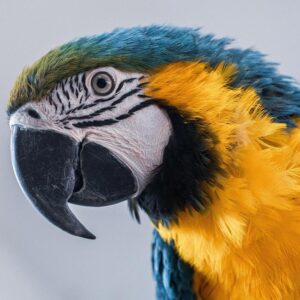
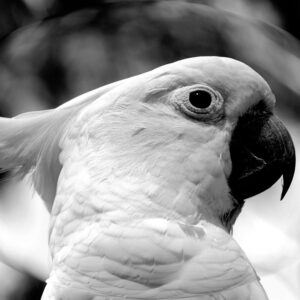
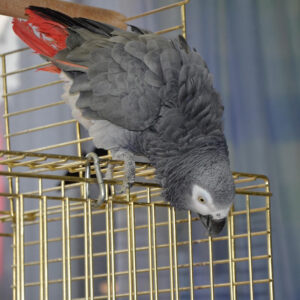
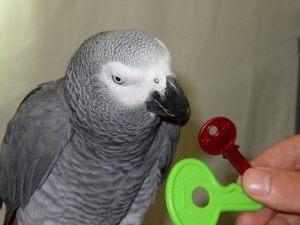
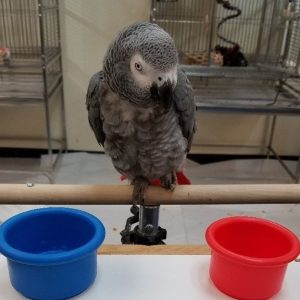
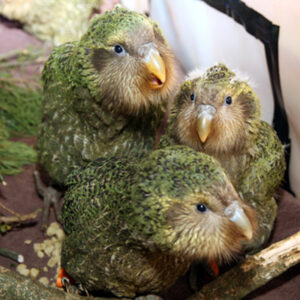

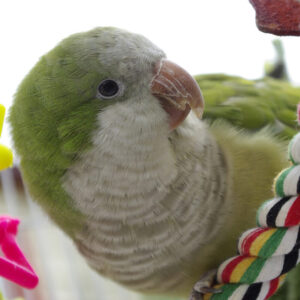
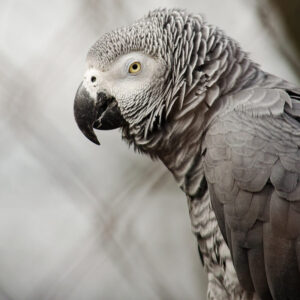
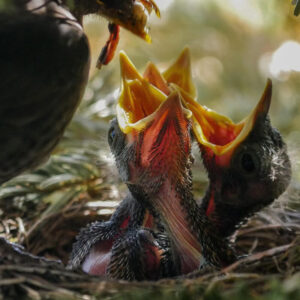
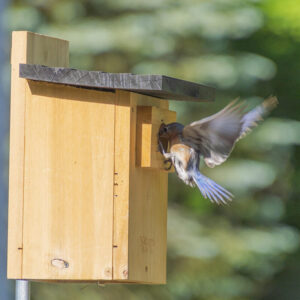
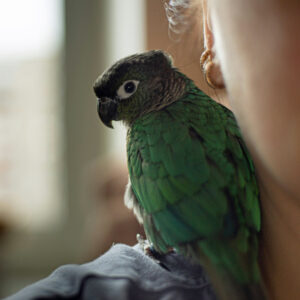
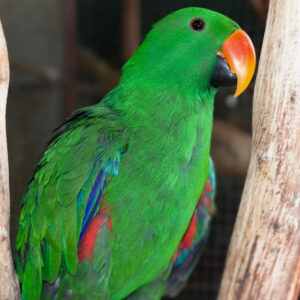
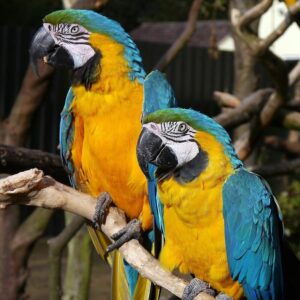
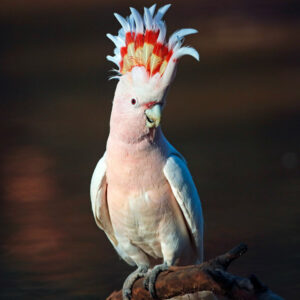
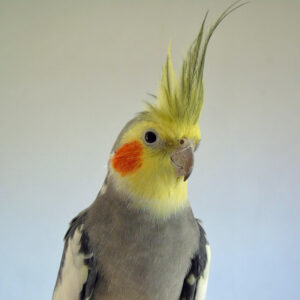
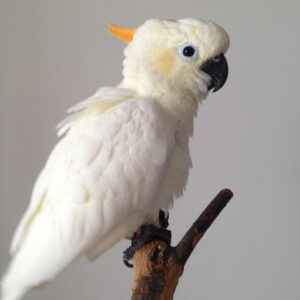
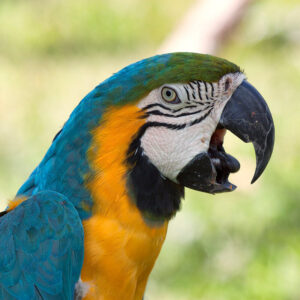
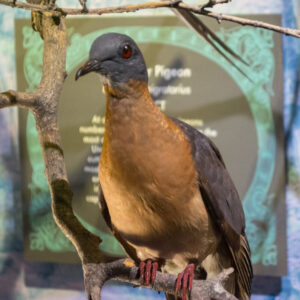
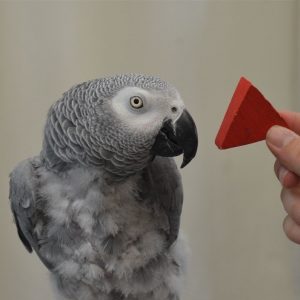
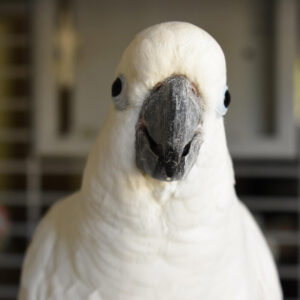
 Snuggle with your feathered friend, pop some popcorn for you, break open a bag of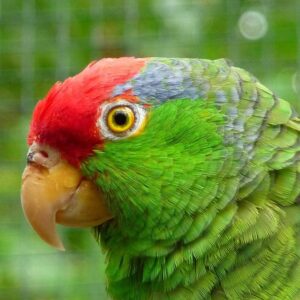
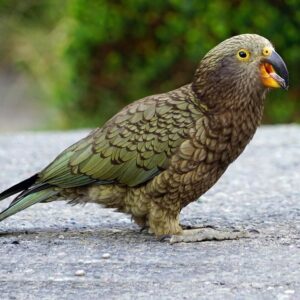
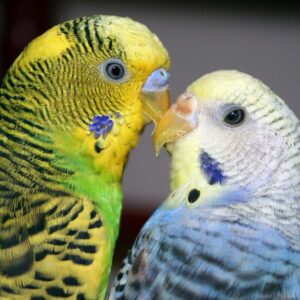
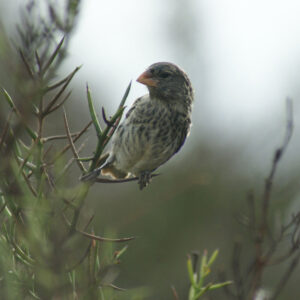
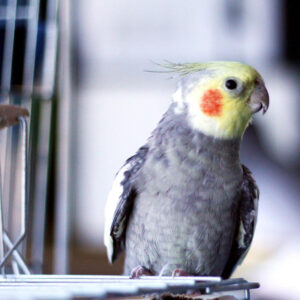
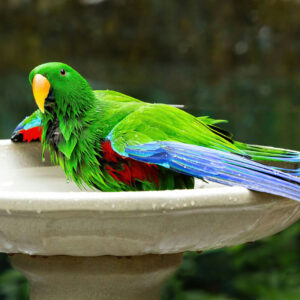
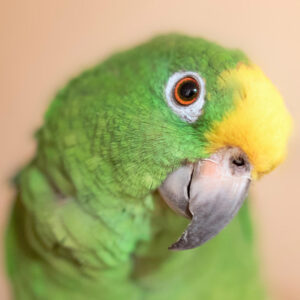
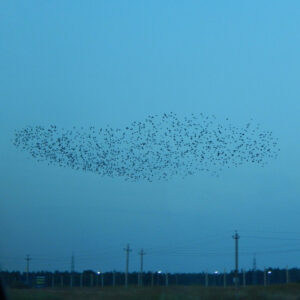
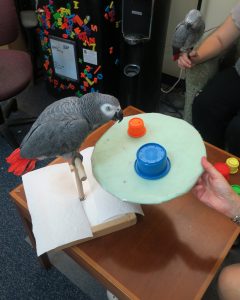
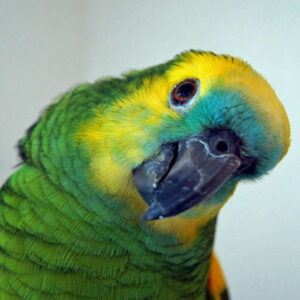

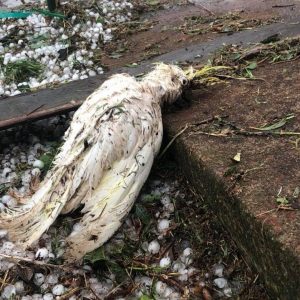 Throughout history, there has been no lack of extraordinary tales of extreme determination against overwhelming odds. Some of them are history book worthy. And while there are many more stories of bravery that fill the all the pages of life’s book, none of them are less memorable than the other. This particularly heartwarming tale involves the tale of the aptly named Lazarus the Cockatoo.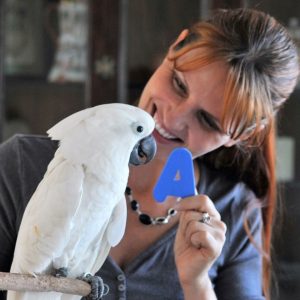
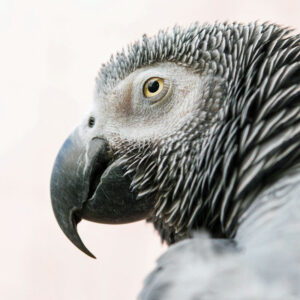
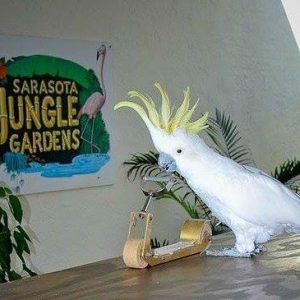
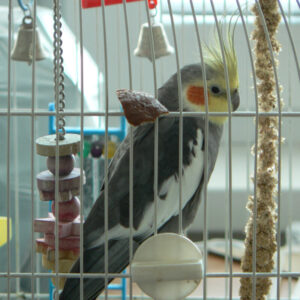
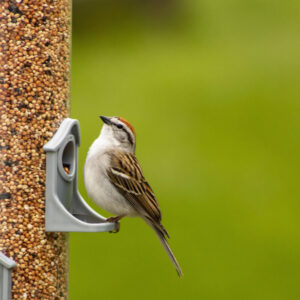
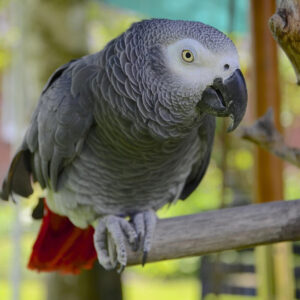
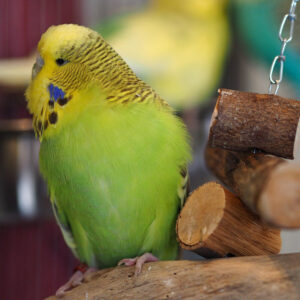
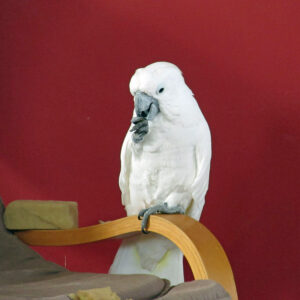
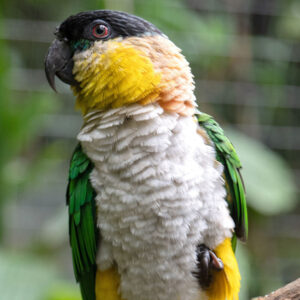
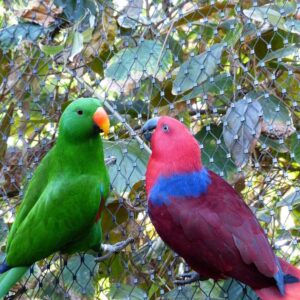
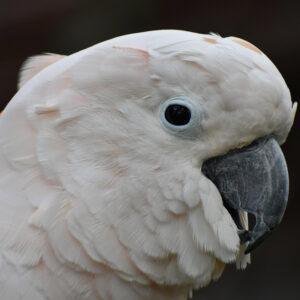
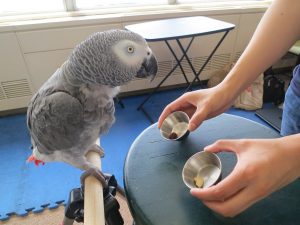
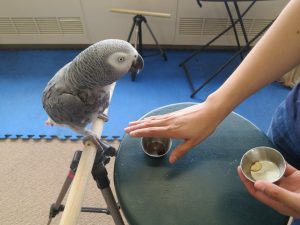
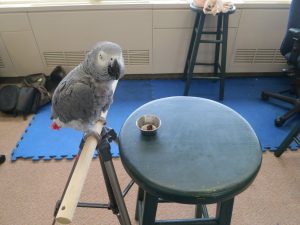
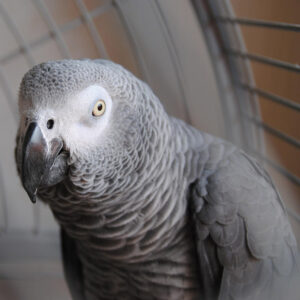
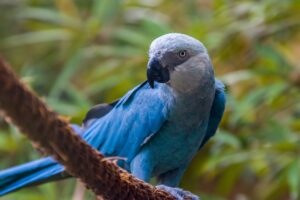
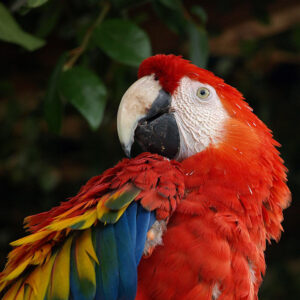
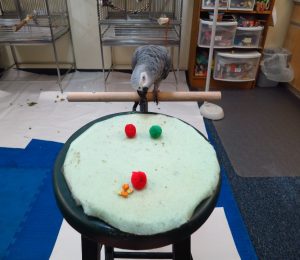
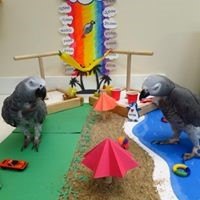
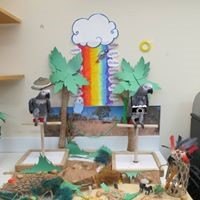
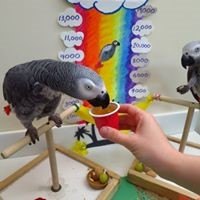
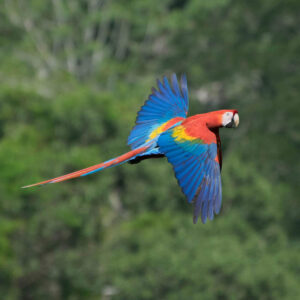
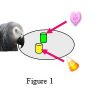
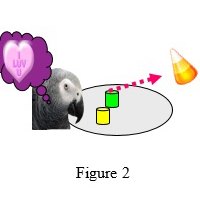

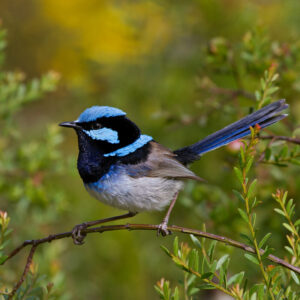
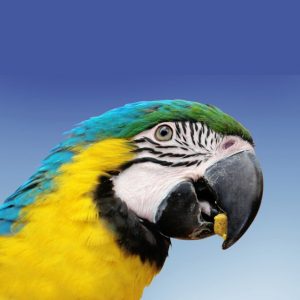
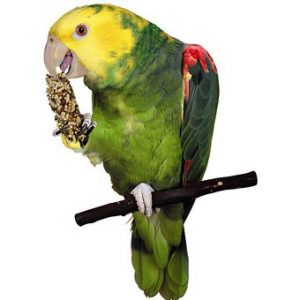
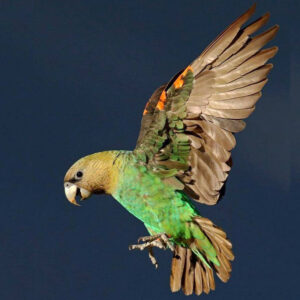
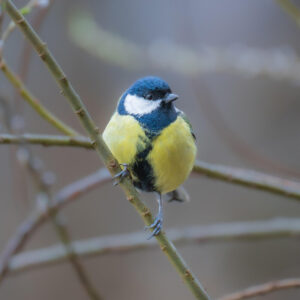
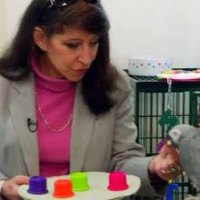
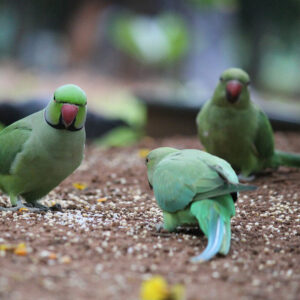
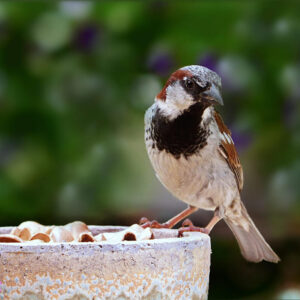
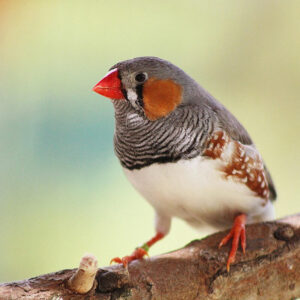

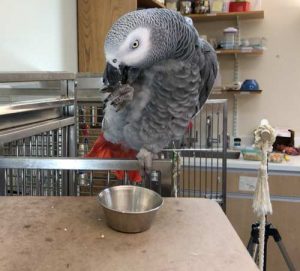

.jpg)


