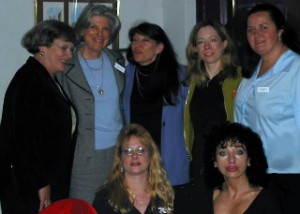
Dr. Susan Orosz and Giacomo Rossi, DVM, Ph.D, at the AIVPA conference in Rome.
This was an intense few days with a small group of veterinarians from around the globe! All of us convened in Rome, Italy to discuss diseases of the gastrointestinal tract. Part of the time was spent listening to each other lecture with simultaneous translation at the Italian veterinary conference, AIVPA. I came to learn more about PDD and I must say that I learned a lot to help guide me to work with this disease. But let me digress …
On the first day, I listened to some of the best veterinary clinicians and researchers of dogs and cats discuss inflammatory bowel disease (IBD) of dogs and cats. Most of the day was spent with lectures in simultaneous translation about the pathophysiology of this disease. I, like the Italian veterinarians, listened well into the night as each discussed the process from their perspective. It seems that how inflammation starts is not well understood but often can be at least helped with diet change to less inflammatory foods. This is parallel to the information being brought forward on inflammation as the cause of a number of human diseases as well- from arthritis to inflammatory bowel disease of humans.
While pathologists demonstrate that in the lining of the intestinal tract, lymphocytes and plasma cells accumulate with IBD, why they show up is not well understood. The research has centered on untangling the response of the immune system in this situation. In the past, researchers have ignored the bacteria of the gut but now are tying them to the inflammatory process. Studies have looked at the types and the quantity of bacteria along the length of the GI tract in humans and in dogs. This collection of bacteria is called the microbiome and it has its own ecosystem set up along the GI tract. In fact, the ecosystem of one dog or person is different than the other one but there are similarities that are being analyzed.
The use of these new techniques looks at the genes of the bacteria to help quantify and determine the types of bacteria present. This has revolutionized the understanding of what is happening in the GI tract of healthy and sick individuals as they vary tremendously. This comparison is useful to figure out what is happening with inflammation. We know that the microbiome changes with those animals and humans with inflammatory bowel disease, and we can speculate that using these same techniques in birds with PDD will also help us to understand the disease and offer new ways of treatment.
In parrots with PDD, there are changes to the intestinal flora or the microbiome that I have observed doing gram stains of my patients for 30 years. In these gram stains, there are more gram negative rod type bacteria with accumulating anaerobic bacteria in birds with PDD. I often observe Clostridal spores on these fecal and choanal gram stains so I know that the GI tract is not mixing and moving properly. How does that occur?
Normal Digestion Interrupted
The stomach of birds consists of the proventriculus, isthmus, and ventriculus or the gizzard. The proventriculus is the proximal portion and is the glandular portion that secretes the digestive enzymes. There is a narrow isthmus or intermediate portion followed by a saclike to highly muscular gizzard depending on the species. The gizzard grinds the food particles making it more readily available for the proteolytic enzymes to digest the food. In psittacines, there is a rotatory motion of the food in the stomach with food moving from the proventriculus to the ventriculus for grinding and then back into the proventriculus where the enzymes are secreted.
This normal pattern is disturbed by a variety of disease processes with the most noted being PDD. The small intestine includes the duodenum (descending and ascending limb), jejunum, and ilium. Birds have a limited length to the small intestine and have a unique peristalsis-retroperistalsis pattern to mix the foods stuffs, digest and absorb nutrients. But, when it does not mix properly, there is a change in the microbiome. This translates to the changes observed on fecal gram stains. When the fecal gram stains change back to normal, I know that the treatment protocol developed for that individual patient is working for them.
Why then does this happen with PDD? We now know that the first thing that happens in this disease is the leakage of glycoproteins from the nerve cells, particularly from the nerves of the first portion of the GI tract. This information was found from the studies from Dr. Giacomo Rossi’s lab – the person who arranged for all of us to meet in Rome. His studies show that, while avian bornavirus often causes this leakage, the symptoms of the disease do not come from the virus directly but from these leaked proteins. In his studies, he was able to recreate the disease symptoms by just taking these glycoproteins and injecting them into birds that were negative for the virus.
The interesting thing is that leakage of these proteins tends to concentrate in the nerve cells of the tenth cranial nerve or the vagus nerve. Guess what? The vagus nerve supplies the first part of the GI tract of birds — the area where we see the symptoms. And just like all of the dogs and cats with inflammatory bowel disease, there is accumulation of lymphocytes and plasma cells but in the case of our bird friends, in the areas of the nerve cell bodies. That explains why the GI tract does not mix properly and when it does not, it causes these changes that we observe on the gram stains. We understand that with dogs and cats with IBD, the underlying problems are from changes in the immune system. We believe that the same thing is happening to birds with PDD. It is more like an autoimmune disease. So it would be much better to describe this disease with a much different name — Avian Autoimmune Ganglioneuritis (AAG)!
Now how then can we help our patients? We know that changing the microbiome back toward normal helps with the symptoms but often there can be flare ups in dogs and cats and the same holds true for our avian patients with AAG. By gram staining and helping rid the GI tract of the anaerobic bacteria and the Clostridial spores with antibiotics, we can start the process. We can also dampen the immune response with the use of celebrex to reduce the accumulation of inflammatory mediators. While we haven’t used immune suppressive agents, that may be part of the protocol in the future.
When we sat down as a group in Italy, we were committed to work together to solve these inflammatory diseases of the GI tract. We thought through some ideas, and I am sure in the coming months will finalize research protocols to investigate new approaches to treat these diseases. I am so thankful that birds were included in the study group and that I could be part of the team. To that end, Drs. Rossi, Bob Dahlhausen, and the research groups from Texas A&M and other institutions are going to convene before the start of the AAV annual conference this August to discuss their research with AGG. Our goal is to help our wonderful birds lead a better life!
A parakeet, which is more properly called a budgie, can easily get enough exercise being out in a small room. The bird will love to fly around, just make sure to take the necessary steps to bird-proof your home. If you’d prefer, you can have a veterinarian, bird groomer or bird-owning friend show you how to trim you bird’s flight feathers to limit his mobility for a few months.
It’s easy to accommodate a roomy parakeet cage in most homes. A good -size cage is about a 1 ½-feet square, with ¼ inch or so bar spacing. That’s enough room for your bird to enjoy some flight, and safe enough so that it won’t get its head caught between the cage bars, which can lead to serious injury or worse.
Perk #2: Talking ability
Parakeets are capable of mimicking words and phrases. In fact, some can rival or surpass the vocabularies of much larger parrots, even those of “known” talkers like African greys, quakers and Amazon parrots. It is only the males that talk, so if you have a male budgie, make time to talk to him daily. Parakeet speech is fast and high-pitched, so listen carefully for his vocalizations. Speaking of vocalizations, both male and female parakeets chatter away cheerfully much of the time. Even if your parakeet doesn’t learn to speak your language, he or she is still good company.
Perk #3: Endless entertainment
Supply your parakeet with the right toys, and he will provide you with a show that’s better than anything on TV. Parakeets love to ring bells, explore hollow things, bonk their toys, toss items and talk to their mirror reflection. When offered chewable items, chances are your parakeet will demolish them. Adding machine tape, whole carrot or a palm frond, for example, will usually be left to shreds.
Perk #4: Social interaction
A hand-tamed parakeet will enjoy spending time with you, and might even prefer sitting on your shoulder to snuggle up to you so you can scratch his head feathers. Also, almost everyone has known someone who owned a parakeet. Even in this age of online friends, it’s nice to have a topic of conversation that is interesting. A huge generation of baby boomers in the United States grew up with parakeets they obtained at a local dime store. Go ahead, mention that you have a pet bird, or ask if someone ever had one, and be ready for the deluge of stories. If you want to interact with proud parents or grandparents, keep a photo of your bird in your wallet. If you do interact with people online, there are communities of bird lovers online.
Perk #5: Better nutrition for both of you
This is only slightly tongue-in-cheek. If you take care of one of these small parrots properly, you’ll be spending more time in the produce section of the supermarket and will have more vegetables at home. Go ahead, make your parakeet a bite-size salad and then make yourself one! Your bird will also love healthy nibbles from your plate, so make what’s on your plate a healthy meal. Also, there are nutritionally balanced diets made specifically for parakeets to help your little parrot live a long, healthy life.
Perk #6: A pint-sized travel companion
A smaller size makes a parakeet an easier travel companion. Compared to other parrots, parakeets require a smaller carrier, and you can even place your little bird’s cage in the car for a weekend away or a visit to family. Of course, give those at your travel destination a heads up about your feathered travel companion so that he is fully welcome. Check which hotels accommodate travelers with pets. The smaller size of a parakeet might make this easier.
You might not want to take your budgie along for the ride during hot or cold weather extremes. If you have to leave your parakeet at home while you travel, you might have a better chance of finding a budgie-friendly pet sitter or friend to take your bird. Your parakeet’s comparably smaller cage and less-intimidating size also makes it easier for you to drop both your bird and his cage off at a friend or relative’s home if you need to leave town.
Perk #7: A colorful outlook
Our dog and cat companions see limited colors, but parakeets see all the colors we do plus a few in the UV spectrum. They enjoy colorful toys, colorful ladders and a colorful assortment of veggies to eat in their bowl.
Perk #8: Trick training
Parakeets are smart and can learn tricks fast. Being small doesn’t limit their trainability at all. Go ahead and teach your budgie to dunk balls in hoop and put rings on a peg. Your parakeet can also learn to fly to you, can learn to talk and can even be taught to do a somersault in your hand.
Parakeets as pets are a manageable size, entertaining, social, and talkative. Small enough to fit in your apartment and travel with you, parakeets can make great pets. You will enjoy watching them play and can share your interest with others offline and online.
It doesn’t take research to know that getting young children to understand sharing — whether toys, snacks or a favorite book — can be a challenge; just ask any parent! But children do eventually grasp the concept. Interestingly, some research has shown that most children even have a tendency, as they mature, to act so as to avoid inequality.
Sharing seems to be less common in our nonhuman primate relatives, and appears to occur only under some fairly specific conditions. But what about creatures that are not primates? Our recent studies suggest that African grey parrots also can engage in sharing behavior.
Do Parrots Care To Share?
My students and I started looking into this possibility, because sharing in parrots does occur in the wild. In a mated pair, for example, birds often share food or engage in reciprocal preening, and often don’t have to be related to be willing to preen each other. We also know that, in the wild, a single parrot is a dead bird, because it can’t both forage and scan for predators. Thus parrots in flocks engage in sentinel behavior where one bird sits up in a tree on watch for predators while the rest of the flock eats. It may not be on an exact tit-for-tat basis, but they do share that behavior, because one bird is not always going to be the sentinel. The idea is that it may be my turn now, but it’s going to be your turn eventually.
We ran two different experiments to see if African grey parrot Griffin would be willing to share with his human trainers and caretakers. In the first experiment, Griffin and humans, working in dyads (twos), took turns choosing one of four differently colored cups with differing outcomes: empty (null, non-rewarding), selfish (keeping reward for oneself), share (sharing a divisible reward), or giving (donating reward to other). The human dyads involved three different trainers with different specific intentions (selfish, giving, or copying the bird’s behavior). In that situation, Griffin was willing to share a reward with a human who was willing to give up her reward (note that he didn’t simply copy the human and give up his reward, but was willing to share), was selfish with the selfish human, but only tended toward sharing with the copycat human.
We theorized that Griffin’s inability to understand the copycat condition fully — that he could potentially maximize reward by choosing to share — was a consequence of his viewing the copycat’s behavior as erratic compared with the consistently selfish or giving humans and thus not realizing that he was indeed being mirrored. We suggested that copycat trials subsequently be performed as a separate experiment, without being contrasted with trials in which humans acted consistently, in order to determine if results might have differed. We have now performed that experiment, and found that Griffin responded in a manner suggesting that he deduced the appropriate contingencies. This new study also suggests that birds like Griffin are capable of thinking ahead and understanding how their actions in the near term will affect those of their human partners in the future.
Notably, in the first experiment, Griffin wasn’t simply copycatting what the student was doing; he wasn’t being altruistic, as was the student, but was willing to share what might seem like the bonus in the green cup. In effect, he was saying, “If you’re willing to give me something, I’m willing to share with you.” He was clearly maximizing his reward. In the latter experiment, he understood that if he shared now, the student would share next.
Although he didn’t start the second experiment by sharing at a statistically significant rate in the first sessions with both students, over time, he came to understand, at a statistically significant level, that he would indeed get a better payoff by picking the green cup — and sharing the reward. That’s not to say Griffin didn’t occasionally choose the pink cup even late in the experiment (which garnered him the same immediate reward), but he realized that every time he chose pink and got a treat, then on the next round, he didn’t, and thus reverted to sharing. Interestingly, even at the beginning, he rarely chose either the orange or purple cup, seemingly remembering what they represented over the many months that had elapsed between the experiments.
Note that for Griffin to succeed, it was important that we separated out the so-called “copycat” sessions from the others where the students all acted either selfishly or generously. Although he might have eventually understood the linkage between his actions and the copycat student in the first experiment, he certainly had an easier time when the trials were run independently and the contingencies were clearer.
*Special thanks to Peter Reuell, Harvard staff writer for input on this article.
Click this video link to get an insider’s view of Dr. Pepperberg’s lab and meet her grey flock.
Some people believe that birds are picky eaters; that they prefer one or two food items and that’s it. Of course, there are many pet birds that do only eat one or two types of foods, but that’s because they haven’t been offered much else or the foods offered don’t appeal to them.
Here are four ways we can sabotageour birds’ appetite and how to avoid them.
1. Serving leftovers you wouldn’t eat.
Unlike dogs, which seem to have no aversion to foraging through the trash for yesterday’s leftovers (which can make them sick!), most pet birds prefer their food fresh. Wilted produce, for example, simply will not do. Many birds like to suck the juice from their fruits and veggies or thoroughly enjoy chomping into crisp food and shredding it apart. If the food is not fresh enough for you, it is not fresh enough for your bird.
2. Serving food the wrong way.
Don’t make the mistake of giving up on your bird eating a healthy food too soon. With some birds, food is equal parts location and equal parts presentation. You might offer your budgie or cockatiel a broccoli floret in his bowl every day for a week only to throw it out untouched each day. But have you tried pushing the broccoli halfway in through the cage bars, slivering it up, slicing it in half or placing it high in the cage or on the cage floor, etc. There is no set formula for maximum appeal — location and presentation preferences can vary by individual bird, and some birds might ignore the food for days, weeks, or months before finally giving it a try. Resist the “one-and-done” attempt and keep trying. You can also up the appeal of fresh fruits and veggies by lightly spritzing them with water. Some birds even like to bathe in a wet produce leaf and nibble on it as they do so.
3. Serving your bird the wrong food at the right time.
You can spoil your bird’s appetite for healthy, nutritionally balanced food if you offer a less nutritious treat as his first meal. Birds tend to wake up with a hearty appetite, so morning is a good time to feed nutritionally balanced food. Better yet, pellets and other manufactured diets are less perishable and can stay in the cage for most of the day, so if you are an especially late riser, consider leaving some pellets or other nutritionally balanced food for your bird to wake up to so he doesn’t have to wait hours for breakfast to arrive.
4. Serving a side of stress.
Parrots are social eaters by nature; in the wild, they forage for food alongside their flock members. Being prey animals, the flock waits to eat until they’re sure the environment is free of predators. It makes sense that your pet bird will have a better appetite when his home environment is stress-free. If your bird is unnerved by the household cat, make sure your feline isn’t sitting just outside the cage during mealtime or that the dog isn’t barking at your bird for a bite of his food. If you have a bustling household and a people-shy bird, consider feeding him just before the commotion of your children arriving home or after everyone has settled down. That’s not to say that your bird will not enjoy joining his people at the dinner table. This is a good way to have him try a new healthy food, and offering it by hand is one way to bond with your bird. Many pet parrots show their dining delight with a shrill, a honk, or a beep; some might even say “Yum!” Or you might just hear crumbs falling off as your bird concentrates all his efforts to the task at hand. If he shows delight in consuming a healthy food, it will be music to your ears!
Feed Smart
Don’t be a lazy feeder by dumping more food on top of yesterdays’ serving and so on until you have a little tower of food that is then dumped every few days. Keep servings to just that; one serving at a time. If the food is prone to spoilage, such as cooked food or produce, remove it from the cage within a reasonable time frame. (Think of food that’s been sitting out at a picnic or on a reception table all day; it loses its appeal after a few hours and can start to become bacteria-laden.)
Foods like seed, pellets, and other manufactured diets can generally be left in the cage throughout the day. A concern with seed-only diets, aside from being high in fat and low in essential vitamin and minerals, is that the food bowl can look full but is in fact filled with empty seed hulls. Some birds, especially those typically fed a seed-based diet, such as budgies (parakeets), cockatiels, and lovebirds, have suffered severe malnutrition due to not having been fed for days because their caretaker mistook empty seed hulls for actual food.
A recent news story told of the sad passing of a young boy from rat-bite fever, which he contracted from his pet rat. While this is a disease in rats, the fact that his rat transmitted this disease to a human shows by definition that it was a zoonotic disease. A zoonotic disease is a disease that can be passed between animals to humans. Zoonotic diseases can be caused by viruses, bacteria, parasites and fungi. As pet bird owners, we all need to know about the zoonotic diseases of our birds so that we can guard against them — to keep both them and us healthy and happy!
The most important zoonotic disease with our parrots is psittacosis, also called parrot fever. While it gets its name from the word parrot or psittacine, it may be transmitted to humans from other types of birds, including turkeys, pigeons and wild birds. Birds in the parrot family, or psittacines, that are more commonly associated with transmitting the disease include macaws, budgerigars (parakeets) and cockatiels. Avian chlamydiosis, the form of the disease in birds, can occur in canaries and finches but is infrequently diagnosed. The disease is caused by a bacterium called Chlamydophila psittaci. It is like a cross between a virus and a bacterium, as this bacteria replicates inside of cells, rather than outside, so the standard tests of gram stains and culture do not work for finding it.
Because psittacosis can be spread by birds in the parrot family, it has been occasionally found in pet-store workers and those who have purchased an infected bird. It may also be found in farmers and slaughterhouse workers who process turkeys. Many of the large pet store chains are concerned about the transmission of this disease, so they test the incoming birds for it. The most common technique for testing is through polymerase chain reaction (PCR) testing. This type of testing amplifies any Chlamydophila genetic information in a sample if it is present, allowing it to be detected even at low levels. It is important to discuss the testing of your bird with your veterinarian, because the manner in which samples are collected, the type of samples collected and the lab that is used can all influence the results.
Psittacosis In People
Human infection with C. psittaci usually occurs when a person inhales the organism that has been aerosolized from dried feces or respiratory tract secretions of infected birds. Other means of exposure include mouth-to-beak contact and the handling of infected bird’s plumage and tissues. Even brief exposures to birds or bird waste can lead to symptomatic infection; therefore, certain patients with psittacosis might not recall or report having any contact with birds. The onset of illness typically follows an incubation period of five to 14 days, but it can be longer. The severity of the disease ranges from a mild, non-specific illness to a systemic illness with severe pneumonia. Some people have died from this disease, but if there is knowledge of exposure and the correct antibiotic is used, the person usually regains health.
In humans, the symptoms are fever, headache, chills and sometimes pneumonia. Some people may only experience mild flu-like illness, or show no illness at all. A nonproductive cough is usually present and can be accompanied by breathing difficulty and/or chest tightness. As the disease progresses, weakness and inability to clearly think sets in. If you experience these symptoms, let your doctor know that you have birds and you may suggest that he or she consult with an infectious disease expert. Often, your doctor may not understand the level of testing in our birds that has a high degree of accuracy, and they may simply suggest that you get rid of your birds. However, companion birds are currently thought to pose a low risk to immune-compromised persons. Appropriate testing of your birds and then not exposing them to birds that have not been tested helps cut down the potential incidence of you or your bird catching this potentially life-threatening disease!
Psittacosis In Birds
In our psittacine birds, the usual incubation period of C. psittaci ranges from three days to several weeks. However, active disease can appear with no identifiable exposure or risk factor. Signs of avian chlamydiosis are non-specific and include lethargy, anorexia and ruffled feathers. Other signs include serous or mucopurulent (mucous with pus) ocular or nasal discharge, conjunctivitis, diarrhea and excretion of green to yellow-green urates. Severely affected birds may become anorectic (lack of appetite) and produce sparse, dark green droppings, followed by emaciation, dehydration, and death. Whether the bird has acute or chronic signs of illness or dies, this depends on the species of bird, virulence of the strain, infectious dose, stress factors, age, and extent of treatment or prophylaxis.
Our companion birds may show a variety of signs depending on the species. Commonly, budgies (or parakeets) and cockatiels may show respiratory or GI signs, but not both, when they have this disease. The larger parrots — including macaws — tend to show GI and respiratory signs. While cockatoos are less susceptible, they can be affected as well; lovebirds may not show any signs but be found dead in their cage. It is important to have these birds tested after death so that family members that may have been exposed are notified and appropriately medicated. Psittacine birds that are tested while apparently healthy or not and are found positive or highly suspicious for the disease are usually medicated for 45 days and then retested to make sure that they are cleared of the infection. It is important to work closely with your avian veterinarian to reduce exposure and infection of this disease.
Other Zoonotic Diseases
There are a number of other potential zoonotic diseases that as a bird owner you should be aware of. Salmonella can be transmitted by birds, particularly pigeons and doves. Avian tuberculosis has been found in some of our parrot species, but it is often the human that transmits the disease to the parrot instead of the other way around! Avian influenza, particularly the H5N1 strain, has had a lot of press but so far, with good monitoring of the wildlife and the poultry in the USA, there have been no cases reported. Canada just recently reported a case of a traveler from China to Canada who was confirmed to have the disease. A more important problem that is not infectious is allergic alveolitis in people. Those people have a hypersensitivity reaction to the feather dander of their birds. Species of birds that are known to more commonly create this problem are African greys, cockatiels and cockatoos.
While these diseases can be a serious threat, understanding them, including how to test and eradicate them when possible, helps reduce possible exposure and infection. Let’s all learn how to play safe.
A little silliness can go a long way to brightening your pet bird’s day. After all, most pet parrots are inclined to love theatrics! That’s why pet birds are more likely to mimic a word or phrase if it is said in an ultra-dramatic or amusing way. Nursery-rhyme books and others that cater to a young audience also make great reading material for parrots — these books are designed to be read out loud and with extreme silliness. Dr. Seuss books certainly fit the bill!
A Little About Dr. Seuss
Theodor Seuss Geisel, who later went by the pen names Dr. Seuss as well as Theo LeSieg, was a cartoonist and writer. In 1954, William Ellsworth Spaulding, director of the educational division at the publishing company Houghton Mifflin, came up with a list of 348 words that he felt every first-grader should know and asked Geisel to trim the list to 250 words and then write a book using only those words. Geisel scanned the list and created a story based on the first two words he came across that rhymed, which were cat and hat. The result was “The Cat in the Hat,” one of the most well-known and beloved children’s books.
Dr. Seuss might have become famous with a cat but he also has plenty of birds in his stories. Here are some Dr. Seuss books that feature bird characters.
Hooey The Green Parrot
The book “Oh Say Can You Say” features Hooey the green parrot who has trouble reading tongue twisters. He introduces the book with these words: “The words in this book are all phooey. When you say them, your lips will make slips and back flips and your tongue may end up in Saint Looey!”
Consider yourself forewarned because here is sample text that follows:
Quack Quack! We have two ducks. One blue. One black.
And when our blue duck goes “Quack-quack”
our black duck quickly quack-quacks back.
The quacks Blue quacks make her quite a quacker
but Black is a quicker quacker-backer.
The Sneetches
Here’s a Dr. Seuss book for those dealing with jealousy among the flock. In “The Sneetches” two types of yellow bird-looking species are separated by those with stars on their bellies and those without. Star-bellied Sneetches think they are the best, and look down upon starless Sneetches. Then along comes Sylvester McMonkey McBean with his Star-on and Star-off machines. Soon the plain-bellied Sneetches have stars added to their bellies so as blend in with their more elite counterparts, which causes the original Star-Bellied Sneetches to have their stars removed. The two types of Sneetches go back and forth adding and removing stars until they finally realize that both types of Sneetches are really all the same and can peacefully co-exist. Here’s a sampling to share to your flock:
Now, the Star-Bell Sneetches had bellies with stars. The Plain-Belly Sneetches had none upon thars. Those stars weren’t so big. They were really so small. You might think such a thing wouldn’t matter at all.
A Book Worth Celebrating
Do you celebrate your bird’s birthday? Whether it’s his actual hatch day or the day he joined your family, pick a day to celebrate your bird’s birth, because you’ll want to breakout Dr. Seuss’s book “Happy Birthday to You!” This story takes place in land called Katroo, where the Birthday Bird throws the reader a one-of-a-kind party on his/her special day. It consists of a running description of a fantastical celebration, narrated in the second person, of the reader’s birthday, from dawn to late night. Here’s a line you can say to both the people and birds in your life, whether it’s their birthday or not!:
“Today you are you, that is truer than true. There is no one alive who is youer than you.”
More Great Books
If you have recently welcomed a new bird to your home, “In A People House,” penned by Geisel (Dr. Seuss) under the name Theo LeSieg, can inspire you as show your pet bird the layout of your home. In the book, a mouse invites a character named Mr. Bird to tour a home, and the mouse by points out all the things they find inside:
A People House has things like chairs, things like roller skates and stairs. Banana, bathtub, bottles, brooms, that’s what you find in people’s rooms.
The mouse and bird play with the items they find, making a mess as they go. The mouse tries to balance too many things on top of another until they all crash to the floor, the people discover them and kick them out.
If books by P.D. Eastman remind you a little of Dr. Seuss that’s because Eastman was a protégé and colleague of Dr. Seuss and Eastman also wrote many books for children, under the Dr. Seuss brand of Random House books for beginning readers. In “The Best Nest,” Mr. Bird boasts about his nest with a song, but Mrs. Bird tells him to hush because she wants a new nest. The pair then go looking for a new, “better” nest. (If you share your home with a female cockatiel or other broody bird you can probably relate!) But every spot they look at is occupied or has something wrong with it. In the end, they discover that their original nest was the best. Here’s a takeaway quote to teach your feathered friend: “I love my house, I love my nest, In all the world, My nest is best.”
Mr. and Mrs. Bird appear again in “Flap Your Wings.” When an egg mysteriously appears in Mr. and Mrs. Birds’ nest they decide to raise the chick inside. However, when the egg hatches they soon realize that is not what they expected. The “chick” looks more like a baby alligator! The Birds soon wear themselves down caring for Junior until he gets too big, and must leave the nest. “But how can Junior fly without wings”? Fortunately, this tale has a happy ending for both Mr. and Mrs. Bird and Junior.
This book list is just to get you started — now go ahead and read a silly bedtime (or anytime) story to your feathered friend!
At a glance, parrotlets and lovebirds look a lot alike. In fact, when parrotlets were discovered in the 1800s — a century after lovebirds became known to Europeans — they were called “South American lovebirds,” a reference to the fact that lovebirds are native to Africa, a world away.
What do these short-tailed, compact birds from entirely different continents have in common, and what makes them different?
Similarity: Feisty Personality
Both lovebirds and parrotlets are described as big birds in small bodies. They don’t know what size they really are, and will hang out with or stand up to much larger birds. Both are described as sometimes being “nippy” but as being adoring pets if hand-raised. Pet birds of both these species must be handled daily in order to retain their tameness. You’re making a commitment when acquiring a lovebird or parrotlet companion. As much as they like attention and affection, neither species will do well with a bird companion. Keep one as a pet bird, or keep more than one in separate cages for their own safety.
The fierce love and devotion both species have for their owners can lead to jealousy of other people or other pets in the household. Sandee Molenda, co-founder of the International Parrotlet Society, said that “both female parrotlets and lovebirds are more likely to be more aggressive than males.”
Lovebirds and parrotlets are not only bold and feisty, but also smart. Lovebirds have a reputation for figuring out how to open cage or feed cup doors and let themselves out of the cage.
The species of parrotlets that are commonly kept as pets are the Pacific, green-rumped and spectacled parrotlet. Their size varies from 3 inches to 5-1/2 inches, and their weight from 18 to 28 grams. Peach-faced, masked and Fischer’s lovebirds are all 5 to 6 inches in length and are hefty birds with weights from 35 to 55 grams. Both lovebirds and parrotlets are relatively small birds, but parrotlets are 2/3 the size of a lovebird.
As far as we know, both species have an expected lifespan of 15 to 20 years. Parrotlets have not been kept in captivity as long as lovebirds, so we’re still learning about their longevity. Because of their small size, high energy and curiosity, these species have a propensity to have accidents, which affects actual lifespan, too.
Difference: Sexual Dimorphism
Lovebirds, like most parrots, are not sexually dimorphic. In other words, both sexes have the same outward appearance. When mature, parrotlets have visual differences between the sexes.
Difference: Verbalizations
Lovebirds have a natural call that is a high-pitched shriek. Parrotlets, on the other hand, chirp quietly and can’t squawk. Though generally quiet, a parrotlet can learn to talk, and it seems the spectacled parrotlet is the best talker among the species. Lovebirds rarely mimic noises or talk.
Similarity: Activity
Both parrotlets and lovebirds are active, curious and acrobatic species. They hang on their toys and love to go in things. The will hang out on a shoulder and hide under their person’s hair or slip in a pocket. Dena Tucker of CreativeBIrdToys.com reports that lovebird and parrotlet owners both purchase toys with colorful parts, toys that make noise, and toys that can be shredded. Because these are hardy birds with strong beaks, their toys should be more cockatiel or conure size rather than budgie size. Again, these are big birds in small bodies!
Both lovebirds and parrotlets will enjoy being provided with a swing. Though they do like going into things like boxes or tents, this will encourage territorial breeding behavior in an adult bird so is not recommended for them.
Difference: Nesting Behavior
If you have a female peach-faced lovebird, you may notice that she shreds everything in sight. She then sticks the pieces of paper, palm frond or whatever into her rump feathers and flies or walks around decorated like that! It’s a nesting behavior that is not found in other lovebird species or in parrotlets.
Similarity: Different species
There are three species of lovebirds often kept as pets — peach-faced, masked and Fischer’s — and three species of parrotlets most often kept as pets —Pacific, green-rumped and spectacle. Get to know the species before you get your pet.
Peach-faced lovebirds make wonderful pets and come in a rainbow of colorful mutations. They stay tame, whereas there are many accounts of masked lovebirds and Fischer’s lovebirds that are tame as babies but don’t remain tame.
Most pet owners keep Pacific parrotlets, of which there are several mutation colors. They can be feisty and stubborn but also loving with their owners. Spectacle parrotlets are bold, and both sexes can learn to talk. Green-rumped parrotlets can be shy but with patience can make great pets.
Difference: Feeding & Bathing
Because they are so active, parrotlets burn up calories and should be fed more food than a lovebird or even a large, sedentary cockatiel.
What you should provide more of to a lovebird, however, is the opportunity to bathe. Most lovebirds appreciate being spritzed with a plant mister or offered a shallow bowl of water in which to bathe.
No other companion pet has a name quite as endearing as a lovebird. The lovebird’s genus, Agapornis, isthe words “love” and “bird” joined together — agape is Greek for “love” and ornis is Greek for “bird.” The lovebird might be a small parrot but not in a delicate way like a budgie. Lovebirds are stocky, with a beak that looks like it belongs on a slightly larger parrot!
The lovebird’s name is based off of the seemingly intense bonding and attention often lavished on the bird’s mate. From this aspect, it is easy to see why lovebirds make the ideal Valentine’s Day mascot — who can argue otherwise when you see two lovebirds cuddled up against one another on a perch?They are most often shown as couples, so many people have the impression that pet lovebirds only come in pairs.
However, just like people, you can’t just put two lovebirds together and expect a happily ever after. Unless the birds were introduced at a young age, the older bird might act aggressively toward the newcomer, and in a larger group situation, some bullying can occur. The average Joe might not know that companion lovebirds can be aggressive toward other birds — including other lovebirds — furred pets and people. Lovebirds have a tendency to be fearless and some have no qualms about going after the household dog or cat if they feel their space has been infringed upon.
A bonded lovebird pair might very well treat the humans in the household as a “third wheel” and want nothing to do with them. For this reason, some people recommend having a single-kept lovebird as a companion pet instead of a lovebird pair. However, given the lovebird’s intense social nature and need to bond, a single bird will need frequent social interaction and attention from the people in their lives.
In the wild, most lovebird species pair for life. You can spot a budding romance by proximity, as lovebirds stay especially close to one another as mating season approaches, briefly parting to collect nesting materials and foraging for food, but back together to relax and roost. You might say that lovebirds love to be near the one they love.
While pet owners might think of February as National Pet Dental Health Awareness Month, this title doesn’t really address those of us who have birds. Now, birds do have an “egg tooth” briefly, which they use to hatch out of the egg, but perhaps birds need their own slogan: National Responsible Pet Owners Month!
I am always amazed that most folks, when they get a new dog or cat, think to take it to a veterinarian to “check it out” and get their “shots,” but few people think to take their new bird to the vet! Sadly, when birds get sick, many owners seek over-the-counter treatments at the pet store. If they only knew that the antibiotics that are pre-packaged are most oftentimes the wrong dose and kill the remaining good bacteria. More importantly, it wastes precious time to treat the bird while there is still time. I have heard it said that, “I took my bird to a vet when he was down on the bottom the cage,” and the owner spent a lot of my money, “but the bird died anyway!”
There are important clues in that statement. The first is … “I took it to a vet.” This sounds like this person thinks that all vets are created equal, at least when it comes to knowledge about birds. That is far from the truth. Bird or avian veterinary medicine is not an integral part of the standard curriculum at any of our four-year veterinary schools. They may provide an introduction to avian medicine and some schools might even give students some hands-on experience; however, as I used to say when I taught avian medicine at The University of Tennessee, you learn enough to be dangerous! What does that mean?
It means that the veterinary student is provided with a basic understanding of a small part of avian medicine. That could be enough to get started in lifesaving measures, but not enough to diagnose and treat many of the conditions of companion parrots. That takes more training — like a one-year internship piled on top of a two- to three-year residency working under a skilled, board-certified avian veterinarian in an approved residency program. Veterinarians who are board certified have taken the time — at least four years along with written reports, and two days of intense testing — to master parts of avian medicine. The process involves mountains of work and dedication. Yet, even after that, there is always more to know. You might know a lot about Amazons and macaws but may have limited knowledge about kookaburras or Anna’s hummingbirds.
How Vetted Is Your Vet?
Veterinarians can say they “see” birds, as anyone graduating from vet school can legally say, even with limited understanding of birds and their care. They may develop their skills and knowledge over time, but they currently have limited expertise. The next rung of the ladder holds those veterinarians who list that they are members of the Association of Avian Veterinarians (AAV). These individuals have the potential to learn current therapies and techniques; but still, the questions that matter are, “When did he or she last attend the annual conference?” and “How many conferences has he or she attended in the past?” The AAV Conference provides cutting-edge information, but only if one is there to learn it. A higher rung holds those who say that their practice is limited to birds, for these veterinarians have considerable experience with birds. Those who are board-certified have gone even further down the road of education to get certification, and they have also attended conferences and done a variety of continual learning courses to be re-certified. All of this takes considerable time, effort and money and part of that expenditure is why the examination charge from a board-certified avian vet is often higher than what a general practice dog and cat veterinarian would charge. This is for a good reason, as my old friend Liz Wilson would say! That boarded person has more expertise, and should be comparably priced to other board-certified veterinarians, yet the office call is often less.
So What Is A Responsible Bird Owner To Do If Their Bird Is Sick?
Unfortunately, many people forgo taking their bird to the vet until it is too late, as in, “Now I should take my bird to the vet because it is down on the bottom of the cage.” When a bird is that sick, it is very difficult (for anyone, no matter their knowledge or expertise) to bring the bird back from the brink of death. That is often the case when a bird is so weak it is unable to leave the cage floor. At this point, all of the bird’s body’s resources have been used up trying to appear normal to the flock, and the bird can no longer support himself. In the wild, obviously sick birds could be driven from the flock or be selected for attack by a predator. So, sick birds tend to disguise their illness until they are no longer able to do so.
Despite the difficulty, early detection of subtle signs enhances treatment success. The subtle signs of illness in pet birds include:
Changes In General Appearance And Posture
When birds get sick, they often sit lower on the perch; spend more time ruffled than they do during their normal afternoon nap time, and tuck their heads and sleep more.
Changes In The Feathers
The quality and color of the feathers reflect the overall health of the bird. Birds that are fluffed and ruffled, and those with wet, stained, or matted feathers (particularly over the cere or nostrils), should also be examined.
Changes In Head Appearance
Examine the contour or shape of the head, beak, nares or nostrils and the surrounding feathers for any changes.
Look for these signs of illness:
Dullness to the eyes
Eye(s) sunken into the skull, indicating dehydration
Swellings around the head, suggesting an upper respiratory tract infection or tumor
Nasal discharge resulting from an upper respiratory tract infection
Fluid, clear or purulent, above the nares or on the cranial margin of the carpus or the wrist on the wing
Rubbing the head or the bird “wiping its nose” to clear discharge or to relieve pressure exerted in the sinuses
Feather loss around any part of the head, particularly the area around the nares or nostrils
Scratching at the nares or the side of the head frequently
Sneezing often, particularly with a discharge
Changes In Your Bird’s Behavior
A bird that does not feel well may stop singing, talking or whistling. An ill bird may not be willing to interact with people.
Changes In Droppings
Lime green-colored feces suggest liver disease.
Matting of the feathers around the vent from sticky droppings is abnormal.
Blood tinged droppings are abnormal, indicating the bird needs medical attention.
Large droppings in female birds often result from impending egg laying but may also be from an infection.
Smaller and/or fewer droppings indicate that the bird has reduced its food consumption, often because of illness.
Changes In Eating, Drinking, Or Digestion
Daily observations of the amount of food consumed, quantity of water drunk, and number, consistency and odor of droppings are important in assessing each bird’s health. Any changes from normal indicate a potential problem that should be evaluated further.
Changes In The Legs, Feet, Or Beak
Problems with the legs and/or feet alter the posture and stance. Birds that stand consistently on one leg need to be examined.
Changes In Breathing
The unique respiratory system of birds is extremely efficient in a healthy bird, but disease can cause rapid changes that can be life-threatening
If your bird has any of the following signs, contact your avian veterinarian immediately:
Wheezes and clicks when the bird takes a breath
Increased rate of breathing
Increased depth of breathing that can be observed as a tail bob with increased abdominal effort
Keep your eye on your bird while you interact and play with it. Pay attention to the sometimes subtle changes listed above, and you can give your bird a fighting chance if it should become sick. If it is, take your bird to your avian veterinarian. Remember to give your bird a yearly checkup, just like your dog and cat, and have periodic grooming as needed. Your vet can use these times to evaluate your bird’s health and intervene if needed. Since February is also Valentine’s Day, treat your bird to a time to make sure it is healthy, for the love of your bird!
Over a remote village in the Moskitia region of Honduras there still flies the critically endangered Central American subspecies of scarlet macaw. Admiring these rainbow birds and working on their behalf, once lived Tomas Manzanares, leader of the indigenous village, Rus Rus. One day he grew tired of nefarious elements coming into the ancestral lands and taking what they wanted — trees, parrots, land. He reported the names of those who were illegally taking his people’s resources to governmental authorities. The government didn’t do anything, but the criminals did. They waited in ambush one morning by the river where Tomas took his daily bath and shot him four times. He nearly died. His fellow villagers fled, knowing that their turn might be next. Only five months later, his wounds still healing, Tomas returned to his village to accompany me and others to survey the area’s scarlet macaw population. We had hired a squad of soldiers to come with us — as much to keep Tomas and his people safe, as we outsiders.
One early morning down by the riverside, Tomas showed me the scars from the bullet wounds. “Tomas,” I said, “Why are you risking your life to help us conserve the parrots here?” “Doctora,” he answered, “Everything is at risk, so I am willing to risk everything. If the birds don’t make it, neither do my people.”
Tomas, with his hard-won wisdom, affirmed a deep healing truth, which supports and motivates my work in parrot conservation in many Central American countries. We are one earth and the well being of all species and individuals intertwines into an interdependent whole. If one of isn’t doing well, none of us are. The corollary to this lightens burdens: if we help one, we help the many, including ourselves. As long as you do something to care for life on this earth, you help us all.
Specifically, if we care for birds either near or far, we help birds everywhere, and we help our human kind as well. We do this in three major ways:
Knowing Wild Birds Helps Us Care For Our Wild Birds
Knowing Wild Birds Helps Us Care For Our Companion Birds
Knowing And Caring For Birds Helps Us Care For Ourselves
Knowing Wild Birds Helps Us Care For Our Wild Birds
The more we know about birds in the wild, the better able we are to frame appropriate research questions and design, and to make adaptive management decisions that improve the quality of life of free-ranging birds. For instance, learning the variety of foods that a wild bird eats helps us determine habitat quality and carrying capacity so that we can, in turn, work on reforestation and identification of suitable areas for conservation efforts, such as the release of birds rescued from the illegal wildlife trafficking. This knowledge is important not just for conservation team members directly involved and on site, but also for the variety of conservation team members required to form powerful and synergistic multidisciplinary teams. Team members can be half a world away and still contribute experiences, skills and resources, such as social media and website management, contribute or conduct publicity, education and awareness campaigns, as well as donate financial or other resources. For instance, for Lafeber Conservation Projects, we utilize people who have never seen a free-flying parrot who help us design websites and media, network with others, and support the programs financially. People with pet birds in their homes are a tremendous resource for wild birds because they form deep and intimate relationships with their birds. They also understand them in ways that others do not. There is power in these relationships and bonds, which results in a commitment and ability to care for birds wherever they may find them.
Knowing Wild Birds Helps Us Care For Our Companion Birds
Photo courtesy of LoraKim Joyner
The American Veterinary Medical Association (AVMA) held a welfare conference in November 2013 to help attendees understand how to conduct a welfare assessment for animals. Each assessment has three components: Body, Mind and Nature. Individuals are rated on a scale from suffering, to coping, to flourishing, which is the aim. Body refers to the physiological needs of an animal and the well being of the body, such as nutrition, safety, temperature, etc. Mind means paying attention to what the animal is experiencing, thinking and feeling, such as fear, stress and pleasure. Nature means looking at “normal” behaviors for the species, such as flight and reproduction. Categories may share common elements, such as in the case of flight for birds. Being able to fly impacts a bird’s body (such as cardiac health and weight), a bird’s mind (such as the ability to avoid stress and enjoy flying), and a bird’s nature, whose evolution niche evolved to perhaps fly tens of miles a day, as in the case of macaws.
Using these categories, there is much we can learn about wild birds in their habitats that can help us care for companion birds. Knowing wild birds helps us recognize low-welfare conditions, including behavioral abnormalities and disease. For instance, the more we can learn about parrots’ diets in the wild, the better we can provide adequate nutrition for pet parrots. Some parrot species, such as macaws, have been documented to eat more than 50 types of plants. Our goal is to provide as close as match as possible to the native diet, as of yet we do not have adequate studies on how to use domestic food stuffs to provide all that a wild diet can. Wild birds can also provide insight on birds’ requirements for growth, reproduction, nesting, housing and flight space, as well as companionship, stimulation, etc.
Photo courtesy of LoraKim Joyner
By studying how parrots raise their chicks in the wild, we discover the important role of adults in the development and survivability of chicks, especially in such long-lived social species. Parent behavior contributes to chick learning, behavior, vocalization, flight patterns, foraging techniques and location, and future reproduction. Knowing this, we can see the importance of raising young parrots with parents and adults of the same species. Most parrots rely on public (flock) information to estimate the quality of patches for foraging. How then might the size of the flock and the number of birds with which a bird lives impact the ability to eat appropriate foods?
Being in tune with the life of wild birds can help us better empathize with others. Studies have shown that by placing ourselves in the situation of the bird, such as experiencing the body, mind and nature states of the bird, we increase our empathy and desire to work on behalf of others. To really be able to empathize with a particular species or individual, one must know aspects of body, mind and nature that lead to the good life for each. So go ahead, be a wild bird, and see how this changes your behavior and attention to birds at home or work. For every species you care for, read all that you can, and make a goal to become a citizen “scientist” or “ornithologist” on behalf of birds. You can use this information to not only help birds you personally know, but those far and wide as you talk to others, give presentations, write, or use social media.
Knowing And Caring For Birds Helps Us Care For Ourselves
Photo courtesy of LoraKim Joyner
One of the greatest sources of happiness for humans is caring for others, regardless of the species. Doing all you can to care for birds near and far brings vitality, happiness and richness to your life. Furthermore, living a life according to your values, including highly valuing birds and their well being, helps you integrate your behavior with your values, which brings satisfaction and a deep indwelling source of happiness and joy to your life. Doing all that you can helps you not only express your values, but also contributes in a way that staves off helplessness, despair or victimhood. By doing something you empower yourself and others to do even more.
Knowing all that we can about the ways and expressions of nature helps us live in a way that comes from our deepest understanding of reality, and not based on our own culture’s biases that tend to favor humans and the powerful. Knowing about nature’s being helps us see that we belong on this planet, and we need not ever experience existential angst or loneliness, for we are one animal species among many, radically interconnected with others in the web of life. Seeing that other species have agency and mind, body, and nature aspects to their well being helps not only welcome us into the family of things, but also helps us welcome others by caring for them and allowing them to live in peace. By helping others we ensure an ecosystem and earth that can support the wide variety of life, including the human species. In addition, we keep up the highest levels of biodiversity, beauty and wildness, which studies have shown contribute to our well being.
Caring and learning about birds keeps the spirit of feathered beings soaring upon this planet and helps our own spirit soar as well. Here is what you can do:
1. Grow your understanding of birds:
Identify the species of birds in your life
Find out everything you can about your bird’s species in the wild – their conservation status and the poaching rate, and all aspects of body, mind and nature.
Improve the way you care for your bird
2. Share your understanding of birds
Educate and raise awareness in others to improve the way they care for birds in captivity and in the wild
Let others know the conservation status of birds, their poaching rate, the laws and what they can do to protect these birds in the wild.
3. Donate financially to conservation projects, such as groups that work with your bird’s species in the wild.
4. Reduce your carbon footprint or consumerism by 10%.
5. Engage in ecotourism
Support communities that need economic power to protect their native species and ecosystems
Support conservation projects that earn their income through ecotourism
Directly provide work, such as caring for rescued birds, monitoring populations, and providing witness to the lives of parrots and people near and far
6. Join a multidisciplinary conservation team
Seek out conservation efforts in species and localities in which you are interested
Offer voluntary services (and sometimes paid!) over as long a period of time as you can. Even if you can only donate a few hours or weeks a year, by doing so year after year you help build expertise and relationships that help the overall conservation effort.
Thank you for caring! By doing so, you help us all.
— LoraKim
Don’t ever let the small size of your small parrot — your budgie, cockatiel or lovebird — deter you from teaching him or her some behaviors on cue. Some commands are really helpful in managing your pet bird. Here are three things to teach your small pet bird:
It’s very useful to have a pet bird that will get on your finger. It’s even nicer to plan ahead, and make sure you have a companion bird that will willingly step onto a stick, perch or T-stand. Not every pet sitter you find will be comfortable handling your pet bird, so it’s good to give that person a touch-free way to manage your feathered friend.
Our small birds almost automatically want to get up off the ground when they’ve landed there. Practice the Step Up command anytime your parrot has flown off the cage or perch. Go to your bird and press your finger into the chest just above the feet. Your bird should step onto your finger if he or she is relatively calm. Say “Step Up” as the bird gets onto your finger or a perch. Repeat, using the Step Up command to raise your bird higher and higher off the ground. That is a reward for your bird, getting back to a safe, high place like the cage or your shoulder.
If this is a bird that is new to you, look for signs of fright or distress; which would include hissing, panting, lunging at you, wings spreading the wings out to look big, feathers slicked close to the body and nervously looking around and backing up against a wall. If you see any of the above signs, slow down your training. Just sit by the bird, be calm and talk to him or her. A frightened bird is likely to bite, and you want training to be a pleasant experience. When a shy or frightened bird is in a cage, start training by casually dropping a treat into the bowl, a food item that is not part of the bird’s regular diet. Consider using a bit of hulled sunflower, toasted oat cereal, piece of toast or a bud from spray millet. That associates you with good things. Do the out of cage Step-Up exercise later, once you’ve won your bird’s trust.
If your pet bird is nervous and just asking him or her to Step Up didn’t work, coax the bird with a treat and use a calm, steady voice. Make sure your bird steps onto your finger or a stick or perch to reach the treat, and say, “Step Up” as soon as the bird does so.
After the initial session, keep repeating this lesson. Related commands are Step down, “Get on your perch,” and “Come here.”
2. Come Here
It can be very useful to teach your bird to come to you when requested. Flighted birds can learn to fly to you, but birds with trimmed wing feathers will waddle over when asked. I teach this to prepare for the day when a bird might get outside by mistake. Usually, pet birds don’t know how to come down to their owners; however, a bird trained to come to you might try. Of course it’s fun to be able to call your bird.
Start training “Come Here” a short distance from your bird, and offer him or her a treat and your finger. You might even start with trying to say “Step up” from a distance of a few inches to see if your bird will walk over to you to step up. I turn this into a hand signal of wiggling my finger back and forth, as well as saying “Come” or “Come here,” but you can use whatever commands you wish. Praise and reward your bird when he or she comes to you. Keep practicing this behavior, from an increasing distance.
Sometimes our companion birds resist going back home to their cages. It’s nice to have a bird trained to go back in when asked. I tap the bars of the cage and say, “Get in,” as my cue. You can choose any word or signal you wish for this cue.
It’s easiest to train this if your bird receives a really special treat for going in. You might try teaching “Get In” when you fill food bowls. Let your bird out on top of the cage. Fill feed bowls and include a treat in one. Put the bowls back in the cage, and as your bird starts to get in its cage, tap the side and say the verbal cue word/phrase you will use. After a few repetitions, your bird should learn to get in the cage when he or she sees the special treat and/or hears the word or sees your hand signal. Never underestimate your bird’s intelligence. I have one that knows what I’m asking when I tap the cage, but doesn’t go in until I produce a treat!
Through repetition and reward, I taught my cockatiels to step up and then to allow me to hold my hand lightly over their back and wings as we walked back to their cage, and I placed them into it. It’s not natural for our birds to be restrained, so I started just rewarding them for holding my hands over their back and, over weeks, worked up to restraint. It made for a much more calm experience for all of us when it was time for them to go back.
Related behaviors: Up The Ladder (from the floor to cage), On Your Perch, entering and exiting a cage perched on your finger
You might be downright diligent about notaccidentally rewarding your pet bird when he or she screams for attention. However, even the most trained and patient among us might experience moments when our pet birds are a little too vocal given the household climate. (Does covering the cage or running toward your bird to tell him/her to quiet down … or screaming back … sound familiar?)
If you find yourself in need of a little quiet time and your parrot is simply not getting it, here are tips and tricks to stop the screech:
Top 4 Scream Stoppers
1. Bath time is usually followed by quiet time.
Is your bird all riled up, screeching for seemingly no reason … and driving you insane in the process? Try giving your bird a gentle spray bath. The emphasis is on “gentle.” You are not fire-hosing your bird off of his perch to stop him from making too much noise; instead you are offering him a healthy, relaxing “spa treatment” distraction. Granted, some parrots can be quite exuberant and loud while bathing, but bath time is almost always followed by quiet time after bathing. Most pet parrots will devote a good amount of time to meticulously preen their feathers after a bath, giving you some noise respite time in the process.
2. Chew on this …
True, some birds can probably scream with their mouths full, but a fun food or toy to chew up will make your bird forget all about that ruckus she was happily engaging in and wreaking havoc on your ears in the process. For food, opt for those that your bird can hold and tear apart or that you can wrap up in a piece of paper for your bird to unwrap and devour, like Avi-Cakes or a few Nutri-Berries. For smaller birds like cockatiels, a bit of spray millet might just get them to pause their whistle serenade. Likewise, offer your bird a foot toy for him to play with. (Some birds like to have their foot toys handed to them, and are more likely to be drawn into a play session if you pretend like you don’t want to hand the toy over.)
3. Sing a silly song … and join along!
Give your parrot an opportunity to “get the noise out.” Sing to your bird or talk in an overly animated way before you need the quiet part of the day. Parrots are usually most vocal in the morning and again in the evening. Once you accept the notion that it is normal for your bird to be more vocal at certain times of the day, you can mentally prepare for it, and better plan your schedule around it. For example, save phoning a friend until after your bird has had a chance to have his vocal say about his day.
4. Prompt service.
A lot of parrots (especially those with hearty appetites) like to start their day with breakfast, promptly served of course. Instead of letting your parrot screech his not-so-subtle-hints that is it is his breakfast time, be in the habit of feeding him around the same time each morning. Does your bird have a tendency to screech for your attention as you get ready for work? Feed him first thing, before you get into your morning rush-around routine. Your bird will be happily chowing down and the dialed-down noise level will help you feel less stressed as you try to get out the door on time.
Do you have any secret weapons to getting your pet bird to quiet down in a happy, healthy way? Do share!
When Dr. Orosz adopted Rio, she looked considerably older than other orange-winged Amazon parrots. The skin around her face showed wrinkles, and her beak had an older appearance, as well as her legs.
I love my “old girls.” I have had a couple of old hens that have taught me a lot about birds. They were both orange-winged Amazon parrots. I am at the end of the generation of veterinarians on the first line where all of our patients were wild caught. I started in San Diego, where it seemed there was an endless supply of illegal psittacines crossing the border. Some were dyed to make them more colorful to catch the eye of the untrained and make a purchase! I was always fascinated on how they could make their feathers look so beautiful with lots of purples, oranges and reds!
That was the time that I learned what great will birds had — the will to live and they tried so hard! But we humans did not recognize symptoms of illness until the bird was on the bottom of the cage, at death’s door. And it was at this time that I learned how hard it was to bring them back. We veterinarians got a bad name. The mantra was “Why take them to the vet? They just die anyway!” And because owners did not recognize subtle signs of illness, we caught problems too late. We were, in essence, a MASH unit that could save only a few of the incoming wounded. We did not have the level of diagnostics, the better diets to improve health, the development of life-saving techniques and equipment to help them and the knowledge base that has progressed over the last 30-plus years.
Romeo is Rio’s companion. He’s a youngster compared to her — a mere 20 years of age!
But these birds were wild. They were caught in their native lands either young or old — ages where they could more easily be caught. It was at this time in San Diego that I received my first orange-winged Amazon. He was quietly slipped into the veterinary office where I worked with a note attached that simply said, “Please give to a good home.” Well, after the surgery to drain the abscess in his infraorbital sinus, he came home to live his life with me. Kia and I were bonded.
But then one day, Kia decided I should be his mate. He went running into the darken bathroom with that pigeon-toed walk and proudly stood behind the toilet. This weird sound emanated and magnified from the ceramic. It was a wonderful, noble mating call! Well, I would not be his mate. So I went about finding him a friend from that never-ending pool of psittacines in San Diego. When we finally found a female after sexing about eight orange-winged Amazons, I was sad to look at one in particular. She was no spring chicken, but she did not appear “old,” at least to me. However, years later I would learn that in fact she was about 70 at the time!
While he was wild, Kia learned to trust me and would Step up and then that led to riding around on my shoulder. I must admit he was and remains the only Amazon parrot that I allowed on my shoulder, particularly after his “mate,” named Amazon Woman, decided to take a chunk out of my ear! Kia knew how to chew on branches, how to skillfully fly through the house and how to open thinner shelled nuts. But Amazon Woman knew a whole lot more about being wild. When it came to raising chicks, she was an excellent mother and had to train Kia what his role as a father and mate should be. When they would duet, I could tell that they had different dialects, which taught me that there were more than just subspecies!
They were a pair, but Kia always pined for me to be his mate. He was so proud and handsome. We could be seen wherever I lived with him — including in the car rocking & rolling with the radio turned up and both of us singing to the top of our voices. But then one day, he was gone and I was crushed. You never get over that actually. Neither did Amazon Woman. I had put her cage outside to get some sunshine as she grieved, and I heard this sad, lonesome call coming from the driveway. I rushed out to find her walking along the driveway — she had somehow gotten out of the cage — and there she was, looking up at the sly and wailing her Amazon heart out.
Well, I thought, “I need to find her a friend, a bird she could hang grow old with!” And in came an abandoned old girl orange-winged Amazon. Her name was Rio, and she also had a dialect very different from Amazon Woman. Rio also looked considerably older than Amazon Woman. The skin around her face showed wrinkles, and her beak had an older appearance, as well as her legs.
When Amazon Woman passed, I had her necropsied, and she had characteristic lesions in her lungs of a bird older than 90! That made her somewhere between 70 and 80 years old when she raised her chicks!
Although Rio is thought to be over a 100 years old, she still lays about three eggs during the summer.
Rio was considerable less tame and was less comfortable around people. She has gotten bolder only recently. She has never gotten used to the hand and prefers Stepping up to a stick. Like all of my adopted wild caughts, she is one to let me know when the sun is up (I refer to that as parrot alarm clocks!) and when it is time to call in the flock, which is about an hour before sundown. She is very loud about making sure I give her food when she thinks she needs some. And she gives me a hard time when I put out foods that she is not particularly fond of. She likes to forage a bit, particularly if the food is linked to chewing wood. She understands branches: chewing the bark, plucking off leaves during the summer and eating berries off the autumn olive or the gray dogwoods in the fall.
She is a keen observer and always wants to be outside. Once when I was bringing her inside on her stick she jumped off and started running for the tree. Wow, could she climb and too fast for me! I think that she sprouted several flight feathers that night high up in that evergreen tree. The next morning, she was off flying around the area from tree to tree. But, this was summer and there were limited foods and too many hawks! She was the smart one that flew into the outside aviary when she saw that I put her favorite foods into a bowl with the door open. She knew the game was up if she wanted to keep living. But she does look out the window every day and watch the goings on. And I can only imagine she is thinking about flying around in a steamy, hot jungle with orchids and wonderfully delicious fruiting bodies instead of a foot of snow, trees without leaves and blowing cold winds. She will be forever wild and I am grateful for her touching my life.
A new year is upon us and with that comes another set of New Year’s resolutions — or a redo of last year’s!
While there’s plenty you can do for your pet bird to make the new year great, here are three things you can do for yourself that will also reap benefits for your pet bird.
1. Unplug/Power Down
While ambient attention like having your pet bird perched near you as you watch TV, surf the Internet or read your Kindle is another way to give your bird out-of-the-cage time, don’t make this the only type of attention your bird receives. It’s easy to get in the habit of settling in front of the TV or firing up the tablet whenever you have downtime, but make powering down part of your New Year’s resolution. Spend time each day being fully engaged with your pet bird. Fifteen-minute, one-on-one social sessions a few times a day can do wonders for your pet bird’s well being. Talk silly or sing to him. Give your bird your full attention as you gently preen his feathers or give him gentle head scratches. Also, bear in mind that an important part of interacting with your pet bird is paying attention to his body language. Your parrot might be telling you that he wants to move on from preening/petting, and if you are touching him while focusing your eyes on the computer screen or TV, your bird might have to resort to a nip to get your full attention.
2. Get More Sleep
Ever notice that your pet bird seems louder or her screeching more grating on the ears when you are running low on sleep? And it doesn’t help that many pet birds start to stir at sunrise. Sleep deprivation can lead to moodiness, irritability and less ability to cope with stress, in both pets and people. If you have a habit of catching up on a whole season of your favorite show by staying up late watching marathon Netflix sessions, or forcing your drowsy eyes to push on to the next chapter of your book, set a timer to remind yourself to turn off the lights and get some shuteye. Your pet bird needs you rested and as stress-free as possible!
You read that correctly: bird owners should drink more water. Harkening back to New Year’s resolution No. 2, being adequately hydrated helps increase your energy and can relieve fatigue. Another reason for pet bird owners to stay hydrated? Without sufficient amounts of water your skin can become dry and flaky (not to mention more prone to wrinkles). How many times have you had your pet bird happily perched on your hand or arm only to suffer track marks left by his toenails when he gripped your skin to hold on when you stood up or reached for something? You might even become downright hesitant to hold your bird if he is overdue for a toenail trim. Healthier skin might just make you more confident when your bird is perched on you. Moreover, just about every article dedicated to the benefits of adequate water consumption say that it also gives skin a radiant glow. Pair this with the fact that parrots see ultraviolet colors and no doubt your bird will notice a healthier you!
A budgie (parakeet), cockatiel or other small pet bird might have a significantly less-expensive price tag compared to larger parrots or cats and dogs; however purchase price should not equate to the amount of care a small bird deserves. A budgie or cockatiel needs to go to the vet for annual well-bird checkups and/or routine care. Also, because these birds tend to be kept fully flighted, and they are flighty (e.g., they take off flying when startled), they are especially vulnerable to flying into a door, wall, or window and injuring themselves. Any injury (or suspected injury) requires prompt veterinary attention. Smaller parrots also deserve spacious housing, a nutritious diet, and a continuous supply of toys, and these costs need to be factored into the family budget.
That said, bird-specific toys for budgies, cockatiels and other small birds tend to cost less than those for larger parrots and the cost of a spacious cage for a smaller parrot will generally be less than the cost of housing a larger parrot.
Myth #2 — Small pet birds are practice pets.
Budgies, cockatiels, and other small birds might not be as long-lived as a larger parrot, such as an Amazon or macaw, but they can live between 10 to 20 years, so plan for “this practice pet” to be around awhile. You will also have plenty of practice cleaning in and around a bird cage, as cockatiels are among the dusty parrot species (along with African grey parrots and cockatoos) and emit a lot of powder down. Both budgies and cockatiels tend to be fed small-seed mixes, which equates to cage “blowout” consisting of little seed hulls that scatter about when the bird flaps his wings.
A bird should be thought of the family’s pet instead of the child’s pet. Ultimately it’s up to the adults in the household to ensure that the bird is properly cared for. Parental involvement is especially needed to assist children under 9 in meeting the bird’s daily needs (fresh food/water, positive social interaction and cage cleaning). A young child might not remember to clean the bird’s food bowls, offer fresh food and water or to change the cage paper.
A practice pet also implies that the standards of care aren’t as important. No bird should be bombarded with forced interaction, or subjected to having fingers poking him through the cage bars. Budgies and cockatiels might be small birds, but they can also resort to biting in self-defense when they feel threatened.
Budgies and cockatiels can make great companions for families with children because these little parrots can be quite affectionate, comical and, yes, their beaks are not big enough to inflict serious damage to a child if a bite should occur. The goal, of course, is to avoid having the bird resort to biting. Teach your child the basics of pet bird body language so that he or she knows when a bird would prefer to be left alone. Show them proper Step-up techniques, whether it is stepping up onto a hand or onto a stick/perch. And remind the child not to walk out the door with their bird. Small birds like budgies and cockatiels are efficient flyers and can often get enough lift off to fly even after a recent wing-feather trim.
Myth #3 — Smaller pet birds just need seed.
Small birds like budgies and cockatiels can have surprisingly big appetites. While their diet can be supplemented with seed, they cannot thrive on seed alone. Since budgies, cockatiels and other small parrots are often fed a mostly seed diet, many suffer from malnutrition and vitamin and mineral deficiencies. An all-seed diet is high in fat, which can lead to fatty liver disease, so a low-fat diet with the right balance of vitamin, minerals and amino acids can go a long way in preventing disease. Lafeber’s Premium Daily Diet Pellets and Classic Nutri-Berries are specially formulated to meet a budgie or cockatiel’s dietary needs.
Instead of having your child pour seed in the bird’s bowl, have him or her prepare a special treat for the family budgie or cockatiel, one they can all share! Smaller birds will appreciate small bits of healthy table foods like scrambled egg, quinoa or whole-wheat pasta. And don’t forget the veggies. A budgie can be surprisingly efficient at turning a broccoli floret into mush, and there’s nothing cuter than a cockatiel with an orange-stained beak after gnawing through a carrot chunk. If you can get your small bird to eat his veggies, you just might get your 7-year-old to eat his!
Birds are adapted for a very different environment than us ground-dwellers or even our furry canine and feline companions. Photo by Xenya/Pixabay
We enjoy our companion birds, often without thinking about their very special characteristics. Parrots are structured to survive as flying, flocking, feathered denizens of the sky and trees. They are adapted for a very different environment than us ground-dwellers or even our furry canine and feline companions.
1. Nibbling on Hot Peppers
It’s amazing to watch a parrot calmly nibble on a hot pepper for a snack. People have 9,000 taste buds, while parrots have 350. A parrot’s sense of smell is also less acute. While it’s not known exactly which of these factors plays a part in it, parrots don’t have the same reaction that we have when eating a hot pepper. There are numerous nutritional benefits to peppers, and dried ones are often found in parrot food mixes.
Tip to Use This Info: Since peppers are a good snack for parrots, include some fresh ones, never mind the heat index, on a kabob or in a bowl mixed with fresh veggies for your bird to shred for entertainment and eat as a low-calorie snack. Peppers come in a variety of shapes and colors.
2. Built for Flight
Birds are built to be active and to fly. That’s something we grounded humans marvel at. Parrot’s skeleton consist of hollow bones, with reinforcement that make them strong but still light. A parrot’s skull is quite lightweight and, instead of a jaw and teeth to chew, a bird has a lightweight beak. Its food is ground in a gizzard and processed for digestion.
Birds are also kept warm by their lightweight covering of feathers, which offer ample insulation and assist in flight. People appreciate how efficiently feathers insulate and keep a body warm – that’s why we use them in down coats and down comforters.
Should You Trim Your Pet Bird’s Flight Feathers?: Bird flight is sometimes problematic in a household where a pet bird might fly too fast into a window or might range too freely in a house. On the other hand, flight is a natural form of exercise for birds. We can curtail flight, while still allowing a bird to glide and land for a few months at a time by trimming a few of a parrot’s flight feathers. Those feathers will re-grow in 6 months to a year (or sooner for some species like cockatiels), and you will make the decision again whether or not to trim the feathers.
Should you have your birds wing feathers clipped? There are many factors to consider, from a bird’s ability to get away from a dog or cat in the house to the bird’s level of target/recall training, to the layout of the area in the home the bird is housed in.
3. Digestion
Parrots have a crop and a gizzard, two pieces of anatomy you won’t find on mammals. The crop serves to store food. If a parrot hits a windfall of food, that’s a way to eat more than he needs and have some for later. The crop is a muscular pouch near the throat, a part of the esophagus. The crop softens food, which moves along the digestive system from there to the gizzard to be processed. The gizzard performs the function that chewing does in mammals. It does so without heavy apparatus — teeth — up front that would not be very aerodynamic. When your bird uses his crop for storage, it will be very visible. If you’ve seen featherless parrot chicks, you know that in those early stages the crop is an important part of the anatomy! Some parrots look like they are half crop and half body when they’re very young.
4. Water-Proofed Exteriors
Birds spend a great deal of time caring for their feathers. They preen their feathers by taking oil from a gland at the base of their tail and spreading it on each feather. This gives them a clean, warm, waterproof exterior. Some birds have down feathers beneath their exterior feathers (cockatoos and cockatiels, for example) to provide extra warmth. These feathers disintegrate and make those species dusty ones to keep.
Behavior Note: Encourage your pet parrot to preen by offering it a shower at least once a week, or by taking him into the bathroom when you shower, where the steam produced is good for his feathers. There are shower perches available so your bird can come in with you and have a safe place to perch.
Tip: Changes in feather quality can signal illness. If your bird’s feathers are dull, grow in a different color from normal or have patterns of bars on them, have the parrot checked out by an avian veterinarian. Bird feathers are a rare external indication of bird illness or malnutrition.
5. Extensive Respiratory Systems
Mammals have two lungs that expand and contract. Birds have small, stationary lungs and a diaphragm that does not move, with an extensive set of air sacs to complete their respiratory system. Parrots also use their respiratory system to help regulate their body heat, and some air sacs extend into those light, hollow bones.
Tip: With a respiratory system that extends throughout their body, parrots are sensitive to fumes and smoke. Minimize exposure to these in a bird’s environment.
The companion parrot is part of the family! While including our feathered friends in the holiday season, we must be sure to keep them safe:
1. Christmas trees are extremely attractive to companion parrots.
Unfortunately many Christmas trees are sprayed with chemicals, and the water used to sustain live trees may contain fertilizers.
2. Many holiday plants are also potentially toxic.
Chrysanthemum
English Ivy (Hedera helix)
Holly (Ilex spp.)
Mistletoe (Viscum album)
Poinsettia (Euphorbia pulcherrima)
Yew (Cephalotaxus sp.)
3. Many holiday decorations can be toxic.
Ornaments may be made from cheap materials containing heavy metals. Curious beaks may chew on ribbons or tinsel, which can cause intestinal blockages.
4. Electric wires represent an enticing danger for pet birds.
Birds may chew on Christmas tree light sets used to decorate trees or windows, risking serious injury or death.
5. Strong fumes can be irritating — or even dangerous.
When compared to lowly mammals, birds possess a highly efficient respiratory tract. This anatomic upgrade means that birds can extract much more oxygen from the air — a benefit during flight — however this also means that birds can inhale irritating or even toxic particles much more easily and in much greater quantities.
Do not expose your pet bird to scented candles, potpourri, or room fresheners. Also protect your bird from second-hand cigarette smoke.
And don’t forget about the danger of cooking fumes, particularly from overheated nonstick pots and pans. The vapors released by superheated teflon (polytetrafluoroethylene) are known to be toxic to birds, potentially causing serious respiratory distress or even death.
6. Cleaning agents can also be irritating, and some products are actually toxic.
Holiday visitors mean holiday cleaning. The strong smells released from cleaning agents can release powerful fumes that can also be extremely irritating to the sensitive avian respiratory tract. Use of items such as carpet cleaner or bleach has been associated with death and illness in birds.
7. Discourage furry visitors
Discourage guests from bringing dogs or other pets into your home. If strange animals do enter your home, keep them separated from your pet and remain vigilant since predatory instincts can kick in suddenly.
8. The holidays are also associated with lots of cooking!
Confine your pet bird to its cage to prevent accidents with pots of boiling water and pans of frying food.
9. Resist the temptation to share holiday foods with your feathered friends
Many human foods can cause serious illness in pet birds.
Do not offer salty snacks or items containing caffeine, avocado, alcohol, and rhubarb.
Never offer chocolate to pet birds. Chocolate contains theobromine, which is toxic to birds and other animals.
Sweet treats frequently irritate the gastrointestinal tract.
10. Holiday stress is not just a problem for humans
Take your bird’s personality into account when making them part of your holiday. Some individuals enjoy the noise and excitement of holiday festivities, while other birds may become stressed. “Shy” birds may do better with a view of holiday activity from a distance.
Regardless of your bird’s personality, keep their daily schedule as consistent as possible and be sure to spend time with your pet on a daily basis.
Be Prepared!
The incidence of pet accidents increases dramatically during the holiday season. No matter how careful you are, your pet can be injured or ingest something toxic so be prepared.
Many veterinary clinics have limited office hour during the holidays. Will your avian veterinarian be available?
Also keep contact information for your local emergency veterinary service as well as the ASPCA Animal Poison Control Center: 1-888-426-4435 or the Animal Poison Control Center website. If you suspect that your bird has ingested something harmful, seek medical attention immediately.
November is a great month for those of us who love birds! Why do I say that? Because we celebrate a very special bird at the end of month. The Native Americans know it as the earth eagle — others know it as the wild turkey! The wild turkey has a long history of association with spirituality and the honoring of the Earth Mother. It is a symbol of all the blessings that the Earth contains. It is truly an American bird that provides us sustenance and allows us a time to reflect and give thanks.
November is also the month of harvesting the great bounty of the earth, including fall-season foods that are good for our companion birds to eat! Let’s start with the foods that are good for our birds at this Thanksgiving time!
1. Pumpkin
Pumpkin refers to certain cultivars of squash, most commonly those of Cucurbita pepo. Pumpkins, like other squash, are native to North America. Pumpkins are widely grown for food. Pumpkin pie, for instance, is a traditional part of Thanksgiving meals. And it can be part of our bird’s meal, too. Research indicates that phytochemicals found in pumpkin may favorably affect insulin and glucose levels in laboratory diabetes models. The flesh of the pumpkin is an excellent source of many natural poly-phenolic flavonoid compounds such as A, ß carotenes, cryptoxanthin, lutein and zeaxanthin.
Carotenes are converted into vitamin A, important for health of the epithelial tissues and the eye. Epithelial tissues that need a constant source of vitamin A include the lining of the respiratory tract, the intestinal tract, oviduct and the tubes that make up the kidney’s filtration system. Vitamin A is needed to allow the cells to differentiate properly — an important requirement of healthy tissues. Pumpkin-seed oil is also rich in omega 3 fatty acids that support immune health along with heart health!
Zeaxanthin, a natural antioxidant, is found in pumpkin. This antioxidant is able to filter UV (ultra-violet) rays and is important in the protection of the macula lutea in the retina of the eyes. Pumpkin is also a good source of B-complex group of vitamins like folates, niacin, vitamin B-6 (pyridoxine), thiamin and pantothenic acid. Pumpkin is also a rich source of minerals like copper, calcium, potassium and phosphorus.
2. Pecans
Pecans have a delicious nutty flavor, but are technically a fruit called a drupe. The raw pecans inside the husk are dried, yielding a tasty source of energy that is rich in monounsaturated fatty acids and phenolic antioxidants. Pecans are also high in vitamin E, several B-complex vitamins and minerals, including potassium, selenium, manganese, calcium and iron.
3. Sweet potatoes
Sweet potatoes contain 65 percent of the minimum necessary daily amount of vitamin C for humans. Sweet potatoes are also high in calcium, folate, potassium and beta-carotene with as much as 700 percent of the US RDA for vitamin A. While they are sweet to the taste, they have a low glycemic index, making them much better than offering regular potatoes for your feathered friends! Research has shown that extracts from sweet potatoes can significantly increase blood levels of adiponectin. Adiponectin is a protein hormone produced by our fat cells, and it serves as an important modifier of insulin metabolism.
Anthocyanin and other color-related pigments in sweet potato are equally valuable for their anti-inflammatory health benefits. In animal studies, reduced inflammation following sweet potato consumption has been shown in brain tissue and nerve tissue throughout the body. So feeding them at other times of the year can aid in maintaining health.
4. Green beans
Green beans, while not technically a fall vegetable, often grace our Thanksgiving tables. Green beans also offer a powerhouse of nutrition. Green beans contain excellent levels of vitamin A and the flavonoid polyphenolic antioxidants, including lutein zeaxanthin and ß-carotene!
A Wild Turkey Story!
Photo by Dr. Susan Orosz
Many know that I have a special bond with the wild turkey. I have a number of wild turkeys on my farm in Ohio that have become my friends! It has been a great honor to watch and observe them over the years, but it has also been very hard. This summer, the local wildlife rehabilitation center called because a good Samaritan had rounded up some baby turkeys that were huddled on the road around their dead mother. The local center sent them over to my avian hospital so that we could care for them. While I had raised turkey polts in the past, this was a significant challenge, as they would not eat the turkey crumbles that we commonly feed. They had lived with mom turkey long enough to imprint on wild foods. But I could not figure what to give them, even though I collected a variety of foods that I had seen my turkeys eat on the farm! And there were other medical issues that we attended to and my staff was very involved in saving their lives. After several weeks of intense care, we were able to successfully feed them the turkey mash and other common grains and plants.
When they grew to about a third of their adult height, I put them in a cage where the other wild turkeys would congregate so that they could learn more on how to “talk turkey” and recognize flock members. It was interesting to observe the wild hens and the interest they showed in them. Then when they were closer to adult height, I decided to let them go, hoping the wild flock would adopt them but that has been sporadic at best. They have had to learn about their surroundings and how to roost in tall trees. So far as Thanksgiving is approaching — they are doing well. As the hens and toms start to flock in the fall, they can be seen with a group of hens on occasion. I am hoping that all goes well this winter. And I will have a very special Thanksgiving, savoring the fact that my flock has had a great present — four new earth eagles!
Birds are remarkably long lived for their body size when compared with mammals. Since birds have a higher metabolic rate, body temperature, and a higher resting glucose than that of mammals, it is assumed the parameters of aging are increased. These metabolic factors should lead to a reduced, not increased, life span. The exceptional longevity in birds suggests they have evolved special mechanisms to protect them from rapid aging in the wake of their increased metabolic processes. How is it that they are able to do it?
Flying allows escape from predation. Data show that there is an increased life span in birds and in mammals that can fly. Recent data shows that those animals that routinely undergo exertional exercise have longer life spans than those that do not. Birds have lower levels of oxidative damage in their mitochondrial DNA despite the increased energy required for flight.
So what does this mean? These metabolic processes normally cause the release of free radicals and those bind to cellular components — particularly membranes. That causes the membranes to age and the normal processes of the membranes to malfunction or to perform less well.
But birds, particularly psittacines (parrots), live much longer than they are supposed to live. In fact, the large macaws live on average four times their predicted life spans! Birds, in general, have a reduction in oxidative damage. This signifies that birds have lower levels of reactive oxygen species (ROS) or have developed strategies to reduce the damage associated with them.
Birds also have a complex array of mechanisms to reduce damage from oxidative processes. For example, male quail show plasticity of the hypothalamo-pituitary-gonadal axis despite the reduced fertility associated with aging. If only we could do that when we age! White matter tracts in the CNS of passerines regrow neurons related to song seasonally, which defies current mammalian dogma. If we could understand how they regrow tracts in their spinal cord and brain, it could help stroke victims and those with spinal cord injuries.
When Is A Bird A Senior Bird?
One concern that has been expressed is that old animals, including birds in the wild, simply die before they have a chance to show signs of aging. However, studies observing birds over time have shown that is not true. So when we look at our companion birds, we then ask, “At what age are they considered geriatric?”
In one study, Drs. Dury Reavill and Gerry Dorrestein determined the following by looking at age vs. changes associated with aging in older birds. Small birds (budgies, lovebirds) were considered senior at > 6 years; cockatiels > 12 years; and Amazons, macaws, cockatoos, and African grey parrots > 30 years.
There are several conditions that clinicians have observed in companion birds as they age. Tumors are more common in senior birds, including pituitary tumors in budgerigars. Cataracts and retinal changes have also been observed in a variety of psittacines. Decreased range of motion and osteoarthritis also occurs. However, radiographic evidence of osteoarthritis is much more difficult to discern. Chronic renal and liver disease occurs as our parrot friends age. Gout occurs more often in older birds. When the kidneys begin to fail, uric acid can accumulate within joints or on the surfaces of organs.
Endocrine diseases tend to be more common as birds age, with gonadal degeneration often reported. Atherosclerosis and increased pulmonary hypertension have also been documented. The most common species affected include blue-fronted Amazon parrots (91.4%), Congo African greys (91.9%), and macaws. The average age when atherosclerosis occurs is 12 years, with plaques primarily in the brachiocephalic trunk, along with the pectoral and carotid arteries. Interestingly, fatty changes are rare in the coronary arteries. These devastating changes are associated with high-fat diets and lack of exercise.
Tips To Help Your Bird Age Well
So how then can we provide quality care to our parrots as they age? The first step is taking your senior bird in for a yearly exam by your avian veterinarian. The physical exam of the senior bird should include looking at the eyes for cataracts, determining the quality of feathering and, if there are skin changes, looking for lumps and bumps; palpating joints and determining if there is a change in mobility; if there is pain, auscultating the heart and lungs and taking a blood pressure and general palpation of the body. Additional diagnostic tests may be indicated in the individual patient.
How then can we support our senior feathered friends? Providing a good diet is the first step, one that offers balanced omega fatty acids to help with the quenching of oxidation from the free radicals. Foods should provide slightly increased levels of vitamin E and C, as these are used up at a higher rate as animals age. Vitamin A and beta-carotenes are also important in maintaining the membranes of the body — from the respiratory tree to the intestinal tract and the tubules of the kidneys.
Vitamin A is also important for support of the immune system. A functioning immune system helps stave off infections and reduce the incidence of tumors. Seed diets, on the other hand, are deficient in these vitamins. Nutri-Berries, Avi-Cakes and Senior Nutri-Berries have these important vitamins in them. They are also balanced with the omega fatty acids and non-GMO ingredients.
Senior Bird Nutri-Berries also contain milk thistle, dandelion, and ginger. These herbs are important for many of the organ systems. Milk thistle, or Saint Mary’s thistle, is a plant indigenous to the Mediterranean region and is used for chronic hepatitis in people and may help our birds as well. It works by stabilizing cell membranes and stimulates protein synthesis while accelerating regeneration in damaged liver tissue. Milk thistle promotes wound healing and counteracts skin degeneration as an anti-inflammatory and by free radical scavenging mechanisms. Silymarin, the main component in milk thistle, has an anti-inflammatory and anti-arthritic effect in ratsand increases bile flow and bile salt secretion.
Dandelion is a perennial herb and has been noted to increase bile production and enhance the flow of bile. The choline content of dandelion may act to improve liver function as well. Patients with severe liver problems (loss of appetite, low energy, jaundice, and dyspepsia with deficient bile secretion) had a significant drop in blood cholesterol after 20 days of administration and their liver function tests improved. All of this would be of benefit to our senior birds.
Ginger is often used as a spice, but it is also a great medicinal herb.Ginger blocks nausea by reducing stimuli within the gastrointestinal tract. By inhibiting cyclo-oxygenase and lipo-oxygenase pathways, ginger inhibits both prostaglandin and leukotriene synthesis, thereby acting as an antioxidant. Ginger has been found to improve cardiovascular conditions and osteoarthritis, which are important to reduce those problems in senior birds.
Our senior birds represent the fountain of youth compared with mammals, and we can help them live improved healthful lives along the way!
Fall is the time of change — particularly along the northern tier in the United States.It is a time of vibrant color changes in the trees and plants, the migration of birds, cooler temperatures, and it is when daylight hours reduce dramatically. While we often think about how autumn affects us, a change of seasons also brings out changes in our pet birds.
With fall’s cooler temperatures, we often turn on our furnaces. Along with the sudden burst of warm air, there can also be a burst of spores and dust, which pose respiratory hazards for our birds. The very anatomical features that allow birds to fly, an upper and a lower respiratory tract, also predisposes pet birds to respiratory problems with molds, dust and bacteria. Air flows through a much larger percentage of birds’ bodies, compared to mammals, so mold and dust affects birds more.
Upper Respiratory Tract In Birds
The upper respiratory tract includes the cere, the area around the top of the upper beak. It may be feathered or unfeathered, depending on the species of bird. The nares, or nostrils, are located within the area of the cere and may be shaped abnormally as a result of chronic upper respiratory infection. Air moves through the nares into the nasal cavity.
The nasal cavity in most parrot species is divided by a nasal septum. Within the lateral walls of the cavity are highly vascularized nasal “conchae,” which are scroll-like cartilage covered with a nasal mucosa. There is also the infraorbital sinus, which drains through the top of the middle nasal concha. This area is sometimes plugged by mucopurulent material (pus and mucus) during respiratory infections, which causes swelling under the bird’s eye. The infraorbital sinus extends into the upper and lower beaks, around the eye and ear and also connects with the cervicocephalic air sac at one end, thereby creating another area for air (and dust and mold) to flow.
Lower Respiratory Tract In Birds
A bird’s lower respiratory tract starts at the tracheal opening and includes the airways and the gas exchange surfaces. This includes the larynx, trachea, syrinx (“voice box”), primary bronchi, the parabronchi (small tubes within the lungs that transport respiratory gases), air capillaries of the lung parenchyma, and paired air sacs. The interconnected air sacs and lungs allow for much greater oxygen exchange than in mammals. Interestingly, inspiration is active in both mammals and birds, but expiration is an active process in only birds. So birds need to move their chest wall for both inspiration and expiration.
Gas exchange occurs primarily in the walls of in the air capillaries, which are the avian equivalent of alveoli. The blood-gas barrier of birds is similar anatomically to that of mammals in that it consists of an endothelial capillary cell, a common basal lamina and an air capillary epithelium of squamous cells. The difference is that the blood-gas barrier is much thinner in birds than in mammals. The diameter of the air capillaries of birds is much smaller than that of a mammalian alveolus, allowing for a much larger number of air capillaries in a given space when compared with mammals. It is this small diameter that poses a problem when birds get sick, as they tend to take on fluid into their lungs.
The result of all these anatomical adaptations is that birds are much more efficient than mammals in capturing oxygen and removing carbon dioxide. However, birds can accumulate fluid in the lower respiratory tract with infections.
Preventive Measures
So, with the change of seasons, the goal is to minimize the effect of on-and-off cycles of the furnace on our pet birds. Clean your furnace filters, add humidity to the air, and keep your birds away from drafts. Stay alert to your pet birds’ health and behavior. Is it staying active and breathing normally? Are there any plugs (debris) visible in the nares (“nostrils”), or are they clear? A pet bird might be seriously ill if its feathers are fluffed, and its tail bobs up and down with each breath it takes for extended periods, which warrants a call to your avian veterinarian.
Reduced Daylight Triggers Hormones Changes
With fall comes reduced daylight, which can also cause changes in your bird’s behavior. Shorter daylight hours can turn off sexual behavior in some species of pet birds and turn it on in others.
While longer days stimulate reproductive behaviors and nest-building behaviors in many pet birds, such as Amazon parrots and conures, cockatiels exhibit these behaviors in the fall. In captivity, macaws often breed in December and January (often with a secondary spike in July), followed by African grey parrots and large cockatoos. Artificial lighting during fall and winter confounds the timing of reproductive activity, so it’s difficult to separate natural behavior from induced behavior in pet birds.
To reduce reproductive behaviors, consider how reproductive triggers occur in the wild and how we sometimes create similar triggers without meaning to. For example, when we cover our pet birds’ cages we create what some birds might view as a palatial nest-box. Feeding a large variety of foodstuffs (especially foods high in protein and fat) creates something similar to a rain-forest smorgasbord that signals the time is right for reproduction.
With long, dark nights, we often sit on our couches and watch television, sometimes petting our feathered friends. However, it’s important to know that your pet bird might interpret excessive petting as a signal that you are its mate, which can bring out reproductive behavior, especially if you pet under the wings or down the bird’s backside. Instead, only pet your bird’s head/cheek feathers.
Fall is a time of change that stirs our senses. Autumnal changes and indoor living can affect the respiratory system of birds through molds, dusts and drafts, and alter the amount of light, causing changes in reproductive behavior. With care and attention, we can get our birds through the fall season in fine form.
You may be a pet person. You’ve had a dog or a cat for a pet, and maybe several of each. But now you’re a bird owner. Wow! This is a different kind of pet.
Here are some of the things that make companion birds interesting, and things that make them different from dogs and cats.
Prey vs. Predator
Dogs and cats are predators, while birds are prey species. You can see this by looking at eye locations. Predators have eyes facing forward, while prey species, whose lives may depend on seeing a predator coming, have eyes on the sides of their head.
So our parrot companions have a much larger field of vision than we do. They can see almost all the way around themselves and can move their eye in its socket to see even better. They also have a higher resolution throughout that field of vision compared to people. Our vision is concentrated in the center of our field of vision. Besides that, birds can turn their heads around up to 180 degrees to look for danger. Don’t even attempt that yourself!
Behavior Note: Building trust with a companion animal is always important, but especially so when you are working with a prey animal like a bird. If your companion bird is a little shy, try approaching it with your head to the side, so he sees just one of your eyes. That’s less like a predator. And do not leave your predator dog or cat pets alone with your prey-animal bird. If the bird is being stalked, move him or provide him with a curtain of toys, a piece of plywood, or some other way to be out of the line of vision of a predatory species with which he shares the house.
Hormones Rage
Unlike dogs and cats, parrots generally cannot be neutered due to the location of their vital organs. There are times of the year when their hormones rage. In these times they can be aggressive and territorial and a female bird could start to lay eggs. Birds might mate with or “incubate” a toy, defend their cage as though it’s a nest, and be unpredictable in their biting behavior. Bird owners need to be understanding about this. It’s most likely to happen in the spring or fall. Sometimes it seems to be all of the time. Some birds become hormonal when daylight hours are lengthened. This happens artificially if we watch movies past sunset, or stay up with lights on in the area where a bird is.
Behavior Note: If your bird is excessively hormonal, try covering the cage so that he or she gets only 10 to 12 hours of daylight each day. If that doesn’t work, consider having a separate sleep cage for you bird or birds that is in a dimly lit, quiet room of the house. Move your bird there so that he or she spends 12 hours in the dark and quiet and gets a good nights rest, without lengthened days that stimulate hormones.
Some of the signs that a bird is becoming broody include excessive chewing and looking for a dark place to nest. Female birds may feel heavy – they store calcium in their leg bones preparatory to laying eggs. It’s also normal for a broody bird (especially female budgies, both sexes of cockatiels) to withhold feces overnight, and evacuating one large, smelly dropping in the morning. That’s how a parrot keeps the nest clean.
Behavior may include lunging at you to defend the cage or other “nesting” area. There will be lots of vocalizing. Males try to impress the females with their vocalizations, and some birds will call loudly, trying to get a mate to answer. The bright side? These behaviors don’t last long. Put up with them for a couple weeks or a couple months and you and your bird will be back to normal.
Living With No Teeth
It’s obvious that our companion birds do not have teeth. Both dogs and cats do. Parrot beaks are appropriate for cracking seeds, and for applying pressure to a hard nut in order to crack the shell. Another term for the parrot family is “hookbills,” which refers to the hooded shape of their upper beak. Parrots do a fair job at chewing up wood and anything else in their path. Beaks can be used for defense as well, though most birds will try to communicate displeasure or avoid trouble before resorting to biting.
Behavior Note: In order not to be bitten, be observant of your pet bird and his moods, as well as the season. Don’t frighten a bird by moving suddenly, and if you see aggression or fear (hissing noise, stepping back and away, flying away, pinning eyes, flaring tail feathers) don’t push your bird. Learn to tempt your bird with treats or act in a non-threatening way to gain your parrot’s trust.
Built for Flight
Our companion birds are lighter than dogs or cats. We appreciate that when they perch on our fingers! Birds attain this with hollow bones and a lightweight outer covering of feathers built to trap pockets of air and insulate their bodies. We appreciate them again when we don a down jacket, of lightweight but insulating feathers.
Seeing Color
Parrots see in color (again, unlike dogs and cats) and can even see colors in the UV spectrum, beyond what people can see. It’s possible that some of your outfits fluoresce to these birds.
Behavior Note: if your birds are flighty when they see you, for no particular reason, note what you are wearing. I find my flock shies away from me when I wear purple. To me it’s purple, to them it could be glowing and menacing.
Human-Bird Bond
Has anyone mentioned that you will lose your heart to your companion bird? That you’ll know quickly why people become so attached to their pet birds? The personality and love and curiosity in our small, feathered friends are beyond description. There’s no explanation how that happens, but it does for many of us.
Birds have been part of the Halloween tradition for a long time — even before the demonic few from Alfred Hitchcock’s “The Birds” in 1963! The birds most commonly shown are crows and ravens, which are members of the corvidae family. This family of birds makes up a variety of passerines including jackdaws, rooks, crows, ravens, magpies, jays, choughs, and nutcrackers.
Even though the “black birds” in this family have a role in the dark side of Halloween, folklore often represents corvids as clever and even mystical animals. Some Native Americans, such as the Haida, believed that a raven created the Earth and, despite being a trickster spirit, ravens were popular on totems, credited with creating man and placing the sun in the sky.
Crows and ravens share the same genus — Corvus — and with jackdaws makes up a third of all of the family members. They are considered the most intelligent of the birds and among the most intelligent of all animals having demonstrated self-awareness in mirror tests (European Magpies) and tool making ability (crows, rooks) — skills until recently regarded as solely the province of humans and a few other higher mammals. Their total brain-to-body mass ratio is equal to that of great apes and cetaceans, and only slightly lower than that of humans.
Intimidating Intelligence
Crows most likely became part of the tradition due to a number of their habits, including their feeding habits. Crows are large and black with a “caw caw” sound that it often considered grating compared with the melodic sounds of other passerines. This shrill call has an unsettling sound to many who hear it in gray autumn skies. These birds are scavengers, like vultures and condors, and this plays into the macabre of Halloween. Due to their carrion diet, even before the traditions of Halloween, the Celtic peoples strongly associated corvids with war, death, and the battlefield. They were known to feast on the remains of those struck down in battle.
John Tenniel illustration for Edgar Allan Poe’s “The Raven”: 1858. John Tenniel, Public domain, via Wikimedia Commons
Ravens are found in the same genus and share some similar traits. They are meat eaters like their cousins and black and have a similar shape. They are larger than crows and unlike crows, they are more solitary in nature while crows are much more gregarious! Being larger they have a deeper but similar caw sound. It was the poem by Edgar Allen Poe, “The Raven,” that may have led to the association of ravens and hence crows at Halloween. The narrator in the poem calls the raven a thing of evil and a prophet, suggesting a connection with the supernatural. This talking raven responds to the questions of the narrator helping to drive him mad. His intelligence and talking ability adds to the mystery of the poem and reflects the natural abilities of these amazing birds.
Their great intelligence meant that they were often considered messengers, or manifestations of the gods, such as Bendigeidfran Blessed Raven or the Irish Morrigan, underworld deities that may be related to the later Arthurian Fisher King. This plays into a common theme throughout history of specific species of birds in various cultures transmitting the soul to the heavens or the underworld.
The intelligence of crows has taken a recent turn using old-fashioned behavioral studies linked with new scanning techniques. One study looked at how these birds respond to the sight of human faces. It is known that crows take to the skies more quickly when an approaching person looks directly at them, as opposed to when an individual nears with an averted gaze, according to a report by biologist Barbara Clucas of Humboldt State University and her colleagues in the April issue of Ethology. The researchers walked toward groups of crows in three locations in the Seattle area, with their eyes either on the birds or on some point in the distance. The crows scattered earlier when the approaching person was looking at them, unlike other animals that avoid people no matter what a person is doing.
Clucas speculates that ignoring a human who has an averted gaze is a learned adaptation to life in the big city. Indeed, many studies have shown that crows are able to learn safety behaviors from one another. For example, John Marzluff of the University of Washington (who co-authored the aforementioned paper with Clucas) used masked researchers to test the learning abilities of crows. He and his colleagues ventured into Seattle parks wearing one of two kinds of masks. The people wearing one kind of mask trapped birds; the others simply walked by.
Five years later, the scientists returned to the parks with their masks. The birds present at the original trapping remembered which masks corresponded to capturing, and they passed this information to their young and other crows. All the crows responded to the sight of a researcher wearing a trapping mask by immediately mobbing the individual and shrieking.
Although humans take it for granted, this type of social learning is cognitively complex and rare in the animal kingdom, according to Marzluff. “It’s one thing to learn from one’s own experience and another to observe that happening to other individuals and infer it could happen to you,” he explained.
A crow recognizes human faces using the same visual pathways in the brain as humans do. In fact birds are more visual than people! A 2012 study using PET scans found that when crows viewed human faces that they associated with threat or care, the birds had increased activity in the amygdala, thalamus, and brain stem, areas related to emotional processing and fear learning. In response to threatening faces, areas that regulate perception, attention, and fleeing also lit up in these studies.
The similarity to human brain activity and the parallels in social intelligence in general are significant. The newer concept is that the brain evolves based on the sociality of the species. Corvids tend to be more social and this higher social aspect with their peers requires greater brain processing. So while we might be scared on the Halloween night with the cawing of crows, just think, that’s right think … and we, like crows share some interesting intelligent abilities!
It’s easy to assume that birds must like other birds. After all, they have much more in common with each other than with people — feathers, beaks, squawks, and the ability to fling food in inconceivable places, to name a few. But before you buddy up two pet birds consider that fact that many avian veterinarians treat bird patients that were injured by other bird housemates. I can relate.
Years ago, my cockatiel Gracie (male!) went to introduce himself to the flock newbie, conure Ollie. Gracie hopped over to Ollie’s cage and used his beak to climb the bars outside Ollie’s cage. Ollie apparently didn’t care for Gracie’s intrusion, because he reached in between the bars and gave Gracie’s beak a pinch. This whole scenario went down in a matter of seconds; before I could even utter a “Nooo!”
I learned two hard lessons. Lesson number one: a bird in his cage can injure a bird outside his cage. Lesson number two: an injured bird will not cry like a baby or whimper like a dog. No, it is often quite the opposite. A bird is more apt to act like the person who, after tripping and falling, quickly gets back up and tries to walk it off, hoping no one noticed.
When I scooped up Gracie to place him back in his cage, he calmly sat on his perch, as if nothing happened. It wasn’t until a half hour later, when I saw Gracie flick his head a couple of times, that I noticed a small indentation on the side of his beak. (If you can picture the beak as a nose, the spot would be about where a person would have a nose piercing.) There was no blood, just a little indent and that occasional head flick, like he was trying to fling food off his beak. I took Gracie to the vet the next day, and learned that if left untreated, Gracie’s beak could get worse … to the point of him not being able to eat properly. He had a fractured beak that was at risk for not growing properly. (Like nails, a parrot’s beak grows continuously, which is why birds need safe toys to chew up!) Fortunately, my vet happened to have specialized training in beak repair, even using some of the same state-of-the-art dental equipment we might be familiar with. Gracie’s beak healed perfectly, and the indent eventually grew out.
Back to flock dynamics: Just because birds are birds, doesn’t automatically mean they will be friends. Birds can and do have different relationships with other birds in the household. Some birds are practically inseparable and spend a good part of their day snuggling together or preening one another. Other birds might play together on a play gym, or simply tolerate each other’s presence while sharing the same playtree. Or a bird may flat out not like the other bird(s) in the house infringing on his or her personal space. And some birds just need a little time to warm up to another bird’s presence, which is how it ended up being with Gracie and Ollie.
Eleven years later, Gracie and Ollie still aren’t best buds, but they know each other’s boundaries, and I know them, too. They used to sit on opposite ends of the curtain rod during our morning shower, but they’ve closed the gap to about two wingspans over the past few years. And they do seem to appreciate being housed in the same room; they even contact call with screeches (Ollie) and whistles (Gracie) whenever they are in separate rooms. However, I would never expect them to share a cage or a travel carrier. When you have birds of differing species, where there is the slightest size discrepancy, you have to be extra-cautious about potential interactions. I don’t think Ollie meant to seriously hurt his cockatiel housemate, but Gracie’s beak nonetheless was no match for the stronger beak of conure.
What’s your experience or advice for others when it comes to flock interactions? Please share!
Are you always rushing out the door in the morning, barely leaving enough time to feed your bird, let alone allow him morning time out of the cage? Set your alarm 20 minutes earlier, and make sure you don’t keep hitting the snooze button. The earlier rise time might not be easy at first, but the payoff is definitely worth it. Spend a few minutes giving your bird head scratches or talking to him enthusiastically — “Did you have a good night’s sleep? Are you ready for breakfast!? … “You are so gorgeous in the morning!” Your bird will appreciate this focused attention, even if it’s a one-way conversation.
Extra time also allows you to swap out your commuter mug for a cup of coffee or tea sipped at home. When was the last time you sat down for breakfast with your bird before work? Invite your bird to eat his breakfast with you at the table while you enjoy a bowl of whole-grain cereal instead of grabbing a cereal bar to eat as you drive off. Birds are social eaters by nature and your bird will appreciate having a breakfast buddy.
If your bird loves his playgym, make sure you allow him time on it while you get ready (just check to make sure he hasn’t wandered off of it if he is so inclined, or move it to your room while you get dressed). If you have a shower-loving parrot, take him along in the shower with you. Even if your bird doesn’t like a direct shower soaking, many birds enjoy perching on the shower rod, within steam’s reach. Similarly, many birds enjoy the ambient attention of simply being in the same room as their people — so let your bird give you the one-eye look of approval (or disapproval) as you try on different outfits before settling on the right one.
Giving yourself more morning prep time also reduces that sense of urgency to get out the door in time for work or school. Ever been bit by your parrot as you rush in to scoop him up to go back in the cage because you are running late? Not only do parrots not like to be rushed, they also pick up on their people’s stress levels and respond accordingly. Give yourself time to finish your morning routine in a relatively sane manner; your parrot will be less stressed, too!
2. Begin with a clean slate.
Start your bird’s day with food served in clean bowls as well as fresh water. Don’t just dump more food on top of yesterday’s meal. Wash out your bird’s food bowls with warm, soapy water the night before, or have a second set ready to go for the morning. Not only does this ensure that your bird won’t be ingesting potential bacteria from food or water from the previous day, it also gives you a more accurate idea of how much feeding and how much your bird is eating. And while you are at it, switch out your bird’s cage liner — think of it like making your bed in the morning … don’t you feel better starting your day with a made bed?
3. Serve a healthy breakfast.
It’s OK to kick start your bird’s day with a favorite treat like a blueberry or a piece of almond, but keep it to this one small bit and don’t fill the bowl with treats. In the wild, morning is a busy foraging time for birds. The base diet, whether it’s Nutri-Berries, Avi-Cakes, Pellet-Berries, or Premium Daily Diet Pellets — or a combination of these, should be offered in the morning when your pet bird is hungriest to ensure that he fills up on balanced nutrition first.
4. Give your bird something to do before you leave for the day.
Use that extra 20 minutes in the morning to create a foraging area for your bird. Wrap some Nutri-Berries in paper and place them in the bowl, or place them on the cage floor if your bird likes to ground forage. Break out the toys you know your bird can safely play with while you are away, or place pieces of cardboard or bird-safe wood for your bird to chew and destroy. Give your bird something to “brag about” when you come home and ask how his day was!
What are your tips for starting your bird’s day off right? Do share in our comment area!
The happiness of life is made up of minute fractions –
the little soon forgotten charities of a kiss or smile,
a kind look, a heartfelt compliment, and the countless
infinitesimals of pleasurable and genial feeling. -Samuel Taylor Coleridge, 1828
A discussion of optimal environments for parrots cannot ignore the issue of social climate. However, as humans living in a busy society, this is an issue that we do largely ignore in our own lives. We have to. So many of us live in cities too populated for our tastes, or in families wherein too much animosity exists. We work at jobs in which we are treated as if we do not matter. Our feelings are expendable. We have to disregard our own personal feelings if we are to keep our homes, our jobs and our families…or at least we think we have to. Thus, we have evolved into a way of living in which we largely ignore our feelings about the social climate of the work place and even our homes.
No so with our parrots. Parrots are social creatures. They are flock animals, traveling and feeding together as a group. The majority of the activities in which they engage are done as a group. As prey animals, the health and integrity of the flock is essential to their ability to survive. However, the flock brings to a single parrot many other things besides feelings of safety and security. The flock provides opportunity for frequent and variant social interaction, learning skills, and just good fun.
The emotional and physical health of the flock is therefore of paramount significance to them and critical to their feelings of safety. Thus, they are masters at measuring this from watching the other flock members. This does not change just because they live in our homes, rather than in the wild.
Both positive and negative elements of our home’s social climate can have a significant impact on our parrots. The most extreme example of this would be the female African grey parrot that destroys her feathers, critical to her survival in the wild, solely because of the constant anxiety and fear that she senses from her owner, who remains in an abusive relationship.
The History of Skepticism
There is historical basis for skepticism regarding the emotional lives of animals and birds, as well as their intelligence. This skepticism has had its roots in an event that occurred in the early 1900s and concerned a German mathematics professor and his horse, Clever Hans.i This professor had taught Hans spelling, counting, simple arithmetic, color and musical theory. He believed his horse a prodigy because Hans was able to correctly answer questions designed to test his knowledge by tapping his foot the correct number of times in response. The originally skeptical scientific community was eventually convinced, and agreed that Clever Hans was a genius.
An experimental psychologist named Oskar Pfungst eventually exposed the true nature of Hans’ gifts. After intensive study he proved that Hans was merely reacting to subtle visual cues from his trainer and observers. If observers did not know the correct answer to a question posed to Hans, or if Hans was unable to see their faces, he could not answer even the simplest question correctly. The horse had been taking his cues from almost imperceptible shifts of body posture or facial expression in members of the audience, which occurred due to their involuntary relaxation of tension when Clever Hans reached the correct number of taps in response to a question.
Humiliated by being fooled, the scientific community reacted to this discovery by no longer entertaining open-minded investigation into the animal mind, or animal emotions. Until very recently, skepticism regarding the emotions and intelligence of animals has been a common and widely held attitude.
Fortunately, however, this is changing due to the investigation of many animal researchers, among them Donald Griffin, author of The Question of Animal Awareness. Thus, we are once again taking a more open-minded approach to evaluating the emotional lives of other species, and nowhere is this more appropriate than with our companion parrots. At the same time that this shift in attitude has taken place, other researchers have been investigating the essence of human emotions and thoughts, and the energies created by these. Some of their findings, which follow, will also bring light to this discussion.
Emotions Have Energy
William Collinge provides an elegant discussion of human emotions and how they translate into measurable and tangible energies in his book,Subtle Energy. Dr. Collinge writes, “Earlier this century, Albert Einstein showed through physics what the sages have taught for thousands of years: everything in our material world — animate and inanimate — is made of energy, and everything radiates energy. The earth is one enormous energy field – in fact, a field of fields. The human body is a microcosm of this – a constellation of many interacting and interpenetrating energy fields.”ii
He goes on to discuss many studies proving this statement, one of which was performed by Rollin McCraty at the Institute of HeartMath in Boulder Creek, California.iii McCraty and his colleagues found that the effects of our thoughts and emotions on the heart could be seen in the waveforms that show up in electrocardiograms. Stress, depression, anxiety or frustration shows up in an irregular wave pattern. A state of calm or peace produces a waveform that is “smoother and more coherent.” Dr. Collinge finishes his report stating, “As you might expect, our heart signal does not stop at the skin, but radiates into the space around us. The field of the heart can actually be measured four or five feet away with a magnetometer. Since the wave forms of this field change with our thoughts and emotions, you can see how it is possible that with our magnetic sensitivity, we can sense ‘bad vibes’ or ‘good vibes’ from someone around us and why we feel uncomfortable around someone who is angry or agitated, depressed, or fearful.”
Dr. Collinge is not alone is his assessment of the manner in which our emotions affect the energy that we transmit to those around us. In his discussion of the principles behind the relatively new science ofvibrational medicine, Richard Gerber states, “This theoretical perspective is based upon the understanding that the molecular arrangement of the physical body is actually a complex network of interwoven energy fields … There is a hierarchy of subtle energetic systems that coordinate electrophysiologic and hormonal function as well as cellular structure within the physical body … These unique energy systems are powerfully affected by our emotions and level of spiritual balance as well as by nutritional and environmental factors.”iv
Parrots & Children … Sensitive “Receivers”
One of the underlying principles in family therapy is that children are very sensitive to the tensions or underlying problems in their parents’ marriage, and that much so-called acting out behavior is unconsciously aimed at restoring balance or harmony. Children are quite sensitive to the energies of others. Even most adults would admit that being in the presence of someone who is feeling love and tenderness feels very different from being in the presence of someone in a state of agitation.
Parrots are as sensitive as children to the energies emitted by the people around them. I believe that parrots, like children, can also become the symptom bearers of imbalance and disharmony in their owners, or the entire the household, and that some screaming and feather-destructive behaviors fall into this category. I remember a statement that parrot behavior consultant Chris Davis once made to the effect that African greys will “show us our own issues.” The same is true, more or less, of all parrots, although I believe it to be truer of African grey parrots.
Further, it is also widely recognized that those who offer emotional support and/or physical care to people, such as therapists and nurses, often burn out. Once this occurs, they distance themselves from their clients’ emotional neediness to the point of loosing effectiveness in their jobs. They may have entered the profession with enthusiasm but were unable to conserve their own vital energy. As a result, this was gradually sapped by continual interaction with those who were sick or had low energy.
If a person is depressed or sick, he will absorb energy from those around him who have an abundance. This is why it feels good to be around someone of high energy, as it raises our own.v From my observations, parrots that sit around all day are often involuntary “receivers” for low or negative energies prevalent in their environments. Further, they have no relief from this and little exercise that might allow them to work off some of the tension this can create.
Happy People Make for Happy Parrots
I have repeatedly had the same conversation with different clients. I will suggest that perhaps the stress they are experiencing could be affecting their parrots. Typically, the reply states, “Oh … but I’m not acting stressed!” I believe that the work of Dr. Collinge and Dr. Gerber, coupled with the story of Clever Hans and his ability to perceive subtle changes in human body language and facial expression, should convince us that we do not have to act stressed for our parrots to perceive those feelings.
Accordingly, I will assert that our parrots are extremely sensitive to the subtle changes in our own emotions, as well as the emotional health of our households. Simply stated, emotions have energy. Any actions we can take to insure greater happiness and harmony within our households and ourselves will significantly benefit our parrots. Parrots enjoy the greatest emotional and physical health when living in happy households.
Elements of Wild Society
Further, there are practices that increase our parrots’ sense of safety, as well as their satisfaction with their social experience in our homes. In seeking to discover these, we must use as our initial guide the bits of information we have about parrots’ lives in the wild, plus our imagination regarding their wild flock’s social experience.
What might be some elements of a parrot’s emotional life in the wild? We know that, as prey animals, feelings of safety are crucial to them. We have learned from studies of wild behavior that parrots participate in group interaction with seeming enthusiasm, which is evidenced by physical play, mutual vocalization, and group movement and interaction. >From observations made in the wild and amongst the parrots in captivity, we also understand the strength of the pair bond and the affection that can exist between parrots that are producing young.
Cues can also be obtained from observing their lives with us. Watching young African greys learn to fly and land skillfully provides an awareness of their satisfaction and enjoyment in achievement. The happy tail wag and fling of the head at the end of a successful flight makes this apparent. Parrots obviously need to feel competent. They need know if they are successful in our homes, and if we like and appreciate them. In the book Wild Minds this is underscored in a discussion of parrots in general, and especially the grey parrot, by the simple statement, “As it is for human infants, imitation is fueled by a clear social payoff.”vi Parrots look to their human caretakers for information as to whether or not they are successful.
Predictability & Rituals
Our challenge then is to attempt to replicate some of these essential elements in the domestic environment. When we examine what might make a parrot feel safe and secure, aside from wise arrangement of the physical elements in the environment, the matter of predictability comes to mind. When we might choose to try to imagine a parrot’s life in the wild, rarely do we see him in relation to his surroundings. However, patterns in nature and the behavior of other animals are supremely predictable. The sun rises and sets predictably on schedule. Other species of birds, as well as ground dwelling animals, will enter the area and feed at certain times of each day. It is perhaps only the behavior of predators that carries the quality of wild unpredictability.
The simple addition of rituals to our interactions with our parrots can perhaps serve to reproduce some of this most appreciated predictability in the domestic environment. These are especially useful during the morning and evening social times that many of us enjoy. My own parrots take apparent delight in the simple rituals I have created. In the morning, I uncover each individual. In an affectionate behavioral duet, I have a few brief moments in interaction with each parrot that is always the same. The parrots have been as much responsible for participating in the creation of these as I have been. Over time, through intimate and loving fun, we have taught each other a subtle duet of greeting.
Each greeting is unique to each individual. With my African grey, Rollo, I must wait until he yells his typical, sing-songy “hell-o-oh” before taking him out of his cage, whereupon he throws himself upside down in my hand and I raspberry his tummy. My little Senegal, Ruby, simply crawls up under my chin for head scratches and purrs like a kitten. As I place her on top of her cage to await breakfast, she ducks her chin quickly in a silent request for one more scratch, and I am happy to oblige. My blue-and gold macaw, Golding, is always antsy from hunger in the morning, manifesting some food anxiety … a lasting vestige of his too-early weaning perhaps. As I uncover him, I greet him with the question, “Do you feel like a nut?”, followed by the nonsensical observation, “Sometimes you feel like a nut, and sometimes you don’t!” as I hand him a walnut or other healthy and immediate beginning to his breakfast. And so it goes. I travel around the room, extending my unique greeting to each individual and always in the same order, never deviating from my established pattern in any way. Their delight in this morning ritual could not be more evident, as each rushes to play their part.
Our flock language also serves to create a measure of predictability for our group of parrots. I will feed the birds, always in the same order, saying the same things. “Do you want some water?” “Are you hungry? Here’s your breakfast.” When I leave the house, I proclaim, “Mama’s goin’ bye-bye. I’ll be back!” Once again, their behavior indicates significant satisfaction with my predictability. As far as I can tell, there is nothing that brings more happiness to some parrots than to be able to predict what their favorite human will do.
Paying Attention
We can re-create the sense of security inherent in living within a flock more directly by paying attention to what scares our parrots. It is important that we watch their body language for indications of alarm or fear, take this reaction seriously, and seek to reassure them verbally, as well as physically. Many things about our world can be frightening to a parrot. After all, it is our world, not theirs. I have noticed that many phobic parrots are owned by people who tend not to pay attention, nor take their bird’s fears seriously, or who simply can’t read the body language of a frightened bird. They don’t think ahead about what will be likely to make the bird afraid. If they do notice, they do not respond with a nurturing approach, out of a simple lack of understanding of the importance of doing so. For instance, it is a simple enough matter to ask the friend wearing the frightening baseball cap to remove it when he enters our home.
It is also important to guard our parrots in whatever way we can against unpredictability that is frightening. Violence, anger resulting in loud noises or too-swift movements … all can be unsettling to a parrot. When it’s a grey parrot, the resulting anxiety can often be cumulative, resulting in increased behavior problems over time.
The Flock Dynamic
The delight in group interaction can also be re-created in our homes, especially those with multiple parrots. In the morning, my Double yellow-headed Amazon will often beat me to the punch, by asking with loud enthusiasm, “So, do you want some music?!” And on goes the stereo to play their musical favorites while I prepare their breakfast. All react with much vocalizing and ready participation in this special social time. Predictably, I usually play one of several children’s favorites by the Canadian artist, Raffi. His music touches the heart of adults, children and parrots alike.
I have found I can create social interactions in the flock by sharing a morsel of what I’m eating with each parrot. Predictably, I travel in the same order, dishing out a piece of this or a piece of that.
Homes with one parrot will have a greater challenge to re-create a flock dynamic, but such owners can certainly include their parrot in social human rituals, such as grooming or preening in the bathroom, and enjoying meals together. Much use can also be made from visits from friends. We take this opportunity to order pizza and this is shared by all, humans and parrots alike.
Parrots in the wild are playful and have even been observed to make snowballs and play with them.vii If we allow ourselves to become more playful, our parrots will respond happily and with appreciation of the exuberance and abandon such silliness can manifest. Physical play, such as tossing things back and forth, can also be appreciated. However, the majority of my parrots adore it most when we engage in mutual silliness. There is nothing my Amazon loves more than when I stand by his cage, calling him over dramatically saying, “Come ‘ere you! Come ‘ere you sexy Amazon. Give me a kiss!”
The Matter of Affection
The affection our parrots need in their interactions with us is an ephemeral matter to contemplate, in terms of how we choose to recreate this. We must maintain a balance in our interactions with them so that they do not come to see us as “mate.” However, like a small child, they are hungry for our love and attention. For most, this is not a difficult thing to offer, most effectively provided in small doses. I usually do not spend large quantities of time with each parrot, interacting in a close physical manner. I neither have the time for this, nor do I want to encourage the type of bond which this kind of attention often produces. Instead, I will travel around the room several times a day, showing them my love in small ways for a few minutes at a time.
They seem to thrive on this type of frequent, cheerful, loving, and silly interaction. Again, parrots know how we feel about them. If we take the time to get in touch with how much we love them, they will understand this however we choose to display it.
The Social Pay-off
In their greed to obtain our attention, parrots are like small children. They want a reaction to their behavior. They are happier when this is an appreciative reaction, but they will make do with a negative reaction as well. Psychologist Fitzhugh Dodson wrote in How to Discipline With Love, about what he calls the “Law of the Soggy Potato Chip,” using the analogy that children would rather have a soggy potato chip than no potato chip at all. Similarly, they would rather have negative attention than no attention at all.viii And, so it is with parrots.
In attempting to provide the optimal social environment for our parrots, it is important that we train ourselves to catch them in the act of being good. This is especially critical with young parrots. Any desirable behavior – including eating, bathing, playing with toys, vocalizing in pleasant ways – should be noticed and rewarded with effusive praise and attention. Thus, the parrot will have clear guidance as to how it can be successful in its life with us. When negative behaviors manifest, it is often best to simply ignore these as a first reaction. As Mr. Hauser illustrated above, the social payoff is a powerful reward for behavior. It is important that we structure any social payoffs we are providing, so our parrots have the opportunity to learn the behaviors that will lead to success in captivity.
On a subtler note, frequent are the stories of parrots that are empathic enough with their owners to recognize when one of their behaviors causes irritation in the human. Thus, we must also guard against involuntary teaching. Our emotional reactions to a parrot’s behavior, even if not manifested overtly, are often enough to encourage the behavior if the parrot is bored and lacks other challenges in his life. As with Clever Hans, our own involuntary and subtle body language is at work in these situations. The only path out of the downward spiral between parrot and human that such a dynamic can cause, is to work with our own emotions inwardly. It simply never works to hand a parrot the power to upset you.
The Importance of Learning
It is equally important that we not flag in our efforts to allow our parrots opportunities to learn new skills, since learning is critical to growth in all species. It is important to provide focused attention necessary to teach tricks, skills, or verbal labels. This will go a long way toward balancing a parrot’s emotional life so they can benefit from the pleasant feelings an intelligent animal feels with successful accomplishment.
I believe the last two techniques: providing positive social payoffs for desirable behavior and teaching new skills — are the two most powerful methods we can use to keep ourselves firmly in the position of flock leader because each patterns the parrot to look to us for guidance and instruction. This sets the tone for a deeper relationship, wherein the parrot comes to trust and rely on the human caregiver rather than simply becoming obedient. Once again, with parrots as with children, being able to rely on another for guidance as well as care will create a greater feeling of security.
Expressions of Love
Lastly, one of the best things we can do for a parrot is to look at him, and say, “I love you. You are the most magnificent creature I have ever seen. I am grateful for your presence in my life, and I will never forsake you.”
These are broad statements, yet I’m sure they are not unlike those that wild parrots convey to their mates daily. The measure of difficulty we might have in saying them is only a manifestation of our distance from nature, our dissociation from all things wild. I write often about the lessons parrots teach us, and this is a good example. The above statements spring to my lips unbidden in response to my parrot companions.
I am grateful to feel that emotion. It makes me a better person. And the energy behind that emotion is not lost on my parrots. They know they are in my heart to stay … that I will not forsake them.
When we can feel that emotion toward a companion parrot, it is difficult to say who is more the winner, parrot or person. The emotional resources necessary to make such declarations are deep and …”wildish.” And isn’t this the direction in which we’d like to grow as humans, anyway?
i Gould, James L and Carol Grant. The Animal Mind. New York, NY: Scientific American Library, 1999: 1
ii Collinge, William. Subtle Energy. New York, MY: Warner Books, 1998: 2
iii Ibid: 47
iv Gerber, M.D., Richard. Vibrational Medicine. Santa Fe, NM: Bear & Company, 1988:43
v Collinge, William. Subtle Energy. New York, MY: Warner Books, 1998: 40
vi Hauser, Marc D. Wild Minds: What Animal Really Think. New York, NY: Henry Holt & Company, 2000: 132
vii Gould, James L and Carol Grant. The Animal Mind. New York, NY: Scientific American Library, 1999: 1
viii Dodson, Fitzhugh Dr. How to Discipline With Love. New York, NY: Rawson Associates Publishers, Inc., 1977:14
Budgies (parakeets) chatter a lot, as budgie owners will have noticed. What does all that chatter mean? Hopefully, it means for the most part that your budgies are content and carrying on some flock talk. Here are some common budgie sounds and what they might mean.
“I’m Mad!”
Along with chatter, budgies squabble about territory, mates, nest boxes and sharing their food or water. A budgie that is a little angry or territorial might make a sound that is kind of like tssssk. Sometimes it will show up in the middle of otherwise happy chatter. Maybe your budgies are just recalling an angry moment? If it is accompanied by an open beak, raised wings or biting at another budgie’s feet, then the budgie is telling off another budgie. Luckily, these squabbles are generally short-lived, and someone usually backs down. There is likely to be more of this in the spring and fall when the natural daylight signals a rise in hormone levels for our budgie pals.
Singing
A budgie in a really good mood might sing. He emits high-pitched garbled but melodic singing with high and low notes. This differs from plain, monosyllabic and monotone chatter.
Beak Grinding
A really content budgie that feels safe might grind his beak as he goes to sleep. It sounds like what it is, a slightly disturbing sound that might make it harder for you to get to sleep when it is happening!
Chirps
Sometimes a budgie will make a single note, a chirp. Several budgies might synchronize and chirp together. Did I say I’d let you know what vocalizations mean? I can’t peg this one, but you should know that it happens. It gives a group of budgies something to do, sing together. And it’s a happy sound for both you and your budgies.
Clicks
Occasionally, along with chatter and chirps, budgies will make clicking sounds. This is another happy sound.
Chattering
Once more, this is the prevalent budgie noise. It’s a constant chatter, interspersed with chirps and clicks, and if you have several budgies they most likely will all be doing it. They’ll throw in a few tssks as they get in each other’s way, but, overall, this is happy noise.
Contact Call
If your budgie misses you or hears another budgie within earshot, he might let loose a contact call, a long, drawn out, insistent single call. It kind of sounds like a person whistling. Tweeeeeet! It’s one call. If you hear this and answer consistently with a contact call of your own, it will reassure your budgie.
Trills
Sometimes budgies trill; that is, emit a long drawn out chip, with a couple notes thrown in. It’s not as complex as a song, but it is more melodic than plain chatter.
Distress/Danger Call
The distress call, as with any companion bird, is unmistakable. It’s a scream. Check on your budgie, and help him calm down or seek medical attention if he appears hurt. Your budgie may have merely seen a cat or hawk outside passing by the window; or he might be bothered by an overhead fan or clock. Or there could be real danger; did the neighborhood kitty come in? When you hear your budgie’s distress call, never assume that he is over-reacting to something — always check on him to make sure everything is OK.
Sounds
Budgies can mimic sounds. It might not be an exactly true imitation, but listen closely if your budgie is making unusual noises. Is that the doorbell, the microwave’s ding, water gurgling down a drain, a squirt bottle noise, or a creaking door? Male budgies are most likely to produce these types of sounds. They may appear in aimless chatter, or there could be times that your action triggers a particular sound. If you open the door, your budgie may “close” it; if you pick up the phone and say, “Hello,” your budgie may start holding your end of a conversation.
Talking
Some of that chirping a budgie does is not aimless. Budgies are great talkers. Well, the males are. A female cannot be expected to talk or mimic sounds, but male budgies can actually learn an incredible number of words. Budgies talk in a high-pitched chirp and at a fast pace. Listen to gargling or gurgling sounds your budgie makes, and see if you can hear words in it. The words are most likely to be ones you repeat often, and they can also be words or phrases your budgie picked up from radio or TV.
A budgie named Puck, who lived a relatively short life (5 years) in Petaluma, Calif., was named the most talking bird in the 1995 edition of the Guinness Book of Records, as well as in several subsequent editions. Puck said more than 1,700 words. His words were verified by numerous area experts, including members of the local bird club. Puck’s owner recorded his chatter and slowed it down to hear some of the words. Then she carefully recorded each one. Puck repeated what he heard, but also made up rhymes and poems and alliteration. Don’t underestimate the intelligence of your small budgie, and do listen carefully to that chatter.
When Do Budgies Vocalize?
Budgies will chirp when they like music you are playing, and you may find that they have a favorite song, so try out several songs and genres of music for your budgie pets. They’ll chirp when they are happy. If there is noise in a room, if you’re playing the radio or TV, your birds will keep up with the ambient noise. So, the noisier an environment, the more noise your birds will make.
Creating a list of foods considered dangerous or toxic to pet birds can be a challenge for many reasons. Just as people don’t have the same reactions to certain foods that another mammal might have, a food that makes one species of bird ill doesn’t necessarily cause illness in another species of bird. Birds belong to Class Aves, a large, diverse group in which many differences exist in anatomy and physiology; so different bird species will demonstrate different sensitivities to toxins.
Another consideration is that many incidents of pet birds having an adverse reaction to foods are based off of bird owners’ own accounts, which may not have been verified. For example, if a pet bird dies shortly after eating, the owner might jump to the conclusion that a particular food item killed his or her pet.
Pinpointing exactly how toxic a particular food is can also be tricky. A food can be eaten in small amounts or in moderation without problems, yet this same food item can cause illness or even death in birds if consumed in excessive amounts. An important consideration is that some of the toxicology information used by avian veterinarians has been directly transferred over from dog, cat, and even human pediatric medicine; the assumption being that if the food is toxic to people and other pets, it may be toxic to birds as well.
Avian veterinarians rely on such a wide range of information, however, because it is generally considered best to err on the side of caution. Here is a breakdown of foods that are potentially toxic to pet birds, with accompanying degrees of caution.
1. Foods On Your Avian Vet’s Do Not Feed List
Chocolate
Theobromine and caffeine, which are both classified as methylxanthines, can cause hyperactivity, increased heart rate, tremors, possibly seizures, and potentially death in pets if it is ingested at a toxic dose. As a general rule, the darker and more bitter the chocolate, the more potentially toxic it is to your pet.
Avocado
All parts of the avocado plant contain persin, a fungicidal toxin that has been reported to be a cardiac toxin to birds. Small birds like canaries and budgies are considered to be more susceptible; however, clinical signs have been observed in other bird species. Clinical signs like respiratory distress usually develop 12 hours after ingestion and death can occur within one to two days.
Onion & Garlic
Onion and garlic toxicity is well recognized in dogs and cats. Those in concentrated forms, such as garlic powder or onion soup mix, are more potent than the raw vegetable form. Fatal toxicity has been described in geese fed large amounts of green onions, as well as a conure fed large amounts of garlic.
Comfrey
This green leaf herb is popular with some canary breeders, but studies in human medicine have shown it can cause liver damage.
Fruit Pits & Apple Seeds
While diced apple is OK for pet birds, the apple seeds contain cyanide and should always be removed prior to feeding apple to your bird. Pits from cherries, plums, apricots, and peaches also contain cyanide, so never allow your bird to chew on them.
High-Fat, High-Sodium, High-Sugar Foods
Although not technically toxic, table foods laden with high concentrations of fat, salt, and sugar can cause serious health problems in birds. Instead of offering your bird a bit of pasta with sauce, let it enjoy a noodle before you add the sauce, salt, or butter.
Sugar-Free Candy
Sugar-free candy might offer a better alternative to regular sweets for people, but it often contains the sugar alternative xylitol, which has been associated with severe hypoglycemia and liver damage in dogs.
2. Not Recommended But Are Sometimes Fed Without Incident
Peanuts
Moldy peanuts and/or peanut products (as well as corn and other cereal grains) can be contaminated by a toxin-producing fungus.
Certain Plants
Birds can eat green tomatoes, potatoes, peppers, and eggplant; however these plants are all members of the nightshade family. This means that the fruits are safe to eat, but the plants themselves are toxic. By the same token, the leaves of the rhubarb plant contain oxalate crystals, which can cause kidney problems.
Grit
Parrots do not need grit and some birds, such as parakeets (budgies) cockatiels and lovebirds, might overeat grit when not feeling well, which can potentially lead to intestinal blockage. Grit can help doves/pigeons and other species that consume seeds whole digest their food, but since parrots crack the seeds hulls before consuming them, they generally do not need this added supplement.
Dairy
Although not technically toxic, studies show that birds cannot digest lactose, which is found in milk and other dairy products. As the amount of dairy in the diet increases, birds can develop diarrhea. Not all dairy products contain lactose and/or have very little lactose in them, such as some cheeses and yogurts — still these foods should be fed as an occasional treat and in small amounts.
Mushrooms
Mushrooms are occasionally included on toxic-food lists. There are a few toxic mushroom varieties, however mushrooms that can be eaten by people are also considered safe for pets. Do not offer false morel (Gyromitra) mushrooms to your bird — or eat them yourself for that matter. Cooking can render these mushrooms less toxic, but it does not completely eliminate the potential danger of death.
The beak is derived from a cornified specialization of the skin and has the same components. The skin (epidermis, dermis and subcutaneous layer) of birds is generally thinner and more delicate than that of mammals — an important consideration in wound care. It has few attachments to underlying muscles but extensive attachments to bone, particularly the manus (hand) and the pes (foot). This is also true in the case of the beak.
The epidermis is composed of a stratum corneum of dead cells with three “living layers” (basal, intermediate, and transitional). The feather follicles develop in the dermis where blood vessels are found. The subcutaneous layer is formed from loose connective tissue with a variable amount of fat. Subcutaneous fat is especially abundant in aquatic birds for buoyancy and insulation and in passerines during migration as an energy source.
The two main horny structures in birds are the bill and the claws. The bill is also called the beak and technically is called the rhamphotheca. It consists of a horny keratinized (stratum corneum) layer that covers the rostral portions of the upper or maxillary and lower or mandibular jaws. This is the front part of the boney skull that is modified to from this bill. The bill has specializations and the outer stratum corneum is one of those areas that are different from skin.
The stratum corneum is thickened and it contains free calcium phosphate, regularly arranged crystals of hydroxyapatite and keratin-bound phospholipids and calcium. This produces the outer hardness of the bill. The dermis with its blood vessels is directly attached to the underlying periosteum of the jawbones. That is important when trimming beaks to understand this anatomic arrangement.
It is also important with malformed beaks. One of the common problems is that when the young bird or chick is being hand-fed, the pressures exerted by human hands are too strong or not the correct pulling forces so that, as the chick matures, the beak does not grow correctly. That results in it being malformed. That is an argument that Mom knows best the correct forces that need to be exerted on a soft growing beak before is hardens! In macaw chicks, the stronger forces result in a wry beak where the tip of the upper bill grows off to the side.
In young cockatoos, the mom pulls on the upper beak as she locks her beak to the youngster to feed with that pumping action. That lack of proper pulling in that feeding process results in the upper bill shortening in relation to the lower bill.
While the entire bill of most birds is thick and hard, in the wading birds it is more leathery. This long bill is used to probe around in the sand for food items. In these shorebirds, it is only the tip of the bill that is hardened. This hardened tip is called the nail or bill tip organ and is a very specialized structure. It consists of a dermis that is thrown into folds. These folds form a core that contains near the surface of the cornified skin special mechanical receptors with their nerve endings.
These mechanoreceptors are in a perfect position to receive tactile information from the surface during feeding. The principal type of mechanoreceptor of the bill including the bill tip organ of ducks and geese is the Herbst corpuscle. These corpuscles are highly sensitive to vibration and act together for tactile exploration. They are the most common type of mechanoreceptor in birds. These receptors are capable of discriminating food particles from other material.
You can visualize them when trimming the beak of your parrot. As you scrape away the edges of the upper bill you can see on the margins white dots. These are Herbst corpuscles of your bird’s beak. They too have the ability to understand their environment by tactile stimulation — just like when babies put objects in their mouths to understand that particular object better. So does your bird and is part of the normal behavioral repertoire of understanding. That is why some birds like the texture of certain objects and not others. Cockatoos tend to like plastics and hemp or sisal while macaws like hard woods for example. It is good to figure out what you bird likes in terms of tactile structures so that you can incorporate those textures into their foraging.
The beak is constantly growing. It needs to do that so that in the wild the beak keeps up with the wearing away of its structure as the bird is feeding and chewing to get to its foodstuffs. Most of the foods that our birds get in the wild involve lots of chewing and beak manipulation to get to the foods. Often the food has a hard outer shell like our nuts so that there is a lot of grinding that goes on. But in our home environment, the foods are not so hard. The beak continues to grow and flake without those hard grinding foods, so that there will be excess horn. This is the part that is groomed away to not allow build up of these cornified tissues.
Excess tissues may result in infections of the beak. For that reason it is important to have your bird’s beak looked at once yearly by your avian vet. Some birds like African greys do not get this excess scaling like other species. But one thing that is a concern is when you bird has a beak that suddenly takes off growing and grows rapidly. We know that is a sign of liver disease and it is important to get your bird in to your avian vet as soon as possible.
Bird beaks are actively growing structures that bring an important dimension of the external world to your bird so it is important to keep it healthy to make your bird happy! Have fun with your busy beak!
Time Magazine online and other media outlets recently highlighted a new trend called “Pet Flipping,” which describes selling a stolen pet on a classified-based website like Craigslist. Some pets are targeted because of their perceived monetary value. Other schemes involve a person responding to a “Found Pet” poster/ad, claiming the pet as his or her own, and then selling the pet. Most of these thefts involve dogs — especially purebred dogs — however; pet parrots are also prime targets because of their perceived monetary value. Here are some steps pet bird owners can take to “theft-proof” their beloved companions:
1. Keep a Low Profile
Of course, this can be a tough one for those who share their home with a parrot you can hear from down the street. By low profile, I mean not placing your bird’s cage or play gym in full street view, where passerby can see him from the street. This rule is especially true for the larger, “flashier” parrot species, such as macaws, cockatoos and known talkers such as African greys and Amazon parrots. Unfortunately, some unscrupulous individuals view these types of parrots not as living beings but as big-ticket money items. A low profile also includes rethinking putting parrot-themed signs in public display, such as “Amazon Crossing” and “My Parrots Rule This Roost.”
2. Keep a Close Eye On Your Pet Bird
With the warmer weather, it also tempting to give our birds some outdoor time by placing their cage/play gym outside on the front porch or in the yard. Of course any outdoor time should be sufficiently supervised to ensure your bird’s safety from predators, such as birds of prey and neighborhood cats and dogs, and that it can’t fly away. But even under close supervision, you should be aware that a potential crook might have your flock under surveillance, waiting for you to step inside your home to seize the moment by seizing your bird. Don’t be complacent in thinking that your bird will not willing go with anyone he or she doesn’t know — a pet thief will not ask your bird to “Step up” but rather will grab your screaming and biting parrot and throw him in a bag and fleeing the scene.
Some parrot owners have an outdoor aviary so that their birds can enjoy the fresh air, which is an excellent way to offer a bird the health benefits of natural sunlight as well as exercise. While an adequately fitted aviary can offer predator protection and protection for the elements, consider locking it, and even so, check on your flock frequently. I once spoke with a devastated African grey owner who left her bird in a locked outdoor aviary only to return home to find her bird gone and hole cut into the aviary wire. I heard a similar story of a breeding pair of macaws being stolen from an outdoor aviary. Think of your bird’s outdoor time in an aviary setup as you would a school-aged child playing in family the yard … check on your bird frequently.
3. Document Your Bird
Of course, no one plans for their beloved pet bird to become lost or stolen, but the reality is that we need to plan for our birds to be lost or stolen. Take some portrait pictures of your pet bird, ones that show your bird close-up, as well as ones that show its full body, so that you have photos ready to go to make up lost-bird fliers and to show to local veterinary hospitals, anima shelters and your neighbors. You can also use the photos to post on lost-pet websites like www.911parrotalert.com and PetFinder.com and on Craigslist’s “Lost & Found” listing.
If your bird has a leg band, make sure you have all of the band information written down and that you keep it with your other important documents. The info on your bird’s band will help positively identify your bird. Also keep a list of your bird’s vocabulary/the sounds he or she makes (barks like a dog, meows like a cat, beeps like a microwave, etc.) and any distinguishing physical traits, such as a missing toenail. If there is ever a dispute about the bird’s ownership, having this information can help you prove yourself as the bird’s rightful owner.
If your bird is stolen, search not only your local Craigslist but also the Craigslist of nearby cities for a pet-bird-for-sale profile that fits your bird’s description. If you do find a profile that matches your bird, do not confront the seller. When a dog owner profiled in Time’s “Pet Flipping” article saw her missing dog listed for sale on Craigslist, she and her father met with the seller, and told him she would go to the ATM and return with the $900 asking price, but instead they went to the police.
Also be aware that some people can take advantage of a pet owner seeking to re-home his or her pet. If you need to re-home a pet bird, consult a reputable pet bird rescue/adoption organization or your avian veterinarian for advice. You don’t want your bird going to someone who says he or she will give your pet a loving, forever home, only to have that person sell your bird to make a quick $100.
The Bourke’s parakeet (Neophema Bourkii) is a gem among the members of the popular Neophema family, a group of colorful grasskeets that originate in Australia. The Bourke’s hasn’t received much attention among novice bird fanciers because of its notoriety as having less character than other birds of its size and price. It is true that the Bourke’s spends much of the day in what seems like a prolonged coffee break, but dawn and twilight bring about a change in personality. These birds take flight early in the morning and at dusk, chirping and interacting with their environment and each other. They are not a truly nocturnal bird, but they are known to be active well past sunset, unlike most parrots.
Like the other Neophema parakeets, the Bourke’s is quite stunning. The nominate bird (the color most found in the wild) is a combination of shades of blues and shimmering pinks and violets. This species is dimorphic, meaning that there’s a visible difference between the sexes. The male has a blue band above his eyes and the female either does not have this band, or has a band that’s much duller in hue. The female’s plumage is duller in general. Juveniles look like females and come into mature coloring at about nine months. This species is the only member of the Neophema family that does not have green feathers.
There are color mutations available for the Bourke’s including the popular rosy Bourke’s, pink, cream, blue, pied, and cinnamon. The Rosy is a favorite among fanciers because of its unusual shade of bright pink. Males and females in the Rosy mutation look identical, unlike their nominate cousins, though some female Rosies can have more gray feathering than the Rosy males.
This bird makes an amiable aviary companion, able to get along with other grasskeets, budgies, cockatiels, canaries, and sociable finches. However, the Bourke’s activity past dusk can disturb other aviary birds, even going so far as knocking them off of their perches. This species has a lifespan of ten to twelve years or more with good care.
Housing for the Bourke’s should be as large as possible, preferably an aviary or large flight cage. These birds don’t thrive in small quarters. The aviary can be lushly planted because the Bourke’s isn’t generally a destructive bird. It can also be housed outside and acclimated to colder weather conditions, though the aviary should be protected from harsh weather in the deep winter, especially if other species of birds are present.
Since the Bourke’s is a grasskeet, it thrives on seed, unlike many other parrots. However, adequate nutrition for any captive grass keep requires more than just seed. A pelleted diet. Wild Bourke’s may feed on seed sprouts, other vegetation, and even insects. Many of Lafeber’s foods — like Lafeber’s Premium Daily Pellets, Nutri-Berries and Avi-Cakes — incorporate seeds with healthy pellets, fruits and vegetables, as well as Omega 3 and 6 fatty acids and chelated minerals
Have a Bourke’s parakeet? Tell us about your bird in comment section!
There will probably be a time in your bird’s life when he needs temporary care in your absence. We hope that’s because you plan a wonderful vacation, or have an opportunity to visit far-off relatives. But in other scenarios, a person can be hospitalized or be called away to care for an ill friend or family member. It is a good idea to have a plan in place for a pet sitter. When you have a pet sitter, provide the information he or she needs to take wonderful care of your companion bird.
Trip Info
Write down your departure and return dates and times, with approximate times; dates you expect the pet sitter to visit.
This seems obvious, but this basic information is often omitted on instructions, and can be a source of misunderstanding. For example, if you are traveling October 18-21, will you have cleaned the cage and left food that first day? Are you home early the 21st, or is that also a day your bird needs care because you will be arriving home late in the evening.
Contact Info
Provide your contact information like your cell phone and email address. It’s nice to also include at least the name of your hotel/campground or the phone number of the friend or family member you are visiting.
Also include the name of your friends or family who know your birds, in case the sitter has questions about your bird’s care.
And always include the name of your veterinarian. It’s nice to let the vet know that you’ll be gone and who will be caring for your birds. Leave a signed permission slip for the pet sitter to take your bird in to the vet, and let the vet know if there are any restrictions, monetarily or because of a known illness, on the care a bird should receive.
Feeding
Set up your bird’s environment so that it can be cared for without opening the cage. Yes, your ideal pet sitter will have a loving relationship with your bird and be able to handle it. Realistically, there will be times your pet sitter will not be comfortable letting a bird out of the cage.
Be detailed on the amount and types of veggies or fruit treats to feed your bird. If you’re gone for an extended amount of time, leave money so that your pet sitter can purchase fresh produce.
Write down the brand of food you get and what size or flavor as well as where you obtain food. Not all pet stores carry all brands, and a pet sitter may not know to ask at the veterinarian’s office for your food. Of course, you’ll leave enough food for the amount of time you plan to be gone, but it’s always wise to prepare for the unexpected.
Water – Let your pet sitter know if you fill water bowls or bottles with tap water, bottled water or filtered water. Stress that water should be changed daily and that bowls should be cleaned so that slime doesn’t develop on them.
Showers
If you mist or shower your bird regularly, let the pet sitter know. Many pet sitters who don’t take care of birds regularly will not be familiar with this aspect of bird care. To a dog or cat sitter, that water bottle is for discipline.
Cleaning
Make sure you let your pet sitter know where you keep cage-cleaning supplies. Include what bird-friendly cleaner you use to clean up messes and how often you expect the cage to be cleaned. Leave a trashcan accessible, with plenty of paper or cage litter and extra garbage bags, and a note about when outside trash pickup can be expected.
Let your pet sitter know where your vacuum is located and how to use it. That’s one instruction frequently omitted, in my experience. That, and the location of extra paper towels!
Social Time
Not all pet sitters will be comfortable with handling a bird. Not all companion birds are easy to handle. Give your pet sitter instructions on interacting with your bird while your bird is in the cage. Include what music your bird likes, what treats are well received and what words your bird responds to. Good social time for a bird doesn’t have to include touching, and a pet sitter may not be able to offer a bird the same types of interactions you could give yourself.
Where to Find a Pet Sitter
In most communities there are people who pet sit for a living. The best way to find one is through a reference from a bird-owning friend, from a veterinarian or bird-store owner. Often vet techs also pet sit to supplement their income. If there is a bird club in your area, they probably list bird pet sitters.
A friend who gets along with your bird can make a good pet sitter, if you think he or she will be reliable. Sometimes, especially in an emergency, a friend, neighbor or family member may be called on to take care of your bird.
Other Services
A pet sitter who comes to your home will also water your plants, take in your mail and newspapers. They will make a home look lived in by opening and closing blinds or windows and turning on lights in different areas of the house.
Other Options
Not everyone is comfortable leaving the key to the home with a pet sitter. Other options include boarding your bird at a bird boarding facility, a local pet store or an avian veterinary office, which typically requires a certificate of health from your avian veterinarian beforehand. Some pet sitters will take birds into their homes. Be sure to check out the cleanliness of the facility and the willingness of staff to answer your questions when you visit.
To put it bluntly, keeping companion parrots is similar to trying to pound a square peg into a round hole. The fact that they do as well as they do is testimony more to their adaptability than it is to our husbandry efforts. Still undomesticated, parrots evolved to fly miles every day, have unlimited social contacts with other flock members, forage for food of their own choosing, bathe in a manner and spot of their own choosing, remain active throughout the day shredding plant materials, and mate and raise their own young. Even in the most benevolent of homes, this same parrot remains for hours a day in a cage, eats food of our choosing served at times convenient for us, is dependent for stimulation and activity upon us, is unable to breed and rear young, and receives limited social interaction.
All that said, however, I am not against keeping parrots as pets. That already is a “done deal,” as they say. Since the reality of keeping companion parrots is unlikely to change, we must instead do so as consciously as possible, with a deep awareness of exactly what it is we are asking of them. Life in captivity always carries a measure of stress for our companion parrots. The wise parrot owner both acknowledges this and works to alleviate as much stress as possible that results from the conditions of living in captivity.
Veterinarian David McCluggage writes in Holistic Care for Birds, “We know from practical experience and from scientific research that emotions affect the state of an animal’s health, whether the animal is a human being or a bird. The more intelligent an animal is, the keener its perception of danger and the greater its stress.” There is little doubt that many of the conditions in our homes create stress for our parrots. These include erratic feeding schedules, boring or non-nutritive food choices, the unpredictable behavior of children and other pets, placement of the cage in an “exposed” spot in the home, the temperature in the home, and many others.
Many parrot owners, so used to ignoring their own stress levels out of necessity in our jumbled and fast-paced world, often do not recognize signs of stress in their birds. We try to shrug off our own feelings of fear or emotional discomfort, as many of us have been taught to do since childhood. If we are not in touch with our own anxiety or feelings of stress, then we need to train ourselves to look for and honor the signs of anxiety in our parrots. We need to take them seriously.
Careful Observation of Your Parrot
It is a valuable exercise to spend two to three weeks, observing your parrot as if you were taking a video of his actions. In other words, strive for objectivity. Get acquainted with what his body language looks like when he’s startled or scared. With many species, the feathers will be held tightly in toward the body, the neck will elongate, and he may look “wide-eyed.” Anxiety in African grey parrots is often demonstrated by dancing from one leg to the other while biting the toenails of the elevated foot, or by twisting of the head in a figure-eight motion while seeming to look upward. Generalized anxiety or stress often results in lack of play, fewer vocalizations, and sometimes-decreased food intake. Extreme anxiety will result in the more obvious behaviors of feather destruction or phobias.
On the other hand, a relaxed, happy parrot will vocalize frequently, eat hungrily, preen normally, and find ways to invite social contact with us. Happiness behaviors will also be observed. These include tail wags, stretches that include the wing and leg on one side of the body, softly fluffed head feathers, and wings raised together in unison as a greeting.
During your period of observation, make note of any incidents that startle him or cause your parrot to look afraid or anxious. Once you have a list of situations in which you have observed fear or anxiety, then changes should be made accordingly. For example, if he appears wary when visitors get too close to his cage, then future guests should be instructed to remain a certain distance away until the parrot gets to know them better. Socializing a parrot to new people is important, but if he is shy or timid, this should be done gradually and with sensitivity.
If his cage is near a stairway or a doorway where people startle him as they appear out of nowhere, then his cage should be moved to a quieter location in the same room. If such a placement is not possible, then family members will need to learn to verbally announce their presence prior to entering the room. In that way, he won’t be frightened by people’s abrupt appearance.
If a friend visits wearing a hat that scares the bird, you will ask him to remove the hat. In other words, the owner must become a student of the parrot’s body language and do what he/she can to modify the environment or situations in order to insure greater comfort for him.
Owners should also learn to anticipate problems and avoid any new situations or objects that are likely to scare the bird. It is predictable that many parrots will find at least many of the following to elicit fear:
Anything that seems to appear out of nowhere, especially from above.
Sticks, ropes, brooms, ladders, hoses
Unbroken or extended eye contact
A new fingernail or hair color, especially if this is a bright shade
Large boxes
Moving furniture
Costumes or unusual clothing
Bald heads
Hats or strange headgear
Helium-filled balloons
New over-head track lighting or large pictures recently hung on the wall
Shaking out blankets, rugs or other large pieces of fabric
Loud noises from construction equipment, remodeling activities or fireworks
Cage Placement
Since pet birds spend most of their time in the cage, the importance of correct placement cannot be overstated. As indicated above, it should not be in any very busy traffic pattern, although it should remain in the living area. For most parrots, cages should not be placed in front of a window, either. Unexpected things happen outside of windows. If the cage is next to a window or sliding glass doorway, it should be shifted a little to the left or right so that at least half of the cage is against a solid wall. If this is not an option, than a light colored sheet can be used to cover 1/3 of the cage back to front. This provides a hiding place, so parrots have a to retreat to if feeling threatened or anxious.
Clicker Training
Spend some time daily actively teaching your parrot something, as this will also help reduce his anxiety. Clicker training is an excellent for this. It’s fun for both owner and parrot, and will help to teach him to focus his attention. Often, birds that startle easily have difficulty focusing clearly on tasks for very long, as they are constantly distracted by their own anxiety and perceived need to be watchful at all times. Clickers can be ordered from www.clickertraining.com. This website also provides basic information about clicker training and how to begin.
Once you have completed the initial steps to the practice of clicker training, you can teach your parrot many things, such as to retrieve a ball, climb a ladder, or push a cart. Clicker training can even be used to teach a parrot to play with toys, or to desensitize him to a new toy, since the sound of the clicker delivers immediate reinforcement. These short sessions will expend physical and emotional energy, which will relax him and create in him a feeling of success and accomplishment…feelings which have often been extinguished or never fully developed in hand-reared parrots.
Patterning to Music
Pattern him to some piece of soothing music. (I use Stephen Halpern’s Spectrum Suite for this). This idea is based upon techniques for self-hypnosis and meditation in humans. Simply described, if I meditate for 20 minutes every day to the same piece of soothing music, then after a few months all I will need to do is to hear the music to experience again the feelings of relaxation and peacefulness usually felt during and after meditation.
This works just as well for parrots. Once you choose the music, watch for times when your parrot is resting and relaxed and put the music on to play. Also play it when you put him to bed at night. Eventually, he will be patterned to relax every time he hears this same music. You can then use it during times of high stress, such as before and after a trip to the vet, if you must have any workmen come into your home for repairs, or during the holidays when stress levels in homes are higher anyway.
The Importance of Good Nutrition
A poor diet will result in generalized stress. Arguments abound about proper nutrition for parrots, but it is generally accepted that parrots thrive best on a wide variety of healthy foods, and that no one food (such as a seed mix or formulated diet or “pellet”) should comprise the entire diet. Improving the diet is essential to reducing stress in many cases where the bird has often developed a deficiency of essential fatty acids and may also not be getting enough high quality complete protein. Increase the amount of fresh, raw foods he gets to 30% of the diet or more. The darker the color of the vegetable or fruit, the more nutritional value it contains.
If your parrot will not eat fresh vegetables and greens, leave his dish of seed or pellets in the cage for now, but also provide him twice a day with a chopped salad of fresh, raw foods, with additional seeds mixed in. Over time, he will become accustomed to the appearance of the fresh mix, and he will begin to forage through that mixture for the seed it contains. Once this begins to occur, the dish of seed can be removed from the cage. Initially, the fresh mix may contain 50% seed to prevent him from getting too hungry as he learns to also eat the fresh vegetables and other items this mix contains. As his acceptance grows, the amount of seed should be decreased to 10 to 15%.
I have no argument with the value of a quality formulated diet, and I believe that they are an important component of a nutritious diet. However, formulated diets should not comprise the entire diet, as they are devoid of certain classes of valuable nutrients such as essential fatty acids and enzymes. Fresh greens, vegetables, seeds and nuts are excellent sources for these nutrients.
Make sure that a source for complete protein is provided in a form the parrot will consume. Formulated diets are a good source of protein. Cooked beans, legumes and grains can be served in combination and will provide a complete blend of amino acids, the building blocks of protein. Or, small amounts of low-fat cheese, scrambled eggs, or well-cooked organic chicken or fish can be offered.
In cases where a parrot exhibits chronic stress, it may also be beneficial to obtain digestive enzymes and sprinkle these on his food. A good product sold for use with birds is Prozymes™. This is available from a variety of mail-order sources. Some parrots simply do not absorb nutrients from their diets as well as others do, and this can lead to increased nervousness and poor feather quality. Enzymes are extremely important for good emotional and physical health, and the provision of such a supplement can increase nutrient absorption, resulting in better all around health.
Many African greys, Senegals and Jardine’s parrots who either damage feathers or exhibit chronic stress can be provided with an essential fatty acid oil supplement once or twice a day. You can give him between three and six drops twice a day. Adequate essential fatty acids are not only necessary for good plumage, but are needed for optimal brain function. Each nerve cell in the brain is covered with a myelin sheath that is composed of essential fatty acids. It’s possible that some birds have a higher need than others do for these nutrients. This is especially true of African greys, who eat the fruits of the oil palm in the wild, which are especially high in essential fatty acids. Senegals and Jardine’s parrots also enjoy food sources in the wild, which are similarly high in fat. This type of supplement can be found in the health food store refrigerator section. It can be placed on a small square of bread or other absorbent food.
Soothing Rituals
Create rituals and predictability in every way possible. Parrots love routines because they appear to enjoy being able to anticipate what is going to happen next. The issue of predictability is closely related with their innate need as prey animals to feel safe. In the wild, most things are predictable. The sun rises and sets without fail. Even the land dwelling animals in the area will tend to behave in predictable, cyclic ways … foraging and resting at certain times of the day. It is only predators who are unpredictable, appearing out of nowhere. Thus, for a parrot that has learned to feel anxiety, any methods that create predictability will be helpful.
One way to do this is to develop a flock language. Say the same things to him at appropriate times. When you feed him, “Are you hungry?” When you give him water, “Do you want some fresh water?” When you leave, “Bye-bye… I’ll be right back.” The more you talk to him in context about predictable happenings, the more secure he will feel. If he hears a noise that startles him, label it for him and reassure him: “That was just the gardeners! Bad gardeners! But you’re okay.”
Rituals are created between owner and bird as a sort of social duet that forms over time. Bedtime rituals can be especially reassuring. Every night I extend to each his/her own special bedtime goodbye before covering their cage for the night. My Meyer’s parrot lies on his back in my hand while I scratch the back of his neck. Then I proclaim he’s the handsomest Meyer’s without feet I’ve ever seen, place him back on his perch, and cover him up. As I approach my blue-and-gold macaw, I demand dramatically “Give me a kiss!” to which he responds by clasping a cage bar with his beak so I can deposit a kiss on it. He then gets a bedtime almond. My middle-aged male yellow-naped Amazon receives simply a very respectful and loving “Good night” from a distance. Each one receives a special bedtime salute, unique to them, and is sung to them as I cover them. It doesn’t matter what type of ritual you develop, just that it’s the same every time. This serves to create a great sense of safety in parrots.
Morning rituals are also important. A parrot should be greeted each morning upon being uncovered, or awakened, as if he is a special and important member of the family. This greeting takes only a minute or two, but never should the morning greeting be merely perfunctory. If you carefully observe people who are really great with parrots, you will note that they focus solely on the bird, appreciating every quality as they speak softly to them. Slow down, really look at your bird as if the rest of the world didn’t exist and let him know that on this new day, you find him exceptional and valuable.
Include your parrot in as many social family activities as possible, within the guidelines of safety. Parrots are social creatures, and being part of the activity helps to create a greater sense of safety. You might use a tabletop perch or a basket and bring him to the table during mealtimes. When you take a shower or get ready in the morning, you can bring him into the bathroom on a portable perch. Just being in there while you dress will give him some satisfaction because he will instinctively understand that you are “preening” and he is being included.
Problems with Empathy
Closely guard your own emotions about your parrot and his problems. I can’t write enough about the empathic nature of psittacine birds. When a parrot has problems with chronic stress, it is often because his human does not know how to alleviate his own stress. Parrots (especially greys) know how we feel, and when we are worried. If, when we interact with them, we allow ourselves to think about our own stressors instead of focusing on them, the bird will likely experience this as a danger signal. Parrots in the wild watch each other closely for any sign that danger is near. They are so in tuned with each other that an entire flock can instantly change direction when flying. Similarly, they watch us for signs of danger.
Many clients will say, “Oh … but I’m not acting stressed!” However, in the words of Gretel Ehrlich in Intimate Nature: the Bond between Woman and Animals: “Animals hold us to what is present, to who we are at the time. What is obvious to an animal is not the embellishment that fattens our emotional resumes but what’s bedrock and current in us: aggression, fear, insecurity, happiness or equanimity. Because they have the ability to read our involuntary tics and scents, we’re transparent to them and thus exposed – we are finally ourselves.” Since they are so adept at reading “our involuntary tics and scents,” our relationship with them, and their sense of safety will benefit greatly if we can leave our worries behind when interacting with them. If you must worry, do so when away from the parrot. When in his presence and interacting with him, banish those thoughts and focus on his positive qualities.
Train yourself to get into the habit of catching your parrot in the act of being good. If he eats food, praise him. If he drinks water, praise him. If he preens or plays with a toy, praise him. If this type of ambient positive attention is provided consistently, the parrot will receive the consistent feedback that he needs regarding what is expected of him to be successful in your home and this too will allow him to relax a little more.
Hunger = Anxiety = Stress
One of the most powerful tools for reducing stress in a young parrot is to feed him warm, soft, nutritious food from a spoon at least once every day. Most hand-reared parrots were never spoon fed when young, since the practice of using a syringe is so popular, but they can learn to enjoy this if the owner is willing to be persistent about offering it on a nightly basis.
The majority of parrots reared for sale by breeders or pet stores are weaned too early, in addition to being deprived of the fledging experience. Early weaning helps to insure an early sale, which maximizes profits. In order to accomplish this, the hand-feeder eliminates feedings according to an arbitrary schedule that will insure that the young parrot is weaned as early as possible. The huge problem with this practice is that hunger and anxiety become closely linked in the minds of baby parrots.
In the wild, no adult parrot wants a chick to be calling for food because this elicits the attention of predators. Babies are fed constantly, rarely ever wanting for food for long. Further, as more breeders allow their pairs to raise their young through weaning and fledging, observations accumulate that prove what we long suspected … that adult parrots will continue to feed their chicks even after they are weaned, apparently to provide reassurance or nurturing if the chick encounters a frightening experience as it becomes more independent. The chick not only does not experience hunger, but it receives feedings even when it only needs to be nurtured or reassured.
Contrast this reality with the common rearing practice of eliminating feedings according to a schedule, which can leave a parrot chick hungry for hours at a time, as he learns to manipulate food in order to feed himself. Further, to compound the anxiety caused by the hunger that he instinctively understands to be unnatural, he also receives no feedings simply for the purpose of reassurance as he meets the challenges of life in a pet store or new home. Thus, hunger and anxiety become inextricably and forever linked in the mind of the parrot.
I believe this is why so many adult parrots do not eat well when feeling anxious. In more consulting cases than I care to count, close questioning reveals a pattern of eating that results in a hungry bird. An anxious young parrot will eat enough to keep himself alive and maintain his weight, but will not eat enough to reach satiety, the point that usually brings a greater sense of relaxation. In many cases, a young bird weaned through deprivation weaning techniques will become food independent, but will have a permanent behavioral disability as a result.
Whenever circumstances cause anxiety for such a bird, he eats less than normal. This results in an edge of hunger, which causes more anxiety, which results in poorer eating habits. This is one reason why anxiety can be so difficult to overcome in parrots, and the key can be to simply feed them a supplemental meal by spoon. Such feeding not only results in a full crop of warm food, which results in a decrease of anxiety and greater relaxation, but it appears to trigger on an instinctive level, a feeling of being nurtured and safe.
Owners of any anxious bird should get into the practice of looking to see if the parrot’s crop is empty at different times of the day. This is quite easy to tell. With an African grey, look at the line of the neck as it descends downward and meets the chest. If this is a smooth line, then the crop is nicely full. If there is an indentation where the neck meets the spot where the chest begins to swell outward, and this indentation is present most of the time in this anxious bird, the implementation of supplemental feeding should be considered. When fed a little warm food, often anxiety will diminish to the point where the bird will eat more on his own. Thus, anxiety and stress can be reduced or eliminated simply by feeding warm, mushy foods once or twice a day.
A feeding spoon can easily be made by dipping a plastic spoon into a small pan of boiling water until the plastic is soft enough that the sides can be bent upward. Warm cooked oatmeal is a real favorite. It’s okay to add a small amount of pure maple syrup and a little low-fat milk. While parrots are said to be lactose intolerant, this amount will do no harm and seems to be much enjoyed…thereby providing incentive to the parrot initially reluctant to enjoy this. Other foods that can be used are high vitamin A baby foods, such as sweet potatoes, winter squash, and carrots, or other cooked cereals. (Baby food cereals should not be used because of the iron content.)
Be sure to cool the mixture to 108-110 degrees Fahrenheit. A candy thermometer should always be used to insure that the delicate tissues of the mouth and crop are not burned. African birds tend to be rather fussy about food temperature, and if it drops below 105 degrees, they may be less interested. Thus, when trying to teach a bird to accept this practice, temperature may be critical.
It can take real patience and persistence on the part of the owner to teach a previously weaned bird to enjoy this, but it’s well worth the work. The value of this practice with captive parrots that are experiencing any difficult circumstances cannot be underestimated. It triggers a young parrot to re-experience the comforting feelings it had as a baby in a manner that nothing else can. If the bird is fed just before bed, it will insure that he goes to bed with a crop full of warm nutritious food, which can in turn encourage more relaxing sleep.
If your young parrot will not eat formulated diets (i.e., “pellets”), consider ordering some Harrison’s Hand Feeding Formula and spoon-feeding this either by itself, or mixed with oatmeal. This can be invaluable for birds that do not eat well on their own and will not eat pellets. This is an exceptionally high quality formula preparation and can help to heal any nutritional deficiencies of parrots that have not been eating well, or have been on insufficient diets. This formula should be offered on a temporary basis, served once a day until the bird has reached the point where it is eating a nutritious diet with eagerness, and shows no reduction of food intake in reaction to stress.
Sleep Cages & Relaxation Periods
Think about creating a separate sleeping cage in a spare room. This cage need not be very big, and often a collapsible travel cage suffices nicely. It needs only one perch and two small dishes. It should be covered at night on at least three sides. Put it in a room where there is either a comfortable chair for you. Before you put him to bed, feed the warm food by spoon, and then put him in his sleeping cage but leave the door open. Give him a small amount (one tablespoon) of a good quality seed mix, or other treat that he really likes. You can read a book or just visit quietly with him. In other words, the idea is to create a quiet, reassuring interlude for the two of you. Put on the Spectrum Suite CD. It doesn’t matter exactly what you do… just that it’s a short period during which you both relax together in a pleasant environment.
Then, begin to take him up there during the day at some point and do the same thing. Maybe at those times when you feel yourself like you could use a 15-minute break. Take him up there with you, again putting him in the cage for a treat, or even on top of the cage. Play the music. Over time, this will pattern him to see this room and his sleeping cage as a little oasis. Then, when life is stressful and lots is going on and you see him start to look a little tense, you can take him up there for a short siesta … just an hour or two in the middle of the day. Again, play the music for him. That way, during the holidays or other really busy times, he will have a respite.
Falling & Broken Blood Feathers
A stressed or anxious parrot may startle easily and will often break incoming blood feathers when he falls. These should not be pulled unless it is absolutely necessary to stop the bleeding. A broken blood feather will usually stop bleeding on its own within 15 minutes. If it doesn’t, you can gently restrain the bird and apply pressure right at the point where the feather emerges from the follicle. Do not use Kwik Stop™, or any other product sold for the purpose of stopping bleeding. This product is not designed to be used on skin or wounds. It should only be used on bleeding toenails or chipped and bleeding beaks. If you can’t get the bleeding stopped after 15 minutes of pressure, you should call your avian veterinarian.
It is best to avoid having the feather pulled because this often results in increased anxiety. Many novice parrot owners see blood from a broken feather and panic, rushing the bird to the vet’s office to have the feather pulled. The stress and fear manifested by the frightened owner, as well as the actual veterinary procedure (if not performed with sensitivity), can result in a dramatic increase in anxiety levels for the bird. Thus, if you do have to make such a trip to the vet for a broken feather, remain calm and reassure your bird.
If the bleeding stops and you are able to avoid a trip to the vet’s office, watch the feather closely for a day or so to make sure it doesn’t begin bleeding again. In some cases, the broken feather will be left sticking out at an odd angle, so that the bird bangs it as he moves around. However, parrots have taken care of this sort of problem by themselves for eons, and in most cases, either the bird will chew it off himself, or you can wait a couple of days and cut it back yourself – just enough so it doesn’t drag. By that time, the blood supply to the feather will have begun to recede back up into the body.
Outside Aviaries
Think about providing an outdoor aviary for the parrot. Parrot owners often initially rejected this idea, believing that their weather does not permit the use of an aviary. However, this is rarely the case. A good friend in Ohio installed a beautiful hexagonal aviary for the daytime use of her six parrots. While it’s true it can’t be used during much of the winter, but she has never regretted the purchase, so great are the benefits.
I live in a climate that reaches 115 degrees on the hottest days of summer and extends down to 22 degrees Fahrenheit during winter. However, I can usually find a way to use my outdoor aviaries for at least a part of most days. Today was quite warm, but my Blue and Gold Macaw had a wonderful time outdoors from 7:00 am until noon, when the temperature had reached 90 degrees and it was time for him to come in.
Simply put, there is no substitute for fresh air and real sunshine. Parrots evolved to live outdoors. Even we, as thoroughly domesticated humans, can feel the difference made by time spent outdoors. If I sit in front of the computer all day or even stay indoors, I accumulate some tension, but an hour outdoors does wonders for me. Parrots are no different. I have several outdoor aviaries and I don’t know what I would do without them. My birds come inside from a period outdoors so much more relaxed and happy. I also think it benefits them greatly to get a respite from human “vibes”.
Projects & Busy Work
Give a parrot plenty of stuff to tear up and destroy. He should have a new project every day to alleviate boredom and use up some of that energy. Rotating toys is great, but what parrots really need is something new to destroy every day. I usually give my clients a shopping list as follows (find these at retailers of parrot toys):
Food skewers for parrots
Fun Rings for parrots in all three sizes (4″, 5″ and 7″)
A vast array of parrot toy making parts
Cooked whole artichokes, whole cooked sweet potatoes, whole pomegranates, large leafy greens, fruit in halves, whole carrots with the tops on, big chunks of corn on the cob, etc. — all for skewering.
Food skewers can be used to make a new destructible toy each day, using toy making parts with or without a chunk of food for tearing apart. The Fun Rings can be used in the same manner. You can put a frozen bagel on one in the morning and hang it in the cage before leaving for work. The largest Fun Ring will accommodate a whole roll of white, unscented toilet paper for shredding. Toy parts can also be strung on these, so get creative. Give him something new to look forward to each day to tear apart. Again, this will help him to learn to focus, but will also use up some of that energy that might otherwise get channeled into anxiety.
The usual cautions pertain, however. It can be difficult to predict what will and will not frighten a parrot. If any of the above ideas scare him, then hang it low on the outside of the cage the first few times so that he can simply get used to looking at it. Don’t worry about the waste…it will be worth it in the long run.
Holistic Assistance
Lastly, consider trying Bach Flower Remedies and standard homeopathic remedies, under informed guidance. A few homeopathic remedies that can help nervous, anxious and fearful birds include Chamomilla, Hypericum, Ignatia, Lycopodium, Pulsatilla, and Silica. However, none of these remedies should be used without the counsel of someone who regularly uses them with parrots. Veterinarians David McCluggage in Colorado (author of Holistic Care for Birds) and Joel Murphy in Florida (author of several books), do telephone consultations. Used properly, these types of remedies are gentle, have no side effects, and can be exceptionally effective in such cases.
Problem Behaviors, Environments & Diet
The vast majority of behavior problems are the result of poor environment and diet. Following the suggestions above will go a long way toward the prevention of problems with your companion parrot, and will serve to help alleviate any stress-related problems that may already exist. Our companion parrots deserve our compassion. We do our best by them when we care for them in a manner that takes into consideration the difficulty of the task we ask of them…to join us in our world, learn our language, eat our food, amuse us, comfort us, and allow us to clutch and hold onto a measure of their beauty and wildness.
When we think of birds, we often imagine these fascinating creatures flying through the air. Yet, what goes up must come down.
Let’s focus on birds’ feet, which allow birds to maneuver and rest while taking a break from flight.
Feet & Toes
The bird foot includes the outer covering of skin that ends in the claws or nails. This skin, or epidermis with the underlying dermis, covers over the tendons and the bones of the foot along with the metatarsal pad, which is more like the palm of your hand. The number of phalanges (think toe segments, the parts between joints) that make up a toe or digit varies as well.
In general, digit I — the hallux or big toe — has two phalanges; digit II has three phalanges; digit III has four phalanges and digit IV has five phalanges. The last phalange on each toe or digit is the claw or nail. All of the digits have underlying bone. A bird’s nail is like your finger nail; there is a bed of germinal tissue, and the nail grows out from that bed. In the wild, constant growth is needed to maintain nail length because the tip is constantly being worn as the bird uses its feet and nails for its normal daily functions. Depending on the bird species, the toes of a bird will get worn from walking, running, swimming, climbing and food gathering.
While people have five toes on each foot, most birds have four toes. However, the exact number of toes can vary by bird species, and the direction a bird’s toes point can differ, based on function. There are some bird species that have only three functional toes, and these include many of the waders, the rheas, cassowaries and emus, some woodpeckers and one of the passerine species. In most of these birds, it is the toe comparable to the big toe of humans, or the hallux, that is missing. This occurs in some fast-running birds or wading birds; these three-toed species thus exhibit tridactylism. However, one bird goes further — the ostrich — with only two toes!
The arrangement of a bird’s toes depends on function. Most species of birds have three toes pointing forward and one toe back. That arrangement is called anisodactyly and is often seen in songbirds. With these birds, the first digit or toe points backward, and the remaining three toes — digit 2, 3, and 4 — point forward. But our parrot friends have two toes forward and two toes back, a trait shared by some woodpeckers, toucans and cuckoos. This is called zygodactyly, or yoked toe, where toes 2 and 3 point forward and toes 1 and 4 point backward. Owls, osprey and turacos basically have this zygodactylous foot but have the ability to move that fourth toe forward when needed. This zygodactylous foot of two toes forward and two toes backward is designed for climbing and grasping, which parrots are very good at!
From a functional perspective, there are three main functional foot types: grasping; walking and wading; and swimming. Common examples of each are parrots that grasp; mallards that walk and wade; and mergansers that swim.
Perches
Many of our companion birds have a grasping type of foot, as is commonly found in parrots. As a result, properly sized perches should accommodate a parrot’s normal grasping behavior.
Cleaned, natural branches are ideal perches for pet birds. Branches should not be sprayed with chemicals or insecticides if you are going to use them in your bird’s cage. It’s important to spray them with an antibacterial soap and to rinse with hot water. You can use a spray made up of 1-part chlorine bleach and 20-parts water. When using chlorine bleach, make sure there is good ventilation and that other birds are not in the room where it is sprayed. Leave the solution on for 15 minutes and then rinse with clean water and let dry.
Here are some more perching tips:
Most birds enjoy chewing on fresh branches, especially if the outer bark has not dried. It’s good exercise for their beaks and provides enrichment. Make sure to remove any splintered pieces of wood or sharp pieces that could cause injury.
Select a perch size that is appropriate for your bird. Your bird’s nails should reach about half around the perch and never all the way around. However, the perch should not be so wide that the bird is unable to grasp it appropriately. Perches should vary in size and shape to vary footpad and toe pressure. Inappropriate perches can harm foot health and lead to bumblefoot.
A soft wood, such as pine or aspen, is preferred, especially for African grey parrots. Manzanita perches are harder on an African grey’s feet and slipperier, which can cause the bird to feel insecure. It may lead to a fear of falling, which inadvertently can create an adverse behavior. Cockatoos are notorious for chewing wood, but softer wood perches should still be available for them. Harder wood perches as the only perch option can cause foot problems to develop over time.
When positioning perches, be sure that droppings do not fall into food and water dishes. Make sure perches in your bird’s cage are placed in a comfortable location for your bird to perch high but allow the bird to get to the food and water dishes.
Sandpaper perches do not reduce the length of a pet bird’s nails; instead, they can cause trauma to the foot pad and lead to bumblefoot — an infection that may be hard to treat successfully.
The undulating perches that get bigger and then smaller can harm the feet if that is the only perching option available.
Parrots are wonderful if you have a low tolerance for boredom like I do. Despite living and working with them for over three decades, I still find their complexities stimulating and the study of their behaviors both fascinating and absorbing. However, their complexities are also daunting, and the study of their behaviors is fraught with frustration and a lack of real knowledge. Such a contradiction!
Domestic bred, hand-raised baby parrots appeared in the pet trade a mere 25 years ago, so there is still much to be learned about how humans can raise psittacines properly. For those of us who specialize in companion parrot behavior, most of our information is anecdotal and experience-based instead of scientific, and despite our constant learning, there is still woefully insufficient information.
Confusing Literature On Parrot Behavior
Every species of parrot is different from every other species, and within each species, every parrot is an individual. Experiences vary tremendously with different species and different birds, and as a result, much of the parrot behavior literature is contradictory. This diversity can be tremendously frustrating to the new psittacine caretaker. Caring owners need to assimilate everything they read, and use their common sense. Sally Blanchard commented years ago that any behavioral advice needed to be evaluated in terms of its potential to either increase, or possibly damage, the trust between parrot and person. Under no circumstance should potentially trust-damaging techniques be used with parrots.
I have been living and working with parrots for over thirty years, and the more I learn, the more I realize how complex parrot behavior is and how much we do not yet know. As a result, I am less comfortable answering what some consider a “simple” question. For example, ten years ago, I would not hesitate to give quick advice on how to stop a parrot from biting. Nowadays, I believe a problem behavior like biting is a symptom of a more important underlying problem in the relationship between parrot and person. Consequently, I am more concerned with why the biting is happening, and I need more information about circumstances before giving advice about adjusting the behavior.
Parrot Owner Issues
From my experience as a parrot behavior consultant, it is the owner — not the bird — that is the source of most problems with parrots in captivity. People problems manifest in a variety of ways, but especially in terms of unrealistic expectations, a lack of control and a lack of knowledge and understanding.
Unrealistic Expectations About Parrot Ownership
Unfortunately, many people have no information about parrot ownership prior to purchase and consequently have no realistic conception of what a parrot is… and is not.
The most familiar companion animal is the dog, and unfortunately many people assume that all animals perceive humans the way dogs appear to: as god-like beings who are the Center Of The Universe. This view agrees with much of humanity’s perspective, yet as far as I can tell, this is a belief that only humans and dogs share. Like cats, parrots certainly do not see humans as the Center Of The Universe, nor do they perceive themselves as being a “pet” or being “owned” by anyone. After all, even if born in captivity, parrots are not domesticated animals. Instead, they are genetically identical to their wild counterparts and they have no understanding as to what people expect of them as companion animals. To many people, this comes as quite a shock.
To some people, parrots can seem very dog-like at times with the level of companionship they can provide, and at times they can seem almost human. Unfortunately, these attributes can often create problems for them. Despite how they might act at times, a parrot is NOT a little feathered person, a dog with feathers or a surrogate child. Instead, psittacines are extremely demanding, raucously loud, highly social and intelligent animals with an aptitude for creating gigantic messes and total destruction. As a consequence, they do not make good companions for most people.
Natural Parrot Behaviors vs. Problem Behaviors
Natural Parrot Behavior
Human’s Perception of Problem Behavior
Chewing branches and leaves
Chewing furniture, windowsills, priceless antiques, and stock certificates
Chewing toys
Chewing computer components and electrical cords
Normal vocalizations (screaming)
Excessive screaming (e.g. for hours at a time)
Biting to drive away a predator
Biting to get owner to go away
Dropping and throwing food to reseed the rain forest for the future
Lobbing beets & blueberries onto white carpeting and gluing valuable books shut with pomegranate juice
Everything belongs to the parrot
Everything belongs to the humans
Screaming
Screaming
Getting into trouble
Getting into trouble
Natural Parrot Behaviors May = “Problem” Behaviors
Behaviors that are natural for parrots in the wild often get them into trouble when trying to succeed in the human habitat. Arrogant as humans are, when we dislike a behavior we often assume there is something wrong with the behavior, when in reality it might be totally normal. For example, chewing is a normal psittacine occupation. The owner is the one who perceives a parrot’s chewing as negative, the bird doesn’t. Whether people like it or not, an uncaged and unsupervised parrot is likely to cause a lot of damage to its environment. This is not the bird’s problem, nor is it the bird’s fault. Indeed, it is the fault of the human who was irresponsible and did not provide adequate supervision.
Another frequent annoyance with companion parrots is their propensity towards creating huge messes. Food flinging and food dropping are also normal psittacine behaviors, and they cannot be trained to behave in any other way. Colleague Chris Davis tells a wonderful fable about the Lord creating the rain forest with lots of luscious foods growing high in the jungle canopy. When the little ground dwelling animals complained about being unable to reach these wonderful things, the Lord created the parrot to take one bite from a piece of fruit and fling the rest to the jungle floor. As Chris puts it, when a parrot lobs a chunk of fruit across the room, it is only doing the Lord’s work. Whimsical tales notwithstanding, a parrot is messy and cannot be otherwise. This is not a problem for the parrot, but it can certainly be a problem for the people.
Excessive screaming is a common complaint from parrot people, and I have been amazed at the number of times that I discover that – despite the owner’s opinion – that a parrot is not making excessive noise at all. Parrots are often equipped with harsh, loud voices, and they cannot be taught to be quiet. Most parrot species will not succeed in apartments or pet controlled housing, and it is completely unfair to bring them into such situations. When publications discuss “quiet” species, that does not mean these birds are quiet – just quieter than those that are REALLY LOUD. Remember the saying: “If you want a quiet pet, get a reptile.”
People Problems = Parrot Problems
It is an unfortunate fact that people may be attracted to parrots for reasons other than simply wanting the extraordinary company of a psittacine. Parrots are in vogue now, which is a terrible thing to have happen to any animal. Some people will want one because they think having a parrot is “cool” and that by extension, having a parrot will make them “cool,” also. In reality, people who wish to be “cool” need to seek other avenues for improving their self-image. Companion animals cannot do that.
Another common situation with psittacines is a person who enjoys, either consciously or otherwise, his or her pet bird liking no one but them. When someone is insecure, a parrot’s fierce devotion can be a wonderful thing — for the person, though not the bird. Most parrot species are flock animals, and interacting with only one person is not psychologically healthy for them. Many people, however, make little or no effort to change this situation until further problem behaviors develop. For instance, people may contact me because their parrots have started feather destructive behaviors such as plucking. As I begin to collect information, I find the birds have been viciously biting other family members for months or years, but the owners did not see that as a problem! It is only when they learn that feather destruction is often a manifestation of an over-dependent, one-person bird, that they see any value in trying to improve the relationship between their parrot and other family members.
Preventing Parrot Behavior Problems Through Knowledge
Prevention is always the key. It is much easier to keep problems from starting than it is to fix them later. There are good parrot behavior books on the market, but people must understand that no amount of reading can adequately prepare them for the wonders — and aggravations — of living with a companion parrot. Reading every parenting book ever written cannot prepare someone for what it is like to have children, either. Books can only portray just so much. From my experience, the first step to preventing problems with parrots is to understand that, as wild animals born in captivity, parrots cannot easily adapt themselves to become human companions. It is up to the human to do the adapting.
Preventing Parrot Behavior Problems Through Training
It is also necessary to realize that a parrot will not know how to be good companions unless we teach them, and the easiest technique for doing that is through training. Having used it successfully for many years, I firmly believe in the effectiveness of Sally Blanchard’s nurturing guidance training, in which a parrot is taught to step on and off the human hand on the commands of Up and Down. By establishing these commands in a positive, unaggressive manner, people are placing themselves in a position of control, and the birds have a better idea as to their position in the human household. Parrots will run amok in the human environment, if allowed, doing whatever they please. By setting clear and consistent rules about acceptable behavior, parrots gain an understanding of our expectations. My blue-and-gold macaw is allowed to join us at the dinner table, but she has her own plate and is not allowed to take food from other dishes. She will invariably test these parameters if there is company, but everyone is instructed on consistency. This way she understands that the rules remain the same, with no exceptions.
Basic Training For Parrots
Teach parrots to step on the hand with the Step-up command
Teach parrots to step off of the hand with the Down command
Teach parrots what “No” means, and that they are to stop what they are doing whenever that word is used.
Teach parrots what “Good!” means.
Teach parrots to amuse themselves through play, whether humans are home or not.
Teach parrots to amuse themselves in their cages, whether humans are home or not.
Teach parrots that they do not need to be physically attached to their owners for hours at a time.
Preventing Parrot Behavior Problems Through Improved Communication
Parrots are eloquent communicators, expressing breathtaking subtleties of meaning and mood to all around them. Unfortunately, since people rarely notice much less understand psittacine body language, this information is not available to them. For successful communication with a parrot, the human must learn to be keenly attuned to psittacine body language. Failure to do this can often times result in tragedy, with escalations of developing behavior problems. A woman with a 3-year-old male African grey parrot complained that her parrot bites her “for no reason” when she tries to pet him. When asked if his feathers are tight to his body, with neck elongated and eyes round, she said yes. When queried if he was pushing her hand away with his beak, the response was again affirmative. In other words, this little grey was politely telling his person in every way that he could, that he did not want to be petted, and the human understood none of it. When he finally gave up and bit her, she immediately backed off. This story is important for two reasons. First, she taught him that biting was the only way he could communicate his wishes in a manner that got her to stop. Second, she didn’t understand that the bird has the right to not want to be petted. Parrots have their own opinions about things, just as we do, and the only animal I know that always wants to be petted is a dog.
What we call aggression in parrots is often a mask for fear, and owners of “aggressive” birds need to evaluate the situation in terms of that. It behooves us to remember that parrots are prey animals, and no matter how large and scary the birds may appear, we human predators are substantially larger and often more frightening to a parrot. Someone on the internet commented last year that her parrot was terribly aggressive and kept biting their small child. As it turned out, the baby was only bitten when he poked his fingers in the bird’s cage, which is purely a defensive reaction by the bird. The owner was quite surprised when this was mentioned to her. Thinking the parrot understood instinctively that babies don’t know any better, it hadn’t occurred to her that her child was terrorizing the bird and it was only defending itself.
We humans also teach our parrots to scream excessively by missing important signals. Decades ago, Joseph Forshaw identified certain parrot sounds as being “contact calls.” Designed to make certain a parrot has not become separated from its flock, the bird is looking for a response to make sure it isn’t alone. Companion parrots also use contact calls, and if the calls are not answered, the noise level will escalate until there is a response. This is what happens when I think I hear my husband in the house. I say, “David?” If there is no response, I say, “DAVID?” If still no answer, I yell, “DAAAVIIIID!” and my husband says “WHAAAT?!” This response teaches me that he only answers if I am rude, and the same thing happens with parrots. The trick to preventing excessive screaming is to figure out a specific parrot’s contact call, and always answer it. It is also a good habit to respond to any sounds a parrot makes that the person likes. For instance, if a parrot whistles or talks, answer it. In contrast, if it screams excessively, give it only silence. As intelligent and social creatures, parrots learn quickly to use the method that gets them the attention they crave, not the one that gets them ignored.
It also behooves people to carefully research the average normal noise level of a species prior to purchase, since experience dictates that people do more than just believe what aviculturists and/or pet store personnel say. After all, agendas frequently enter the picture when income is to be made. A woman told me she read a book about umbrella cockatoos, and the book discussed how loud cockatoos can be. However, when she asked a pet storeowner about this, he said the book was incorrect. In that situation, common sense dictates that the store owner had more to gain by lying than the book’s author did.
Creating Parrot Behavior Problems Through Inadvertent Reinforcement
A common problem is that people inadvertently reward behaviors they do not want in their companion parrots. Frequently accomplished through “drama rewards,” parrot people often respond to a negative behavior with great excitement, such as “OW! YOU BIT ME!!!” or “HOW DARE YOU DESTROY MY ROLEX™!!” or the all-time favorite of, “SHUT UUUUUUPPPPPP!!“ Since parrots really enjoy drama, these kinds of responses actually reinforce the behavior, rather than discouraging it. From my experience, parrots that scream excessively have been rewarded for it, somehow, and unless those inadvertent rewards are discontinued, the behavior will not change.
The same process is at work with many cases of “feather plucking” parrots. Parrots may start feather destructive behaviors for a spectrum of different reasons, many of which are physical. However, it is guaranteed the behavior will continue indefinitely if owners reward their birds with attention whenever they fiddle with their feathers. Instead, caretakers of feather destructive parrots should first invest in a full medical work-up with an experienced avian veterinarian, to rule out the plethora of medical and management reasons for this behavior. Only when these are discounted, can one somewhat safely assume a behavioral origin to the problem. If this appears to be the case, it behooves the caretaker to contact an experienced parrot behavior consultant to try to identify what is triggering the behavior. Often if parrots damage feathers for prolonged periods, the behavior becomes habituated. As a result, one should contact a professional right away, before a habit is formed.
The greatest dangers and pitfalls with psittacine problem behaviors have to do with a lack of good information about companion parrots and an understanding of their complexities. By constantly reading, talking with other educated psittacine companions, and by watching and learning from one’s own parrots, can caretakers prevent most problem behaviors.
Food plays an essential role in the survival of every living creature. It can also be a source of great pleasure. Animal trainers, behaviorists, pet owners, and, yes, parents of young children, use food in a number of creative ways. Most people love giving their animals friends food treats. How can a concerned bird lover determine what foods are acceptable for their parrots, as well as understand how to use some of those foods as treats and as toys?
A balanced and nutritious daily diet is of primary importance. First, it is essential that your pet bird eats a healthy diet daily. Also, your bird’s diet must provide a certain amount of psychological and emotional satisfaction. Your avian veterinarian can be an excellent source of information about the best diet for your particular avian friend. Unlike many years ago, when little was known about birds’ nutritional needs, many resources now exist for the practitioner who wishes to study avian nutrition. Your local veterinarian will also know what foods are more accessible in your geographic area.
Another reliable source for basic diet information is a bird breeder who has a long history in the industry and an excellent reputation for keeping healthy breeding birds and babies. Find someone, if possible, who specializes in your kind of bird. Some species appear to have slightly different dietary requirements. Find out if your bird is one of those with more specialized needs. This is a relatively new consideration, and there are still only a few hard statistics pertaining to it in scientific literature.
Reputable pet bird breeders and veterinarians do their best to keep up to date and inform their clients of new data as it becomes available. Books are available that discuss good husbandry practices and suggest diets for the avian companion. There are organizations and bird clubs, some of which focus on one particular avian species. They are often good sources for up-to-date dietary information.
Once your pet bird is eating a balanced and appropriate diet, what about toy or treat foods? When are those types of foods appropriate, and which ones make the best toys or treats? Why are they important for many birds, and how can we best use them?
Easily Destroyed Foods Are Fun
In the wild, parrots spend many hours foraging. Once hunger has been satisfied, time is spent shredding leaves, twigs, and food matter, in the process scattering seeds for future food growth. Birds that have a strong need for this kind of activity can benefit greatly when provided with similar activities in a domestic environment. Some pet parrots that are not given enough material to shred and destroy begin to pick at anything that satisfies that particular need or sensation. Unfortunately, those items usually consist of things that people do not want to have damaged. They forget that nothing is sacred to a bird on a seek-and-destroy mission.
Throughout the years, clients have related numerous horror stories of their destructive birds, describing damage that runs from the annihilation of treasured antique furniture to near disastrous encounters with electrical cords.
Many years ago, one of my clients was a dealer in very old and very expensive antiques. Unfortunately, she learned the hard way, exactly why it is not wise to place a cockatoo‘s cage in front of a one-of-a-kind, 500-year-old hanging tapestry. Some easily shredded toys or foods might have directed the bird’s attention to a less expensive object. The wisest option, of course, would have been to move the tapestry as fare away from the bird as was possible.
Leaving the worst case scenario for last, some companion parrots (when denied shredding activity) resort to destroying their own feathers or, in the very worst cases, their own flesh!
The Best Foods for Your Pet Bird
Before using food as a treat or as a toy, assess your parrot’s needs, interests, and general behavior. For example, does your bird eat things that are not edible? Those little “Billy goat birds” require careful supervision. Everything given to them must be either edible or indestructible, and they will not do well with objects that are meant to be shredded but not eaten.
Most pet birds seem to take great delight in ingesting food that have a variety of tastes, colors and textures. Because their lives in the wild are so active, colorful and exciting, food can be a wonderful, easily provided and inexpensive source of interest for the domestically raised companion bird.
Study your parrot’s reaction to various foods. Although there is little or no hard scientific data supporting the hard scientific data supporting the alteration of birds’ moods or behaviors after eating certain foods, I have often found that some birds seem to consistently behavior more aggressively or irritably on particular foods.
For example, some birds react strongly to eating sunflower seeds. Although many people scoff at this, I can attest that numerous clients found that their birds had a similar sensitivity to them. We determined this by keeping a behavior diary. When I first began working behaviorally with birds 25 years ago, there were few dietary options available to bird owners. At the time, sunflower seeds were the predominant seed in most mixes. If someone’s bird was behaving aggressively or nervously, they would keep a diet diary, tracking the bird’s daily behavior. Special notation was made whenever the bird concentrated on certain foods, or when foods were added to, or deleted from, the diet.
Providing projects that occupy busy beaks and stimulate avian Einsteins is one of the never-ending challenges of parrot ownership. The quest for that perfect bird toy takes us trekking to innumerable pet shops and bird marts, and pouring through countless catalogs. Keeping our feathered dynamo busy is indeed a top priority for companion bird owners. This is no easy task with a creature that boasts the intelligence of a toddler with an attention span to match! Whether he’s hanging out on a playstand with the flock or spending some quality time alone in his cage, your feathered friend needs to have something to do.
Jungle Jobs
Everyone knows that parrots should have “toys.” It has been documented that just about every intelligent creature delights in “play.” For your feathered companion who is only a generation or two away from his wild cousins in the jungle, this “playing” takes on a whole different meaning. It might not be as much “play” as it is “work.” Just as we get up in the morning and have a job to do, so it is with the wild flocks of parrots.
Not Just a Toy, But a Parrot-Toy!
Without the jungle in which to play, work, and forage, your bird will need some awesome substitutions! Therefore, toys have a large role to play in the well-being of your companion parrot. That feathered dynamo in your living room is still “genetically programmed” with the same needs of its wild cousins. A parrot that spends his days locked in his cage with little to occupy his beak or mind is being deprived of the stimulation that he needs to stay psychologically healthy.
Refusing to buy a parrot a toy because “all he’ll do is chew it up” is to ignore the needs of these incredible companions. Toys for parrots are not really “playthings” or “rewards” — rather, they are a NECESSITY. They provide the essential activities that these inquisitive and intelligent creatures must have to stay physically and mentally healthy. Because many people tend to associate the word “toy” with something frivolous, from now on we will use the term “parrot-toy” to refer to these very important objects.
A parrot-toy is an object that provides opportunities for natural activities similar to those that would occur in the wild. A parrot-toy can be designed to be mentally or physically challenging, to teach, or to entertain. They are not an option for your parrot. They are a necessity! Although we will often use the words “fun” and “play,” we are really referring to a very ESSENTIAL activity for your parrot.
One of the reasons some pet parrots don’t have enough useable parrot-toys in their cages (or in some cases, any parrot-toys at all) is because it’s awfully hard to fork over hard earned cash and have the new purchase literally disappear overnight. But we can’t deny them their parrot-toys. We just have to buy smart; re-use; re-assemble; and be creative with the inexpensive and the free.
A parrot with nothing to do is a prime candidate for behavioral problems. A bird in a cage filled with stimulating things to explore will usually be more interested in chewing a new colorful array of wood blocks than screaming. Shredding a feather duster might prove more satisfying than shredding a feather. Set yourself up for success. Plenty of parrot-toys can help prevent some problems before they start.
Let’s Make It Easy
Open a catalog or go to the bird store and you will see an explosion of brightly colored wood, mirrors, and acrylic. They might be strung together with ropes, chain, leather, or cloth. Some are as tiny as your thumb and others weigh 20 lbs. and are almost as tall as you! Overwhelming? You bet! Where do you start? Which are the perfect parrot-toys for your feathered buddy?
To put some order into this bewildering array and to aid you in making informed decisions about what to buy your bird, we have divided the multitude of parrot-toys into 11 Parrot-Toy Categories. Just about every parrot-toy out there will fit into one of the categories listed below. Needless to say, these are not hard and fast groupings and there will be some overlap with certain parrot-toys. That’s OK. The idea is to furnish guidelines to assist you in providing the widest possible range of activities for your bird. In describing each category we also mention the natural parrot activity this parrot-toy might duplicate.
We recommend that you try to keep at least one parrot-toy from at least four different categories in your buddy’s cage at a time. This variety will give your bird a chance to use all his parrot skills. You may find that he prefers some varieties and has no interest in others. That’s fine. But every now and then, try a new category and put some spice in his life!
Is It Playtime Yet?
Are you ready to get your feathered friend chewing, swinging, puzzling, and cuddling? It’s time to explore the 11 Parrot-Toy categories! For maximum skill building and enjoyment, outfit your buddy’s cage with a parrot-toy from at least 4 of the Parrot-Toy categories. Use the groupings to help you shop at bird or pet stores or from catalogs. And don’t forget to check out the great ideas for parrot toys that you can make yourself.
The “Cuddler”
In the wild, most parrots like to be in physical contact with their mate, clutchmate, parents, or friends while roosting.
Examples: Cuddlers can be soft, furry pieces of material attached to the side of the cage to cuddle and sleep against. Included in this category are also little “huts” or tubes in which to hide and sleep. A Cuddler can be a perfect hide-away for a shy parrot. Huts may not be appropriate for some parrots during mating season as they may get a little too territorial about their favorite spot.
The “Noisemaker”
To impress a potential mate, a male Palm Cockatoo will beat a hollow log with stick. Parrots have also been observed screaming into hollow logs and drumming with their beaks. Parrots love noise!
Examples: This is any parrot-toy that rings, rattles, dings, or clatters. This can be as simple as a bell or as complicated as a parrot music box toy. Included in this category are sections of bamboo with wooden balls held by chains that clatter against the outside of the cylinder. Many parrot-toys in other categories have attached bells. Besides just banging a bell around, parrots often use bells to “make a statement” and even show emotion. Some birds may be saying “Hey, look at me!” or “Come back!”
The “Puzzler”
All parrots are by nature inquisitive and curious creatures.
Examples: These are parrot-toys that require a parrot to solve a problem. The reward can be food, smaller toy pieces or the undoing of the toy itself. Some examples of Puzzlers are: acrylic holders that dispense or hide popsicle sticks or treats, a bell inside an acrylic tube, or a metal box held together with wing nuts and bolts. Another Puzzler on the market consists of a metal “basket” with a removable lid into which paper, wood, and other treasurers can be stuffed and then pulled out through the bars. When filled with dried fruit or nuts it becomes a Food Finder parrot-toy. Puzzlers can also be parrot-toys that require some degree of manipulation to move beads or marbles in acrylic tubes. Puzzlers can keep your feathered friend occupied for hours!
The “Destructible”
In the jungle, parrots engage in such activities as chiseling away at nest holes and tearing up branches looking for food.
Examples: These are parrots-toys that are primarily made of wood, rawhide, or any other chewable material that can be destroyed. Destructibles are important parrot-toys. All parrots, from little budgies to Hyacinth macaws must have access to wood they can chew. Making toothpicks is critical to the psychological well being of our feathered friends. Even Libby, Carol’s blind Timneh African Grey, does an admirable job of chewing up her Destructible parrot-toys. Because wooden parrot-toys are meant to be destroyed, it is important to note that wood varies in its “crunch potential”. Some woods are harder than others to chew are. Pieces of manzanita, bamboo, and arbutus are appropriate for larger birds. They are pretty tough for smaller birds to destroy. For the little guys or birds that aren’t big chewers, buy toys with smaller pieces of softer wood such as pine or cholla. Because parrots are so visually responsive, the bright colors of these wooden parrot-toys are very attractive to them. Be aware of the fact that some parrots tend to be more destructive during certain times of the year – usually during their breeding period. Non-chewers may begin to chew, and heavy-duty chewers may turn into buzz saws. Be sure to have plenty of Destructibles on hand.
The “Non-Destructible”
In the wild, parrots use hard substances to hone and clean their beaks.
Examples: These are generally parrot-toys made of acrylic, PVC, rawhide, plastic or heavy nylon. Many are dishwasher safe. Non-Destructibles are often brightly colored and fashioned into mobiles or puzzles. Some examples are acrylic mobiles with dice or keys hanging from them, mirror cubes, dangling men figures, and marbella bead and plastic ring or chain toys. Because some folks don’t understand the need for parrots to chew and destroy their toys, they fill their cage with Non-Destructible parrot-toys. As you can see this is only one category of the 11 that we have listed and your pet should have the opportunity to sample parrot-toys from all the categories. However, for the parrot that is prone to ingesting his toys, these may be the only safe alternative.
The “Food Finder”
In their natural habitat, this activity occupies most of a parrot’s day!
Examples: The Food Finder is any parrot-toy that requires your bird to “work” for his food. These parrot toys can be PVC peanut holders, acrylic, leather, or coconut treat hiders, nuts imbedded in wood or clay, and food skewers to make kabobs. If you use foods other than nuts, dried fruits or seeds remember to remove the treat before it spoils, in case your bird hasn’t already done that for you. As we mentioned earlier, our 11 parrot-toy categories are not hard and fast divisions. Just ask Baby the Umbrella cockatoo. He was given a large PVC tube peanut hider by his owner. He promptly unfastened the Quick Link and dropped it to the floor of the cage where he proceeded to drag it along the bottom grate making as much noise as possible. It just shows — one parrot’s Food Finder can be another’s Noisemaker. He had no intention of trying to remove the peanuts — he just loved the racket it made!
The “Preener”
To keep their feathers in tiptop shape, parrots preen themselves and also each other.
Examples: These are parrot-toys that can be preened, shredded, chewed, and woven. Often a bird will sit on his perch quietly chewing a leather strand that dangles nearby. These toys can also be great stress-reducers. A Preener parrot-toy may provide the added benefit of being a problem solver for those birds that over- preen or pull their feathers. Examples of Preeners include parrot-toys that are made of or contain peacock feathers, leather strands, cotton rope or jute, and cloth strips. Parrots seem to enjoy different textures and parrot-toys with a combination of these materials usually earn an avian “thumbs up”. These are best hung close to a bird’s face near a roosting or nighttime perch. Some of the Preener parrot-toys consist of relatively long strands of jute, cloth, or leather.
The “Push ‘n Pull”
In the jungle, parrots pull, twist, and push branches, twigs, and leaves as they look for food.
Examples: These are parrot-toys in which pieces can slide back and forth or move up and down. These can also be mobiles that can be pushed and twirled, or “busy boards” of wood or acrylic that can be attached to the side of the cage. Abacus-type parrot-toys may consist of one or more acrylic rods on which wood or plastic pieces move back and forth. Push ‘n Pulls can provide a mini physical workout in addition to mental stimulation as a parrot figures out what parts move. These parrot-toys can be made of wood or acrylic so there might be some overlap with other categories.
The “Movers & Shakers”
The parrot’s zygodactyl foot design (two toes forward and two toes back) give it a remarkable ability to firmly grip branches and allow for all sorts of wondrous acrobatic feats.
Examples: These parrot toys will really get your feathered friend swinging! Movers and Shakers include swings, ladders, rings, perches with attached toys; perch toys (toys with a hole to slide onto a perch); spiral perches, plastic chain, and knotted ropes. There is no end to the variety in this category. These can be made from virtually any bird-safe material. Parrots should have a Mover and Shaker in their cage at all times. The exercise potential is unlimited.
Foot Toys
Again, that unique toe design with two toes forward and two back provides a parrot with a “fist” with which to hold things. The beak also is used as an extra “hand”.
Examples: Foot Toys are small parrot-toys that are suitable for grasping. These can be anything from small pieces of wood, rattles, barbells, hard rubber chews, rawhide pieces, small chunks of cholla, and hard plastic toys that roll and wobble. Foot Toys can go into the toy bowl or toy chest in the cage. They’re great to have on hand as a beak distraction to keep your parrot from nibbling on your fingers. And they are fun to play with on the floor. Some parrots love to play on their backs and wrestle with their Foot Toys.
The Toy Chest
This last category isn’t really a parrot-toy but rather a box, bowl, or container that can be placed inside the cage that allows your bird to pick out his own Foot Toys to play with. The Toy Chest is a good place to put the chunks of old toys that still have some “chew” left in them.
Examples: It is simple to designate a bowl in the cage as a toy bowl. Baby, the Umbrella Cockatoo has one and this is the first place he looks when he returns to his cage. There is always something new to chew in there! Toy bowls and boxes provide another place to forage and foraging keeps bird brains busy!
Try this one: “Cane Curls”
Cane Curls are actually made from basket weaver’s reed. Reed can be purchased from craft stores and online at basket making web sites. It is easier to work with the narrower reed (1/4″ to 1/2″). These websites also have other parrot-friendly materials available such as seagrass, raffia, bamboo, and cane.
Cane Curls can be added to toys; tied in bunches and hung in the cage; or twisted through the cage bars. Birds love them!
You will need:
Reed
Bucket of water to soak reed
Dowel 1/4″ to 1/2″ diameter. You can experiment with other sizes.
Soak reed in water for about 30 minutes until pliable. Secure end of reed on dowel by wrapping it with a rubber band or by wrapping the reed around itself on the dowel. Continue wrapping the reed tightly around the dowel. Secure bottom end by tucking back up into coils. Let completely dry (could take several hours ), remove, and let the fun begin!
The M band of mammals consists of a line of proteins that connect adjacent myosin filaments and forms an observable band when viewed with the electron microscope. This band is not present in birds and its significance, from the ability to provide contractile properties, is unknown. The T-tubule, or transverse tubule system, of mammals represents the invaginations of the outer plasmalemma at regular intervals perpendicular to the long axis of the muscle fibers. The T-tubule system increases the surface area in relation to the volume of the muscle cells. However, in birds, this T-tubule system does not exist. This means that there are more muscle cells in the same volume in birds than in mammals. The surface-to-volume ratio of the cardiac cells with these factors taken into account in the finch heart is the same as a mouse heart with similar cardiac frequencies.
Electrophysiology
Excitation-contraction coupling produces an electrical signal to the heart muscle, and it produces an action potential. This wave of electrical activity travels along the sarcoplasmic reticulum, and this causes the cardiac muscles to contract. It is the movement of calcium across the membrane of the sarcoplasmic reticulum that causes a change in the actin-myosin fibrils effecting muscle contraction. In cardiac muscle, there is all-or-none muscle contraction. Control of the work performed is by regulating the amount of calcium entering through the sarcoplasmic reticulum and the amount of calcium released from it.
The cardiac conduction system of the avian heart consists of a sinoatrial (SA) node, atrioventricular (AV) node, AV Purkinje ring, bundle of His, and three bundle branches. There are three types of cells that provide the histologic components of this conduction system. The pacemaker cells or P-cells are small, spherical cells in the nodes that have repetitive spontaneous depolarizations. Transitional cells or T-cells are intermediate in morphology as they have smaller numbers of myofibrils than cardiac cells and are much smaller. Purkinje cells are large, elongated cells that are more rectangular in shape. They transmit the electrical impulse through the substance of the myocardium or heart muscle.
The SA node consists of a loose collection of P-cells and T-cells within a connective tissue sheath. The node has a variable location depending on the species of bird. It may be found near the area where the venae cavae open into the right atrium. It has been noted that the pacemaker region appears to change location spontaneously within the node.12 The T-cells within the SA node transmit electrical impulses to the atrial muscles for contraction to occur. It is unknown if there is a true conduction system that transmits the electrical impulse through the atria but one does exist in the ventricles.
All of the muscle fibers of each chamber must contract at roughly the same time to efficiently move blood from one chamber to the next. The conduction system also needs a time delay so that blood can fill the ventricles (or the atria) before this chamber ejects blood to perfuse the lungs or the rest of the body. After the electrical impulse is initiated in the SA node, it spreads through the atrial muscles after which there is a slowing of the conduction velocity at the AV node. From the AV node, the electrical impulse is conducted though the Purkinje cells in the ventricles. From the AV node there is a bundle of His with three main branches of these cells that conduct the impulse. The right and left bundle branches from the wall between the ventricles form a network that follows the course of the coronary arteries. This results in a relatively short distance of travel for these fibers as they penetrate the thick endocardium of bird hearts. The third branch encircles the aorta and connects with an AV ring of fibers that forms around the right AV valve. This peculiar arrangement of the Purkinje fibers forming rings around valves of the heart suggests a reptilian ancestry.
In mammals, the Purkinje cells conduct the electrical impulse at a faster rate than the myocytes (muscle cells). The size of birds’ Purkinje cells is greater than their myocytes, so the conduction velocity of birds is greater than that of mammals.2 You would expect that because bird hearts beat much faster than mammals!
The Purkinje cells take a short course through the thick left ventricular myocardium so that the surface of the heart is depolarized relatively rapidly. This causes the burst effect of electrical impulse, which, on an ECG produces the deep S wave in birds and is not found in mammals.14 Studies indicate that the wave of depolarization is from the right ventricular apex, or the tip of the heart, to the right ventricular base, then the left ventricular base, and finally the left ventricular apex.
Electrocardiography
The electrocardiogram can be useful clinically for evaluating and diagnosing diseases that cause vague signs of weakness, fatigue, lethargy, collapse, and/or seizures in our avian patients.14 However, these signs are not specific to the cardiovascular system. The electrocardiogram is useful in monitoring anesthesia in avian patients as well, as it can alert the clinician of possible hypoxia (deficiency in the amount of oxygen delivered to the body tissues).
In birds, the electrical activity of the heart is recorded using electrodes placed on the body using standard leads. The body is a surface conductor of electrical activity with waves of depolarization and repolarization such that it can be recorded as a single dipole. The dipole has magnitude as recorded in volts of direction and sense (positive and negative). The polarity of the recording in mammals is such that the majority of the contraction (i.e., ventricular contraction) is positive, while in birds, ventricular contraction is negative. For this reason, the mean electrical axis or its vector in birds is negative.
The avian electrocardiogram has a positive P wave, and its duration represents the period of depolarization of the atria. The Ta wave is observed commonly in normal racing pigeons and represents repolarization of the atria.14 The QRS wave of birds is actually a RS wave that is deeply negative. This negative wave represents the period of ventricular activation. The PR interval includes the wave of activation through the atria and the conduction delay at the AV node. The RT interval represents the complete cycle of activation and relaxation of the ventricle. The T wave represents repolarization of the ventricles. The shape and duration of the T wave is commonly observed during anesthesia as is often increases in size with hypoxia and/or electrolyte changes.
The heart rate of many avian patients requires that the paper speed on the electrocardiogram be at least 100 Millimeters per second, which is much faster than in mammals and requires a special machine designed to record it. Electrocardiograms can be recorded in anesthetized or unanesthetized patients. ECG recordings are useful in evaluating for primary heart disease, treatment(s), and during anesthesia.
Acknowledgments: This manuscript was supported by the Lafeber Company, Cornell, IL, USA. The author would like to thank Dr. Robert Hamlin for providing me inspiration and knowledge of the cardiovascular system.
Summer wouldn’t be summer without backyard barbecues or time at the pool. But before you fire up your backyard grill or unroll the pool or spa cover, take a moment to see what steps you need to make to ensure your bird’s safety and well-being all summer long.
AC, Fans, And Bird Safety
Temperatures can soar in July and August, which means finding ways to keep cool. If you turn on your home’s air conditioner, make sure that it is not blowing cold air directly on your bird. Likewise, if you turn on a fan, aim it off-center of your bird’s area. Some birds become spooked or just plain annoyed when a fan’s breeze hits them straight on. If you run a fan, see how your bird reacts, and adjust accordingly.
Ceiling fans are a great way to cool down a room, but pet bird owners need to be especially careful when they are in use. Pet birds have been seriously injured and/or killed after colliding with the blades of a ceiling fan. Diligence is especially due if your bird is free-flighted or able to gain enough lift-off to reach ceiling fan level. (Cockatiels are especially adept fliers and can often fly within a couple of weeks of having a wing feather trim.) Play it safe, and keep your bird in the cage or in another room while a ceiling fan is in use.
Birds And Windows
During warm-weather months, many people open the windows of their homes for fresh air and to allow air to circulate. Bird owners need to make sure their window screens are secured (not unhinged) and free of holes and tears. Extra supervision is in order if there is any possibility that your bird has access to window screens. Years ago, my cockatiel’s cage was situated on a countertop. He loved spending time outside the cage, foraging for his treats and toys strewn along the countertop. What I failed to notice was that he was also making headway on a hole he started in the window screen located behind his cage. It grew large enough for him to stick out his head and part of his body!
The Dangers To Birds From Open Doors
Summer months also tend to be a bit busier for most households, and doors are likely to be left open. Whether its going in and out of the house loading (or unloading) the car for a road trip or having guests over for a backyard gathering, be door aware amid the hustle and bustle. An open door creates an accidental escape hazard if your bird’s cage is left open or if the bird is left on his playgym. It can also lead to the unexpected. I once heard from a bird owner whose sliding door was left open while she and her guests had a nighttime barbecue. When she went inside with some dishes, she encountered a raccoon pawing at her terrified cockatoo through the bars of his cage! Another reason to keep doors shut is to keep mosquitoes out, which can carry West Nile virus.
Outside Safety
A lot companion parrots enjoy spending time outdoors, and exposure to natural sunlight is great for your pet bird’s health. However, before bringing your feathered friend outside for some time in the sun, take some precautions. First and foremost, make sure your bird can’t fly away. If your bird is flighted, roll out his cage so he can enjoy the sunshine from there, or place your bird in a travel carrier. Accustoming your bird to wearing a harness is a safe way to allow your pet to spend time with you outdoors without the risk of an accidental flyaway. If your bird has a wing feather trim, again, be absolutely sure that it cannot gain lift off in the event that something startles him.
If your bird is spending an extended time with you outdoors or it is especially hot, make sure your bird has access to shade and water. Cover part of the cage or carrier with a blanket or towel to create shade, or move the cage under an awning. A sunny day is the perfect time to give your bird a spray bath, too! Most parrots love a post-bath preening session in the sunshine.
Do not let your bird poolside. Parrots can drown, so don’t assume that your bird will be fine perched on a playgym close to the pool or spa. Make sure your bird is thoroughly supervised during a pool party.
Grilling
When backyard grilling, prevent smoke from streaming inside your home through a window and straight toward your bird’s cage. Gas stoves can be deadly to birds, so ensure that your bird’s airspace is free and clear of direct exposure to your barbecue’s smoke.
Wash Those Hands!
Be sure to thoroughly wash your hands after cooking meat on the grill before you handle your bird to prevent Salmonella exposure. Also wash your hands after using lighter fluid, scrubbing the grill, or after handling charcoal before interacting with your bird. Hopefully you follow sun safety tips for yourself, such as applying sunscreen, but keep it off your bird’s feathers. If you use spray-on sunscreen, make sure your bird doesn’t receive spray back. Breathing in sunscreen residue can irritate your bird’s respiratory system, and it doesn’t belong on your bird’s feathers!
The zebra finch and canary are the most popular birds kept by pet owners, after budgies and cockatiels. They both also have a long history in captivity, as does the society finch. Let’s take a look at how these birds are alike and how they differ.
Similarities
If you’re considering adding a finch or a canary to your family, you might be surprised to find that a canary is a finch. So you are only choosing among finches, really. Zebra finches, society finches, also called Bengalese finches, and canaries actually have a lot in common.
Though they are both finches, canaries and society finches as we know them don’t actually exist in the wild! Society finches were raised by the Chinese and Japanese for hundreds of years. After all this time raised as captive pets, they have changed from whatever wild finch is their forebear, and they are eminently suited to life in a cage or aviary. Canaries have been kept for hundreds of years as well. The Spanish first started keeping, breeding and trading in the singing finches native to the Canary Islands. Over time, canaries have developed into numerous breeds, none of which bear a resemblance to wild finches anymore. Even though canaries are not found in their pet forms in nature, there is one spot where they have been released and thrive. In 1911 canaries were released in the Hawaiian Islands, and there are still some on the Midway Atoll. Yes, bright yellow “Tweety” birds,
The term “canary” for our companion finches comes from the name applied to the Canary Islands, located off the coast of Africa in the eastern Atlantic. These islands were named after the large dogs on the islands, in Latin canaria. So the canary finch is named after dogs.
Canaries, society finches and zebra finches are all cage birds and wonderful companions – to watch. For the most part, they won’t perch on your finger or obey commands. They will live in flight cages and you will observe them, listen to them and care for them. Because these are mainly caged pets or aviary birds, be sure to provide a large environment for them so that they can fly and have plenty of room to move about.
Both finches and canaries do well on a diet based on small seeds, and a formulated diet. In addition finch keepers usually supply egg food for their companions, and calcium in the form of oyster shell or grated cuttlebone, or chicken eggshells that are dried in the oven and crushed.
All of these birds enjoy bathing. It’s simple to encourage them. Put a shallow saucer of water on the bottom of their aviary or cage, and let them go for it. The birds will especially enjoy bathing during hot weather. They air dry fine; bathing stimulates grooming, keeping your finches looking their best.
All of these species have been favorites in captivity, and through many years of captive breeding, mutation colors have developed. Society finches range from dark to light browns, white and cream; each one is colored differently, in fact. Zebra finches come in a variety of brown/gray/chestnut and white mutations. American zebra finches are mostly the size of their wild counterparts, about 4 inches long. Zebra finches called “German” or “English” are those that have been bred for exhibition and are often larger or longer than the typical zebra finch.
In canaries, there are not only color mutations, but difference in shapes. Canary breeds have been established, much as in domesticated dogs or cats. Canaries are bred for either their song, color or their type. They range in color from white to gray to red and sherbet-orange. Some have patterning on their feathers, and in the type canaries their body type and feather quality vary considerably. No, canaries aren’t all plain yellow finches.
Differences
Though zebra finches, society finches and canaries are all finches, they originated in different parts of the world. We already mentioned that canaries are the descendants of finches from the Canary Islands off Africa. Canaries with a reddish tint are hybrids between these finches and the Venezuelan black-hooded red siskin. Society finches were kept in China and Japan, but are sometimes bred to other finches. Zebra finches are natives of the arid Australian desert.
One of the big differences among these birds is the fact that zebra finches are sexually dimorphic. At least in their wild, or normal color, the males and females differ in color once they reach maturity at 3 months old. The males have the zebra striping, a chestnut ear patch, chestnut flanks and bright red beak, while the female is a subdued brown with a lighter colored beak. You can’t tell male and female canaries or society finches apart by color.
Each of these companion birds has a different temperament. Society finches are… well, social! They like to be in groups. Though they don’t need a nest box, if there is one available they pile up inside it. They have a passive temperament and can be kept with other birds. Zebra finches are “pushy” and may quarrel among themselves; they do like to be kept in pairs and in small flocks, but in a mixed aviary they should be kept with other busybody species. Canaries are territorial and solitary. The best situation for a companion canary is to keep a solitary male for its singing ability. Female canaries rarely sing, and they raise their clutches on their own without a male contributing to chick rearing.
Though none of these finches talk, the canary is a fair imitator of sounds. A male can pick up beeps and tones and the calls of other birds as he is creating a repertoire for himself. That is not true of the other two finches. Both the society and zebra finch males also sing, though their “song” is a bubbly, grating, beeping sound. Listen to some on YouTube. Not anything like the trills and melodic songs of canaries.
Finch Or Canary For You?
It’s a personal choice which species you choose. Consider their housing and song when making your choice. On Facebook, Silla De Gatosaid, “society and zebra finches are very social — you can toss almost any of them together and they will happily coexist (may have their turf wars but will work it out), canaries can be very territorial.”
Ginny Tata-Phillips mentioned supplements to a formulated diet she offers her canaries and finches. “Yes, they eat egg food, but I usually give them crumbled hardboiled egg. They love cooked brown rice mixed with frozen corn. They love Romaine lettuce but are not too fond of other greens — I have tried parsley, kale and celery leaves. They eat (8 of them) 1/4 slice of whole grain wheat bread per day.”
Our feathered friends deserve to be treated as VIPs, too, as in Very Important Parrots. Add some “Pampered Parrot” days to your calendar, where the day is all about your bird. Here are five fun suggestions for pampering your parrot.
Bathing is an important part of maintaining healthy feathers, and most parrots enjoy bathing in one form or another. Since summer is now upon us, and with it warmer weather, set aside some time on a sunny day to treat your bird to an outdoor spray bath. Roll your bird’s cage outside, place your bird in a travel cage or, if it’s trained to wear a harness, place it on a T-stand and give it a gentle, yet thorough drenching via a spray bottle bath. Aim just above your bird’s head so the water falls like a mist down on it, as opposed to a direct body hit with a stream of water. (A word of caution: Don’t let your bird’s wing feather trim give you a false sense of security. Some birds, especially cockatiels, can gain lift off and fly away even if its feathers were recently clipped.)
After its outdoor bath, give your bird some time to preen under the natural sunlight, which is also good for feather health; just be sure to stay with your bird while it is outdoors … you don’t want its spa day ruined by being dive-bombed by a bird of prey or pawed at by a neighborhood cat!
2. Hang Time On You
If your bird enjoys hanging out on you, offer yourself up as an edible tree. I’m not talking about enticing your bird to bite you; I’m suggesting sprinkling some spray millet seeds on your arm, shoulder or lap and letting your bird “vacuum” them up as it climbs or cuddles with you. You can also crumble up a Nutri-Berrie and spread it around you. This pampered parrot activity is more ideal for small birds (with small beaks!), such as cockatiels, budgies and small conures. Strips of cardboard, shredded paper or balsa wood pieces for your bird to find and chew up are fun to throw into the mix as well. Of course, there is likely to be a mess afterward; however, since this is your bird’s “pampered parrot” day, you can put up with a little laundering and sweeping up, right?
3. Schedule Some Silly Talk
If you haven’t had a silly conversation with your parrot lately, set aside some time for this fun yet simple activity. This is especially great for parrots that tend to be hands off — your bird might not want you to pick it up or pet it, but it will still love you taking the time to give it 100% of your attention devoted to saying how handsome/pretty it is, how much you love him/her and how smart he/she is. Talk to your parrot in a silly, enthusiastic voice — even the most seemingly standoffish parrot will start to relax and revel in the fun talk. Ideally, this setup should be free of visual and sound distractions, so you have your bird’s full attention and so you don’t have to compete with other visual and audible stimuli. Invite your bird to participate in the conversation by whistling or singing to it, too!
4. Make It Movie Night
What bird wouldn’t love to spend full-length movie time with their favorite person? There are some fabulous bird-themed movies that both you and your bird can enjoy together. For animated flicks, check out “Rio,” “Three Caballeros,” there’s also Disney’s live action “Paulie,” starring a blue-crowned conure. Two excellent bird-focused documentaries are “The Parrots of Telegraph Hill, and “Winged Migration.” Many birds also enjoy cartoons, so flip the channel to Cartoon Network, Disney Channel or Nickelodeon, or peruse the many animated selections on Netflix’s family category. Open a bag of Popcorn Nutri-Berrie Treats to give your bird a true cinematic experience.
5. Food & Games
No pampered parrot day would be complete without catering to its taste buds. Use your imagination to create a fun-to-eat treat. Imagine you and your bird having a picnic or tea together. For medium to large parrots, cut the core out of a mini apple and wedge a couple of almonds or mini carrot in it, or pull a handful of cilantro through the center.
How do you pamper your parrot? Or how do you think your parrot would want to be pampered? Do share!
Two small companion parrots have consistently been the most popular ones in the United States. For years, budgies, also called parakeets, were the most numerous companion birds, and only recently were overtaken by cockatiels. If you’re looking at getting one or the other, how do they compare?
Cockatiels and budgies are both parrots, or hookbills, with hooked beaks suitable for cracking seed. Both live in flocks in the wild and lay eggs in holes in trees, which is a trait shared by many parrots. Budgies and cockatiels are natives of arid, inland Australia. These are common species in their native Australia, and they are quite numerous in aviculture.
Both cockatiels and budgies are desert-adapted birds. I’m convinced that some of their success as companion and aviary birds is due to the fact that they can survive under less than ideal situations. They thrive when fed a formulated diet and vegetable treats, with fresh water, and loving socialization. But many have survived all-seed diets and unsuitable environments — and sadly, even neglect.
Both cockatiels and budgies became companion birds through the efforts of John Gould in the 19th century. He brought these two species to England and Europe, where they started to become established in wildlife collections. Because of this relatively long history in captivity, color mutations have developed in both species.
Cockatiels in the wild are solid gray with red cheek patches and white wing patches. In captivity, cockatiels can have lacy or pied patterns and a range of colors, from soft brown to gray, cream and white. Wild budgies are green with yellow faces, but those kept as pets come in many colors of the rainbow. Common pet budgie coloring is a green bird with a yellow face or a blue bird with a white face. Their bodies also can be patterned or pied, and their colors are myriad and varied.
All of the cockatiels, no matter what color, are not different breeds but only different colors of one species. The same goes for budgies, which are all still budgies. They simply come in a variety of colors (and sizes and shapes, we’ll get to that).
We keep both species as pets because cockatiels and budgies are easily hand-tamed. They are both curious enough to also learn other behaviors and tricks, if their caregiver has the patience to work with them. Budgies have often been thought of as pets for children, but they can be interesting companions for adults and seniors as well. The same goes for cockatiels. They make good, interactive adult companions and can help keep a senior company without the need for walks and without being underfoot with its potential for causing a fall.
In both cockatiels and budgies, it is the male that typically learns to talk, while the females generally do not. Both species adapt well to living in most home situations. You can offer them a roomy cage and a chance to fly free in the average home and apartment, which cannot be said of some larger parrot species!
Since I mentioned apartments, both cockatiels and budgies make good apartment pets. They do vocalize, but generally their calls do not disturb neighbors. And, like most parrots, they are quiet during the night, which makes them good neighbors, too.
Differences
Birds have individual personalities, but, in general, cockatiels are low-energy and pacifists. They spend a lot of time sitting and preening. Cockatiels are most likely to vocalize in mornings and evenings; cockatiels are the smallest member of the cockatoo family and act like one of them.
Budgies move around and play a lot, as well as keep up a steady chatter while they do so. Budgies are parakeets, a group of long-tailed, slim-bodied birds found throughout the world. You may know of Indian ring-necked parakeets, the Carolina parakeet (which became extinct in the U.S.), and the South American native, the quaker parakeet, for example.
There is a difference in size between these two species. A cockatiel is generally 12 to 14 inches from the top of its head to the ends of its tail feathers. Budgies vary in size from 5 to 11 inches. Why is there such a big difference in budgie size? The budgies most often raised as pets are called “American parakeets” and are about 5 to 6 inches long. Budgies bred by exhibitors to be larger are called “English budgies” and are 10 to 12 inches long. The biggest English budgies and the smallest cockatiels are similar in size. Despite the size difference, American parakeets and English budgies have the same DNA; the show birds have just been selectively bred to be bigger and to have a certain conformation.
Which Bird Is Right For You?
You may have a preference for a budgie or a cockatiel because of their size. Budgies are smaller, and so their cage could be slightly smaller than suitable for a cockatiel environment. Which bird would you rather handle? And how do you propose to handle your bird? Budgies are very trainable and can become hand-tame. If you want a bird to interact with vocally and to fly after you in the house, the budgie is a good choice. A budgie is not, however, as tolerant of petting as a cockatiel can be.
Many cockatiels love to be petted behind their crest feathers and over their ears (marked in many colors by that fiery red cheek patch). A budgie typically does not like this type of interaction. Choose the bird to match your personality: cockatiels tend to be more low-key and touchy-feely, while budgies are high-energy and will perch on a finger but generally don’t like to be touched.
Size in companion birds correlates with age span. A budgie can live 10 to 15 years, while a cockatiel can live 15 to 20-plus years. Of course, sadly, accidents may happen, or a bird could get a disease that shortens its life. By the same token, each species can outlive its projected lifespan by many years.
Both species make rewarding, interesting, and loving companion birds. That’s something else they have in common!
Birds most likely evolved from theropod dinosaurs, while mammals descended from carnivorous reptiles, the cynodonts. Their differing lineage possibly contributed to the differences observed in the avian cardiovascular structures when compared to mammalian ones. Similarities may represent the conservation of characteristics common to the two ancestral groups and/or convergence of evolution once the groups diverged.
The most striking features of birds is their ability to perform very rigorous functions in harsh environments, such as diving deeply in cold water, flying at high altitudes and running in hot deserts. This requires that their cardiovascular system (CVS) be able to meet the demands of providing adequate delivery of oxygen to vascular beds that are taxed by extreme metabolic demands. The CVS must also efficiently remove metabolic byproducts to maintain function and hence performance. As homeotherms, this CVS must maintain internal body temperature while conserving or removing excess heat.
Gross Anatomy & Function of the Avian Heart
The avian heart is four-chambered. The right side of the heart receives blood from the systemic circulation and pressurizes the pulmonary circulation. Blood returns to the left side of the heart, where the left ventricle then pressurizes the systemic circulation. Both the right and left ventricles receive blood at the central venous pressure before they enter their respective outflow tract. This resistance to blood flow (peripheral resistance) is less on the pulmonary side when compared to the systemic side. For this reason, the left ventricle has more muscle mass to overcome the increased resistance on the systemic side to produce the same flow rate as that on the pulmonary side.
The heart is located in the cranial portion of the thoracoabdominal cavity with its long axis slightly to the right. Radiographically, the liver extends caudally from the apex of the heart, and this overlap results in an hourglass appearance of the two organs. The heart is enclosed in a tough, fibrous pericardial sac that contains a small amount of serous fluid for lubrication. The pericardial sac is loosely attached to the sternum, vertebral column, and adjacent air sacs and more firmly to the liver. By its peritoneal connections, it is attached to the hepatic peritoneal cavities. This arrangement makes the pericardial sac relatively noncompliant and thereby resistant to large increases in size from volume overload.
The relative size of the heart in birds is inversely related to a species’ body mass. This suggests that the larger species of birds have reduced heart mass in comparison to the smaller ones, which have proportionally larger hearts. This arrangement differs from mammals, as their body mass is directly proportional to the size of their hearts. This difference may result from the fact that the heart of larger birds, such as the barnacle goose, can hypertrophy (enlarge) prior to migration so that their hearts are proportional to their weight. Hummingbirds have proportionally larger hearts for their size, most likely as a consequence of the high aerobic demands of hovering flight.
The four chambers of the heart are completely divided into two atria and two ventricles. The right atrium tends to be larger than the left in most birds. The wall of these chambers consists of the same components as in mammals — the endocardium as the inside lining, the middle myocardium and the outer epicardium. The muscular myocardium of the atria is thinner than that of the ventricles. However, the myocardium is arranged in thick muscular bundles forming muscular arches. The atrial muscles contract to empty blood into the ventricles during ventricular diastole.
The muscular anatomy of the ventricles is more complex than the atria. The left ventricle is cone-shaped and extends to the apex of the heart, while the right ventricle is a crescent-shaped cavity that does not go to the apex. Its right wall forms the interventricular septum that separates the two chambers. The wall of the left ventricle is two to three times thicker than that of the right. The curvature of the wall of this left chamber is less than the right and results in a greater mechanical advantage for pressure generation. This allows it to generate systolic pressures that are four to five times greater than those produced by the right ventricle.
The atrioventricular (AV) valves of the heart of birds are similar in their anatomy to those of mammals; however, the cusps of the valves are poorly defined. The right AV valve is structurally distinct, however. It consists of a single spiral flap of myocardium attached to the free wall of the right ventricle. The AV valve of the left side is tricuspid, and not bicuspid, as it is in mammals. It appears that these valves are connected to the Purkinje system — a network of fibers that carry the cardiac impulse from the atrioventricular node to the ventricles of the heart and causes them to contract — and are electrically activated prior to activation of the myocardium to contract the valves and close the AV orifice at the start of ventricular systole. This arrangement differs from that of mammals, which allows the leaflets to float up into the atrial chambers.
The outflow valves of the ventricles are similar to those of mammals except for the fact that there is myocardial tissue that extends into the valves. Additionally, the myocardial extensions have connections to the Purkinje electrical system. This suggests that the valves act as a sphincter that is capable of constricting the outflow opening and changing flow dynamics.
Oxygenated blood from the left heart can enter the right and left aortic sinuses that become their respective coronary arteries. Most commonly, there are two coronary arteries in birds but there may be up to four in number. Often the superficial branches form a ring around the coronary groove to provide blood to the area. There are also deep branches that supply the ventricular walls along with the atria. The right branch is often the dominant vessel and supplies that majority of the blood to the heart. There are frequent anastomoses between branches of the coronary arteries particularly near the coronary groove.
There are often five groups of coronary veins with small tributaries that return blood to the right atrium and/or the right ventricles. There is often a coronary sinus where the blood is shunted before it enters the atrium.
Perfusion of the heart muscle is more active than in skeletal muscle and other avian tissues. As in mammals, perfusion (the passage of fluid through the lymphatic system or blood vessels to an organ or a tissue) occurs during diastole (the normal rhythmical dilatation of the heart during which the chambers fill with blood). The reduction in oxygen supply and increase in myocardial oxygen demand results in an increase in coronary blood flow. These factors come into play in birds that fly at high altitudes.
Coronary blood flow increases as a result of decreases in vascular resistance in response to hypoxia (inadequate oxygenation of the blood). As birds fly at even higher altitudes, the reduction of oxygen results in a compensatory increase in ventilation. Therefore, the arterial blood becomes alkalotic or the pH of the blood rises and the carbon dioxide levels decrease but the perfusion of the tissues with blood increases. This is very different from the dynamics of coronary flow in mammals where hypocapnia (abnormally low levels of carbon dioxide in blood) causes a decrease in blood flow.
Studies and dissections of avian hearts demonstrate that birds have larger hearts with bigger stroke volumes resulting in larger cardiac outputs than mammals.Birds have lower heart rates per unit size for greater perfusion of the tissues of the body. However, they have a greater mean arterial blood pressure than those mammals of comparable body mass. Values that compare birds of different sizes show that larger species have a greater increase in heart rate in absolute terms when transitioning from rest to flight. All of these factors are important to allow birds to have the oxygen capacity to flight and to handle these extreme conditions — something man has only been able to do with machines in the last 100 years of time!
Cage safety starts with not just what you put in your bird’s cage, but what you don’t leave behind.
Don’t leave these in the cage …
Food That Can Spoil
Fresh food is yummy for your pet bird, but don’t leave foods that can spoil in the bowl all day. Photo by Tanuj_handa/Pixabay
A serving of healthy cooked food like quinoa or a bit of sweet potato and/or pieces of fresh produce are great additions to your bird’s diet. However, don’t be tempted to leave cooked foods or produce in the cage all day (or all night, for that matter) thinking that your bird can continue to nosh on them over the course of the day. Bacteria can start to grow in perishable foods in a couple of hours, or sooner during hot weather. Remove perishable food items within a half hour to an hour after serving them to your bird.
A good habit to get into is to offer cooked foods in the morning, and then remove the uneaten portion before you leave home for the day. You can offer homemade goodies again when you return home. During the day, offer your bird a nutritionally balanced base diet, such as Lafeber Pellets,Nutri-Berries or Avi-Cakes, which offer good nutrition yet are fun for your bird to eat, and you don’t have to worry about them spoiling.
A Mess …
After a day full of eating and making a playful mess, give your pet bird a clean cage to wake-up in by changing the cage liner and wiping it down before bedtime. Photo by davidvives90/Pixabay
Another good habit to have is removing all food, even seed and pellets, at your bird’s bedtime. Leaving food in the cage overnight can attract rodents keen on pilfering bits of your bird’s food. A mouse can slip through gaps as small as a 1/4-inch, which is common bar-spacing size for many small- to medium-sized bird cages, such as those designed for cockatiels and conures.
Signs that you might have a rodent rummaging through your bird’s cage include: night-fright type episodes where your bird thrashes about his cage at night; you notice scattered cage debris below the cage in the morning or see cage liner/newspaper pulled out through the cage bars. Make your bird’s cage less appealing to pests by removing your bird’s food bowls at night, change the cage liner and clean up any leftover food, including seed hulls, at your bird’s bedtime. Another reason to clean the cage bottom at bedtime: Well before you rise and shine for the day, your bird might be up and playing on the floor of his cage, foraging through his droppings and discarded food from the day before.
Dirty Water In The Dish
Water doesn’t have to look dirty to be dirty; water that sits in the water dish for a couple of days can be full of bacteria, which can make your bird sick. Of course, if your bird is inclined to poop or drop/dunk his food in his water bowl, bacteria counts can be significant by the end of the day. Ideally, your bird’s water should be changed twice a day or sooner if your bird is a prolific food dunker/water pooper. Chances are good that your bird wakes up before you do, so don’t let his first drink of the day be a cloudy, debris-filled one. It might be tempting to save water changes for the next day, but it’s much healthier for your bird to do it right away. But don’t forget to change your bird’s water as part of your morning feeding routine.
Accustoming your bird to drinking from a water bottle can help keep his water cleaner and fresher longer (Make sure your bird reliably drinks from the water bottle before removing his water bowls). Using a water bottle, however, doesn’t mean you can skip water changes or cleaning duties. If you use a water bottle, be diligent about changing the water, thoroughly cleaning it, and make sure your bird hasn’t stopped up the bottle’s sipper tube with food or other debris.
A Ragged Toy
Toys are meant to challenge your bird, but play it safe and check toys frequently for wear and tear. Photo by UweMini/Pixabay
Toys, of course, are more than a pet bird accessory — they are a necessity because toys keep birds active and mentally engaged.
Routinely check your bird’s toys for wear and tear. Toys are designed to take a beating/chewing, but this also means that your bird might alter a toy during play, and inadvertently create a hazard. Keep an eye out for frayed ropes or strings, which can wrap around a bird’s leg, toes, or neck. (The rope/strings on some toys can be trimmed down to prevent long strands from wrapping around a bird.) Also check for gaps or sharp pieces that might have been created when your bird chewed off pieces of the toy. Don’t leave a ragged, potentially unsafe toy in the cage, even if it’s your bird’s favorite — replace it with a new one!
Toys designed specifically for pet birds are generally safe; however, some birds are capable of interacting with their toys in ways that the toy’s manufacturer or the bird’s owner never intended. Birds have been known to get caught up in clamps, hooks, ropes, and other toy elements.It is especially important to supervise your bird whenever introducing a new toy to see how he plays with it.
Bedtime Checklist
Remove leftover food
Change/replace cage liner
Check door latch and food bowl doors to make sure they are properly secured (so you don’t wake up with your bird loose in the house)
Cover the cage, or a portion of it, if it makes your bird feel more secure or to keep out nighttime drafts
Turn night-light on (if your bird is prone to night frights)
You don’t have to know a budgie — or “parakeet” as it is widely known in the U.S. — for long to know that it’s a bundle of energy. Give your budgie some toys!
You will be wildly entertained as your budgie plays, and your budgie will stay active and engaged without getting into any mischief from boredom.
Social Nature
When choosing toys for your budgie, consider how a budgie likes to play. Budgies are very social birds. They do well in small flocks. If you have a single budgie, give it a friend with a mirror. A budgie will talk to a mirror, chortle at it, and check up on it frequently. Lori Hughes-Begley posted on Facebook that she believes her Gizmo thought he had two friends in the cage with him, since he had a double-sided mirror. You might have to clean a budgie’s mirror occasionally, as many budgies will “feed” the bird in the mirror, they like it so much.
Another toy based on a budgie’s social nature are the plastic budgies that clip on to the cage or a perch. Budgies bonk each other with their beaks, and will often do the same to artificial budgie friends. That’s why sometimes these toys only feature a budgie face. The other traditional budgie go-to bonk toy is a penguin on wheels that responds to the bonking by falling back, then bounces right up for more. Hours of entertainment for you and your little feathered friend!
Climbing Toys
Budgies like to climb on toys. For this activity, a round, hollow plastic ball is a favorite of budgies Yin and Yang in my household. They perch on it and climb around. There are other round-shaped climbing toys made of rope or wood.
For climbing fun, consider a rope spiral or a wooden or plastic ladder. Wooden ladders offer the additional entertainment value of wood that a budgie can chew on. Plastic ladders sometimes make up for that by coming outfitted by colored beads that a bird can jiggle and move.
Colorful Assortment
Unlike dogs and cats, birds see the full spectrum of colors (and beyond what people can see!) Their favorite toys are often those that are brightly colored and have movable or chewable parts to keep budgies’ beaks busy.
Parakeets Love Noise Toys
Budgies talk and chatter a lot. They like toys that add to their repertoire. Toys that feature numerous bells get chimed and clinked. Susan Kitz commented on her Facebook post that there used to be a windup musical toy for budgies. When the bird hopped on the perch music would play. If you can find a similar, interactive toy for your budgie, it will enjoy making the music play and may even learn to imitate the music.
Fast Learners
Budgies enjoy learning tricks. The only reason that they aren’t featured as performers at theme parks is because of their size. They don’t show up too well on a stage. But they’re fine on your coffee table or dining table. You can order budgie-sized trick-training props like pegs and colored rings to put on them. The sky is the limit for budgies, which love to learn and respond to your attention. They can walk a tightrope or dunk a basketball in a hoop.
Let Your Parakeet Swing
A simple but much-appreciated budgie toy is a swing. These come in many styles. Once your budgie figures how to get on a swing, it will also learn to make it swing and how to just sleep quietly on it. Some swings have chewable or movable parts, but a basic swing can be very entertaining for our busy little friends.
Lettuce Surfing
A friend of mine used to clip a dripping wet piece of romaine lettuce onto her budgie’s cage. Her budgie would surf the piece of lettuce, stand on it and bath in the water on it, going through contortions that made it look like the budgie was surfing a wave. Ginny Tata-Phillips wrote in from Facebook that she offers wet parsley for a similar effect. As Phillips says, “It is ok to play with food!” That includes large items that a budgie can tear apart, such as a chunk of celery with leaves, corn on the cob, a carrot stick or a Lafeber Avi-Cake, a large chunk that can be torn apart.
Don’t Forget Foraging!
Like other parrots, budgies benefit from foraging for at least some of their food. This is an activity that simulates natural budgie behavior. There are a variety of foraging toys available with parts a budgie can pull or turn to get at a treat or food. Nutri-Berries is a food that encourages foraging behavior.
Create a Parakeet Playground
It can be handy to have a portable playgym for your budgie. If it learns to stay on the playground, you can take it with you as you move from room to room. Many of these playgrounds combine favorite budgie elements: rope perches, a bell, colorful toys, wooden parts and ladders. Maybe even a treat bowl. The main thing to consider about a playgym is how easy it is to clean. Can it be run through the dishwasher, or can you scrub the base and keep it clean and disinfected? By putting a portable perch or stand over a piece of newspaper, you can have an easily cleaned and portable perch for your bird.
Variety is the Spice of Life
The key to keeping a budgie engaged with its toys isn’t the number of toys it has, but variety. You can change out toys occasionally, rotating in your set of toys one by one on a weekly basis. By the time a toy is back in your pet bird’s cage, it will seem like new again and be entertaining to your budgie.
Parakeet Play Styles
“I have not had a budgie for a long time, but when I was growing up the pet stores sold a windup music box that you could put in the birdcage. It looked like a little bird house with a mirror and a perch. When the bird hopped on the perch music would play. Usually Rock-a-bye Baby or Bhram’s “Lullaby.” Our budgie, Pepper, would learn to sing the entire song and wore out the music box so we bought him another. This one played Bhram’s, poor Pepper was speechless, or rather song less for days and then began singing the new song. We also had a really smart budgie, Mickey, who would fetch his ball like a dog.” — Susan Kitz
“Mine loved a mirror with beads in front of it and a wheel with a bell … we always said he was spinning his wheel of fortune and solving the puzzles! Lol.” — Pat Woessner
“Mine like to play with their food! A piece of celery with all the leaves; half a piece of whole-grain bread with seeds; parsley misted with water. So long as they eat some too it is ok to play with food!” — Ginny Tata-Phillips
“(1) Pop-up penguin (2) open-weave ball he could toss.” — Kathy Heaton
“Gizmo (R.I.P.) absolutely LOVED a two-sided mirror hanging from the top of the cage. There was just enough room between the roof of the cage and the top of the mirror for him to shimmy onto the top of the mirror and look at himself upside down on the other side. Hours of entertainment. I think he thought he had TWO roommates — one on each side!” — Lori Hughes-Begley
Meet Paco. He represents a new generation of active, senior psittacines. Paco isn’t your typical “old-bird perch potato,” slowed down by arthritis or a few extra grams of weight. No, Paco is still bouncing around his playgym and up to his usual shenanigans thanks to a new diet specifically tailored to a senior bird’s nutritional needs.
What exactly is a senior bird? Life spans among birds vary widely, depending on the species. Smaller parrot species generally have shorter life spans than larger parrots. A cockatiel or conure, for example, can reach senior bird status by age 7 to 10; for an Amazon parrot like Paco, that age is around 15 to 20. Poor nutrition, however, can speed up the aging process exponentially, including the onset of cardiovascular disease and arthritis — essentially turning your feathered friend into an “old bird” well before its time.
Milk Thistle is known for its anti-inflammatory and anti-arthritic benefits, as well as its potent antioxidant properties. This flowering plant also promotes wound healing and has protective effects in avian patients with liver failure and/or fibroids.
Dandelion, which is rich in vitamins A, C, and calcium, not only maintains bone health, it also improves liver function and can act as a diuretic. It is most effective when paired with Milk Thistle.
Ginger is a powerful anti-inflammatory herb that eases tendinitis, lowers cholesterol and blood pressure, and it aids in preventing blood clots. There has been much interest in its use for joint and arthritis problems.
Plums — high in vitamins C, A, and K, and the minerals potassium and iron, as well as beta-carotene — provide dietary fiber and are known to help regulate the functioning of the digestive system. The fruit also offers a good source of health-promoting poly phenolic antioxidants, such as lutein, cryptoxanthin and zea-xanthin. These compounds act as scavengers against oxygen-derived free radicals and reactive oxygen species (ROS) that play a role in aging and various processes.
Cranberries are full of antioxidants that flush out harmful toxins, strengthen the immune system and help internal-organ performance, thus promoting good health and longevity. The citric acid and other nutrients in cranberries help prevent kidney and bladder problems. Cranberries also aid in lowering bad-cholesterol levels and help prevent plaque from forming in the arterial walls.
Dates are an iron-rich fruit that contain flavonoid polyphenolic antioxidants known as tannins, which possess anti-infective, anti-inflammatory and anti-hemorrhagic properties. This fruit is rich in dietary fiber, which prevents LDL cholesterol absorption of the gut. Dates also have adequate levels of B-complex group of vitamins, as well as vitamin K, which is essential for many coagulant factors in the blood and in bone metabolism. It contains very good amounts of pyridoxine (vitamin B-6), niacin, pantothenic acid and riboflavin. These vitamins act as cofactors to help the body metabolize carbohydrates, protein and fats.
Glucosamine is a joint-health supplement believed to help slow cartilage deterioration and relieve arthritis joint pain, as well as improve joint mobility. Its anti-inflammatory effects help prevent osteoarthritis in joints of the body. Chondroitin also helps reduce joint pain and inflammation and improve joint function, as well as slow the progression of osteoarthritis. Like glucosamine, this supplement is thought to help cartilage retain water, keep joints lubricated, and possibly even reverse cartilage loss.
Complete Nutrition
While there is no “cure” for old age, with Senior Bird Nutri-Berries, we believe we’ve perfected the recipe to give your bird a longer, stronger, healthier life. Senior Bird Nutri-Berries contain the necessary amino acids, vitamins, minerals, and balanced Omega 3 & 6 fatty acids critical to maintaining a healthy immune system, strong beak and bones, and gorgeous feathers. This premium low-calorie, high-fiber, non-GMO daily diet serves up complete nutrition with scrumptious fruits and healing herbs mixed with pellets and wholesome grains. It’s all rolled up into an irresistible berry shape that encourages beak and tongue exercise … a fun, nutritious way to keep your senior bird in tip-top shape!
A random chirp, a warble repeated over and over, a long, drawn-out wolf whistle, a piercing squawk, intermittent chirps, an elaborate whistle serenade, a soft cheep while napping — these are all sounds pet cockatiels make.
Like other parrots, cockatiels are natural-born communicators. In their native Australia, cockatiels live in flocks, where contact calls are crucial to alerting others in the flock if a predator is too close for comfort. No doubt, there are many other vocalizations going on in a wild cockatiel flock — from happy foraging sounds to “Yes, you can perch here,” and “Did you hear that?” chirps and squawks.
Parrots typically are most vocal at sunrise and sunset, including cockatiels. However, that doesn’t mean a pet cockatiel will not vocalize intermittently throughout the day. In fact, a happy, playful cockatiel will not check the clock to see if it is chirp or whistle time. Male cockatiels, in particular, are inclined to burst into a whistle song when the mood hits them, especially if they spy their reflection in a mirror or other reflective object like a lacquered vase; but that doesn’t mean they won’t whistle a song to just themselves or to you. Below are some common cockatiel sounds and a brief explanation of what cockatiel noises mean.
A pet cockatiel will most likely attempt to keep household members’ movements in check with contact calls. When you leave the room, your cockatiel responds with a chirp or sequence of chirps, as if to say, “Where are you going, and when will you be back?” A cockatiel’s contact calling isn’t strictly reserved for people the bird is affectionately bonded to. Even a “hands-off” cockatiel is inclined to send out a contact call from its perch spot in the cage when you leave the room. You can help put your cockatiel at ease by answering its contact call with a quick whistle back when you turn a corner out of its sight.
The Cockatiel Alarm Call: “Attention! Attention!”
A pet cockatiel might sound an alarm call if something startles it. This call is a louder, more intense chirp that continues until the bird calms down. Just about any sudden sound or movement, such as a truck rumbling down the street, a crow flying past the window, or a dog being walked on the sidewalk outside, can result in an alarm call. Inside the home, there are even more sights and sounds your cockatiel might feel the need to vocally comment on, such as when you move a chair across the room, sweep the floor, drop a dish, or the phone rings.
A Happy And Content Cockatiel
The sound of beak grinding is a telltale sign that a cockatiel is happy and relaxed. This is often accompanied by facial feathers that are fanned out over its beak and relaxed, fluffed body feathers. A sleepy cockatiel might grind its beak shortly before falling asleep.
The Cockatiel “Leave Me Alone!” Noise
An uptight cockatiel will have an uptight look — the feathers will be held tightly in — and it might also let out a quick hiss to show its disdain. One sound you don’t want to hear from your cockatiel is “hissing.” A cockatiel that feels threatened might retreat to a corner of its cage or travel carrier and hiss like a snake. This is sometimes the case with cockatiels that are not used to interacting with people, such as an unsocialized cockatiel being brought from the pet store into a new home. It is especially important to not force interaction if the cockatiel is frightened. Instead, allow the cockatiel time to adjust to its new environment.
Cockatiel “Ready For Bed” Signal
A cockatiel might send out a bedtime call, such as some attention-grabbing chirps, when it is ready for some shuteye. It is your cockatiel’s way of reminding you to go to bed, too.
Cockatiel Inquisitive Chirp
A cockatiel that is unsure of something might emit a single ”What was that?” chirp, as if it is not quite sure what to make of the situation. This might be your cockatiel’s way of asking, “What do you think of that sound?”
Talking ’Tiels
Like most parrots, cockatiels are also capable of talking. A cockatiel’s vocabulary is generally not as extensive as other parrots, such as African greys and Amazon parrots, but some can be taught to say a few words or phrases, such as “Hello,” “Pretty bird,” “I’m a good bird,” etc. Male cockatiels are more inclined to speak than females. The key to getting a cockatiel to talk is to repeat a specific word or phrase and then moving on to another word/phrase once it masters it.
Your cockatiel vocalizes to communicate with you. Just as you would check to see why the dog is barking, you should also check to see why your cockatiel is squawking, especially if it sounds urgent. Is there a cat outside the window? Did something fall near its cage? And if your cockatiel is by itself in another room, its chirps might be its way of reminding you, “Hey, I’m over here … talk to me!”
I really can’t remember when I first met Liz — it was so long ago. Avian medicine was in its infancy, and we would attend meetings and hang onto every word. Those words would provide clues that might help us save birds’ lives. There were few pieces of information written, so we relied on the experiences of others to help us move forward in the field of avian medicine.
Most meetings of the Association on Avian Veterinarians were small enough that you got to know those in attendance pretty quickly, and it was there that I first heard Liz talk. She came by her credentials from the road of experience — as a veterinary technician who had seen a lot of parrots and, like all of us, knew that we needed to help them adjust to a life in captivity.
She came to lecture to veterinary students and veterinarians back in the early ’90s at The University of Tennessee College of Veterinary Medicine. I think that was my first time to sit down with Liz over a period of days and talk ”parrot.” Her deep voice (a bit gravelly), quick wit, and even quicker assessment of the situation, were hallmarks.
I remember the first thing that Liz wanted all parrot owners to do when they first got their bird and especially if they were having a problem: she wanted them to take it to their avian vet! She needed them to learn from their vet the “bad birdie” diseases and how to keep them safe. We all knew then that husbandry issues — the lack of quality care, from food to cages — had a hand in killing birds. As a veterinary technician, Liz knew how important it was at getting care right. In a more recent conversation with her, we discussed that even fewer new bird owners, and even bird owners in general, do not seek yearly exams and help from avian veterinarians.
Liz was even more alarmed at Internet doctoring and many owners’ lack of general knowledge. She alluded to the hazard of Internet misinformation and mystery sources with her famous quote, “The danger with internet quotes is that they can rarely be verified… Abraham Lincoln. ” With this, she again demonstrated her wit and cut-to-the-chase style of communication. She knew that this problem has only escalated and is a detriment to parrots!
Another topic that we had recently discussed was her rewriting of the veterinary issue topics in her articles. The first issue is “Is it TRUE you can’t tell when a bird is SICK?” She relates in one of her articles that a novice bird owner actually picked out a bird because he was “real nice and quiet.” Her recommendation was to … you guessed it … take your bird to your avian vet! As she related, it is NOT normal for a parrot to be quiet. And in this case the bird had psittacosis, a disease that can be transmitted to people and make them very sick! The point is that birds often have subtle symptoms when they are first sick, and these early warning signs are very important clues. That means that when an owner sees a bird on the bottom of the cage, the time to go to the vet … is NOW!
“When dogs are sick they stare at you with mournful eyes and they practically pull on your pant leg and say I DON’T FEEL GOOD! This is because (as a predator species) the body language is so different… and with birds the body language is unfamiliar.” Liz related that she had a problem with her female, blue-and-gold macaw, Sam, and so she took her to her avian vet. She said that she knew that there was a change but “telling the difference between a normal biological change and that a medical problem developing is the job of a competent avian veterinarian.”
As she told vet students so long ago, when working with owners she would refuse to work on their bird’s behavior problem until they had been “vetted,” that is, the bird was thoroughly examined by a veterinarian. She also insisted that birds go to qualified vets. In one of her articles, she related how a bird owner said her vet had told her that her bird had a runny nose due to an allergy. Liz, in her quintessential, direct manner, questioned the qualifications of “this vet! ” She stressed that the vet be “competent in avian medicine.” And to determine a vet’s competency, Liz had a routine question that she would pose to the receptionist — “What was the most recent continuing education avian veterinary seminar the vet attended?” As she said, there are fewer veterinarians who are willing to spend their own money and their own time to attend a continuing education seminar having to do with birds. Her attitude was “my own bird deserves state-of-the art medicine, and yours does too!”
Another issue that we discussed recently was her article, “The Top 18 Ways to Drive an Avian Veterinarian CRAZY.” This is a classic article and those of us who only see birds and exotics really understand and unfortunately nod our heads in recognition, albeit sadly. Those words still rattle us vets 15 years later. One common item to share is number 5 from an owner: “Don’t do annual check-ups with their birds, only bring in a bird when there is an emergency.” Unfortunately, this still drives avian vets crazy. Birds deserve yearly exams just like dogs and cats!
I will always remember Liz at the podium discussing how we vets would grab birds up in a towel — acting, as she said, like a Harpy eagle! “And how and what does the parrot think?” she asked the veterinary audience with her eyes almost bulging! “No wonder they scream and are in a panic!” She went through a calm, slow approach with the towel, and we all benefited.
Once she came to visit my avian and exotic animal hospital, and she patiently answered questions and worked with a variety of owners, from those wanting a 5-minute “silver bullet” session to ask questions about their birds to those who paid to spend an hour with her and their birds. She was able to assess and provide care from biters to screamers to complex problems. I remember how Liz replied to an owner who said her young Amazon parrot had not bitten her. “Yet!” was Liz’s one-word response. I often think of that word when owners say similar things. And I smile, and think “Yet” in Liz’s voice.
Liz reminded us that parrots are intelligent sentient creatures. She wanted so much for humans and birds to live well together. Her words over the years ring true to all of us in our search to enhance the lives our companion birds. Liz was very special, just like the parrots that she loved. We will miss her words of wisdom.
World Migratory Bird Day, which takes the second weekend in May, is an annual awareness-raising campaign highlighting the need for the protection of migratory birds and their habitats. The survival of migratory birds is closely tied to the availability of well-connected habitat networks along their migration routes. What about parrots, do they travel to one region or climate to another at specific times of the year?
Parrots do not migrate in the sense that they fly hundreds or thousands of miles during certain times of the year, such as during breeding season or before the onset of winter. Almost all parrots are sedentary, that is, they reside in an established range throughout the year. There are two parrot species, however, that do migrate in the truest sense of the word — the swift parrot (Lathamus discolor) and the orange-bellied parrot (Neophema chrysogaster).
Swiftest Fliers
Swift parrots, which are about the size of a lory but have a longer tail, breed in Tasmania in the autumn, and then migrate to mainland Australia in February and March. This journey takes them across the Bass Strait, a shallow channel of water approximately 150 miles wide that separates Victoria, Australia, from the island of Tasmania on the south. As their name suggests, swift parrots are fast fliers, and they travel the furthest of any parrot — reported to be as many as 1,243 miles (2,000 kilometers) a year.
The swift parrot’s migration follows the available abundance of food sources. They are nectar feeders, and like lories and lorikeets, they have a brush-like tongue. According to the Tasmania Parks & Wildlife Services Department, swift parrots arrive in Tasmania in August/September to nest in eucalyptus tree hollows. There is also an abundance of blue gums eucalyptus, which flower in September to December (springtime in Tasmania); these are the months when swift parrots lay their eggs, which take a little over three weeks to hatch. The parrots and their fledglings have a plentiful supply of nectar from the flowering blue gums. Around March or April, swift parrots return to mainland Australia.
The orange-bellied parrot, which is slightly larger than a budgie, also migrates from Australia to Tasmania, arriving around October and staying until the end of March before crossing the Bass Strait back to Australia at the start of winter (June, July, August). According to the Australian Government Department of Sustainability, Environment, Water, Population & Communities , orange-bellied parrots migrate yearly from their breeding site in south-western Tasmania, in a northward direction, along the western and north-western coast of Tasmania and through western Bass Strait to spend the non-breeding period on the Australian mainland. They return using the same route.
The orange-bellied parrot’s range in Tasmania is in coastal southwest, Tasmania, while the swift parrot’s is mostly in southeast Tasmania, but with a wider overall range. Unlike swift parrots, orange-bellied parrots are not nectar eaters; they eat regional seeds and grasses.
Critically Endangered
The swift parrot is currently listed as endangered under the International Union for Conservation of Nature (IUCN) Red List category; orange-bellied parrots are IUCN Red Listed as critically endangered. Unfortunately, both the swift parrot and the orange-bellied parrot face the same challenges many migratory bird species face — namely diminishing and/or changing habitats. Agricultural land clearing of blue gum eucalypts and suitable nest sites are main threats to swift parrots. BirdLife International lists their population as between 1,000 and fewer than 2,500 mature individuals.
BirdLife cites the clearance of more than 50 percent of the original grassy blue gum eucalyptus forest in the swift parrot’s breeding habitat and the selective logging of larger trees from the remaining forest patches as main threats to the species, as well as collisions with windows, vehicles, fences and other man-made obstacles. On the Australian mainland, agriculture, residential and commercial development is said to have had a significant impact on the swift parrot populations.
Orange-bellied parrots face even more challenges, especially since their breeding grounds are limited to a narrow stretch of land in Tasmania. A report by the Orange-Bellied Parrot Recovery team listed their population to be around 50 mature individuals as of June 2010.
According to BirdLife International, the primary threat to the orange-bellied parrot is fragmentation and degradation of overwintering habitat by grazing, agriculture and urban and industrial development. Competition for winter food availability with introduced seed-eating finches, and portions of its former breeding habitat being vacated because of a change in the fire regime are other possible threats.
The Tasmanian Conservation Trust has information for ways to help support the swift parrot and other native species. The orange-bellied parrot has a Facebook page dedicated to helping its survival, as well as regularly updated photos of orange-bellied parrots in the wild.
Many of us who share our homes with pet birds are pros at repurposing items. From using newspaper as cage liner, cardboard as chew toys, to wadded-up paper to hide foraging treats, we bird owners can be quite creative in our thriftiness.
Here are a few other items that can get a second life before going into the recycle bin.
Little Spoon/Big Help
Photo by L. Doering
Like to occasionally indulge in a Haagen-Dazs mini-cup ice cream treat or sample some of the 31 flavors at your local Baskin Robbins ice creamery? Don’t toss the cute little plastic “spoon stick,” as it can come in handy when you need to scrape bird poop off of the cage surface and off of your bird’s toys or to break up dried poop from non-carpeted floors. The little spoon’s design is compact enough so as not to break when you press down hard on it — it’s strong enough to handle the pressure needed to scrape away at droppings — and the blunted, hard-plastic edge is less likely to leave a scratch.
A Perfect Place For A Placemat
When I came across this laminated placemat with a bull’s eye design, I knew exactly what to use it for … perfect for the poop drop zone beneath the cage. Photo by L. Doering
Hold on to your old placemats if you buy new ones. A plastic or vinyl placemat can come in handy when placed under the spot your bird likes to perch while outside the cage. Many birds, for instance, enjoy perching on their opened cage door. Instead of a towel or rug to catch your bird’s droppings, try a plastic, laminated, or vinyl placemat, which can be cleaned using less water and in less time. Simply rinse it down with warm water; no washing machine needed. While a newspaper also offers ease of use in this capacity, a placemat is more likely to stay in place if your bird flaps his wings or a breeze blows in from an open window or door. And a placemat will blend in better with your décor than yesterday’s news.
“Egg-Cellent” Forage Fun
Photo by L. Doering
Use a clean, empty cardboard egg carton to create a fun foraging playground for your bird. An added bonus … the carton’s cup shape is a perfect fit for holding Nutri-Berries! If your bird is an expert forager, you can close the lid for him to chew through to reach the treat-filled cups inside; for rookie foragers, leave the lid open and cover the cups with shredded paper or tissue.
Please visit Liz Wilson’s dedication page for her full biography, photos and comments from her colleagues.
I had the pleasure of working with many avian experts throughout my years as editor of Bird Talk magazine, but none was quite like avian behavioral consultant Liz Wilson. What made Liz stand out was her candid approach to teaching us the nuances of parrot behavior. Liz’s writing rarely needed editing because she always cut right to the chase; she didn’t inflate her words to come across as more scholarly. Instead, she gave us her common-sense approach to understanding our birds’ motivations. She often emphasized the cons more than the pros of opening our homes to a pet parrot because she felt obligated to discourage those who couldn’t deal with not having a “perfect parrot,” reminding us that people aren’t perfect, so why on earth would we put such unattainable expectations on any other living thing?
Liz was not shy about talking people down from buying or adopting a parrot if their reasons for doing so would likely end on a sour note for both the person and the parrot. According to Liz, if you wanted a parrot that talks, you’re better off buying a radio to listen to because not every parrot chooses to talk and you have to be OK with that (Liz liked to emphasize certain words with italics so we wouldn’t gloss over them.). If you wanted a bird because they are pretty, Liz suggested you buy a beautiful stuffed animal of a bird to look at because birds are so much more than eye candy. Make no mistake, however; Liz did not have a “holier-than-thou” mentality. She was as self-depreciating as they come, and she freely admitted each and every mistake she made during the four decades she shared with her beloved female blue-and-gold macaw, Sam. Liz was OK with bird owners making mistakes; she just didn’t want us repeating them.
In the more than 10 years I worked with Liz, I can’t recall her missing a single deadline; in fact, she usually turned her assignment in a few days early. She infused enough wit and charm into her writing to keep us wanting more.
Liz once mentioned that she always bought one new item while out grocery shopping — a new vegetable, spice, tea condiment, etc. — even if it was something she’d likely not buy again, just to broaden her horizons. She said she loved the fact that life is full of endless possibilities. I can’t think of a better way to honor Liz than to make it our mission to see what life has to offer and to extend that opportunity to our pets.
Parrots might be loud and quite vocal at times, but they still needed an advocate who could speak up for them. That person was parrot behavioral consultant Liz Wilson, who, before her passing on April 13, 2013, dedicated 40 years of her life to helping bird owners better understand their feathered companions. Liz effectively was the bird community’s very own “Dear Abby,” and she had a loyal following of bird owners eager to read her Parrot Psychology column, which ran in Bird Talk magazine for many years. Lafeber Company was honored to have hosted Liz as our monthly Avian Expert columnist on LafeberCares up until Liz’s unexpected passing.
Liz’s family generously shared with us a little about her beginnings.
Liz Wilson was born in Birmingham, Ala., and her family also lived in Scarsdale, NY, Paris, France, and Connecticut. Liz graduated from DePauw University in Indiana, and later graduated from the vet tech program at Harcum College in Bryn Mawr, Pa., where she was an adjunct faculty member for many years. Liz also worked extensively with wildlife rehabilitation for seven years.
With prior training in elementary education and psychology, Liz began working with companion parrot behavior in 1989 and gained recognition internationally as a parrot behavior consultant thanks to her engaging lectures at avian veterinary and avicultural conferences, and at bird clubs both in the United States and Europe. She challenged bird owners to take a closer look at their own behavior as a catalyst for their birds’ behavior and offered a realistic glimpse at the benefits and challenges of sharing one’s life with a pet parrot. Liz wanted people to open their hearts and homes to a pet parrot for all the right reasons and didn’t shy away from talking someone out of getting a pet bird if it wasn’t in the bird’s best interest. In her articles, Liz often lovingly referred to her husband David Hearn, as well as her beloved 60-plus-year-old blue-and-gold macaw, Sam.
Liz’s passion to expand the avicultural community’s understanding of parrot behavior inspired her to establish the Association of Parrot Behavioral Professionals in 2001, which fostered collaboration among her colleagues, as well as created an invaluable source of information for bird owners. In 2005, she moved this organization into the International Association of Animal Behavior Consultants (IAABC) where it became its Parrot Division.
Liz was dedicated to parrot welfare, education and helping re-home parrots in need. She was the Education Vice President of the Phoenix Landing Foundation, a position she held since 2004, and was also a member of the Parrot Education and Adoption Center (PEAC) and served on the adoption committees for both its San Diego, CA and Anchorage, AK, chapters.
“Over the years I’ve met many people who had their views shaped by a simple truth spoken in raw honesty by Liz. Since she was dedicated to the life of the parrot, she was not patient with those who thought a situation was all about them, or that they did something right and the parrot did it wrong. That’s a good thing; parrots need this kind of advocate, someone who doesn’t dance around the edges of the hard issues. Parrots often pay the price for our stupidities, and Liz was bound and determined to help people get ahead of those, for the parrot’s sake. Liz, I really don’t know yet what we are going to do without you, as a friend and as a colleague. But I promise you, Phoenix Landing will always put the birds first, and we will do our best to promote education in your honor and good name. Love always to you and all the parrots now by your side. — Ann Brooks, president & founder, Phoenix Landing Foundation (www.phoenixlanding.org)
Learning from Liz.
I met Liz nearly 20 years ago. Liz was one of the pioneers in avian behavior. She was a trailblazer when it came to working with wild-caught parrots and helping people to understand them.
I lovingly say I grew up learning from her writings, lectures and friendship. I found her to be an enthusiastic, engaging, entertaining speaker who made learning fun. She was honest, to the point and spoke her mind. She had no use for egos and refused to tolerate fools. Liz was full of knowledge and compassion for companion parrots as well as an excellent teacher. While teaching, Liz spoke to you, never down at you.
Much of her life revolved around the avian community and what she could do to make a difference. Her writings have transcended generations of bird keepers and have educated people around the world. She was loved and admired by colleagues, friends and clients.
Clockwise: Liz Wilson, Maggie Wright, Dr. Irene Pepperberg, Dr. Laura Wade- ABVP, Dr. Cyndi Brown- ABVP, Rose Lawlor and Lisa A Bono, ACPBC, at the Alex Foundation Fundraiser 2005
Our relationship grew closer after I joined the Parrot Division in the International Association of Animal Behavior Consultants. Liz was a trusted confidant and staunch supporter who pushed me to excel. She was never too busy to lend a hand, offer advice or keep me grounded. Liz believed in me, even when I did not believe in myself. She often reviewed my articles that were to be submitted for print. She reminded me to always keep an open mind to learn more on my journey while teaching others. Liz was one of the few who would acknowledge that that no one knows it all and she too, was always eager to learn.
When I was accepted to speak at this year’s Long Island Parrot Society’s annual show, the place I met her all those years ago, I immediately contacted her to say I wanted to make her proud. She told me I already had.
I will always be grateful to the woman who took me under her wing, helped shape who I am, and taught me to fly. I will miss her and hopefully continue to make her proud.
— Lisa Bono, IAABC – Associate Certified Parrot Behavior Consultant (http://theplatinumparrot.com)
Birds are highly visual animals with unique features and adaptations that allow them to fly. As they begin to migrate, they use visual cues to help guide them. Their eyes can change focus rapidly using an active process called accommodation. Birds also see ultraviolet light, and they have enhanced visual acuity because of different mechanisms, including a one-to-one projection of receptor cells to ganglion cells in the retina.
Avian Ocular Anatomy & Physiology
Birds are the most visually dependent class of vertebrates. Even though humans are highly visual, the information transmitted to our brains is only 40 percent of that transmitted by pigeons and chickens. Birds of prey have even greater visual acuity. Pigeons can discern subtle color differences, and other avian species are able to record and remember over 6,000 images of caches where food is stored.
Eye position in birds can be lateral in the skull or directed frontally, particularly in predator species such as raptors. Species with laterally placed eyes, such as parrots, have a larger visual field (300o for pigeons) versus frontally directed eyes (150o for barn owls). However, as the visual field increases, binocular vision decreases. In binocular vision, both eyes focus on the same object, and eye movement is coordinated. Monocular vision occurs when only one eye is focused on one object at any particular moment. That type of vision is the norm for our parrots.
The eyeball consists of the small anterior cornea, a variable intermediate region, characterized by scleral ossicles and the posterior sclera. These sclera ossicles provide the rigid shape to the eyes of birds, which is not the way mammal eyes get their shape. Types of eyeballs include:
Flat eyeball — diurnal birds (active during the daytime) with narrow heads; a short bulbar axis results in a small visual image on the retina and lessened visual acuity.
Globular eye — diurnal birds with wider heads, including passeriforms, most parrots and birds of prey; a cone-shaped intermediate region results in greater visual acuity
Tubular eye — nocturnal birds of prey; the intermediate region is relatively elongated.
The shape of the avian retina is relatively flat, meaning that its surface lies near the point of focus for all directions of incident light. The wall of the eyeball consists of:
Outer fibrous tunic — cornea and sclera
Middle layer — vascular layer
Inner layer — nervous (retinal) layer
Fibrous Tunic
The outermost layer, or fibrous tunic, maintains the shape of the eye. The cornea is relatively small, particularly in underwater swimmers. It is strongly curved in tubular and globular eyes. The refractive index between the air and the cornea is relatively larger compared with that between the water and cornea, and is nearly the same underwater.
The sclera in birds is reinforced with a continuous layer of hyaline cartilage, except at the scleral ossicles. These ossicles form a continuous ring of overlapping bones that support and form a base of attachment for the ciliary muscles. Mammals maintain their eye pressure with the fluid that is made internally. Birds also make fluid in their eyes, and this fluid is drained out by the scleral venous sinus, or canal of Schlemm. This sinus is at the sclerocorneal junction or limbus of they eye, and it needs to stay open to drain fluid or it will cause an increase in pressure like in mammals that get glaucoma.
Vascular Tunic
The middle layer of the eye consists of a continuous layer — the vascular tunic. It is composed of the choroid, ciliary body and iris. The choroid tends to be thick, highly vascular and darkly pigmented, and it provides a significant portion of the nutrition to the eye. The tapetum lucidum, a highly reflective surface in many species, has been observed in only a few species of birds — the goatsuckers, which are nocturnal. The choroid continues as the ciliary body and then the iris.
The ciliary body suspends the lens with its processes, the ciliary processes and its fibers, the zonular fibers that encircle the lens. The ciliary processes are pressed firmly against the lens with its muscles that provide accommodation. These muscles are striated in birds, and they are directly attached to the lens capsule. This unique feature allows birds to rapidly adjust their vision as they fly. These muscles are most highly developed in hawks because they require rapid accommodation as they descend in a dive to hit their prey target with great accuracy.
Accommodation is much different in birds compared with mammals. In mammals, the ciliary muscles result in a passive change of the thickness of the lens. Birds, however, use a variety of active mechanisms for accommodation of the lens. These mechanisms include:
Using the posterior sclerocorneal muscle to force the ciliary body actively against the lens to change its shape
Using the anterior sclerocorneal muscles to distort the center of the cornea (hawks, owls)
Having a softer lens with powerful sclerocorneal muscles to force the lens to bulge through the pupil (diving birds). Water reduces vision because there is no longer corneal refraction, which accounts for 20 diopters.
The iris is often dark but may be highly colored. Male cockatoos often have a black iris, while females have a brown one.
The pupil is commonly rounded; pupils with an irregular margin may result from avian leukosis. Pupillary size is regulated by striated, rather than smooth muscles — the sphincter and dilator muscles of the pupil. Movement and size are rapidly changed in birds, but because of willful movement, a bird’s pupils often not respond to light in a pupillary exam because of stress. Birds also have the ability to regulate the quantity of light reaching the retina by migration of pigment in special cells embedded into the retina. With light adaptation, the pigment migrates to shield the receptor cells.
Lens
As indicated, the lens of birds is softer than that of mammals to provide rapid accommodation. Part of this softness results from the lens vesicle, which is fluid-filled. It lies between the annular pad (Ringwulst) and the body of the lens. The annular pad encircles the equator of the lens and is most pronounced in diurnal predators. In primates, the lens filters light below 400 nm, making it impossible to detect ultraviolet light. On the other hand, birds are able to visualize wavelengths down to 350 nm, allowing them to visualize many things we cannot. They are able to discern males from females in what we think are sexually monomorphic species. They can detect ripeness of food items because of this quality and hawks can visualize urine trails of mice. Now that is something very different than mammals and provides them with unique abilities to see things that we cannot see.
Retina
The retina of birds is relatively thickened and does not contain blood vessels, as occurs in mammals. This allows the entire space to pack in more “pixels” to see with. The retina consists of a non-nervous pigmented epithelium and a nervous layer composed of rods, cones, bipolar cells and ganglion cells. The ganglion cells collect to form the optic nerve at the optic or blind spot.
The rods and cones are the receptors in the retina. Rods are sensitive to the intensity of light, so nocturnal birds have mostly rods. In order to increase sensitivity to low amounts of light, several rods synapse with a single bipolar cell and several bipolar cells synapse with a single ganglion cell. However, the sensitivity of the owl’s eye may be due to its ability to gather more light (2½ times brighter than humans). Their ability to hunt in near darkness may result from their sense of hearing.
Cones are responsible for visual acuity and color vision. In diurnal passerines and predators, one cone synapses with a single bipolar cell, which synapses with a single ganglion cell. This one-to-one projection to the brain greatly enhances visual acuity, or the sharpness of detail.
Factors that affect visual acuity include:
Relatively large eye
Accuracy of focus on the regions of the retina because of the shape of the eye (ie, tubular)
Magnifying capacity of the fovea
Absence of blood vessels
The visual acuity or one-to-one projection of receptor cells to ganglion cells
Amount of contrast between an object and its background
The central area of the retina is the place of maximal optical resolution and may have a fovea. This fovea is commonly deeper than that of primates, thereby increasing visual acuity. The fovea may have one of three arrangements:
A single, round central area in each eye, close to the optic axis. A horizontal central area is present in water birds and those that live in open plains, which allows the eye to fix the horizon at its reference point.
Two foveate areas — one in the central area and a laterally situated temporal one. This is common in fast-moving birds, which require accurate perception of distance at relatively high speeds.
A single foveate area temporally placed, as in owls.
Color Vision
There are three visual pigments in birds, with a possible fourth, that are sensitive to near ultraviolet wavelengths. In birds, cones additionally have an oil droplet within them with five different absorbency spectra. The droplets’ function is not entirely known, but they may directly produce color vision or may enhance contrast by acting as intraocular filters. For example, yellow droplets could remove much of the blue from the background, increasing contrast between an object and the blue sky.
Editor’s note: The bird community lost Liz Wilson when she passed away on April 13, 2013. Please visit our dedication page for her full biography, photos and comments from her colleagues.
Several years ago, I regularly groomed a very sweet African grey parrot named Tommy (not his real name). Our relationship entailed some sweet talk and a gentle towel wrap, plus the trimming of his wing feathers and nails ‑ nothing more than that. During the years that I worked with him, Tommy never tried to bite me. So I was understandably quite startled when his owner started complaining that Tommy was biting her. Amazed, I asked, “What are you doing that’s getting him to bite?” The answer was, “Nothing!”
There is no such thing as a parrot biting for no reason. No such thing. It is, however, common for a parrot to bite for no reason that humans understand. BIG difference.
I questioned the owner further, and it turned out that Tommy was most prone to bite when the owner was petting him. So I asked, “Does Tommy gently push your hand away when you are petting him?” The owner looked surprised and said, “Yes.” Indeed, Tommy would push her hand away repeatedly before he would bite. When queried further, the owner said that when Tommy bites her, she goes away.
The owner obviously did not recognize that by pushing her hand away, Tommy was very courteously asking the owner to stop. By continuing to pet the grey despite the parrot’s gracious requests, the owner was clearly sending the message that Tommy’s opinions do not matter.
I explained the ABC approach of applied behavior analysis in more detail in Part I of this little series, titled What Are You Actually Rewarding? Briefly stated, A = Antecedent, or what comes right before the target behavior; B = target Behavior; C = Consequence, or reason why the behavior continues. Applying this formula to Tommy’s situation, we have the following:
A = Owner is petting Tommy when he does not wish to be petted
B = Tommy bites
C = Owner stops petting him and goes away
So this well-meaning but clueless owner is teaching her very sweet grey that biting is the only means of communication that she understands.
Improved Communication
My friend and colleague, Certified Parrot Behavior Consultant Jamie Whitaker, points out that parrots use their beaks to express their feelings. As she put it, “A bite isn’t automatically a statement about likes and dislikes as much as it is a way to communicate something.”
Years ago, many of us who worked as parrot behavior consultants talked about “taking a bite,” that getting bitten was a part of living with parrots. While I still feel that way to a small degree, my focus now is on preventing the bite, not surviving it.
Preventing a bite means finding better ways to interact successfully with your parrot. If you watch its body language and are sensitive to its feelings, your parrot will not need to resort to biting. After all, a parrot is not a little automaton that weown. It is an intelligent and sentient creature that has its own opinions. If it is pushing your hand away, or leaning away from your hand, your parrot is very emphatically telling you that it does not like what you are doing. So you need to stop immediately and find another approach.
Does this mean, as some people have said, that you should never make a parrot do anything it does not want to do? Of course not. Life isn’t like that. If my house is on fire, I’m not going to ask my blue-and-gold macaw Sam if she feels like coming out of her cage so we can evacuate. But instead of battling daily over every little thing, a much better approach is to teach your parrot to choose to do what you wish it to do.
Non-Confrontational Approaches
Many decades ago when I was asked how to deal with biting, I would happily rattle off a formulaic, one-size-fits-all response. Then I gained more experience and the more I learned the more I realized my early approach was wrong. If you have a parrot that bites you, you need to figure out WHY or you will never successfully resolve the problem. Once you figure out the why, changing what leads up to the bite is often all you need to do to eliminate the behavior.
One client had a small parrot that would only bite when she tried to step the bird off the kitchen table after breakfast. Further questioning revealed that she would then give the bird a bath and he didn’t like bathing. Once she patiently taught the bird to enjoy having a bath, the problem was resolved.
Another client’s parrot bit him when he tried to step it up off the top of its cage. It is natural for a parrot to be territorial, so he needed to work with the bird away from the cage. He taught it that stepping up politely ALWAYS earned it something it really enjoyed, like a tiny bit of a sunflower seed. Once again, the issue went away.
A third client’s parrot would get rowdy and aggressive when she had visitors. This problem was easily resolved by not trying to handle the bird when strangers were present. Once the bird settled down and the client recognized it was simply afraid, she figured out how to keep the parrot feeling safe when new people were around. When the bird gained sufficient confidence that it was not being threatened, its defensive aggression disappeared.
Simplistic Approaches
Due to the space limitations of this column, I have offered simplistic explanations for resolving what are often complicated problems. The important message is stop trying to change a behavior before you have any understanding of what is triggering it. Using the ABC approach is an extremely valuable tool for analyzing a situation. Once analyzed, it is often clear how you need to change circumstances to resolve the problem.
When a pet bird has a change in or loss of voice, this will localize lesions to the trachea, or more specifically the syrinx. The syrinx is the “voice box” of the bird, a collection of membranes and muscles located at or near the tracheal bifurcation (the termination of the trachea, where it divides into two principal bronchi). When compared to the cat or dog, the bird trachea is relatively wide until the level of the syrinx. The airway normally narrows at this point, creating turbulent airflow. This turbulence means that some disease agents, such as an inhaled foreign body or Aspergillus spores, are most likely to drop out in the syrinx.
Signs of Tracheal or Syringeal Disease
Signs of tracheal disease are usually not very subtle and may involve cough-like noises and gurgling breath sounds. When the syrinx is the site of disease, common findings include a loss of voice or a change in voice. Birds often emit a high-pitched squeak or clicking sound with each breath. In some cases, these noises can be heard for days or weeks before the bird becomes truly dyspneic (has difficult or labored breathing).
Signs of dyspnea, or increased respiratory effort, include open-mouth breathing, increased sternal motion, tail bobbing, and/or tachypnea (rapid breathing). The bird might also hold its wings away from its body and sit in a wide-based stance.
Tracheal disease is usually seen in conjunction with upper or lower respiratory problems. Therefore, it is possible that a pet bird can have more subtle signs of illness, such as a fluffed and ruffled appearance and a prolonged respiratory recovery rate (RRR). A bird that takes longer than three to five minutes to breathe normally after being manually restrained has a prolonged RRR. A prolonged RRR may be observed with a host of problems, including respiratory disease, obesity and/or heart disease.
Important Differential Diagnoses
There are only a few diseases that commonly cause tracheal disease in birds. The likelihood of each condition can vary depending on the bird’s species and medical history:
1. Aspergillosis Fungal infection caused by Aspergillosis fumigatus is a very important cause of tracheitis in raptors. Aspergillosis is less common in companion parrots; however, disease is more prevalent in African grey parrots (Psittacus erithacus), Amazon parrots (Amazona spp.), Pionus parrots (Pionus spp.) and macaws. The likelihood of a fungal infection is increased if the bird is housed in an environment in which there is poor sanitation, high relative humidity and high temperatures, which can increase the load of fungal spores. A bird with a weakened immune system due to steroid administration or concurrent illness (particularly when treatment involves long-term antibiotics) is also at greater risk for aspergillosis.
2. Exposure to Mites/Worms Sternostoma tracheacolus mites of the trachea, air sacs, and lungs are seen in the Gouldian finch (Erythrura gouldiae), and less frequently in canaries (Serinus spp.). In addition to difficulty breathing, wheezing, squeaking and loss of voice, clinical signs can also include sneezing, nasal discharge and head shaking.
Syngamus trachea is a nematode, which can be found in the tracheas of backyard poultry, pheasants, guinea fowl, and many wild birds, such as corvids. Infection occurs either by direct ingestion of the third-stage (L3) larvae or through ingestion of a paratenic host, such as an earthworm. Therefore, infection is much more common in birds with access to the outdoors. The smaller male and larger female worms are locked in a state of permanent copulation creating a characteristic “Y” shape. Young birds are most severely affected as the worms migrate through the lungs, leading to pneumonia. Adult worms attach to the trachea and bronchi, where lymphoid nodules form at the points of attachment. Hemorrhaging and formation of large quantities of mucus can plug the trachea leading to dyspnea, gasping or gaping, asphyxiation and even death. Pheasants seem particularly susceptible, with mortality rates approaching 25% in some outbreaks.
3. Foreign Body Inhalation
Mechanical obstruction of the trachea can occur secondary to inhalation of foreign bodies, such as seeds or seed hulls. Inhalation of millet seed seems to occur most commonly in cockatiels or similarly sized birds. Onset of clinical signs is often peracute in the bird suffering from a seed foreign body. The bird might appear completely fine until respiratory distress suddenly develops while the bird eats.
4. Goiter/Iodine Deficiency
Goiter is an important cause of voice change or voice loss in the budgerigar, or parakeet (Melopsittacus undulates). Goiter, or iodine deficiency develops, in “budgies” fed all-seed diets lacking vitamin/ mineral supplementation. Clinical signs develop secondary to compression of the trachea and/or crop by the enlarged thyroid gland. In addition to a clicking respiratory noise, voice change and dyspnea, affected birds might also regurgitate.
What To Expect: Care & Treatment
A change in your bird’s voice or loss of voice, as well as any sign of labored breathing, warrants a prompt checkup by your avian veterinarian. If the bird is dyspneic (has labored breathing), the clinician’s initial response is often hands off. Dyspneic birds can die soon after presentation with the additional stress of restraint. Therefore, the veterinarian or clinic staff will want to minimize handling and place the bird in an oxygen-rich environment. If the bird is in a relatively small cage, the vet can place the entire cage within a large oxygen cage.
While the bird is resting, a complete health history can be obtained.
After taking a complete history and providing supplemental oxygen, the bird may improve enough to handle an abbreviated physical examination. The avian veterinarian might order whole body radiographs that include the trachea, as well as a complete blood count, and other diagnostic tests.
Since the dawn of the digital age, more and more newspapers are going the way of the dinosaur — extinct. While a computer, tablet or Smartphone can’t match the simple feel and satisfaction of turning a page, electronically delivered news is here to stay. I’m willing to bet, however, that many pet bird owners continue to check “renewal” on their newspaper subscriptions; after all, yesterday’s news is today’s cage liner. In addition to the long-held practice of lining the bottom of the birdcage with newspaper, here are four other ways to get the most bang out of your newspaper subscription buck:
1. Paper Curtains
Photo by L. Doering
Many pet parrots enjoy their privacy and often retreat to a more secluded part of the cage during their downtime. If your bird likes a privacy screen and has a penchant for chewing, hang a page of newspaper along the outside of one side of the cage. Simply pull the paper through the top of the cage and push it through the bars down along the outside of the cage -no hooks or clamps are needed. (Note: Parrots are cavity nesters. For some species — namely chronic egg-layers like cockatiels, budgies and lovebirds — huts and similar enclosed items can send them into reproductive mode, so be careful that your female bird isn’t becoming broody.)
While I read the Sunday Los Angeles Times newspaper, my conure sits behind the canopy of the Arts & Entertainment page as he eats his breakfast. By the time I get to reading the metro section, he is well into his paper demolition project; taking care to pull a bit of the paper through the cage bars and then he chews strips into bunched-up paper balls. If my conure is in a feisty mood, chunks of ripped paper swirl about the cage. Even if your parrot doesn’t take to chewing up newspaper, it might enjoy it as a temporary privacy curtain that still allows light into the cage.
2. Bonus Real-Estate
Expanding your bird’s inside-the-cage foraging area can be as simple as laying newspaper on top of the cage grate. Treats won’t fall through the gaps in the grate, and your bird might find this setup easier on his feet for doing a walkabout on the bottom of the cage. Crumble up some Lafeber Avi-Cakes or Lafeber Daily Diet Pellets, and spread the bits around so your bird can go foraging walk. If your bird likes to roll around on his back during play, newspaper placed over the cage grate also makes a cost-effective play mat.
3. Wrapping Paper
Photo by L. Doering
For a quick foraging toy, wrap Nutri-Berries up in newspaper before placing them in the bowl. This foraging creation takes only seconds to make, but it can keep your bird happily occupied for much longer. You can even make a hanging foraging toy by rolling up some Nutri-Berries on one end of a long strip of newspaper and twisting or tying the other end to the cage top so that it hangs down. Again, there’s little prep time for you, but this challenge will keep your bird in foraging mode for a good deal longer. (Play it safe by always supervising your pet bird whenever you offer an item for it to destroy.)
4. Health Monitor
Lining the bottom of your bird’s cage with newspaper (wax paper or a paper cage liner work as well) can help you keep track of your bird’s health. Changes in the appearance of your bird’s droppings can be a sign of illness. Instead of your pet bird’s poop falling onto the cage grate, you essentially capture the fecal droppings whole on the newspaper, which makes it easy to check your bird’s droppings for size, color and formation. Better yet, you can bring the newspaper with you to your bird’s vet-checkup. (Don’t worry; your avian veterinarian won’t think you are crazy for bringing along soiled newspaper. On the contrary, your vet will be thankful to have a client who is proactive when it comes to their pet bird’s health.)
A piece of newspaper placed over the cage grate also saves on cleaning time because you don’t have to scrub dried poop off of the cage grate. Just roll it up, and replace it with a new sheet of newspaper each day.
Newspapers today are toxin-free (with inks made from soy instead of lead), so you can feel good about getting extra mileage out of your daily paper before placing it in the recycle bin. Your bird will enjoy shredding your paper up as much as you enjoy reading it.
While most responsible pet bird owners strive to make their birds feel part of the family and offer them plenty of one-on-one time whenever feasible, there are times when your bird should perch elsewhere.
Here are nine activities you should do away from your bird.
1. Smoke
Exposure to second-hand smoke can certainly have ill health effects on people and other mammals, and it can be even more pronounced in pet birds. A smoke-filled environment can lead to pneumonia, secondary bacterial infections, conjunctivitis and it can even cause some cancers. And don’t overlook those cigarette butts, as they can be quite appealing to a curious parrot, leading to possible nicotine poisoning. If you smoke, go outside to light up or some other area where you and your won’t share airspace
2. Cook
Is your bird a foodie? That is, is he quite interested in whatever you are eating or does your bird watch you like a hawk when you make the slightest move toward the kitchen? A food fanatic parrot might screech when you open the fridge or raise its foot for you pick him up en route to the kitchen. Hopefully, your bird is not in the kitchen with you if your meal plan includes turning on the stove, boiling water or cooking anything on nonstick cookware. A sudden noise like a phone ring or knock on the door can send your bird into a panic episode and in its attempt to flee, it might fly off your shoulder or perch and crash land into a pot of boiling water or on a hot stove.
And be extra-cautious if you use nonstick cookware, because, when heated, nonstick cookware emits fumes that can be fatally toxic to your pet bird. Whenever you use a frying pan, skillet or turn on the oven, ventilate your home by opening windows and using the fan over your stove so that potentially toxic fumes vent out of your home.
3. Use Cleaners/Disinfectants Or Set Your Oven To Self-Clean Mode
Don’t include your bird in household chores that involve the use of insecticides, ammonia, bleach, oven cleaners, and other common household cleaners, as they can make your bird severely ill. Residue from such products can also make your bird sick, so wipe down any cleaned surface your bird might come into contact with. There are some bird-friendly cleaning products available at avian retail stores and online, as well as home-made cleaners you can make and use that are less harsh, such as vinegar.
If you use the self-cleaning mode on your oven, open windows and turn on the fan above the stove to help ventilate the room and take your bird to another part of your home while the oven’s self-cleaning mode is on. Self-cleaning ovens are lined with PTFE (Teflon), which, when heated, can release gasses that can kill your bird.
4. Host A Big Party
What could go wrong hosting a large party, especially if your bird loves to be the center of attention? If you’re serving alcohol, be aware that people don’t always act responsibly after consuming a few drinks — there’s an increased chance a party guest will try to pet your bird and will fail to recognize your bird’s posturing and protests; resulting in a big, bad bite. This is especially bad if the bird is forced to perch on a guest’s hand and the person reacts to being nipped or bitten by flinging the bird to the floor.
Another reason not to allow a party crowd around your bird? A well-meaning guest might think its cute to offer your bird a bite of what he or she is eating, and that person might not know that chocolate, candy, avocado dip and other items can be harmful to birds. Your attention-loving parrot can be part of the party if you’re able to provide close supervision. No one knows you bird better than you, so pay attention to your bird’s body language and, if you see your bird getting overly excited or if appears timid, give it a break from the action by allowing it some downtime in a quiet room, and place a sign near your bird’s cage to let guests know not to poke their fingers in the cage.
5. Place A Phone Call
Dogs howl at the sound of sirens … pet parrots screech at the sound of their people attempting to talk on the phone. Some parrots might mimic the phone conversation itself or copy intonations with mumbled vocals. Many pet birds seem to feel the need for attention whenever their people talk on the phone. Attempt to place a call with your bird in the room, and be prepared to say, “Say that again?” or to hear, “What is that noise?” from your phone caller. Also worth noting, some parrots are so spot-on in the timing of their vocalizations that they can render cued responses in automated phone systems useless (as in “Say, ‘Yes,’ if you wish to speak to a customer service representative”).
Don’t be surprised if your parrot takes offense to you talking on the phone during its one-on-one time with you. If your parrot is perched on your shoulder, it might remind you of its annoyance for you taking a call via a nip to your ear (or other area of the body within close proximity) as a soon as it sees you raise a phone to talk. Similarly, it is often futile to attempt to record your outgoing message on your voicemail or answering machine with your parrot in the room … unless you want callers to know that you share your home with a pet bird, which isn’t necessarily a bad thing.
6. Organize Important Paperwork
The power of their wings is not lost on most parrots, and they seem to intuitively know just the right way to flap their wings so as to scatter the most paperwork. If your to-do list includes sorting a lot of paper work, such as organizing your business receipts, tax records or loan papers, think of your bird as a fan that can go off-and-on in moment’s notice.
7. Swear
The words parrots often choose to mimic are those said enthusiastically or with extra emphasis, which makes swear words very interesting to some parrots. The f-bomb you accidentally dropped today when you spilled your coffee can come back to haunt you for years and years, especially if you share your home with an African grey, Amazon parrot or other top-talking parrot species.
When it comes to word choice, treat your bird as if it were a young child. If you need help keeping your potty mouth in-check, try the good old fashioned swear jar method, and drop in a coin whenever you slip up. If you are a repeat offender, consider donating your accumulating coinage to a reputable bird rescue organization or other worthy cause.
You might find your swear-talking parrot amusing, but if you find yourself needing to re-home your bird, others might not be amused with your bird’s raunchy vocabulary, and you thereby reduce the number of potential adopters. If your bird has managed to pick up some inappropriate words, try swapping out the offensive words with near-sounding ones, such as ship, duck, fudge, … well, you get the idea.
8. Spray Anything But Water
Many birds love sharing in their people’s morning routines. Having our birds perched on the shoulder or on a nearby spot as we prep in front of the mirror becomes second nature. We might forget that applying hairspray, spray–on deodorant, perfume or powder makeup can send irritants into our birds’ airspace, which is not good for their respiratory system. When you get to the hair-and-makeup stage of your morning routine, locate your bird to another area.
9. Eat Junk Food
Some birds screech at the site of potato chips or french fries or go into “pick me up” stance when junk food snacks are within eyesight. Parrots can be quite charming when begging for a bite of their owners’ food, and many are successful in scoring a bite or two … or three or four of forbidden foods. Be your bird’s healthcare advocate, and refrain from eating junk food in front of it, especially if you have a hard time saying, “No.”
On the flip side, you might be less likely to eat fattening or sugar-filled foods if that means having to eat them while hiding in the pantry or on the patio where your bird can’t see you. Instead of chips, share a healthy fruit or vegetable, or have some healthy bird treats on hand, and go through your fridge and pantry to see what junk foods you can swap out with healthier alternatives.
In my previous column, I discussed how we unintentionally stimulate our birds sexually and then we are stuck with a number of unwanted behaviors. It is also important for bird owners to understand the female bird’s reproductive system. Here is a detailed account of exactly what goes on during the egg-laying process, which will be especially helpful for those who wish to raise birds.
A hen’s ovary develops to its functional state based on the life span of her particular species. Many of the larger psittacines have development at about 4 to 7 years of age, while in smaller parrot species it is at 1 to 3 years of age. All birds have ovarian development during the breeding season; the ovary then shrinks during the non-breeding season.
As the ovary grows and matures, there is an outer definable cortex where the follicles develop with an inner medulla. The medulla becomes an irregularly shaped vascular zone that is centrally located. The vascular zone has nerves and blood vessels that supply the ovary along with smooth muscle and interstitial supporting cells. The vessels to the ovary come off of the abdominal aorta and the vena cava as short stalks, making it very difficult to remove the ovary from birds without significant bleeding from these large blood vessels. When the ovary is stimulated hormonally in the lay period, it bulges into the coelom or abdomen.
The ovary is located just caudal (or distal) to the lung and slightly caudolateral to the adrenal gland. This landmark is used for endoscopy when sexing a bird to determine its gender, called surgical sexing (a blood test is another way to determine a bird’s gender).
Three Phases of Development
In birds with a seasonal laying period, there are approximately three phases of development of the reproductive system: a prenuptial acceleration phase, a culmination phase, and a refractory period. During the onset of lay, or the prenuptial acceleration phase, the follicles begin to develop into a hierarchical pattern so that they don’t reach maturity simultaneously. As egg laying commences during the culmination phase, the ovary resembles a bunch of grapes because of its follicular development. During the resting phase, or the refractory period, the ovary diminishes in size as each follicle is reduced significantly and the ovary becomes quiescent (inactive).
During the acceleration phase, the oviduct increases in size to reach its full development in the culmination phase. This second phase is when the oviduct is capable of turning the ovum into an egg! In the resting phase, the oviduct shrinks to a very small thread-like structure. While these structural changes are occurring, there are hormonal and behavioral changes that are happening as well. I discussed some of those in the last column.
Ovulation
Birds have a variety of mechanisms to reduce weight, which serve to compensate for part of the expenditure of energy for flight. One way to reduce weight is to only have the reproductive organs large during the culmination phase so that the bird does not have to carry all of that weight around other times of the year — particularly during migration! Another way for birds to carry around less weight is the laying of an egg that is incubated externally. Interestingly, no avian group is viviparous, that is, bears live young like people and other mammals. However, from their reptilian ancestry birds inherited an elaborate development process to form a heavily yolked, or cleidoic egg.
In order for the hen to have multiple offspring, each fertilized ovum must be fertilized sequentially and travel down the oviduct to form a shelled egg for external incubation. During the laying period or culmination phase, each follicle enlarges in a hierarchical arrangement so that they don’t mature simultaneously.
Each large follicle is suspended by a stalk that contains smooth muscle and a blood and nerve supply. The follicle is composed of a primary oocyte surrounded by six layers of tissue. The nerve supply consists of both adrengeric and cholinergic fibers, suggesting a role in ovulation. These tissues have an endocrine role, providing communication between the ovary and oviduct with the passage of each ovum to form an egg. Many birds have a stigma on all large follicles. This area is the point where the oocyte breaks through the follicular wall during ovulation.
Ovulation occurs under the influence of multiple factors, including a preceding LH spike (acute rise of luteinizing hormone). Ovulation, in the chicken, and presumably in other species, occurs at a relatively fixed time after oviposition or the time when the egg is laid (one-half hour in chickens). Ovulation with subsequent ovum capture by the infundibulum must involve at least some neural control.
Determinate Egg Layers
Some birds, such as crows and budgerigars (aka “parakeets”) are determinate layers. These birds lay a fixed number of eggs in their clutch. Indeterminate layers, such as cockatiels, are those bird species that can replace a lost egg by laying another. Double clutching is a technique to increase the number of eggs normally laid in a clutch by removing an egg, thereby stimulating the hen to replace that “lost” egg. This is why you should not remove the eggs in the nest of your companion bird as she lays them — it will cause her to continue laying eggs, much like chickens do!
Internal Laying
The infundibulum is the proximal opening of the oviduct. This capture is helped by the anatomic arrangement of the left abdominal air sac. This air sac surrounds the ovary in its ovarian pocket except caudally, thereby acting as a conduit for the ovulated ovum to “fall” into the opening of the infundibulum. However, not all ovulated ovum are captured successfully. When the ovum does not reach the oviduct, but is laid into the coelomic cavity, it is termed internal laying.This process occurs more frequently at the initiation and termination of the culmination phase. Interestingly, this ovum can be absorbed without problems by the hen or can lead to egg peritonitis (the presence of yolk material in the coelomic cavity).
A different process occurs with egg binding, when the egg gets “stuck” in the shell gland or uterus. This is common when birds do not get enough calcium or protein in their diets, but there are other reasons as well. Seed-only diets are deficient in calcium and the amino acids that form the building blocks of protein, which is why a nutritionally balanced diet is especially important.
Egg Fertilization
Once the ovum reaches the infundibulum, spermatozoa must penetrate it rather quickly before albumen is laid down. This requires a well-timed wave of sperm to be in the appropriate location at the time of ovulation. In chickens, there is only a 15-minute window of time for penetration of the sperm for fertilization to occur. Fertilization is presumed to occur in this very proximal portion of the infundibulum.
After ovulation, the follicle where the ovum was expelled from undergoes rapid regression and absorption. During this regression, the cells in this follicle are replaced with hypertrophied granulosa cells laden with lipid. This lipid is converted to progesterone and other sex hormones to prime the oviduct for the development of the egg and to make the hen nesty and broody, which compels her to sit on her eggs for the required incubation time.
When the correct number of eggs are laid, the hen becomes involved in the incubation and caring of the chicks. It is during this time that the remaining follicles stop developing, and the ovary begins to regress until the next breeding season. As discussed in my previous column, an unsuspecting owner might unintentionally stimulate their bird to go back into egg-laying production or at least keep them in the stage of reproduction right before the lay period.
How The Egg Is Formed
The left oviduct in most birds is responsible for the formation of the shelled egg. It consists of five basic components that are only distinguishable histologically or by the stage of development of the egg in that portion of the oviduct. These components include, from proximal (in relation to the ovary) to distal: infundibulum, magnum, isthmus, uterus or shell gland and vagina.
The wall of the oviduct is similar in its basic structure to other tubed organs of the body. It consists of an epithelium with an underlying submucosa, external layers of smooth muscle, and covered by peritoneum. The epithelium of the oviduct has two predominant cell types; a ciliated and a glandular cell that is similar to a goblet cell.
The number of each cell type varies in each portion of the oviduct based on its function. For example, the magnum has a much larger proportion of unicellular glands, involved in the production of albumen. The ciliated cells have cilia that beat toward the cloaca in most areas.
There are multicellular tubular glands that are found opening into mucosal folds in each region of the oviduct except for the vagina. The mucosal folds spiral slightly along the oviduct to help rotate the eggs as it moves distally. The outer layers of smooth muscle are thought to propel the developing egg down the oviduct and transport the sperm by reverse peristalsis to the infundibulum.
Infundibulum
The infundibulum consists of a funnel for ovum capture and a tubular region. The funnel opening is toward the ovarian pocket of the abdominal airsac. Sperm have been observed to be stored in the glandular grooves and tubular glands of the infundibulum. The release of the ovum causes the release of the sperm into the area for fertilization. It must be fertilized at this point before traveling to the next region.
The tubular region is also described as the chalaziferous zone. The tubular portion secretes a thin layer of dense albumen, the chaliziferous layer of albumen. These chalazae twist around the yolk, and thereby tighten as they turn when traveling down the oviduct. In chickens, the ovum passes through the infundibulum in approximately 15 minutes.
Magnum
The next region of the oviduct is the magnum, the site where the majority of the albumen is added to the egg. The albumen is secreted primarily by the numerous branched tubular glands. The ovum remains in the magnum approximately three hours in chickens.
Isthmus
The isthmus is the site for the formation of the two shell membranes (inner and outer), the addition of a small amount of protein to the albumen and the initiation of calcification of the shell. Only the glands of the isthmus produce sulfur-containing amino acids, important for shell membrane production. Passage through this short segment of the oviduct takes approximately 75 minutes in chickens.
Uterus or Shell Gland
There are two anatomically distinct portions of the uterus or shell gland in fowl. The cranial part is short. The distal portion is pouchlike and where the egg remains for approximately 20 hours in fowl. In addition to longitudinal folds, there are transverse folds that result in lamellae with a leaf-like appearance. These lamellae flatten against the developing shell. The uterus initially is responsible for plumping of the egg, whereby water and electrolytes are added to the albumen. This occurs first and then calcification proceeds.
The uterus has a remarkable ability to extract large amounts of calcium from the blood stream, thereby requiring the release of calcium stored in the long bones. The shell consists of shell membranes, testa and cuticle. The testa is composed of an organic matrix with calcite — a crystalline form of calcium carbonate. The outermost organic layer is the cuticle. The cuticle is water repellent, reduces evaporative loss, and it forms a barrier for microorganisms.
The vagina is a conduit for the egg to pass from the oviduct through the cloaca and out the vent. The process of expelling the egg is termed oviposition. The time required for oviposition varies among species. The vaginal sphincter separates the uterus and vagina. This sphincter relaxes at the onset of oviposition. It is the smooth muscles of the uterus that propel the egg through the vaginal sphincter and into the vagina. The presence of the egg produces neuronal stimulation. This causes a bearing down reflex of the cloaca, passing the egg out through the vent.
Additionally, there are folds in the region of the sphincter, the spermatic fossulae or the sperm host glands. These glands represent the primary site for sperm storage, an important adaptation to allow for rapid fertilization of the next ovum immediately after its ovulation. Ovulation often occurs shortly after oviposition of the egg that is fully formed.
The Egg Inside & Out
The fully formed egg is composed of a germinal disc, yolk, yolk membranes, albumen, and a shell. The germinal disc is normally a circular, opaque, whitish spot. In chickens, it is approximately 3 to 4 millimeters in diameter. It represents the remnant of the nucleus. If the ovum is fertilized, it is termed the blastoderm and represents the cells of the developing chick embryo.
The yolk consists of mostly lipo- and phosphoproteins. The yolk serves as the main source of nutrition for the developing embryo. There are four yolk membranes; two from the follicle and two provided by the infundibulum. These membranes from a barrier between the yolk and the albumen, but allow for the movement of electrolytes and water.
The albumen is less viscous than the yolk. Its solid component consists of ovomucin, which is mostly protein. The albumen in an egg is divided into dense and thin albumen. The dense albumen has a higher content of ovomucin than the thin albumen. The chalaziferous layer surrounding the yolk membranes is dense albumen. The chalaza represent twisted strands of ovomucin fibers. The egg has an inner and outer layer of thin albumen with a middle layer of dense albumen. The albumen suspends the embryo in a relatively aqueous environment. Its protein component acts as a source of nutrition for the embryo. Albumen also is considered to have antibacterial properties.
The shell, as indicated above, consists of the two shell membranes, the testa, and the cuticle. Generally, the size of the egg is related to the size of the parent. However, its relative weight diminishes as the body weight increases. The eggs of precocial species (offspring are born covered with down, having open eyes and capable of leaving the nest within a few days of hatching)are often larger than those layed by altricial species (helpless, naked and blind when hatched. The shape is also species-dependent and appears to be related to the shape of the hen’s bony pelvis. Spherical eggs are associated with a deep pelvis oriented in the dorsoventral direction, while elongated eggs occur with dorsoventral narrowing.
The owner should examine the eggs and note the sequence of eggs when they are laid. When the shell thins or the eggs become misshapen, there is great cause for concern. This represents a hen that is not able to provide enough calcium and/or protein in the diet. There may be additional concerns, so it is important to get the bird to an avian veterinarian as soon as possible.
Coloration of the egg shell is very diverse. These ranges of color result largely from variations of two pigments; the red-brown porphyrins and the blue-green biliverdins. These pigments are deposited as crystals throughout the calcified testa. The surface texture of the shell also varies. Most commonly, the shell is smooth with a slight sheen. It can also range from the highly glossy egg of woodpeckers to the pitted eggs of the ostrich.
Birds are remarkable, and egg laying is a unique biologic event. It was designed to reduce weight with flight. We often use the egg as a symbol of birth and hope. With spring come eggs and hope for a new year!
Editor’s note: The bird community lost Liz Wilson when she passed away on April 13, 2013. Please visit our dedication page for her full biography, photos and comments from her colleagues.
Several years ago, I did a consultation with a client who said she’d heard that African grey parrots were supposed to be really smart but that hers was stupid. When asked why she felt that way, she explained that her grey wasn’t bright enough to realize his screaming resulted in getting his cage covered. As further proof of her grey’s lack of intelligence, his excessive noise was actually increasing, despite her reprimands! Further questioning revealed that her grey was caged in a room by himself and when he produced his piercing shrieks, she would go in there, yell at the bird, and then cover his cage.
So a social animal that was locked away from his human flock yells and, in response, his person appears. This particular African grey was very outgoing, and I suspect he found it highly entertaining that his human added drama to the mix by yelling. That he ended up covered likely did not even enter into the picture as far as he was concerned. After all, hadn’t she relieved his boring, solitary existence by magically appearing on his command?
And this grey wasn’t intelligent, riiight.
The ABCs
Harking back to my previous column (“What Exactly Are You Rewarding?”), if we set this up as an ABC sequence (A = Antecedent or what comes right before the target behavior, B = the target Behavior, and C = the Consequence), we get this:
A = Parrot is alone
B = Parrot shrieks
C = Owner appears, yay!
Pretty obvious why the behavior is escalating, yes?
Indeed, by carefully analyzing the patterns around unwanted behaviors in our parrots (or dogs or cats or children or husbands … or even wives!), we can identify the reward (or reinforcer) that is keeping the behavior going. Like the blue-and-gold macaw that let out piercing, window-shattering shrieks when the teenaged son came home from school. The reward? A piece of cheese. Or the cockatoo that went into ear-splitting overload every afternoon when the husband and kids came home from work and school.
We humans often get into trouble because we do not understand what others (animals, people, whatever) find rewarding. Since I hate to be yelled at, that means my macaw Sam also hates to be yelled at, right? Wrong! I learned decades ago that she gets a huge kick out of it if I lose my temper and yell. (My first clue? Her wildly flashing eyes and sardonic laughter.)
Changing the Patterns
Changing behaviors is actually pretty easy, at least on paper. If the African grey’s owner wants her parrot’s shrieking to cease, she has to stop rewarding it by paying attention to him when he screams. Same with the blue-and-gold macaw. The teenager has to stop giving the bird cheese to shut him up. Simple. Right?
No. Changing a parrot’s behavior usually means the humans have to change their behavior first — not always so easy. So we look for ways around the problem behavior, ways to change what leads up to the problem behavior.
Shrieking African Grey
Since the grey was likely making a racket because he was alone and bored, I suggested the owner bring the bird out of his cage two to three times during the day for a brief play period. She was never to react to the sounds she didn’t like, so that important reinforcement was stopped. And she was to introduce the grey to a variety of foraging opportunities to keep him interested and busy during the times when she could not have him out of his cage. She was also encouraged to stop by his room during other quiet times, just to say, “Hello.”
When he was no longer rewarded for excessive noise, and his boring, solitary days were greatly improved, the African grey’s noise level returned to normal and peace and harmony (within reason) returned to the household. And the owner learned much greater respect for her grey’s intelligence!
Screaming Macaw
In this situation, the teenager was given specific instructions on how to deal with the macaw. As soon as he arrived, he was to greet the bird immediately and take him out of his cage. Once placed on his playgym, the teenager was to offer him a bit of cheese. By going directly to the cage, the human prevented the eruption of brain-boggling screams from even starting. By paying attention to the macaw, he fulfilled the parrot’s need for interaction after being alone for several hours. Hence, the macaw no longer needed to seek his attention by screaming excessively.
The cockatoo situation was a tad more complex, since it is a natural behavior for a parrot to loudly announce to the world that the flock has reunited. The fact that the children were equally excited and vocal exacerbated the problem. Besides, if the children were allowed to make shrill noises to express their enthusiasm, why wasn’t the cockatoo?
A multi-pronged approach was suggested.
Since the work-from-home mom knew when the rest of the family would appear, she could plan ahead. Prior to their arrival, she first implemented a wild and cacophonous play period for the cockatoo, complete with loud rock and roll, much human and cockatoo screaming, and lots of blowing off of steam. Once accomplished, a less pent-up cockatoo was given a deep and soaking bath, which necessitated much wing flapping and water tossing. So the cockatoo was much more relaxed and even a little tired before dad and the kids appeared.
When the family reunited, everyone was encouraged to share a brief period of celebration, and the merriment was to involve such things as everyone singing and dancing. After all, wasn’t it lovely the flock had safely reunited at the end of the day?
So no one was trying to stifle the cockatoo’s natural greeting. Instead, much cockatoo energy was defused prior to the arrival time, and then everyone engaged in a brief but very happy little party. Interestingly enough, not only did the cockatoo’s behavior improve exponentially, but the family learned to enjoy their “celebration time” so much that it became a family tradition!
In each of these situations, the parrots’ behaviors were altered simply by changing a couple of patterns. First, people identified and ceased providing accidental rewards for behaviors they did not want. Second, they learned to reward the behaviors they did want.
Many pet birds have a few chill out and relax spots — their cage, their play gym and on the couch or coziest chair with you. But before you pop in a DVD, break out the Popcorn Nutri-Berrie Treats and snuggle up with your bird on the sofa, take a moment to think about your furniture’s well being. Here is a look at furniture types that might be vulnerable to the feathered kind, and what you can do about it.
Wicker
Wicker is often made from material of plant origin (although there is also synthetic wicker), and it is woven together to make baskets, chairs, footrests, and more. Another thing about wicker … beaks of all sizes can make a dent in it. A bird friend of mine loved her new wicker chair and, unfortunately, so did her cockatiels. She dedicated an entire room to her birds and took great steps to bird-proof it; the thought being that her cockatiels could safely hang out on the top of their cages. What she didn’t foresee was that, true to their ground-foraging tendencies, her cockatiels took to the floor and, over what must have been the course of a few weeks, picked away at the foot of the chair, which was there so she could sit and read with her flock.
Wicker, with its somewhat delicate design, can be tempting to birds of all sizes. Taking down a wicker chair leg might be a weeklong project for a cockatiel, but a macaw or Amazon can conquer it in a few well-placed chews. Believe it or not, you can fix wicker furniture, even if your bird tore through it like it was a chew toy, with the help of wicker caning and other fix-it materials. Check out this extreme restoration.
Leather & Suede
The lure of leather is often too tempting for some parrots. Perhaps it is the satisfaction of pinching through it, the back-and-forth “beak sawing” motion needed to chew off bits of it or the sense of accomplishment for leaving half-moon beak imprints all over it. Whatever the reason, a lot of parrots love toys with leather pieces to chew up, and there are plenty of bird toys with untreated/ nontoxic leather elements available to offer a healthy outlet for your bird’s chewing needs. You don’t mind your bird tearing up its toys … but your leather couch? Not so much.
Not only is your leather couch likely treated with chemicals you don’t want your parrot ingesting, but you probably don’t want a chunk taken out of it or an annoying pinch imprint from your bird’s beak forever imprinted in it. Years ago, I made the mistake of perching my Amazon parrot on a chair with a leatherback while I went to laundry in the dryer. Now the chair has four half-moon indents … not enough damage to warrant a replacement, but enough to be slightly annoying.
Not all is lost if your bird customizes your couch. There are a variety of leather repair kits, from simple fixes to more extensive patch repair. For scratches, the Internet has a smorgasbord of home remedies to diminish scratches, including baseball glove oil, shoe polish, Lanolin and olive or canola oil … do your research so you don’t discolor your leather or make things worse before you go this route.
Cleaning Tip:Did you know the longer your bird’s poop stays on your leather upholstery, the likelier you’ll have a stain? Wipe the dropping off while it’s still fresh with a soft damp cloth. If you find dried-on poop, gently brush it off with a soft brush and then use leather cleaner according to the product’s instructions.
Is it really leather … or is it microfiber? Microfiber is used to make a range of products, and it can be made to look like leather or suede. If your bird leaves a mess on your microfiber furniture, turn the seat cushion over and look for the tag with cleaning instructions. You’ll likely see one of four codes — “W,” “S,” “S-W” or “X”— and the code you see dictates the way to clean it. The letter “W” means you can use water-based products, “S” means to use a solvent or professional dry cleaning solution, “S-W” gives you the option of using either “W” or “S” products and “X” gives you no product options at all … it means vacuum only. One thing not to use on microfiber furniture is soap and water, which can leave water-ring stains.
Fabric Sofa/Chair
If you have one of the dustier pet bird types, your sofa or chair might be a canvas for your bird’s dust and dander, which can be quite visible on darker hues. (Not sure if your pet bird belongs in the “dusty” parrot category? Try this: Put on a black shirt and hold your bird close. If you have a white silhouette on your clothing, your bird is of the dusty kind; likely a cockatiel, cockatoo or African grey parrot). Fortunately, cloth upholstery is one of the easiest types of furniture to clean, and a steam cleaner is the way to go to deep clean your fabric furniture. To suck up treat crumbs your bird leaves behind, invest in a shop vac with an upholstery brush accessory and vacuum down your couch frequently.
Light-Colored Furniture
If you share your couch time with your parrot on a consistent basis, chances are your bird has “bombed” it one time or another. Depending on what your bird recently ate can be the difference between spot-cleaning success or a stain you cover up with a throw blanket or décor pillow. The same goes if your bird is allowed a treat while on the couch with you. At some point, your bird is going to rub blueberry off its beak or drop that itty-bitty morsel of pizza, sauce-side down, and the logical landing spot is your couch cushion.
Families with young children stay clear of white furniture (and carpet, too), and so should you. If you do have light-colored furniture, drape a machine-washable blanket on part of it before you sit down with your bird. A perfect treat for couch time? Something that is easy to clean up, such as Avi-Cakes, which offers good nutrition bound together … sticky enough to appeal to your bird’s tactile senses, yet won’t stick to upholstery.
Cushions With Buttons
Nothing can turn your beautifully button-bedazzled couch cushion from fab to drab than a missing button or two. If your bird has a habit of removing buttons from your shirts, it would find nothing more thrilling than the challenge of freeing a couch cushion button. Keep these cushions out of beak’s reach, or turn them around so your bird can’t see the buttons. Buttons used for pillows and cushions might also have lead in them, which is a good reason to keep your bird from touching them; give your bird a toy with bird-safe buttons instead.
Glass Tables
What could be wrong with glass you ask? There are two ways your parrot can leave its mark; some birds like the sound their beak makes against glass as they run the tip or side of the beak along the glass surface. If you have one of the larger pet bird species, don’t blame your bird for leaving behind a scratch trail as it scoots along the surface like nails to a chalkboard (parrots aren’t so good at lifting their feet up when walking; for some, their gait can be reminiscent of ice skating). Also, with the dusty parrot species, you will want to keep some glass cleaner on hand to wipe it down.
Antique/Family Heirloom Furniture
If you own valuable antiques or sentimental home furnishings, keep them off limits from the flock. Some parrots seem to make it their special mission get their beaks on the “stay-well-away” items around your home. What beak could resist the appeal of a one-of-a-kind, hand-carved chair leg or the back of a wooden rocking chair, one that resembles a play gym?
Has your bird left its mark on your furniture? Do share!
Yes, parrots do cycle, and they tend to be reproductive during a certain time of the year; just when depends on their location and other factors. Some birds, like chickens and cockatiels, are light dependent, meaning that increasing light (as the days lengthen) stimulates their reproductive hormones.
1. Mood Lighting
In summer, there are about 12 hours of light and dark. As fall and winter approach and the days shorten, we humans tend to come indoors, turn the lights on and stay up to watch the news or something else. While the outdoor day has shortened, your bird experiences the increasing artificial light; and the increased light can signal that it’s time to breed. That is why it is important to give your bird regular sleep time and not interrupt it with light. This doesn’t mean just making sure the light switch is off, but also making sure that light from the TV or computer doesn’t stimulate your bird — even briefly flicking on the light can be interpreted as part of a long day. A bird’s brain, and specifically its pineal gland, “sees” that light and interprets it as increased day length.
2. Abundant Food
But what other factors stimulate parrots to go into breeding mode? For one, offering abundant, high-energy food, which we humans sometimes provide, can have unintended consequences. After all, we like to eat — and we like variety. And we love our birds! So we don’t want to give them the same old thing day in and day out like our cats and dogs getting the same old kibble! That is part of the fun in owning a bird — cooking and doing things like making platters of food.
However, in the wild, during the non-breeding months, the selection of foods is limited and may also be sparse, so the energy content is limited as well. There is not a huge selection of fruits ready to be consumed each day during the non-breeding season. Birds in the wild don’t have platters of fruits — like banana, apple and grapes out there with their high content of sugar. The fruiting bodies and other fruits that are present in the wild are more fibrous, tough to open and have a much lower energy content than what we buy for our feathered friends at the grocery store, especially if we feed dried fruits. The brain of your bird interprets ample sugar and a wide variety of food with conditions that occur after the rainy season: it’s time to breed!
Proper Foods: Well, how then can we enjoy our birds and not tell their brains it is breeding time? We need to think about what things are like in their environment during the non-breeding season. They do not have a huge variety of foods, and they spend a large part of their day foraging to obtain the necessary foodstuffs. For this reason, you should provide a quality pellet and/or Nutri-Berries and Avicakes (to the amount specified on the package insert; generally six to eight Nutri-Berries per day) as the mainstay, and then provide a small portion of veggies and other foods that have reduced levels of starch and sugar, like green beans and chard. Walnuts and flaxseeds are also great to enhance their levels of omega 3 fatty acids.
Foraging: Your goal is for your bird to eat these nutritious foods through foraging. This means that you need to teach your bird to forage. When they are able to forage using one toy, up the ante, and make the foraging experience more complex and diverse! Your goal is for your parrot to forage for all of its foods in a day and not use a food bowl filled with treats. You want to link chewing to foraging or food as a daily activity.
3. Chewing
Chewing food through foraging will not activate the desire to breed, but chewing other items can. You do not want your bird to chew (paper shredding, tearing up boxes or piñata toys, chewing on wooden blocks) too much, especially if your bird is showing signs of nesting, as chewing in these instances is just what a wild bird would do in making a nest box! Chewing to chew is stimulating the right environment for breeding.
Avoiding the Cage as Nest Box: The chewing experience is a difficult problem. We want our birds to be active in the day and use their brains. Part of their normal repertoire of activities is to chew – for foraging and for nesting. But then we put them in a cage and we often then put a cover over it and – voila — the Taj Mahal of nest boxes is created. We have this big “box” with its privacy cover and plenty of things to chew!
Birds chew inside their nest boxes as a way to put fibrous material or wood chips in the bottom so that they are constantly raising the surface to keep their chicks clean and healthy. And those chew toys we bought and the paper to tear up are all great nesting materials!
So how are we to avoid this? Don’t cover their cages at night for starters. As I said above, link chewing with food and that means plenty of foraging. Provide exercise and get your bird out of its cage as much as possible. You might try moving the cage about every other week or as soon as they get comfortable in one location, move it. Parrots were meant to fly and so get them to fly or at least do flapping daily or even multiple times in a day. Work up to it, particularly if you have a couch potato.
Just like with foraging, flying has to be learned as well — actually landing is the large part of the learning curve! Shaping of the landing experience is a must after getting your bird to flap. Another idea is to bathe your bird as often as daily by misting it. It rains daily in the rainforests during the rainy season, which is generally the non-breeding season.
4. Petting
We love to pet our pets. But if you have a bird, and you find yourself petting it not just occasionally on the head but along its back repetitively, your bird may get a very different message than just “good bird.” Your actions can inadvertently stimulate reproductive behavior. A short quick touch means I am your friend while a long stroking pet means “I want to be your mate!”
Signs of Reproductive Behavior
And what could be some of the telltale signs that love is in the air? Your bird’s personality might change. They will tend to want to defend their “nest box,” which just happens to be the cage! Your friend may turn to being a foe as you don’t interpret their signals correctly and they warn you — you may get a bite on the finger. The droppings get larger and looser. While the first one of the day is always bigger, there may be fewer but bigger droppings throughout the day. They might tend to hold their droppings until they get out of the cage, as no self-respecting bird intends to soil its nest box regardless of its sex. Large, loose droppings will occur in both male and female birds.
And don’t think that a single hen bird will not lay an egg without a male around — remember chickens do that every day. Some species may not lay an egg without a male or need to have multiple pairs in the same environment before laying. But it is common for a hen parrot to not lay an egg for many, many years and then out comes an egg! This type of bird is often found down on the bottom of the cage and straining. The egg may get stuck or may pass normally, so you need to be watchful if this happens as you may need veterinary assistance!
As a great bird owner, you now are equipped with more information to make your relationship with your bird more meaningful — one that stops breeding and focuses on non-breeding natural behaviors.





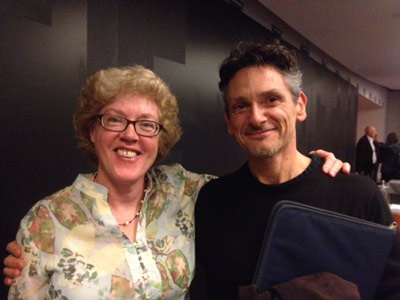
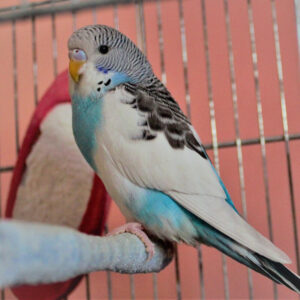
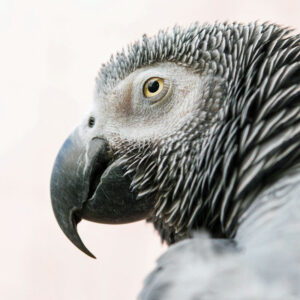
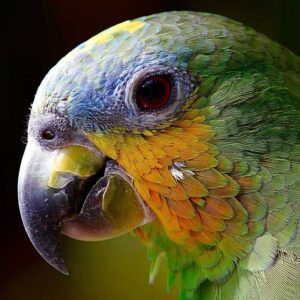
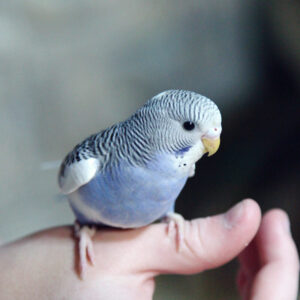
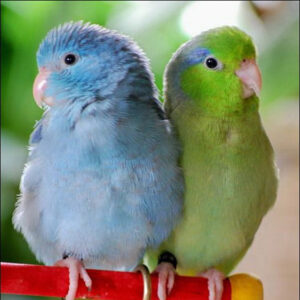
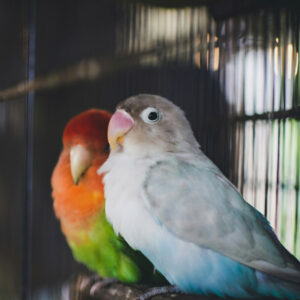
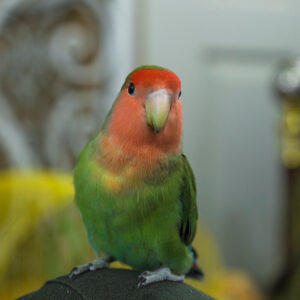
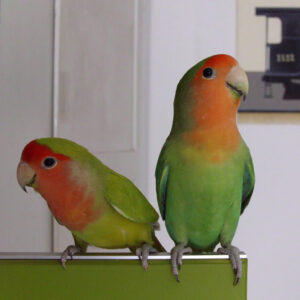
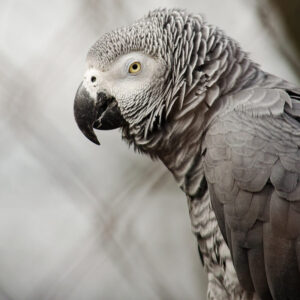



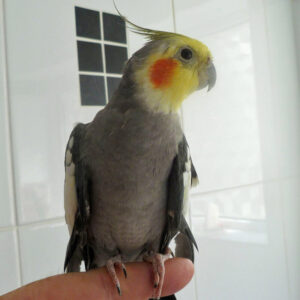
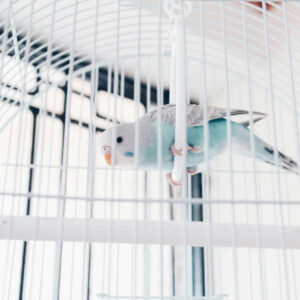
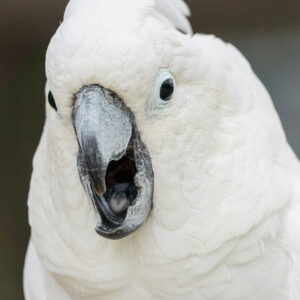
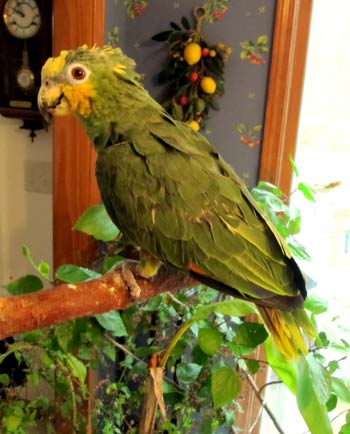
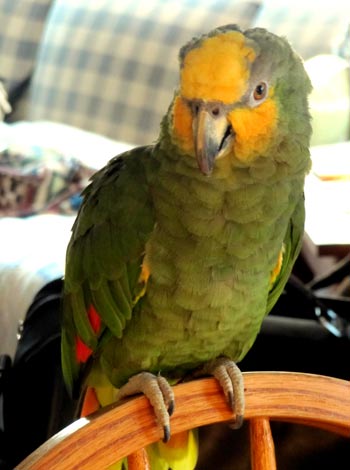
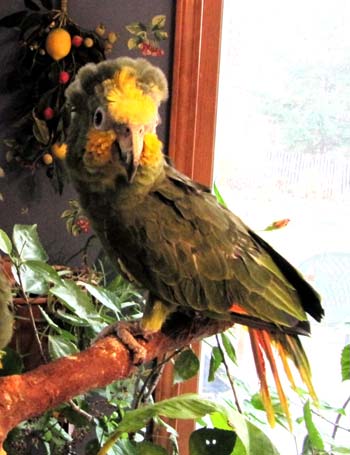

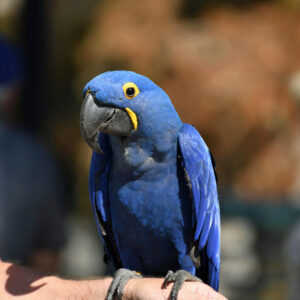
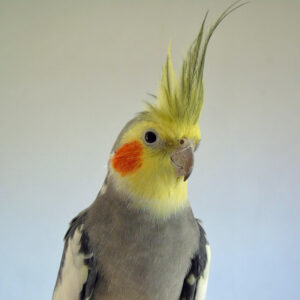
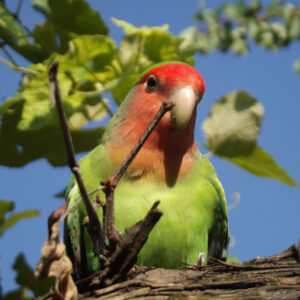
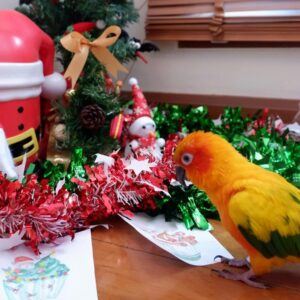
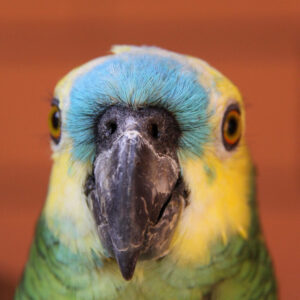
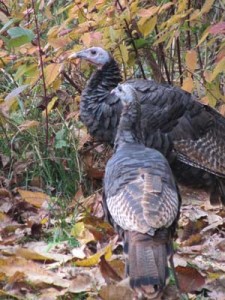
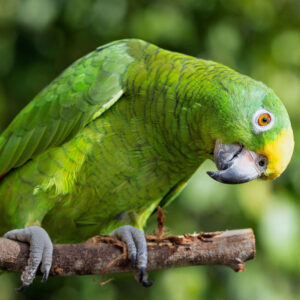
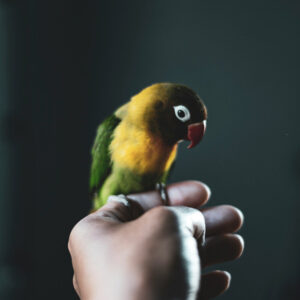

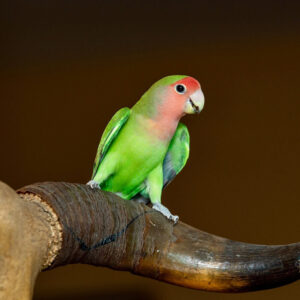
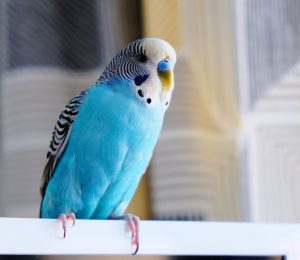
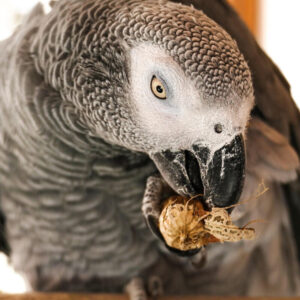
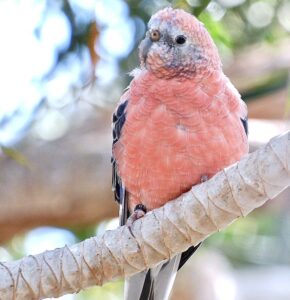
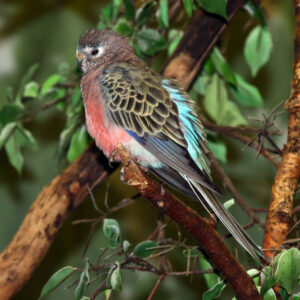
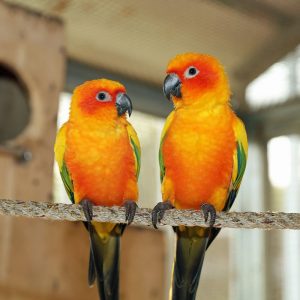
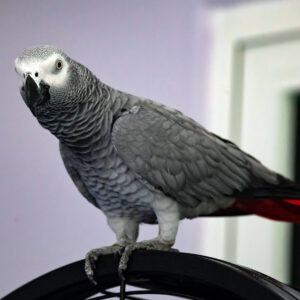
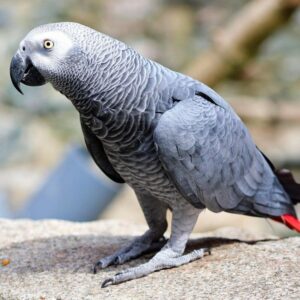
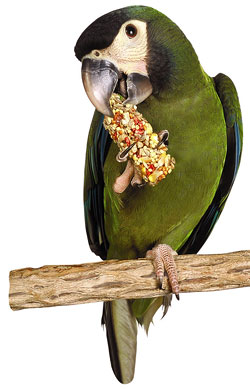
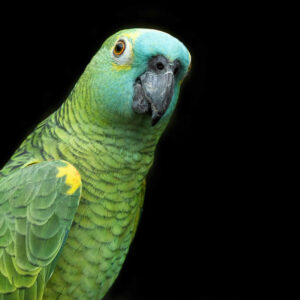
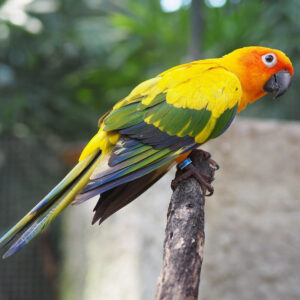
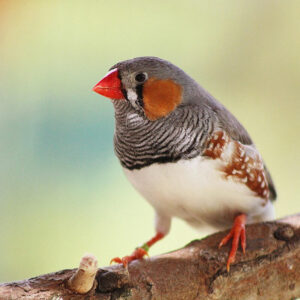
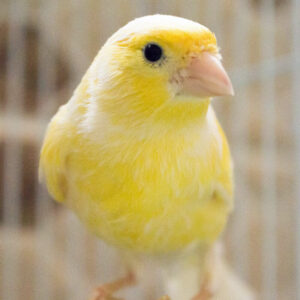
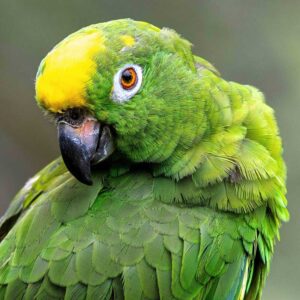
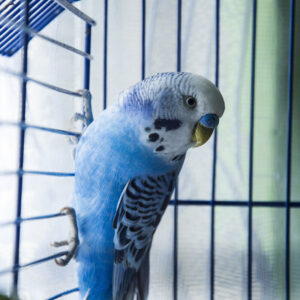
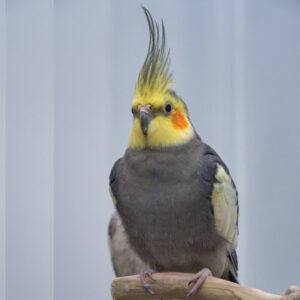
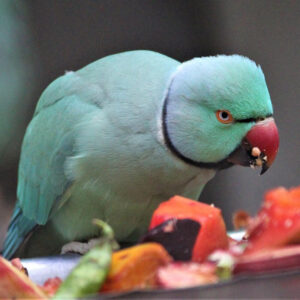
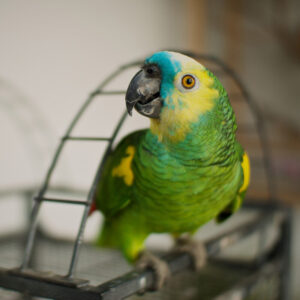
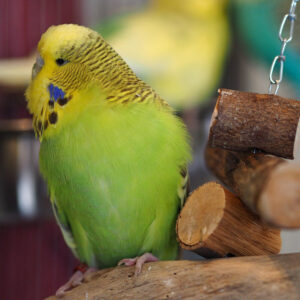
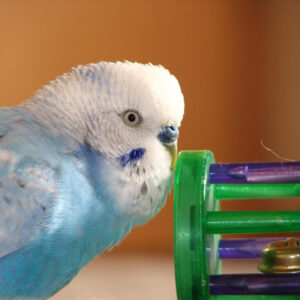
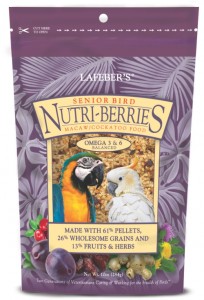
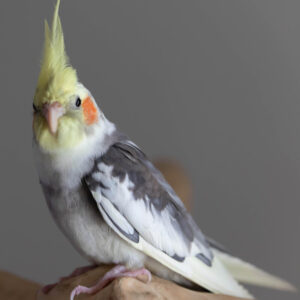
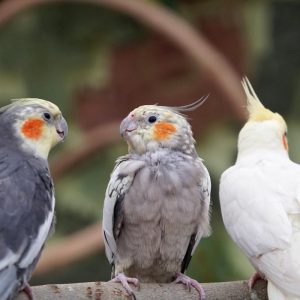
 I really can’t remember when I first met Liz — it was so long ago. Avian medicine was in its infancy, and we would attend meetings and hang onto every word. Those words would provide clues that might help us save birds’ lives. There were few pieces of information written, so we relied on the experiences of others to help us move forward in the field of avian medicine.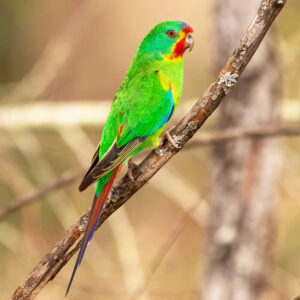
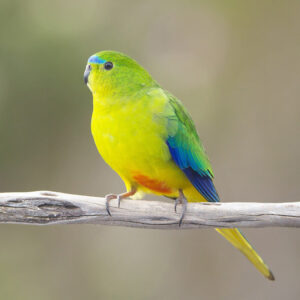
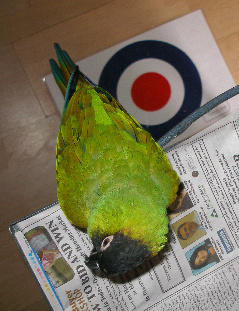
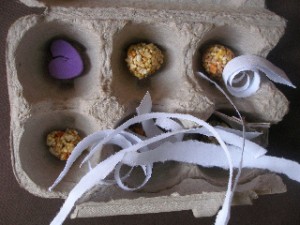

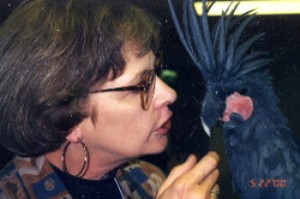 With prior training in elementary education and psychology, Liz began working with companion parrot behavior in 1989 and gained recognition internationally as a parrot behavior consultant thanks to her engaging lectures at avian veterinary and avicultural conferences, and at bird clubs both in the United States and Europe. She challenged bird owners to take a closer look at their own behavior as a catalyst for their birds’ behavior and offered a realistic glimpse at the benefits and challenges of sharing one’s life with a pet parrot. Liz wanted people to open their hearts and homes to a pet parrot for all the right reasons and didn’t shy away from talking someone out of getting a pet bird if it wasn’t in the bird’s best interest. In her articles, Liz often lovingly referred to her husband David Hearn, as well as her beloved 60-plus-year-old
 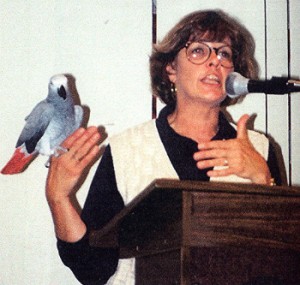 Liz’s passion to expand the avicultural community’s understanding of parrot behavior inspired her to establish the Association of Parrot Behavioral Professionals in 2001, which fostered collaboration among her colleagues, as well as created an invaluable source of information for bird owners. In 2005, she moved this organization into the International Association of Animal Behavior Consultants (IAABC) where it became its Parrot Division.
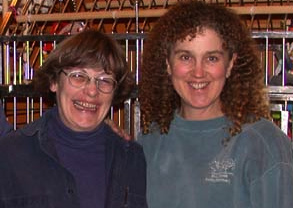 “Over the years I’ve met many people who had their views shaped by a simple truth spoken in raw honesty by Liz. Since she was dedicated to the life of the parrot, she was not patient with those who thought a situation was all about them, or that they did something right and the parrot did it wrong. That’s a good thing; parrots need this kind of advocate, someone who doesn’t dance around the edges of the hard issues. Parrots often pay the price for our stupidities, and Liz was bound and determined to help people get ahead of those, for the parrot’s sake. Liz, I really don’t know yet what we are going to do without you, as a friend and as a colleague. But I promise you, Phoenix Landing will always put the birds first, and we will do our best to promote education in your honor and good name. Love always to you and all the parrots now by your side.
— Ann Brooks, president & founder, Phoenix Landing Foundation (www.phoenixlanding.org)
“Over the years I’ve met many people who had their views shaped by a simple truth spoken in raw honesty by Liz. Since she was dedicated to the life of the parrot, she was not patient with those who thought a situation was all about them, or that they did something right and the parrot did it wrong. That’s a good thing; parrots need this kind of advocate, someone who doesn’t dance around the edges of the hard issues. Parrots often pay the price for our stupidities, and Liz was bound and determined to help people get ahead of those, for the parrot’s sake. Liz, I really don’t know yet what we are going to do without you, as a friend and as a colleague. But I promise you, Phoenix Landing will always put the birds first, and we will do our best to promote education in your honor and good name. Love always to you and all the parrots now by your side.
— Ann Brooks, president & founder, Phoenix Landing Foundation (www.phoenixlanding.org)