
This 4-page manuscript provides guidance on what to do when one finds a baby bird.
Normal Parrot Behavior
Pet bird behavior is complex, and it is crucial that bird owners have a realistic understanding of what to expect from their pets…
Mouse, Care of the Pet
Mice are good-natured, inquisitive creatures that make great, inexpensive, low-maintenance pets.
Medicating Your Bird
Keeping your pet healthy is everyone’s goal. However if your bird becomes ill, effective treatment will require that medications are given at the right dose and frequency for the…
Litter Training the House Rabbit
Rabbits naturally choose one or a few places (usually corners) to deposit their urine and most of their fecal balls. Therefore training a rabbit to urinate in a litter pan involves little more than…
Lead Poisoning in Birds
Lead poisonings in birds most commonly occurs from ingestion of substances containing lead. Lead can be found in many household items.
Download the PDF version of the Lead Poisoning in Birds client education handout.
Insulinoma in the Ferret
This client education handout provides a comprehensive overview of insulinoma, an abnormal growth of the pancreas that secretes excess amounts of insulin. Unfortunately, insulinoma is an extremely common disease of middle-aged to older ferrets in some nations, including the United States. Client education is crucial for owners of affected ferrets. Teach owners to recognize signs of hypoglycemia and to prevent hypoglycemic episodes from occurring. Owners must also recognize situations that can precipitate a hypoglycemic crisis and take measures to minimize stressors whenever possible. Additional preventive measures are also explored.
Download the “Insulinoma in the Ferret” Handout
A 2022 LafeberVet client education handout on insulinoma was updated, revised, and critically reviewed by members of the Association of Exotic Mammal Veterinarians (AEMV) in 2024: Marian Allison, Cathy Johnson-Delaney, Rae Porter-Blackwell, Nico Shoemaker, and Jeff Rhody. This AEMV handout is posted with permission.
Download the PDF version of this AEMV client handout, or modify the 2022 LafeberVet DOCX version for your veterinary hospital.
Household Dangers
There are a host of potential household dangers that may confront our winged companions.
Holiday Hazards
The companion parrot is part of the family! When including our feathered friends in the holiday season we must keep them safe. This client education handout explores potential holiday hazards for pet birds during the holiday season, from plants and cleaning agents to foods and stressors.
Download the Holiday Hazards PDF Handout. For additional information on holiday hazards geared towards pet bird owners, visit our sister site, Lafeber Pet Birds, for Top Ten Holiday Hazards for Pet Birds.
Hedgehogs
The African pygmy hedgehog, also known as the 4-toed or white-bellied hedgehog, originates from central Africa.
Care of the Pet Guinea Pig
Native to South America, the guinea pig is a lively, lovable rodent that requires relatively easy care. This client education handout reviews housing and diet recommendations as well as the basics of safe handling, enrichment, and grooming.
Download the PDF version to distribute to veterinary clients or modify the Word DOCX for your hospital’s needs.
Green Iguana, Care of the
The green or common iguana (Iguana iguana) is a tree-dwelling reptile native to the tropical and subtropical regions of central and South America and parts of Mexico. Unlike domestic pets that have lived with human beings for multiple generations, pet reptiles, (even those that are captive bred) are still essentially wild animals. Our goal for keeping iguanas in captivity should be to copy their natural environment and diet as closely as possible. Therefore this client education handout reviews the essentials of green iguana housing and nutrition.
Download the Word (23 KB) or PDF (144 KB) version of the Care of the Green Iguana handout.
Forgaging Behavior in Companion Parrots: Behavioral & Environmental Enrichment
In the wild, psittacine birds exhibit four main behaviors: social interaction, grooming, foraging, and sleep. The vast majority of their days are spent foraging or searching for food.
Food is readily available for pet birds. A feeding process that should take hours, may take only minutes in the caged bird. Left with little to fill their days, some birds turn to excessive preening which in turn may lead to feather destructive behavior. Foraging behavior provides pet birds with physical and mental stimulation.
Download the Foraging Behavior Handout PDF or a DOCX version that can be modified.
Care of the Pet Ferret
Ferrets are playful, friendly animals that can make excellent pets for the right person. This client education handout reviews basic care of the pet ferret. Topics covered include natural history, diet, housing, behavior and handling, grooming, as well as proper preventive care.

Download the PDF version of the Care of the Pet Ferret client education handout, or modify the DOCX version or DOC version for your veterinary hospital.
Feeding Your Pet Bird a Healthy Diet
This client education handout begins with a brief discussion of the diet of psittacine birds in their native habitat, before reviewing healthy foods for the pet bird.
Download the PDF version of this client education handout, or modify the DOCX version for your veterinary hospital.
Feather Destructive Behavior
This client education handout presents a brief (230 word) overview of feather destructive behavior, which represents a range of actions from excessive preening to feather plucking or feather picking to self-mutilation.
Download the PDF version of this client education handout, or modify the DOCX version for your veterinary hospital.
Corticosteroids
Dispense this client educational handout to owners of ferrets suffering from insulinoma or lymphoma and other patients on steroids.
Download the PDF version of this client education handout, or modify the DOCX version for your veterinary hospital.
Converting Your Bird to a Healthy Diet
Conversion to a healthy diet will improve the well-being of your pet bird. This client education handout first describes the evaluation by an avian veterinarian that your pet bird should undergo before beginning a dietary conversion. Several common techniques for converting the bird’s diet are then discussed.
 Download the PDF version of this client education handout, or modify the DOCX version for your veterinary hospital.
Chronic Egg Laying
This client education handout answers questions for the concerned pet bird owner: What is chronic egg laying? What species are most likely to suffer from chronic egg laying? Why are some birds more likely to be chronic egg layers, and what measures can be taken to minimize egg laying in the hen? What can your avian veterinarian do to help?

This information is useful for preventive health care or for the companion bird requiring veterinary care of reproductive disease.
Download the PDF version of this client education handout, or modify the DOCX version for your veterinary hospital.
Chinchillas
The long-tailed chinchilla (Chinchilla laniger) is native to the mountains and foothills of the Andes Mountains in South America. These rodents are known for their large ears and soft, luxurious fur. Chinchillas make charming pets, but they are naturally skittish and are not considered a good choice for small children because of their delicate bones and their hyperactive natures. Most pet chinchillas live 6-10 years
This client education handout reviews basic husbandry recommendations, including diet, housing, dust bathing, exercise, as well as handling and behavior.
Cats Indoors
Every year, cats kill hundreds of millions of birds in the United States alone. Download the American Bird Conservancy PDF brochure that advises clients on the best way to protect birds and cats.
Visit ABC’s website and download the PDF brochure.
Caging the Companion Parrot
The ideal bird cage should be spacious and clean, with multiple perches and stimulating toys. Specific cage requirements will vary with the species and the amount of time your…
Blue-Tongued Skink, Care of the
The blue-tongued skink is a stocky, cylindrical lizard with small legs and a large head, known for its deep, vivid blue tongue…

Download the Blue-Tongued Skink PDF Handout
Biting in Companion Birds
The parrot beak is not inherently a weapon. Instead it is a sensory organ used to touch and explore the world. Much of the exploration parrots do with their beak is not biting, however this exploration can get a little rough, or even…
Behavioral Modification Techniques in the Companion Parrot
There are a number of medical reasons for feather picking and a complete diagnostic evaluation of your bird’s health status is always recommended. The following techniques may be helpful, however, whether the underlying cause of the feather picking is behavioral or medical.
Download the Behavioral Modification Techniques in the Companion Parrot PDF Handout
Bearded Dragons, Care of the Australian
Bearded dragons are omnivores that accept a wide variety of foods. Variety is the key to good nutrition and foods offered should include…
Bats and Rabies
A public health guide on bats and rabies by Bat Conservation International.
Download the Bats and Rabies PDF Handout (link posted with permission).
Avian Reproductive Behavior
This client education handout reviews some basic principles of reproductive behavior in the companion bird. When is puberty seen in popular pet birds? How do breeding pairs behave in the wild, and what does broody behavior look like in in the pet bird? What environmental cues promote avian reproductive behavior and what can be done to minimize reproductive behaviors in the pet bird?
Download the PDF version of this client education handout, or modify the DOCX version for your veterinary hospital.
Avian Polyomavirus
Avian polyomavirus is one of the most important viral diseases seen in the companion parrot. Avian polyomavirus or APV can cause serious financial losses for aviaries and pet stores as well as considerable heartache for owners. Use this client handout to review susceptible species, clinical disease, and of course prevention.
Download the PDF version of this client education handout or modify the DOCX version for your veterinary hospital.
Avian Influenza
Use this client education handout to answer the following questions: What is bird flu? What are the signs of disease in birds? What are the signs of bird flu in humans? Why are some strains of bird flu cause for international concern?
Avian influenza or “bird flu” is a group of viral infections that occur naturally among birds. Some wild birds like waterfowl can carry influenza viruses in their intestines, but usually do not get sick from them. Infected birds shed flu virus in saliva, nasal secretions, and feces. Other birds may be easily infected when they come into direct contact with secretions from infected birds or when they are exposed to surfaces or materials contaminated with the virus such as dirt, cages, water, of food. Migratory birds are responsible for spreading bird flu virus among bird populations from country to country.
Download the PDF version of this public health client education handout, or modify the DOCX version for your veterinary hospital.
Avian Bornavirus Infection
This Association of Avian Veterinarians* client education handout discusses avian bornavirus, which was experimentally confirmed to be the cause of proventricular dilatation disease or PDD in 2008. Avian bornavirus (ABV) infection is one of the most frustrating diseases encountered in avian medicine today. Since its initial recognition in the United States, ABV has been reported worldwide and infection poses a significant threat to the captive breeding of endangered psittacine (parrot) species. At least eight different psittacine bornaviruses have been identified in captive parrot populations worldwide, and researchers around the world are working on learning more about ABV infection.
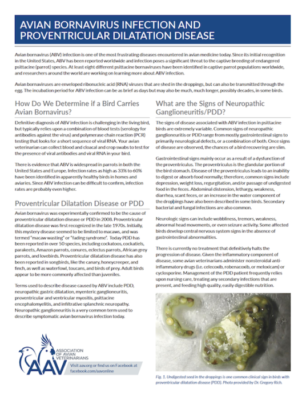
Download Avian Bornavirus Infection PDF Handout
*A 2014 LafeberVet client education handout was updated, revised, and critically reviewed by the Association of Avian Veterinarians (AAV) in January 2020. This AAV handout is posted with permission.
Aspergillosis
Aspergillosis can develop in any bird, but companion birds most frequently diagnosed with aspergillosis include…
Are You the Right Pet For Me? House Rabbits
What you need to know before adopting a house rabbit.
Are Rabbits Right For Me?
This handy guide details the key facts you need to consider before committing yourself to a pet rabbit.
Visit the Make Mine Chocolate website and download the Are Rabbits Right For Me? PDF handout. (Link posted with permission).
Adrenal Disease in the Ferret
Adrenocortical disease is a common endocrine disorder in middle-aged to older ferrets. This client education handout answers several questions for the ferret owner: What is the adrenal gland? What causes adrenocortical disease? What are the clinical signs of adrenal disease? How can adrenal disease be diagnosed and treated? And finally, why should I treat adrenal disease and what can be done to prevent this medical condition?
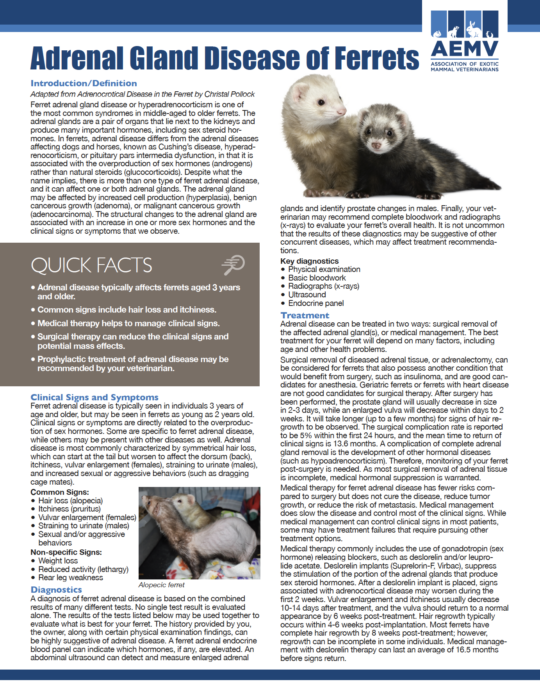
Download the “Adrenal Gland Disease of Ferrets” Handout
A 2022 LafeberVet client education handout on adrenocortical disease was updated, revised, and critically reviewed by members of the Association of Exotic Mammal Veterinarians (AEMV) in 2024: Marian Allison, Cathy Johnson-Delaney, Rae Porter-Blackwell, Nico Shoemaker, and Jeff Rhody. This AEMV handout is posted with permission.
Download the PDF version of this AEMV client handout, or modify the 2022 DOCX version for your veterinary hospital.
Tim Tristan, DVM, DABVP (Reptile & Amphibian Practice)

Dr. Tim Tristan is a Diplomate of the American Board of Veterinary Practitioners in Reptile and Amphibian Practice. Dr. Tristan is the Director and Veterinarian of Texas Sealife Center in Corpus Christi, Texas. Dr. Tristan also volunteers for The ARK, or Animal Rehabilitation Keep, part of the Marine Science Institute at The University of Texas in Port Aransas, Texas.
LoraKim Joyner, DVM, MPVM, M.Div
 Rev. Dr. LoraKim Joyner is a wildlife veterinarian, Unitarian Universalist minister, and Certified Trainer in Nonviolent Communication with over 37 years as a conservationist and wildlife veterinarian in the Americas. As Co-Director of One Earth Conservation, LoraKim leads team members in supporting others through One Earth’s international Nurture Nature Program that seeks to empower the people saving the planet. She directs projects in Latin America to stand in solidarity and witness to the plight of the parrots and people there, and do what she can. One Earth’s projects have extended to Guatemala, Honduras, Nicaragua, Paraguay, Guyana, Brazil, Belize, French Guiana, Suriname, and El Salvador. She has written three books: “Conservation in Time of War,” “Nurturing Discussions and Practices”, and “Prion.”
Susan Orosz, PhD, DVM, DABVP (Avian Practice), DECZM

Dr. Susan Orosz is Director of the Bird and Exotic Pet Wellness Center in Toledo, Ohio. Dr. Orosz earned a Ph.D in neuroanatomy from The University of Cincinnati College of Medicine in 1980 and her DVM from The Ohio State University in 1984. During her senior year, Susan performed an anatomic study on the bones of the California condor, which was turned into the award-winning text, Avian Surgical Anatomy: Thoracic and Pelvic Limbs. After graduation, Dr. Orosz worked at an exotics practice in San Diego before joining the University of Tennessee College of Veterinary Medicine, where she served as Section Chief for the Avian, Exotic Animal and Wildlife Medicine Service for 14 years. Susan lectures both nationally and internationally on avian and exotic animal medicine topics and she has authored a number of books and publications. She is also a Past President of the Association of Avian Veterinarians and she was the Scientific Editor for the Journal of Avian Medicine and Surgery for several years. She was named the 2007 T.J. Lafeber Avian Practitioner of the Year. Dr. Orosz is also board-certified in avian practice through both the American Board of Veterinary Practitioners and the European College of Zoological Medicine. Dr. Orosz is also a veterinary consultant for Lafeber Company.
Exotic ICU: Nursing Care for Reptiles
Due to their unique anatomy, physiology, and behavior, critically ill reptiles pose special challenges. Fortunately there are a host of tips and tricks that can increase clinical success in an intensive care setting... This Exotic ICU article is part of a series exploring nursing care of special species . . .
To continue you need to be a LafeberVet.com member. (Français), (Español)
Pour continuer, vous devez être un membre LafeberVet.com
Pour les vétérinaires. Par les vétérinaires.
Le site Lafervet.com est conçu pour une utilisation par les vétérinaires. Il est ouvert aux vétérinaires diplômés, aux techniciens vétérinaires diplômés, aux animaliers et aux étudiants dans ces domaines.
Créer un compte pour accéder à des articles et des ressources du site.
L'inscription est gratuite.
Para continuar, debe ser miembro de LafeberVet.com
Para Profesionales Veterinarios. Por Profesionales Veterinarios.
El sitio Lafervet.com es para uso de los profesionales veterinarios. Está abierto a los veterinarios licenciados, técnicos veterinarios licenciados, rehabilitadores licenciados y estudiantes en estos campos.
Cree una cuenta para acceder a los artículos y recursos del sitio.
La registro es gratis.
Already a LafeberVet Member?
Please Login
Online Resources: Herptile Medicine
| Website | Internet Address |
|---|---|
| American Society of Ichthyologists and Herpetologists | http://www.asih.org |
| Amphibian and Reptile Conservation | http://www.arc-trust.org |
| Amphibian Disease Laboratory, San Diego Zoo Global website | http://www.sandiegozooglobal.org/News/Amphibian_Disease_Laboratory |
| Amphibian Medicine Video Tutorials | https://www.youtube.com/channel/UCaOhxmTP7asO5zyZQwYzh-A/about |
| Amphibian Rescue & Conservation Project | http://amphibianrescue.org |
| Association of Reptilian and Amphibian Veterinarians | http://www.arav.org |
| Bearded Dragon.org: Sexing Your Bearded Dragon | http://www.beardeddragon.org/articles/sexing/ |
| Behler Chelonian Center | http://turtleconservancy.org |
| Center for North American Herpetology | http://www.cnah.org/ |
| The Center for Snake Conservation | http://www.snakeconservation.org |
| HerpDigest | http://www.herpdigest.org |
| National Wildlife Health Center, Snake fungal disease, USGS website | http://www.nwhc.usgs.gov/disease_information/other_diseases/snake_fungal_disease.jsp |
| Save the Frogs | http://www.savethefrogs.com |
| Society for the Study of Amphibians and Reptiles | http://www.ssarherps.org |
| Turtle Survival Alliance | http://www.turtlesurvival.org |
| World Chelonian Trust | http://www.chelonia.org |
| Worms & Germs Blog | http://www.wormsandgermsblog.com/ |
Presenting problem: Aural Abscess in Turtles
The turtle ear is a simple structure that sits caudoventral to the eye covered by a large scale called the tympanic scute. As in many reptiles, the external ear is absent in chelonians. The tympanic membrane sits flush against the skin just underneath the tympanic scute. There is one ossicle, the columella, which crosses the large tympanic cavity to insert medially on the oval window of the cochlea. A narrow Eustachian tube connects the middle ear to the oropharynx.
Aural abscesses are well-encapsulated, caseous plugs that slowly develop until it fills the tympanic cavity. The cause of aural abscessation . . .
To continue you need to be a LafeberVet.com member. (Français), (Español)
Pour continuer, vous devez être un membre LafeberVet.com
Pour les vétérinaires. Par les vétérinaires.
Le site Lafervet.com est conçu pour une utilisation par les vétérinaires. Il est ouvert aux vétérinaires diplômés, aux techniciens vétérinaires diplômés, aux animaliers et aux étudiants dans ces domaines.
Créer un compte pour accéder à des articles et des ressources du site.
L'inscription est gratuite.
Para continuar, debe ser miembro de LafeberVet.com
Para Profesionales Veterinarios. Por Profesionales Veterinarios.
El sitio Lafervet.com es para uso de los profesionales veterinarios. Está abierto a los veterinarios licenciados, técnicos veterinarios licenciados, rehabilitadores licenciados y estudiantes en estos campos.
Cree una cuenta para acceder a los artículos y recursos del sitio.
La registro es gratis.
Already a LafeberVet Member?
Please Login
Nutritional Strategy: Nectarivory in Birds 10 Facts You Should Know
Although nectar is considered a nutritional reward for pollination, it is probably the most nutrient-dilute food consumed by birds. Nectar meets less than 15% of essential amino acid requirements and is particularly low in methionine. In fact nutrients other than sugars, such as protein, vitamins, trace minerals, and lipids are present in nectar at levels considered inadequate for growth, reproduction, or even maintenance activity . . .
To continue you need to be a LafeberVet.com member. (Français), (Español)
Pour continuer, vous devez être un membre LafeberVet.com
Pour les vétérinaires. Par les vétérinaires.
Le site Lafervet.com est conçu pour une utilisation par les vétérinaires. Il est ouvert aux vétérinaires diplômés, aux techniciens vétérinaires diplômés, aux animaliers et aux étudiants dans ces domaines.
Créer un compte pour accéder à des articles et des ressources du site.
L'inscription est gratuite.
Para continuar, debe ser miembro de LafeberVet.com
Para Profesionales Veterinarios. Por Profesionales Veterinarios.
El sitio Lafervet.com es para uso de los profesionales veterinarios. Está abierto a los veterinarios licenciados, técnicos veterinarios licenciados, rehabilitadores licenciados y estudiantes en estos campos.
Cree una cuenta para acceder a los artículos y recursos del sitio.
La registro es gratis.
Already a LafeberVet Member?
Please Login
Fast Facts on Family Corvidae
Just in time for Halloween, get fun facts on the much maligned, much misunderstood, but always interesting family Corvidae . . .
To continue you need to be a LafeberVet.com member. (Français), (Español)
Pour continuer, vous devez être un membre LafeberVet.com
Pour les vétérinaires. Par les vétérinaires.
Le site Lafervet.com est conçu pour une utilisation par les vétérinaires. Il est ouvert aux vétérinaires diplômés, aux techniciens vétérinaires diplômés, aux animaliers et aux étudiants dans ces domaines.
Créer un compte pour accéder à des articles et des ressources du site.
L'inscription est gratuite.
Para continuar, debe ser miembro de LafeberVet.com
Para Profesionales Veterinarios. Por Profesionales Veterinarios.
El sitio Lafervet.com es para uso de los profesionales veterinarios. Está abierto a los veterinarios licenciados, técnicos veterinarios licenciados, rehabilitadores licenciados y estudiantes en estos campos.
Cree una cuenta para acceder a los artículos y recursos del sitio.
La registro es gratis.
Already a LafeberVet Member?
Please Login
The Snapping Turtle – Tips for the Practitioner
At the Ontario Turtle Conservation Centre, previously the Kawartha Turtle Trauma Centre, we encourage private practices, emergency clinics, and rehabilitation centers to aid in the initial treatment of these injured turtles. We admit turtles from across the province, and it is extremely beneficial to the turtle to get immediate care locally before transfer. Snapping turtles are incredible in their ability to heal (albeit slowly!) and we cannot stress enough that the injuries can appear horrific, and yet can go on to heal, with subsequent release of the turtle back into the wild . . .
To continue you need to be a LafeberVet.com member. (Français), (Español)
Pour continuer, vous devez être un membre LafeberVet.com
Pour les vétérinaires. Par les vétérinaires.
Le site Lafervet.com est conçu pour une utilisation par les vétérinaires. Il est ouvert aux vétérinaires diplômés, aux techniciens vétérinaires diplômés, aux animaliers et aux étudiants dans ces domaines.
Créer un compte pour accéder à des articles et des ressources du site.
L'inscription est gratuite.
Para continuar, debe ser miembro de LafeberVet.com
Para Profesionales Veterinarios. Por Profesionales Veterinarios.
El sitio Lafervet.com es para uso de los profesionales veterinarios. Está abierto a los veterinarios licenciados, técnicos veterinarios licenciados, rehabilitadores licenciados y estudiantes en estos campos.
Cree una cuenta para acceder a los artículos y recursos del sitio.
La registro es gratis.
Already a LafeberVet Member?
Please Login
The Wild Side of Dental Care
Veterinarians that provide care in zoological parks or private wildlife collections frequently encounter unique dental challenges. LafeberVet's 2014 Dental Health Month article describes the wild side of dental care, exploring dental anatomy and dental disease in a variety of mammals, from hippos and hyenas to bats and babirusas . . .
To continue you need to be a LafeberVet.com member. (Français), (Español)
Pour continuer, vous devez être un membre LafeberVet.com
Pour les vétérinaires. Par les vétérinaires.
Le site Lafervet.com est conçu pour une utilisation par les vétérinaires. Il est ouvert aux vétérinaires diplômés, aux techniciens vétérinaires diplômés, aux animaliers et aux étudiants dans ces domaines.
Créer un compte pour accéder à des articles et des ressources du site.
L'inscription est gratuite.
Para continuar, debe ser miembro de LafeberVet.com
Para Profesionales Veterinarios. Por Profesionales Veterinarios.
El sitio Lafervet.com es para uso de los profesionales veterinarios. Está abierto a los veterinarios licenciados, técnicos veterinarios licenciados, rehabilitadores licenciados y estudiantes en estos campos.
Cree una cuenta para acceder a los artículos y recursos del sitio.
La registro es gratis.
Already a LafeberVet Member?
Please Login
Flamingo Fast Facts
Introduction
Flamingos belong to order Phoenicopteriformes and family Phoenicopteridae. There are six different kinds of flamingos: greater (Phoenicopterus roseus), lesser (P. minor), Caribbean (P. ruber), Chilean (P. chilensis), Andean (P. andinus), and James’s flamingos (P. jamesi). The greater or American flamingo has the widest distribution (Fig 1), however the Chilean flamingo is the most numerous and widespread of the South American species. Flamingos live in large colonies and are adapted for survival in extreme habitats.

Figure 1. Free-ranging American flamingos (Phoenicopterus ruber). Photo credit: Adam Baker via Flickr Creative Commons. Click image to enlarge.
Explore LafeberVet’s collection of fascinating flamingo facts below:
Flamingos in history
Egyptians used flamingo as a hieroglyphic symbol to indicate the color red. The flamingo was also considered the embodiment of the sun-god Ra.
The Romans believed the flamingo tongue to be an exquisite delicacy.
Filter feeders
Flamingos primarily feed on small invertebrates using a “reverse design” bill. The upper bill or rhinotheca acts as a ‘lid’ to a large, trough-like lower bill or gnathotheca (Fig 2). A nasofrontal hinge articulates with the mandible to increases gape.

Figure 2. The large, trough-like, lower bill of the flamingo is used to scoop. Photo credit: Robert Claypool via Flickr Creative Commons. Click image to enlarge.
The flamingo uses its unique bill to perform a characteristic foraging behavior. The bill is held upside-down under water, making it easier to scoop organic matter (Fig 3). A system of horny plates along the sides of both the upper and lower bill then screen food particles from the water much like the baleen of the whale. The large, fleshy tongue acts like a piston, forcing mud and water past this filtering device and trapping food items within the internal horn lamellae of the bill (Wyss 2014).

Figure 3. While foraging, the flamingo bill is held upside-down under water to scoop organic matter. Photo credit: Mike Fisher via Wikimedia Commons. Click image to enlarge.
Color & carotenoids
Juvenile flamingos are gray-brown, and the characteristic pink color of adult flamingo plumage is not achieved until 4 to 6 years of age. This pink color comes from carotenoid pigments, such as canthaxanthin, astaxanthin, and phoenicoxanthin, which are acquired through feeding on algae, fungi, and bacteria (Wyss 2014). Carotenoid pigments are also excreted by the flamingo’s uropygial gland and applied during preening (Amat 2011).
Canthoxanthins, a type of carotenoid pigment, are also present in the secretions of the esophageal mucus glands present in the greater flamingo. This red, nutritive fluid is regurgitated and fed to the young by both parent birds (King 1984).
There are commercially available diets that include canthaxanthin. Floating pellets, are often preferred as they that promote normal foraging behavior. Duckweed can also be offered as a supplement, since it contains a variety of natural carotenoids (Fig 4).

Figure 4. Flamingo in duckweed-infested lagoon. Photo credit: Evelyn Simak via Wikimedia Commons from geograph.org.uk. Click image to enlarge.
Clinical problems
Bumblefoot or pododermatitis is very common in captive flamingos (Fig 5). Lesions frequently include hyperkeratosis, papillomatous growths, and/or fissures and a novel Dermatophilus-like bacterium, Arsenicicoccus dermatophilus, has been found to invade the cornified epidermis of juvenile flamingos (Wyss 2014, Gobeli 2013). The incidence of foot lesions increases in birds housed in cold climates (<15°C or 59°F) and/or hard substrate like concrete, vinyl, rubber lining, or even grass. Pododermatitis is much less common in birds housed in enclosures with ponds lined by natural substrates such as fine sand (Nielson 2012).

Figure 5. Pododermatitis is a common problem in the captive flamingo. Photo credit: Dr. Christal Pollock. Click image to enlarge.
Flamingos are also prone to capture myopathy. Affected birds often die secondary to massive myoglobinuric tubulonephrosis and renal failure. Since treatment is difficult, prevention is key. Plan all capture and restraint procedures in advance to prevent the birds from running. While restraining individual birds, do not fold the legs under the body (Wyss 2014, Paterson 2007).
There is also a case report of bill impaction in a group of captive Caribbean flamingos. The flamingo bill is adapted for suction, filtration, and ejection of fluid medium, and flamingos ingest larger food items only rarely. The birds in this case report were house in a mixed aviary with access to minced meat. Bill impaction may be visible from a distance because backward displacement of the tongue can give the throat region a thickened appearance (Wyss 2014, Hammer 2007).
Other conditions reported in captive birds include traumatic fractures or luxations, soft tissue injury, limb deformities, poxvirus, aspergillosis, and atherosclerosis. West Nile virus has also been isolated from a dead Chilean flamingo (Wyss 2014, Steele 2000).
Life stages
Most flamingos begin mating at approximately 6 years of age although successful breeding does not occur until 7 to 8 years. Flamingo flocks synchronize time of nesting so young birds can grow up together to form large groups. Only one egg is laid, and both male and female birds take turns incubating the egg for 28 to 30 days (Fig 6). These precocial chicks possess pink or red legs and the bills turn black within the first week of life. Chicks fledge at 2 to 3 months of age (Wyss 2014).

Figure 6. Both parent birds take turns incubating the flamingo egg. Photo credit: Jason Kaechler via Flickr Creative Commons. Click image to enlarge.
In captivity, flamingos are fairly long-lived birds. The reported lifespan of the Chilean flamingo is approximately 25 to 60 years.
In captivity, flamingos are fairly long-lived birds. The reported lifespan of the Chilean flamingo ranges from 25 to 60 years.
References
Behavior Essentials: The European Rabbit
Domesticated since the early 16th century, the companion rabbit retains many of the behavioral characteristics of its wild ancestor. A video recording summary of key points, or the more detailed article, explores some of these shared characteristics as well as rabbit behavior that influences clinical practice and animal welfare. This content is part of a RACE-approved teaching module on rabbit basics . . .
To continue you need to be a LafeberVet.com member. (Français), (Español)
Pour continuer, vous devez être un membre LafeberVet.com
Pour les vétérinaires. Par les vétérinaires.
Le site Lafervet.com est conçu pour une utilisation par les vétérinaires. Il est ouvert aux vétérinaires diplômés, aux techniciens vétérinaires diplômés, aux animaliers et aux étudiants dans ces domaines.
Créer un compte pour accéder à des articles et des ressources du site.
L'inscription est gratuite.
Para continuar, debe ser miembro de LafeberVet.com
Para Profesionales Veterinarios. Por Profesionales Veterinarios.
El sitio Lafervet.com es para uso de los profesionales veterinarios. Está abierto a los veterinarios licenciados, técnicos veterinarios licenciados, rehabilitadores licenciados y estudiantes en estos campos.
Cree una cuenta para acceder a los artículos y recursos del sitio.
La registro es gratis.
Already a LafeberVet Member?
Please Login
2014 T.J. Lafeber Avian Practitioner of the Year
The T.J. Lafeber Avian Practitioner of the Year is nominated by their peers and selected by an independent Committee of AAV members . . .
To continue you need to be a LafeberVet.com member. (Français), (Español)
Pour continuer, vous devez être un membre LafeberVet.com
Pour les vétérinaires. Par les vétérinaires.
Le site Lafervet.com est conçu pour une utilisation par les vétérinaires. Il est ouvert aux vétérinaires diplômés, aux techniciens vétérinaires diplômés, aux animaliers et aux étudiants dans ces domaines.
Créer un compte pour accéder à des articles et des ressources du site.
L'inscription est gratuite.
Para continuar, debe ser miembro de LafeberVet.com
Para Profesionales Veterinarios. Por Profesionales Veterinarios.
El sitio Lafervet.com es para uso de los profesionales veterinarios. Está abierto a los veterinarios licenciados, técnicos veterinarios licenciados, rehabilitadores licenciados y estudiantes en estos campos.
Cree una cuenta para acceder a los artículos y recursos del sitio.
La registro es gratis.
Already a LafeberVet Member?
Please Login
Basic Husbandry: Hospitalizing the Sea Turtle
Debilitated sea turtles are often too weak to be housed in water upon presentation to a veterinary medicine or wildlife rehabilitation setting. Instead these patients are maintained on a padded surface or waterbed. Once the turtle is stronger, it should ideally be transferred to a rehabilitation tank. LOGIN to view references . . .
To continue you need to be a LafeberVet.com member. (Français), (Español)
Pour continuer, vous devez être un membre LafeberVet.com
Pour les vétérinaires. Par les vétérinaires.
Le site Lafervet.com est conçu pour une utilisation par les vétérinaires. Il est ouvert aux vétérinaires diplômés, aux techniciens vétérinaires diplômés, aux animaliers et aux étudiants dans ces domaines.
Créer un compte pour accéder à des articles et des ressources du site.
L'inscription est gratuite.
Para continuar, debe ser miembro de LafeberVet.com
Para Profesionales Veterinarios. Por Profesionales Veterinarios.
El sitio Lafervet.com es para uso de los profesionales veterinarios. Está abierto a los veterinarios licenciados, técnicos veterinarios licenciados, rehabilitadores licenciados y estudiantes en estos campos.
Cree una cuenta para acceder a los artículos y recursos del sitio.
La registro es gratis.
Already a LafeberVet Member?
Please Login
Michelle Hawkins, VMD, DABVP (Avian Practice)
 Michelle Hawkins is a Professor of Medicine and Epidemiology at the School of Veterinary Medicine, University of California (UC) Davis, an Associate Director of the UC Davis One Health Institute Leadership Team, and the Director of the California Raptor Center. Dr. Hawkins is board certified in avian practice, and her research interests include anesthesia, analgesia, and critical patient care of all exotic animals.
In 2023, Dr. Hawkins was named the T.J. Lafeber Avian Practitioner of the Year.
Rebecca Duerr, DVM, MPVM, PhD
 Rebecca Duerr is the Senior Director of Research and Veterinary Science for the International Bird Rescue in California. She earned her DVM from the University of California at Davis (UCD). She then completed a Master’s in Preventive Veterinary Medicine at UCD on “The usefulness of initial physical examination findings and simple diagnostics in predicting survival of oiled seabirds through the rehabilitation process“. Dr. Duerr also completed a PhD at UCD on the critical care nutrition of marine birds with Dr. Kirk Klasing and the Oiled Wildlife Care Network . She also has a long-standing interest in avian pediatrics, and has worked with several California wildlife rehabilitation organizations. Rebecca co-edited Hand-Rearing Birds, and she penned the avian section of the Hand Rearing Orphaned Native Birds and Mammals chapter in the 10th edition of the Merck Veterinary Manual. Dr. Duerr also contributed chapters on seabird medicine and orphan care in Medical Management of Wildlife Species: A Guide for Practitioners.
In addition to her LafeberVet contributions, read The “Mystery Goo” Bird Event on EmeraidVet.
Stephen Divers, BVetMed, DZooMed, DECZM (Herp, ZHM), DACZM, FRCVS
 Stephen Divers is a tenured professor in Zoological Medicine at the University of Georgia. Dr. Divers is board-certified in zoological medicine through the American and European College of Zoological Medicine, and a Fellow of the Royal College of Veterinary Surgeons. His research interests include minimally invasive endoscopy and endosurgery, and he coordinates an annual Exotic Animal Endoscopy training course. Dr. Divers is also an associate editor for the Journal of Zoo and Wildlife Medicine, and senior editor of Maders Reptile and Amphibian Medicine and Surgery textbook.
Dr. Divers has contributed a variety of images for use by LafeberVet.
Sue Carstairs, DVM
 Dr. Sue Carstairs is the Executive and Medical Director of the Ontario Turtle Conservation Centre (OTCC) (formerly the Kawartha Turtle Trauma Center) in Peterborough, Ontario. Dr. Carstairs received her Bachelor of Science from the University of Guelph, and her Doctor of Veterinary Medicine from the Ontario Veterinary College. She is an authorized wildlife custodian with over 20 years of experience in wildlife medicine, and she joined the OTCC team in 2009. Sue is also a Professor at Seneca College where she teaches Exotics and Wildlife, and also runs a summer Wildlife Medicine and Field Studies course, for veterinary technicians and veterinarians. Previously, Sue served as a wildlife veterinarian at Earth Rangers Wildlife Hospital and Toronto Wildlife Centre.
Recommended References for Herptile Practice
General resources
Association of Reptile and Amphibian Veterinarians, Proceedings of the Annual Conference
Carpenter JW, Marion CJ. Exotic Animal Formulary, 4th ed. St. Louis, MO: Elsevier Saunders, 2012
Girling S, Raiti P. BSAVA Manual of Reptiles. Quedgeley [England]: British Small Animal Veterinary Association; 2004
Mader DR. Reptile Medicine and Surgery, 2nd ed. St. Louis: Saunders Elsevier; 2005
Mayer J, Donnelly TM (eds). Clinical Veterinary Advisor: Birds and Exotic Pets. St. Louis, MO: Elsevier Saunders: Publisher; 2013
Mitchell MA, Tully TN (eds). Manual of Exotic Pet Practice. St. Louis: Saunders; 2009
Wright KM, Whitaker BR. Amphibian Medicine and Captive Husbandry. Malabar, FL: Krieger Publishing; 2001
Clinical pathology
Fudge AM (ed). Laboratory Medicine: Avian and Exotic Pets. Philadelphia, PA:WB Saunders, 2000
Radiographic atlas
Krautwald-Junghanns, Pees M, Reese S, Tully T. Diagnostic Imaging of Exotic Pets: Birds, Small Mammals, Reptiles. Hannover:Schlütersche Verlagsegllschaft & Co.; 2011
Rubel GA, Isenbugel E, Wovekamp P. Atlas of Diagnostic Radiology of Exotic Pets. Philadelphia, PA: WB Saunders; 1991
Supplemental resources
Bays TB, Lightfoot TL, Mayer J. Exotic Pet Behavior: Birds, Reptiles, and Small Mammals. WB Saunders, St. Louis, 2006
Jacobson E. Infectious Diseases and Pathology of Reptiles: Color Atlas and Text. Boca Raton, FL: CRC Press; 2007
Jacobson ER (ed). Biology, Husbandry and Medicine of the Green Iguana. Malabar, FL: Krieger Publishing; 2003
McArthur S, Wilkinson R, Meyer J. Medicine and Surgery of Tortoises and Turtles. Oxford [England]: Blackwell; 2004
Wyneken J. Reptile Anatomy. Malabar, FL: Krieger Publishing; 2005
Wyneken J, Godfrey MH, Bels V (eds). Biology of Turtles: From Structures to Strategies of Life. Boca Raton, FL: CRC Press; 2008.
Journals
Journal of Exotic Pet Medicine
Journal of Herpetological Medicine
Veterinary Clinics of North America: Exotic Animal Practice
Reptile and Amphibian Equipment List
Are you prepared to see herptiles in your clinical practice? This equipment list, created by a veterinarian board-certified in reptiles and amphibians, provides recommendations for basic equipment needs as well as tools for advanced reptile care including amphibians and even crocodilians . . .
To continue you need to be a LafeberVet.com member. (Français), (Español)
Pour continuer, vous devez être un membre LafeberVet.com
Pour les vétérinaires. Par les vétérinaires.
Le site Lafervet.com est conçu pour une utilisation par les vétérinaires. Il est ouvert aux vétérinaires diplômés, aux techniciens vétérinaires diplômés, aux animaliers et aux étudiants dans ces domaines.
Créer un compte pour accéder à des articles et des ressources du site.
L'inscription est gratuite.
Para continuar, debe ser miembro de LafeberVet.com
Para Profesionales Veterinarios. Por Profesionales Veterinarios.
El sitio Lafervet.com es para uso de los profesionales veterinarios. Está abierto a los veterinarios licenciados, técnicos veterinarios licenciados, rehabilitadores licenciados y estudiantes en estos campos.
Cree una cuenta para acceder a los artículos y recursos del sitio.
La registro es gratis.
Already a LafeberVet Member?
Please Login
Christal Pollock, DVM, DABVP (Avian Practice)
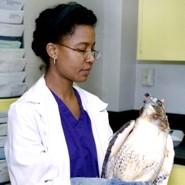 Dr. Christal Pollock is a Veterinary Consultant for Lafeber Company. Dr. Pollock completed an internship in small animal medicine in private practice and a residency at the University of Tennessee College of Veterinary Medicine in avian and zoological medicine. She then served as a Clinical Instructor in the Zoological Medicine Service at Kansas State University College of Veterinary Medicine. Christal is board-certified in Avian Practice through the American Board of Veterinary Practitioners (ABVP). She serves on an ABVP committee and she also served as Chair for the Association of Avian Veterinarians Membership Committee for 7 years as well as an Associate Editor for the Journal of Avian Medicine and Surgery for 15 years. She has written and presented extensively on exotic animal medicine topics. Christal currently works as editor and lead writer for LafeberVet. She wears many other “hats” for Lafeber Company, including product development projects and co-management of the Lafeber Company Veterinary Student Program.
Robert Dahlhausen, DVM

Dr. Robert Dahlhausen received his doctorate from The Ohio State University in 1983. Dr. Dahlhausen has practiced avian and exotic animal medicine for over 30 years, opening the Avian and Exotic Animal Medical Center in Cincinnati, Ohio in 1992. Bob lectures locally and nationally, and he has also served as a veterinary consultant for the US Department of Agriculture and the Animal and Plant Health Inspection Service since 1990. He is the founder of Research Associates Laboratory, Inc., now known as Veterinary Molecular Diagnostics, Inc., which practiced the first commercial application of molecular diagnostic methods in veterinary medicine. Infectious avian disease is a field of special interest for Dr. Dahlhausen and he has studied proventricular dilatation disease (PDD) in his practice and laboratory. In 2008, he was named the T.J. Lafeber Avian Practitioner of the Year.
Terry Campbell, MS, DVM, PhD

Dr. Terry Campbell is an Associate Professor of zoological medicine at Colorado State University College of Veterinary Medicine. Dr. Campbell has over 30 years of experience in exotic animal medicine. His research interests focus on exotic animal cytology, hematology, and plasma biochemistry and he is the co-author of Exotic Animal Hematology and Cytology, the definitive hematologic and cytologic reference for all veterinarians and researchers working with avian and exotic animals. Dr. Campbell is also the co-author of Clinical Cases in Avian & Exotic Animal Hematology & Cytology, a hands-on guide that takes the reader through nearly 100 clinical cases.
Greg Burkett, DVM, DABVP (Avian Practice)
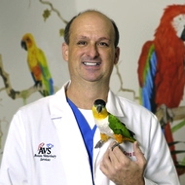
Dr. Gregory Burkett is a Diplomate of the American Board of Veterinary Practitioners in Avian Practice. Dr. Burkett completed his Doctorate of Veterinary Medicine degree from North Carolina State University and he is the owner of Avian Veterinary Services Clinic in Durham, North Carolina, which exclusively sees avian patients. Dr. Burkett is also the co-founder of a bird specialty shop, The Birdie Boutique, Inc. in Durham as well as Diamond Avian Distributers, Inc. in Huddle Mills, North Carolina. Dr. Burkett has extensive experience in all aspects of aviculture, and he has successfully bred over 40 different species of psittacine birds over the last 20 years. He is a member of the Association of Avian Veterinarians (AAV) Board of Directors and Chair of the AAV Avian Welfare Committee.
Cyndi Brown, DVM, DABVP (Avian Practice)
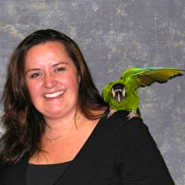
Dr. Cyndi Brown is board-certified in avian medicine and surgery. Cyndi initially worked as a licensed veterinary technician at the Animal Medical Center (AMC) in New York City. Although she was primarily an intensive care nurse, Cyndi spent a great deal of time with the exotics team, often joining doctors for house call visits. After two years, Cyndi decided to return to school and complete prerequisites for veterinary school. Dr. Brown graduated from Kansas State University College of Veterinary Medicine in 1999 and returned to the AMC for a one-year internship in small animal medicine and surgery. She then began a residency in avian and exotic pet medicine at the AMC. Upon completion of her training in 2003, she remained on staff teaching interns, residents and technicians until 2005. Dr. Cyndi Brown currently practices at Ocean State Veterinary Specialists in East Greenwich, Rhode Island.
John Bauer, DVM, PhD, DACVN

John E. Bauer is Professor of Small Animal Clinical Sciences and holder of the Mark L. Morris Professorship of Clinical Nutrition in the College of Veterinary Medicine at Texas A&M University. Dr. Bauer is a past Chair and current member of the Intercollegiate Graduate Faculty of Nutrition at Texas A&M. His areas of specialization are lipid biochemistry, disorders of lipid metabolism, and comparative biomedicine and nutrition. His studies have included lipoprotein and fatty acid metabolism of domestic and exotic animals as well as animal models of hypercholesterolemia and atherogenesis in humans. Dr. Bauer received a Ph.D. in nutritional sciences from the University of Illinois, and he is a charter Diplomate of the American College of Veterinary Nutrition.
Heather Barron, DVM, DABVP (Avian Practice), CertAqV
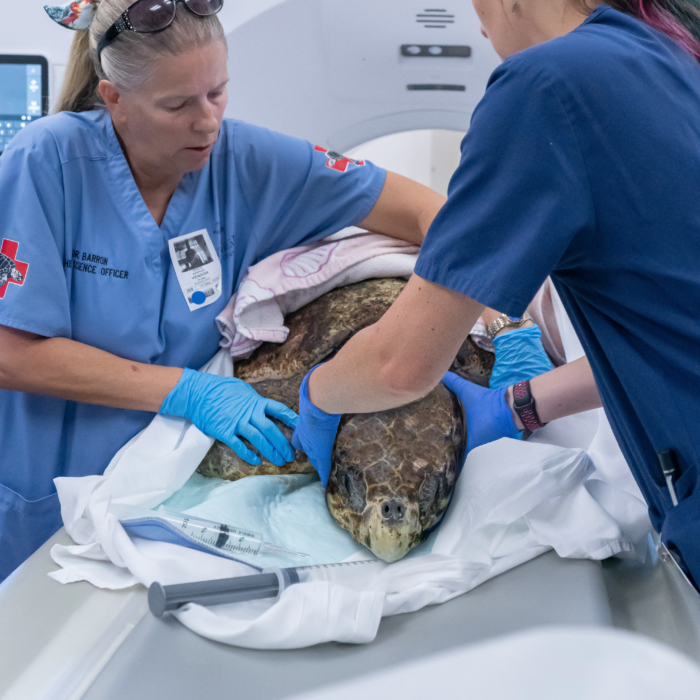 Heather Barron has over 30 years of experience in wildlife health, rehabilitation, and clinical care. She serves as Chair of the Wildlife Veterinary Section for the Wildlife Disease Association, and is currently the Chief Science Officer and Veterinarian for Loggerhead Marinelife Center in Juno, Florida. Dr. Barron previously served as the Hospital Director of the Clinic for the Rehabilitation of Wildlife (C.R.O.W.) as well as the Chair of Veterinary Clinical Sciences and Professor of Small and Exotic Animal Medicine at St. Matthew’s University School of Veterinary Medicine in the Cayman Islands. Dr. Barron is a former Associate Editor of the Journal of Avian Medicine and Surgery (2002-2019) and the author of numerous publications. Dr. Barron is board certified in avian medicine, and she served as the 2010-2011 President of the Association of Avian Veterinarians. She is a graduate of the University of Georgia at Athens (UGA) College of Veterinary Medicine, where she also completed a residency in avian and exotic animal medicine. Heather remained at UGA for 10 years and was a tenured Associate Professor.
Foraging and Enrichment Webinar
Introduction
Enrichment has become a common term when describing proper care of captive animals. This presentation explores the importance of enrichment and how its proper implementation can be highly variable between and within species. Multiple animal (avian and otherwise) video examples are used to highlight concepts of enrichment. Basic principles are highlighted with the end goal to get people to start thinking about ways to enrich the lives of captive animals, especially birds.
Outline
- Foraging as a natural behavior
- Definition:
- Foraging is the act of searching for and finding food.
- Occupies a significant portion of a bird’s daily activity
- Many wild birds spend more than 50% of their day foraging and feeding, particularly in the morning and evening
- Likely has social and behavioral importance.
- Definition:
- Lack of foraging can influence behavior
- Basic categories of bird behavior
- Foraging
- Socialization
- Grooming
- Self-preening
- Sleeping or resting
- Free-ranging parrots like the Puerto Rican Amazon parrot (Amazona vittata) forages for 4-6 hours daily
- Captive orange-winged Amazon parrots (Amazona amazonica) monitored remotely using video camera
- Demonstrated grooming behaviors primarily in the morning and evening
- Complete diet nearby and ingested food 3-4 minutes per hour for a total of 30-72 minutes daily
- Birds were inactive for a significant amount of time
- Captivity can disrupt normal behaviors
- If the ability to forage is removed, that leaves socializing, grooming, and rest
- If birds are isolated and have limited contact with humans, this may leave preening and sleep as the only natural behaviors conducted
- When one behavior is altered or abolished, other behaviors may become emphasized
- Behavior displacement
- Can feather destructive behavior (FDB) be redirected foraging behavior?
- Many species differences
- Direct conclusions cannot be made
- Perhaps lack of foraging can lead to overzealous feather grooming, feather destructive behavior, or inactivity,
- Basic categories of bird behavior
- Enrichment
- Foraging enrichment
- Chew objects
- Require sorting, manipulating, and/or opening objects to get foods
- Environmental enrichment: increasing physical complexity
- Alternate perching sites
- Moveable, climbing, and swing objects
- Recommended for all captive parrots
- Prevented or reduced psychogenic feather picking in young orange-winged Amazon parrots
- Improves feather scores
- Foraging enrichment
- Other avian species
- FDB reported in chickens
- Psittacine species are not the only birds reported with FDB
- In chickens, inability to access substrates appropriate for dust bathing or foraging is highly correlated with feather picking
- Studies in other avian species indicate birds prefer to work for food
- Prefer to peck at a key to find grain rather than eat the same food free choice
- Pigeons
- Domestic fowl
- Starlings chose to obtain mealworms by searching through covered holes rather than freely from a dish
- Prefer to peck at a key to find grain rather than eat the same food free choice
- FDB reported in chickens
- Stereotypic behavior
- Definition: abnormal, repetitive, functionless behaviors
- Most commonly develop in animals kept in barren environments
- Cause is not completely understood
- Develop in captive environments where…
- Highly motivated behaviors are thwarted
- Functional goals are unattainable
- Behavioral competition is low
- Development of stereotypies occurs in four distinct phases.
- Ritualization: Behaviors become less variable over time
- Emancipation: Behaviors are elicited by a greater variety of environmental stimuli
- Establishment: The behavior becomes fixed in routine actions even when the environment is modified
- Escalation: Stereotypies become more frequent and occupy a greater proportion of time
- Oral stereotypies: repetition of identical oral movements, possibly within an identical location in the cage
- Wire chewing
- Chewing movements but with nothing in the mouth
- Manipulating food items in the mouth over and over again
- Dribbling (dropping and picking up an object repeatedly).
- Locomotor stereotypic behaviors: repetition of an identical pattern of movement
- Pacing (walking back and forth across the perch)
- Perch circles (in which the parrot walks the length of the perch, climbs the side wall of the cage, climbs across the top of the cage, and down the opposite wall)
- Corner flips (small circles in a top cage corner or repeating an identical route around the cage over and over again
- Group of orange-winged Amazon parrots
- 96% performed locomotor and/or oral stereotypies
- Certain individuals spent up to 85% of their active time performing these abnormal behaviors
- Birds introduced to enrichment performed significantly less stereotypy
- Behaviors were primarily limited to locomotor stereotypies in enriched birds
- Foraging enrichments were used more frequently than physical enrichments
- Physical enrichments were often used to gain access to foraging enrichments
- Declines in stereotypies are gradual with the introduction of enrichment
- First there is a silent reversal phase
- Precedes significant behavioral changes or attenuation
- Practical applications of foraging
- FDB is common, but their causes are often complex
- Management concerns that should be addressed include:
- Socialization with “bird confident” people
- Dietary modification as needed
- Underlying disease
- Environmental stressors
- Increasing availability of toys and encouraging play activity
- Keeping the bird below shoulder level
- Making a conscious effort not to encourage feather picking
- Incorporate foraging strategies
- Gradually introduce until it is used as main food source
- When away from home, instruct owners to provide a small amount, if any, food in the cage
- When home…
- “Foraging tree”
- Foraging toys that require the bird do some action to retrieve food
- Multiple levels of difficulty
- Begin with simple toys and gradually increase complexity
- Two brief video clips
- Resources and Further Reading
Webinar recording
Webinar slide 4
Post-test
Take the brief post-test to earn 1 hour of continuing education credit. With a passing grade, you will receive a continuing education certificate in jurisdictions that recognize AAVSB RACE approval.
RACE approval
This program is approved by the American Association of Veterinary State Boards (AAVSB) Registry of Approved Continuing Education (RACE) for 1 hour of continuing education credit for veterinarians and veterinary technicians in jurisdictions that recognize AAVSB RACE approval.
Rabbit Reproduction Basics
Introduction
Even in the neutered pet, rabbits draw very little distinction between sexual behavior and social behavior (Harriman 1995). Normal actions like territoriality, attention-seeking behaviors like honking and circling, and nesting behavior such as digging and chewing, are all intimately tied to the instinctive drive to reproduce.
If you are reading this article as part of the Basic Rabbit Care Teaching Module, please go to the sections on male rabbits, female rabbits, newborn rabbit, and rabbit milk. Then take the brief quiz to test your knowledge.
“Breed like rabbits”
The prolific nature of the rabbit has linked them with fertility and the cycle of life and death since ancient times. In fact the idea of the Easter bunny probably arose from the medieval belief that rabbits, as a creator of life, ushered in the dawn (Fig 1) (Mayer 2003).

Figure 1. Rabbits have been associated with fertility and the cycle of life since ancient times. Photo credit: Elliott Brown via Flickr Creative Commons. Click image to enlarge.
One female rabbit can potentially deliver up to 60 young per year. Because of this fecundity, early explorers carried rabbits as a food source and rabbits were even released on remote islands. Unfortunately the absence of predators allowed rabbit populations to rapidly reach pest numbers on some islands like New Zealand (O’Malley 2005).
Male rabbits
The head and body of the intact, adult, male rabbit is generally more thickset than the doe (Richardson 2000). The penile sheath is cylindrical and the penis can be easily extruded in rabbits over 2 months of age. The scrotal sacs sit craniolateral to the penis (Fig 2). The scrotum is oblong and partially hairless, and the testicles are relatively large with prominent epididymal fat pads (O’Malley 2005).
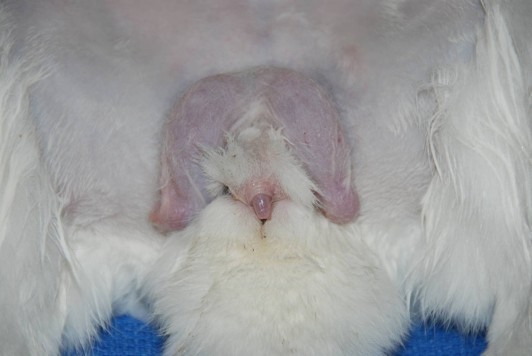
Figure 2. The oblong, partially hairless scrotal sacs sit craniolateral to the cylindrical penis. Photo credit: Dr. Matt Rosenbaum. Click image to enlarge.
The testicles descend sometime between 10 to 14 weeks of age. The first appearance can vary with the individual, the breed, and environmental temperature. The adult rabbit can retract the testes back up into the abdomen through the open inguinal ring when stressed or to regulate testicular temperature. Testes descend further on hot days and are brought closer to the body on cool days. This phenomenon can be distinguished from a true cryptorchid male by the absence of scrotal sac(s) (O’Malley 2005, Richardson 2000).
Prior to castration of the male rabbit, elevation of the hindquarters or gentle pressure on the caudal abdomen will cause testicles to fall back into the scrotum. A closed castration technique is preferred to minimize the risk of post-operative inguinal hernia. If an open surgical technique is performed, the large, superficial inguinal ring should be closed.
Female rabbits
Adult females, particularly medium and large breed does, often develop a dewlap or fold of skin beneath the chin. Older does tend to be larger than bucks of the same breed (Richardson 2000).
The ovaries are elongated, and are located relatively caudal in the rabbit. The oviducts are very long and coiled. The duplex uterus consists of two separate uterine horns separated along its length. There is no uterine body. The mesometrium is a site of significant fat storage in the rabbit, proportionally much greater than in other companion animals. The two uterine horns communicate with two cervices, which join to form a common vagina (O’Malley 2005). The rabbit vagina is relatively long and saccular (Vella 2012). The urethra enters the dorsal wall of the vagina; the clitoris sits on the ventral surface. The vulva appears triangular with a slit-like opening, and the appearance of this slit is used to distinguish juvenile females from juvenile male rabbits.
If the urinary bladder is expressed while the rabbit is in dorsal recumbency, the relatively flaccid vagina can potentially fill with urine. To minimize the risk of contamination during ovariohysterectomy, the bladder is expressed after the patient is anesthetized but before the animal is placed on its back (Jenkins 2012). The suspensory ligaments are relatively long, making exteriorization of the uterus relatively easy, however the large amount of fat in the broad ligament still makes rabbit spays relatively challenging procedures, even in young does. The double cervices are not routinely removed during ovariohysterectomy, however removal is indicated for patients with cervicitis, neoplasia, or endometriosis (Jenkins 2012, O’Malley 2005).
The female rabbit is an induced ovulator. There is no regular estrous cycle, instead ovulation occurs after mating. If coitus does not occur, the doe will vary in receptivity as ovarian follicles regress and new follicles mature. Periods of receptivity last anywhere from 5 to 14 days and are followed by one to two days in which the doe will refuse to mate. This cycle repeats until conception occurs, although ovarian activity decreases as photoperiod decreases during the late summer to winter months (Vella 2012, Klaphake 2012, O’Malley 2005).
Vaginal smear cytology is not useful for identification of doe receptivity (O’Malley 2005), however the appearance of the vulva can provide a helpful clue. When the doe is receptive, the vulva is more swollen and is often a pink-purple or reddish-purple color (Klaphake 2012, O’Malley 2005). During anestrus the vulva appears narrow and pale (O’Malley 2005).
Breeding rabbits
Both male and female rabbits can be quite territorial, and mating is best accomplished if the doe is placed in the buck’s enclosure or if the pair are introduced in neutral territory (Bays 2006, Richardson 2000).
Upon introduction, the buck follows the doe around, softly humming while sniffing and licking her for approximately 30 seconds (Vella 2012, Bays 2006). He may also spray the female with urine (Bays 2006). The receptive female will hop around in circles or flatten to the floor (Bays 2006). Lordosis is observed when pressure is applied to her back (Bays 2006), while the non-receptive doe will run away from the buck, and if cornered she may vocalize or even bite. Active mating begins when the buck grasps the female by the nape with his teeth. He then mounts the female rabbit, thrusting vigorously until ejaculation occurs relatively quickly. Afterwards the male emits a sharp cry or squeak, before falling onto his back or side while the doe either runs away or begins to bite and kick the male (Video 1)(Bays 2006, Richardson 2000).
Video 1. Rabbit breeding is a brief affair
Ovulation occurs 10 to 13 hours after mating (Vella 2012, O’ Malley 2005, Richardson 2000). Although a single mating is often sufficient stimulus to stimulate ovulation, breeders often allow mating to occur several times over a 30-minute period before returning the doe to her enclosure. Despite her fecundity, the doe should have no more than three litters in one year (Richardson 2000). Reproductive life varies with the breed, however bucks are typically bred for 5 to 6 years and does for approximately 3 years (Vella 3012).
Gestation
When compared to hares with their 40 to 50 day pregnancy, rabbits have a relatively short gestation period averaging 31 days. Gestation can range from 28 to 35 days (Vella 2012, Bays 2006, O’Malley 2005), however the risk of stillbirth increases by Day 32 (O’Malley 2005). Litter size ranges from four to 12 kits (Vella 2012, Bays 2006). Small breed rabbits tend to produce smaller litters that are born after a relatively long gestation period (Vella 2012). Larger litters are generally born after a shorter gestation period (O’Malley 2005). The fetus is palpable by Day 12 to 14 (Richardson 2000).
Despite their high fertility rates, rabbits tend to suffer from a high incidence of embryonic mortality. There are many potential reasons for this problem including infection, heredity, trauma, drug use, poor nutrition, as well as social or environmental stress. Fetal death and resorption is most likely to occur in subordinate does (Vella 2012, Klaphake 2012). The fetus is also at increased risk on Day 13, when placentation changes from yolk sac to hemochorial, and on Day 21 when there is a temporary reduction in blood flow as the fetus changes in shape and size (Klaphake 2012, O’Malley 2005).
Parturition
The doe begins to nest several days to a few hours before parturition. Hair epilates more easily as estrogen levels rise and progesterone levels fall, and the doe plucks hair from her abdomen, sides, and dewlap. She then uses the fur to line her nest of hay and straw (Fig 3) (Vella 2012, O’Malley 2005).
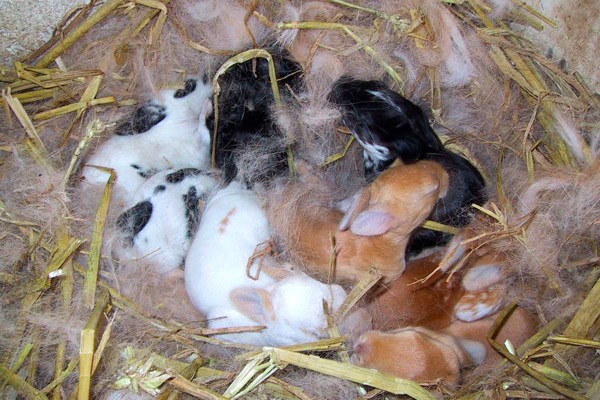
Figure 3. The doe interweaves plucked hairs with hay and straw to create her nest. Photo credit: Andre Mouraux via Flickr Creative Commons. Click image to enlarge.
Kindling usually occurs during the early morning hours and normally takes about 30 minutes (Vella 2012). The doe begins a fertile postpartum estrus within 24 hours of kindling, however her receptiveness decreases once lactation begins and this lack of interest in breeding continues until after weaning (O’Malley 2005).
Newborn rabbit
Unlike the precocial young of hares, rabbits deliver altricial young that normally weigh 40 to 50 grams at birth (O’Malley 2005, Harkness 1995). The kit is born hairless, with sealed eyelids and ear canals. Anogenital stimulation is required for elimination of feces and urine (Table 1) (Bays 2006).
| Table 1. Developmental stages of the rabbit (Oryctolagus cuniculus) (Bautista 2013, Bays 2006, Richardson 2000) | |
|---|---|
| Day | Developmental stage |
| 7 | Fur begins to grow |
| 10 | Eyes open |
| 12 | Ears open |
Despite their relatively helpless state, the young are not brooded by the mother (Bautista 2013, Bays 2006). Brown fat levels are highest during the first 2 weeks of life. Brown fat produces heat or “non-shivering thermogenesis” because of its extensive capillary network and its reserves are unaffected by the animal’s nutritional state (O’Malley 2005).
Until fur begins to grow in at Day 10, kits also depend heavily on the warmth and insulation provided by littermates (Bautista 2013, Bays 2006, Hull 1982). Central litter positions are associated with higher body temperature, higher milk intake, heavier body weights, and faster growth rates (Bautista 2013), however behavioral differences have also been identified based on litter position during the first week of life. Adult animals that occupied the periphery showed an “enhanced survival instinct” being “more proactive” than “intermediate” or “central” littermates (Reyes-Meza 2011).
Kits rely heavily on their sense of smell at birth. The mother is recognized by the smell of her feces, and suckling is stimulated by a pheromone secreted by a gland near the nipple (Vella 2012, O’Malley 2005). Does also scent mark their kits, and females will pursue and even kill kits from other colonies. Successful cross-fostering of neonatal domestic rabbits requires camouflaging the new kit’s scent by rubbing the newcomer in nest bedding and/or placing the kit on the bottom of the litter pile (Bays 2006).
Rabbit milk
Rabbits usually possess eight mammary glands that extend over their thoracic and inguinal region. Only the doe has nipples. She may possess as many as 10 nipples, and the presence of accessory nipples is favored by rabbit breeders (Vella 2012, O’Malley 2005).
Rabbit milk is very rich, so rich in fact that the doe needs only nurse her young once or twice a day (O’Malley 2005, Cheeke 1987). Rabbit milk is very high in fat (9%) with unusually low lactose levels (1%) and very high protein (13%) (Table 2) (O’Malley 2005, Cheeke 1987, FAO). Physiologically, lactation is a very demanding time for the doe. Water consumption increases ten-fold during lactation as does cecotroph consumption (O’Malley 2005).
| Table 2. Comparison of rabbit milk and cow milk | ||
|---|---|---|
| Rabbit | Cow | |
| Lactose (%) | 1 | 5.0 |
| Protein (%) | 13 | 3.3 |
| Fat (%) | 9 | 3.0-4.0 |
The doe spends approximately 3 to 5 minutes at a time nursing her young (O’Malley 2005, Cheeke 1987). The free-ranging doe then carefully covers the nest burrow with soil each time she leaves (Bays 2006). This “stop” disguises the nest from predators (Thompson 1994).
The neonatal rabbit stomach has a pH of approximately 5.0 to 6.5. A stomach at this pH, full of milk curd, would normally make an ideal substrate for bacterial overgrowth. Fortunately the kit’s stomach contains a protective antimicrobial factor called “milk oil” during the first 3 weeks of life. Milk oil is a mixture of octanoic and decanoic fatty acids and is produced by an enzymatic reaction that occurs when does milk comes into contact with enzymes in the kit’s digestive tract. Hand-raised rabbits lack this protective antimicrobial factor making them susceptible to infection (O’Malley 2005, Harkness 1995).
Weaning
Kits begin to leave the nest and eat solid food at approximately Day 18-21. Weaning is generally achieved by Day 42. The doe is usually removed during the weaning process so the young can remain in a familiar enclosure.
Weaning is a critical time in the rabbit’s life when the young are vulnerable to illness. Kits begin to eat cecotrophs passed by the doe at approximately 2 weeks of age. By the time the protective effect of milk oil ends at 4 to 6 weeks, the gut has not been completely colonized by healthy microbes and stomach pH has not reached a mature adult level of 1 to 2. “Bad bacteria”, like coliforms and Clostridia spp., can proliferate causing rapid enterotoxemia, particularly when the rabbit is fed a low fiber, high carbohydrate diet (O’Malley 2005, Cheeke 1987).
Puberty
Until sexually mature, wild rabbits live furtively and often alone. By 3 to 4 months of age the youngsters may form pair bonds and take their place in a colony’s social hierarchy. Since males can outnumber does, male rabbits sometimes live solitary lives as “satellites” to the colony (Thompson 1994). Mortality rates can be as high as 90% during the first year of life (Harriman 1995).
Body weight is more important than age in determining sexual maturity. The juvenile rabbit reaches puberty just after it undergoes a maximal rate of growth; therefore the age of onset for sexual maturity varies with the rabbit breed. Small breed rabbits typically develop faster and become sexually mature at an earlier age (Table 3). Does generally reach puberty before bucks (Vella 2012).
| Table 3. Typical age of onset of puberty in various rabbit breeds | |
|---|---|
| Small breeds | 3.5-5 months |
| Medium-sized breeds | 4-6 months |
| Large breeds | 5-8 months |
Optimal sperm production occurs 40 to 70 days after puberty is reached (Vella 2012). Male rabbits should be housed separated from females by at least 16 weeks of age to avoid unplanned pregnancies.
Sexual behavior
Negative sexual behaviors, such as territoriality and aggression, are most intense at the height of adolescence. Observed behaviors can include chinning, circling, honking or oinking, and mounting and humping. During puberty, both males and females that were previously litter trained may also urinate and defecate outside of the box to mark their territory (Bays 2012). Nesting behavior, such as frantic digging and chewing, is also commonly observed in does (Bays 2012, Bays 2006). Visit Behavior Basics: The European Rabbit for additional details on sexual behavior in the pubescent rabbit.
Fortunately neutering improves the pet quality of house rabbits, and responsible rabbit owners elect to have their pets spayed or neutered. Viable sperm can persist post-castration, so it is prudent to keep the buck separate from the doe for 4 to 6 weeks to be safe.
Pathology
Uterine adenocarcinoma is the most common neoplasia of the domestic rabbit (Varga 2013, Klaphake 2012, Vinci 2010, Walter 2010). The incidence of uterine tumors is independent of the doe’s breeding history (Klaphake 2012). Age is considered the most important risk factor for this slowly developing tumor, and the incidence of disease is highest in middle aged to older rabbits (Klaphake 2012, Saito 2002). Uterine adenocarcinoma is present in approximately 60% of females after 4 years of age (Varga 2013); the mean age of affected rabbits at presentation is 6.1 years (Walter 2010).
Early clinical signs of uterine adenocarcinoma can include subtle, non-specific signs of illness such as anorexia, and loss of body condition. Infertility, vaginal discharge, and hematuria can also be observed (Fig 4). Pale mucous membranes will develop with persistent or heavy hemorrhage (Varga 2013, Walter 2010). As disease advances, additional findings can include gastrointestinal stasis, swollen, painful mammary glands, and abdominal swelling. Multiple masses may be palpable cranial to the urinary bladder on physical exam. Does are sometimes presented for dyspnea secondary to pulmonary metastases or excessive uterine enlargement (Varga 2013).

Figure 4. Hemometra due to adenocarcinoma in a doe. Note the duplex uterus. Photo credit: Uwe Gille via Wikimedia Commons. Click image to enlarge.
Uterine neoplasia is best managed through prevention. Does not intended for breeding should be spayed early. The owners of intact females should be educated on the early signs of disease, and instructed to present the doe regularly for physical examination (Klaphake 2012).
Other pathologic conditions commonly reported in the doe include endometrial hyperplasia, pyometra, endometritis, and pseudopregnancy (Varga 2013, Klaphake 2012, Walter 2010, O’Malley 2005). Pseudopregnancy, also known as pseudocyesis or “false pregnancy”, can occur even in does housed alone although the most common causes include an infertile mating or the presence of a nearby male rabbit (Klaphake 2012, O’Malley 2005). As the mature corpus luteum (CL) secretes progesterone, enlargement of the uterus and mammary glands is most pronounced during the first 10 days. By Day 16, organs begin to involute. The CL begins to degenerate after Day 18. As progesterone levels fall, the doe will pluck fur to make a nest after 18 to 22 days (O’Malley 2005).
Test your knowledge
References
Fascinating Facts on Foraging and Enrichment
Adapted from van Zeeland YRA, Schoemaker NJ, Ravesteijn MM, et al. Efficacy of foraging enrichments to increase foraging time in Grey parrots (Psittacus erithacus erithacus). Applied Animal Behaviour Science 149:87-102, 2013. Also, view a RACE-approved recording of the non-interactive webinar recording by Dr. van Zeeland: What Parrots Want: The Importance and Use of Foraging and Enrichment for Birds.
The wild parrot’s day
Foraging is the act of searching for, finding, and procuring food. In the wild, most animals, including psittacine birds, spend a significant part of their daily activity on foraging. In fact, many free-ranging parrots regularly travel several miles between feeding sites in search of food (Symes 2003, Wirminghaus 2001, Gilardi 1998, Synder 1987). Once free-ranging parrots arrive at a feeding site, a wide variety of foraging behaviors are observed including searching, selecting and obtaining, manipulating, as well as consuming food (Synder 1987). Foraging makes up a significant part of the wild bird’s day (Fig 1). Depending on the species and the season, time invested on these behaviors can range from 40% to 75% of daytime or approximately 4 to 8 hours per day (Renton 2001, Sydner 1987, Magrath 1985).
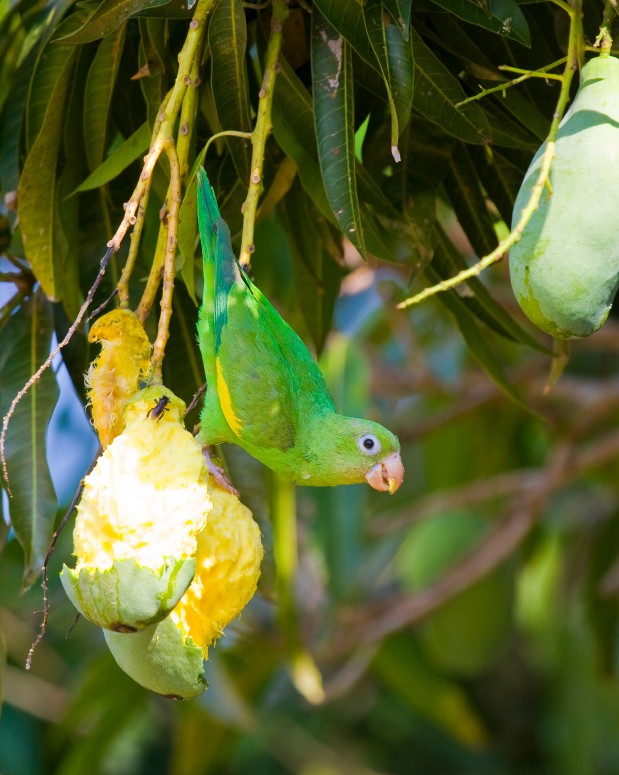
Figure 1. Free-ranging psittacine birds spend a significant part of their day foraging for food. Click image to enlarge.
Captive parrots
Most parrots kept in captivity should be considered as non-domesticated species, being only one or two generations removed from the wild. Therefore the instincts, behaviors, and needs of captive parrots are probably similar to those of their wild conspecifics (Davis 1998, Graham 1998). It would thus be likely that captive parrots have a need to forage, too.
Previous studies have provided evidence in support of the hypothesis that foraging is a behavioral need by demonstrating that parrots are motivated to work for food (Joseph 2010, van Zeeland 2009, Coulton 1997). Similar to other animals, parrots would choose to work for food even when identical food is freely available. This behavior is also known as “contrafreeloading” (Video 1).
Video 1. View this example of contrafreeloading in psittacine birds (1:01). Note: This video is the property of Dr. Yvonne R.A. van Zeeland and the Division of Zoological Medicine, Faculty of Veterinary Medicine, Utrecht University, the Netherlands, and cannot be downloaded or used without permission.
When parrots cannot forage
In the conventional captive parrot environment, food is often offered in a regular food bowl from which it may be readily consumed by the parrot thereby resulting in foraging times of less than an hour (Oviatt and Millam 1997; Rozek et al 2010; van Zeeland 2013). This leaves little room for the parrots to display their natural foraging activities. As a consequence, abnormal repetitive behaviors can arise including oral stereotypies, such as wire chewing or tongue playing, and feather destructive behavior (Fig 2) (Lumeij 2008, Meehan 2004, Meehan 2003, Huber-Eicher 1998).
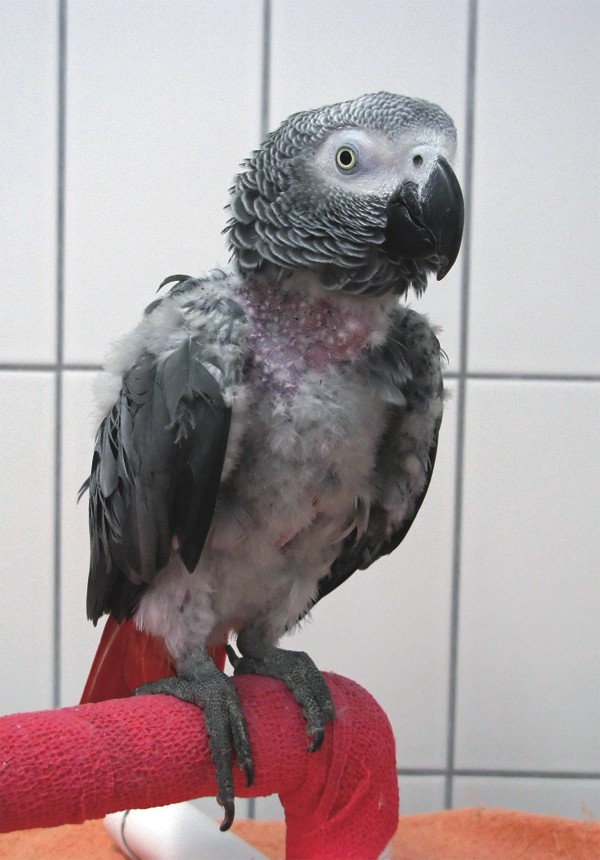
Figure 2. Abnormal repetitive behaviors, like feather destructive behavior, may develop in captive psittacine birds that are unable to indulge the natural desire to forage. Photo credit: Dr. Yvonne R.A. van Zeeland. Click image to enlarge.
The benefits of foraging
Foraging enrichment is considered one of the most effective strategies to improve welfare and reduce behavioral problems in captive animals including parrots (Dixon 2010, Lumeij 2008, Miller 2005, Meehan 2004, Meehan 2003, Elson 2001, Coulton 1997, van Hoek 1997). Foraging increases physical activity, provides cognitive stimulation, relieves stress, frustration, or boredom while reducing and preventing aggression and abnormal repetitive behaviors including stereotypies (Box 1) (Brinch-Riber 2008, Vargas-Ashby 2007, Aerni 2000).
| Box 1. Benefits of foraging (Brinch-Riber 2008, Vargas-Ashby 2007, Aerni 2000) |
|---|
|
Foraging opportunities
Several approaches have been developed to stimulate foraging behavior and increase foraging times in a variety of species ranging from megavertebrates to reptiles (van Krimpen 2009, Aerni 2000, Bauck 1998, Newberry 1995):
- Multiple bowls to offer smaller, more frequent meals in multiple locations
- Mix food with inedible items
- Increase feeding time by offering vegetation, bones, ice blocks, whole food item, carcasses, etc.
- Foraging devices (puzzle feeders)
- Scatter or hide food in enclosure
- Live prey (in predatory animals)
- Increase dietary fiber (promote satiety)
- Feed at irregular time intervals to decrease the predictability of feeding times
Although many studies have been performed into the efficacy of foraging enrichment on normal and abnormal behavior in various species, most of these offered multiple types of foraging enrichment at once, thereby making it difficult to evaluate the relative merit of each individual technique.
In search of the perfect foraging enrichment
In our study, the following foraging enrichment techniques were evaluated in 12 grey parrots (Psittacus erithacus) (van Zeeland 2013):
- Increasing the spatial distribution of food within the enclosure: Pellets were placed in four food bowls rather than one location. Two bowls were hung at the level of the highest perch and two were placed on ground level on opposite ends of the cage.
- Increase search time by mixing food with inedible items: Food items offered to grey parrots were mixed with marbles measuring 1.5 cm in diameter.
- Increase extraction time: Foraging devices or puzzle tend to remain stimulating to the animal, especially when they contain the individual’s total daily diet (Lumeij 2008, Shyne 2006, Bauck 1998, Coulton 1997). Eight different devices were evaluated.
- Increase the time needed to process and ingest food: Lafeber Company Nutri-Berries were offered as an example of a larger-sized food particle. This nutritionally balanced mix of seeds, grains, nuts, and pellets is shaped into the form of a berry measuring 2.5 cm in diameter (Fig 3).
Figure 3. Nutri-Berries were offered in the study as an example of a larger-sized food particle. Photo credit: Drs. Nico Schoemaker and Yvonne R.A. van Zeeland. Click image to enlarge.
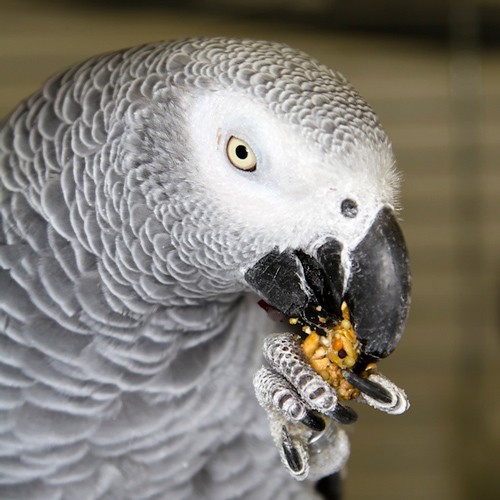
After acclimatization and assessment of baseline foraging times, enrichments were presented in a random order. Enrichments were gradually introduced, and video recordings were used to analyze total foraging time as well as the time spent on different foraging activities. The frequency and duration of foraging periods and the times at which they occurred were also determined.
In addition, learning curves and familiarization with enrichment items were assessed over a 1-week period. Differences in learning curves were most likely due to differences in the difficulty level of enrichments. Parrots needed 8.3 +/- 1.1 days to learn how to use the foraging enrichments. For two puzzle feeders, it took considerably longer. Parrots in this study needed little to no time to learn how to use Nutri-Berries; they only needed to learn where food was located and no further effort was required to obtain food.
How effectively can foraging enrichments increase foraging times?
Our study investigated the effects of different types of enrichment on foraging times and foraging-related activities in grey parrots (Box 2) (van Zeeland 2013).
| Box 2. Hypothesis (van Zeeland 2013) |
|---|
| Although all types of foraging enrichment would result in significant increases of foraging times compared to baseline values, puzzle feeders would result in the highest increases in foraging times. |
The parrots in our study spent an average 47 + 18 min per day on foraging activities when offered a conventional pelleted diet in a regular bowl. These baseline values are similar to those reported in Amazon parrots (Rozek 2010, Oviatt 1997). Foraging enrichments could indeed increase foraging times, and nine out of 11 foraging enrichments significantly increased foraging times in the grey parrots studied.
- The most effective enrichments resulted in a 2- to 2.5-fold increase compared to baseline. The most effective enrichments were three different puzzle feeders, which increased foraging time up to 123 + 52 min (Fig 4 and Fig 5).
- The effect of Nutri-Berries was comparable to the most effective puzzle feeders, resulting in foraging times that exceeded 100 minutes per day. This increase in foraging time was similar but less to that compared to the feeding of larger-sized pellets by Rozek 2010. As both food items were similar size in size (approximately 2.5 cm diameter) other factors such as hardness, structure, nutritional composition, and/or energy content may have contributed to this difference.
- The least effective foraging enrichments were two foraging devices as well as food placement in multiple locations. This latter technique has been shown to be most effective in parrots housed in a large enclosure or aviary (Elson 2001, Coulton 1997, van Hoek 1997), and the results of our study seem to support this finding (van Zeeland 2013).
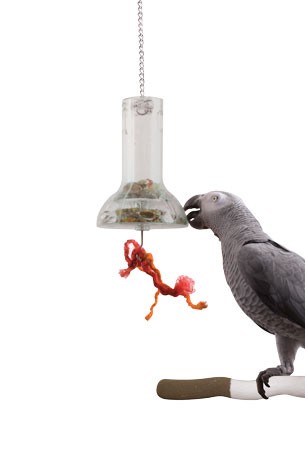
Figure 4. Transparent acrylic capsule in which food can be placed. The parrot must pull down a platform in order to have pellets drop into the lower compartment which can then be accessed via holes in the side. Photo credit: Creative Foraging Systems, posted with permission.
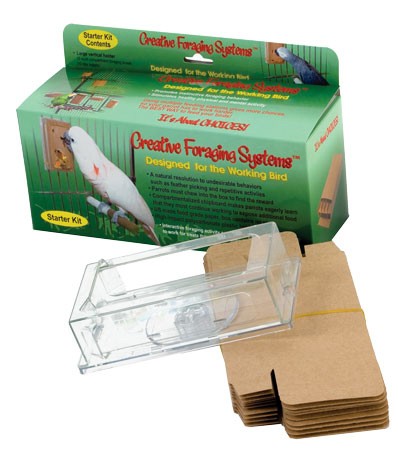
Figure 5. Transparent acrylic feeder in which food can be placed. To access food, the bird must shred the cardboard. Photo credit: Creative Foraging Systems, posted with permission. Click image to enlarge.
Considerations for the future
The results of this study (van Zeeland 2013) will help make evidence-based decisions on best way to provide foraging enrichment to grey parrots. Approaches that focus on increasing extraction time by using puzzle feeders and increasing food processing time with larger-sized food particles such as Nutri-Berries appear to be most effective in increasing foraging time.
Thus far the maximum foraging times that have been obtained in captive parrots provided with foraging enrichment have not exceeded 3 hours per day (Rozek 2010, Lumeij 2008, Elson 2001). To further increase foraging times in captive parrots, new more effective foraging and currently available foraging enrichments should be developed, tested, and refined, during which individual preferences for specific colors, sizes, hardness and/or structure (as demonstrated in studies by Rozek 2011, Webb 2010, Kim 2009, Fox 2007) should also be taken into account. As preferences may differ between genders, ages, and/or species, these should be further studied to be able to adapt the enrichment to the needs and preferences of the bird.

Figure 6. Front cover of thesis by Dr. Yvonne R.A. van Zeeland. Click image to enlarge.
Dr. van Zeeland’s thesis can be downloaded for free from dspace library or contact Dr. van Zeeland to order a printed copy, which includes a special cover with a lenticular image of a grey parrot that either has its feathers plucked or is normally feathered (Fig 6).
References
Egg Laying Problems
Reproductive problems are a common problem in many small pet bird species, particularly cockatiels, budgerigars parakeets, lovebirds, finches, and canaries. Use client education handout to briefly explain egg laying problems, from egg binding and egg yolk peritonitis to chronic egg laying to the companion parrot owner.

Download the PDF version of this client education handout, or modify the DOCX version for your veterinary hospital.
Vitamin A Client Handout
Vitamin A is one of the most common deficiencies in pet bird medicine, especially in South American species like Amazon parrots, conures, and macaws. At least one Vitamin A-rich food should be fed to your pet bird EVERY DAY.
Feather Picking
Feather picking is the most frustrating behavioral condition in pet birds from both the veterinarian’s and the owner’s perspective. This client education handout, donated by Dr. Eric Klaphake, explains that feather picking is a symptom and not a particular disease. Potential causes of feather picking are summarized and possible veterinary tests and treatment recommendations are listed.
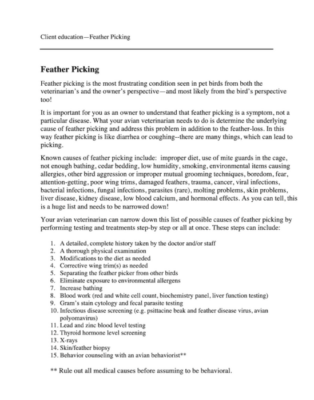
Download the PDF version of this client education handout, or modify the DOCX version for your veterinary hospital.
Cold Weather Tips for Exotic Animal Pets
While most exotic pets are housed indoors, there are still some key concepts to keep in mind when winter comes around. Donated by Dr. Eric Klaphake, this client education handout describes exotic pet housing, baths, transport and household hazards during cold weather months.
Download a PDF of the Cold Weather Tips for Exotic Animal Pets handout.
Avian Polyomavirus Client Handout
Avian polyomavirus infection is a disease in psittacine birds or parrots of greatest concern in chicks. Donated by Dr. Eric Klaphake, this client handout briefly explains this important disease from signs and transmission to diagnostic testing and control or prevention.
Download the Avian Polyomavirus PDF Handout by Dr. Eric Klaphake
Practical Communication: Tools for Your Practice
Veterinary medicine education and clinical management increasingly incorporates communication and relationship skills. Improving communication through understanding and applying emotional and social intelligence leads to greater job satisfaction, commitment, efficiency, management, and decreases stress, burnout, and client dissatisfaction. In this live, interactive, web-based course, Dr. Joyner reviewed the importance and application of communication and relationships . . .
To continue you need to be a LafeberVet.com member. (Français), (Español)
Pour continuer, vous devez être un membre LafeberVet.com
Pour les vétérinaires. Par les vétérinaires.
Le site Lafervet.com est conçu pour une utilisation par les vétérinaires. Il est ouvert aux vétérinaires diplômés, aux techniciens vétérinaires diplômés, aux animaliers et aux étudiants dans ces domaines.
Créer un compte pour accéder à des articles et des ressources du site.
L'inscription est gratuite.
Para continuar, debe ser miembro de LafeberVet.com
Para Profesionales Veterinarios. Por Profesionales Veterinarios.
El sitio Lafervet.com es para uso de los profesionales veterinarios. Está abierto a los veterinarios licenciados, técnicos veterinarios licenciados, rehabilitadores licenciados y estudiantes en estos campos.
Cree una cuenta para acceder a los artículos y recursos del sitio.
La registro es gratis.
Already a LafeberVet Member?
Please Login
Catheters in Reptiles
Fluid therapy is an important part of supportive care, and there are several routes available for fluid support in the reptile. Subcutaneous and/or oral fluids are appropriate for mild to moderate dehydration, while intracoelomic, intravenous, or intraosseous fluids are administered to critically ill reptiles or to patients with moderate to severe dehydration . . .
To continue you need to be a LafeberVet.com member. (Français), (Español)
Pour continuer, vous devez être un membre LafeberVet.com
Pour les vétérinaires. Par les vétérinaires.
Le site Lafervet.com est conçu pour une utilisation par les vétérinaires. Il est ouvert aux vétérinaires diplômés, aux techniciens vétérinaires diplômés, aux animaliers et aux étudiants dans ces domaines.
Créer un compte pour accéder à des articles et des ressources du site.
L'inscription est gratuite.
Para continuar, debe ser miembro de LafeberVet.com
Para Profesionales Veterinarios. Por Profesionales Veterinarios.
El sitio Lafervet.com es para uso de los profesionales veterinarios. Está abierto a los veterinarios licenciados, técnicos veterinarios licenciados, rehabilitadores licenciados y estudiantes en estos campos.
Cree una cuenta para acceder a los artículos y recursos del sitio.
La registro es gratis.
Already a LafeberVet Member?
Please Login
Presenting problem: Stomatitis in Reptiles
Stomatitis, also known as “mouth rot”, ulcerative stomatitis, necrotic stomatitis, and/or periodontal disease is a common problem in snakes and lizards. Stomatitis is less common in chelonians and crocodilians, and often presents as a stomatitis-rhinitis complex in tortoises. This presenting problem article explores the pertinent anatomy involved, key points of urgent care, as well as tips for case management . . .
To continue you need to be a LafeberVet.com member. (Français), (Español)
Pour continuer, vous devez être un membre LafeberVet.com
Pour les vétérinaires. Par les vétérinaires.
Le site Lafervet.com est conçu pour une utilisation par les vétérinaires. Il est ouvert aux vétérinaires diplômés, aux techniciens vétérinaires diplômés, aux animaliers et aux étudiants dans ces domaines.
Créer un compte pour accéder à des articles et des ressources du site.
L'inscription est gratuite.
Para continuar, debe ser miembro de LafeberVet.com
Para Profesionales Veterinarios. Por Profesionales Veterinarios.
El sitio Lafervet.com es para uso de los profesionales veterinarios. Está abierto a los veterinarios licenciados, técnicos veterinarios licenciados, rehabilitadores licenciados y estudiantes en estos campos.
Cree una cuenta para acceder a los artículos y recursos del sitio.
La registro es gratis.
Already a LafeberVet Member?
Please Login
In My Experience: Living With a PDD Bird
In My Experience: Living with a PDD Bird was authored by a diligent parrot owner and reviewed by her avian veterinarian. This commentary includes suggestions on diet as well as management tips that improved the quality of life, and possibly the life span, of this owner’s birds . . .
To continue you need to be a LafeberVet.com member. (Français), (Español)
Pour continuer, vous devez être un membre LafeberVet.com
Pour les vétérinaires. Par les vétérinaires.
Le site Lafervet.com est conçu pour une utilisation par les vétérinaires. Il est ouvert aux vétérinaires diplômés, aux techniciens vétérinaires diplômés, aux animaliers et aux étudiants dans ces domaines.
Créer un compte pour accéder à des articles et des ressources du site.
L'inscription est gratuite.
Para continuar, debe ser miembro de LafeberVet.com
Para Profesionales Veterinarios. Por Profesionales Veterinarios.
El sitio Lafervet.com es para uso de los profesionales veterinarios. Está abierto a los veterinarios licenciados, técnicos veterinarios licenciados, rehabilitadores licenciados y estudiantes en estos campos.
Cree una cuenta para acceder a los artículos y recursos del sitio.
La registro es gratis.
Already a LafeberVet Member?
Please Login
Procedure Equipment Checklists
Introduction
Procedure equipment checklists are used in clinical practice to increase efficiency, improve consistency, and help maintain a high standard of care. Use these equipment checklists to train students and staff, or simply to jog your memory for procedures performed only sporadically (Fig 1).

Figure 1. Do I have everything? Use equipment checklists as a handy clinical reminder system.
The following equipment checklists are available in two formats. Color portable document format (PDF) files and black and white Word documents (DOCX and DOC). Modify the Word files as needed to best meet the needs of your practice.
Equipment Checklists
| Equipment Checklists | |||
|---|---|---|---|
| Complete Equipment List | PDF (553 KB) | DOCX (349 KB) | DOC (399 KB) |
| Anesthesia, general | PDF (82 KB) | DOCX (73 KB) | DOC (39 KB) |
| Catheter placement | PDF (108 KB) | DOCX (80 KB) | DOC (42 KB) |
| Dermatologic procedures | PDF (289 KB) | DOCX (68 KB) | DOC (49 KB) |
| Euthanasia | PDF (75 KB) | DOCX (52 KB) | DOC (32 KB) |
| Nasolacrimal cannulation | PDF (65 KB) | DOCX (54 KB) | DOC (32 KB) |
| Nutritional support | PDF (119 KB) | DOCX (86 KB) | DOC (49 KB) |
| Physical examination & venipuncture | PDF (94 KB) | DOCX (80 KB) | DOC (39 KB) |
| Small mammal dentistry | PDF (72 KB) | DOCX (65 KB) | DOC (35 KB) |
| Surgery (major) | PDF (92 KB) | DOCX (81 KB) | DOC (40 KB) |
| Thoracocentesis | PDF (79 KB) | DOCX (65 KB) | DOC (36 KB) |
| Urethral catheterization | PDF (85 KB) | DOCX (82 KB) | DOC (46 KB) |
Honoring Kevin Wright; What You Can Do
Dr. Kevin Michael Wright passed away at the age of 50 after a brief illness on Friday, September 27, 2013.
Remembering a distinguished career
Kevin Wright earned his Doctorate of Veterinary Medicine from the University of Florida. He worked in private practice before completing a residency in zoological medicine at the Philadelphia Zoo and the University of Pennsylvania’s School of Veterinary Medicine. Dr. Wright then served as the veterinarian and curator for the amphibian and reptile collection at the Philadelphia Zoo. In 1999, he went to work for The Phoenix Zoo, but returned to private practice in 2005 co-founding an exotic animal hospital. In 2012 he founded his own exotic pet mobile practice.
An original member of the Board of Directors of the Association of Reptilian and Amphibian Veterinarians, Dr. Wright was named the Exotic DVM of the Year in 2008. In both 2009 and 2012 he was awarded Exotics Speaker of the Year by the North American Veterinary Conference. In the first year this specialty was offered (2010), he became a Diplomate of the American Board of Veterinary Practitioners in Reptile and Amphibian Practice. Dr. Wright was the co-author of the highly respected text, Amphibian Medicine and Captive Husbandry, and the author of more than 150 articles related to zoological medicine for both professional and lay audiences.
Dr. Kevin Wright Memorial Fund
In a Facebook post dated October 5, 2013, his brother, Don Wright wrote:
As many of you know, my brother Kevin passed away after a brief illness on September 26, 2013. Our family is heartbroken and numb by the loss, but our attention is focused on helping Marlene through this extremely difficult time. Not only did she lose her beloved husband and life partner of 23 years, but she also lost her employer.
Although Kevin’s veterinary house call business was growing, many of you also know he was unable to acquire health or life insurance. In order to help Marlene with expenses, we have set up a memorial fund in Kevin’s honor to receive monetary gifts. All funds will be used to pay off final expenses and any excess will be used for living expenses to support Marlene until she can re-enter the workforce…We intend to donate a portion of the proceeds to organizations that represent Kevin’s varied passions including local animal rescues and others committed to preservation of native wildlife around the world.
| The Fund can receive online payments or wire transfers using the following information:* | Checks should be made payable to C. Marlene Wright |
| Desert Schools Federal Credit Union Phoenix, AZ 85062 (602) 433-7000Name: C. Marlene Wright Routing and transit: 122187238 Account: 6000201101 Account type: Savings Note: Dr. Kevin Wright Memorial Fund |
Note The Dr. Kevin Wright Memorial Fund in the memo field.Mail the check to: 2036 N. Gilbert Road Suite 2-153 Mesa, AZ, USA 85203-2139 |
*Outside of the United States?
Desert Schools Federal Credit Union does NOT have IBAN or SWIFT numbers. If your bank requires more than a routing number, have your institution select a larger, local bank to serve as an intermediary for the wire transfer.
Obituary
Click here to visit an online obituary that includes a guest book where you can post your remembrances until November 2, 2013.
Administration of Medication in Reptiles
Reptile owners are routinely instructed on oral or intramuscular drug administration techniques for outpatient care. In many instances and in many species, parenteral injections are preferred over the oral route. Injectable medications can be delivered intramuscularly, subcutaneously, intracoelomically, intravenously, or . . .
To continue you need to be a LafeberVet.com member. (Français), (Español)
Pour continuer, vous devez être un membre LafeberVet.com
Pour les vétérinaires. Par les vétérinaires.
Le site Lafervet.com est conçu pour une utilisation par les vétérinaires. Il est ouvert aux vétérinaires diplômés, aux techniciens vétérinaires diplômés, aux animaliers et aux étudiants dans ces domaines.
Créer un compte pour accéder à des articles et des ressources du site.
L'inscription est gratuite.
Para continuar, debe ser miembro de LafeberVet.com
Para Profesionales Veterinarios. Por Profesionales Veterinarios.
El sitio Lafervet.com es para uso de los profesionales veterinarios. Está abierto a los veterinarios licenciados, técnicos veterinarios licenciados, rehabilitadores licenciados y estudiantes en estos campos.
Cree una cuenta para acceder a los artículos y recursos del sitio.
La registro es gratis.
Already a LafeberVet Member?
Please Login
Esophagostomy Tube Placement in the Ferret
Esophagostomy tube placement is an excellent choice for nutritional support of the debilitated small mammal patient requiring long-term feeding or for individuals that have suffered major orofacial trauma. Use this video clip or text with still images to review this important technique in the ferret . . .
To continue you need to be a LafeberVet.com member. (Français), (Español)
Pour continuer, vous devez être un membre LafeberVet.com
Pour les vétérinaires. Par les vétérinaires.
Le site Lafervet.com est conçu pour une utilisation par les vétérinaires. Il est ouvert aux vétérinaires diplômés, aux techniciens vétérinaires diplômés, aux animaliers et aux étudiants dans ces domaines.
Créer un compte pour accéder à des articles et des ressources du site.
L'inscription est gratuite.
Para continuar, debe ser miembro de LafeberVet.com
Para Profesionales Veterinarios. Por Profesionales Veterinarios.
El sitio Lafervet.com es para uso de los profesionales veterinarios. Está abierto a los veterinarios licenciados, técnicos veterinarios licenciados, rehabilitadores licenciados y estudiantes en estos campos.
Cree una cuenta para acceder a los artículos y recursos del sitio.
La registro es gratis.
Already a LafeberVet Member?
Please Login
Zoonotic concern: Rabies in Terrestrial Small Mammals
All mammals are considered to be susceptible to rabies although susceptibility appears to vary by species and viral variant. Rabies is exceedingly rare among small wild mammals and exotic pets. Among rodents in the United States, rabies is most commonly reported in . . .
To continue you need to be a LafeberVet.com member. (Français), (Español)
Pour continuer, vous devez être un membre LafeberVet.com
Pour les vétérinaires. Par les vétérinaires.
Le site Lafervet.com est conçu pour une utilisation par les vétérinaires. Il est ouvert aux vétérinaires diplômés, aux techniciens vétérinaires diplômés, aux animaliers et aux étudiants dans ces domaines.
Créer un compte pour accéder à des articles et des ressources du site.
L'inscription est gratuite.
Para continuar, debe ser miembro de LafeberVet.com
Para Profesionales Veterinarios. Por Profesionales Veterinarios.
El sitio Lafervet.com es para uso de los profesionales veterinarios. Está abierto a los veterinarios licenciados, técnicos veterinarios licenciados, rehabilitadores licenciados y estudiantes en estos campos.
Cree una cuenta para acceder a los artículos y recursos del sitio.
La registro es gratis.
Already a LafeberVet Member?
Please Login
World Lion Day Facts
World Lion Day is August 10 and LafeberVet celebrated on Twitter in 2014. Explore our collection of “Felidae-friendly” facts expanded for this post . . .
To continue you need to be a LafeberVet.com member. (Français), (Español)
Pour continuer, vous devez être un membre LafeberVet.com
Pour les vétérinaires. Par les vétérinaires.
Le site Lafervet.com est conçu pour une utilisation par les vétérinaires. Il est ouvert aux vétérinaires diplômés, aux techniciens vétérinaires diplômés, aux animaliers et aux étudiants dans ces domaines.
Créer un compte pour accéder à des articles et des ressources du site.
L'inscription est gratuite.
Para continuar, debe ser miembro de LafeberVet.com
Para Profesionales Veterinarios. Por Profesionales Veterinarios.
El sitio Lafervet.com es para uso de los profesionales veterinarios. Está abierto a los veterinarios licenciados, técnicos veterinarios licenciados, rehabilitadores licenciados y estudiantes en estos campos.
Cree una cuenta para acceder a los artículos y recursos del sitio.
La registro es gratis.
Already a LafeberVet Member?
Please Login
Presenting problem: Anticoagulant Rodenticide Toxicosis in Free-Living Birds of Prey
Why is this bird bleeding? Anticoagulant rodenticide exposure in birds of prey has been documented in the United States, Canada, and Europe. Anticoagulant rodenticides have been commonly used over the past decades for control of rodent populations and these rodenticides can cause toxicosis in birds of prey via consumption of poisoned prey.
Anticoagulant rodenticides are divided into two categories: first generation rodenticides like warfarin and second generation rodenticides, such as brodifacoum. Second generation anticoagulant rodenticides are more toxic and also have . . .
To continue you need to be a LafeberVet.com member. (Français), (Español)
Pour continuer, vous devez être un membre LafeberVet.com
Pour les vétérinaires. Par les vétérinaires.
Le site Lafervet.com est conçu pour une utilisation par les vétérinaires. Il est ouvert aux vétérinaires diplômés, aux techniciens vétérinaires diplômés, aux animaliers et aux étudiants dans ces domaines.
Créer un compte pour accéder à des articles et des ressources du site.
L'inscription est gratuite.
Para continuar, debe ser miembro de LafeberVet.com
Para Profesionales Veterinarios. Por Profesionales Veterinarios.
El sitio Lafervet.com es para uso de los profesionales veterinarios. Está abierto a los veterinarios licenciados, técnicos veterinarios licenciados, rehabilitadores licenciados y estudiantes en estos campos.
Cree una cuenta para acceder a los artículos y recursos del sitio.
La registro es gratis.
Already a LafeberVet Member?
Please Login
Yearly Checkup: Promote Exotic Pet Annual Exams
FREE video to promote exotic pet annual exams
Produced by exotic animal veterinarians for exotic animal veterinarians
We know that our patients need yearly exams to receive excellent medical care. Drs. Greg Rich, Scott Echols, Christal Pollock, and Ted Lafeber worked together to produce this video for the benefit of the exotic veterinary community.
Too many exotic pets miss their yearly exam
Lack of routine care often results in needless patient suffering, which can lead to expensive trips to the emergency clinic. This video serves to encourage clients to have yearly exams for their exotic animals.
Designed to easily work with your web page
This video can be posted on most websites and most web browsers. Simply cut and paste the embed code of your choice (size and title) below and place it on your site. This video is available with your choice of titles: Exotic 911: Help Your Vet Save Your Pet OR Keep Your Exotic Pets Healthy. Select the video title and size that best suits your practice and your website.
A free resource
We believe that veterinarians need to work together. This video is a result of veterinarians helping veterinarians.
Keep your exotic pets healthy with yearly checkups
700px wide
Courtesy of Drs Greg Rich, Scott Echols, Christal Pollock,Ted Lafeber, and Lafeber Company.
Copy the embed code for your site:
<iframe src="https://player.vimeo.com/video/71435826" width="700" height="381" frameborder="0" allowfullscreen="allowfullscreen"></iframe> <a href="https://lafeber.com">Courtesy of Drs Greg Rich, Scott Echols, Christal Pollock,Ted Lafeber and Lafeber Company</a> |
500px wide
Copy the embed code for your site:
<iframe src="https://player.vimeo.com/video/71435826" width="500" height="281" frameborder="0" allowfullscreen="allowfullscreen"></iframe> <a href="https://lafeber.com"> Courtesy of Drs Greg Rich, Scott Echols, Christal Pollock, Ted Lafeber and Lafeber Company</a> |
200px wide
Copy the embed code for your site:
<iframe src="https://player.vimeo.com/video/71435826" width="200" height="120" frameborder="0" allowfullscreen="allowfullscreen"></iframe> <a href="https://lafeber.com"> Courtesy of Drs Greg Rich, Scott Echols, Christal Pollock, Ted Lafeber and Lafeber Company</a> |
Epidural Anesthesia in Small Mammals
Are you using epidurals in your practice? The epidural is a neuroaxial technique that provides preemptive analgesia by injecting drug into the epidural space surrounding the spine. Epidurals can be used for abdominal surgery, perineal surgery, and orthopedic procedures involving the pelvic limb or spine. Some opioids can also travel cranially to provide supplemental analgesia for chest and thoracic limb procedures. Epidurals serve as an adjunct to systemic analgesia, and epidural analgesia also reduces the amount of anesthetic drug needed. Epidurals can also shorten recovery time . . .
To continue you need to be a LafeberVet.com member. (Français), (Español)
Pour continuer, vous devez être un membre LafeberVet.com
Pour les vétérinaires. Par les vétérinaires.
Le site Lafervet.com est conçu pour une utilisation par les vétérinaires. Il est ouvert aux vétérinaires diplômés, aux techniciens vétérinaires diplômés, aux animaliers et aux étudiants dans ces domaines.
Créer un compte pour accéder à des articles et des ressources du site.
L'inscription est gratuite.
Para continuar, debe ser miembro de LafeberVet.com
Para Profesionales Veterinarios. Por Profesionales Veterinarios.
El sitio Lafervet.com es para uso de los profesionales veterinarios. Está abierto a los veterinarios licenciados, técnicos veterinarios licenciados, rehabilitadores licenciados y estudiantes en estos campos.
Cree una cuenta para acceder a los artículos y recursos del sitio.
La registro es gratis.
Already a LafeberVet Member?
Please Login
Laboratory Assessment of the Bleeding Exotic Animal Patient
Hemorrhage in the critical patient can occur from a number of reasons. Before a blood sample is collected, carefully weigh the risk to the exotic animal patient against the clinical value of the test results. What will you do with this information? How will it affect your clinical plan? EDTA is the most commonly used anticoagulant in small mammals; lithium heparin is commonly used in birds and reptiles. Whenever possible, make a blood film immediately after venipuncture using fresh blood free of anticoagulant. Most adult small mammal hematocrits range from . . .
To continue you need to be a LafeberVet.com member. (Français), (Español)
Pour continuer, vous devez être un membre LafeberVet.com
Pour les vétérinaires. Par les vétérinaires.
Le site Lafervet.com est conçu pour une utilisation par les vétérinaires. Il est ouvert aux vétérinaires diplômés, aux techniciens vétérinaires diplômés, aux animaliers et aux étudiants dans ces domaines.
Créer un compte pour accéder à des articles et des ressources du site.
L'inscription est gratuite.
Para continuar, debe ser miembro de LafeberVet.com
Para Profesionales Veterinarios. Por Profesionales Veterinarios.
El sitio Lafervet.com es para uso de los profesionales veterinarios. Está abierto a los veterinarios licenciados, técnicos veterinarios licenciados, rehabilitadores licenciados y estudiantes en estos campos.
Cree una cuenta para acceder a los artículos y recursos del sitio.
La registro es gratis.
Already a LafeberVet Member?
Please Login
Intravenous Catheter Placement in Small Mammals
Intravenous catheters are commonly placed in ferrets and rabbits to administer fluids and medications, induce anesthesia, and for delivery of analgesic drugs during and after surgery. Intravenous catheters are also placed with growing frequency in chinchillas, guinea pigs and other small exotic companion mammals. Use this video clip or text with still images to review patient selection, potential complications, equipment needed and step-by-step instructions for this technique, as well as daily fluid requirements, catheter maintenance, and patient monitoring . . .
To continue you need to be a LafeberVet.com member. (Français), (Español)
Pour continuer, vous devez être un membre LafeberVet.com
Pour les vétérinaires. Par les vétérinaires.
Le site Lafervet.com est conçu pour une utilisation par les vétérinaires. Il est ouvert aux vétérinaires diplômés, aux techniciens vétérinaires diplômés, aux animaliers et aux étudiants dans ces domaines.
Créer un compte pour accéder à des articles et des ressources du site.
L'inscription est gratuite.
Para continuar, debe ser miembro de LafeberVet.com
Para Profesionales Veterinarios. Por Profesionales Veterinarios.
El sitio Lafervet.com es para uso de los profesionales veterinarios. Está abierto a los veterinarios licenciados, técnicos veterinarios licenciados, rehabilitadores licenciados y estudiantes en estos campos.
Cree una cuenta para acceder a los artículos y recursos del sitio.
La registro es gratis.
Already a LafeberVet Member?
Please Login
Understanding the Illegal Parrot Trade
Introduction
America is a nation of pet keepers with approximately 63% estimated to own at least one pet. In 2008, Americans were estimated to own 16 million pet birds and many of these birds are parrots (APPMA 2012, AVMA 2002). Members of order Psittaciformes are highly sought as pets because of their brilliant coloring, social nature, intelligence, and ability to vocalize (Fig 1).

Figure 1. Parrots are charismatic birds that are highly sought as pets. Shown here, hyacinth macaw (Anodorhynchus hyancinthinus).
While there are more parrots than ever before in captivity, there are fewer parrots in the wild now than at any time in recorded history. In fact, psittacine birds are the most threatened group of bird species in the world today (Wright 2001, Pires 2011). The situation is particularly dire in the neotropics where at least 46 out of 145 species (31%) are at risk of global extinction (Wright 2001).
Although the cause of declining parrot populations worldwide is complex (Box 1), the most important factors include habitat loss, culling, and capture of individuals for the pet trade (Snyder 1999,Wright 2001).
|
Most parrots live in tropical rain forests, and destruction of their habitat is ongoing as land is cleared for cattle ranching, exotic tree plantations, settlement, and agriculture. As rain forest is turned into farmland, parrots can turn into crop pests, by eating or indiscriminately destroying plants. Farmers respond by culling bird populations, which can take a serious toll on bird numbers. The relatively low reproductive rate of parrots exacerbates their conservation status (Wright 2001) (Box 2).
|
Although parrots are cavity nesters, they lack beaks that are capable of excavating holes within trees, so they must rely on cavities created by other species (Fig 2) (Pires 2012). If a parrot is unable to find a suitable nest cavity, it does not breed.
Figure 2. Ring-necked parakeets (Psittacula krameri) nesting in a tree cavity. Image by Les Chatfield. Click image to enlarge.
While habitat loss is indiscriminate, affecting all species that claim the rain forest as their home, the pet bird trade only affects those species craved by humans (Fig 3) (Pires 2012). This fact should lead companion parrot owners, as well as professionals that dedicate their time and expertise to bird care, to some uncomfortable truths:
[L]et us…presume that you didn’t hop on a plane and pluck your bird out of a tree. We will also assume that none of us are directly responsible for the millions of parrots taken from their natural habitats. However, it is inescapable that we have directly benefitted from this exploitation. In essence, while we are only a gear in the machine that made parrots threatened, the machine wouldn’t work without us. We owe them.—Dicker 2000

Figure 3. Trapping for the legal pet bird trade & illegal smuggling have made a significant impact on wild bird populations. Image by Janice Waltzer from Flickr Creative Commons where the caption reads: [S]o sad…she tried to smuggle them into the US and they suffocated when customs kept them for hours going through everything… Click image to enlarge.
A dozen facts about the illegal bird trade
So if we “owe birds”, then the first, necessary step we can take is to learn more about the illegal bird trade, a complex and pressing issue.
- The illegal wildlife trade is the third largest black market industry in the world: The wildlife trade is a massive global industry in which live animals are captured from their native habitats and sold as pets or for research, or animals are killed and their parts sold for medicines, food, clothing, or accessories (Gastañaga 2011). Interpol values the worldwide wildlife black market at (US) $10 billion annually, making it the third largest illegal trade in the world after guns and drug trafficking (Gastañaga 2011). The illegal parrot trade, which occurs largely in the neotropics, is a part of wildlife crime.
- Most parrot poachers are the quintessential “little guy”: Although the role of professional poachers or members of organized crime groups is important in activities like tiger poaching in India or turtle poaching in Asia, this is not the dominant picture in the wild bird trade (Pires 2011). Local villagers opportunistically commit most poaching in underdeveloped regions of the neotropics, Africa, and Asia (Pires 2011). These individuals often subsist on very little income, and wildlife trade serves as a secondary, or sometimes primary, source of money (Pires 2011). Villagers often keep parrots like chickens until they can be sold to a trader (Pires 2012) The middleman then transports birds to open-air markets in major cities throughout the neotropics (Gonzalez 2003, Gastañaga 2011, Pires 2011, Pires 2012).
- Villagers usually target nestlings or juvenile birds during the breeding season: Depending on the species of interest, anywhere from 30% to greater than 70% of nestlings are poached (Fig 4) (Pain 2006, Pires 2012).Species whose nestlings are most easily removed from the nest are captured in the highest numbers (Pires & Clarke 2012).
Figure 4. Poaching of nestlings for the pet trade is believed to contribute to the decline of many parrot species. Image provided by LoraKim Joyner.
The type of nest targeted determines the method used:
- Only a few parrot species nest in cliff crevices, making them the most difficult to access and the least likely to be poached.
- The few parrot species that nest closer to the ground or in arboreal termite mounds, like the canary-winged parakeet (Brotogeris versicolorus), are most likely to be poached. Villagers simply reach into nest holes and remove nestlings although they may need to bring along children whose smaller hands can more easily reach into the nest (Pires 2012).
- Of course most psittacine bird nests are found high up in trees. The poacher climbs the tree using ropes and primitive ladders then reaches into the nest cavity. Sometimes a machete is used to enlarge the cavity. Alternatively cutting down the entire tree allows easy access to the nest. Of course machete use or demolition of an entire tree can cause bird death and also destroys a viable nest that could be used for future breeding purposes (Cantu 2007, Pires 2012).When smugglers plan to transport birds internationally, eggs can be less cumbersome to transport than live birds. Egg smugglers in Australia utilize specialized body vests to prevent egg damage while incubating and concealing their cargo (Alacs 2008, Coghlan 2012).Nest poaching requires no specialized gear, however professional poachers employ specific skills and equipment like cage traps, fishing line snares, or netting outside of the breeding season (Engebretson 2006, Cantu 2007, Wetson 2009, Pires 2012). Species targeted by mist nests, like the monk parakeet (Myiopsitta monachus) and yellow-chevroned parakeet (Brotogeris chiriri), spend much of their time in agricultural lands and may be easier to catch while feeding on crops (Pires 2012).
- Domestic trade rules the roost: The large, international demand for birds fueled wildlife poaching during the 1960s to 1980s (Gastañaga 2011), but there are indications that a large segment of poached birds today are part of internal trade (Fig 5) (Desenne 1991, Best 1995, Wright 2001, Pires 2011). Throughout the neotropics, parrots are common household pets–like cats and dogs in the United States (US) (Drews 2002, Cantu 2007, Weston 2009, Pires 2012). A survey that interviewed many licensed trappers and environmental police inspectors in Mexico estimated that 86% to 96% of birds captured from the wild are sold within Mexico and are not exported abroad (Pires 2012).

Figure 5. Young girl with her pet parrot or “lorito” in Paraiso, Peru. Image by ‘Jagubal’.
- The most heavily poached species are usually the least expensive: Although the media often focuses on the smuggling of species considered rare and valuable, the most heavily poached and traded species are actually the least expensive birds. Smaller species, like parrotlets and parakeets, generally lack the ability to mimic the human voice and demand the lowest prices. For instance the canary-winged parakeet, the most poached parrot in northern Peru, sells for only (US) $0.33. In Mexico, the Mexican parrotlet (Forpus cyanopygius) retails for (US) $5 and the orange-fronted conure (Aratinga canicularis) for (US) $18 (Fig 6). Amazon parrots (Amazona spp.) are higher priced since these fairly large birds are considered the best talkers. Macaws are generally the most expensive birds because of their large size, ability to talk, and longevity. For instance the military macaw (Ara militaris) sells for anywhere from (US) $600 to $1800 (Cantu 2007, Pires 2012).

Figure 6. A free-ranging orange-fronted conure (Aratinga canicularis). Image by Brian Ralphs.
- The illegal bird trade poses an immediate threat to species survival through loss of species from the wild:
According to the International Union for Conservation of Nature (IUCN) Red List of Threatened Species, of the 330 existing parrot species, 100 psittacine birds are listed and 66 are directly threatened due to the illegal parrot trade (Gastañaga 2011, Pires 2012, Coghlan 2012, Fernandes 2013). Extensive poaching has the potential to eliminate species from the wild and the Spix’s macaw (Cyanopsitta spixii) is considered the latest victim of the wild bird trade. This species is now thought to be extinct in the wild (Pires 2012), and wild population estimates for the blue-throated macaw (Ara glaucogularis), red-fronted macaw (Ara rubrogenys), and Lear’s macaw (Anodorhynchus leari) hover around 150 individuals or less per species (Pires 2012). The hyacinth macaw (Anodorhynchus hyancinthinus) is also considered an endangered species because the population has undergone very rapid reductions in the past and the threat from illegal trapping and habitat loss remains (Fig 7) (Wright 2001, BirdLife International 2012).
Figure 7. Free-ranging pair of hyacinth macaws (Anodorhynchus hyancinthinus) in southern Pantanal, Mato Grosso do Sul, Brazil. Image by Geoff Gallice.
- Poaching is associated with a very high mortality rates: Many birds do not survive the process of poaching. It is estimated that approximately 75% of birds taken from the wilds of Mexico (50,000-60,000 birds per year) die in transit. Researchers in Nicaragua estimate that in order to compensate for mortalities, up to four times as many parrots are captured than are needed at market (Engebretson 2006, Wetson 2009).Even parrots that do survive can become malnourished, ill, or injured. Feather plucking is also commonly observed in birds kept at illegal pet markets presumably due to the stress of capture, transport, and inadequate diet (Engebretson 2006, Wetson 2009, Pires 2012).
- The illegal wildlife trade is associated with potentially significant health risks: The global wildlife trade is considered an important source of emerging diseases (Gomez 2008). Smuggled birds can serve as a health risk to both humans and native bird species by exposing them to pathogens introduced from their region of origin or acquired during transit (Raso 2004, Karesh 2005, Gomez 2008). Pathogens diagnosed in illegally traded wild birds have included (but are not limited to) Chlamydophila psittaci, Newcastle’s disease, and avian influenza (Bruning-Fann 1992, De Schrijver 1995, Mase 2001, Raso 2004, Freitas 2004, Gomez 2008).
- The primary purpose of CITES is to ensure that international trade in wild animals and plants does not threaten their survival: Although its efficacy is greatly undermined by the illegal wildlife trade, the Convention on International Trade in Endangered Species of Wildlife Fauna and Flora or CITES is one of the most successful international environmental treaties ever established. Nations traditionally viewed environmental problems as domestic concerns, but by the 1960s the need for international cooperation had become clear. CITES originated as a 1963 resolution of the World Conservation Union and was entered into force on July 1, 1975 (Zimmerman 2003).CITES establishes a permit system for exportation and importation of regulated wildlife. The treaty divides regulated plant and animal species into three appendices (Box 3) (Zimmerman 2003). CITES has also banned trade in over 800 species of flora and fauna (Pires 2011).
Box 3. Convention on International Trade in Endangered Species Appendices Appendix I Species in serious danger of extinction. Appendix II Species not necessarily threatened with extinction, but in which trade must be controlled in order to avoid use incompatible with their survival. Species that closely resemble Appendix I species (“look-alikes”) are also listed in Appendix II. Appendix III Species that are protected in at least one country that has requested assistance from other member states in controlling trade CITES covers all psittacine birds except budgerigar parakeets (Melopsittacus undulatus), cockatiels (Nymphicus hollandicus), ring-necked parakeets (Psittacula krameri), and peach-faced lovebirds (Agapornis roseicollis) (Coghlan 2012) because their wild populations are not threatened.
- ‘[P]eople and States are and should be the best protectors of their own wild fauna and flora’ (CITES 1973): Individual member states to CITES must take responsibility for protection of their native wildlife, and each country must also pass (and enforce) national legislation that regulates animal importation.
- Australia elected to halt trade of its native wildlife in the 1950s.
- In the 1980s and early 1990s, the US was the largest importer of neotropical parrot species, accounting for almost 50% of the international market for imported birds (Pires 2012, Wright 2001). In 1992 the US passed the Wild Bird Conservation Act (WBCA), which bans the importation of all endangered species listed by CITES (Wright 2001).
- Although parrot-poaching rates were significantly lower in the years following the WBCA (Snyder 1999), over 75% of legal bird trade was redirected to Europe (Beissinger 2001, Wright 2001). In October 2005, the European Economic Union (EEU) temporarily banned wild bird trade after imported birds died from a H5N1 strain of avian influenza in the United Kingdom. In 2007 the EEU adopted a blanket ban on parrot trade that is irrespective of the species conservation status (Carrete 2008).
- A “top-down” approach to wildlife trade control appears ineffective in the neotropics: The “top-down” approach to trade control emphasizes state level concerns and policing. For instance, the Peruvian government has established legal trade quotas that allow parrot harvesters to operate under a state license (Weston 2009). Ideally, such quotas are based on population and habitat studies and are meant to remove ‘surplus’ individuals from the wild population (Munn 2006, Weston 2009).Unfortunately there is little that is done for violations of state wildlife laws. Law enforcement is generally indifferent to wildlife crimes given the perception that it is a relatively minor offense (Herrera 2007, Pires 2011). This mindset is particularly true in underdeveloped countries where an environmental police agency may not even exist (Pires 2011).Even when law enforcement takes the illegal parrot trade seriously, very little can be done to deter potential poachers (Pires 2011). Agents are faced with the daunting task of patrolling large areas of land despite inadequate resources. Law enforcement in Mexico, for instance, has been credited with halting only 1% to 2% of illegal parrot poaching on an annual basis (Cantu 2007, Pires 2011).
- The strongest solutions to the illegal parrot trade may come from the “bottom up”: Given that local villagers, and not professional poachers, are responsible for most wildlife poaching, it is not surprising that the typical policing model of catching offenders in the act has a negligible effect on reducing the illegal wildlife trade. Arresting and prosecuting individuals may even be counter-productive because it not only builds resentment against outside authorities but can also criminalize common village practices (Duffy 2010, Pires 2011). Viable solutions to the poaching problem must acknowledge that livelihoods sometimes depend on exploiting species for the illegal wildlife trade (Pires 2011).The best approach to the illegal wildlife trade in neotropical countries targets multiple issues by reducing the rewards associated with poaching by shutting down illegal markets in the cities, incentivizing locals, and increasing the risk to poachers (Pires 2011, Pires 2012).Increasing the risk to poachers is done by (Wright 2001, Pires 2011):
-
- Increasing guardianship: Poaching rates at nest sites decrease significantly when breeding sites are actively monitored by local citizens or police through patrols or video, although this can be expensive and difficult to extend over large areas (Fig 8).
Figure 8. Villagers patrolling local parrot nests in Honduras. Image provided by LoraKim Joyner.
- Strengthening formal surveillance e.g. law enforcement stops on roads that middlemen use to transport species.
- Making certain areas inaccessible e.g. remove make-shift ladders from trees
- Eliminating the sale of mist-nets
Research indicates that one of the best methods to preserve wildlife is to incentivize locals to not only abstain from poaching, but to actually protect parrots instead (Pires 2011). Locals can develop a vested economic interest in the conservation of their native wildlife when the existence of parrots provides jobs and money (Pires 2011). For example clay licks in Peru are a favorite destination of macaws year-round and draw many ecotourists internationally (Fig 9) (Pires 2011). Another tactic is parrot nest sponsorship programs, which pay an annual sum for protection of nest sites (Carrete 2008). Support of parrots by locals can also be encouraged through conservation education programs and awareness campaigns for national pride (Wright 2001).
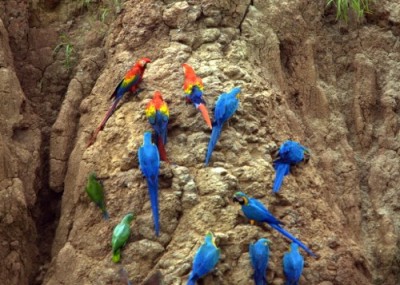
Figure 9. Clay licks attract large flocks and can potentially support ecotourism. Image by Brian Ralphs. Click image to enlarge.
-


What can you do?
Now that you have a better understanding of the illegal parrot trade, you are better equipped to help.
- Next vacation? Consider ecotourism. Visit The International Ecotourism Society Web site and/or the agencies listed in LafeberVet’s Ten Things Every Avian Veterinarian Should Know About Conservation Medicine.
- Giving your time or money? Request information about finances and projects supported from charities you plan to support regularly or with substantial gifts. Although there is debate on the specific target for the proportion of charity unds that should go to overhead costs, the goal is generally less than 30% with a national median of 10%. Nevertheless there are some very worthwhile organizations that may spend up to 50% of funds on fund-raising and administration. Visit GuideStar or the Better Business Bureau for additional information on evaluating a charity’s reports.
- Think parrot ownership is for you? Consider carefully and if you elect to go forward, only purchase captive-bred birds from reliable sources.
- Visit LafeberVet’s Ten Things You Can Do to Promote Avian Conservation for additional advice.
Conclusion
The illegal wildlife trade is a large and complex industry that has fed and clothed many of the poorest people in the world. Of course smuggling has also brought many species to the brink of extinction (Pires 2011). Although the topic can appear overwhelming, on Earth Day and in the days that follow, we owe it to parrots to learn more about the world around us—and to do what we can.
Macaw ID Slideshow: Photos & Fast Facts
References
Nasogastric Tube Placement in the Rabbit
Video
Video produced by M. Scott Echols, DVM, DABVP (Avian Practice) and narrated by Marla Lichtenberger, DVM, Dipl. ACVECC. Video script adapted from Dr. Paul-Murphy’s article by Christal Pollock, DVM, DABVP (Avian Practice). Video script reviewed by Drs. M. Lichtenberger , M.S. Echols, Natalie Antinoff, DVM, DABVP (Avian Practice) and S. Orosz, DVM, DABVP (Avian Practice), DECZM.
Introduction
When a rabbit is weak, dehydrated, and has been anorectic for more than 24 hours, use of a nasogastric (NG) tube can be less stressful and more successful than syringe feeding (Fig 1). Nasogastric intubation is also indicated in rabbits that will undergo surgery involving the oral cavity, esophagus, stomach, or biliary tract. Enteral feeding is an essential component in recovery from illness, as it delivers calories, rehydrates stomach contents, promotes gastrointestinal motility, and prevents hepatic lipidosis. Overweight, anorectic rabbits are particularly at risk for developing hepatic lipidosis.

Figure 1. Nasogastric tube placement can be more successful than syringe feeding in the weak, dehydrated rabbit that has been anorectic for more than 24 hours. Click image to enlarge.
Equipment needed
- 3.5-to 8-French soft, flexible, pediatric feeding tube (Argyle tube, Kendall Company). This tubing is softer than a red rubber tube, and a stylet is not necessary. Select an 8-French tube for larger rabbits (Oryctolagus cuniculus) and a 5-French tube for large guinea pigs (Cavia porcellus). Use a 3.5-French tube in small guinea pigs.
- Local anesthetic (i.e. 2% lidocaine gel, lidocaine viscous, or proparacaine hydrochloride)*
- Syringe, 6-12 mL
- Water-based lubricant
- Tape
- Suture material or surgical staples, white porous tape, and needle holders, or surgical glue and latex glove
Technique for nasogastric tube placement in the rabbit:
- Determine the length of tubing necessary to reach the stomach by measuring from the tip of the nose to the last rib (Fig 2). Mark this point with a piece of tape on the tube or with a permanent marker. Determine the volume needed to flush the tube.
Figure 2. Determine the tube length needed to reach the stomach by measuring from the tip of the nose to the last rib. Click image to enlarge.
- Place a local anesthetic into the rabbit’s nares at least 2-3 minutes before tube placement. Instill both nostrils in case tube placement must be attempted in the other naris. Briefly elevate the head to promote coating of the nasal mucosa with local anesthetic (Fig 3).
Figure 3. Instill a local anesthetic into both nares. Click image to enlarge.
- Have an assistant properly restrain the rabbit. Protect its back and flex the head ventrally, ensuring the neck is straight to avoid tracheal compression.
- With a generous amount of lubricant at the tip of the feeding tube, gently insert the tube ventromedially into the ventral nasal meatus(Fig 4). Do not use a stylet, as the esophageal mucosa is delicate and easily torn.
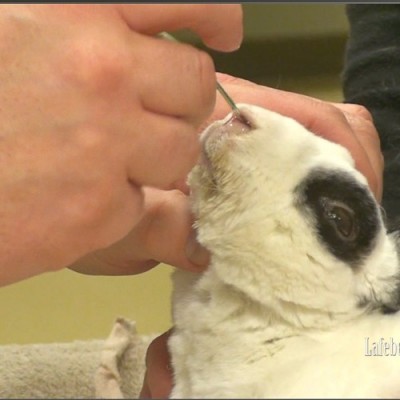
Figure 4. Tilt the head up to gently insert the tube into the ventral nasal meatus.
Direct the tube ventromedially. Click image to enlarge. - Rabbits that will not tolerate nasogastric intubation with topical anesthetic alone will need heavy sedation or light anesthesia to place the nasogastric tube.
- Advance the tube until the end reaches the stomach (previously marked in Step #2)(Fig 5).
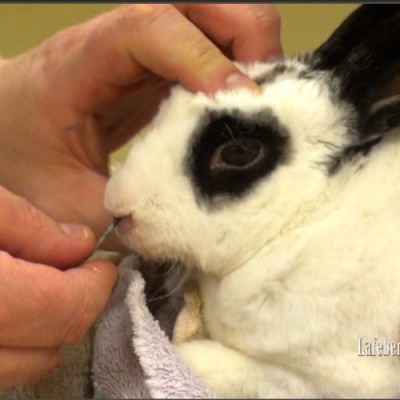
Figure 5. Once the tube is in the ventral nasal meatus, place the neck in a normal, flexed position to allow the tube to slide into the oropharynx and esophagus instead of the trachea. Click image to enlarge.
If resistance is met, gently withdraw the tube and attempt to pass it while gently rotating the tube. If the tube still cannot pass, then place the tube in the other nostril. Occasionally an elongated tooth root can cause resistance.
- Verify tube placement using more than one method:
- Aspirate gastric contents.
- Take a survey lateral radiograph to confirm tube position (Fig 6). Some tubes have a radiodense marker or a small amount of non-iodinated contrast material can be instilled into the tube if need be.
- The tube may also be palpated within the esophagus, although this is difficult with small diameter tubes.
- Air may also be injected through the tube while the stomach is ausculted for a gurgling sound.
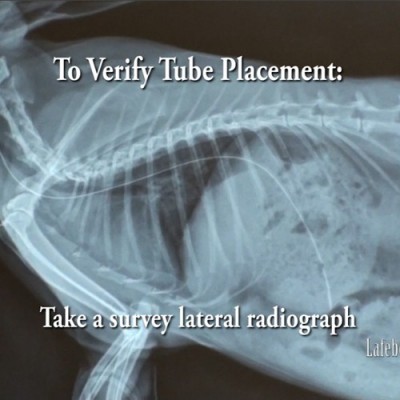
Figure 6. One method to verify tube placement is to take a survey lateral radiograph. Click image to enlarge.
*** Do not rely upon flushing the tube with water, as a depressed or sedated rabbit will likely make no coughing sounds if the tube is in the trachea.
- Secure the tube to the nose using tape tabs and suture (Fig 7), or secure it further along the length of the tube between the ears where surgical staples can be applied (Fig 8).
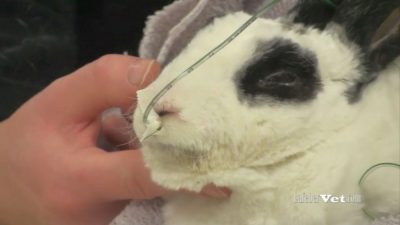
Figure 7. The tube can be secured to the nose using butterfly tape and suture. Click image to enlarge.
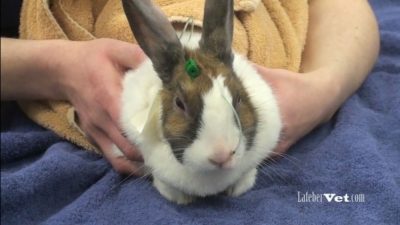
Figure 8. The nasogastric tube can also be secured between the ears. Click image to enlarge.
Another method uses surgical glue and a cut piece of latex glove. Insert your index finger into a latex glove and place the finger firmly over the tube as it passes over the rabbit’s nose. Liberally apply surgical glue between the glove and the tube, holding the tube in place until the glue has begun to set. Then carefully remove your finger from the glove, trimming all but a small patch that overlies and anchors the tube.
- Curve the tube up between the eyes and ears and along the back of the head.
- Cap the tube opening to prevent air from building up within the stomach.
- Rabbits generally tolerate NG tubes well, and it is best to avoid surgical collars for rabbits. However, if necessary, use of a soft, recovery collar will prevent premature tube removal and is usually well tolerated.
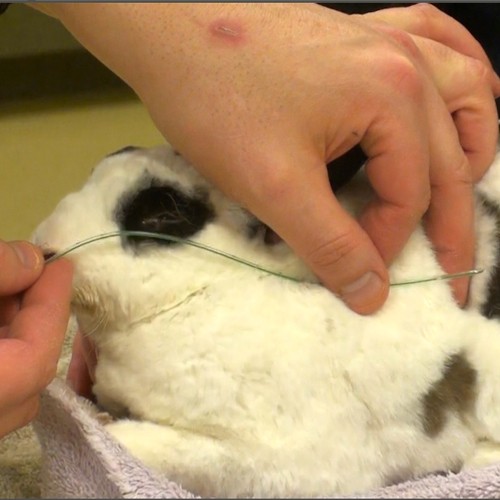


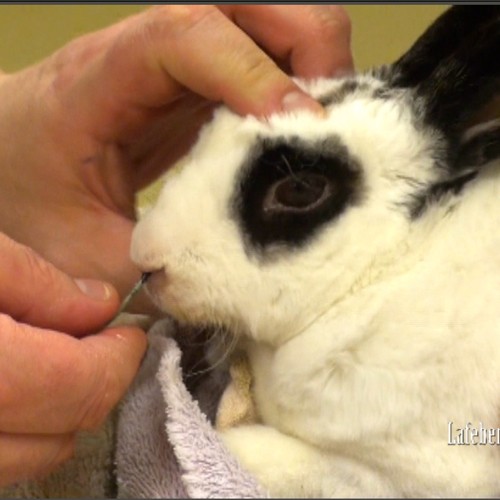


Tube feedings
Deliver Emeraid Intensive Care Herbivore or Emeraid Sustain Herbivore slowly by syringe into the NG tube every 6 hours. Use a small syringe (i.e. 3 ml or smaller) to minimize the pressure on the small-diameter tube (Fig 9). Emeraid IC Herbivore is a partially elemental diet designed for the critically ill herbivore, so it is particularly well suited for feeding a rabbit that requires NG tube placement. Emeraid Herbivore easily passes through a 5-French tube; the formula must be diluted slightly to pass through a 3.5-French tube (Marla Lichtenberger, personal communication, June 21, 2011). Critical Care Fine Grind (Oxbow Animal Health; Murdock, NE) is an alternative product.

Figure 9. Using a small syringe, slowly deliver food every 6 to 8 hours to minimize pressure on the small-diameter nasogastric tube. Click image to enlarge.
Follow every feeding with at least 5-6 ml of water to keep the tube patent, and monitor the rabbit carefully for stool production. Slightly soft droppings are typically seen within 12-36 hours.
Continue to offer greens, grass hay, and water free choice as the rabbit can still eat, drink, and swallow around the tube.
Tube removal
The NG tube may be left in place for weeks or until the rabbit is eating on its own and producing stool. The tube is easily removed in the conscious rabbit.
Contraindications and potential complications
Absolute contraindications for NG intubation include severe trauma to the midface or recent nasal surgery. Relative contraindications are also quite rare and include coagulopathy, esophageal stricture, and alkaline ingestion.
In human medicine, reported complications vary widely from 0.3% to 8.0%. The most common problems are tube-related and include tube knotting and impaction, the tube doubling back and kinking, tube breakage, or tube obstruction and rupture with syringing. Epistaxis may also occur, but generally can be avoided by generously lubricating the tube tip and using gentle technique. Nasal discharge can also be observed with tube irritation or contamination of the lower respiratory tract. In these instances, remove the tube and implement antibiotic therapy (Fig 10). Other potential albeit uncommon complications include bronchial placement leading to atelectasis, pneumonia and lung abscess. In some rabbits, tube or collar placement can also be extremely stressful for the severely debilitated rabbit leading to secondary gastrointestinal stasis.
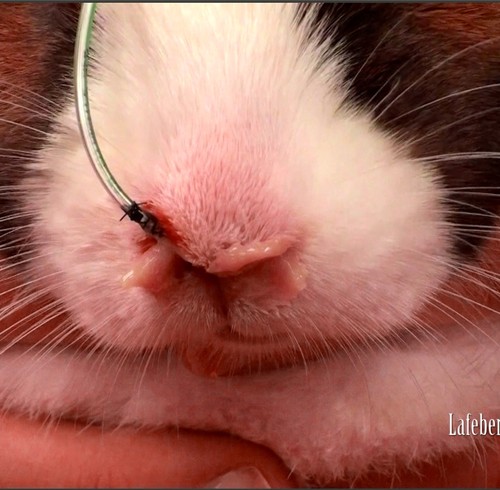
Figure 10. Remove the tube immediately if nasal discharge develops. Click image to enlarge.
References
Presenting problem: Crop Burn in Birds
Crop burns are commonly caused by thermal injury in young birds and, in rare instances, by ingestion of caustic chemicals in adult birds. Crop burn is generally caused by feeding formula that is too hot (>110ºF or 43.3ºC) or less commonly, contact with a heat lamp or heating pad. Damage typically occurs in the gravity dependent right ventral region of the crop where the weight of the food bolus presses heated material against the skin. This increased thermal exposure can lead to necrosis of the crop wall and skin forming a fistula that can leak food . . .
To continue you need to be a LafeberVet.com member. (Français), (Español)
Pour continuer, vous devez être un membre LafeberVet.com
Pour les vétérinaires. Par les vétérinaires.
Le site Lafervet.com est conçu pour une utilisation par les vétérinaires. Il est ouvert aux vétérinaires diplômés, aux techniciens vétérinaires diplômés, aux animaliers et aux étudiants dans ces domaines.
Créer un compte pour accéder à des articles et des ressources du site.
L'inscription est gratuite.
Para continuar, debe ser miembro de LafeberVet.com
Para Profesionales Veterinarios. Por Profesionales Veterinarios.
El sitio Lafervet.com es para uso de los profesionales veterinarios. Está abierto a los veterinarios licenciados, técnicos veterinarios licenciados, rehabilitadores licenciados y estudiantes en estos campos.
Cree una cuenta para acceder a los artículos y recursos del sitio.
La registro es gratis.
Already a LafeberVet Member?
Please Login
Blood Collection in Ferrets
All but the weakest ferrets can be challenging to restrain for blood collection. Consider sedation or general anesthesia, particularly if the handler or phlebotomist is relatively inexperienced; however remember that anesthesia can affect ferret hematology.
Use this video clip or article with still images to review equipment needed, and potential venipuncture sites including the jugular vein, cranial vena cava, lateral saphenous vein, and cephalic vein . . .
To continue you need to be a LafeberVet.com member. (Français), (Español)
Pour continuer, vous devez être un membre LafeberVet.com
Pour les vétérinaires. Par les vétérinaires.
Le site Lafervet.com est conçu pour une utilisation par les vétérinaires. Il est ouvert aux vétérinaires diplômés, aux techniciens vétérinaires diplômés, aux animaliers et aux étudiants dans ces domaines.
Créer un compte pour accéder à des articles et des ressources du site.
L'inscription est gratuite.
Para continuar, debe ser miembro de LafeberVet.com
Para Profesionales Veterinarios. Por Profesionales Veterinarios.
El sitio Lafervet.com es para uso de los profesionales veterinarios. Está abierto a los veterinarios licenciados, técnicos veterinarios licenciados, rehabilitadores licenciados y estudiantes en estos campos.
Cree una cuenta para acceder a los artículos y recursos del sitio.
La registro es gratis.
Already a LafeberVet Member?
Please Login