
The Collapsing Ferret webinar was reviewed and approved by the American Association of Veterinary State Boards (AAVSB) Registry of Approved Continuing Education (RACE) program for 1 hour of continuing education credit for veterinarians and veterinary technicians in jurisdictions that recognize AAVSB RACE approval. You have three chances to take this post-test and pass. With a passing grade, you will see your results and a link to your continuing education certificate . . .
Pour les vétérinaires. Par les vétérinaires.
Le site Lafervet.com est conçu pour une utilisation par les vétérinaires. Il est ouvert aux vétérinaires diplômés, aux techniciens vétérinaires diplômés, aux animaliers et aux étudiants dans ces domaines.
Créer un compte pour accéder à des articles et des ressources du site.
L'inscription est gratuite.
Para Profesionales Veterinarios. Por Profesionales Veterinarios.
El sitio Lafervet.com es para uso de los profesionales veterinarios. Está abierto a los veterinarios licenciados, técnicos veterinarios licenciados, rehabilitadores licenciados y estudiantes en estos campos.
Cree una cuenta para acceder a los artículos y recursos del sitio.
La registro es gratis.
Already a LafeberVet Member?
Please Login
Thank You For Attending
The Collapsed Ferret: More Than Insulinoma
 |
Presented by Cathy Johnson-Delaney, DVM and hosted by LafeberVet |
Enter the Drawing & Provide Feedback
Please complete the brief
evaluation form/Expert Q&A survey
to share feedback, suggest future topics,
and enter the drawing for Ferret Medicine and Surgery

Test Your Knowledge (OPTIONAL)
LafeberVet utilizes an automated grading system.
So, you will need to register and login to LafeberVet
for FREE to access the post-test.
With a passing grade, you will be able to
download your personalized continuing education certificate.

Download the Housekeeping PDF
Download the “Housekeeping” PDF for information
on the free drawing and RACE-approved webinar recording
as well as links to the quiz, evaluation form/survey, and more.

Webinar sponsored by EmerAid
Reproductive Disease in Female Psittacine Birds
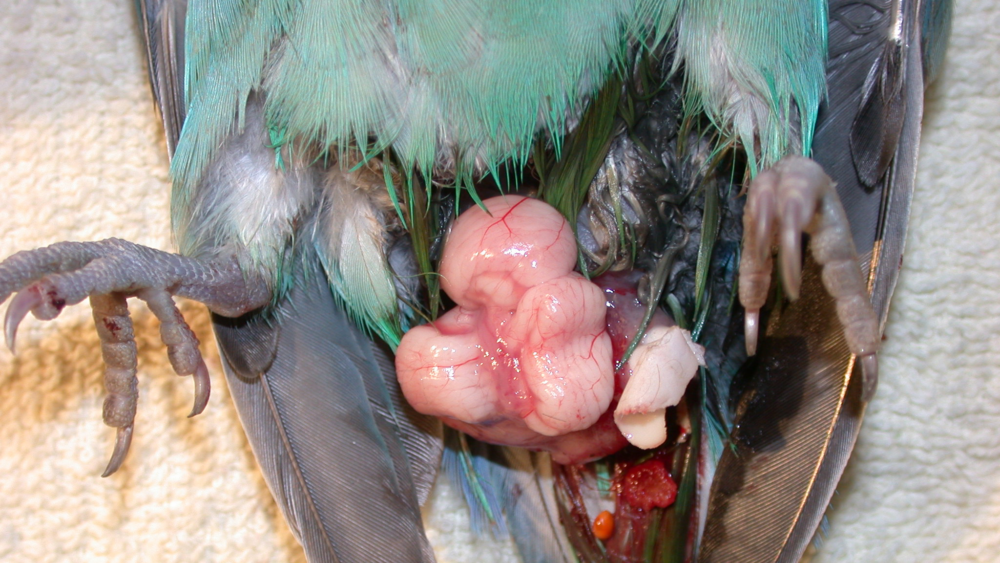
Photo: Dr. Isabelle Langlois
Save the Date
Save the Date for the LafeberVet webinar “Reproductive Disease in Female Psittacine Birds” by Don Harris, DVM.
Date: Wednesday, June 24, 2026
Time: 2 pm EDT (New York) (UTC -04:00) What time is this in my time zone?

Abstract
While reproductive disease in captive psittacine birds can take on multiple forms (sometimes all at once), the condition most encountered by the avian practitioner is dystocia or egg binding. Egg binding will be the primary focus of this webinar presentation. There are many approaches to resolving the condition of egg binding. What I will present here is not the right way or the wrong way, they are simply my ways. After 45 years in avian practice, these are methods that I have found to be both safe and effective, although no method is without limitations.
Outline
- Clinical presentation
- Subjective parameters
- Clinical signs
- Bottom-dwelling
- Posturing
- Shredding
- Straining
- History
- Previous laying (or not)
- Nutrients
- Dietary deficiencies
- Ultraviolet light deficiencies
- Indoor
- Outdoor
- Sex
- Confirmed
- Supposed
- Clinical signs
- Objective parameters
- Sex
- Posture
- Palpation
- Radiology
- Subjective parameters
- Conservative management techniques
- Fluid therapy
- Calcium
- Warm humidity
- Soaking- isotonic fluids
- Prostaglandin E2 (PGE2α)
- Time
- Aggressive management techniques
- Cloacal implosion/extraction
- Percutaneous implosion with subsequent passage
- Salpingohysterectomy
About the presenter
Dr. Don Harris is the owner of Miami’s first exotics-only veterinary hospital, Avian & Exotic Animal Medical Center. Don is a graduate of Louisiana State University School of Veterinary Medicine…In 1990, after several years in mixed animal practice, his practice became exclusively avian and exotic. The Avian & Exotic Animal Medical Center was opened in 1996. Don serves as a consulting veterinarian for the Georgia Aquarium Research Center, Miami MetroZoo and Jungle Island in Miami and he is on the Advisory Board of Abaxis Veterinary Diagnostics. Don has also served as Past-President of the South Florida Veterinary Medical Association, the Association of Avian Veterinarians, and the North American Veterinary Community, organizer of the North American Veterinary Conference, the largest veterinary conference in the world… [MORE]
Download and share the press release.
Webinar FAQ
How do I view the live webinar event?
After registering, you will receive a confirmation email via Zoom. To access the webinar on June 24, simply select the Join Webinar button OR copy and paste your personalized URL link into your browser.
When entering the webinar “room”, you will be prompted to download webinar service software. This software can be downloaded immediately before the webinar or right now to ensure a pleasant, viewing experience.
Do I need special equipment to view and listen to a webinar?
All you need is a computer (or similar device) with an internet connection. Provided your computer has speakers (can you listen to music?) you will be able to view and listen to the webinar.
What web browsers do you recommend?
Recommended browsers include Internet Explorer 8 or greater, Mozilla Firefox 3 or greater, Google Chrome or Safari 4 or later. Adobe® Flash® Player 11.3 or later must be installed.
What if I’d like to view the course on a mobile device?
Apps for viewing the webinar are available for Apple and Android devices.
Will I be able to ask questions?
If you attend the live webinar, you will be able to ask questions by typing into the Q&A field. The speaker will read out and answer as many of these questions as possible. Questions not addressed during the live webinar will be answered by email at a later date, then posted on this webinar page.
What happens if I miss the live webinar?
The live event will be recorded, and the recorded version will be available for viewing on this webinar page several days after the live event.
Additional questions or concerns?
Please contact LafeberVet at [email protected].
RACE approval
This program is approved for 1.0 credit hour for veterinarians and veterinary technicians in jurisdictions that recognize American Association of Veterinary State Boards (AAVSB) Registry of Approved Continuing Education (RACE) approval.
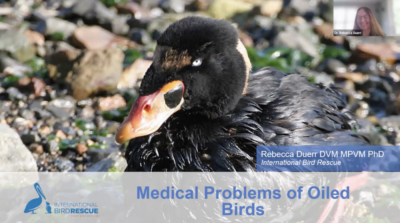
Medical Problems of Oiled Birds
Introduction
Rebecca Duerr, DVM, MPVM, PhD presented this virtual dinner presentation for the Kansas State University College of Veterinary Medicine Exotics Club as part of the Lafeber Company Student Program.
Recording
Download the presentation
Download a PDF of Dr. Duerr’s PowerPoint presentation.
Reference
Test Your Knowledge: Foraging and Enrichment
The Foraging and Enrichment webinar was reviewed and approved by the American Association of Veterinary State Boards (AAVSB) Registry of Approved Continuing Education (RACE) program for 1 hour of continuing education credit for veterinarians and veterinary technicians in jurisdictions that recognize AAVSB RACE approval. You have three chances to take this post-test and pass. With a passing grade, you will see your results and a link to your continuing education certificate . . .
Pour les vétérinaires. Par les vétérinaires.
Le site Lafervet.com est conçu pour une utilisation par les vétérinaires. Il est ouvert aux vétérinaires diplômés, aux techniciens vétérinaires diplômés, aux animaliers et aux étudiants dans ces domaines.
Créer un compte pour accéder à des articles et des ressources du site.
L'inscription est gratuite.
Para Profesionales Veterinarios. Por Profesionales Veterinarios.
El sitio Lafervet.com es para uso de los profesionales veterinarios. Está abierto a los veterinarios licenciados, técnicos veterinarios licenciados, rehabilitadores licenciados y estudiantes en estos campos.
Cree una cuenta para acceder a los artículos y recursos del sitio.
La registro es gratis.
Already a LafeberVet Member?
Please Login
The Collapsing Ferret: More Than Insulinoma
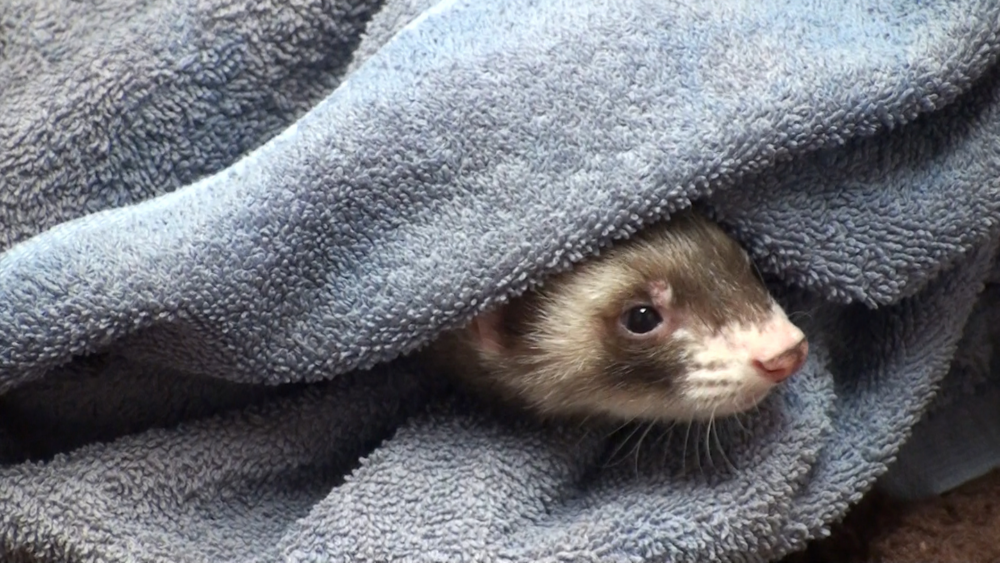 Photo credit: Dr. Ariana Finkelstein
Abstract
Clinicians are often presented with older ferrets exhibiting ataxia, intermittent collapse, exercise intolerance, changes in appetite, and muscle mass loss. The immediate jump to a diagnosis of insulinoma can unfortunately happen when a quick test with a glucometer measures a blood glucose under 70-90 mg/dL. Although there has been more testing of these glucometers to show that they are often inaccurate, and no consideration is made towards when, what and how much the ferret ate, the ferret may be placed on prednisone and sent home. Sometimes bloodwork is performed, which may yield a more accurate glucose if it was processed quickly, and radiographs were taken which were inconclusive other than noting splenomegaly and possibly cardiomegaly. The ferret does not respond to the prednisone and signs may even worsen.
This lecture will explore the differentials for a collapsing ferret which include further diagnostics and imaging. Additional potential causes of these clinical signs include dental, cardiac, renal, and musculoskeletal disease as well as other types of. Islet cell disease can be correctly diagnosed, but not on one glucometer reading as normal ferret physiology fluctuates blood glucose differently than dogs and cats. Case reports illustrating more common reasons for collapsing geriatric ferret will be discussed.
Download a PDF of Dr. Johnson-Delaney’s abstract and outline.
Outline
- Learning objectives
- Understand basic ferret anatomy and physiology as relates to metabolism and disease
- Develop an appropriate differential diagnoses list
- Identify and obtain appropriate diagnostics, including imaging
- Provide urgent care of the ferret
- Develop a diagnosis-based treatment plan, including client education
- Important anatomy and physiology
- Species considerations
- Domesticated species (Mustela putorius furo)
- Single global blood type
- No true wild “fitch” ferrets
- General characteristics of the gastrointestinal tract
- Simple, relatively short gastrointestinal tract.
- No cecum
- Rapid transit time: 1.75–3 hours
- Nutrition
- High protein, high fat diet
- 40–45% protein
- 30–40% fat
- Limited fiber digestion (<4%)
- Avoid carbohydrate-rich diets
- Feeding considerations
- Feed diets supported by feeding trials (avoid boutique diets)
- Raw diets: risk of pathogens (e.g., Campylobacter, Salmonella)
- Whole prey: domestic prey higher in fat/carbohydrates than wild prey
- Gastrointestinal tract
- Gastric physiology
- Spontaneous acid and proteolytic enzyme secretion
- Stimulated by histamine and vagal input
- Innervation
- Parasympathetic fibers of vagus
- Sympathetic via celiacomesenteric plexus
- Histamine effects
- Stimulates acid secretion
- Low endogenous histamine levels
- Limited histamine-forming enzyme activity (L-histidine decarboxylase)
- Histamine H2 receptor antagonists abolish acid secretion response to exogenous histamine (pentagastrin)
- Atropine only reduces response 30%
- Intestinal anatomy and function
- Small intestine
- Duodenum (3 sections)
- Major duodenal papilla (~3 cm from pylorus)
- Minor papilla may be absent
- Jejunum and ileum indistinguishable (jejunoileum)
- Innervation
- Vagus nerve
- Sympathetic trunk (celiac, cranial mesenteric plexus)
- Duodenum (3 sections)
- Colon
- Tubular glands and goblet cells
- Sulfated mucosubstances (similar to humans)
- Motility
- Similar to canine ileum
- Vagus-dependent
- Mediated by cholinergic and noncholinergic pathways
- Sacral innervation is excitatory
- Retroperistalsis contributes to vomiting
- Ferrets are used as emetic models
- Small intestine
- Pancreas
- Gallbladder and GI integration
- Cholecystokinin (CCK) function
- Stimulates gallbladder contraction
- Inhibits gastric emptying
- Increases intestinal and colonic motility
- Cholecystokinin (CCK) function
- Overall GI function
- Highly motile, secretory system
- Designed for rapid transit
- Requires highly digestible food
- Gastric physiology
- Species considerations
- Differentials for a collapsed ferret
- Hypoglycemia
- Islet cell endocrinopathy (insulinoma)
- Inappetence/anorexia
- Systemic illness
- Dental disease
- Pain
- Gastrointestinal disease (gastroenteritis, malabsorption, inflammatory bowel disease, etc.)
- Neoplasia
- Poor diet or feeding practices
- Inappropriate diet
- Feeding irregularities, competition, stress at the food bowl
- Cardiac disease
- Cardiomyopathy (dilated, hypertrophic, restrictive)
- Arrhythmias
- Heart block
- Congestive heart failure
- Other causes
- L-carnitine deficiency
- Pain
- Orthopedic
- Spinal
- Osteoarthritis
- GI
- Dental
- Neoplasia
- Hypoglycemia
- Clinical evaluation: symptoms versus etiology
- Key history questions
- Diet and feeding schedule
- What diet is the ferret eating?
- When was the last meal?
- Access to food?
- Is food always available?
- Can the ferret get to the food easily?
- Clinical signs?
- Does the ferret paw at its mouth?
- Hypersalivate?
- Show hindquarter weakness prior to going “flat ferret/speed bump”?
- Show any signs of nausea or pain?
- Show inactivity, lack of playing, other limitations?
- Diet and feeding schedule
- Measuring blood glucose
- One low blood sugar result on a collapsed ferret in the exam room should not be a definitive reason to diagnose “insulinoma”
- Ferret normal can be 66–69 mg/dL. Lower than dog/cat
- In clinic blood glucose analyzers – immediate reading
- Greenacre: AEMV 2011
- Considered most ferrets 66–69 mg/dL on regular lab
- Every human glucometer indicated severe hypoglycemia
- Alpha Trac C overestimated by 15% but was closest
- Alpha Trac F, PBGM One Touch, and AccuChek poor correlation
- Alpha Trak 2 – on C was fairly good, at least for trends
- Alpha Trak 3 – so far hard to correlate
- Send out: need to spin immediately, separate serum
- Key history questions
- Islet cell endocrinopathy
- Referrals
- Signalment: most are older ferrets
- History
- Collapsing episodes
- Most not directly related to meals
- Many have pattern, often connected to sleeping or inactivity
- Many have concurrent diseases and medical treatments
- Collapsed or lays around (flat ferret, speed bump, pelt)
- May walk a little, play a little then collapses again
- Sometimes hypersalivation
- Sometimes pawing at the mouth, bruxism
- Sometimes gagging or tremors
- May/may not be progressive – frequency
- True testing
- Feed the ferret
- Time 2 hours, 3 hours, 4 hours
- Glucose and insulin blood draws
- When glucose drops below 60 mg/dL, use serum for insulin – University of Tennessee Endocrinology Laboratory – Validated ferret insulin assay
- NOTE: If the blood glucose is below 50 mg/dL at 2 hrs: high suspicion
- If blood glucose is below 40 mg/dL at 3 hrs – likely
- If blood glucose is over 70 mg/dL at 4 hours – unlikely
- Interpretation
- Insulin
- Elevated or “within normal limits”
- Compare with low blood glucose.
- Normal blood glucose at 2 or 3 hours, but insulin elevated – suspicious
- If BG less than 50 mg/dL at 2 hrs and high insulin – likely
- Insulin
- Full workup: assess other organs
- Many have concurrent gastrointestinal, liver, or kidney disease or other endocrinopathies
- Most have some degree of adrenal disease, should have deslorelin implant
- CBC, chemistries, radiographs, abdominal ultrasound (may find tumors)
- Imaging: large nodules may be seen with ultrasound, sometimes evidence of gastritis/gastroenteritis, gallstones, changes in liver.
- Surgery: If ferret good candidate, remove neoplastic islet cell masses
- Usually peel out unless adherent adjacent organs, invagination, neovascularization, metastasis
- May not be able to find actual nodules
- Removal of part of the pancreas? Diffuse changes can metastasize into the liver.
- Create diabetes mellitus, exocrine pancreas insufficiency
- IV fluids during/post-surgery should contain glucose
- A rebound insulin surge may occur so monitor for several days post-op. May use dexamethasone in fluids post op
- Chemotherapy?
- Doxorubicin 1 mg/kg IV two to three treatments, 2–3 weeks apart has helped slow progression
- In some, virtual elimination of symptoms for months
- May have cardiotoxic effects: closely monitor with ECG and echocardiography. Do not use if there is concurrent cardiac disease
- Supportive care
- Recognize nausea, pain
- Famotidine at 1–2 mg/ferret q 24h
- Maropitant helps with gut pain (?): 1 mg/kg PO q 24h
- Buprenorphine: Ethiqa: 0.6 mg/kg SC q 72h
- Gabapentin: 3–10 mg/kg PO q8–12h prn
- Make sure eats every 4–6 hours
- Subcutaneous (SC) fluids prn
- Medical therapy
- Diazoxide PO
- Published doses seem too low for efficacy in my experience
- Start at 10 mg/kg PO q 12h
- Can increase to 30 mg/kg PO q 12h
- Depends on compounding formulation for absorption?
- Corticosteroid PO
- Dexamethasone 0.5–1 mg/kg PO q12h
- Prednisone 0.25–2 mg/kg PO q12h
- Can be used with diazoxide up to 2 mg/kg/day
- Side effects: fatty liver, iatrogenic Cushing’s disease, GI bleeding, hyperactivity, hypertension, alopecia
- Contraindicated with cardiomyopathy, renal and preexisting liver disease.
- Monitor: CBC, Chems, Imaging, fecal occult blood, cytology, BP, UA with specific gravity
- Apocaps® (large dog size)
- Nutraceutical
- One-half capsule per day per ferret
- Anecdotal action against solid tumors
- Can’t hurt – inhibits neovascularization
- Contains antioxidants
- Available on Amazon
- Diazoxide PO
- Cardiac insufficiency
- Cardiac conditions
- Cardiomyopathy: dilated, hypertrophic, restrictive
- Cardiomegaly
- Hypotension/poor perfusion
- Pulmonary edema
- Ascites
- Arrhythmias – Grade 2 or 3 heart block, atrial fibrillation, etc.
- Cardiomyopathy
- Clinical signs
- Weakness, collapse
- Arrhythmias
- Dyspnea
- Poor perfusion
- Diagnostics
- ECG
- Echocardiography
- Radiographs
- Blood pressure measurement
- Treatment
- Pimobendan
- ACE inhibitors (enalapril, benazepril)
- Diuretics (furosemide)
- Terbutaline for heart block
- Pacemaker for complete heart block
- Emergency cardiac management
- Acute cardiac arrest (CPR may be effective)
- Stabilize before major diagnostics
- Heat
- Oxygen
- Get IV access as soon as possible
- Can do SC fluids while getting IV
- Dobutamine
- 0.01 mg/kg slow bolus IV to increase HR, stabilize rhythm
- May need constant rate infusion for 24–72 hours
- Clinical signs
- Cardiac conditions
- Additional differentials
- L-carnitine deficiency
- Older ferrets
- Metabolism abnormality linked to skeletal muscle weakness
- Hindquarters paresis, collapse
- Supplement with L-carnitine
- Pain
- Orthopedic
- Spinal
- Osteoarthritis
- Dental disease, especially fractured canines, periodontal
- Neoplasia
- Gastrointestinal
- Spleen, splenomegaly
- Chordoma
- Gastrointestinal disease
- Urolithiasis
- Gallstones
- L-carnitine deficiency
- Case-based applications
- Case 1: Misdiagnosed insulinoma → cardiac disease
- Case 2: Dilated cardiomyopathy with arrhythmia
- Case 3: Severe arrhythmia with cardiomyopathy
- Case 4: Cardiac disease misdiagnosed as insulinoma
- Conclusion
- Perform thorough diagnostic evaluations
- Islet cell endocrinopathy
- Confirm with controlled testing
- Recognize limitations of glucometers
- Address concurrent disease
- Consider major differentials
- Insulinoma
- Cardiac disease
- L-carnitine metabolism disruption
- Pain
Download a PDF of Dr. Johnson-Delaney’s abstract and outline.
About the presenter
Currently partially retired, Cathy Johnson-Delaney practiced avian, exotic and laboratory animal medicine in the greater Puget Sound area of Washington State for over 30 years. Dr. Johnson-Delaney was a founding member of the Washington Ferret Rescue & Shelter. She was named the 2003 Exotic DVM of the Year and she received the 2009 Oxbow Exotic Mammal Health Award. Dr. Johnson-Delaney is also a Past President of both the Association of Avian Veterinarians and the Association of Exotic Mammal Veterinarians. Cathy is the principal author and editor of the textbook Ferret Medicine and Surgery, and she has written and lectured extensively [MORE]
Webinar recording
Book drawing/evaluation form
Please complete the brief survey/evaluation form by Friday, June 5, at 11:59 p.m. CDT to enter a drawing for a complimentary copy of Ferret Medicine and Surgery and to provide feedback or suggest future webinar topics.
Book Drawing – Terms and Conditions
- Eligibility: Participation is open to all “The Collapsed Ferret “webinar registrants licensed veterinary professionals and wildlife rehabilitators. No purchase is necessary to enter or win. This promotion is void where prohibited by law.
- How to enter: Participants must follow the entry instructions provided in the online survey. Only one entry per individual will be accepted.
- Prize: The prize consists of one (1) Ferret Medicine and Surgery book as described in the promotional materials. Substitution of an ebook or a textbook of equivalent value is at the sole discretion of the Sponsor.
- Winner selection and notification: The winner(s) will be selected at random from all eligible entries and notified via the contact information provided at the time of entry. If a selected winner cannot be contacted, does not respond within the stated timeframe, or fails to meet eligibility requirements, an alternate winner may be selected.
- Use of information: By entering, participants consent to the use of their name, credentials, and country (if applicable) for the limited purpose of announcing the winner. Personal information collected will be used solely for the administration of this drawing and delivery of the prize, in accordance with applicable privacy laws.
- Limitation of liability: The Sponsor assumes no responsibility for any technical issues, communication errors, or unauthorized interventions that may affect participation or the outcome of the drawing.
- Sponsor: This drawing is sponsored by Lafeber Company. This promotion is not sponsored, endorsed, or administered by, or associated with, any social media platform used to promote it.
Post-test
Take the brief post-test to earn 1 hour of continuing education credit. With a passing grade, you will receive a continuing education certificate in jurisdictions that recognize AAVSB RACE approval.
Expert Q&A
Most questions were addressed during the live event, however, remaining questions were answered by email. Questions answered in writing by Dr. Johnson-Delaney during intermission are also listed below.
PANCREATIC BETA CELL TUMORS
What levels of glucose in ferrets with insulinoma are considered as stabilized?
[The goal is to] keep [blood glucose] above 60 after 4 hours and/or [ensure the ferret is] asymptomatic
What are normal values for insulin in blood? What is an elevated value?
The following information on normal insulin levels is taken from Table 7.3 of Schoemaker NJ, van Zeeland YRA. Endocrine diseases of ferrets. In: Quesenberry KE, Orcutt CJ, Mans C, Carpenter JW (eds). Ferrets, Rabbits, and Rodents: Clinical Medicine and Surgery, 4th ed. Elsevier, St. Louis, MO; 2021:85-88.

- (40) Mann F.A, Stockham S.L, Freeman M.B, et al. Reference intervals for insulin concentrations and insulin:glucose ratios in the serum of ferrets. J Small Exot Anim Med . 1993;2:79–83.
- (41) Marini R.P, Ryden E.B, Rosenblad W.D, et al. Functional islet cell tumor in six ferrets. J Am Vet Med Assoc. 1993;202:430–433.
- (a) Clinical Endocrinology Laboratory. College of Veterinary Medicine. University of Tennessee
If you are presented with a collapsed ferret of unknown cause, at what BG reading would you supplement with dextrose if you’re not sure if the low glucose is physiological or pathological?
[If] the ferret just came in; [the] first question is when did it last eat? If it is less than 2-3 hours, take the BG and put dextrose on the gums and retake in 15-30 minutes. It is all dependent on when their last meal was.
CARDIAC DISEASE
Several attendees asked about the Cardiac Formula mentioned during Dr. Johnson-Delaney’s presentation
The Cardiac Formula is referenced in Johnson-Delaney CA (ed). Ferret Medicine and Surgery. Boca Raton, FL: CRC Press Taylor & Francis Group; 2017. Dr. Johnson-Delaney shared:
I researched/developed [the formula], and you make it up for the client. [This formula] is also mentioned in a number of proceedings on nutraceuticals and herbals that Susan Orosz and I have taught, as well as my ferret cardiology lectures. I recommend only using products in the Cardiac Formula that are labeled U.S. Pharmacopeia (USP) or reviewed and approved by ConsumerLab.com.
- 1000 mg L-carnitine
- 1000 mg taurine
- 1000 mg CoQ10
- 400 IU Vitamin E
- +/-160-200 mg Hawthorn if there is no arrythmia or hypertrophic cardiomyopathy
These ingredients are placed in a balanced omega 3-6-9 oil, like VetOmega, which is currently unavailable, so use salmon oil to equal 30 mLs instead.
Keep the mixture refrigerated.
Do not stir or shake as this reportedly breaks fatty acid bonds.
The dose is usually 0.5 ml per ferret per day.
What is the recommended ratio of omega 3:6 fatty acids
The ratio of omega-3 to Omega 6 should be 3:1
MISCELLANEOUS
Any tips for conscious blood sampling? We usually sedate and [use the] cranial vena cava
This attendee was provided with the venipuncture section from Dr. Johnson-Delaney’s Ferret Medicine and Surgery.
The LafeberVet video Blood Collection in Ferrets may also be useful.
Any suggestions to prevent dental problem in ferrets?
Brushing the teeth with a hydrolyzing toothpaste, like we use in cats, [and] dental cleaning under sedation/anesthesia, like we do in other carnivores. [Ferrets fed] kibble diets may have less calculi but more tooth wear.
RACE approval
This program is approved by the American Association of Veterinary State Boards (AAVSB) Registry of Approved Continuing Education (RACE) for 2 hours of continuing education credit for veterinarians and veterinary technicians in jurisdictions that recognize AAVSB RACE approval.
Acknowledgements
- Clinical collaborators and institutions
- Washington Ferret Rescue & Shelter
- Staff of many clinics I’ve worked with
- Diagnostic equipment providers
- Aloka Trivitron Advanced Ultrasound System, Clarius
- Vetronics Services Ltd, Keith Simpson; Vmed/Vchek
References
MVDr. Andrea Henrik
 Andrea Henrik is an avian veterinarian in Hradec Králové of the Czech Republic. Andrea earned her Medicinae Veterinariae Doctor from the Veterinary University of Brno in 2024. She completed a 1-year internship at the Medical Center for Birds under the mentorship of Brian Speer, DVM, DABVP (Avian Practice), DECZM (Avian) as well as an 8-week externship at the exotic animal clinic at Justus Liebig University Giessen. MVDr. Henrik is the founder of Avilore, a Czech brand which specializes in the production and retail of high-quality food, treats, and supplies for parrots.
Avian Nutrition for Purdue
Introduction
Kara Burns, MS, MEd, LVT, VTS (Nutrition), VTS-H (Internal Medicine, Dentistry) presented this distance-learning Lunch and Learn for the Purdue University College of Veterinary Medicine Exotics Club as part of the Lafeber Company Student Program.
Recording
Dr. Rebecca Duerr presents on Oiled Wild Bird Care to the Kansas State University Exotic Animal Medicine Club
The Lafeber Company Veterinary Student Program supports the growth of zoological medicine in veterinary medical schools. View the calendar of events below for a list of speakers and continuing education events sponsored at participating schools. Then visit our Student Program page for additional information or to browse our Student Program photo album.

As part of the Student Program, Lafeber Company sponsored the Texas A&M University College of Veterinary Medicine Zoo, Exotics & Wildlife Club Annual Animal Wetlabs. Shown here, participants in the Avian Handling and Hematology Laboratory.
Calendar of Events
| Date | School | Event Sponsored |
|---|---|---|
| April 20, 2026 | Kansas State University | Dr. Rebecca Duerr , Senior Director of Research and Veterinary Science for the International Bird Rescue, virtually presented Medical Problems of Oiled Birds to the Exotic Animal Medicine Club. |
| April 7, 2026 | University of Arizona | Dr. Amanda Fisher of the University of Pittsburgh virtually presented Laboratory Animal Medicine and Cases to the ZEWA Club |
| April 4, 2026 | Cornell University | Wildlife Conservation Day |
| March 26, 2026 | Purdue University | Kara Burns, MS, Med, LVT, VTS (Nutrition), VTS-H (Internal Medicine, Dentistry) will virtually present Avian Nutrition Fundamentals |
| March 19, 2026 | Atlantic Veterinary College | Dr. Andrea Henrik virtually presented "Surgery of the Reproductive Tract of Female Birds", co-sponsored by the Association of Avian Veterinarians |
| February 6, 2026 | Atlantic Veterinary College | Dr. Josie Thal of the Alaska Sealife Centre virtually presented on aquatic animal medicine to the ZLA Medicine Club |
| November 20, 2025 | Western University of Health Sciences | Dr. Larry Nemetz discussed Emergency & Critical Care with the Student Chapters of the American Association of Avian Pathologists and Veterinary Emergency and Critical Care Society |
| November 19, 2025 | Louisiana State University | Wildlife, Avian, Zoo & Exotic Medicine Club Rabbit Dentistry Lab, led by Dr. Javier Nevarez |
| November 18, 2025 | Lincoln Memorial University | Dr. Peter Helmer leads an Avian/Exotic Clinical Pathology Case Discussion. This meeting was cohosted with the Pathology Club |
| November 12, 2025 | Atlantic Veterinary College | Hannah Sharpe of the Canadian Food Inspection Agency discusses Shellfish Disease Monitoring and Control |
| October 29, 2025 | University of Tennessee | Liandrie Swanepoel, DVM discusses avian atherosclerosis in a meeting cohosted by the AWE and Nutrition clubs |
| October 25, 2025 | University of Illinois | Second Annual Bunny Bonanza Week & Symposium |
| September 21, 2025 | Atlantic Veterinary College | Lafeber Company sponsored a bird walk hosted by the ZLA Medicine Club. All attendees were entered into a raffle for Sibley's Guide to Birds, 2nd edition. |
| March 28, 2025 | University of Illinois | Grayson Doss, DVM, DACZM, Clinical Associate Professor in Zoological Medicine at the University of Wisconsin presented Hedgehog Anesthesia & Surgery as a distance-learning event for the Non-Traditional Species Club. |
| February 27, 2025 | University of Florida | Kara Burns, MS, Med, LVT, VTS (Nutrition), VTS-H (Internal Medicine, Dentistry) presented Avian Nutrition Fundamentals as a distant-learning event for the WZAAM Club. |
| Jan 22, 2025 | Kansas State University, European Association of Avian Veterinarians Student Group, and Archaeopteryx of Utrecht, Netherlands | Yvonne van Zeeland, DVM, MVR, PhD, DECZM presented Behavior & Medical Issues in Birds: Separate Concerns or One and the Same? as a distant-learning event that explores the intersection of companion parrot behavior and medical care. |
| Nov 6, 2024 | University of Tennesee | Janelle Musser, Tennessee Wildlife Resources Agency Black Bear Support Biologist speaks to the Avian, Wildlife & Exotics Club |
| Oct 14, 2024 | University of California at Davis | Exotic Animal Medicine Board Certification Panel Discussion |
| Oct 5-6, 2024 | North Carolina State University | Parrot Cognition and Behavior Symposium, presented by Drs. Irene Pepperberg and Jan Hooiemeijer, and hosted by the Wildlife, Avian, Aquatic, and Zoological Medicine Club |
| Aug 19, 2024 | North Carolina State University - AAV Student Committee Lunch & Learn | Salina Locke, DVM, DABVP (Avian Practice), Cert AqV presents "Getting Started in Avian Practice + Avian Nutrition Basics" |
| April 19, 2024 | University of Georgia | Dr. Elizabeth Mackey presents "Avian Patients in the General Practice" to the UGA Zoological Medicine Club. This event was co-sponsored by the Association of Avian Veterinarians Student Committee |
| March 26, 2024 | Virginia-Maryland College of Veterinary Medicine | "Sea Turtle Radiographs and CT Scans" Lunch and Learn co-hosted by the Public Veterinary Practice Club and the Veterinary Imaging Club |
| March 19, 2024 | University of Illinois | Sarah Ozawa, DVM, DACZM presents "Exotic Animal Ophthalmology Cases" to the University of Illinois Non-Traditional Species Club. |
| February 17, 2024 | Texas A&M University | Gold sponsor of the 2024 Zoo, Exotics, & Wildlife Club Wet Lab |
| February 15, 2024 | Louisiana State University | Thomas Boyer, DVM, DABVP (Reptile & Amphibian Practice) presents "Reptile & Amphibian Nutritional Diseases" to the LSU Wildlife, Avian, Zoo, Exotic Medicine Club |
| January 9, 2024 | University of Georgia | Assistant Professor of Zoological Medicine, Jörg Mayer, MS, DVM, DABVP (Exotic Companion Mammal Practice), DECZM, DACZM presents Topics in Avian Medicine to the UGA Zoological Medicine Club. |
| December 14, 2023 | University of California at Davis | Kara Burns, MS, MEd, LVT, VTS (Nutrition), VTS-H (Internal Medicine, Dentistry) presents "Avian Nutrition" to the Avian & Exotics Club |
| November 11, 2023 | Michigan State University | Jack Kottwitz, DVM, PhD, CertAqV presents a handling lab for the Zoo, Exotics, Wildlife and Aquatics Club, hosted by Birds and Beaks |
| November 2, 2023 | University of Florida | Dr. April Romagnano presents avian medicine lectures |
| October 5, 2023 | University of Tennessee | Noha Abou-Madi, DVM, MSc, DACZM of Cornell University presents elephant reproduction in general and the twin elephant births at Rosamond Gifford Zoo in particular as a distance-learning event for the exotics club and therio club |
| April 25, 2023 | Michigan State University | Jack Kottwitz, DVM, PhD, CertAqV performs physical examinations at Birds and Beaks, to help this local bird rescue while also serving as a skills lab for students |
| April 18, 2023 | Western University of Health Sciences | Dr. Sydney Pokard presents “Common Emergencies in Exotic Medicine" as a distance-learning event |
| April 12, 2023 | Louisiana State University | Thomas Tully, MS, DVM, DABVP (Avian Practice), DECZM (Avian) presents Exotic Companion Animal Nutrition for the Wildlife, Avian, Zoo, Exotic Medicine and Nutrition clubs |
| April 5, 2023 | Kansas State University | Dr. Sara McReynolds, Asst Animal Health Commissioner of Kansas, presents a Lunch & Learn on HPAI for the Avian Medicine Club |
| March 31-April 2, 2023 | Cornell University | Special Species Symposium, Gold Level Sponsor |
| March 30, 2023 | Kansas State University | Exotic Animal Medicine Techniques wetlab |
| March 29, 2023 | Tufts University Cummings School of Veterinary Medicine | Kemba Marshall, MPH, DVM, DABVP (Avian), SHRM-CP will discuss diversity in zoological medicine as a distance-learning event for the Tufts Veterinary Council on Diversity |
| March 23, 2023 | Auburn University | Dr. Adam Cooner speaks on reptile medicine to the Zoo, Exotics & Wildlife Club |
| March 11-12, 2023 | Atlantic Veterinary College | Co-sponsorship of the International Wildlife Rehabilitation Council Basic Wildlife Rehabilitation Introductory Course for the Zoo, Exotics, and Wildlife Medicine Club |
| March 9, 2023 | University of Minnesota | La’Toya Latney, DVM, DECZM (ZHM), DABVP (Reptile & Amphibian Practice), CertAqV presents Reptile Nutrition 101 as a distance-learning event for the Zoo, Exotics, Aquatics & Wildlife Medicine Club |
| February 18, 2023 | Texas A&M University | Co-sponsor of the Zoo, Exotics & Wildlife Club 8th Annual Wet Lab |
| February 9, 2023 | Ontario Veterinary College | Zoo, Exotics, and Wildlife (ZEW) Club Exotic Animals Clinical Skills Lab |
| February 8, 2023 | University of Florida | Dr. April Romagnano discusses Avian Clinical Cases with the Wildlife, Zoological, and Aquatic Animal Medicine Club |
| February 2, 2023 | University of Georgia | Dr. Cheryl Greenacre presents "Top 10 Neoplasms of Exotic Companion Mammals" to the Zoological Medicine Club |
| September 26, 2022 | Michigan State University | Dr. Rae Porter-Blackwell presents "Rabbit GI Physiology" as a distance-learning event |
| September 14, 2022 | Michigan State University | Dr. Olivia Petritz presents Avian Anatomy & Radiology as a distance learning event also open to Utrecht University veterinary medical students |
| March 7, 2022 | Iowa State University | Jennifer Graham, DVM, DABVP (Avian Practice, Exotic Companion Mammal Practice), DACZM presents on ferret medicine to the Iowa State University College of Veterinary Medicine Zoo, Exotics and Wildlife Club as a distance-learning event |
| February 23, 2022 | University of Minnesota | Kara Burns, MS, Med, LVT, VTS (Nutrition) presents “Rabbit Nutrition & Critical Care Feeding” as a distance-learning event for the University of Minnesota College of Veterinary Medicine. |
| February 18, 2022 | University of Florida | Dr. April Romagnano discusses Avian Clinical Cases with the College of Veterinary Medicine Wildlife, Zoological, and Avian Animal Medicine Club. |
| December 7, 2021 | University of Georgia | Dr. Petra Schnitzer presents "Ultrasound in Birds: Finch to Goose" as a distance-learning event for the students at the University of Georgia College of Veterinary Medicine Zoo Med Club. |
| November 9, 2021 | North Carolina State University | Wildlife, Avian, Aquatic, and Zoological Medicine Club Avian Blood Smear Wetlab |
| November 1, 2021 | Mississippi State University | Dr. Jaime Samour presents "Medical, Nursing & Cosmetic Procedures in Birds of Prey: Part 2” , a distance-learning event for the students at Mississippi State University College of Veterinary Medicine |
| October 20, 2021 | University of Tennessee | Dr. Jaime Samour presents "Medical, Nursing & Cosmetic Procedures in Birds of Prey: Part 1”, a distance-learning event to the UT CVM Avian, Wildlife & Exotics club |
| October 19, 2021 | Virginia-Maryland College of Veterinary Medicine | Dr. Jessica Magnotti presents on Gastrointestinal Stasis in Rabbits as a distance-learning event |
| March 29, 2021 | University of Florida | Dr. LoraKim Joyner presents "Liberating Wings: The Possibility of Transformative Parrot Conservation ", a distance-learning event to the UF CVM WZAAM club |
| March 24, 2021 | Iowa State University | Dr. Gregory Rich presents an "An Introduction to Exotic Animal Medicine" as a distance-learning event |
| March 20-21, 2021 | Cornell University | Special Species Symposium Gold Sponsor |
| March 11, 2021 | University of Georgia | Kathryn Gamble, DVM, MS, Dipl. ACZM, Dipl. ECZM (ZHM) of Chicago's Lincoln Park Zoo presents zoo medicine cases to the Zoological Medicine Club as a distance-learning event |
| March 3, 2021 | North Carolina State University | "Exotic Animal Dermatology Cases" by Dr. Olivia Petritz for the NCSU WAAZM Club as a distance-learning event |
| Jan 28, 2021 | University of Minnesota | Jason Crean, MS Bio, EdD speaks on "Avian Raw Whole Food Nutrition" to the University of Minnesota ZEAW club as a distance-learning event |
| Jan 27, 2021 | Texas A&M University | Dr. Gregory Rich presents "An Introduction to Exotic Animal Medicine" as a distance-learning event |
| Nov 11, 2020 | University of Missouri | Ann Brooks of Phoenix Landing presents a "Parrot's Point of View" course as a distance-learning event |
| Oct 29, 2020 | Kansas State University | Dr. Deborah Monks presents "Avian Medicine: Emergencies and Resuscitation" to the Exotics Club and SVECCS as a distance-learning event |
| Oct 29, 2020 | University of Illinois | Dr. Jörg Mayer presents "Using Comics to Interpret Rabbit Hematology" as a distance-learning event |
| Oct 28, 2020 | Purdue University | Nicole Harmon, Director of Humane Indiana Wildlife on lead toxicity in local bird species |
| Oct 26, 2020 | Cornell University | Dr. David Scott of the Carolina Raptor Center presents "Introduction to Avian Orthopedics" as a distance-learning event |
| June 5, 2020 | University of Florida | Dr. Teresa Morishita presents on avian infectious bronchitis & backyard poultry to the WZAAM Club as a distance-learning event |
| March 31, 2020 | University of Missouri | Postponed: Herptile Nutrition by Dr. Ellen Dierenfeld to the Mizzou Nutrition Club |
| March 7-8, 2020 | University of California at Davis | Gold Sponsor of the 2020 Wildlife & Exotic Animal Symposium |
| March 7, 2020 | University of Pennsylvania | Exotic Companion Mammal Handling Lab at the Special Species Symposium |
| Feb 22-23, 2020 | Texas A&M University | Annual ZEW Club Wetlab - Avian Track |
| February 20-21, 2020 | Tufts University | April Romagnano, DVM, DABVP (Avian Practice) of the Avian & Exotic Clinic of Palm City |
| February 1, 2020 | North Carolina State University | Parrot Behavior Wetlab, led by Phoenix Landing |
| November 19, 2019 | Louisiana State University | James Johnson, DVM, MS, CertAqV, DACZM of the St. Louis Zoo |
| November 14, 2019 | University of Georgia | Kathryn Gamble, DVM, MS, DACZM, DECZM (ZHM) |
| October 23, 2019 | University of Missouri | Rabbit Handling Lab led by J. Gioia of the House Rabbit Society |
| September 17, 2019 | University of Florida | April Romagnano, DVM, DABVP (Avian Practice) of the Avian & Exotic Clinic of Palm City |
| April 26-27, 2019 | Cornell University | Behavior Symposium: Lafeber sponsored Dr. Dennis Christen of Georgia Aquarium |
| April 26, 2019 | Louisiana State University | Sonia Hernandez, DVM, PhD, DACZM spoke to the Exotics and Pathology Clubs |
| April 24, 2019 | University of Missouri | ZEW Club Avian Handling & Techniques lab led by Dr. Julie Burge |
| April 19, 2019 | Colorado State University | Kara Burns, LVT, VTS (Nutrition), VTS-H (Internal Medicine, Dentistry) Colorado State University Nutrition Club |
| April 3, 2019 | Ohio State University | Kara Burns, LVT, VTS (Nutrition), VTS-H (Internal Medicine, Dentistry) |
| Mar 23-24, 2019 | University of Wisconsin | Wisconsin Exotic Animal Veterinary Conference |
| Mar 9-10, 2019 | University of California at Davis | 2019 Wildlife & Exotic Animal Symposium |
| February 23, 2019 | Texas A&M University | 6th Annual Zoo, Exotics, Wildlife Club wetlabs: Avian Reproductive Surgery by Dr. Stephen Fronefield & Bird of Prey Medicine by Last Chance Forever & Dr. Melissa Hill |
| Jan 12-13, 2019 | University of Missouri | Show-Me Exotics Symposium |
| Jan 12, 2019 | North Carolina State University | Phoenix Landing Bird Behavior, Husbandry & Handling lecture and wetlab co-hosted by NCSU WAAZM and Behavior Clubs |
| Nov 29, 2018 | Colorado State University | Gabriel Foundation wetlab co-hosted by Behavior Club & Zoological Medicine Society |
| Nov 16, 2018 | University of Pennsylvania | Wildlife medicine panel hosted by Wildlife Disease Assoc Chapter. Participants include Drs. Christine Higbie & Erica Miller |
| Oct 23-24, 2018 | Purdue University | Medicine of Mammalian & Avian Species Symposium |
| Sep 13, 2018 | University of Florida | April Romagnano, DVM, DABVP (Avian Practice) Hyperbaric therapy in avian medicine |
| May 5-6, 2018 | Phoenix Landing 4th Wellness Retreat Donated funds specifically geared to facilitate student attendance |
|
| April 16, 2018 | Oklahoma State University | Kara Burns, LVT, VTS (Nutrition), VTS-H (Internal Medicine, Dentistry) Co-Meeting with Emergency Medicine Club on Critical Care Nutrition & Emeraid |
| April 16, 2018 | Oklahoma State University | Kara Burns, LVT, VTS (Nutrition), VTS-H (Internal Medicine, Dentistry) VOICE/BSAVA meeting on LGBTQ+ and Diversity in the Veterinary Profession |
| April 14, 2018 | Virginia-Maryland | Heather Barron, DVM, DABVP (Avian Practice) Hospital Director, Clinic for the Rehabilitation of Wildlife |
| April 8, 2018 | Mississippi State University | David Hannon, DVM, DABVP (Avian Practice) |
| Apr 6-8, 2018 | Washington State University | Zoo, Exotics & Wildlife Symposium |
| Mar 24, 2018 | University of Wisconsin | Wisconsin Exotic Animal Veterinary Conference |
| Feb 24-25, 2018 | University of California at Davis | Wildlife and Exotic Animal Club Symposium, Silver Sponsor |
| Feb 24, 2018 | University of Minnesota | Zoo, Exotics, Avian, and Wildlife Club wetlab with the Gabbert Raptor Center |
| Feb 24, 2018 | Kansas State University | Avian Techniques Wetlab |
| Feb 17, 2018 | Colorado State University | 4th Annual Zoological Medicine Society Exotics Symposium |
| Feb 9, 2018 | Purdue University | Dr. Scott McDonald |
| Jan 25, 2018 | Texas A&M University | ZEW/Behavior Meeting with Barbara Heidenreich |
| Jan 20-21, 2018 | University of Tennessee | 16th Annual Exotic Animal Medicine Symposium |
| Nov 17, 2017 | Western University | Veterinary toxicologist, John Tegzes, speaks on aflatoxicosis in birds |
| Nov 4-5, 2017 | Purdue University | 1st Annual Medicine of Aquatics, Amphibians & Reptiles (MOAAR) Symposium |
| Oct 21, 2017 | n/a | Exotic Animal Seminars, featuring Drs. M. Scott Echols and Rose Ann Fiskett |
| Sep 7, 2017 | University of Georgia at Athens | Elizabeth Mackey, DVM of Sycamore Veterinary Services |
| April 19, 2017 | University of Florida | Dennis Schmitt, DVM, Ph.D Ringling Bros. and Barnum & Bailey Center for Elephant Conservation |
| April 8, 2017 | Texas A&M University | Zoo, Exotics & Wildlife Club Annual Animal Wetlab: Avian Exam & Hematology by Sharman Hoppes, DVM, DABVP Avian Reproductive Surgery by Stephen Fronefield, DVM, DABVP |
| April 4, 2017 | Oklahoma State University | Jill Murray, RVT, VTS The Perfect Image: Diagnostic Imaging in Exotics |
| Feb 17, 2017 | Mississippi State University | Alison Sharpe, Director Wildlife Care and Rescue Center |
| Feb 16, 2017 | University of Illinois | Susan Orosz, Ph.D, DVM, DABVP, DECZM Distance-learning event Avian Neurologic Exam |
| Nov 13-14, 2016 | Purdue University | Pet Bird Symposium |
| Aug 22-23, 2016 | North Carolina State University | Phoenix Landing Parrot Handling Wetlab |
| May 6, 2016 | University of Illinois | Angela Lennox, DVM, DABVP (Avian Practice), DABVP (Exotic Companion Mammal Practice) Avian & Exotic Animal Clinic of Indianapolis |
| April 23-24, 2016 | Texas A&M University | Sponsorship of Zoo Exotics & Wildlife Wetlabs Avian Emergencies Techniques (Sharman Hoppes,DVM, DABVP) Fish Anesthesia (Chad Harris, DVM) |
| April 12, 2016 | Purdue University | Pet Bird Symposium |
| April 9-10, 2016 | University of California at Davis | M. Scott Echols, DVM, DABVP (Avian Practice) Wildlife and Exotic Animal Symposium |
| March 30, 2016 | Purdue University | Jessica Ray , MA, Population Biologist Population Management Center, Lincoln Park Zoo The Science of Zoo Population Management |
| March 12, 2016 | University of Pennsylvania | La’Toya Latney, VMD Special Species Symposium Reptile Handling Lab |
| Feb 15, 2016 | Mississippi State University | April Romagnano, DVM, DABVP (Avian Practice) Animal Health Clinic |
| January 9, 2016 | University of Tennessee | UTCVM Exotics Symposium |
| Nov 13, 2015 | University of Florida | Terri Parrott, DVM St. Charles Veterinary Hospital |
| Oct 20, 2015 | Kansas State University | Julie Burge, DVM Burge Bird Services and Rescue Psittacine Bird Handling Lecture and Handling Lab |
| Oct 13, 2015 | North Carolina State University | William Murray, DVM Antibiotic Resistant Pneumonia in a Western Lowland Gorilla” |
| April 11, 2015 | University of California at Davis | Lauren Powers, DVM, DABVP (Avian Practice) Avian & Exotics Medicine Club Symposium |
| April 1, 2015 | University of Florida | Hayley Adams, DVM, PhD, DACVPM, DACVM Silent Heroes Foundation |
| March 28, 2015 | Tufts University | Raising Standards of Exotic Bird Care Symposium Anthony Pilny, DVM, DABVP (Avian Practice) The Center for Avian & Exotic Medicine |
| March 10, 2015 | Oklahoma State University | Paul Welch, DVM Forest Trails Animal Hospital |
| Feb 27, 2015 | Texas A & M University | Don Harris, DVM Avian & Exotic Animal Medical Center |
| Nov 18, 2014 | University of Georgia at Athens | Surgical Patients at Zoo Atlanta Ken Greenwood, DVM, DACVS |
| Oct 23, 2014 | Tuskegee University | Kara Burns, LVT, VTS (Nutrition), VTS-H (Internal Medicine, Dentistry) Critical Care Nutrition (lecture recorded) |
| May 5, 2014 | Kansas State University | Julia Ponder, DVM The Raptor Center Lecture and Bandaging Wetlab |
| May 4, 2014 | Tufts University | LoraKim Joyner, Director of Lafeber Conservation The Human Dimension of Parrot Conservation |
| April 26-27, 2014 | University of California at Davis | Natalie Antinoff, DVM, DABVP (Avian Practice) Avian & Exotics Medicine Club Symposium |
| April 11, 2014 | Purdue University | Amber Lee, DVM; Avian & Exotic Animal Clinic of Indianapolis |
| April 4-6, 2014 | University of Pennsylvania | Special Species Symposium Silver Level Sponsor Dr. Erica Miller, Keynote speaker Emergency & Critical Care Wetlab |
| March 7, 2014 | Texas A&M University | Dr. Gregory Rich West Esplanade Veterinary Clinic |
| March 27, 2014 | Iowa State University | S.O.A.R. or Saving Our Avian Resources |
| Feb 28, 2014 | University of Illinois | Feather Destructive Behavior in Birds by Kenneth Welle, DVM, DABVP (Avian Practice) |
| Feb 11, 2014 | Oklahoma State University | Dr. Paul Welch Forest Trails Animal Hospital |
| Feb 8, 2014 | Western University of Health Sciences | 6th Annual ZWEACC Conference Rebecca Duerr of International Bird Rescue |
| Feb 5, 2014 | North Carolina State University | Lysa Pam Posner, DVM, DACVAA Can Fish Feel Pain? |
| Jan 11-12, 2014 | University of Tennessee | 12th Annual Exotic Animal Symposium: Lecture by Dr. Scott Citino of White Oak Conservation Center Herpetology Necropsy wetlab by Dr. Debra Miller |
| Dec 2, 2013 | University of Georgia at Athens | Dr. Cheryl Greenacre, DVM, DABVP (Avian Practice) University of Tennessee Microsurgery in Exotic Animals |
| Oct 12, 2013 | Texas A&M University | Zoo, Exotics & Wildlife student organization Rabbit Dental Lecture & Wetlab, led by Anneliese Strunk, DVM , DABVP (Avian Practice) |
| April 26-28, 2013 | Cornell University | Special Species Symposium, Bronze Level Sponsor |
| April 24, 2013 | Tuskegee University | Hayley Murphy, DVM Zoo Atlanta and the Great Ape Heart Project |
| April 22, 2013 | University of Florida | Calvin LeClear, DVM Shores Animal Hospital |
| March 27, 2013 | University of Illinois | Stephanie Moy, DVM Chicago Exotics Animal Hospital |
| March 4, 2013 | Kansas State University | Gregory Rich, DVM Esplanade Veterinary Clinic |
| Feb 8, 2013 | Texas A & M University | Barbara Heidenreich, Ph.D Good Bird Inc. |
| Jan 19-20, 2013 | Western University | Zoo, Wildlife, Exotics, Aquatics and Avian Conservation Club (ZWEACC) conference |
| Dec 6, 2012 | University of Georgia at Athens | Hayley Murphy, DVM Zoo Atlanta |
| April 28, 2012 | Tufts University | Erica Miller, DVM Tri-State Bird Rescue & Research |
| April 13-15, 2012 | University of Pennsylvania | Special Species Symposium, Silver Level Sponsor |
| March 13, 2012 | Tuskegee University | Samuel Rivera DVM, DABVP (Avian Practice) Zoo Atlanta |
| March 13, 2012 | Kansas State University | M. Scott Echols, DVM, DABVP (Avian Practice) |
| Jan 30, 2012 | University of Illinois | LoraKim Joyner, DVM, MPVM, M.Div Lafeber Conservation |
| Jan 28, 2012 | Western University | Zoo, Wildlife, Exotics, Aquatics and Avian Conservation Club (ZWEACC) conference |
| Jan 10, 2012 | Oklahoma State University | Sía, the Comanche Nation Ethno-Ornithological Initiative |
| Jan 7-8, 2012 | University of Tennessee | Tonya Clauss, DVM Georgia Aquarium |
| Nov 11, 2011 | Texas A&M University | Tim Tristan, DVM, DABVP (Avian Practice) Animal Medical Corpus Christi |
| April 30, 2011 | University of California at Davis | Katrina Ramsell, Ph.D, DVM Northwest Exotic Pet Vet |
| April 17, 2011 | Cornell University | Special Species Symposium |
| April 4, 2011 | Kansas State University | Bob Dahlhausen, DVM Avian and Exotic Animal Medical Center |
| March 25, 2011 | Texas A&M University | Natalie Antinoff, DVM, DABVP (Avian Practice) Gulf Coast Veterinary Specialists |
| March 9, 2011 | Cornell University | Leigh Ann Clayton, DVM, DABVP; National Aquarium in Baltimore |
| Feb 25, 2011 | Western University of Health Sciences | Mark Edwards, Ph.D. Cal Poly Comparative Animal Nutritionist |
| Feb 22, 2011 | Oklahoma State University | Kay Backues, DVM, DACZM Tulsa Zoo |
| Feb 19, 2011 | Tufts University | Susan Friedman, Ph.D |
| Feb 15, 2011 | University of Tennessee | Barbara Heidenreich, Ph.D |
| Feb 9, 2011 | University of Georgia | LoraKim Joyner, DVM, MPVM, M.Div Lafeber Conservation |
| Sep 29, 2010 | Tuskegee University | Tarah Hadley, DVM, DABVP (Avian Practice) |
| March 16, 2010 | University of Georgia | Michael P. Jones, DVM, DABVP (Avian Practice) University of Tennessee |
| March 30, 2010 | University of Illinois | Ellen Dierenfeld, Ph.D., nutritionist |
| April 8, 2010 | Cornell University | Florina Tseng, DVM Tufts Wildlife Clinic |
| April 9, 2010 | Western University | Brian Speer, DVM, DABVP (Avian Practice) The Medical Center for Birds |
| April 25, 2010 | University of California at Davis | Geoff Pye, BVSc, MSc, DACZM San Diego Zoo |
| Jan 8, 2010 | University of Tennessee | Susan Mikota, DVM The Elephant Sanctuary |
| Oct 13, 2009 | Oklahoma State University | M. Scott Echols, DVM, DABVP (Avian Practice) |
| April 21-22, 2009 | Tufts University | Dawn Kelly, Master Falconer |
| April 20, 2009 | University of Tennessee | Dr. Lynne Seibert |
| April 20, 2009 | University of Illinois | Dr. Kathryn Gamble, Lincoln Park Zoo |
| March 30, 2009 | Texas A&M | Dr. Shannon Ferrell, Dallas Zoo |
| Dec 2, 2008 | Cornell University | Ellen Dierenfeld Ph.D., nutritionist |
| Sep 25, 2008 | University of Georgia | Teresa Lightfoot, DVM, DABVP (Avian Practice); Florida Veterinary Specialists |
| Sep 17, 2008 | University of Florida | April Romagnano, DVM, DABVP (Avian Practice) |
| Sep 2, 2008 | Kansas State | R. Avery Bennett, DVM, MS, DACVS; University of Illinois |
| April 17, 2008 | Texas A&M University | Marla Lichtenberger, DVM, DACVECC |
| Nov 26, 2007 | University of Tennessee | American Eagle Foundation |
Test Your Knowledge: Sunburned! UVB Lighting for Captive Exotic Species
The "Sunburned! An Evidence-Based Update on UVB Lighting for Captive Exotic Species" webinar was reviewed and approved by the American Association of Veterinary State Boards (AAVSB) Registry of Approved Continuing Education (RACE) program for 1 hour of continuing education credit for veterinarians and veterinary technicians in jurisdictions that recognize AAVSB RACE approval. You have three chances to take this post-test and pass. With a passing grade, you will see your results and a link to your continuing education certificate . . .
Pour les vétérinaires. Par les vétérinaires.
Le site Lafervet.com est conçu pour une utilisation par les vétérinaires. Il est ouvert aux vétérinaires diplômés, aux techniciens vétérinaires diplômés, aux animaliers et aux étudiants dans ces domaines.
Créer un compte pour accéder à des articles et des ressources du site.
L'inscription est gratuite.
Para Profesionales Veterinarios. Por Profesionales Veterinarios.
El sitio Lafervet.com es para uso de los profesionales veterinarios. Está abierto a los veterinarios licenciados, técnicos veterinarios licenciados, rehabilitadores licenciados y estudiantes en estos campos.
Cree una cuenta para acceder a los artículos y recursos del sitio.
La registro es gratis.
Already a LafeberVet Member?
Please Login
Test Your Knowledge: Palliative and Pain Management Strategies for Exotic Animals
The Palliative and Pain Management Strategies for Exotic Animals webinar was reviewed and approved by the American Association of Veterinary State Boards (AAVSB) Registry of Approved Continuing Education (RACE) program for 1 hour of continuing education credit for veterinarians and veterinary technicians in jurisdictions that recognize AAVSB RACE approval. You have three chances to take this post-test and pass. With a passing grade, you will see your results and a link to your continuing education certificate . . .
Pour les vétérinaires. Par les vétérinaires.
Le site Lafervet.com est conçu pour une utilisation par les vétérinaires. Il est ouvert aux vétérinaires diplômés, aux techniciens vétérinaires diplômés, aux animaliers et aux étudiants dans ces domaines.
Créer un compte pour accéder à des articles et des ressources du site.
L'inscription est gratuite.
Para Profesionales Veterinarios. Por Profesionales Veterinarios.
El sitio Lafervet.com es para uso de los profesionales veterinarios. Está abierto a los veterinarios licenciados, técnicos veterinarios licenciados, rehabilitadores licenciados y estudiantes en estos campos.
Cree una cuenta para acceder a los artículos y recursos del sitio.
La registro es gratis.
Already a LafeberVet Member?
Please Login
Sunburned! An Evidence-Based Update on UVB Lighting for Captive Exotic Species
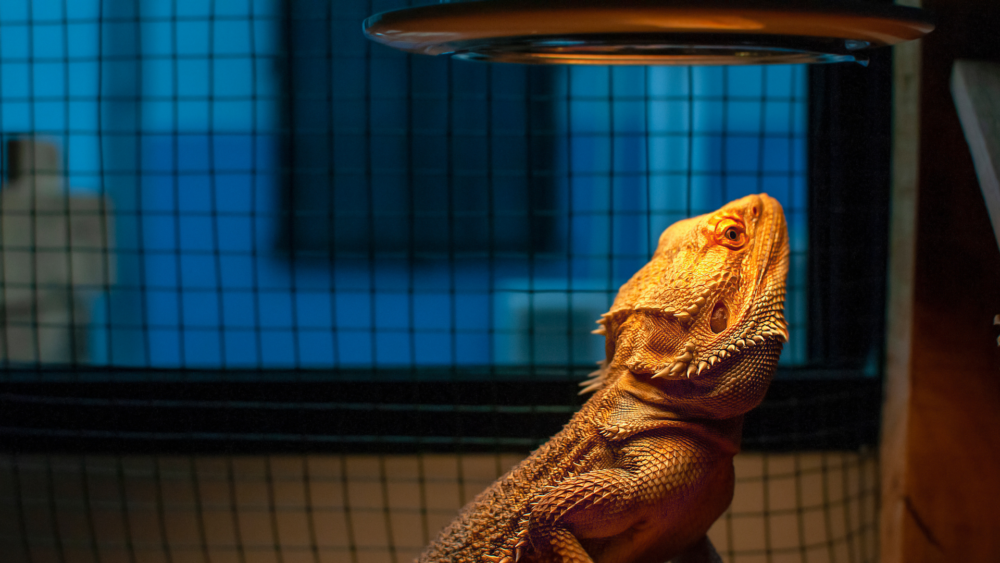 Photo: I am 3D animator artist/Getty Images
Abstract
What is ultraviolet radiation?
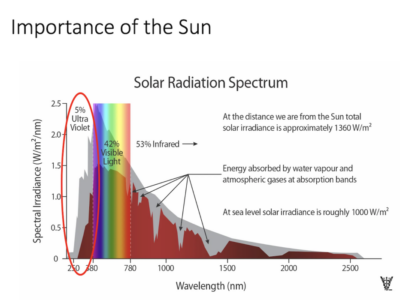
Lighting remains an important component of reptile husbandry and is a commonly discussed topic amongst veterinarians and exotic pet caretakers. Most of the discussions related to this topic are focused on “full spectrum” lighting. This is a term that has been used (and manipulated) in many ways; however, the basic premise behind this type of lighting system is that it provides the essential spectrums of ultraviolet, visible, and infrared light required by captive animals, mimicking natural exposure to the sun. The focus of this lecture will be on ultraviolet B radiation.
Ultraviolet light is produced by electromagnetic radiation. The wavelengths for ultraviolet radiation are shorter than those for visible and infrared light. Ultraviolet radiation is generally discussed in relation to those categories important to vertebrates: Ultraviolet A, B, and C. Ultraviolet C radiation represents the shortest wavelengths of the three classes (<280 nanometers). This range of ultraviolet radiation is germicidal and is commonly used to control pathogens in aquatic systems. Ultraviolet B radiation provides the medium range of ultraviolet radiation (280-315 nanometers). Ultraviolet A radiation represents the longest rays of the group and is characterized as “black light” (> 315-380 nanometers).
Vitamin D3
Ultraviolet B radiation represents the range considered important in the synthesis of vitamin D3. Vitamin D3 is an essential hormone that plays many different important physiologic roles. Its role in calcium metabolism is its most recognized function, where it helps to ensure the development and maintenance of healthy bones. In reptiles, maintaining appropriate levels of vitamin D3 has also been found to be associated with increased reproductive success. Ultraviolet C is not discussed at any great extent, although it is considered important in regulating behavior in vertebrates.
There are two primary methods for obtaining vitamin D3: synthesizing it from exposure to ultraviolet B radiation or consuming a food source that has synthesized the hormone through exposure to the sun. The production of vitamin D occurs because of the photosynthetic conversion of 7-dehydrocholesterol to pre-vitamin D3. Pre-vitamin D3 is converted to vitamin D3 via a temperature-dependent process. At this stage, the hormone is transported to the liver where it is hydroxylated to 25-hydroxyvitamin D3. The kidneys serve as the site for the final conversion of the hormone to 1, 25-hydroxyvitamin D3, which represents the active form.
Species-specific information
Vitamin D is considered important in vertebrates because it plays many different roles in the body. Because captive exotic species are routinely maintained indoors, the use of “full spectrum” lighting has become an important consideration for ensuring that captive, non-carnivorous species can obtain vitamin D3. Historically, this focus for UVB was for reptiles, and more specifically diurnal lizards. However, research has shown that carnivorous reptiles, such as snakes, and crepuscular reptiles, such as leopard geckos, also increase their circulating vitamin D concentrations for post-UVB exposure. Moreover, mammals not historically provided UVB have also been found to benefit from UVB exposure, including rabbits, guinea pigs, and chinchillas. These findings reinforce our need to pursue research to develop an understanding of how these changes benefit animals in captivity.
Commercial lighting
When making recommendations regarding lighting, it is important to recognize that not all bulbs are created equal. Although “full spectrum” lights may appear similar, they can produce vastly different quantities of ultraviolet B radiation. To confirm the quantity of ultraviolet B radiation being produced by a bulb, it is important to measure the intensity of the radiation using an appropriate radiometer/photometer. The distance the bulb is placed to a basking reptile can also influence the quantity and intensity of light reaching an animal. “Full-spectrum” lights should not be shown through glass because the glass can defract the ultraviolet B radiation. Historically, only fluorescent tube light bulbs produced any significant quantity of ultraviolet B radiation; however, compact fluorescent bulbs and mercury vapor bulbs can also produce appropriate to high levels of ultraviolet B radiation.
Adverse effects
While ultraviolet B radiation is considered important, it is not without its risks. Photokeratitis has been observed by the author and reported by others in reptiles exposed to certain types of artificial ultraviolet B radiation. Fortunately, removing the light source corrected the problem in the author’s experience. There is also concern that some species (e.g., bearded dragons) may develop skin cancer (e.g., squamous cell carcinoma) from exposure to ultraviolet B radiation. Additional research is needed to elucidate the risks associated with exposure to ultraviolet B radiation from artificial lights.
Clinical recommendations
Ultraviolet B radiation appears to be an important requirement for most species of animals that have been studied. To date, there is only one exception, the ball python (Python regius); however, that difference could have been impacted by study design. Based on our current understanding of UVB, the author believes it is important to provide these animals with UVB lighting but with restricted exposure times. Currently, the author recommends no more than 2 hours of UVB lighting a day. This is recommended to reduce the risk of side effects, while ensuring these animals can produce this important hormone. More research is needed, and the author hopes to continue to pursue this research in the future.
Outline
- Importance of lighting to animals
-
Panorama Images/Getty Images
Natural sun
- Ultraviolet
- Visible
- Infrared
- Methods for obtaining vitamin D
- Oral
- Ultraviolet B exposure
- Commercial lighting
-
- Experimental studies in captive animals
- Reptiles
- Photoperiod
- Diurnal
- Crepuscular/nocturnal
- Duration of exposure
- 12 hours
- <12 hours
- Photoperiod
- Lagomorphs and rodents
- Rabbits
- Short-term studies
- Long-term studies
- Guinea pigs
- Short-term studies
- Long-term studies
- Chinchillas
- Short-term studies
- Rabbits
- Birds
- Psittacine birds
- Budgerigars
- Cockatiels
- Psittacine birds
- Reptiles
- Adverse effects from UVB exposure
- Ocular lesions
- Photokeratitis
- Cataracts
- Neoplasia
- Ocular lesions
- Recommendations
- Types of bulbs
- Exposure distance
- Duration of exposure
About the presenter
Mark A. Mitchell is a Professor of Zoological Medicine and Director of the Wildlife Hospital of Louisiana at Louisiana State University (LSU) School of Veterinary Medicine. Dr. Mitchell first joined the LSU faculty in 1996. He has also served as the hospital director at LSU. His research interests include wildlife epidemiology, conservation medicine, and One Health, examining how diseases move among wildlife, people, and the environment… [MORE]
Webinar recording
Download the presentation
Download a PDF of Dr. Mitchell’s PowerPoint presentation.
Post-test
Take the brief post-test to earn 1 hour of continuing education credit. With a passing grade, you will receive a continuing education certificate in jurisdictions that recognize AAVSB RACE approval.
Expert Q&A
Although many questions were addressed during the live event, remaining questions were answered by Dr. Mitchell in a follow-up meeting with the moderator. Replies were sent by email to individual attendees and the entire collection of “leftover” questions and answers is posted below.
Dr. Mitchell emphasized evidence-based information in both his presentation and his answers to questions: I hope everyone’s noting that when you’re reading these, the things that I don’t have experience with, I’m not going to just give my opinion because I don’t want to misdirect people…
When people are adamant about something, it can be UVB lights, it can be about drug dosing, it can be anything you want. If you’re adamant about it, make sure you have evidence to back it up. I hope everyone can see from the presentation I gave, there is a wealth of evidence and a lot of it follows a very similar pattern. And those are the things that I really tried to stress during the lecture presentation.
BULB-SPECIFIC QUESTIONS
Can you please write down the UVB light you recommend?
I recommend Fluker’s 23-watt 5.0 bulb because that’s what I have tested.
Are there any cases you recommend an animal use a 10.0 UVB?
No, I do not.
For those housed indoors (birds and reptiles) how would you supplement the lighting as many branded bulbs are combined with UVB?
Dr. Mitchell emphasized evidence-based information in both his presentation and his follow-up answers, and he has only tested the Fluker’s light that he mentioned. (See above).
The one exception would really be the mercury vapor bulbs, which produce heat and UVB. And what I would do is switch over to an incandescent heat lamp and then basically only use the mercury vapor with the UVB under the conditions of time dosing. That’s what I would recommend.
If you’re using a full-spectrum light, should it not be on all the time for an 8-hour day?
What I recommend is to give the animal a photoperiod that mimics the natural light cycle for that species. So, if you are in a northern climate, but you have a species from South America, it’s not your schedule you should put the lizard on. It’s their schedule, you should put them on. If UVB is on the whole time the light is on…that increases the risk of [adverse] effects. Most of us are really after the UVB for the benefits on the synthesis of the vitamin D. If that’s the case, then that’s where I really think the dosing concept comes in.
For exotic pets from seasonal country, do we have to imitate the daylight hours exposure i.e. winter hours, autumn hours etc.. 4 months summer, 4 months autumn, winter , spring, etc.
Dr. Mitchell recommended the same answer as listed above: What I recommend is to give the animal a photoperiod that mimics the natural light cycle for that species. So, if you are in a northern climate, but you have a species from South America, it’s not your schedule you should put the lizard on. It’s their schedule, you should put them on.
How long are they getting exposed to UV in those studies?
Lighting was provided for 12 continuous hours each day in the corn snakes, red-eared sliders, Blanding’s turtles, guinea pigs, and chinchillas. Depending on the study, lighting was provided for 6 or 12 hours to rabbits. Depending on the study, lighting was provided for 2 or 12 hours to blue-tongued skinks. Lighting was provided for 2 hours to the leopard geckos.
The studies mentioned above are included in the References section below.
Still a bit unsure of the compact vs linear. There is very much a move away from compact UVB bulbs here in Europe due to the belief that the animal has to be under the bulb to get the full benefits, particularly with cryptic baskers. Do the reptiles seek out the UVB, even if the whole enclosure is under light (like an LED)? For example, in a long 4 ft enclosure where a leopard gecko is on the opposite end of the UVB but cryptic basking there
I know people are posting and making suggestions, even publishing, those types of suggestions, but I’ve not seen data from them…As an epidemiologist and a clinical scientist, it’s all about the evidence. In all of the studies…I am using the same 5.0, 23-watt bulb that is a compact fluorescent, and…[in] chelonians, multiple species of chelonians, snakes, multiple species of lizards, and multiple species of exotic small mammals it’s worked perfectly. And so, I truly believe it’s more about the UVB exposure versus what the bulb looks like.
As the feds banned fluorescents, are the Avian Sun LEDs as good or similar to their fluorescents?
The current administration has not banned the fluorescents. It’s going to be a political thing based on who’s in, but right now the bulbs are not banned.
What is your opinion of the Osram Ultra-Vitalux light?
What’s your thoughts on the recently developed LED UVB light for reptiles?
What are your thoughts on the tester strips for checking UVB output?
Does reducing to 2 hrs per day apply to the 7% ShadeDweller UVB bulbs specifically aimed at animals who require less UVB?
Dr. Mitchell emphasized evidence-based information in both his presentation and his answers and he has not tested these products.
…The things that I don’t have experience with, I’m not going to just give my opinion because I don’t want to misdirect people.
…My hope is that they’ll be getting tested under conditions beyond just looking at the light and looking at the animals themselves.
HUSBANDRY RELATED
If not glass or plexiglass – what are we using for enclosures?
Although many reptile enclosures sold in pet stores (etc.) have glass or plexiglass sides, the tops are almost invariably some sort of mesh. Additionally, use of a wire cage within a warm, humid reptile room is preferable for ventilation.
Dr. Mitchell added: There are plexiglasses that do allow UVB to penetrate, but I just recommend a mesh…while the mesh will diffract some of the UVB…from the [research] that I’ve done, I am no longer worried about delivering these whomping doses of 10,00 microwatts…
The reason most human beings aren’t dying from nutritional disorders is because our bodies are absorbing what little vitamin D we’re getting through ultra-processed foods or in poor diets to allow us to survive. These animals are doing the same thing with vitamin D.
Suggestions for reptiles/amphibians that are on exhibit 10 hours a day? Use non-UVB lightbulbs for the majority of the day?
Yes, that’s exactly what I would recommend.
How many days does it take for the levels to go back to baseline without UVB from your initial studies in this talk?
Dr. Mitchell has one study that evaluated the return to baseline. With 2 hours of daily exposure, blue-tongued skinks took 4 months to return to baseline. It took the skinks more than 7 months with 12 hours of daily exposure to return to baseline.
Godke A, Rhim H, Aguilar MG, Marrero-Acosta K, Mitchell MA. Measuring the rise and fall of plasma 25-hydroxyvitamin D concentrations in blue-tongued skinks (Tiliqua scincoides) following ultraviolet B exposure and withdrawal. Vet Sci. 2025;12(10):965.doi: 10.3390/vetsci12100965. PMID: 41150105; PMCID: PMC12568120.
Do you recommend UVB lighting attached to the inside of the enclosure versus through a mesh? Does the mesh interfere significantly?
Most UVB bulbs don’t produce a lot of heat. The mercury vapors are the exception. They can produce significant heat and lead to significant burns. [Regardless], I do not recommend keeping the bulbs [inside the enclosure] because…heat can be generated at the bulb surface…
So, I [recommend] outside through a mesh. And while the mesh will diffract some of the UVB…from the [research] that I’ve done, I am no longer worried about delivering these whomping doses of 10,00 microwatts…
The reason most human beings aren’t dying from nutritional disorders is because our bodies are absorbing what little vitamin D we’re getting through ultra-processed foods or in poor diets to allow us to survive. These animals are doing the same thing with vitamin D.
[Will] UVB…be adjusted based on the enclosure setup? Will you suggest longer photoperiod if they have shelter, and how much shelter? If the bulb is linear which goes over one-third of the tank versus three-quarters, or even the whole tank?
Yes, you could adjust UVB based on enclosure setup because enclosures of different sizes are going to put the animal closer or further from the UVB. And really, from my research, what I’m after is the amount of exposure that they’re getting, microwatts per centimeter squared. So that’s why I really like to measure these things.
A lot of times people are talking about using a much higher concentration… When people say, ”[Take] this bulb and put it 6 inches from the [patient, the animal] they may be getting more UVB exposure than they would get on a sunny day [at the] beach. So that would not be normal. And so, yes, it needs to be based on [enclosure setup].
…with regards to shelter, I’m not worried about whether they have shelter or not, because…the real take-home message is EXPOSURE. [The animal needs to] get enough exposure to be able to increase and synthesize vitamin D…Low exposure is likely sufficient across the species from at least all the research we’ve done…
As far as a bulb being linear versus compact fluorescent, again…to me it’s less about the size of the bulb or the size of the enclosure and more about what the dose is. And I really want us to start thinking about vitamin D dosing like we do for antibiotics or anti-inflammatories or anesthetics. And instead of saying we’re going to dose an animal with 2 mg/kg, I’m saying 5 to 30 microwatts. And again, this is still not completely refined, but from the studies we’ve done…those low doses…they’re literally based on the exposure. It’s efficient to do that.
Ultimately, what people need to do is measure vitamin D3, measure 25 hydroxyvitamin D, see where those values are. That’s really how you’re going to answer this.
VITAMIN D and NUTRITION
At what levels of 25-hydroxyvitamin D3 [25(OH)D3] would you recommend reducing UV exposure to limit side effects?
That is a great question because we still need to build reference ranges to ultimately make that determination. What I have found is that human level of ~50 nml/L is something that I see in reptiles consistently. I’m not seeing issues with vitamin D deficiency. And so that’s what I’m usually looking at, to be honest. But that’s highly variable because in the case of the blue-tongued skinks, their [values] went so much higher than that, but it still took them 9 months…to basically decay that vitamin D out.
Godke A, Rhim H, Aguilar MG, Marrero-Acosta K, Mitchell MA. Measuring the rise and fall of plasma 25-hydroxyvitamin D concentrations in blue-tongued skinks (Tiliqua scincoides) following ultraviolet B exposure and withdrawal. Vet Sci. 2025;12(10):965. doi: 10.3390/vetsci12100965. PMID: 41150105; PMCID: PMC12568120.
When asked in a follow-up question if there were numbers that he would consider “too high”:
No. I’m more worried about minimum levels. I’m more worried about vitamin D deficiency with UVB exposure… There’s no UVB exposure hypervitaminosis D associated with this system. There is associated with cataracts, ocular disease and skin cancer.
What vitamin D-rich foods do you recommend for reptiles?
I generally do not recommend relying heavily on vitamin D–rich foods. Instead, I recommend short-term UVB exposure appropriate for that species. Based on current understanding of its pathophysiology, this will support endogenous vitamin D synthesis while minimizing the risk of toxicity. Otherwise, I maintain normal diets, recognizing that gut-loading diets may contain vitamin D and can provide an additional, indirect source through routine feeding practices.
How do you prevent vitamin D toxicity when supplementing orally in bearded dragons for example?
I would minimize [the oral supplement] and [provide] UVB light because they are shown to be able to [utilize] that.
Can reptiles be overdosed with vitamin D3 powders easily?
I generally do not recommend extensive vitamin D supplementation. Instead, I rely on standard diets, with the understanding that gut-loading diets may contain vitamin D. So, we are providing an additional source of vitamin D through normal feeding practices.
What gut-loading diet do you recommend for insects?
The diets that I recommend are the Fluker’s Farm diets for Dubia roaches, for mealworms and superworms, and for crickets, because those are the diets that we have published on and can show that they work.
REPTILES
What is the ideal number of hours of UVB for leopard geckos?
Under natural conditions, it would be the length of the photoperiod. The issue is that we’re often exposing them to higher concentrations in captivity, not letting them regulate their UVB exposure and that’s why I recommend the shorter duration time based on what I’ve been studying…It’s still early because we’ve only done a few studies, but in the leopard geckos we’re finding 2 hours [of UVB provides adequate exposure].
Gould A, Molitor L, Rockwell K, Watson M, Mitchell MA. Evaluating the physiologic effects of short duration ultraviolet B radiation exposure in leopard geckos (Eublepharis macularius). J Herp Med Surg. 2018;28(1-2):34-39. doi: 10.5818/17-11-136.1. Available at https://www.reptifiles.com/wp-content/uploads/2019/05/Geckos-and-UVB-paper.pdf. Accessed April 1, 2026.
What are the UV duration recommendations for diurnal reptiles (i.e. bearded dragons, Uromastyx)?
Under natural conditions, it would be the length of the photoperiod. The issue is that we’re often exposing them to higher concentrations in captivity, not letting them regulate their UVB exposure. And that’s why I recommend the shorter duration time based on what I’ve been studying…It’s still early because we’ve only done a few studies, but in the blue-tongued skinks, we’re finding 2 hours [of UVB exposure], puts them in the same place 12 hours does.
Godke A, Rhim H, Aguilar MG, Marrero-Acosta K, Mitchell MA. Measuring the rise and fall of plasma 25-hydroxyvitamin D concentrations in blue-tongued skinks (Tiliqua scincoides) following ultraviolet B exposure and withdrawal. Vet Sci. 2025;12(10):965. doi: 10.3390/vetsci12100965. PMID: 41150105; PMCID: PMC12568120.
If you are measuring UVB for leopard geckos with a radiometer, what is the ideal range?
5-30 microwatts per square centimeter
Do you recommend keeping heat and UVB separate for tortoises?
Yes. Although heat and UVB could be on the whole time, this increases the risk of those adverse effects we discussed. Most of us are really after the UVB for the benefits of vitamin D synthesis. And if that’s the case, then that’s where I really think the dosing concept comes in.
By controlling UVB exposure can I help my chameleon minimize the times she becomes gravid? If yes, on what other reptiles does that apply?
Yes, I’d be controlling it probably more so through photoperiod. I would mimic the photoperiod for your species of chameleon to their non-breeding season. What people are doing in captivity is they’re exposing [these animals] to long duration light, so [the animal] always think it’s the breeding season.
Any chance you can comment on infrared wavelengths A, B, and C and their effect on thermoregulation in reptiles?
Dr. Mitchell has not studied the infrared spectrum enough to be able to comment.
There are a number of papers published on this topic, including:
Campbell AL, Naik RR, Sowards L, Stone MO. Biological infrared imaging and sensing. Micron. 2002;33(2):211-25. doi: 10.1016/s0968-4328(01)00010-5. PMID: 11567889.
Chen Q, Liu Y, Brauth SE, Fang G, Tang Y. The thermal background determines how the infrared and visual systems interact in pit vipers. J Exp Biol. 2017 Sep 1;220(Pt 17):3103-3109. doi: 10.1242/jeb.155382. PMID: 28855322.
Clark RW, Bakken GS, Reed EJ, Soni A. Pit viper thermography: the pit organ used by crotaline snakes to detect thermal contrast has poor spatial resolution. J Exp Biol. 2022 Dec 15;225(24):jeb244478. doi: 10.1242/jeb.244478. Epub 2022 Dec 23. PMID: 36453156.
Jones BS, Lynn WF, Stone MO. Thermal modeling of snake infrared reception: evidence for limited detection range. J Theor Biol. 2001 Mar 21;209(2):201-11. doi: 10.1006/jtbi.2000.2256. PMID: 11401462.
Kelber A. Infrared Imaging: A motion detection circuit for rattlesnake thermal vision. Curr Biol. 2019 Jun 3;29(11):R403-R405. doi: 10.1016/j.cub.2019.04.043. PMID: 31163140.
Panzano VC, Kang K, Garrity PA. Infrared snake eyes: TRPA1 and the thermal sensitivity of the snake pit organ. Sci Signal. 2010 Jun 22;3(127):pe22. doi: 10.1126/scisignal.3127pe22. PMID: 20571127.
Safer AB, Grace MS. Infrared imaging in vipers: differential responses of crotaline and viperine snakes to paired thermal targets. Behav Brain Res. 2004 Sep 23;154(1):55-61. doi: 10.1016/j.bbr.2004.01.020. PMID: 15302110.
Wang Q, Yan X, Xie W, Wang Y. Image fusion method based on snake visual imaging mechanism and PCNN. Sensors (Basel). 2024 May 12;24(10):3077. doi: 10.3390/s24103077. PMID: 38793931; PMCID: PMC11125101.
BIRDS AND MAMMALS
Until we get individualized data for each species, do you recommend adopting the Ferguson zones to other taxa (birds and mammals)?
Those [Ferguson] zones are really built for the reptiles, but they’re the same concept. They’re based on where animals come from. But the issue with that is that reptiles and birds and mammals have different functions in a day. And so, what they’re basing it on is how a reptile thermoregulates… A bird and a mammal are going to regulate differently as endotherms and they’re going to function differently. So, I don’t know that I see a need for [adopting Ferguson zones], but if people want to look at that and they find some good things, this is where getting everyone to share information is so important. Everyone can participate in this kind of research by collecting data and publishing it.
For guinea pigs with severe dental disease, would you recommend natural UVB or artificial? How long should they be exposed to this for? Can this also help with healing or preventing tooth root abscesses?
Certainly, severe dental disease could be because of vitamin D deficiency. Vitamin D is essential to the healing process as well as bone remodeling.
If you can give an animal natural UVB exposure, that would be best. You just have to protect them from the heat. If it’s a species that’s susceptible [to heat stress], like a guinea pig, you want to make sure they have plenty of shelters outside…I know a lot of people who have outdoor guinea pig colonies and the guinea pigs can thrive with plenty of shade and…of course, protect from predators.
Is there research on small primates, such as golden lion tamarins and UVB?
Dr. Mitchell does not have any direct experience with UVB in golden lion tamarins. The following papers may prove helpful. The manuscript by Killick et al does include information on tamarins.
Goodroe AE, Fitz C, Power ML, et al. Evaluation of vitamin D3 metabolites in Callithrix jacchus (common marmoset). Am J Primatol. 2020;82(6):e23131. doi: 10.1002/ajp.23131. Epub 2020 Apr 9. PMID: 32270886; PMCID: PMC7384697.
Killick R, Saunders R, Redrobe SP. Summer and winter vitamin D3 levels in seven platyrrhine species housed at a British Zoo, with reference to natural UVB levels. J Zoo Wildl Med. 2017 Sep;48(3):732-741. doi: 10.1638/2016-0071.1. PMID: 28920802.
Given the lack of research in birds. Do you still recommend UVB exposure? If so, how many hours per day?
If birds can get natural sunlight exposure, that’s really my preference. And based on the mixed [research] results, I don’t know that I’m recommending UVB bulbs at this point.
In wildlife rehabilitation settings, does anyone have any recommendations for herons in UVB, specifically black-crowned night herons (Nycticorax nycticorax) when raising the nestlings or fledglings that are not ready to go outside?
Dr. Mitchell is the Director of the Wildlife Hospital of Louisiana:
Natural sunlight would be the best, and what I would actually recommend if you have a nestling, what we do; we see black-crowned night herons. We will take them outside periodically. Making sure they are protected [from the sun] and heat, even in a container. Take the lid off and just let them get UVB exposure naturally, and that will take care of it. That UVB is hitting them at that point.
Can you comment on Stanford’s study on African greys and UV?
I cannot. I’ve not read the paper.
AMPHIBIANS
What about cane toads that are most active nocturnally?
I don’t have any experience with them, but just like the leopard geckos and some of the other crepuscular/nocturnal species, there were some studies…that talked about UVB reflecting off the moon and some geckos getting exposed that way. And then of course, even nocturnal species are crepuscular at some level, and so they may be active at crepuscular times because that’s when they’re getting their UVB exposure.
Nordberg EJ, Schwarzkopf L. Afraid of the dark? The influence of natural and artificial light at night on the behavioral activity of a nocturnal gecko. Frontiers in Ecology and Evolution. 2022;10. Sec. Behavioral and Evolutionary Ecology. doi: 10.3389/fevo.2022.821335.
Oonincx DGAB, Diehl JJE, Kik M, et al. The nocturnal leopard gecko (Eublepharis macularius) uses UVb radiation for vitamin D3 synthesis. Comp Biochem Physiol B Biochem Mol Biol. 2020 Dec;250:110506. doi: 10.1016/j.cbpb.2020.110506. Epub 2020 Sep 17. PMID: 32950659.
Prötzel D, Heß M, Schwager M, Glaw F, Scherz MD. Neon-green fluorescence in the desert gecko Pachydactylus rangei caused by iridophores. Sci Rep. 2021 Jan 11;11(1):297. doi: 10.1038/s41598-020-79706-z. PMID: 33432052; PMCID: PMC7801506.
FISH
Anything on fish?
Dr. Mitchell does not have any fish-related research experience.
It was long believed that fish only obtain vitamin D through the diet, however, research in Atlantic salmon and rainbow trout has shown that UVB exposure significantly increases vitamin D3 levels (as does exposure to blue light). A few papers (some open access) are listed below:
Fossen I, Backström T, Holte T, Klakegg Ø. UV-B light stimulates the production of vitamin D3 in Atlantic salmon. Aquaculture. 2026. 611:743058. doi: 10.1016/j.aquaculture.2025.743058.
Husebø CA, Berge K, Keitel-Gröner F, et al. Field evidence of endogenous vitamin D synthesis in Atlantic salmon induced by natural sunlight. Aquac Nutr. 2025;2025:3823472. doi: 10.1155/anu/3823472. PMID: 41424696; PMCID: PMC12717467.
Pierens SL, Fraser DR. The origin and metabolism of vitamin D in rainbow trout. J Steroid Biochem Mol Biol. 2015 Jan;145:58-64. doi: 10.1016/j.jsbmb.2014.10.005. Epub 2014 Oct 11. PMID: 25305412.
Sun Y, Alessandroni L, Angeloni S, Del Bianco E, Sagratini G. From 7-dehydrocholesterol to vitamin D3: Optimization of UV conversion procedures toward the valorization of fish waste matrices. Food Chem X. 2024;22:101373. doi: 10.1016/j.fochx.2024.101373. PMID: 38633740; PMCID: PMC11021362.
RACE approval
This program is approved by the American Association of Veterinary State Boards (AAVSB) Registry of Approved Continuing Education (RACE) for 1 hour of continuing education credit for veterinarians and veterinary technicians in jurisdictions that recognize AAVSB RACE approval.
References
Test Your Knowledge: Therapeutic Techniques in Reptiles
The Therapeutic Techniques in Reptile Patients webinar was reviewed and approved by the American Association of Veterinary State Boards (AAVSB) Registry of Approved Continuing Education (RACE) program for 1 hour of continuing education credit for veterinarians and veterinary technicians in jurisdictions that recognize AAVSB RACE approval. You have three chances to take this post-test and pass. With a passing grade, you will see your results and a link to your continuing education certificate . . .
Pour les vétérinaires. Par les vétérinaires.
Le site Lafervet.com est conçu pour une utilisation par les vétérinaires. Il est ouvert aux vétérinaires diplômés, aux techniciens vétérinaires diplômés, aux animaliers et aux étudiants dans ces domaines.
Créer un compte pour accéder à des articles et des ressources du site.
L'inscription est gratuite.
Para Profesionales Veterinarios. Por Profesionales Veterinarios.
El sitio Lafervet.com es para uso de los profesionales veterinarios. Está abierto a los veterinarios licenciados, técnicos veterinarios licenciados, rehabilitadores licenciados y estudiantes en estos campos.
Cree una cuenta para acceder a los artículos y recursos del sitio.
La registro es gratis.
Already a LafeberVet Member?
Please Login
Caring Beyond Cure: Palliative and Pain Management Strategies for Exotic Animals
Jade Kingsley, BVSc, MANZCVS (Avian Health) presented this interactive, RACE-approved webinar exploring the veterinarian’s role in delivering compassionate, structured palliative care for exotic companion animals. As advances in husbandry and veterinary care extend lifespan, chronic and degenerative diseases are increasingly common, making effective pain recognition and management essential. This presentation will focus on early identification of chronic pain, species-specific assessment tools, and multimodal analgesia techniques while addressing unique physiologic considerations of exotic species. Dr. Kingsley also discussed client communication, hospice planning, ethical decision-making, and practical medical, environmental, and nutritional strategies to improve quality of life in . . .
Pour les vétérinaires. Par les vétérinaires.
Le site Lafervet.com est conçu pour une utilisation par les vétérinaires. Il est ouvert aux vétérinaires diplômés, aux techniciens vétérinaires diplômés, aux animaliers et aux étudiants dans ces domaines.
Créer un compte pour accéder à des articles et des ressources du site.
L'inscription est gratuite.
Para Profesionales Veterinarios. Por Profesionales Veterinarios.
El sitio Lafervet.com es para uso de los profesionales veterinarios. Está abierto a los veterinarios licenciados, técnicos veterinarios licenciados, rehabilitadores licenciados y estudiantes en estos campos.
Cree una cuenta para acceder a los artículos y recursos del sitio.
La registro es gratis.
Already a LafeberVet Member?
Please Login
Jade Kingsley BA/BSc, BVSc, PgDip, MANZCVS (Avian Health)
Jade Kingsley is an exotics and wildlife veterinarian based in Sydney, Australia. She is the founder of Urban Exotics Vet, where she consults in primary accession and referral cases in exotic animal medicine. Dr Kingsley graduated from the University of Sydney in 2012 and completed internships in zoological and wildlife medicine at multiple institutions internationally during her veterinary training. Following graduation, she worked in emergency and wildlife hospitals across Australia. In 2018, she attained Membership of the Australian and New Zealand College of Veterinary Scientists in Avian Health (MANZCVS – Avian Health), and has since worked exclusively in zoo and exotics veterinary services. Dr Kingsley has a strong clinical interest in nutrition, internal medicine cases, and quality-of-life care. She continues to collaborate with wildlife organizations in Australia and internationally.
Avian Euthanasia Survey Results
Introduction
Euthanasia, or providing “a good death,” is an essential, yet often challenging, part of veterinary practice. Euthanasia presents unique difficulties in avian patients, and while many recommendations exist, strong personal opinions also shape clinical practice.
An avian euthanasia survey was shared with the LafeberVet mailing list and with LafeberVet webinar attendees during winter 2025. The survey was closed when 201 responses were received. Many respondents generously provided detailed and thoughtful feedback. View the results of this confidential survey below.
View the LafeberVet review article Avian Euthanasia: Welfare Considerations & Clinical Techniques” for additional information.
Geographic region
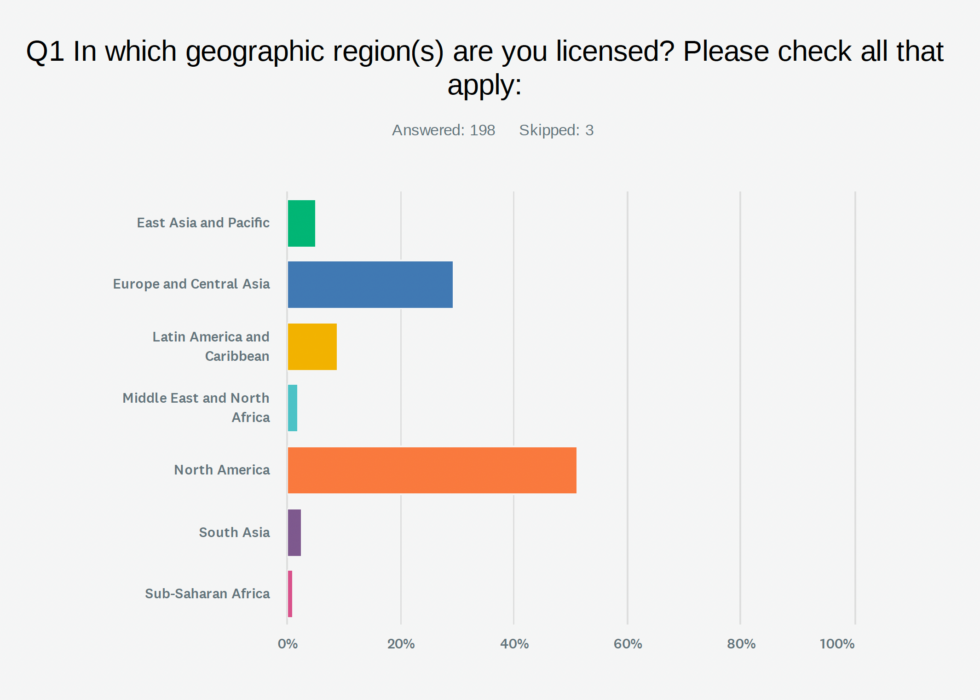
The world regions listed are based on groups defined by Our World in Data. A little over half of respondents (51.24%) are from North America. The second largest group of participants (29.35%) are from Europe and Central Asia.
Sedation/anesthesia
Many respondents sedate and/or anesthetize birds that present for euthanasia. Sedation and anesthesia are widely regarded as essential components of humane avian euthanasia, with the majority of clinicians reporting routine use prior to administration of euthanasia agents. Many emphasize that “deep sedation or anesthesia [is] always” performed, and that “heavy sedation or anaesthesia is an essential step prior to euthanasia”.
In fact, some practitioners note, “I always ensure my patients are under general anesthesia before administering the euthanasia agents”, underscoring the strong professional consensus around this practice. Sedation is also valued for minimizing undesirable effects associated with barbiturates, including “flapping [and] vocalization”, thereby improving both patient welfare and the client experience. Reflecting this perspective, one clinician states, “pain management and adequate sedation should be mandatory before each euthanasia”.
Sedation and anesthetic protocols are most commonly administered via parenteral or inhalational routes, with intramuscular injection frequently used for initial restraint and induction, particularly in wild or fractious birds. Inhalational agents such as isoflurane are often used to deepen anesthesia following initial sedation. Additional approaches include intranasal and, less commonly, oral/transmucosal administration (e.g., intranasal midazolam), offering flexibility in minimizing handling stress.
A variety of drug combinations are described, tailored to species and clinical context. Common protocols reported include combinations of benzodiazepines and dissociatives (e.g., midazolam/ketamine), alpha-2 adrenergic agonists with adjunct agents, and tiletamine-zolazepam–based regimens. In wildlife and field settings, injectable anesthetics such as tiletamine/zolazepam are frequently favored. Some clinicians report that high-dose anesthetic protocols, such as an overdose of propofol, may result in death without the need for a secondary euthanasia agent in severely compromised patients.
I give a whopping cocktail dose, usually of midazolam/telazol/xylazine intramuscularly (which often will result in death on its own in very ill birds-this goes over very well with owners, as it helps confirm that they have made the right decision).
I work exclusively with New Zealand wildlife…We use zoletil [tiletamine/zolazepam] for sedation. Injected IM. We make it up, draw up 0.2ml in each syringe and freeze it. Defrost as needed. Works perfectly for sedation and it is sometimes enough to euthanise…
Client presence is an important consideration influencing anesthetic approach. Many clinicians prioritize a calm, low-stress experience by allowing owners to remain with the bird during initial sedation, noting that “they are significantly sedated…then [the bird is] taken…[for] inhalational isoflurane if not completely asleep”. This staged approach balances patient welfare, client expectations, and procedural practicality.
I do not think inhalant gas should be used for anesthesia in the presence of clients, but I think birds can often be sedated parenterally or intranasally and given oral transmucosal pentobarbital if IV access is not feasible.
Almost 100% of avian euthanasias I perform are given Telazol [tiletamine/zolazepam] IM in a pectoral muscle, allowed to sit with their owner for 5-10 minutes, then given IV euthasol when deeply sedated. Works quickly smoothly and has been used by myself hundreds of times.
The vast majority of my euthanasias are performed with owner present. Most owners hold the birds following sedation and most prefer to hold them during euthanasia.
I never euthanase in front of the owner, if they want to be there while the animal goes asleep I will use intranasal midazolam and take the animal away for the injection itself.
While a minority of clinicians report performing intravenous euthanasia without prior sedation in calm patients, the prevailing standard strongly supports the use of adequate sedation or general anesthesia to ensure a smooth, humane, and low-stress euthanasia process across avian species.
In clinical practice I predominantly use intravenous euthanasia via the medial metatarsal vein, which is reliable in most species and often does not require sedation when performed calmly and efficiently. Sometimes, due to diagnostic work such as radiography, I will sedate first using an intramuscular protocol of medetomidine, butorphanol, and alfaxalone.
Most respondents do not use pre-visit anxiolysis. As one respondent shared, “Pre-visit anxiolysis is rarely practical”.
Routes of administration
For birds euthanized in the presence of an owner, a majority of respondents (36.92%) never place an IV catheter
I think it is important that clinicians make every effort to allow clients to be present for euthanasia if that is desired.
I do not think inhalant gas should be used for anesthesia in the presence of clients, but I think birds can often be sedated parenterally or intranasally and given oral transmucosal pentobarbital if IV access is not feasible.
I think it is important that we never say clients cannot be present if that is what they desire.
The vast majority of my euthanasias are performed with owner present. Most owners hold the birds following sedation and most prefer to hold them during euthanasia.
I never euthanase in front of the owner, if they want to be there while the animal goes asleep I will use intranasal midazolam and take the animal away for the injection itself.
Euthanasia agents
Euthanasia agents are usually administered via parenteral routes (36.34%) or inhalation (35.05%). When using inhaled agents, survey participants report that birds may become unconscious very quickly, with one respondent noting they are “asleep within three breaths”. Delivery of isoflurane via induction chambers or enclosed environments is designed to avoid direct contact with the liquid anesthetic and is associated with “less struggling than anesthesia by mask”.
I euthanize [by] pouring isoflurane into a Rubbermaid® box in a vent hood…
For small birds…We use Ziploc® bags, place the anesthetized bird in the bag with a small piece of gauze and then inject isoflurane onto the gauze. We then cover with a towel and allow about 10-15 minutes before we confirm death. This method is especially useful if there is only one person licensed to handle euthanasia drugs in our wildlife clinic.
Therefore, inhalant techniques also offer logistical advantages in wildlife and field settings, particularly when access to controlled euthanasia agents is limited or restricted. Such methods also reduce the need for physical restraint, thereby minimizing stress in free-ranging or fractious birds.
Barbiturates are used most commonly (74.45%). A few respondents recommend diluting pentobarbital half strength.
[I] find that full strength causes more vocalisation, muscle spasms, agonal gasping etc.
There were also conflicting opinions expressed on T-61:
It would be helpful to bring T-61 back to the USA. With pre-sedation this is a humane drug.
…I know there are studies stating that T-61 is humane for euthanasia because this drug contains a paralytic, I personally do not think it should ever be used. No matter what studies say, if there is a chance, however slight, that an animal is paralyzed before it undergoes cardiorespiratory arrest, we should not use that method. Is this something you would risk on your pet? I certainly would not.
One respondent shared their preferred regimen with potassium chloride.
Usually, I use propofol and potassium chloride after the animal is tranquilized and with pain killers.
There is strong consensus that the intravenous (IV) route via a peripheral vein is the preferred and most commonly utilized method. Clinicians frequently report administering agents through accessible sites such as the ulnar or medial metatarsal veins, noting that this approach is “reliable in most species” and can be performed efficiently, sometimes without sedation in calm patients. In wildlife and clinical settings alike, peripheral IV catheterization is widely used.
The intracardiac route is the second most reported method in some contexts, though used less frequently overall. Its application is generally limited to anesthetized or deeply sedated patients:
Sedation is key prior to intracardiac administration, especially in a setting with the owners. Be as fear free as possible to make the birds last moments stress less.
Another clinician stressed the importance of intracardiac injections in veterinary training, particularly for wildlife applications:
I urge all veterinarians and attempt to teach veterinary students intracardiac injections on wild birds for euthanasia so they feel more comfortable providing that service to animals in whatever practice they choose.
Greater variability in administration routes is observed in small or pediatric birds. Oral administration of barbiturates may be appropriate in select cases, particularly when birds are still voluntarily eating, with one clinician noting it as “lowest stress…[and] excellent for owner experience.” Delivery via crop needle or feeding tube is also described as “effective and fast, minimizing handling for wild birds”.
The occipital venous sinus has been used to achieve rapid unconsciousness.
I don’t know how often I actually hit the occiputal venous sinus but what I suspect is happening – either flooding the brain with pentobarb and/or hydrostatic pithing – appears to cause reliable unconsciousness in under a second and – as the target area is larger – requires only very brief restraint. There is frequently wing spasm so not recommended for birds whose owners are present.
Additional routes—including intramuscular, cloacal (intracloacal), subcutaneous, and intrathecal administration—are reported with mixed perspectives. Some clinicians describe intramuscular administration as “consistent, pain free, [with] smooth ‘induction’ and death within 5 minutes”, while cloacal administration is considered by others to be “very effective…[with] little stress or pain,” particularly in small birds and poultry. Subcutaneous administration has also been noted to allow birds to “fall asleep…without showing any distress” in certain companion species. Intrathecal administration of lidocaine, performed under anesthesia, is reported to produce “quick death and no signs of pain”.
Unfortunately, the option for intramuscular euthanasia is not given [in the survey], and this is my preferred route of administration, which works very well [using] T61 (31 years of experience with this route).
Cloacal pentobarb [is] useful in companion birds (psittacines and pet chickens).
I mainly deal with wild birds. Giving pentobarb per rectum seems very effective, and seems not to cause much stress or pain. (Doesn’t work well in aquatic birds, I always use IV for these patients).
I have used pentobarbital injected SQ in small birds such as budgies and cockatiels and it has worked very well. Owners can stay with the bird and they just fall asleep and then die without showing any distress.
Despite these varied practices, important welfare considerations are highlighted.
Pentobarbital is extremely irritating to mucosa and therefore oral, cloacal, intracoelomic and intramuscular routes are inappropriate and do not meet the criteria for euthanasia “a good death”. If methods other than intravenous administration are used, patients must be anaesthetised.
Q10-Q13. My preferred route for administration of injectable euthanasia agents given to…
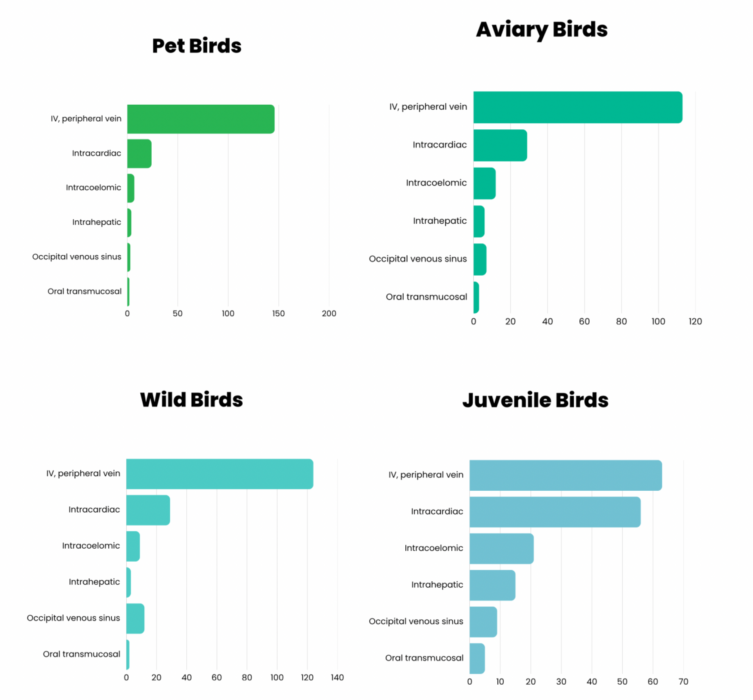
The preferred route of administration is quite similar across companion, wild, and aviary birds, with use of a peripheral vein being most popular and intracardiac being secondary. A bit more variety is incorporated into the approach to euthanasia of juvenile birds. (See the PDF below for details).
Download the detailed survey results
Download the PDF version of survey results for questions 1-13 listed above, including details on the preferred route of administration for companion birds, wild birds, juvenile birds, and aviary birds.

Clinical tips
Q14. Are there any clinical tips or comments on avian euthanasia that you wish to share?
Several respondents shared comments about poultry:
Chickens are still a challenge due to their tendency to stretch their legs and flap immediately following death, which is disturbing to owners (we warn them if they elect to be present), we are still working on dosing to avoid this.
…I think it is important to give chickens sufficient sedation and/or propofol prior to euthanasia to prevent vocalization/dysphoria.
Important to note that [a] recent study showed that oral transmucosal pentobarbital is poorly effective for euthanasia in chickens; this is in line with my personal experience in chickens.
…Or perhaps you regularly use physical methods, such as cervical dislocation?
The comments received confirm that cervical dislocation is used as a euthanasia method in avian species under specific conditions. Most commonly, it is performed in field settings where access to anesthetic or euthanasia agents is unavailable, or when rapid intervention is required. A few respondents in wildlife or rehabilitation settings select this technique when carcasses may be repurposed as food for other animals. This practice was also reported in research or academic settings.
Additional applications reported included situations where preservation of tissue for pathology is necessary and management of suspected infectious diseases to limit in-clinic exposure. In backyard poultry operations, one participant also shared that cervical dislocation may be selected to reduce stress-related biochemical changes in meat.
We are a wildlife hospital…if [the] patient has no disease or medication, [cervical dislocation] can be used as natural food for other patients (birds of prey, foxes, etc).
[I] have used cervical dislocation in wild birds with suspected infectious diseases that we don’t want inside the practice.
I use dislocation on backyard poultry farms (chickens, ducks, turkeys, and quail) because it greatly reduces cortisol contamination in the meat.
Cervical dislocation is primarily reserved for appropriately-sized birds, including neonates or small wild birds. This technique is also used in poultry, such as chickens, turkeys, and quail.
We regularly use cervical dislocation for birds corvid and smaller. Mostly pigeons or small garden birds.
I’ve used cervical dislocation in newly hatched chicks and ducklings (in a teaching/academic/research setting), and while emotionally disturbing, I believe it works well.
Cervical dislocation is generally avoided in larger species, such as waterfowl and raptors, although a few respondents specifically mentioned the application of this technique in these relatively large birds.
…in chicken…cervical dislocation is my choice.
[I] wouldn’t use cervical dislocation in waterfowl, raptors etc.
Proper training of veterinary professionals, wildlife staff, and, in some cases, experienced animal handlers was emphasized by some respondents.
Once trained on this method it is fast and in my opinion, humane for smaller birds…
…Any bird bigger than [a] wood pigeon I will always gas down with iso[flurane] beforehand.
[I perform] cervical dislocation in smaller birds after inhalation anaesthesia.
Whilst this may be controversial, I am confident in mechanical euthanasia techniques as they are useful in the field where it is not practical to carry anaesthesia/euthanasia products. I also encourage my colleagues and certain clients (e.g. falconry clients) to learn it in case they have an emergency requiring immediate euthanasia of one of their birds and they are a distance from a veterinary centre.
As a wildlife vet, I also need to ensure my team are competent in physical methods of euthanasia. Therefore, I do teach cervical dislocation for appropriate small species, but only with proper training and assessment
Of course, not everyone recommended this technique:
I have never used physical methods, and I do not think they should be used unless there is no other option. With chemical euthanasia, each step of the process reduces pain/distress, while with physical methods, if the method is performed incorrectly, it can result in severe pain and distress.
Avian Reproductive Tract Surgery: From Egg Binding to Neoplasia
Introduction
MVDr Andrea Henrik presented this distance-learning event for the Atlantic Veterinary College Zoological and Laboratory Animal Medicine Club. This Lunch & Learn presentation was co-hosted by the Lafeber Company Student Program and the Association of Avian Veterinarians Student Committee.
Dr. Henrik explored the surgical management of the avian reproductive tract, reviewing the clinical decision-making involved in determining when surgery is the best option for avian patients.
Topics included:
• Diagnostic evaluation using radiographs and ultrasound
• Surgical indications for reproductive tract disease
• Case examples ranging from egg binding to testicular neoplasia
• Key considerations and potential post-surgical complications
Recording
Test Your Knowledge: Clinical Medicine of Bearded Dragons
The Clinical Medicine in Bearded Dragons webinar was reviewed and approved by the American Association of Veterinary State Boards (AAVSB) Registry of Approved Continuing Education (RACE) program for 1 hour of continuing education credit for veterinarians and veterinary technicians in jurisdictions that recognize AAVSB RACE approval. You have three chances to take this post-test and pass. With a passing grade, you will see your results and a link to your continuing education certificate . . .
Pour les vétérinaires. Par les vétérinaires.
Le site Lafervet.com est conçu pour une utilisation par les vétérinaires. Il est ouvert aux vétérinaires diplômés, aux techniciens vétérinaires diplômés, aux animaliers et aux étudiants dans ces domaines.
Créer un compte pour accéder à des articles et des ressources du site.
L'inscription est gratuite.
Para Profesionales Veterinarios. Por Profesionales Veterinarios.
El sitio Lafervet.com es para uso de los profesionales veterinarios. Está abierto a los veterinarios licenciados, técnicos veterinarios licenciados, rehabilitadores licenciados y estudiantes en estos campos.
Cree una cuenta para acceder a los artículos y recursos del sitio.
La registro es gratis.
Already a LafeberVet Member?
Please Login
Therapeutic Techniques in Reptile Patients
Douglas Mader, MS, DVM, DABVP (Canine/Feline Practice), DABVP (Reptile/Amphibian Practice), DECZM (Herpetology) presented this live, interactive webinar. View the RACE-approved webinar recording, then take and pass the brief post-test to earn 1 continuing education credit. Effective therapeutic management of reptile patients requires strict attention to the Preferred Optimal Temperature Zone (POTZ). Warming patients to their POTZ ensures predictable pharmacologic responses, as reptiles at ideal temperatures demonstrate significantly improved drug absorption and metabolism compared with hypothermic individuals. Hydration status and appropriate route selection also influence therapeutic success in reptile medicine. Various routes of drug and fluid administration . . .
Pour les vétérinaires. Par les vétérinaires.
Le site Lafervet.com est conçu pour une utilisation par les vétérinaires. Il est ouvert aux vétérinaires diplômés, aux techniciens vétérinaires diplômés, aux animaliers et aux étudiants dans ces domaines.
Créer un compte pour accéder à des articles et des ressources du site.
L'inscription est gratuite.
Para Profesionales Veterinarios. Por Profesionales Veterinarios.
El sitio Lafervet.com es para uso de los profesionales veterinarios. Está abierto a los veterinarios licenciados, técnicos veterinarios licenciados, rehabilitadores licenciados y estudiantes en estos campos.
Cree una cuenta para acceder a los artículos y recursos del sitio.
La registro es gratis.
Already a LafeberVet Member?
Please Login
Test Your Knowledge: Guinea Pig Medicine
You need to be registered and logged in to take this quiz. Log in
Clinical Medicine of Bearded Dragons

Photo: Erica Mede, CVT
Abstract
Bearded dragons are a semi-arboreal genus of agamid lizards native to Australia. The central bearded dragon (Pogona vitticeps) is the most common species of bearded dragon kept in captivity. The average captive lifespan of bearded dragons is 7 to 12 years and there are numerous color morphs available in the pet trade.
Bearded dragons require access to ultraviolet B radiation for calcium homeostasis. The preferred optimum temperature zone for bearded dragons is 25-40°C (77-104°F), where the low end represents the cool side and the high end the basking area. Bearded dragons are omnivores and should be fed a varied diet of leafy greens and vegetables in addition to gut-loaded prey insects. Calcium and multivitamin powders should be used on a regular schedule. The author typically recommends using a calcium supplement (without vitamin D3 and phosphorus) two to three times per week and a multivitamin supplement two to three times monthly. Live insects should be appropriately gut loaded before being offered to the lizard.
Bearded dragons, like other Agamidae lizards, have acrodont dentition, which predisposes them to dental disease. Therefore, a thorough oral and dental examination should always be performed as part of the physical examination in this species. The salivary viscosity and eye position within the orbit can be used to assess hydration status. Coelomic palpation is helpful in bearded dragons. Symmetrical, caudal coelomic fat pads should be palpable along the lateral body wall in healthy animals.
If aggressive or intolerant, a bearded dragon can be easily physically restrained by holding the forelimbs and pelvic limbs snug against the trunk and tail, respectively. Injectable sedation can be used to facilitate diagnostic imaging (e.g. coelomic ultrasound) and basic surgical procedures with additional analgesia. Neuraxial administration of bupivacaine, lidocaine, and morphine has been described in bearded dragons and can be a useful addition for coeliotomies, cloacal procedures, partial tail amputations, hemipenal amputations, or pelvic limb amputations. Hydromorphone and morphine can be used for systemic analgesia.
Caudal (tail) vein venipuncture is easily performed in adult bearded dragons, using ventral or lateral approaches. Given the generally poor coelomic serosal detail of reptiles, coelomic ultrasound and computed tomography provide significantly more information about the coelomic organs than plain radiography.
Outline
- The basics
- Biology
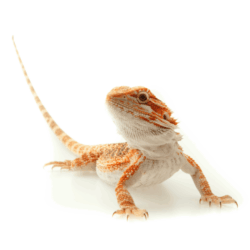
Photo: Lipowski
- Behavior
- Husbandry
- Biology
- Clinical techniques
- Physical examination
- Radiography
- Venipuncture
- Sedation
- Analgesia
- Fluid therapy
- Common conditions
- Constipation
- Periodontal disease
- Nannizziopsis guarroi
- Follicular stasis
About the presenter
Dr. Grayson Doss is a Clinical Associate Professor of Zoological Medicine at the University of Wisconsin-Madison School of Veterinary Medicine. Dr. Doss is a Diplomate of the American College of Zoological Medicine. Grayson earned a Bachelor of Science in 2008 and his Doctorate of Veterinary Medicine in 2013 from Louisiana State University. He completed an internship in small animal medicine and surgery from the University of Tennessee College of Veterinary Medicine in 2014 and a residency in zoological medicine and surgery from the University of Wisconsin, Milwaukee County Zoo, and… [MORE].
Webinar recording
80-104°F = 26.6-40.0°C
Presentation
Download a PDF of Dr. Doss’s PowerPoint presentation.
Post-test
Take the brief post-test to earn 1 hour of continuing education credit. With a passing grade, you will receive a continuing education certificate in jurisdictions that recognize AAVSB RACE approval.
Evaluation form
What did you think? Please complete the evaluation form to provide feedback or to make suggestions for future webinar topics.
Expert Q&A
Although many questions were addressed during the live event, remaining questions were answered by Dr. Doss during a private recorded session. The transcript from this session was then used to answer attendee questions by email. The entire collection of “leftover” questions and answers is posted below.
HUSBANDRY
Since sand is not recommended as a substrate, what would you recommend to allow natural digging behaviours (especially for females)?
Coconut husk and maybe vermiculite…I think [providing this bedding] in a smaller…subsection of the enclosure, particularly for females that you’re trying to breed, gives them an opportunity to dig and potentially lay eggs …It’s not the entire enclosure, so it’s going to be easier to clean and you don’t have to worry as far as ingestion goes…
Do you recommend sand in dig boxes during scheduled/monitored time?
Yeah, so actually not just straight sand. I would probably do a soil:sand mixture…Some people use vermiculite, but I usually aim for some sort of compressed coconut husk (such as Eco Earth by Zoo Med)…There’s a couple of brands out there but…blend with sand within a small tub…that they can climb into. That’s usually what I recommend.
Reptifiles recommends specific bedding (i.e. Reptisand) claiming it is unlikely to cause impaction- are these ok/recommended so they can burrow or best to avoid?
There are mixed opinions on what’s the safest type of sand, like natural, crushed granite sand, which is honestly kind of hard to find in most places versus some people say “play sand” because it’s really small, but it’s just easier not to have them on sand, I think.
What are your thoughts on bioactive enclosures?
I have mixed feelings. I like bioactive enclosures, particularly for small reptiles and amphibians. I think the bioactives are tougher to maintain when you have larger animals that have larger amounts of waste because [it takes] a lot for it to breakdown and they like to explore. So a bioactive enclosure could work for beardies but it would have to be relatively complex, and is therefore not recommended for most clients.
Does “avoid fruits” include things like cucumber, zucchini, bell peppers?
I think those are probably better than the fruits we typically think of because they’re going to be lower in sugar content…Peppers do have some [sugar], but I think [they] are probably fine in small amounts, although we don’t really know for sure. So I think occasionally [offering these food items] as enrichment or increasing water intake is probably okay, but I would not offer them as a large portion of the daily diet.
Any tips to get stubborn beardies to eat vegetables? Or is vegetable refusal actually a sign of a bigger problem?
I don’t think it’s necessarily a sign of a bigger problem. I think [some individuals] get spoiled… It’s kind of like trying to transition a bird on a mixed seed/pellet diet. [This] can be challenging and is really a common question that I get from clients…
- You could try offering insects that they like mixed in with the greens and maybe they get pick up enough to where they start thinking it’s okay.
- Try offering different types of vegetation to see if there’s one that they like. Also, offering [vegetables] in different formats…Larger leaves versus chopped up.
- Sometimes…[you can try] feeding them in a different environment.
- Make sure the client is not overfeeding insects because then they have no real appetite to eat other things…Make sure the proportions are appropriate.
It often [requires] a combination of these things.
For how long can a bearded dragon not be eating without considering it anorexia?
That’s a loaded question. I guess it depends on the patient’s normal diet and frequency of food intake. So if the bearded dragon has been eating every day for most of its life and is now refusing its food for a couple of days–with no change in ambient temperature–then I would probably have it checked out.
I thought black soldier fly larvae had a good Ca:P and weren’t too fat. should we treat those more like mealworms?
Black soldier fly larvae are nutrient dense with respect to calcium, and the dietary fat content is not excessive, however, the bioavailability of calcium can be limited based on how tough their exoskeleton is…If you can disrupt the exoskeleton before they eat it…that really improves the calcium bioavailability.
Boykin KL, Mitchell MA. The value of black soldier fly larvae (Hermetia illucens) as a food source: A review. Journal of Herpetological Medicine and Surgery. 2021;31(1):3-11. doi: 10.5818/JHMS-S-20-00015.
Dierenfeld ES, King J. Digestibility and mineral availability of phoenix worms, Hermetia illucens, when fed to mountain chicken frogs, Leptodactylus fallux. Journal of Herpetological Medicine and Surgery. 2008;18(3/4):100–105.
ANATOMY
Does the bearded dragon have tail autotomy?
I don’t think so…I’ve never seen their tails fall off…and when I’ve done partial tail amputations, I feel like the musculature has been different compared to green iguanas.
Moderator’s note: After checking some references I can confirm that the bearded dragon is a member of the Agamid family, which generally lacks the ability to drop their tails as a defense mechanism.
DIAGNOSTICS
What would normal heart rate/respiratory rates look like range-wise?
Heart rate range 56 to 67 beats per minute and then respiratory rate, eight to 26 breaths per minute.
Moderator’s note: Visit LafeberVet’s Monitoring Vital Signs in Exotic Animal Species for additional information.
Are there any good resources you are aware of for interpreting reptile imaging in general
Mader [is usually] where I usually start.
Divers SJ, Stahl SJ (eds). Mader’s Reptile and Amphibian Medicine and Surgery, 3rd ed. 2019; St. Louis, MO: Elsevier. doi: 10.1016/C2014-0-03734-3.
Is there any lab test for sexing in reptiles? Maybe not in beardies if its obvious but any sample we can send off somewhere if they want to sex a baby?
Not that I know of…I don’t think I’ve ever done that. I feel like I know an avian species sometimes you can sell off egg membrane for hatched, but I don’t know if they have that option for reptiles.
…I know there’s been several studies trying to figure out ways to sex helodermatids and varanids as adults. It’s just really challenging…
Rovatsos M, Rehák I, Velenský P, Kratochvíl L. Shared ancient sex chromosomes in varanids, beaded lizards, and alligator lizards. Mol Biol Evol. 2019;36(6):1113-1120. doi: 10.1093/molbev/msz024. PMID: 30722046.
Johnson Pokorná M, Altmanová M, Rovatsos M, et al. First description of the karyotype and sex chromosomes in the Komodo dragon (Varanus komodoensis). Cytogenet Genome Res. 2016;148(4):284-91. doi: 10.1159/000447340. Epub 2016 Jul 23. PMID: 27450879.
Moderator’s note: Sex determination in reptiles can be chromosomal or temperature dependent while in the egg. With reptiles, they can either have the XY set of sex chromosomes, they can have a ZW set of sex chromosomes, and some still have no recognizable sex chromosomes. Because of this, it is unreliable to use DNA markers as they will likely be unrepresented across all species. There are some DNA markers that have been identified in some endangered or threatened species, but these tests are not commerically available for most companion species.
Zhu ZX, Matsubara K, Shams F, et al. Diversity of reptile sex chromosome evolution revealed by cytogenetic and linked-read sequencing. Zool Res. 2022;43(5):719-733. doi: 10.24272/j.issn.2095-8137.2022.127. PMID: 35927394; PMCID: PMC9486513.
THERAPEUTICS
Electrolytes in beardies? Soak vs oral administration?
I typically don’t mess around with just over the human electrolyte solutions like Gatorade or anything like that. I’m going to use true balanced electrolyte solutions. So the more recent papers from Christoph’s studies have shown that any sort of balanced electrolyte solution should be okay in most situations for rehydrating beardies. So avoid just normal saline because that’s not really balanced at all. But LRS normosol or plasmalyte, those sorts of things should be fine and that’s what I usually go for. I guess I don’t have an absolute favorite between those, but just avoiding regular saline and making weird reptile ringer concoctions, I avoid that.
Parkinson LA, Mans C. Evaluation of subcutaneously administered electrolyte solutions in experimentally dehydrated inland bearded dragons (Pogona vitticeps). Am J Vet Res. 2020;81(5):437-441. doi: 10.2460/ajvr.81.5.437. PMID: 32343174.
Do you use ceftazadime? If not, what is the alternative and why is it not used/ or why is it used over other antibiotics for dragons?
[Keeping the importance of] antibiotic stewardship [in mind]…I do use ceftazidime. It’s not going to be necessarily the only drug I use because [my choice is] going to be mostly based off culture and sensitivity. But I do use it…
Moderator’s note: Learn more about antimicrobial stewardship with the RACE-approved LafeberVet webinar recording “Antimicrobial Stewardship in Exotic Animal Medicine” as well as the Association of Reptile and Amphibian Veterinarians white paper on this topic:
Divers SJ, Burgess BA. ARAV Antimicrobial Stewardship Policy. Journal of Herpetological Medicine and Surgery. 2023;33(1):61-64. doi: 10/5818/JHMS.33.1.61.
What type of skin suture material do you use?
I’ve used nylon. [Depending on] the location, I’ve used absorbable…I really don’t have a strong preference for skin sutures. I’m probably going to use 3-0 or 4-0 size monofilament nylon, or absorbable.
What kind of post-operative care do you have the owners do after a surgery that has skin sutures?
…If it’s located in an area where it could get dirty, [such as] a paramedian incision…I will have [the owner] switch over to an enclosure with paper substrate that keeps sand or soil out of…the incision site. And I’ll have them check the incision site every day to make sure there’s no dehiscence or any changes consistent with infection. But otherwise I leave it alone.
…I have questions about tail amputation?
[Tail amputation] is similar to other species. I do make… closure [of] my incisions…a V shape because I think that [makes] closing a lot easier rather than making a complete circumferential…line. [That is] just a lot harder to close, with a lot more tension. So other than doing a V-shape, which is not unique to bearded dragons, that’s probably my best tip.
ANESTHESIA/ANALGESIA
Do you ever use non-steroidal anti-inflammatory drugs (NSAIDs) (i.e. meloxicom)?
I do use meloxicam. I try and use it by an injectable route because…based on what we know for oral bioavailability for different therapeutics and reptiles, it’s all over the board. I don’t really know what the efficacy of oral would be…So I try and use injectable, which limits…its usefulness as an outpatient drug just because…it takes a specific [type of] owner to be able to do that…
Ting AKY, Tay VSY, Chng HT, Xie S. A critical review on the pharmacodynamics and pharmacokinetics of non-steroidal anti-inflammatory drugs and opioid drugs used in reptiles. Vet Anim Sci. 2022;17:100267. doi: 10.1016/j.vas.2022.100267. PMID: 36043206; PMCID: PMC9420515.
Would using the vasovagal response with gentle pressure on the eyes be an appropriate tactic to facilitate intubation?
During the live event another attendee wrote: There should still be a balanced anesthesia protocol, and with proper sedation we generally find them easy to intubate. Dr. Doss agree and added:
We use [the vasovagal response] mostly for oral exams and then sometimes if we need to get imaging done short term. But no, I would think trying to intubate them with only [the vasovagal response] would be really stressful, so I’d probably avoid it.
Do you have recommended/example sedation and analgesia doses?
Usually when I’m looking for…baseline doses, I either check the anesthesia chapter in Mader or I check the Exotic Animal Formulary.
Carpenter JW, Harms CA (eds). Carpenter’s Exotic Animal Formulary, 6th ed. 2023; St. Louis, MO: Elsevier. doi: 10.1016/B978-0-323-83392-9.00091-5.
Divers SJ, Stahl SJ (eds). Mader’s Reptile and Amphibian Medicine and Surgery, 3rd ed. 2019; St. Louis, MO: Elsevier. doi: 10.1016/C2014-0-03734-3.
Moderator’s note: You can also visit the RACE-approved webinar recording Spotlight on Anesthesia & Analgesia in Reptiles.
Have you experienced a “violent” reaction after ketamine IV idministration? I have seen it in wild iguanas…like a transitory high excitation state.
…I’m not sure if that means straight ketamine, but I haven’t used high doses of ketamine IV probably usually if I’m giving something IV it’s going to be alfaxalone or propofol.
Webb JK, Keller KA, Chinnadurai SK, et al. Use of alfaxalone in bearded dragons (Pogona vitticeps): optimizing pharmacodynamics and evaluating cardiogenic effects via echocardiography. J Am Vet Med Assoc. 2022;261(1):126-131. doi: 10.2460/javma.22.08.0371. PMID: 36355454.
OBSTIPATION
On the topic of enemas, do you recommend use of lubricant and/or soap to help break up and pass stools? Or no, since most constipation is associated with the urate plug?
Usually when I’m doing enemas across species…I usually like to use warm electrolyte solutions, mixed 50:50 with sterile lubricant. Some people don’t use lube at all, but it tends to…makes me feel better…I’ve done it with lactulose too. So, I guess it really depends on the day…
Is lactulose useful as a laxative?
It should be. I’ve used it in reptiles before. I can’t say I’ve compared it to normal enemas, but I do use it. It should work.
Does flushing cloaca with fluids cause contamination in reproductive organs as both openings are connected?
I’m not sure if anyone knows the answer to that for sure, but if the reproductive tract is structurally normal…there should be at least folds that protect these areas. So I would say as long as you’re not holding the vent closed and flushing with a lot of pressure, I would not worry very much about retrograde fluid push.
PERIODONTAL DISEASE
Do you see dental disease more often within mandible versus maxilla?
I see more severe changes in the mandible usually. But…usually in cases that have mandibular involvement, they’re going to have some level of maxillary disease.
Is it necessary to do a computed tomography (CT scan) prior to surgical debridement, in the case of stomatitis with abscess formation/swelling of the lower jaw?
I would say no, [although] some sort of imaging would be ideal just to know the severity…If have a pretty large lesion, where you could risk fracturing the mandible, then I would probably do radiographs–dental radiographs would be even better if you have that option–and you don’t want to do CT. But…some sort of imaging is probably good from a planning aspect.
FOLLICULAR STASIS
Is egg laying seasonal?
Moderator: The Animal Diversity Web (a great natural history resource) states: Wild bearded dragons mate in summer, but captive individuals may be sexually active year round.
How often do they lay eggs?
Per Animal Diversity Web: Females lay anywhere from 10 to 30 eggs per clutch, and they can lay up to nine clutches a year, with up to two clutches from just one copulation event.
How much do you need to be concerned about rupturing follicles during ovariectomy?
I try not to rupture follicles, if at all possible…We did one last week and it was in an iguana where there was terrible coelomitis. And so when you go in there, depending on where it is…if you ovariectimize them early enough, the follicles are pretty intact and they’re not super easy to rupture. So I handle them in a way where I try and minimize that if I can because the yolk is highly inflammatory to the coelomic membrane. But then a lot of times you go in there and they’re already starting to necrose and there’s yolk material everywhere. And in those cases, it’s really hard to handle the follicles without them just turning into mush. And those are the cases where I don’t worry very much about it. I don’t actively squeeze them, but by that point there’s no easy way to handle them without furthering the dissolution of the follicles and producing more yolk material.
Is saline flush post removal recommended to minimize coelomitis?
…definitely I do a saline flush. And oftentimes, even the early ones…where you might have a little bit of leakage somewhere on the ovary as you’re taking them out, I will do a warm saline flush every time. Just to try and pull as much yolk material, particularly in those cases where you go in and there’s definitely yolk material already present free of the follicles. Those absolutely need a flush.
What can we do preventatively to encourage egg laying?
When to provide laying box to prevent this, or have box available all the time?
Unless the pet owner is actively working to breed the dragon, egg laying is not generally encouraged.
However, provision of a nest box is considered a major factor to encourage egg laying.
I’m not sure how you would totally remove that [urge] because it seems like some females never have an issue with this and others do. So I don’t know of any way to discourage it…
When to provide laying box to prevent this, or have box available all the time?
…I’m not sure how you would totally remove that [urge] because it seems like some females never have an issue with this and others do. So I don’t know of any way to discourage it…
Because of the frequency of follicular stasis, do you recommend prophylactic ovariectomy before they develop this condition?
I think it wouldn’t hurt necessarily. I have recommended [this procedure] before, [but] I haven’t had anybody take me up on it… [for] most people [the procedure is] probably cost prohibitive.
NANNIZZIOPSIS
Is Nannizziopsis endemic to North America? Did you hear about cases in other continents…?
Moderator’s note: Although a few attendees from other nations chimed in confirming the presence of this disease in other countries, I asked Dr. Doss if he had any recommendations for resources that recently describe where Nannizziopsis has been seen. He couldn’t think of any off the top of his head, but he recommended that you look at publications by Jean Paré, who has written about this disease quite a bit.
Paré JA, Wellehan J, Perry SM, et al. Onygenalean dermatomycoses (formerly yellow fungus disease, snake fungal disease) in reptiles. 2020;30(4):198-209. doi: 10.5818/19-12-221.1
Also, here is an abstract describing the first report of this disease in bearded dragons outside of North America:
Abarca ML, Martorell J, Castellá G, Ramis A, Cabañes FJ. Dermatomycosis in a pet inland bearded dragon (Pogona vitticeps) caused by a Chrysosporium species related to Nannizziopsis vriesii. Vet Dermatol. 2009 Aug;20(4):295-9. doi: 10.1111/j.1365-3164.2009.00736.x. PMID: 19659541.
When you say can spread, is it zoonotic? or just reptiles?
I don’t think there are any documented zoonotic cases, so it’s just reptiles.
Which part of the lesion is best for sampling in cases of suspected Nannizziopsis…?
Okay, the way I’ve done it, you can submit the crusts for culture or PCR. Sometimes what I’ll do is submit crust and then also swab underneath the crusts that you remove in the ulcerated areas. If they’re small, a lot of times I’ll basically just do a punch biopsy and do an excisional biopsy of the whole lesion and submit that for culture, PCR, whatever, or split it and then submit for both sometimes if I’m really worried.
…which stain or technique is commonly used?
Moderator’s note – Paré et al 2020 states: Cytology is the cheapest, easiest, and fastest way to obtain a diagnosis of suspected N. guarroi. Impression smears can be easily performed in any clinic, and slides can be stained with Diff Quik or modified Wright Giemsa. Cytological impression smears should be performed directly on suspicious lesions or underneath any crusts…
For histology of Nannizziopsis, the key stains are periodic acid-schiff (PAS) and Grocott’s methenamine silver (GMS), which highlight fungal cell wall components (polysaccharides/chitin) and structures like hyphae and arthroconidia, however molecular techniques are sometimes used more commonly.
Wong AD, Adamovicz L, Dalen JP, et al. Multiple diagnostic modalities are appropriate for detectingNannizziopsis guarroi in experimentally infected bearded dragons (Pogona vitticeps). Frontiers in Amphibian and Reptile Science.2025;3. doi: 10.3389/famrs.2025.1607686.
Do you have a preferred lab for sending samples?
I guess I don’t have a preferred lab. There are multiple labs out there…that will do Nannizziopsis cultures and PCRs. So I feel like it’s whatever lab you routinely work with or the client can afford. I know some are more expensive than others.
When treating with systemic antifungal…how often would you check biochem? Every 2 weeks? Every 4 weeks?
I guess it depends on the one you’re using. If you’re using itraconazole, which they have documented significant side effects in beardies with itraconazole, I would be checking it probably once or twice a month.
Van Waeyenberghe L, Baert K, Pasmans F, et al. Voriconazole, a safe alternative for treating infections caused by the Chrysosporium anamorph of Nannizziopsis vriesii in bearded dragons (Pogona vitticeps). Med Mycol. 2010;48(6):880-5. doi: 10.3109/13693781003743122. PMID: 20370369.
Visvanathan N, Lim JYA, Chng HT, Xie S. A critical review on the dosing and safety of antifungals used in exotic avian and reptile species. J Fungi (Basel). 2023;9(8):810. doi: 10.3390/jof9080810. PMID: 37623581; PMCID: PMC10455840.
Does Virkon® S kill the spores?
From Jourdan et al 2023: “…The Lysol product evaluated contained hydrogen peroxide and showed similar disinfecting capabilities to Virkon S, but overall many of the fungal plates still had 25% growth, therefore cannot be recommended...”
So it does work, it just doesn’t work well enough, particularly compared to 10% bleach.
Jourdan B, Hemby C, Allender MC, et al. Effectiveness of common disinfecting agents against isolates of Nannizziopsis guarroi. Journal of Herpetological Medicine and Surgery. 2023;33(1):40-44. doi: 10.5818/JHMS-D-22-0004.
Are there any supplements to add to diet to reduce fungal load?
That’s a great question—I’m not sure, but it would certainly be interesting.
OPHTHALMIC DISEASE
Have you seen frequent eye problems in this species? We’ve seen some microsporidia in some eye infections – any experience with this?
I have seen frequent eye issues with beardies. A lot of times [this involves] conjunctival issues or masses, microsporidial infection. Certainly I mentioned the uveitis. We’ve seen neoplasia, like squamous cell periocularly; we’ve had retroorbital neoplasia. So eye issues seem to be pretty common in at least adnexal [tissues], in my experience. But compared to leopard geckos, there’s also very little information on prevalence…But I do see a lot of eye issues in beardies.
And… there was a paper that came out recently from North Carolina State, a case report where they had that presented with an abnormal eye, but it was also not just in the eye. So sometimes it’s a manifestation of systemic disease too.
Raphtis V, Roeder M, Jimenez-Romero A, et al. An ocular manifestation of a systemic disease with Encephalitozoon pogonae in a juvenile central bearded dragon (Pogona vitticeps). Vet Ophthalmol. 2025 Sep 16. doi: 10.1111/vop.70081. Epub ahead of print. PMID: 40958376.
Or…you could have ocular changes with cardiovascular issues, which seem to be common in beardies. So I would say, unfortunately, not well described, but very common.
I have a client with a beardie with anterior uveitis, bloodwork was No Abnormal Findings, had high oxyurids and ascarids. No other signs of infection. Do you have any info on this in these or any other lizards?
I’ve seen beardies with uveitis that have come back with pretty boring workups outside the eyes. And I’ve just…focused on treating the eyes primarily. I can’t say I’ve had a ton of those cases, but I’ve had a few. And I did actually mention that in the talk…how you can see iridial changes with that, but there’s not really any great information on causes of uveitis in bearded dragons yet. So hopefully we’ll know more, but I would probably focus on treating the eyes from an ophthalmic perspective since everything else seems to be clean.
Raphtis V, Roeder M, Jimenez-Romero A, et al. An ocular manifestation of a systemic disease with Encephalitozoon pogonae in a juvenile central bearded dragon (Pogona vitticeps). Vet Ophthalmol. 2025 Sep 16. doi: 10.1111/vop.70081. Epub ahead of print. PMID: 40958376.
Losada-Medina D, Grahn BH, Desprez I, Leis ML. Unilateral phacoclastic uveitis in a young crested gecko (Correlophus ciliatus). J Exotic Pet Med. 2023;44:53-57. doi: 10.1053/j.jepm.2022.12.006.
RACE approval
This program is approved by the American Association of Veterinary State Boards (AAVSB) Registry of Approved Continuing Education (RACE) for 1 hour of continuing education credit for veterinarians and veterinary technicians in jurisdictions that recognize AAVSB RACE approval.
References
2025 T.J. Lafeber Avian Practitioner of the Year
Dr. Julia Ponder named
Avian Practitioner of the Year
Eighteen exceptional avian veterinarians from all around the world were nominated for the T.J. Lafeber Avian Practitioner of the Year Award. The independent Selection Committee narrowed this list to five finalists and the 2025 Avian Practitioner of the Year, Dr. Julia Ponder, was announced during the Plenary Session of the 46th Annual Conference of the Association of Avian Veterinarians.
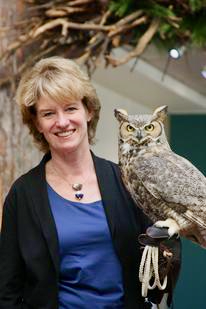
Julia Ponder, DVM, MPH served as Executive Director of The Raptor Center from 2007-2021 and Associate Dean for External Partnerships and Engagement at the University of Minnesota College of Veterinary Medicine from 2021 until she retired in 2024.

Past award recipients
Visit Lafeber.com to see a list of previous Award recipients.

The “Caring Hands” statuette is a bronze mold of Dr. Lafeber’s hands holding his most beloved avian patient, the budgerigar.
Did you know…?
The T.J. Lafeber Avian Practitioner of the Year is nominated and selected by their peers. The Awardee is not, and has never been, selected by Lafeber Company. The 2025 independent Award Selection Committee, consisting of Association of Avian Veterinarians members, was led by Dr. Yvonne R.A. van Zeeland.
A Refresher on Guinea Pig Medicine
View this RACE-approved webinar recording presented by Grayson Doss, DVM, DACZM. Guinea pigs are social, herbivorous rodents that are both a popular pet and laboratory animal throughout the world. This presentation reviews the basics of captive husbandry and clinical anatomy, as well as clinical techniques, including restraint, physical examination, venipuncture, radiography, and antibiotic therapy. Two common conditions, hypovitaminosis C and urolithiasis, are also explored . . .
Pour les vétérinaires. Par les vétérinaires.
Le site Lafervet.com est conçu pour une utilisation par les vétérinaires. Il est ouvert aux vétérinaires diplômés, aux techniciens vétérinaires diplômés, aux animaliers et aux étudiants dans ces domaines.
Créer un compte pour accéder à des articles et des ressources du site.
L'inscription est gratuite.
Para Profesionales Veterinarios. Por Profesionales Veterinarios.
El sitio Lafervet.com es para uso de los profesionales veterinarios. Está abierto a los veterinarios licenciados, técnicos veterinarios licenciados, rehabilitadores licenciados y estudiantes en estos campos.
Cree una cuenta para acceder a los artículos y recursos del sitio.
La registro es gratis.
Already a LafeberVet Member?
Please Login
Avian Euthanasia: Welfare Considerations & Clinical Techniques
Introduction
Euthanasia may be considered an essential part of veterinary practice, however the incredible diversity of class Aves creates special challenges for veterinary health professionals seeking to provide a death free of distress or pain (Fig 1).31

Figure 1. A one-size fits all approach to euthanasia of birds is not feasible. Class Aves includes a diverse range of species with varying sizes, anatomy, physiology, environments, domestication levels, clinical conditions, and responses to restraint, each posing unique challenges. Photo credit from upper left to lower right: Jill Murray, RVT, RLATG, VTS; Mario Micklisch/Flickr Creative Commons, Aneesa Malik, and LafeberVet. Click image to enlarge.
The euthanasia method selected should ideally result in rapid loss of consciousness, followed by respiratory and cardiac arrest, and subsequent loss of brain function.4,8 The objective is to provide a ‘quiet and easy death’ 8, while minimizing pain, distress, and discomfort.4,23
The preferred method of avian euthanasia is typically an intravenous (IV) injection of barbiturate.4,37,45 Given that most avian patients presenting for veterinary care are fearful, stressed, or excited, sedation or preferably general anesthesia is recommended to address animal welfare concerns and reduce handling distress.
Personnel and owner considerations
Personnel performing or assisting with euthanasia should be competent in recognizing normal avian behavior as well as signs of stress or fear.4 The ability to appropriately restrain the bird is also important.4
The handler should also have a working knowledge of avian anatomy. Key anatomical features include the absence of a diaphragm, which means that birds possess a coelomic cavity, as well as the presence of air sacs and pneumatized bones. The role of sternal movement in ventilation as well as the enhanced efficiency of the avian respiratory system must also be appreciated.4
The term ‘euthanasia’ is derived from Greek, meaning ‘a good death’. ‘Dysthanasia’ is a term used to describe the opposite 14, whereby there is pain or distress for the animal, improper technique, or anguish of the observers. Therefore, it is important to consider the welfare of the observers or participants as well as the animal. Research evaluating personnel assisting with laboratory rat euthanasia found that euthanasia methods involving minimal violence; little animal manipulation, and the least amount of blood were considered more acceptable.28
It is recognized that the euthanasia of small birds, especially in front of their owners, can be technically challenging.27
Some owners find euthanasia unacceptable. In such cases, comprehensive palliative care that supports a natural death may be a viable alternative.34
Pre-visit anxiolytics
Many pet birds are unaccustomed to handling and transport, and will present to the veterinary hospital in a stressed, fearful state. Pre-visit anxiolysis should ideally be provided to fearful or stressed pet birds or birds that would be expected to have a fear, anxiety, or stress score over three.21
Benzodiazepines are most commonly used to reduce avian anxiety.7,25,36,38,43 Research to guide dosing is ongoing, however, midazolam (1-3 mg/kg) can be given intranasally to most medium-sized pet birds at home by the owner just before the veterinary visit, provided the bird is used to handling and trained to accept this route of administration (Fig 2).7,35,36 Although the dose of intranasal midazolam may need to be increased in smaller species, such as canaries (Serinus canaria) and budgerigars (Melopsittacus undulatus), to 4-6 mg/kg 11,35,36, the author finds that 1-3 mg/kg tends to be equally effective in small, debilitated birds. As a general rule, lower doses are advised for sicker birds and higher doses are advised for birds that are more fearful or unaccustomed to human handling or transport.
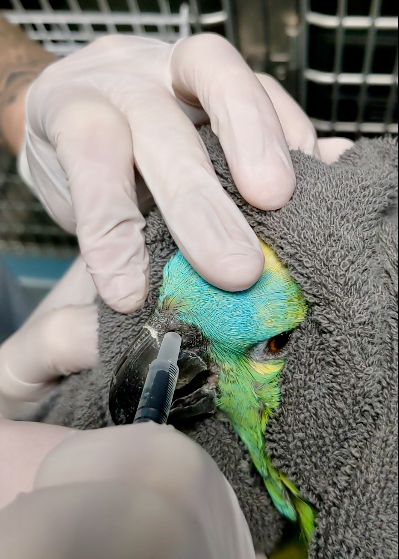
Figure 2. Intranasal administration of midazolam to a blue-fronted Amazon parrot (Amazona aestiva). Photo credit: Aneesa Malik. Click image to enlarge.
Currently, there are no oral pre-visit sedatives routinely given to birds. The use of gabapentin and tramadol are being explored.22 One oral dose of trazadone in pigeons (Columba livia) at 30 mg/kg resulted in plasma drug concentrations consistent with therapeutic effects in humans and dogs, however, no sedative or adverse effects were noted, and further research is needed to understand its clinical effects.17 A single dose of trazadone (50 mg/kg) in Hispaniolan Amazon parrots (Amazona ventralis) resulted in plasma concentrations comparable to other species studied with no adverse effects, however, behavioral effects were not reported.46 A variety of sedatives and antidepressants have also been evaluated in chicks that were socially separated as a model for panic disorder.30 Phenelzine (3.125-25.0 mg/kg), alprazolam (0.065-0.5 mg/kg), imipramine (1.0-15.0 mg/kg) and clonidine (0.1-0.25 mg/kg) attenuated distress vocalizations without significant sedation in cockerels, whereas buspirone (2.5-10.0 mg/kg) and trazodone (0.1-3.0 mg/kg) did not.30
Desmarchelier has described the use of psychopharmacological drugs in exotic animals, including tranquilizing agents, tricyclic antidepressants, and selective serotonin reuptake inhibitors.16 There has also been limited behavioral pharmacology research in pet parrots with behavioral disorders.48 Gabapentin, trazadone, paroxetine and amitriptyline have pharmacokinetic studies in some avian species.16 To the authors’ knowledge there is no research on the use of these drugs for pre-visit anxiolysis.
The use of some level of anxiolysis or sedation prior to anesthesia and euthanasia is also recommended not just for the animal’s welfare but it can make the euthanasia transition smoother and less distressing for the owner.9
General anesthesia
General anesthesia is typically recommended for euthanizing an avian patient, as it minimizes the risk of spontaneous arousal that can occur with sedation, especially when the bird is stimulated.7 General anesthesia also allows the placement of an IV catheter, which may be desirable if the owner would like to be present for euthanasia (Fig 3).
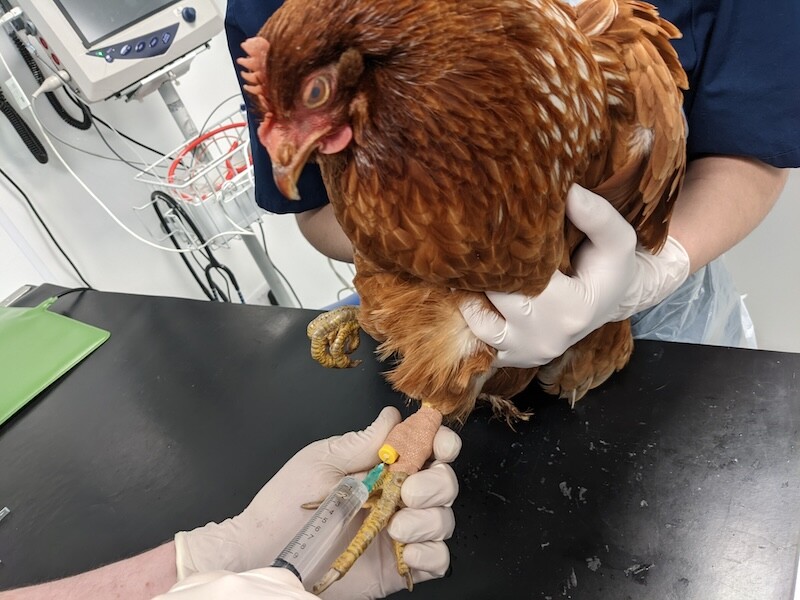
Figure 3. Use of a pre-placed intravenous catheter, as shown in this sedated chicken, is recommended when the owner will be present during euthanasia. Photo credit: Aneesa Malik. Click image to enlarge.
General anesthesia is associated with a loss of consciousness. A deep plane of anesthesia suitable for euthanasia is often associated with complete muscle relaxation, absent reflex limb withdrawal on toe or wing pinch, with a slow or absent corneal reflex.
| Table 1. Signs of loss of consciousness in birds10 |
|---|
| • Loss of the righting reflex • Loss of posture and muscle tone, drooping wings • Absence of rhythmic breathing • Loss of palpebral reflex and spontaneous blinking • Absence of vocalization |
When evaluating euthanasia from an animal welfare perspective, the time between consciousness and unconsciousness, often referred to as “latency to unconsciousness” is more important than the time it takes to achieve brain death. A short interval to insensibility is preferable, to minimize any potential suffering.5 If the bird is completely unconscious, there is also less concern over the method of euthanasia with regards to animal welfare.
Injectable agents
There are a number of anesthetic agents that can be given by IV, intramuscular (IM), or intranasal routes in the bird, such as alpha-2 agonists, ketamine, alfaxalone, and/or opioids (Table 2).7 Although the practitioner is advised to consult species-specific formularies for appropriate doses and combinations, it’s important to note that doses used before euthanasia are often higher, sometimes even doubled.
| Table 2. Common injectable anesthetic/sedative drug combinations administered to avian patients before euthanasia |
|---|
| • Medetomidine with an opioid, such as butorphanol • Medetomidine and ketamine +/- butorphanol • Medetomidine, ketamine, midazolam, butorphanol • Midazolam, ketamine, butorphanol • Alfaxalone +/- an opioid • Xylazine +/- ketamine* |
| *High doses of xylazine are well-tolerated, whereas ketamine appears to cause more discomfort on injection (Angela Lennox, email communication, January 2025) |
The author has had success with IM midazolam-ketamine-butorphanol in garden bird species, such as pigeons and passerines (Table 3).11,26
| Table 3. Intramuscular regimens recommended for garden bird species prior to euthanasia* | ||
|---|---|---|
| Drug | Dosage for sedation | Dosage for anesthesia** |
| Midazolam | 0.5 – 1.5 mg/kg | 1 - 3 mg/kg |
| Ketamine | 5 - 10 mg/kg | 5 – 10 mg/kg |
| Butorphanol | 1-2 mg/kg | 2-4 mg/kg |
| *Check species-specific doses when possible, as individual doses and responses will vary **Renée Schott, email communication, July 2024 |
||
The perception of being unable to escape restraint and being administered an injection has the potential to cause pain, discomfort, and/or distress.
Inhalation agents
The rapid loss of consciousness that can be achieved in birds with inhalation agents, such as sevoflurane or isoflurane, must be weighed against potentially serious disadvantages. The physical properties of halocarbon anesthetics, such as hypoxia, can cause distress. Isoflurane has also been shown to be an irritant to mucous membranes in humans.18 Additionally, all inhaled agents have the potential to cause distress because their effects are not immediate.12,40 The agent must be delivered via face mask or induction chamber; face mask is often preferable due to the disadvantages of chamber induction, outlined below.
FACE MASK INDUCTION
Face masks can be adapted to the size of the bird’s head using conforming bandage or a latex glove (Fig 4). In some species with long beaks, face masks can be created from plastic bottles (Fig 5). The patient can be securely wrapped in a towel during face mask induction.
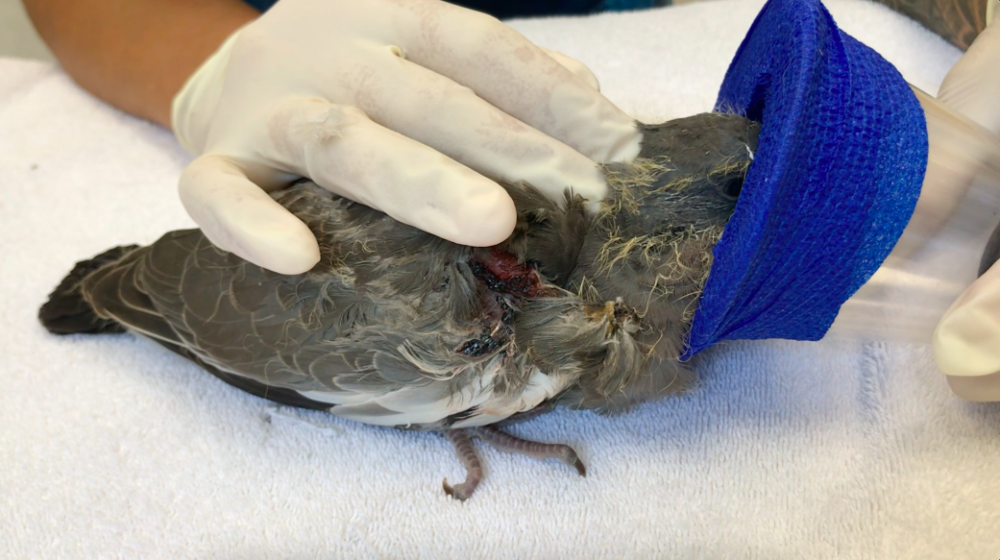
Figure 4. Juvenile wood pigeon (Columba palumbus) masked down with isoflurane and oxygen. A conforming bandage has been used to make an appropriate size hole for the bird’s head. Photo credit: Aneesa Malik. Click image to enlarge.
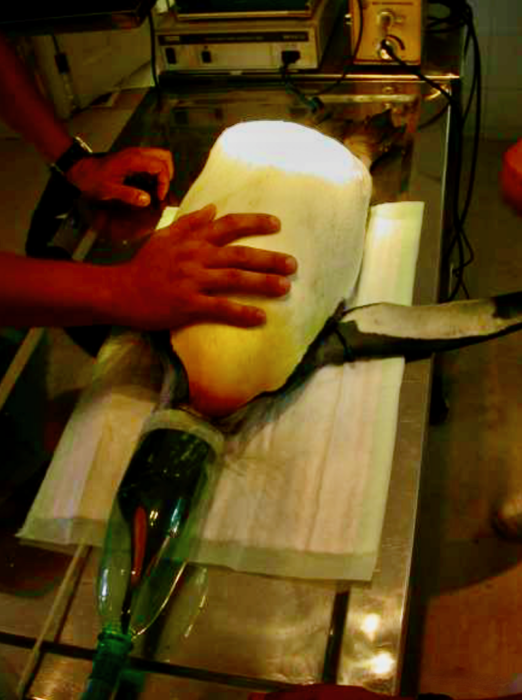
Figure 5. An inhalant anesthetic agent is delivered to a Gentoo penguin (Pygoscelis papua) using a plastic bottle that has been modified to serve as a face mask. Photo credit: Dr. Lorenzo Crosta.
CHAMBER INDUCTION
A dark, covered anesthetic induction chamber may be an option for wild birds that are more stressed by human restraint; however, this technique has several disadvantages. Birds are at risk for further distress or injury if they flap or become disorientated during induction, although padding the sides of the chamber with towels may reduce this risk. Birds also rapidly regain consciousness once removed from the chamber, and must be maintained on a face mask anyway. Additionally, the release of waste anesthetic gases into the environment presents a potential risk for staff and the owner, when present.
Euthanasia agents
Once the bird is unconscious, various euthanasia agents can be selected.
Inhaled agents
Inhaled anesthetics delivered at high concentrations, such as sevoflurane and isoflurane, can be used as a sole method of euthanasia in select avian patients (Table 4).4 Exposure to gas anesthetics also produces minimal tissue damage and results in the least amount of tissue artifact for birds that must be submitted for necropsy.4,33
| Table 4. Considerations for use of inhalant anesthesia for euthanasia of avian patients 4,26,38 | |
|---|---|
| Body size | Consider inhalant anesthetics in relatively small patients or species in which venipuncture may be technically challenging. |
| Breath holding | Diving birds and waterfowl may not respond as readily to inhalation anesthesia due to their breath-holding ability.38 Induction of anesthesia and time to loss of consciousness may be greatly prolonged. Therefore, injectable anesthetic agents will often be more successful in these species. |
| Food animals | Inhaled anesthetics are unsuitable for use in food-producing animals, because large amounts of drug are absorbed, creating potential tissue residues. |
| Sense of smell | Pungent inhaled vapor could be predicted to cause greater distress in avian species known to have a good sense of smell, like vultures or condors (carrion eaters). |
| Fear, anxiety, or stress | Volatile anesthetic agents are irritating to mucous membranes, and the perception of being restrained or unable to escape while being administered anesthetic gases can also cause distress (see below). For instance, inhalant induction has been shown to be stressful for human children.12,40 |
In laboratory settings, inhaled euthanasia agents include carbon dioxide (CO₂), carbon monoxide (CO), nitrogen (N₂), and argon noble (Ar), which induce hypoxia by displacing oxygen.4,42 Studies in turkeys found high CO₂ concentrations aversive 42, while Ar or CO₂-Ar mixtures were generally tolerated.42 In broiler chicks, gases with 90% Ar or N₂ in CO₂ and 80% Ar in CO₂ were least aversive, though all caused some distress.44
A study in zebra finches (Taeniopygia guttata) found CO₂ (80% chamber displacement rate) led to the fastest respiratory arrest but caused open-mouth breathing.45 Isoflurane chamber induction followed by intracoelomic sodium pentobarbital had the longest respiratory arrest time and was linked to distress behaviors like open-mouth breathing, wing flapping, and escape attempts.45
Injectable anesthetic agents
BARBITURATES
All barbituric acid derivatives used for anesthesia are considered acceptable for euthanasia when administered IV. Barbiturates depress the central nervous system and induce anesthesia, beginning with the cerebral cortex. With an overdose, a deep plane of barbiturate anesthesia can lead to apnea and hypoxemia, followed by cardiac arrest.4
Sodium pentobarbital is the most commonly used and widely accepted barbiturate.4 Administer sodium pentobarbital by IV injection (150 mg/kg IV) once the bird is adequately sedated or anesthetized.26 When injected IV, sodium pentobarbital will illicit four stages: voluntary and involuntary excitement, surgical anesthesia, followed by medullary paralysis.29 It is recommended to give the first one-third slowly to further anesthetize the patient.6
Although barbiturates are considered the gold standard for animal euthanasia 11, adverse effects can occur. Agonal gasping is sometimes seen with sodium pentobarbital.26 This caustic solution also causes pain and acts slowly when given by extravascular routes.26 When administered IV, barbiturates can also cause artifactual changes on histopathology, such as erythrolysis, edema, and coagulative tissue changes.33
T- 61
T-61 is a mixture of an anesthetic agent (embrutamide), a paralytic agent (mebozonium iodide), and a local anesthetic (tetracaine hydrochloride) that works by inducing unconsciousness, then cardiopulmonary collapse, followed by death through hypoxia.4,11 T-61 does not cause terminal gasping, as seen with sodium pentobarbital, however, similarly to barbiturates, T-61 can cause histopathological changes on postmortem exam.39 There are also concerns over the possible onset of paralysis prior to unconsciousness when dosage and injection instructions are not closely followed. T-61 was voluntarily withdrawn from the U.S. market due to the distress of personnel euthanizing dogs that appeared to experience pain and suffering prior to death.4
T-61 is considered acceptable in birds when administered IV by trained personnel.1,11 A study evaluating T-61 (0.03 mg/kg IV) in chickens did not find signs of pain or distress within the time frame to ‘insensibility’ (10.5 seconds from the start of the injection and 4 seconds after the end of the injection). Therefore, birds were not conscious during cardiac or circulatory arrest.5
POTASSIUM CHLORIDE
Intravenous administration of potassium chloride (KCl) causes serum levels of potassium to rise so high that heart function ceases. The primary benefit of IV KCl is that it does not cause artifactual changes on postmortem exam.41 A dose of 3 mEq/kg IV has been recommended for birds that will be submitted for histopathological assessment.41
The patient receiving a KCL infusion should always be maintained at a deep plane of anesthesia.11,41 The cardiac arrest which is induced is presumably painful, and seizures and muscle spasm can also occur with KCl administration.11,41 In a study comparing two IV doses of KCl in birds anesthetized with isoflurane, one bird given 3 mEq/kg exhibited mild vocalization.41 At the higher dose (10 mEq/kg), five out of six birds exhibited involuntary muscle tremors.41
Routes of administration for injectable agents
The euthanasia agent selected can be delivered by a variety of methods.
Intravenous
A common site of IV injection in birds is the jugular vein (Fig 6). The right jugular vein tends to be larger and is easily accessible in many species, even tiny birds. The jugular vein is less accessible in pigeons and doves (Columbiformes). Columbids have a diffuse venous plexus in this region that can obscure clear visualization of the jugular vein 13; however, jugular venipuncture is possible and reliable in these species. Additional peripheral IV sites include the medial metatarsal vein and the basilic vein (Fig 7, Fig 8).
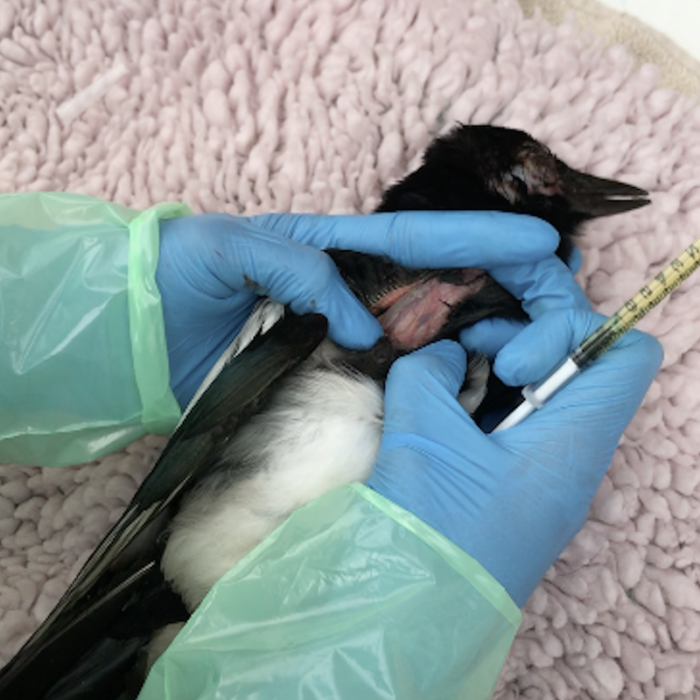
Figure 6. Visualizing the jugular vein in a sedated magpie (Pica pica). Photo credit: Aneesa Malik. Click image to enlarge.
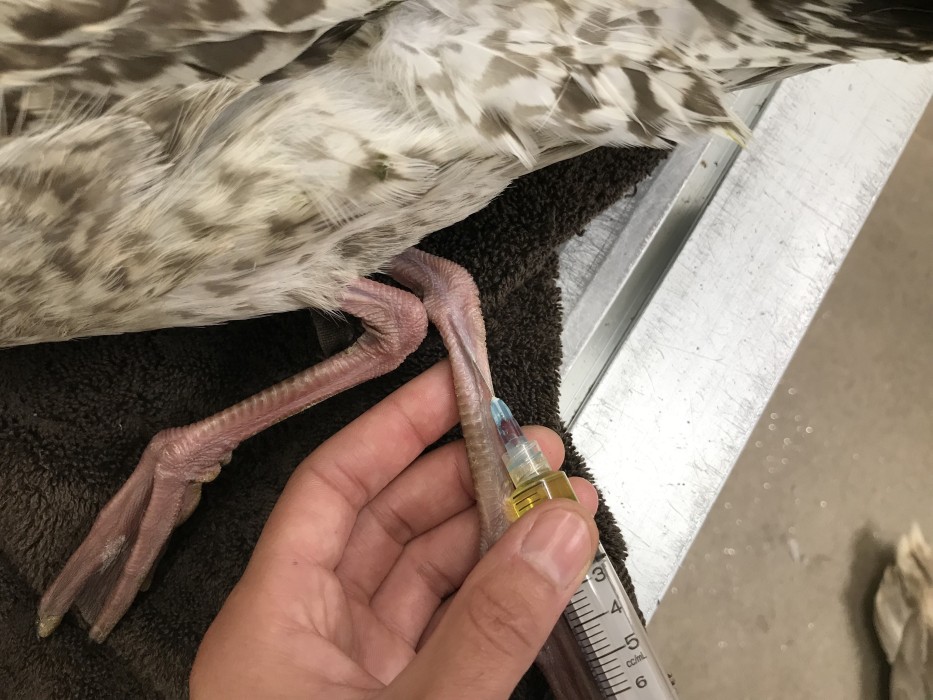
Figure 7. Injection of the medial metatarsal vein as it passes over the medial aspect of the intertarsal joint or “hock” in an anesthetized gull. Click image to enlarge. Photo credit: Aneesa Malik.
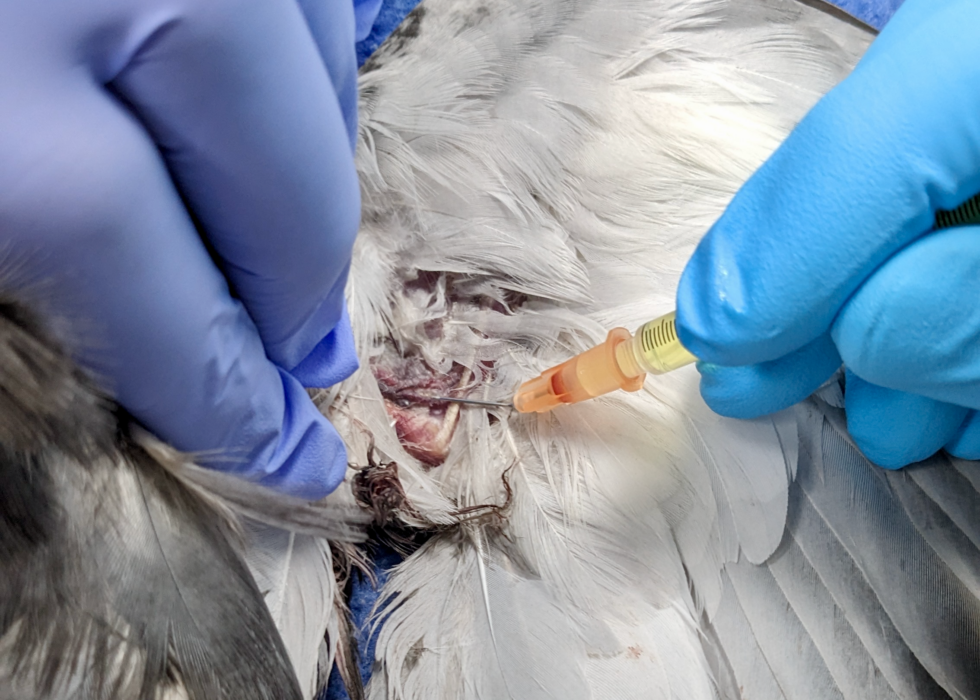
Figure 8. Injection of the basilic or ulnar vein as it passes over the medial surface of the elbow in an anesthetized pigeon (Columba livia). Click image to enlarge. Photo credit: Aneesa Malik
Another peripheral venous site for administration of euthanasia solution is the occipital sinus. This sinus can be accessed by holding the head and neck of the anesthetized bird at a right angle, to expose the space between the dorsal base of the skull and the first cervical vertebrae.49,50 The needle is carefully inserted along the median plane using a 21-25-gauge needle at a 30° to 45° angle (Video 1, Video 2, Fig 9).49,50 The depth of needle entry will vary with the species and size of the bird. An approximately 2-3 mm entry may be required for budgerigars, whereas a large Muscovy duck may require 10-12 mm to access the sinus.49,50 Angle the needle so that it passes just underneath the supraoccipital bone and into the dura mater. Slight resistance may be felt when the needle enters the dura. Anesthesia is essential, as many birds may resist being positioned correctly. Movement can cause the needle to penetrate the skull and/or brain.50
Video 1. Occipital venous sinus injection (no audio) in a Canada goose (Branta canadensis). Source: Katie Lennox-Phillibeck and Dr. Angela Lennox.
Video 2. Occipital venous sinus injection (no audio) in a sparrow (Passer domesticus). Source: Lauren Atkins.
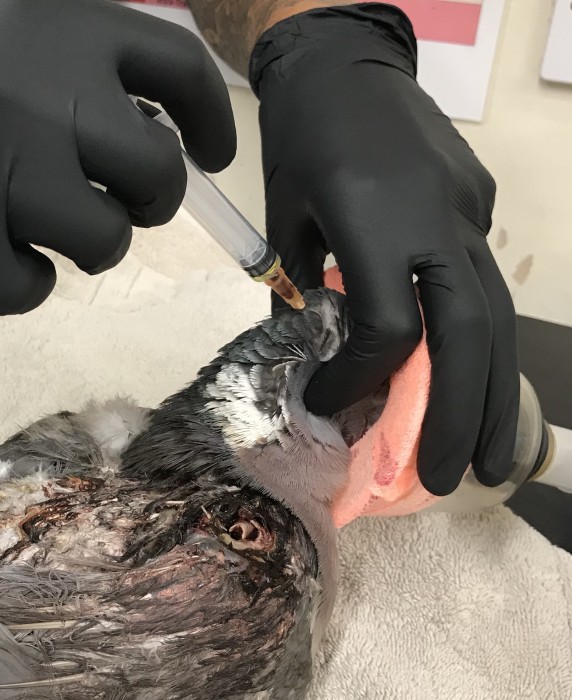
Figure 9. Injection into the occipital sinus in an anesthetized pigeon (Columba palumbus). Note the blood in the needle hub, ensuring correct placement. Photo credit: Aneesa Malik. Click image to enlarge.
Visit Zimmerman (1985) and Vuillaume (1983) for diagrams illustrating needle insertion.49,50
If a vein is inaccessible, alternative techniques may be used in select anesthetized patients.4 Like most barbiturates commonly used for injection, pentobarbital has an alkaline pH of 12- 13 making it irritating and painful when injected directly into tissues.4,32 Therefore, the patient should also be anesthetized when receiving euthanasia solution by these alternative routes.
Intraosseous
Placement of an intraosseous (IO) catheter for the sole purpose of euthanasia may be unnecessary and painful when less invasive routes are available. If the patient already has a catheter in place in the distal ulna, or less commonly the proximal tibiotarsus, this route is certainly an option. There is also potential for pain or discomfort with infusion due to the volume or viscosity of euthanasia solution.15 Therefore, slower injection rates or anesthesia and analgesia may be required.4
Intracardiac
Intracardiac injection of sodium pentobarbital is described as a method of euthanasia in the deeply anesthetized bird and is considered particularly useful in small patients with inaccessible veins.4,24 The heart may be accessed via the thoracic inlet, or through the ribs (laterally, in a region not heavily covered by pectoral musculature), using a needle of sufficient length to reach the chambers of the heart (Fig 10). Care should be taken to avoid the lungs or air sacs.

Figure 10. Intracardiac injection in an anesthetized parrotlet (Forpus coelestis). Photo credit: Aneesa Malik. Click image to enlarge.
Intracoelomic (intrahepatic)
Intracoelomic injection of a euthanasia agent is preferably delivered as an intrahepatic injection in the bird, since misinjection can potentially deliver pentobarbital into the gastrointestinal tract or air sacs. At best, this means the objective of euthanasia is not achieved. At worst, it can flood the respiratory tract, causing drowning and pain.7 Therefore, an attempt at an intrahepatic injection should be considered a last choice.
To perform an intrahepatic injection, insert the needle on midline at the keel base and direct the needle cranially at an approximately 30° angle (Fig 11, Fig 12). Blood aspirated into the needle hub indicates correct placement. In species with a relatively long keel, such as the pigeon, select a relatively long needle (4-5 cm) or pre-measure to ensure the liver is reached. Intrahepatic injections can lead to rapid uptake of barbiturate uptake and rapid unconsciousness.4
Figure 11. Intrahepatic injection in an anesthetized pigeon (Columba livia) using a 4 cm (1.5-inch) needle. Note the blood within the needle hub, which confirms correct needle placement. Photo credit: Aneesa Malik. Click image to enlarge.
Figure 12. Intrahepatic injection in an anesthetized pigeon (Columba palumbus). Photo credit: Aneesa Malik.
If the intracoloemic injection did not reach the liver, and instead went into the gastrointestinal tract or the coelom, the bird will pass through the stages of euthanasia more slowly.4 If the intracoloemic injection was administered into the air sacs, drowning will occur and gasping is observed.
Oral transmucosal
Research on oral transmucosal application of pentobarbital at five (430 mg/kg), six, and seven times (602 mg/kg) the mammalian IV dose has been carried out in conscious wild birds of varying species.23 Eighty of 110 birds showed no adverse effects. In the 30 remaining birds, adverse effects included agonal breathing, head shaking, wing flapping, head tick, excitation, vocalization, feather erection, possible aspiration, tremors, seizure-like activity, and rigidity.23 Loss of consciousness occurred within 5 minutes at all doses, but was fastest with the higher dose. The higher the dose, the less likely the bird required supplemental IV pentobarbital to achieve asystole within the 5-minute time frame.23
However, pentobarbital is known to be distasteful in mice 19, and the alkaline nature of sodium pentobarbital means that this agent can cause inflammation.20 The study in wild birds concluded that histopathology of oral and gastrointestinal mucosa is warranted to assess for tissue damage.23 The perception of being unable to escape restraint and having the oral cavity administered a distasteful or potentially noxious liquid has the potential for discomfort or distress.
Neonatal or embryonic birds
The same principles and techniques for euthanasia described for adult birds, also apply to neonatal birds (Fig 13).
Figure 13. Intrahepatic injection of an anesthetized nestling. Photo credit: Aneesa Malik. Click image to enlarge.
Before hatch, recommendations vary with the degree of embryo development.4 If the embryo is more than 80% through incubation, it can perceive pain; therefore, an anesthetic overdose or prolonged (20-minute) exposure to CO2 is advised.4 Intravenous injection of pentobarbital into the chorioallantoic vasculature or IM injection of ketamine and an alpha-2 agonist has been described in chicken embryos.1 In embryos less than 80% through incubation, cooling at 4.4°C (40°F) for 4 hours or freezing are considered acceptable.4
Field euthanasia
In the event that euthanasia must be performed outdoors and an anesthetic machine for inhalant anesthesia is not available, injectable anesthesia agents can be used to ensure the patient is unconscious prior to IV pentobarbital injection.
If injectable anesthesia drugs are unavailable but isoflurane or sevoflurane are available, gaseous anesthesia can still be used. A sealed ‘induction face mask’ can be created, by placing isoflurane-soaked cotton wool inside a latex glove, attached to one end of the mask (Fig 14). The patient can be securely wrapped in a towel and the head gently placed inside the facemask, with time taken to inhale the isoflurane. Ensure the patient is lower than the glove, as isoflurane is a heavy gas and will fall to the bottom of the mask.
Figure 14. Field euthanasia using isoflurane-soaked cotton wool in a sealed face mask. Photo credit: Aneesa Malik. Click image to enlarge.
Alternatively, the patient can be placed inside a sealed container, alongside a small, unsealed vessel filled with isoflurane. As isoflurane expands, it will diffuse out into the container holding the bird. Ensure personnel wear a face mask and keep above the level of the container so that isoflurane will not be inhaled. The addition of 5 ml of isoflurane to a 1-L capacity container has also been described (Renée Schott, email communication, July 2024).
There are a vast number of resources describing euthanasia methods in farm or field settings, such as depopulation or culling, which are beyond the scope of this article.2,3,10,47
Confirm death
Signs that death is imminent include loss of corneal reflex, fixed and dilated pupils, absent respiration, bradycardia, and reduced heart sounds.7 Death should be confirmed by complete loss of the heart beat or asystole, and/or the onset of rigor mortis.7
The owner may want to spend time with their pet bird after it has passed away. Some long-lived birds may have been part of the family for decades, so the loss of these pets can be especially difficult for owners.27 Footprints or feathers can be offered to serve as a memento.
Survey
Euthanasia, or providing “a good death,” is an essential, yet often challenging, part of veterinary practice. Euthanasia presents unique difficulties in avian patients, and while many recommendations exist, strong personal opinions also shape clinical practice.
Some LafeberVet users completed a brief, confidential survey to share their perspective in fall/winter 2025. View the survey results.
References
Post-Test: Brumation in Turtles and Tortoises
The Brumation in Turtles and Tortoises webinar was reviewed and approved by the American Association of Veterinary State Boards (AAVSB) Registry of Approved Continuing Education (RACE) program for 1 hour of continuing education credit for veterinarians and veterinary technicians in jurisdictions that recognize AAVSB RACE approval. You have three chances to take this post-test and pass. With a passing grade, you will see your results and a link to your continuing education certificate . . .
Pour les vétérinaires. Par les vétérinaires.
Le site Lafervet.com est conçu pour une utilisation par les vétérinaires. Il est ouvert aux vétérinaires diplômés, aux techniciens vétérinaires diplômés, aux animaliers et aux étudiants dans ces domaines.
Créer un compte pour accéder à des articles et des ressources du site.
L'inscription est gratuite.
Para Profesionales Veterinarios. Por Profesionales Veterinarios.
El sitio Lafervet.com es para uso de los profesionales veterinarios. Está abierto a los veterinarios licenciados, técnicos veterinarios licenciados, rehabilitadores licenciados y estudiantes en estos campos.
Cree una cuenta para acceder a los artículos y recursos del sitio.
La registro es gratis.
Already a LafeberVet Member?
Please Login
Post-Test: Hedgehog Anesthesia & Surgery
The Hedgehog Anesthesia and Surgery webinar recording was reviewed and approved by the American Association of Veterinary State Boards (AAVSB) Registry of Approved Continuing Education (RACE) program for 1 hour of continuing education credit for veterinarians and veterinary technicians in jurisdictions that recognize AAVSB RACE approval. You have three chances to take this post-test and pass. With a passing grade, you will see your results and a link to your continuing education certificate . . .
Pour les vétérinaires. Par les vétérinaires.
Le site Lafervet.com est conçu pour une utilisation par les vétérinaires. Il est ouvert aux vétérinaires diplômés, aux techniciens vétérinaires diplômés, aux animaliers et aux étudiants dans ces domaines.
Créer un compte pour accéder à des articles et des ressources du site.
L'inscription est gratuite.
Para Profesionales Veterinarios. Por Profesionales Veterinarios.
El sitio Lafervet.com es para uso de los profesionales veterinarios. Está abierto a los veterinarios licenciados, técnicos veterinarios licenciados, rehabilitadores licenciados y estudiantes en estos campos.
Cree una cuenta para acceder a los artículos y recursos del sitio.
La registro es gratis.
Already a LafeberVet Member?
Please Login
Brumation in Turtles and Tortoises
Brumation is a natural state of dormancy that occurs in response to colder temperatures. View the RACE-approved recording of the webinar presented by Dr. Joanna Hedley. This presentation examines the factors that influence brumation and outlines key considerations when preparing to brumate a chelonian in a controlled environment, including a comprehensive health check and preparatory steps, such as withdrawal of food as well as reduction of environmental temperature and photoperiod. Various techniques are discussed, including outdoor housing, traditional box methods, and refrigerator or chiller methods. Effective monitoring as well as rewarming protocols are also covered . . .
Pour les vétérinaires. Par les vétérinaires.
Le site Lafervet.com est conçu pour une utilisation par les vétérinaires. Il est ouvert aux vétérinaires diplômés, aux techniciens vétérinaires diplômés, aux animaliers et aux étudiants dans ces domaines.
Créer un compte pour accéder à des articles et des ressources du site.
L'inscription est gratuite.
Para Profesionales Veterinarios. Por Profesionales Veterinarios.
El sitio Lafervet.com es para uso de los profesionales veterinarios. Está abierto a los veterinarios licenciados, técnicos veterinarios licenciados, rehabilitadores licenciados y estudiantes en estos campos.
Cree una cuenta para acceder a los artículos y recursos del sitio.
La registro es gratis.
Already a LafeberVet Member?
Please Login
Hedgehog Anesthesia and Surgery
Grayson Doss, DVM, DACZM presented this distance-learning event for the University of Illinois College of Veterinary Medicine Non-Traditional Species Club as part of the Lafeber Company Student Program. This RACE-approved webinar recording reviews current best practices for anesthesia, analgesia, and surgical management in pet African pygmy hedgehogs (Atelerix albiventris . . .
Pour les vétérinaires. Par les vétérinaires.
Le site Lafervet.com est conçu pour une utilisation par les vétérinaires. Il est ouvert aux vétérinaires diplômés, aux techniciens vétérinaires diplômés, aux animaliers et aux étudiants dans ces domaines.
Créer un compte pour accéder à des articles et des ressources du site.
L'inscription est gratuite.
Para Profesionales Veterinarios. Por Profesionales Veterinarios.
El sitio Lafervet.com es para uso de los profesionales veterinarios. Está abierto a los veterinarios licenciados, técnicos veterinarios licenciados, rehabilitadores licenciados y estudiantes en estos campos.
Cree una cuenta para acceder a los artículos y recursos del sitio.
La registro es gratis.
Already a LafeberVet Member?
Please Login
Grayson Doss, DVM, DACZM
 Grayson Doss is a Clinical Associate Professor of Zoological Medicine at the University of Wisconsin-Madison School of Veterinary Medicine. Dr. Doss is a Diplomate of the American College of Zoological Medicine. Grayson earned a Bachelor of Science in 2008 and his Doctorate of Veterinary Medicine in 2013 from Louisiana State University. He completed an internship in small animal medicine and surgery from the University of Tennessee College of Veterinary Medicine in 2014 and a residency in zoological medicine and surgery from the University of Wisconsin, Milwaukee County Zoo, and the International Crane Foundation in 2017. Dr. Doss’s research interests include anesthesia, sedation, analgesia and diagnostic imaging in exotic companion animals.
Post-Test: Clinical Approach to Fish Medicine
The Clinical Approach to Fish Medicine webinar was reviewed and approved by the American Association of Veterinary State Boards (AAVSB) Registry of Approved Continuing Education (RACE) program for 1 hour of continuing education credit for veterinarians and veterinary technicians in jurisdictions that recognize AAVSB RACE approval. You have three chances to take this post-test and pass. With a passing grade, you will see your results and a link to your continuing education certificate . . .
Pour les vétérinaires. Par les vétérinaires.
Le site Lafervet.com est conçu pour une utilisation par les vétérinaires. Il est ouvert aux vétérinaires diplômés, aux techniciens vétérinaires diplômés, aux animaliers et aux étudiants dans ces domaines.
Créer un compte pour accéder à des articles et des ressources du site.
L'inscription est gratuite.
Para Profesionales Veterinarios. Por Profesionales Veterinarios.
El sitio Lafervet.com es para uso de los profesionales veterinarios. Está abierto a los veterinarios licenciados, técnicos veterinarios licenciados, rehabilitadores licenciados y estudiantes en estos campos.
Cree una cuenta para acceder a los artículos y recursos del sitio.
La registro es gratis.
Already a LafeberVet Member?
Please Login
Fish History Form
When managing fish patients, it is essential to consider not only the fish themselves but the entire aquarium system, including the water, air, filtration components, and other life forms within the environment. A thorough history should include a detailed assessment of the system, with particular emphasis on the life support components and water quality parameters.
Download a PDF version of the fish history form.
Because evaluation of the entire environment will be needed, an on-site evaluation is ideal. If this is not feasible, instruct clients to provide high-quality photographs and videos of the aquarium environment, including all life support equipment.
It is also important to assess the client’s level of experience with fish husbandry and their understanding of fish health. General categories of fish keepers range from single-tank owners and multi-tank hobbyists, pond enthusiasts to breeders, retailers, and wholesalers. Additionally, understanding the client’s goals is critical to guiding appropriate care and management.
Todd R. Cecil, DVM, DABVP (Avian Practice), DABVP (Fish Practice), CertAqV
 Todd Cecil is the owner of Western Aquatic Animal Veterinary Service with over 30 years of aquatic animal veterinary experience. Dr. Cecil is one of only 20 fish specialists in the world certified by the American Board of Veterinary Practitioners. He is also a certified aquatic veterinarian (CertAqV), credentialed by the World Aquatic Veterinary Medical Association. His experience includes over 25 years with aquaculture species, fresh and salt water aquaria and pond species (koi and goldfish). Dr. Cecil also provides avian and exotic animal medicine services at Pet Emergency & Specialty Center in La Mesa, California. Prior to attending veterinary medical school, Todd worked as a zookeeper at the San Francisco Zoological Society where he developed a keen interest in exotic species. He earned his veterinary degree from the University of California at Davis and he completed a postdoctoral fellowship at Mississippi State University.
Post-Test: Respiratory Disease in Chelonians
The Respiratory Disease in Chelonians webinar was reviewed and approved by the American Association of Veterinary State Boards (AAVSB) Registry of Approved Continuing Education (RACE) program for 1 hour of continuing education credit for veterinarians and veterinary technicians in jurisdictions that recognize AAVSB RACE approval. You have three chances to take this post-test and pass. With a passing grade, you will see your results and a link to your continuing education certificate . . .
Pour les vétérinaires. Par les vétérinaires.
Le site Lafervet.com est conçu pour une utilisation par les vétérinaires. Il est ouvert aux vétérinaires diplômés, aux techniciens vétérinaires diplômés, aux animaliers et aux étudiants dans ces domaines.
Créer un compte pour accéder à des articles et des ressources du site.
L'inscription est gratuite.
Para Profesionales Veterinarios. Por Profesionales Veterinarios.
El sitio Lafervet.com es para uso de los profesionales veterinarios. Está abierto a los veterinarios licenciados, técnicos veterinarios licenciados, rehabilitadores licenciados y estudiantes en estos campos.
Cree una cuenta para acceder a los artículos y recursos del sitio.
La registro es gratis.
Already a LafeberVet Member?
Please Login
Clinical Approach to Fish Medicine
View this webinar recording presented by Claire Vergneau-Grosset, DMV, IPSAV, CES, DACZM, RACE-approved for 1 credit hour. Freshwater fish are the most common pets in North America, with over 139 million kept in U.S. households. Historically, fish medicine has focused on population-based care—a model still relevant in aquaculture and research settings. However, a more individualized approach is gaining ground. Dr. Grosset covers key aspects of companion fish care. Topics include history taking, water quality assessment, physical exams under anesthesia, and comparative diagnostic methods such as clinical pathology and imaging. This session also reviews core principles . . .
Pour les vétérinaires. Par les vétérinaires.
Le site Lafervet.com est conçu pour une utilisation par les vétérinaires. Il est ouvert aux vétérinaires diplômés, aux techniciens vétérinaires diplômés, aux animaliers et aux étudiants dans ces domaines.
Créer un compte pour accéder à des articles et des ressources du site.
L'inscription est gratuite.
Para Profesionales Veterinarios. Por Profesionales Veterinarios.
El sitio Lafervet.com es para uso de los profesionales veterinarios. Está abierto a los veterinarios licenciados, técnicos veterinarios licenciados, rehabilitadores licenciados y estudiantes en estos campos.
Cree una cuenta para acceder a los artículos y recursos del sitio.
La registro es gratis.
Already a LafeberVet Member?
Please Login
Claire Vergneau-Grosset, Dr. med vet, IPSAV, CES (Pathologie Aviaire), DACZM
 Claire Vergneau-Grosset has worked as an Associate Professor in Zoological Medicine at Université de Montréal Faculté de médecine vétérinaire in Canada since 2019. She has also been affiliated with the Aquarium du Québec since 2015. Claire graduated from the École Nationale Vétérinaire d’Alfort in France in 2008. She completed an internship in veterinary clinical sciences (IPSAV) in zoological medicine at the Université de Montréal in 2009 followed by a residency in Companion Avian and Exotic Pet Medicine at the University of California, Davis (UCD) from 2011 to 2014. Dr. Vergneau-Grosset became a Diplomate of the American College of Zoological Medicine in 2014. She worked as an Associate Veterinarian in aquatic animal health at UCD from 2014 – 2015, performing applied research and providing consultations for ornamental fish, both owned as pets or held in aquaculture and zoos. Dr. Vergneau-Grosset worked as a teaching clinician in zoological medicine at the University of Montreal from 2015 to 2019. Claire has authored scientific articles about aquatic invertebrates, fish, reptiles, birds, and mammals and she has presented locally, nationally, and internationally on these subjects. She has a strong research interest for fish welfare and analgesia and has received the Zoetis Award for Veterinary Research Excellence in 2025.
Post-Test: Hazardous Habitats
The "Hazardous Habitats: Protecting Zoological Companion Animals from Everyday Toxins" webinar was reviewed and approved by the American Association of Veterinary State Boards (AAVSB) Registry of Approved Continuing Education (RACE) program for 1 hour of continuing education credit for veterinarians and veterinary technicians in jurisdictions that recognize AAVSB RACE approval. You have three chances to take this post-test and pass. With a passing grade, you will see your results and a link to your continuing education certificate . . .
Pour les vétérinaires. Par les vétérinaires.
Le site Lafervet.com est conçu pour une utilisation par les vétérinaires. Il est ouvert aux vétérinaires diplômés, aux techniciens vétérinaires diplômés, aux animaliers et aux étudiants dans ces domaines.
Créer un compte pour accéder à des articles et des ressources du site.
L'inscription est gratuite.
Para Profesionales Veterinarios. Por Profesionales Veterinarios.
El sitio Lafervet.com es para uso de los profesionales veterinarios. Está abierto a los veterinarios licenciados, técnicos veterinarios licenciados, rehabilitadores licenciados y estudiantes en estos campos.
Cree una cuenta para acceder a los artículos y recursos del sitio.
La registro es gratis.
Already a LafeberVet Member?
Please Login
Mike Corcoran, DVM, DABVP (Reptile & Amphibian Practice), CertAqV
 Mike Corcoran is a certified aquatic veterinarian and a board-certified specialist in reptile and amphibian practice through the American Board of Veterinary Practitioners. Dr. Corcoran currently works as an exotic animal medicine consultant in California. He also mentors reptile and amphibian medicine residents at the Arizona Exotic Animal Hospital (AZEAH) and Colorado Exotic Animal Hospital, consults for Moichor Diagnostic Services, and assists in planning Exotics 365, the annual conference of the Association of Reptile and Amphibian Veterinarians (ARAV). Mike is a 2008 graduate of the Washington State University College of Veterinary Medicine. His past clinical experiences have included small animal emergency medicine and exotic animal-exclusive practice, including serving as an associate veterinarian at AZEAH and managing an exotic animal medicine referral practice at Bulger Animal Hospital in the Boston area. Dr. Corcoran is also a Past President of ARAV.
Respiratory Disease in Chelonians
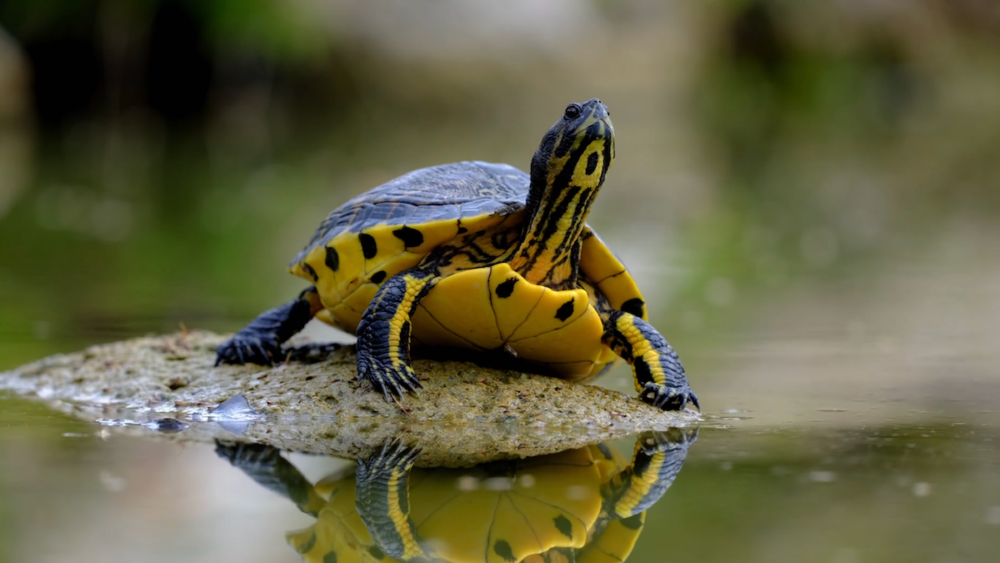
Photo: Engin_Akyurt/pixabay
Abstract
Respiratory disease in chelonians bears many similarities to respiratory disease in any animal. The disease can be infectious, inflammatory, neoplastic, or toxic. Infectious causes can be bacterial, fungal or viral. From a practical point-of-view for the clinician, what matters is the differences presented by chelonians. Slight adjustments to the normal case workup are required due to differences in anatomy, physiology, and specific agents of disease. Otherwise, the workup is similar to other species. By that logic, understanding the differences is the most important thing to offering good quality of care for the affected animals in a veterinary practice.
There are numerous anatomical differences from the mammalian species commonly taught in veterinary medical school curricula. In mammals, inhalation and exhalation are accomplished by expansion and contraction of the rib cage and the diaphragm. The most obvious difference with chelonians is the presence of the shell. Rigid fusion of the ribs and sternum varies greatly from the flexible rib cage structure of mammals. They also lack a diaphragm. The lungs don’t terminate in alveolar sacs, but are rather divided into multiple chambers with a reticulated structure of the lung parenchyma housing the alveoli. The trachea has complete cartilaginous rings through at least a portion of the structure, which branches cranially compared to most mammalian species. Finally, the glottis is more cranial in the oral cavity in most chelonians by comparison to mammalian counterparts.
What do these differences mean? Let’s go through a typical workup to get at the practical differences from the perspective of clinical practice. Without a flexible rib cage and a diaphragm, inhalation and exhalation are both active processes depending upon movement of the limbs and various abdominal muscles. Respiratory rate is normally counted by looking at the inward and outward movement of the forelimbs. The rigid shell is also a barrier to auscultation of the lungs with a stethoscope. However, even if one could hear the lungs, the differing structure would mean that the lung sounds would differ in these animals. External nares are rigid in most chelonians, so nostril flare cannot be considered a reliable indication of dyspnea. The oral cavity is harder to open, but once opened, the clinician is usually rewarded with good visualization of the internal nares and the glottis.
For diagnostic testing, the lack of diaphragm leads to superimposition of viscera with standard radiographic positioning. Horizontal beam is a minimum requirement for truly diagnostic images in all views, but computed tomography should be considered the standard means for effectively imaging the lower airways. Pulmonary wash or endoscopic views are possible with adjustments to the sampling methods.
For infectious agents, cultures and next-generation DNA sequencing can be used. For tortoises with upper respiratory disease, PCR for mycoplasma should be considered. Primary viral pathogens are most commonly herpesvirus and ranavirus.
Outline
|
 |
- Diagnostic testing
- Imaging
- Radiographs – horizontal beam
- CT
- Culture, cytology, and biopsy
- Endoscopy
- Imaging
- Specific pathogens and agents of disease
- Mycoplasma
- Viral
- Herpesvirus
- Ranavirus
- Treatment considerations
- Oral versus injectable
- Nebulization
About the presenter
Mike Corcoran is a certified aquatic veterinarian and a board-certified specialist in reptile and amphibian practice through the American Board of Veterinary Practitioners. Dr. Corcoran currently works as an exotic animal medicine consultant in Southern California. He also works part-time at the Arizona Exotic Animal Hospital, where he mentors reptile and amphibian residents…Dr. Corcoran has served on the Board of the Association of Reptile and Amphibian Veterinarians (ARAV) for more than 5 years. He also served as a Past President of ARAV and the Chair of the ARAV Legislation and Animal Welfare Committee. [MORE]
Webinar recording
Transcript
Download a transcript of Dr. Mike Corcoran’s recording, available as both a Word document and PDF.
Post-test
Take the brief post-test to earn 1 hour of continuing education credit. With a passing grade, you will receive a continuing education certificate in jurisdictions that recognize AAVSB RACE approval.
Expert Q&A
Virtually all questions were addressed during the live event, two remaining questions were answered by email and are shared below:
Have you had a situation where it was risky to even sedate to do hands-on diagnostics? What do you do in that situation – Oxygen cage? Nebulize with aminophylline?
Yes, placing [these patients] in oxygen and nebulizing would be appropriate if you have one in distress, but once they have time in oxygen, remember that sedation will reduce anxiety and therefore reduce the oxygen demand in most cases. Once you have reduced distress with oxygen, I will often give a dose of midazolam…and return later. A complete exam may not happen on the first day in bad cases.
In tortoises with oral/pharyngeal plaques – we used to say this was herpes- and would treat with acyclovir. Is this now a ranavirus? Have you used antivirals in any of [these] chelonians?
I haven’t used any antivirals in reptiles. I know some use it with papillomas in sea turtles, but I never saw those in practice, only the cold-stunned sea turtles. The papillomas occur in warmer waters. I vaguely remember a paper addressing its use in pet turtles with herpes, but now I can’t find it, so it may only be in proceedings.
Editor’s note: Although not the paper to which Dr. Corcoran refers, the manuscripts listed below discuss the use of antivirals in chelonians:
Okoh GR, Horwood PF, Whitmore D, Ariel E. Herpesviruses in reptiles. Front Vet Sci. 2021;8:642894. doi: 10.3389/fvets.2021.642894. PMID: 34026888; PMCID: PMC8131531.
Gandar F, Marlier D, Vanderplasschen A. In vitro and in vivo assessment of eprociclovir as antiviral treatment against testudinid herpesvirus 3 in Hermann’s tortoise (Testudo hermanni). Res Vet Sci. 2019;124:20-23. doi: 10.1016/j.rvsc.2019.02.001. Epub 2019 Feb 16. PMID: 30782569.
Marschang RE, Gravendyck M, Kaleta EF. Herpesviruses in tortoises: investigations into virus isolation and the treatment of viral stomatitis in Testudo hermanni and T. graeca. Zentralbl Veterinarmed B. 1997;44(7):385-94. doi: 10.1111/j.1439-0450.1997.tb00989.x. PMID: 9323927.
RACE approval
This program is approved by the American Association of Veterinary State Boards (AAVSB) Registry of Approved Continuing Education (RACE) for 1 hour of continuing education credit for veterinarians and veterinary technicians in jurisdictions that recognize AAVSB RACE approval.
References
Test Your Knowledge: AMR in Exotic Animal Medicine
You need to be registered and logged in to take this quiz. Log in
Hazardous Habitats: Protecting Zoological Companion Animals from Everyday Toxins
View this RACE-approved webinar recording presented by Sarah Ozawa, DVM, DACZM, then complete and pass a brief quiz to earn 1 hour of continuing education credit. Zoological companion animals (ZCA) are frequently exposed to potential toxins both inside and outside the home. This webinar explores common and unique toxins affecting birds, exotic companion mammals and reptiles, providing insights into diagnosis and treatment where applicable . . .
Pour les vétérinaires. Par les vétérinaires.
Le site Lafervet.com est conçu pour une utilisation par les vétérinaires. Il est ouvert aux vétérinaires diplômés, aux techniciens vétérinaires diplômés, aux animaliers et aux étudiants dans ces domaines.
Créer un compte pour accéder à des articles et des ressources du site.
L'inscription est gratuite.
Para Profesionales Veterinarios. Por Profesionales Veterinarios.
El sitio Lafervet.com es para uso de los profesionales veterinarios. Está abierto a los veterinarios licenciados, técnicos veterinarios licenciados, rehabilitadores licenciados y estudiantes en estos campos.
Cree una cuenta para acceder a los artículos y recursos del sitio.
La registro es gratis.
Already a LafeberVet Member?
Please Login
Post-Test: Pet Poultry Basics
The Pet Poultry Basics webinar was reviewed and approved by the American Association of Veterinary State Boards (AAVSB) Registry of Approved Continuing Education (RACE) program for 1 hour of continuing education credit for veterinarians and veterinary technicians in jurisdictions that recognize AAVSB RACE approval. You have three chances to take this post-test and pass. With a passing grade, you will see your results and a link to your continuing education certificate . . .
Pour les vétérinaires. Par les vétérinaires.
Le site Lafervet.com est conçu pour une utilisation par les vétérinaires. Il est ouvert aux vétérinaires diplômés, aux techniciens vétérinaires diplômés, aux animaliers et aux étudiants dans ces domaines.
Créer un compte pour accéder à des articles et des ressources du site.
L'inscription est gratuite.
Para Profesionales Veterinarios. Por Profesionales Veterinarios.
El sitio Lafervet.com es para uso de los profesionales veterinarios. Está abierto a los veterinarios licenciados, técnicos veterinarios licenciados, rehabilitadores licenciados y estudiantes en estos campos.
Cree una cuenta para acceder a los artículos y recursos del sitio.
La registro es gratis.
Already a LafeberVet Member?
Please Login
Sarah Ozawa, DVM, DACZM
 Sarah Ozawa earned her veterinary degree from the University of Wisconsin. Following graduation, she completed a small animal rotating internship at the University of Tennessee and then a residency in zoological companion animal medicine at the University of California at Davis. Dr. Ozawa became board certified by the American College of Zoological Medicine in 2020. She is currently an Assistant Professor at North Carolina State University College of Veterinary Medicine and her research interests include small mammal therapeutics and cardiovascular disease.
Antimicrobial Stewardship in Exotic Animal Medicine
The use of antimicrobial drugs has revolutionized medicine, making a wide range of infections readily treatable. However, any use of antimicrobials also contributes to the emergence and spread of resistance. Today, antimicrobial resistance (AMR) is recognized as the most significant global public health threat. View this RACE-approved webinar recording presented by Neil Forbes, BVetMed DECZM FRCVS. This presentation addresses the unique challenges encountered in exotic animal medicine and discusses responsible antimicrobial prescribing practices. Effective infection control and biosecurity strategies are also explored . . .
Pour les vétérinaires. Par les vétérinaires.
Le site Lafervet.com est conçu pour une utilisation par les vétérinaires. Il est ouvert aux vétérinaires diplômés, aux techniciens vétérinaires diplômés, aux animaliers et aux étudiants dans ces domaines.
Créer un compte pour accéder à des articles et des ressources du site.
L'inscription est gratuite.
Para Profesionales Veterinarios. Por Profesionales Veterinarios.
El sitio Lafervet.com es para uso de los profesionales veterinarios. Está abierto a los veterinarios licenciados, técnicos veterinarios licenciados, rehabilitadores licenciados y estudiantes en estos campos.
Cree una cuenta para acceder a los artículos y recursos del sitio.
La registro es gratis.
Already a LafeberVet Member?
Please Login
Test Your Knowledge: Medical and Behavioral Issues in Avian Health
The Intersection of Medical and Behavioral Issues in Avian Health webinar recording was reviewed and approved by the American Association of Veterinary State Boards (AAVSB) Registry of Approved Continuing Education (RACE) program for 1 hour of continuing education credit for veterinarians and veterinary technicians in jurisdictions that recognize AAVSB RACE approval. You have three chances to take this post-test and pass. With a passing grade, you will see your results and a link to your continuing education certificate . . .
Pour les vétérinaires. Par les vétérinaires.
Le site Lafervet.com est conçu pour une utilisation par les vétérinaires. Il est ouvert aux vétérinaires diplômés, aux techniciens vétérinaires diplômés, aux animaliers et aux étudiants dans ces domaines.
Créer un compte pour accéder à des articles et des ressources du site.
L'inscription est gratuite.
Para Profesionales Veterinarios. Por Profesionales Veterinarios.
El sitio Lafervet.com es para uso de los profesionales veterinarios. Está abierto a los veterinarios licenciados, técnicos veterinarios licenciados, rehabilitadores licenciados y estudiantes en estos campos.
Cree una cuenta para acceder a los artículos y recursos del sitio.
La registro es gratis.
Already a LafeberVet Member?
Please Login
Avian Nutrition Quiz: Practical Applications
The Avian Nutrition: Practical Applications webinar recording was reviewed and approved by the American Association of Veterinary State Boards (AAVSB) Registry of Approved Continuing Education (RACE) program for 1 hour of continuing education credit for veterinarians and veterinary technicians in jurisdictions that recognize AAVSB RACE approval. You have three chances to take this post-test and pass. With a passing grade, you will see your results and a link to your continuing education certificate . . .
Pour les vétérinaires. Par les vétérinaires.
Le site Lafervet.com est conçu pour une utilisation par les vétérinaires. Il est ouvert aux vétérinaires diplômés, aux techniciens vétérinaires diplômés, aux animaliers et aux étudiants dans ces domaines.
Créer un compte pour accéder à des articles et des ressources du site.
L'inscription est gratuite.
Para Profesionales Veterinarios. Por Profesionales Veterinarios.
El sitio Lafervet.com es para uso de los profesionales veterinarios. Está abierto a los veterinarios licenciados, técnicos veterinarios licenciados, rehabilitadores licenciados y estudiantes en estos campos.
Cree una cuenta para acceder a los artículos y recursos del sitio.
La registro es gratis.
Already a LafeberVet Member?
Please Login
Doug Mader, MS, DVM, DABVP (Canine/Feline Practice), DABVP (Reptile/Amphibian Practice), DECZM (Herpetology)
 Doug Mader is a triple board-certified veterinary specialist and has been a veterinarian for over three decades. He is an internationally recognized speaker, has written three best-selling medical textbooks and numerous book chapters and scientific publications, and has had long standing pet columns in the Long Beach Press Telegram, Reptiles magazine, and the Key West Citizen. Doug has also authored the award-winning memoir, The Vet at Noah’s Ark. Dr. Mader is the recipient of the U.S. Fish & Wildlife Service Award, the UC Davis School of Veterinary Medicine Alumni Achievement Award, and the Fred L. Frye Lifetime Achievement Award for Veterinary Medicine, and is a seven-time winner of the North American Veterinary Community Speaker of the Year award and a four-time winner of the Western Veterinary Conference Educator of the Year award. He is also a fellow of the Royal Society of Medicine in the UK. Dr. Mader practiced in California for many years, but today lives and works in the Florida Keys.
Lisa Harrenstien, DVM, DACZM
 Dr. Lisa Harrenstien founded Avian and Exotic Veterinary Care in Portland, Oregon in 2016. Dr. Harrenstien has over 30 years of experience as a veterinarian, including employment in private small animal/exotics practice, university exotics practice, postdoctoral training in zoological pathology, consultant work related to avian and exotic species, and zoo practice. Dr. Harrenstien was an associate veterinarian at the Oregon Zoo for 13 years, and she is a board-certified specialist in zoological medicine through the American College of Zoological Medicine (ACZM). Dr. Harrenstien was the first veterinarian in Oregon to achieve this specialist ranking, and remains the only private practice veterinarian in the Pacific Northwest with this status. Dr. Harrenstien belongs to numerous veterinary organizations, including the Portland Veterinary Medical Association and the American Veterinary Medical Association. She also recently completed a 9-year term as treasurer of ACZM.
Katie Dowling, DVM, DABVP (Exotic Companion Mammal Practice)
 Dr. Katie Dowling is is an associate veterinarian at Texas Avian & Exotic Hospital in Grapevine, Texas. Dr. Dowling graduated from The Ohio State University College of Veterinary Medicine in 2019. As a veterinary medical student, she worked with the Nashville Zoo, Vancouver Aquarium, Toledo Zoo, Fossil Rim Wildlife Center, and the Wildlife Center of Virginia to gain more experience working with exotic species. After veterinary school, Dr. Dowling completed a Small Animal Medicine and Surgery Internship at Texas A&M University College of Veterinary Medicine, prior to starting an internship position with Texas Avian & Exotic Hospital. Dr. Dowling then went on to complete a residency at Texas Avian & Exotic Hospital. Since then, she has passed her boards and become a Diplomate of the American Board of Veterinary Practitioners. When working with exotic species, Dr. Dowling has interests in population medicine, preventative medicine, and nutrition.
Kyra Berg, DVM, DACZM
 Dr. Kyra Berg is an associate veterinarian at Cape Cod Veterinary Specialists in Buzzards Bay, Massachusetts. Dr. Berg grew up in Acton, Massachusetts. A Boston University undergraduate degree helped her achieve her lifelong dream of attending veterinary school at the University of Illinois at Urbana-Champaign. After graduation, Kyra completed a 13-month internship in emergency and critical care medicine for cats, dogs, and exotics. Dr. Berg then went on to complete a 13-month zoological medicine specialty internship at Louisiana State University, followed by a 3-year zoological companion animal medicine and surgery residency at the University of California at Davis. Kyra became a board-certified specialist in zoological medicine in 2022 through the American College of Zoological Medicine. She is an avid proponent of animal welfare, preventive care, and evidence-based medicine. Dr. Berg’s particular interests include reptile medicine and surgery, soft tissue surgery, and small mammal dentistry.
Pet Poultry Basics
Backyard poultry continue to increase in popularity in the United States, and many owners are now seeking veterinary care for their backyard flock. These small populations of production birds require special considerations for treatment compared to traditional pet birds. Biosecurity measures, disease risk and food animal status must all be considered when treating these patients. View a RACE-approved recording of the live event presented by Dr. Marcie Logsdon of Washington State University . . .
Pour les vétérinaires. Par les vétérinaires.
Le site Lafervet.com est conçu pour une utilisation par les vétérinaires. Il est ouvert aux vétérinaires diplômés, aux techniciens vétérinaires diplômés, aux animaliers et aux étudiants dans ces domaines.
Créer un compte pour accéder à des articles et des ressources du site.
L'inscription est gratuite.
Para Profesionales Veterinarios. Por Profesionales Veterinarios.
El sitio Lafervet.com es para uso de los profesionales veterinarios. Está abierto a los veterinarios licenciados, técnicos veterinarios licenciados, rehabilitadores licenciados y estudiantes en estos campos.
Cree una cuenta para acceder a los artículos y recursos del sitio.
La registro es gratis.
Already a LafeberVet Member?
Please Login
Marcie Logsdon, DVM, CWR
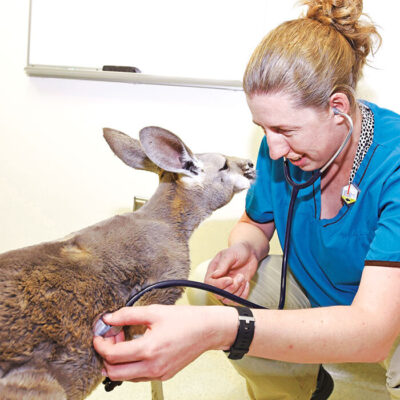
Dr. Marcie Logsdon is an Associate Professor at Washington State University (WSU) College of Veterinary Medicine, where she has been a faculty member since 2014. Dr. Logsdon earned both her Bachelor of Science in 2008 and her Doctor of Veterinary Medicine in 2012 from WSU. In 2017, she began collaborating with the University of Minnesota’s Partners for Wildlife initiative, a program focused on enhancing animal welfare in wildlife rehabilitation. She serves as the intern supervisor for the WSU branch of this program.
In addition to her work at WSU, Dr. Logsdon has run a deer rehabilitation facility on her property since 2022 and she is currently the only licensed wildlife rehabilitator for deer in eastern Washington. She is member of the board for the Washington Wildlife Rehabilitators Association and she also serves on the Advisory Council of the Washington Department of Fish and Wildlife.
Dr. Logsdon is dedicated to education and outreach, regularly presenting at both regional and national veterinary conferences. Her commitment to continuing education led to her being named the 2024 Continuing Educator of the Year by the Viticus Group at the Western Veterinary Conference.
The Intersection of Behavior and Medical Issues in Avian Health
Introduction
Dr. Yvonne R.A. van Zeeland presented this live distance-learning event exclusively for members of the Kansas State University College of Veterinary Medicine Exotic Animal Medicine Club, which participates in the Lafeber Company Student Program, as well as Archaeopteryx, a veterinary association in Utrecht, Netherlands and the Student Section of the European Association of Avian Veterinarians.
Abstract
Veterinary professionals often approach avian health problems through two primary perspectives: medical or behavioral. Clinical signs of medical illness in birds often include non-specific indicators, such as lethargy, anorexia, or a fluffed and ruffled appearance, as well as more specific signs, like respiratory distress or gastrointestinal issues. Other problems, such as aggression, anxiety, and destructive behaviors, are considered to be more typical behavior issues and are more commonly addressed by avian behaviorists rather than veterinarians.
Both professions make use of a similar, problem-oriented approach, albeit with a different primary focus. While veterinarians focus on the internal pathology during the work-up of medical problems, behaviorists focus on external environmental factors that affect behavior, including current living environment (stimuli exposure, both positive stimuli that elicit species-typical behaviors, and aversive stimuli that act as stressors), and prior living conditions, including rearing history and socialization.
When dealing with a bird with behavior problem, it is important to realize that the behavior issue could have developed in response to underlying medical conditions. Alternatively, behavioral issues may initiate or compound medical problems (e.g . trauma-related conditions), potentially creating a vicious cycle of repeated physical injuries/medical issues and ongoing behavior problems. As a result, it is crucial to consider both domains during the management of a patient.
Some complex conditions, such as feather damaging behavior (FDB), blur the lines between medical and behavioral issues. These behaviors can stem from evolutionary needs, neurotransmitter imbalances, early life stressors, and suboptimal living environments, including lack of appropriate stimulation or exposure to aversive stimuli. Additionally, medical ‘triggers’ such as pain, irritation, or discomfort can be involved. Understanding the complexity of these issues requires a comprehensive approach that integrates both medical and behavioral assessments. In cases like FDB, where discomfort or pruritus versus suboptimal living environments may have initiated the behavior, maintenance of the behavior may eventually result from a combination of socio-environmental, neurobiologic and medical factors. Determining whether and which factors are involved is essential for effectively addressing and treating these intertwined issues, and often requires a multi-faceted treatment plan that incorporates medical intervention, environmental changes, and behaviomodification therapy.
Veterinary professionals must also remain vigilant to the potential role that hospital care can play in behavioral issues. Minimizing stress during veterinary visits, avoiding aversive stimuli, and using positive reinforcement strategies are key in both treatment and prevention of disease and behavior problems.
This presentation highlights the importance of an integrated diagnostic and treatment approach to avian health, emphasizing the need for collaboration between veterinarians and behaviorists to achieve the best outcome for a bird. Recognizing the connection between medical and behavioral problems in avian species can improve the quality of care and enhance the well-being of these often misunderstood pets.
Outline
Download a PDF of this detailed outline.
- Veterinary health professionals are accustomed to looking at problems as either medical OR behavioral
- Medical problems in birds
- Non-specific signs of illness, such as lethargy, anorexia, and a fluffed and ruffled appearance
- More specific clinical signs
- Oculonasal discharge or sneezing with upper respiratory problems
- Abnormal breathing with respiratory problems.
- Neurologic signs, like seizures, suggestive for CNS issues
- Vomiting or regurgitation and diarrhea, more typical of gastrointestinal disease
- Orthopedic problems, such as wing droop
- Behavioral problems
- Examples
- Aggression or biting
- Fear or phobia, anxieties
- Destructive behaviors
- Excessive vocalization
- Owners that seek help are much more likely to go to a behaviorist
- Soms expressions of natural behavior like chewing can be misrepresented as behavior “problems”, eg in case of destroying furniture
- Stereotypic behaviors are uncommonly recognized as a problem by owners, who instead simply interpret these as fun, amusing behaviors
- Examples
- Medical problems in birds
- Some complex conditions, such as feather damaging behavior (FDB), are not as clearly distinguished as behavior versus medical problem.
- Multiple factors can contribute
- There can be underlying medical issues that manifests as a behavior problem
- Pain, discomfort, irritation, pruritus can lead to FDB or auto mutilation
- Evolutionary behaviors and needs
- Neurotransmitters: endorphins, serotonin, dopamine
- (Stress) hormones:
- Nor/epinephrine
- Corticosterone
- Sex hormones
- Early living environment
- Imprinting and socialization of hand reared baby birds
- If a bird is…
- Not well socialized
- Unaccustomed to changes in environment
- If the early living environment is very different from that of the adult age
- These can all lead to problems at a later age
- Suboptimal current living conditions that are not meeting the species-typical and/or specific needs of the bird
- There can be underlying medical issues that manifests as a behavior problem
- FDB can result from an initial trigger
- An underlying medical issue
- A suboptimal living environment > can be called a maladaptive behavior
- Ongoing exposure to a suboptimal living environment can lead to (persistent, chronic) pathological or neuropathophysiological changes
- Different factors can also start to interact or lead to multiple active issues at the same time, especially whether there’s learning involved
- Multiple factors can contribute
- There are three main categories to explain occurrence of abnormal behaviors, like FDB:
- (1) Medical causes
- Primary feather conditions
- Primary skin conditions
- Systemic diseases
- (2) Suboptimal living environment à maladaptive behavior
- (a) Missing appropriate stimuli
- Social interaction
- Foraging opportunities
- Space for exercise space
- Bathing
- Fresh air
- Sunlight (lack can also potentially lead to vitamin D deficiency)
- (b) Exposure to aversive stimuli
- Potential predators
- Certain (loud) sounds
- Large or abnormal objects
- Novelty
- Changes in daily routine, household composition
- (3) Altered neurophysiology, brain dysfunction due to chronic or early exposure to suboptimal living conditions à malfunctional behavior
- (a) Missing appropriate stimuli
- (1) Medical causes
- A behavior issue can also be an underlying or contributing factor to a medical issue
- Behavior problems can contribute to the onset of medical issues eg
- A bird may develop aggression because of medical problem
- Example #1: A bird with neurologic deficits > cannot perch normally or may actually fall > can become anxious > bites your hand
- Example #2: Visual deficits > unable to see someone approach > anxious when you try to touch it or it may become aggressive
- FDB and self-mutilation can lead to (other) medical issues
- Damage to feathers, with hemorrhage resulting if blood feathers are damaged
- Wounds
- Disruption of the skin barrier with (increased risk of) (secondary) infection or inflammation of the skin or feather follicles
- Behavior problems can contribute to the onset of medical issues, especially trauma and injuries resulting from…
- Bite
- Fall
- Collision
- Apparent medical conditions can represent normal behaviors
- Reproductively-active birds
- Chronic egg laying
- Regurgitation
- Behavior-related
- Often observed in a specific context
- Sexually bonded bird in the presence of the owner
- In front of a mirror or another particular object
- The process is very controlled
- The bird is BAR
- Can be a ritualized behavior
- Often observed in a specific context
- Resulting from medical issues
- Excess saliva
- Food may be thrown everywhere against the sides of the cage
- Additional signs of illness may be observed eg nausea, reduced appetite, abnormal droppings
- Behavior-related
- Reproductively-active birds
- Chronic stress due to suboptimal living environment
- Effect of physiology: corticosterone release
- Prolonged exposure to glucocorticoid steroids leads to medical issues
- Immunosuppression, which can lead to secondary infections
- Fungal infections (e.g. aspergillosis)
- Macrorhabdus
- Gastric ulcers
- Immunosuppression, which can lead to secondary infections
- Behavioral conditions associated with stress
- Abnormal repetitive or ritualized behaviors (i.e. FDB)
- Anxiety-related disorders
- Prolonged exposure to glucocorticoid steroids leads to medical issues
- Effect of physiology: corticosterone release
- Medical and behavioral work-ups basically involve the same systematic and critical thought processes
- Veterinary diagnostic process
- Objective is to identify the underlying physical disease, lesion, or disorder that leads to clinical signs
- Focuses on internal pathologic processes that affect animal’s health (internal factors)
- Obtain a thorough history > perform a complete physical exam > DDX list determines additional testing > diagnosis determines treatment and prognosis
- Behaviorist’s diagnostic process
- Similar workup but focuses on the behavior instead of clinical signs
- Focuses on the animal’s environment and how this affects behavior (external influences)
- Objective is to identify environmental factors that influence behavior
- Antecedents > Behavior > Consequences (ABCs)
- Determining which factor(s) play a role will often require both a medical and behavioral work-up
- Close observation of behavior can be helpful to identify the issue
- Example: FDB due to pruritus or discomfort can manifest differently from stress-related FDB
- Close observation of the bird is also important from a medical perspective as it allows timely detection of subtle signs that indicate a medical problem
- Sudden changes in behavior should warrant suspicion of possible medical issues
- Veterinary diagnostic process
- Veterinary visits can be a significant source of stress
- Birds are exposed to a variety of stressors in this context
- Novel sounds, smells, tactile and visual stimuli
- Traditional capture and restraint techniques resemble approach of a predator
- May be subjected to stressful or painful procedures
- “Flooding” or “Response blocking”: intense and rapid exposure to fear-invoking objects or situations
- Negative experiences increase the risk to learn aggression or fear
- Associative learning (classical conditioning)
- Operant conditioning (negative reinforcement)
- Can be significant contributor to behavior problems, like fear biting or FDB
- Recognize early warning signs
- Read and understand bird body language
- Prevent fear behavior from escalating (over threshold) in the first place (anticipate)
- Minimize stress and anxiety
- Limit exposure to stressful stimuli (aversive visual and/or auditory cues)
- Approach the bird in a calm and quiet manner
- Begin with a hands-off interaction whenever possible that allows the bird to acclimate
- Low stress handling, least intrusive method
- Allow the bird to recover in between procedures
- Consider the use of restraint devices, sedation, or anesthesia
- Birds are exposed to a variety of stressors in this context
- Challenges associated with treatment
- Difficulty with medicating fearful or aggressive birds
- Stress of repeated handling and restraint
- Minimize stress by
- Offering medication in favored food items
- Medication training to accept Rx via syringe through:
- Shaping
- Desensitization and counterconditioning
- Medical treatment of behavior problems may sometimes be indicated
- Psychoactive drugs
- Medical intervention: chemical or surgical neutering when hormone involvement is suspected
- Focus first on modification of the environment
- Least intrusive
- Most effective for long-term management
- Can also be useful when managing medical issues
- Adjust placement of perches, bowls, and other cage furniture
- Encouraging or restricting exercise
- Integrated treatment strategies use a combination of interventions to increase the odds of success
- Difficulty with medicating fearful or aggressive birds
Webinar recording
Post-test
Take the brief post-test to earn 1 hour of continuing education credit. With a passing grade, you will receive a continuing education certificate in jurisdictions that recognize AAVSB RACE approval.
RACE approval
This program was reviewed and approved by the American Association of Veterinary State Boards (AAVSB) Registry of Approved Continuing Education (RACE) program for 1 hour of continuing education credit for veterinarians and veterinary technicians in jurisdictions that recognize AAVSB RACE approval.
References and further reading
Journal articles
Mans C. Sedation of pet birds. Journal of Exotic Pet Medicine. 2014; 23(2):152-157. doi: 10.1053/j.jepm.2014.02.009
van Zeeland YRA, Spruit BM, Rodenburg TB, et al. Feather damaging behaviour in parrots: A review with consideration of comparative aspects. Applied Animal Behaviour Science. 2009; 121(2):75-95. doi: 10.1016/j.applanim.2009.09.006. Available at https://slunik.slu.se/kursfiler/DO0029/40006.1213/Papegojor_och_fjaderplockning.pdf. Accessed January 22, 2025.
Websites
Board Certification Panel Discussion
Introduction
The Lafeber Company Student Program hosted this distance-learning event for the University of California (UC) at Davis School of Veterinary Medicine Avian & Exotic Medicine Club in October 2024. Panelists first presented summaries on board certification through the American College of Zoological Medicine, American Board of Veterinary Practitioners, and the European College of Zoological Medicine before answering questions submitted by veterinary medical student attendees. View a recording of the live event or read the edited transcript.
Panelists
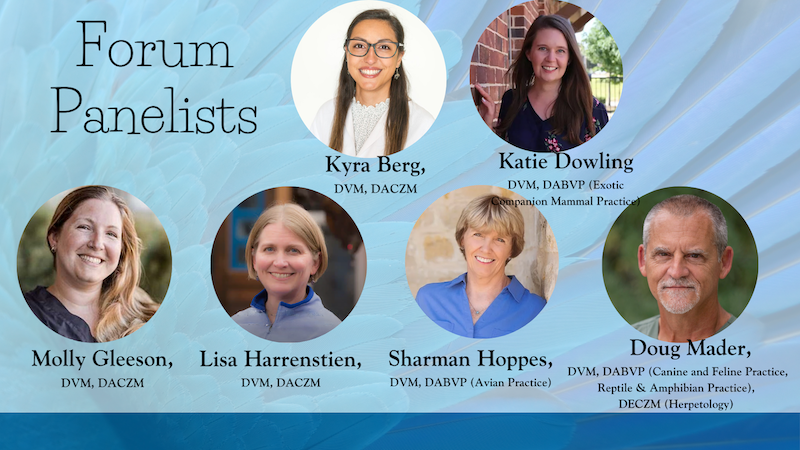
- Kyra Berg, DVM, DACZM
- Katie Dowling, DVM, DABVP (Exotic Companion Mammal Practice)
- Molly Gleeson, DVM, DACZM
- Lisa Harrenstien, DVM, DACZM
- Sharman Hoppes, DVM, DABVP (Avian Practice)
- Doug Mader, DVM, MSc, DABVP (Canine/Feline), DABVP (Reptile/Amphibian Practice), DECZM (Herpetology)
Recording
Transcript
Download a PDF of this 58-minute conversation or read the online version below.
Dr. Christal Pollock, LafeberVet (00:02:53):
…Welcome everyone to the Avian and Exotic Medicine Club’s Specialty Boards Panel Discussion. My name is Christal Pollock. I’m a veterinary consultant for Lafeber Company and I’ll be serving as the moderator for the discussion today.
Now, when our student representative, Sarah Eusebi, asked for a panel on zoological medicine board certification, I was initially pretty confused. Between your zoological medicine service, the companion exotic animal service, and more, UC Davis has an extensive list of specialists…However, Sarah clarified that she wanted to focus on specialists in private practice. And while some of your faculty members do have experience outside of academia, I understand that you do want to look beyond your admittedly amazing institution to additional perspectives outside of your “bubble”, if you will.
So, our objectives for the next hour or so…are as follows. First, we’ll have some brief remarks from our panelists, and Sarah described that a little bit.
I do have these acronyms up because if we say the full name every time, we’ll be here twice as long. So, I do want you guys to become familiar with these three organizations that are all recognized by the American Veterinary Medical Association and we’re going to have our panelists talk about them. And then we’ll also briefly touch upon the relatively new and somewhat controversial American College of Exotic Pet Medicine.
We’ll then move on to the fantastic questions that your group submitted to Sarah…I have rearranged your questions into four categories.
We’ll begin with some of the broad, big picture questions on board certification. Then we’ll have a few questions on the benefits or consequences of the choices you make with your career. We’ll have just a couple of questions about the specifics of board certification. Then we’ll spend more time on tips and information that you can use now or early in your career to guide your board certification choices, if that’s what you choose to do. If there’s time, we’ll open up for questions from the audience, but we have so many great questions already I don’t really think we’ll have time for that. And as Sarah mentioned, this event is being recorded. It’ll be posted to LafeberVet at a later date. That time is to be determined and I’ll let Sarah know.
Now, we have six amazing panelists that have agreed to have a conversation with you guys and I was going to go through each of their bios briefly, but that was posted on the screen beforehand and we have limited time, so I think we should go ahead and get started rather than going through their bios again because they’re all amazing and wonderful and we really appreciate them sharing their time and expertise today. We have a lot of information to cover. And so let’s go ahead and get started. The first group that we have would be the American College of Zoological Medicine. So take it away…

Kyra Berg, DVM, DACZM (00:06:03):
…So hi, my name is Dr. Berg. I’m going to be sharing with you guys just the very brief synopsis of how to become ACZM-certified, if that’s what you’re interested in…So myself, Dr. Gleeson and Dr. Harrenstien are part of the American College of Zoological Medicine or ACZM. I’ll try to be like a so that we can also clarify and distinguish ourselves from ECZM, which is Dr. Mader from European. So, Dr. Harrenstien has been a ACZM since 2005 and she was actually zoo and then transitioned more towards ZCA or Zoo Companion Animals. And then Molly and I, or Dr. Gleeson and I, have been ACZM ZCA, we’re around 3 years apart and all three of us actually did a UC Davis residency.
…So, what is zoological medicine? So it’s a discipline that integrates clinical sciences, preventative medicine, and ecology to advance the health, well-being, and conservation of free-living and managed wildlife and non-traditional companion species. And I think it’s important to acknowledge it is not restricted to the care of zoo animals or captive animals. So, that’s kind of the big thing that we like about zoological medicine is that it encompasses in our minds and in our practice as much as possible.
So, why become an ACZM diplomat? There are 316 dips in the world. It does allow for easy access to a network of very helpful and smart colleagues. So, it’s really nice to be able to have that network. Zoo med does rely on a really comparative approach to medicine and surgery. So, there’s an inherent thinking outside of the box that it allows. So even though I don’t currently practice on elephants and giraffes or tigers, there are still things that having learned all of that information, I feel like I’ve incorporated into practice. And also being one of the diplomats from either DACZM, DABVP, or DECZM, it allows the ethical use of the term “specialist” label and again for all zoological species while also giving us professional and career flexibility. So, if we wanted to do wildlife or lab animal medicine, general zoo, zoo companion, or change that career at some point, it’s really nice to have the DACZM specialty.
So how to become it: You do have to be a veterinarian, obviously. You have to have three letters of reference, one of which must be written by a dip or a diplomate. You do have to do either 3 years, so a residency route or 6 years experiential route of only zoo med work. And again, that could be aquatics, wildlife, lab animal, so it has to be non-traditional species. You do have to publish three articles in peer-reviewed journals as the primary author, and then you do have to have two mentors submit your board application and then study. So on the job experience is not enough and studying typically takes around 2 years and then the exam. So that was a very brief, quick 5-minute synopsis of 5 years of our life minimum.
Dr. Christal Pollock, LafeberVet (00:09:25):
Thank you. That was perfect. Thank you so much, Kyra. So let’s move on to ABVP, please, with Sherman and Katie…

Sharman Hoppes, DVM, DABVP (Avian Practice) (00:09:43):
So I’m Dr. Hoppes and I’m boarded through the ABVP… I’m probably a little bit unique in the fact that I’ve been in private [practice], seeing dogs and cats and exotics. I’ve worked at the university, where I’ve seen exotic pets and zoological animals. And now I’m the owner of and a clinician at a 100% exotic pet hospital in Texas…
As far as ABVP…the American Board of Veterinary Practitioners…is a board certification for practitioners. I mean it’s for people who want to be in clinical practice and most of them are going to be in a private practice setting. [ABVP] really helps you to focus on a specialty…whether it’s dogs and cats, horses and cows. We actually have two people that are boarded that work in emergency in the Dallas area that are boarded in dogs and cats. So there’s a lot of opportunity there just to kind of up your game on it. And it has a little bit, it’s a little bit easier than the zoological board certification, although it’s not at all easy.
There are two routes for ABVP: there’s a residency route and a practitioner’s route. The practitioner’s route is a little bit longer. You’re going to be basically need to have about four and a half years of practice before you can sit for the boards… The residency route is a little bit more abbreviated. You can actually do an internship, get into a 2-year residency, and within a year of finishing your residency, you could be boarded. I mean if you’re really a gunner in this. So, it’s a really fast track to getting board certified and it also allows you to really focus on a group of animals. For me, it was avian. I always loved birds and even though I didn’t really graduate from vet school thinking I was going to be avian certified, I got…directed that way.
And you can be in private practice without being boarded and you can see all these animals, but if you take that extra time to really do the study and to get certified, it really helps you personally and it also basically really speaks volumes to your clients. Clients right now are out there looking for board-certified people in private practice. They want someone boarded to see their birds, their rabbits, their reptiles. They’ll pay money for it. I mean, they are seeking specialty training in private practice. So, it’s really an excellent time to be considering board certification. And you do have to, for the residency component of it, you’re going to have to have either a year of private practice or a small animal rotating internship, or some type of private practice internship before you can enter a residency. And honestly, guys, for most ABVP residencies, you’re probably going to have to have two internships before you can get in because they’re that competitive. But it also gives you some time, most people do a dog and cat internship and then an exotic pet internship and then they go into the residency and then it gives them kind of the background to really excel in their residency. Katie, do you want to add some comments since you’ve just completed your residency?
Katie Dowling, DVM, DABVP (Exotic Companion Mammal Practice) (00:13:34):
I will second a lot of what Dr. Hoppes said. I was someone who initially thought I was going to go more of the DACZM route, but ended up finding myself more in the exotic animal private practice setting. And so that’s something that I really enjoyed and really then redirected my career path to focus more on private practice exotic species. So, I am happy to speak a little bit more about that when it comes time to answering some of your questions. But I think my general bit of advice is definitely all of these specialties offer a lot of really great opportunities for people to really advance their careers. And I think all of them have some great pros and cons, but I think the biggest thing is to also just keep your mind open because you never know where your career path is going to take you. And so don’t get too focused in on one specific thing. I think now’s the time in vet school to kind of take the opportunity to explore these different options now, so you can really figure out long term what’s best for you.
Dr. Christal Pollock, LafeberVet (00:14:42):
Thank you, Katie and Sharman. I guess we’ll move on to ECZM: the European College of Zoological Medicine.

Douglas Mader, DVM, DABVP (canine/feline practice), DABVP (reptile/amphibian practice), DECZM (00:14:48):
Good evening. It’s nice to be here with everybody. I’m talking to you from the East coast, so it’s already dark here. My name is Dr. Doug Mader. I’m double boarded in ABVP in canine/feline and reptile/amphibian. But I’m here tonight to talk about the European College of Zoological Medicine. Dr. Berg did a great job talking about the American College of Zoological Medicine. The ACZM and the ECZM both follow very similar philosophies and mission statements, so I don’t want to repeat that. One of the things that I was asked is: I am not European. I’m an American. I was actually born here in…the southern United States. I went to UC Davis and then moved back to Florida, and I’ve been here in private practice ever since.
So why am in ECZM? The main reason is I do a lot of teaching. I’ve always done a lot of teaching, a lot of writing. I teach and I write, and a lot of the work that I do is worldwide. I probably go to Europe three, four, five times every year to teach in some conference. I also have clients in Europe. I have consulting jobs that I do over there. So to me, being ECZM-certified was incredibly important to add that credibility to my name. So that when I went over there, they go, oh, he’s just a guy from America. Oh, he’s also qualified here in Europe as well. So to me that was extremely important and I take a lot of pride in it, and I think all of the diplomat and all of the specialties do the same thing. It really helps you enjoy what you do, plus it makes you a better veterinarian.
To get ECZM-certified, the path is very similar to the American college. You have to have meet some very rigid training parameters. Now, one thing, unlike America, there is no alternative pathway. I mean, there is no option other than a residency. So it’s not like you can be working in zoo animals for 10, 15 years full time, then decide, well, I’m going to be ECZM diplomate and take the test. They don’t allow that anymore. They used to, that stopped. So now, you have to meet qualifications of number of publications. You have to sit for the exam. You have to demonstrate that you do 60% of your time of a 40-hour work week in that particular subspecialty, because the ECZM does have subspecialties. They have five of them: avian, small mammal, zoo health medicine—zoo health management—reptile, and wildlife. And so you have to demonstrate that you’ve got 60% of your time of your working week in that subspecialty.
Also, with the ECZM, every 5 years you have to recredential showing that you’re staying active. And that could be done by either teaching, publishing, or you can resit for the exam every 5 years. And I like that–it’s a lot of work—but it really keeps you on top of your game. And if you’re going to be called a specialist, I think it’s important that you do stay on top of your game.
So how do you do this and how do you actually get into a residency program? It’s not simple, but it shouldn’t be simple because you’re trying to be a specialist and to be a specialist, it requires extra effort. So they all require, all five disciplines require, that out of veterinary school you spend at least 1 year in a multidisciplinary internship in surgery, medicine, pathology, you name it. Or you can have 2 years in general practice. But as Katie said, really it’s a good idea to do more than…2 years in general practice, or maybe two…internships because you really realize how much you don’t know once you start trying to learn. And I still, I’m learning every day, and I’ve been doing this for four decades.
The second set, once you get accepted into one of the residencies is to do the actual residency. And there are three options that you have. The standard residency is a 3 year, full-time residency under approved residency site, and there aren’t a lot of them. So if you’re interested, you can go to the ECZM website and you can look up the different places where they actually have them. There are a couple in the United States that offer ECZM…approved residencies. The other option is you can have what’s called an alternate route, and that’s a minimum of 3 years, but it can take up to 6 years, and that’s where you spend time at different facilities. And then they just introduce this new thing called the flexible modular pathway, which can take up to 8 years. And again, that’s where you alternate your training through multiple, multiple sites. And every site you go to has to be supervised by a diplomat. Once you do this, you have to have publications. And the publications requirement vary depending on the subdiscipline that you have. And then once you’ve completed all that you can apply for and sit for the exam.
Dr. Christal Pollock, LafeberVet (00:19:58):
Thank you. So those are the three colleges related to zoological medicine that are recognized by the AVMA…
… I had shared a link to the Veterinary Record article that Dr. Berg and Dr. Herrnstein contributed to. And we don’t want to belabor this organization, but we just want you guys to be aware, sort of a “buyer beware” sort of thing, I think just so you’d know. And so if you don’t know about that article, I can resend that link to Sarah. But we’re going to move on to the questions at this point. I just want you to be aware of that organization as well.

Okay. So we had so many great [questions] and I’m going to start with some of the big picture ones. The first question I’m going to direct towards Lisa, and it’s actually two parts: So what are the key differences in the past to working with zoo animals compared to companion exotic animal species? Now I ask this because you’ve done both, but the [second] question asks: Do most veterinarians typically specialize in one area over the other?
Lisa Harrenstien, DVM, DACZM (00:26:26):
So within the ACZM, we currently call them disciplines because we don’t have other letters after the subspecialty thing. Like say for internal medicine, there’s a subspecialty of oncology or whatever. We don’t have that for ACZM. It is extremely likely that by as little as a year from now, we will, and we will have the option for somebody to have really focused on zoological companion animals, exotic pets, and have the additional letters “ZCA” after their DACZM name when they become board certified. But that’s not at the moment. By the time you students get there, it will solidly be there.
But when I went through training, well even today, I’m not sure what kinds of animals are my favorite. People ask me, I have no idea, and clinically, which kinds of animals do I enjoy the most? And it is a huge range. And so I really enjoyed the breadth of learning and everything that I had to do, to do what I picked was the discipline of general zoo. Like keep as broad as I can, don’t track, don’t limit my focus to the extent that I can in private practice doing ZCA (zoological companion animals) in private practice, there is always the possibility that someone will have a pet alligator. There’s always somebody, I mean, it’s not as likely here in Portland as it is in the middle of the Florida Keys where Doug Mader is, but they could have a pet or at least privately-owned, captive tiger—hard to say pet—but depends on their age. They could have a sloth, they could have, and it depends on the state what is considered and the culture, what’s considered typically captive-raised versus wildlife. I mean, if you’re in Malaysia, elephants have been in human care for thousands and thousands of years, so longer than we in this country have been taking care of cats, domestic cats. And is a chicken really that exotic? And is a rabbit really that exotic? I mean the lines get very blurry. So, in private practice, I would say having done both, I get to do more intense diagnostics and therapeutics on every individual animal. It does not matter what the species is. It could be an animal with a lifespan of 2 years and that owner is going to pay me rather than pay their rent. You know these people. You might be these people.
But in a zoo, the herd health kind of imperative, you have a budget, you have 3,000 animals you’re taking care of. What about that rabbit that has very malaligned teeth? Maybe that rabbit, it’s just too much for that rabbit and your department and your budget to go through over the years. So just humane euthanasia, adopt out to somebody else who wants to take it to the private practice person, who’s going to CT scan it every month of their life if you want them to. That’s the difference. The spectrum of ability to pursue care is much broader in private practice I’ve seen. And yeah, just like Dr. Hoppes said, these people are there and they want you to help them.
Dr. Christal Pollock, LafeberVet (00:30:17):
Thank you. One of the original questions that we received read: Is specialization necessary for effective practice? And based on some of the amazing clinicians that I think we probably all know without board certification, I’m not supposed to give answers, but I think the answer is no. And I want us to know if you guys would agree with that.
–All panelists give a thumbs up—

That leads me to before we move on, you do…So that leads me to a question I’m going to direct to Doug, and that is: How do you weigh the benefits and the pitfalls of board certification? And that’s very broad, but we’re starting broad and we’re going deeper.
Douglas Mader, DVM, DABVP, DECZM (00:30:55):
Well, I think it’s real important and a lot of it’s going to be individual because with me, I push myself to the limits. I expect everybody around me to push themselves too. But in order to do that, I have to push myself. So, I set really high standards for myself when I really am hard on myself if I don’t achieve those standards. So board certification was one of those goals that I wanted to make sure that I pursued. …I realized, if I did not pass the test, I was a much better veterinarian for having made the attempt, all the studying and all the discipline and being around all the mentors that I had, I learned so incredibly a huge amount.
So, as far as do you need the certification? No, I won’t give names out right now, but I can think of a half a dozen veterinarians around the country that teach at all the major conferences that are not board certified. And we look up to those people because they are experts. There’s a difference between an expert and somebody who’s board certified. And these experts, man, they know their stuff. They don’t have to be board certified to be an expert. They’ve read every journal article that we’ve read. They’ve gone to all their conferences. They’ve got 20, 30 years of experience. These people know what they’re doing. So they don’t have to be board certified. For me personally, because I do like to teach and because I do like to write, having the credentials are important. The funny thing is for the clients, I think Dr. Harrenstien pointed out that clients are looking for specialists and they are, but a lot of the clients think that if you have more initials after your name, you’re just going to charge more. And in private practice, every single one of us and every one of you here is going to hear at least once, if not a zillion times, you only care about the money. You’re not interested in anything. My only animal, that’s not true. We wouldn’t put ourselves through this specialty training if we didn’t actually care about the animal. So to me, it’s important. It’s a flag that I proudly wave. And I do think it shows that we make the effort to offer the best possible care.
Dr. Christal Pollock, LafeberVet (00:33:00):
Thank you. We’ve had a few panelists now mention the financial aspect or concerns that may be involved. And actually this goes to the next question. I’m going to ask the panelists, if you could please raise your hand if you agree with this statement I’m about to read. And then Sharman, you already touched on this a little bit, but I’d like you to expand on this topic after everybody does their hand or doesn’t do their hand. Okay. So board certification is a financially beneficial decision if you intend to work with companion exotic animal species. Would you agree with that? If you do, raise your hand
–All panelists give a thumbs up—
Okay, thank you. So Sharman, you touched on this a little bit—and Lisa, and actually Doug did too—but do you want to just expand on that at all?
Sharman Hoppes, DVM, DABVP (Avian Practice) (00:33:38):
So are they asking specifically the financial aspect for them or the financial aspect for clients?
Dr. Christal Pollock, LafeberVet (00:33:46):
I think they’re looking for ‘them’. That was just that one question, but yes, I took it as for them.
Sharman Hoppes, DVM, DABVP (Avian Practice) (00:33:54):
Vet school’s expensive and I get that. And doing internships and residencies puts off your ability to get that big paycheck and start paying off debt and I get that. And everybody…has to make their own decision about their financial ability. But I will tell you that if you decide to go the way of an internship, maybe two internships and a specialization, a residency either in zoo or ABVP, the …financial benefit, long-term will be there. You’re going to make more money in the long-term, but you’re also going to have more doors open to you. I would never, if I had not, I would be a good vet whether I’d ever gotten boarded and maybe in medicine or not. I’m a really good reptile vet. I’m a really good mammal vet. I would be a good vet no matter what I did, but I would never have gotten in academia. I would never have gotten the job at the university. I would not be the “Baylor Bear Vet” right now. I mean, there’s a lot of doors that opened for me because of my board certification. And are you going to make millions? I mean, if you want to make millions guys, you probably should have picked a different career to start with, but you’re going to make a really good living.
And the thing I will tell you. At our practice, people, they bring their animals in for CTs, endoscopy, specialty surgeries all the time. And yes, everyone’s concerned about money, but…they’re willing to pay what it takes to take care of their exotic pets. I mean, our clinic has been open now for almost 5 years. People in Dallas told us we couldn’t make it work. And it is thriving because people want that kind of care and they want people that really know how to work these animals up well and give that extra specialization care. So…it’s going to make your financial road a little harder for a little longer, but I think that the final road down there is going to be worth it. And Katie could speak for that. I mean, she did two internships and a residency with us, and she’s thriving now.
Dr. Christal Pollock, LafeberVet (00:36:30):

Thank you. Actually, this next question is also for Sharman: Can you contribute to research while working in general practice?
Sharman Hoppes, DVM, DABVP (Avian Practice) (00:36:40):
Yes, you can, but you have to work at it. It’s a little bit harder. I will tell you.
Dr. Christal Pollock, LafeberVet
Do you have time?
Sharman Hoppes, DVM, DABVP (Avian Practice)
When I was in academia, I got time off to do research. I had the Schubot Center funding most of my research, and so it was a lot easier to do. But even at our facility, we’ve done several small research projects. You just…have to pick and choose. There’s all sorts of things you can do in private practice: literature reviews, …case studies, …small research projects. It’s … very doable. And I think there’s quite a few private practices that basically have shown that it’s possible, but it isn’t quite as easy in private practice. You’ve got a full day of clients, you’ve got to find time to do the research. The last time I did private practice research, …I literally took part of my vacation time. You…have to decide what your priorities are, but it’s very possible… I think Doug can probably speak to that too
Douglas Mader, DVM, DABVP, DECZM (00:37:50):
Definitely. If you’ve got an inquisitive mind, and everybody that’s a specialist does, you just have to make the time to do it. Because unlike in academia, where they pay you to do research and give you time off, you have to pay your own bills and the way you pay your bills and private practice is by working and seeing clients. So, you have to find the time to do it on the side, which means this work-life balance stuff doesn’t always exist. So, I think back when I first got started and everybody hates that, but when I first got started, 14, 15, 16 hour days with the norm for me, but I’m enjoying it now. I’m riding the tide, so I can’t complain.
Dr. Christal Pollock, LafeberVet (00:38:29):
Thank you. This question is for Lisa, or directed first to Lisa: What other veterinary specialties work closely with zoos on a regular basis? And I think the students were wondering…
Lisa Harrenstien, DVM, DACZM (00:38:43):
Zoos or ZCA?
Dr. Christal Pollock, LafeberVet (00:38:45):
What they wrote were “zoos”, and I think what the student was wondering is they were probably looking at other specialties, but they wanted to keep their toe in exotics and zoo as much as possible.
Lisa Harrenstien, DVM, DACZM (00:38:54):
It does feel like whether you’re in ZCA private practice or ZCA at a university or zoo facility stuff, ophthalmologists are called on a lot. One, because they have more specialized equipment. You probably don’t have a slit lamp on you and they can really commit, and they’re the only people on the planet that know how to do indirect ophthalmoscopy. I mean, face it. So, they have all the right diopter lenses, they can do it, and then they can with confidence tell you that the optic disc is just 10% smaller than it should be or cupped or whatever. Anyway, so ophthalmologists, yes.
Surgeons, I would like to involve them more. We would like to involve them more. Surgeons get very busy, and it’s hard to find a mobile surgeon, depending where you live that will come to your facility. And if it’s a zoo thing, there are some instances where you would bring the zoo animal to a multi-specialty referral hospital, but if it’s the “Baylor bear”, it’s going to be more complicated and the surgeon’s going to come to you. So, you have to live in a place where you’ve developed those relationships and the people are willing to come to you.
We had a dermatologist that was sort of interested, but I feel like the level of dermatologic work that we do, there’s several basic diagnostics that you always do. And then once you get the answer from your biopsy and your scrape and your cytology and your cultures and all this stuff, then maybe it’s a phone call to these people. Like the hands-on part, I feel like for derm wasn’t as critical. But ophthalmologists, for sure.
And then in terms of consultants not really on site. I want to pick the brain of dog/cat internal medicine people all the time because the physiology of these animals isn’t really that specific to their taxon. I want to know what happens with ketosis, what is that or explain heart failure to me again, those kinds of things. And so, phone call consulting with people that’s a lot of what happens…
Dr. Christal Pollock, LafeberVet (00:41:24):
…Would you say pathology as well, or no, not so much?
Lisa Harrenstien, DVM, DACZM (00:41:30):
Oh, yeah. … Most zoos don’t have the money to have a pathologist really on site. …My postdoctoral training and stuff was with pathologists, so I’ve been schooled by them for sure. Pathologists have parts of their brain that regular humans will never have and super, super helpful. And if you’re trying to do the herd health thing where…we need to know a surveillance thing, what’s happening in this group of animals. It might be that out of a group of a hundred fish that you just received, you’re euthanizing one. So you get the full postmortem evaluation of it, and then you don’t have to anesthetize the live animals to get the samples that you probably would never be able to get given their size. So, yeah, pathologists for sure, and…some pathologists related to zoo medicine have been really influential in the regular medicine side of things. Like Dick Montali, he was the one who developed the canine distemper vaccine that was recombinant, would not kill ferrets when you gave it to them, would not kill other zoo animals when you gave it to them. So, he did that from the medical side, not the pathologist side. So, there are definitely some brilliant people that crossover.
If you’re in a zoo, if you can find an anesthesiologist to work with, those are super helpful. And depending on what you’re up with, dentists sometimes if they’re open-minded enough..
Dr. Christal Pollock, LafeberVet:
Thank you. So that gives whoever had that question, some good ideas for other specialties. Molly, if I could please direct this question to you. We were asked: What do you consider your most useful resources when you encounter a novel species or a condition or when you must perform a procedure you’ve never done before?
Molly Gleeson, DVM, DACZM (00:43:39):
Ooh, that’s a great question. I mean, I think all of us encounter that a LOT when dealing with non-traditional species, because you’re never going to know everything or know how to do everything. But one thing becoming a specialist teaches us is where to get that information. So, I have a very large library of textbooks with me both on my computer and in my office at all times. I have a very wide network of colleagues throughout all the specialists that I can speak to. And so if I am prepping for the week and I know that there’s something coming up that I’ve never dealt with, I will be reading the literature, I’ll be looking at textbooks, I’ll be drawing diagrams, I’ll be talking to colleagues about what’s gone well for them. And even if it’s something I’ve only done once and someone may have a new way of doing it, I kind of utilize all of that. I like to be extra prepared for things. I don’t like to go into anything without knowing what I’m expecting or what I’m doing, but I think you kind of have to pull a little bit from everywhere.
Dr. Christal Pollock, LafeberVet (00:44:49):
I had planned to survey the group for this question, but time is getting short, so I’m just going to start with who I thought I’d start with, which was Kyra, please. And the question was: Would you recommend entering a rotating internship immediately following graduation rather than going into general practice? And obviously it depends on your life, but…
Kyra Berg, DVM, DACZM (00:45:08):
Yeah. Yeah, that’s definitely a very personal decision. I think it depends on where you as an individual are feeling in terms of your comfort level. So, if after fourth year, do you feel comfortable turning around in two months and now being the one making recommendations for your clients? Or are you kind of like me, and you were like: You know what? I don’t think I’m really ready to be that kind of completely independent veterinarian. I still want some mentorship. I still want guidance. I know that I want to do more with my career, even if that means not getting board certified—and ultimately I was able to—but I knew I wanted to at least pursue that route, even if ultimately I couldn’t. And I knew that with an internship I’d be able to elevate the medicine that I could practice once I started being able to practice independently.
So the other thing is, to know how you are going to be going from a GP [general practice] life, where you can say, no, I’m sorry, it’s six o’clock, I’m going to go home now. Or no, I’m not going to work on the weekends. Or yes, this is my salary and I have 4 weeks of vacation and all these other things. Or do an internship, where you don’t really have weekends necessarily, and your salary is not going to be what you make in private practice and you don’t have 4 weeks of vacation. Sometimes you only have 1 week. Sometimes you don’t have time for CE [continuing education] or you only have $250 or $500 for CE, which barely covers registration. So, I think I knew that I was not going to be the kind of human that would be okay, living the good life and then going back to an internship.
So for me, every step of my career has gotten theoretically easier because I’ve gone from my rotating internship, which by the way was the foundation of my career and I strongly, strongly recommend doing because even if you’re not doing anything with exotics, cat/dog medicine is the foundation of medicine, period, end of story. And you can and will use that information and that medicine and those surgical techniques for our exotic patients, and I think it is really just super, super important to make sure that you do that. So aside from that, I had a very grueling first rotating internship, and then it got a little bit more grueling and a little bit more grueling, but it was with species that I liked. So, I think the other thing is to remember that every step of your career is headed towards the career that’s meant for you. So for me, it was easier to go straight into house officer training and then have my good life now than backwards.
Sharman Hoppes, DVM, DABVP (Avian Practice) (00:48:06):
Can I make a comment about that? Being someone who’s reviewed lots and lots of internship and residency applications, and I know basically for the zoological residencies, this is also true: If that’s really a young person’s goal is…to do a zoo residency or I want to do an ABVP residency, we all look pretty highly at small animal rotating internships because we know what they’re getting. It’s harder sometimes to know what someone’s getting in a private practice internship. And so it’s kind of a known entity, you know that they have a skill level from that small animal rotating internship. …I have taken residents that have had internships in private practice, but I do have to say I give a little bit more weight when I’m looking at applications if they’ve had a small animal rotating internship.
Dr. Christal Pollock, LafeberVet (00:49:05):
Thank you. Molly, we had a question that was also directed to postgraduate training and they said: How did you narrow down your search for residencies? Did you have any advice for them?…
Molly Gleeson, DVM, DACZM (00:49:30):
So, I did a small animal rotating and then an exotics internship, but when I was looking at residencies, I first decided what specialty I wanted to do and that kind of helped me to separate things out. I was someone who initially really wanted to do general zoo, and then the more I worked with zoologic companion animals and in the clinic and things like that, the more I knew I wanted to work with clients and be in private practice. So, that really helped to kind of narrow down, even though I wanted to do ACZM, what type of residency I wanted to do. And I mean, there’s only so many out there, and so once you start to narrow that, you get a little bit of an easier list to…tackle. I did also explore some ABVP residencies as well, just to kind of get a sense of what they were like. I did some interviews and I applied and got some interviews, but I think really figuring out where you’re headed before you actually apply is really helpful. And it helps your application as well, because when they’re looking at residency applications, you want someone who knows what they want and wants to be there, not someone who’s necessarily still trying to figure it out, who may suddenly change the specialty they want as they’re going through. And so I think making some of those choices before you even look at the list is really helpful.
Dr. Christal Pollock, LafeberVet (00:51:00):
Thank you. If you guys don’t mind, we’re going to go over just a teeny bit, but I just have one final question, but I would like to have it for the entire group, but maybe if you could try to keep your answer fairly brief, although I would like to please start with Katie. The final question for the group is reflecting on your experiences: What is one activity or skill you wished you had pursued more during veterinary school to better prepare you for your career?
Katie Dowling, DVM, DABVP (Exotic Companion Mammal Practice) (00:51:25):
That’s a really good question. I think a couple things come to mind initially. I do wish I got more involved in the research side of things as a veterinary student. It’s something I’ve had the opportunity to be a part of now as a clinician, which I’m really excited about. But I think as a veterinary student, a lot of the foundational work and kind of the teaching and learning process of how to go through the research process itself would’ve been nice to have. So that way later on, I could do it a little bit more independently. So, I think if you have any opportunities now to get involved, even just partially involved with the research, setting up the project, writing, getting that experience now would be really helpful. And it’s something that I wish I had. Something else I wish I personally had a little bit more experience with as I did an academic rotating internship, which was amazing and I would definitely do it again, but it didn’t really lend itself to giving me a lot of hands-on surgical experience my first year. And so that’s something else that I wish I had a little bit more time and a little bit more experience with prior to entering my full-time career.
Dr. Christal Pollock, LafeberVet (00:52:42):
Thank you. Does anyone else want to provide some advice?…
Sharman Hoppes, DVM, DABVP (Avian Practice) (00:52:49):
I just have a comment. …I was in vet school so long ago. I don’t know that I can actually say from myself personally, but one of the things that I tell students to do now, a lot of universities have summer research programs and they are awesome. They are absolutely awesome. Every year I had a summer research student, and I’ve even done some as a retired professor, and it’s a great experience for the students. They really learn some critical thinking…I’ve had a couple of people that have actually published papers. I’ve had some that have just done proceedings and abstracts, but it teaches them how to write, and it really gives them some tools. It’s an excellent, excellent way to get that training. If you’re interested in pursuing a residency later, I think it’s a huge, huge boost.
Molly Gleeson, DVM, DACZM (00:53:53):
…One thing I would also add is really learn your basics. I went to Davis, I tracked zoo, and I was so excited about doing exotic species that I jumped at the chance to do everything exotic-related and zoo-related, including in fourth year. I did a lot of external rotations, including with Dr. Mader, and I went through the zoo and CAPE [former name of the UC Davis clinical service] and everything, but it meant that I didn’t get to do some of the basics. Like I didn’t rotate through cardiology or neurology, and there are some of those that as much as I gained a ton of experience with exotics, I really wish I had gone back and really solidified some of those basics because I had to kind of go back and relearn and try to solidify them later on. So as exciting as it is, it is really important to get through those basics and just help yourself become the best doctor you can be before you then start branching out into your specialty.
Dr. Christal Pollock, LafeberVet (00:54:52):
That’s excellent advice. Thank you…
Douglas Mader, DVM, DABVP, DECZM (00:54:54):
I would say the same thing, except I’ll just go ahead and say all of the zoo animals and exotic animals that we work on have hearts. They all have eyes. They all have teeth. And take your time to learn your dog and cat medicine ‘cause that’s where the basics come from. You’re always going to have time to learn how to trim a wing or get blood from a guinea pig down the road. But as Dr. Gleeson just said, to learn those basics man, they’re so important.
Kyra Berg, DVM, DACZM (00:55:23):
Yeah, I will second everything that has been said in terms of cat/dog medicine. And I think research is also really important because from a residency perspective, you’re going to have to be doing a fair bit of publications and it’s hard to have to do three publications in 3 years. So, anything that you can do to kind of help yourself now, when or if you would like to go residency, is very helpful. I totally agree. I did not go through neuro and cardio, and I routinely say that cardio is one of my weakest subjects, and it’s one of my biggest regrets that I didn’t just sacrifice 2 weeks of exotics to really solidify my foundation in cardio. And the other thing I’ll say is that now that I’m in private practice, there are so many vets that I’m teaching at my specialty hospital that are very uncomfortable with emergency. And I think just having that really, really, really solid emergency foundation as well, I think it’s hard to think of, oh, why do I need to know emergency that while I’m going into private practice and exotics, because most of our animals are actually going to come in really sick. And I think being able to think on your toes and reacting quickly is very important. So, as much as we may not like emergency, it is something that we need to be very comfortable with in this field.
Dr. Christal Pollock, LafeberVet (00:56:49):
This is excellent. Anyone else want to add on? I hope you guys are all taking notes. This has been excellent advice. Anyone else? Oh, Lisa.
Lisa Harrenstien, DVM, DACZM (00:56:58):
Yeah. Two things. I guess they both involve people. One is to when you’re going through the process and trying to one, decide what your goal really is, your goal is not to get an internship. Your goal is not to get a residency. Your goal is to probably to be really good at medicine of these species and to have the lifestyle that you need, the family time that you need, the other stuff, remember, there’s other stuff in your life that you have to budget into the equation and you can be as exquisitely trained as possible and your life could just tank because you’re not paying enough attention to the other things in your life and planning for the other things in your life. So, I do like to be like Dr. Gleeson said over-prepared for procedures and stuff just because then that part of my brain is calmer for when things go sideways, because things always go sideways, whether it’s professionally or personally or whatever. And just if you’re more at ease with the predicted possibilities, then you can navigate the other stuff. And that’s sort of a zoo medicine mantra anyway, because when they go sideways, you’re a long way away from where all your supplies are.
Another thing is, as you go through your training, connect with someone who is well-known in the field you want to do and latch onto them and get them to say out loud, yelling it from the top of a mountain, that you are the best trainee they have ever met in their entire lives. Because the word of somebody who’s respected in the profession is going to get you really, really far because there’s a sea of applications that people are looking at. But if they’re like, oh, I respect this person and they say, I ought to do this, then it gives a lot of weight. So if you can connect yourself to somebody like that and be your best person you can be when you’re around them, then that will help you a lot. I think that’s how I got my residency at Davis, honestly. But that’s a whole ‘nother story.
Then the other personal side is realize that you’re all excited about this career, these taxonomic groups of animals, but what’s going to keep you in the position you are in, the culture you’re in, the clinic you’re in, the university you’re in, is the culture of the people that you are around and how you take care of each other, how you respect each other, how you communicate with each other. And so in our vintage, we didn’t really have training in that, and it’s a very personal way that you get more skilled at that. But as time goes on, you’re going to realize that’s super, super important. So whatever you can do, growing the other side of your brain—I never can’t remember if it’s right side or left side—but anyway, the other side of your brain, not the science side, that will help you and your clients and your coworkers, your staff members, your supervisors. They will all appreciate you more and you just bring more to it and hopefully you’re a happier person. So that side of it.
Dr. Christal Pollock, LafeberVet (01:00:17):
Thank you. I think that’s the perfect place to stop. Thank you all so much. I want to thank all of our panelists for sharing their time and their expertise. Thank you to AEMC and their faculty advisors. Thank you to Sarah, our Lafeber Company Student Representative for all of her hard work, and thank you all for attending this panel.
… We’re going to sign off and the students are going to stay and do a free giveaway for Dr. Mader’s book.
Sharman Hoppes, DVM, DABVP (Avian Practice) (01:00:47):
His book is very good. I read it when I was on my cruise. It was awesome.
Dr. Christal Pollock, LafeberVet (01:00:52):
…Thank you all so much. Bye now. Goodnight.
Further reading
Journal
Divers S, Bonar CJ, Chinnadurai S, et al. Recognised standards not met by some ‘specialist’ groups. Vet Rec. 2024 May 18;194(10):395. doi: 10.1002/vetr.4293. PMID: 38757818.
Websites
Become a specialist: Getting certified. American Board of Veterinary Practitioners. Available at https://abvp.com/become-a-specialist/. Accessed January 18, 2025.
Certification. American College of Zoological Medicine. Available at https://www.aczm.org/content.aspx?page_id=22&club_id=366916&module_id=49001. Accessed January 18, 2025.
Guidelines on the identification of board-certified veterinarians. American Veterinary Medical Association. Available at https://www.avma.org/resources-tools/avma-policies/avma-guidelines-identification-board-certified-veterinarians. Accessed on November 5, 2024.
Welcome to the European College of Zoological Medicine. European College of Zoological Medicine. Available at https://www.eczm.eu/. Accessed January 18, 205.
Book
Mader D. The Vet At Noah’s Ark: Stories of Survival from an Inner-City Animal Hospital. New York: Apollo Publishers; 2022.
Post-Test: Clinical Pathology of Herptiles
The Clinical Pathology of Herptiles webinar was reviewed and approved by the American Association of Veterinary State Boards (AAVSB) Registry of Approved Continuing Education (RACE) program for 1 hour of continuing education credit for veterinarians and veterinary technicians in jurisdictions that recognize AAVSB RACE approval. You have three chances to take this post-test and pass. With a passing grade, you will see your results and a link to your continuing education certificate . . .
Pour les vétérinaires. Par les vétérinaires.
Le site Lafervet.com est conçu pour une utilisation par les vétérinaires. Il est ouvert aux vétérinaires diplômés, aux techniciens vétérinaires diplômés, aux animaliers et aux étudiants dans ces domaines.
Créer un compte pour accéder à des articles et des ressources du site.
L'inscription est gratuite.
Para Profesionales Veterinarios. Por Profesionales Veterinarios.
El sitio Lafervet.com es para uso de los profesionales veterinarios. Está abierto a los veterinarios licenciados, técnicos veterinarios licenciados, rehabilitadores licenciados y estudiantes en estos campos.
Cree una cuenta para acceder a los artículos y recursos del sitio.
La registro es gratis.
Already a LafeberVet Member?
Please Login
Test Your Knowledge: Exotic Companion Mammal Enrichment
The Exotic Companion Mammal Enrichment webinar was reviewed and approved by the American Association of Veterinary State Boards (AAVSB) Registry of Approved Continuing Education (RACE) program for 1 hour of continuing education credit for veterinarians and veterinary technicians in jurisdictions that recognize AAVSB RACE approval. You have three chances to take this post-test and pass. With a passing grade, you will see your results and a link to your continuing education certificate . . .
Pour les vétérinaires. Par les vétérinaires.
Le site Lafervet.com est conçu pour une utilisation par les vétérinaires. Il est ouvert aux vétérinaires diplômés, aux techniciens vétérinaires diplômés, aux animaliers et aux étudiants dans ces domaines.
Créer un compte pour accéder à des articles et des ressources du site.
L'inscription est gratuite.
Para Profesionales Veterinarios. Por Profesionales Veterinarios.
El sitio Lafervet.com es para uso de los profesionales veterinarios. Está abierto a los veterinarios licenciados, técnicos veterinarios licenciados, rehabilitadores licenciados y estudiantes en estos campos.
Cree una cuenta para acceder a los artículos y recursos del sitio.
La registro es gratis.
Already a LafeberVet Member?
Please Login
Clinical Pathology of Herptiles
J. Jill Heatley, MS, DVM, DABVP (Avian Practice, Reptile & Amphibian Practice), DACZM presented this live, interactive webinar. View the RACE-approved webinar recording, then take the brief quiz to earn 1 hour of continuing education credit. Clinicopathologic evaluation of reptiles and amphibians is useful for health assessment and monitoring. There are specific considerations when evaluating data from this taxonomic group, including sex, age, time of year/season, reproductive status, diet, captive versus wild, geographic location, methodology, and anticoagulant. In this informative webinar Dr. Heatley discussed hematology, biochemistry, and urinalysis features of reptiles and amphibians as well as the clinical relevance . . .
Pour les vétérinaires. Par les vétérinaires.
Le site Lafervet.com est conçu pour une utilisation par les vétérinaires. Il est ouvert aux vétérinaires diplômés, aux techniciens vétérinaires diplômés, aux animaliers et aux étudiants dans ces domaines.
Créer un compte pour accéder à des articles et des ressources du site.
L'inscription est gratuite.
Para Profesionales Veterinarios. Por Profesionales Veterinarios.
El sitio Lafervet.com es para uso de los profesionales veterinarios. Está abierto a los veterinarios licenciados, técnicos veterinarios licenciados, rehabilitadores licenciados y estudiantes en estos campos.
Cree una cuenta para acceder a los artículos y recursos del sitio.
La registro es gratis.
Already a LafeberVet Member?
Please Login
Test Your Knowledge: Critical Care of Exotic Pet Species
The "Critical Care of Exotic Pet Species" webinar was reviewed and approved by the American Association of Veterinary State Boards (AAVSB) Registry of Approved Continuing Education (RACE) program for 1 hour of continuing education credit in jurisdictions that recognize AAVSB RACE approval. You have three chances to take this post-test and pass. With a passing grade, you will see your results and a link to your continuing education certificate . . .
Pour les vétérinaires. Par les vétérinaires.
Le site Lafervet.com est conçu pour une utilisation par les vétérinaires. Il est ouvert aux vétérinaires diplômés, aux techniciens vétérinaires diplômés, aux animaliers et aux étudiants dans ces domaines.
Créer un compte pour accéder à des articles et des ressources du site.
L'inscription est gratuite.
Para Profesionales Veterinarios. Por Profesionales Veterinarios.
El sitio Lafervet.com es para uso de los profesionales veterinarios. Está abierto a los veterinarios licenciados, técnicos veterinarios licenciados, rehabilitadores licenciados y estudiantes en estos campos.
Cree una cuenta para acceder a los artículos y recursos del sitio.
La registro es gratis.
Already a LafeberVet Member?
Please Login
Test Your Knowledge: Respiratory Disease in Snakes
The "Respiratory Disease in Snakes" webinar was reviewed and approved by the American Association of Veterinary State Boards (AAVSB) Registry of Approved Continuing Education (RACE) program for 1 hour of continuing education credit in jurisdictions that recognize AAVSB RACE approval. You have three chances to take this post-test and pass. With a passing grade, you will see your results and a link to your continuing education certificate . . .
Pour les vétérinaires. Par les vétérinaires.
Le site Lafervet.com est conçu pour une utilisation par les vétérinaires. Il est ouvert aux vétérinaires diplômés, aux techniciens vétérinaires diplômés, aux animaliers et aux étudiants dans ces domaines.
Créer un compte pour accéder à des articles et des ressources du site.
L'inscription est gratuite.
Para Profesionales Veterinarios. Por Profesionales Veterinarios.
El sitio Lafervet.com es para uso de los profesionales veterinarios. Está abierto a los veterinarios licenciados, técnicos veterinarios licenciados, rehabilitadores licenciados y estudiantes en estos campos.
Cree una cuenta para acceder a los artículos y recursos del sitio.
La registro es gratis.
Already a LafeberVet Member?
Please Login
Exotic Companion Mammal Enrichment
Dr. Teresa Bradley Bays presented this live, interactive webinar. View the RACE-approved webinar recording, then take the brief quiz to earn 1 hour of continuing education credit. Enrichment is critical to enhance the quality of life of our companion small mammals. Safe toys, distractions, and healthy food treats that simulate species-specific natural behavior can reduce boredom and destructive behaviors, increase exercise, and provide mental stimulation. The five main areas of enrichment are explored: social, physical, nutritional, sensory, and occupational. Examples of each category are also be discussed, including resources and ideas that are readily available to the practitioner . . .
Pour les vétérinaires. Par les vétérinaires.
Le site Lafervet.com est conçu pour une utilisation par les vétérinaires. Il est ouvert aux vétérinaires diplômés, aux techniciens vétérinaires diplômés, aux animaliers et aux étudiants dans ces domaines.
Créer un compte pour accéder à des articles et des ressources du site.
L'inscription est gratuite.
Para Profesionales Veterinarios. Por Profesionales Veterinarios.
El sitio Lafervet.com es para uso de los profesionales veterinarios. Está abierto a los veterinarios licenciados, técnicos veterinarios licenciados, rehabilitadores licenciados y estudiantes en estos campos.
Cree una cuenta para acceder a los artículos y recursos del sitio.
La registro es gratis.
Already a LafeberVet Member?
Please Login
Critical Care of Exotic Pet Species
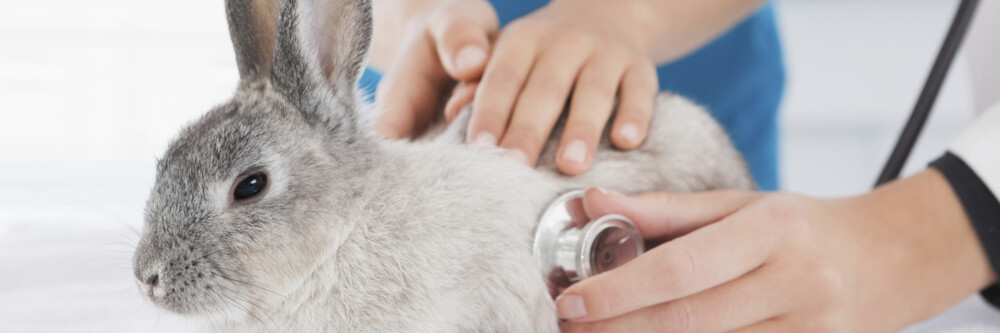
Abstract
The principles of emergency care and stabilization are the same in exotic pets as those established in human and more traditional pet medicine. Life support measures include airway and cardiac support, control of hemorrhage, correction of underlying fluid and electrolyte abnormalities, and restoration of normothermia.
A common scenario for all exotic pets is chronic disease presenting as an acute onset of illness. Many exotic companion mammals, birds and some reptiles fall into the category of prey species, with inherent instincts to hide illness until unable to do so. Therefore, any animal presented in acute crisis must be carefully evaluated for long-term, chronic, underlying illness. Common underlying factors in diseases affecting these species are malnutrition and improper husbandry, especially in those with difficult husbandry requirements, for example, sugar gliders, or unusual types of reptiles.
The Veterinary Emergency Critical Care Society (VECCS) is an outstanding resource for up-to-date cardiopulmonary resuscitation (CPR) guidelines. The RECOVER (Reassessment Campaign on Veterinary Resuscitation) Initiative provides up-to-date, evidence-based approaches for CPR in animals. While not specifically addressing exotic mammals, many principles are useful and can be adapted for exotic pet practice.
Outline
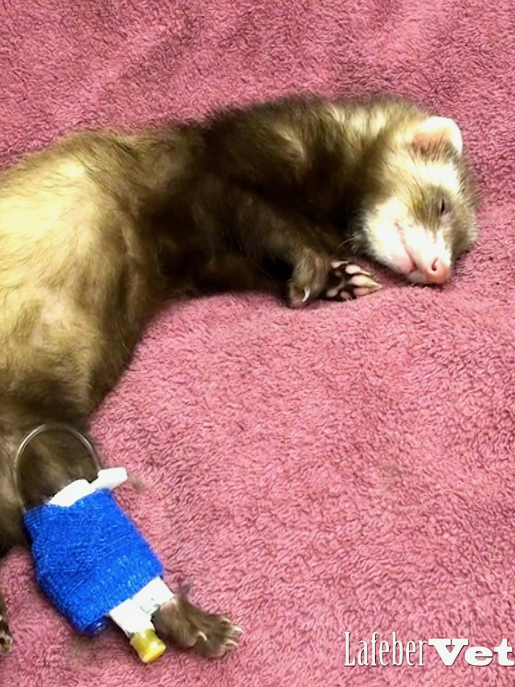
- Preparation for cardiopulmonary resuscitation (CPR)
- Basic life support
- Respiratory support
- Cardiac support
- Chest compressions for mammals
- Chest compressions-challenges for birds and reptiles
- Emergency drugs
- Drug delivery
- Dosage extrapolation
- Oxygen support
- Flow by oxygen
- Oxygen chambers
- Vascular access
- Correction of fluids deficits in mammals, birds, and reptiles
- Fluid choices
- Correction of hypovolemia
- Correction of dehydration and maintenance fluids
- Common disease presentations.
About the presenter
Angela Lennox has practiced exclusively exotic animal medicine since 1991 and she is the owner of the Avian and Exotic Animal Clinic of Indianapolis. Angela is board certified through the American Board of Veterinary Practitioners in both avian and exotic companion mammal medicine, and through the European College of Zoological Medicine in Small Mammal Medicine. Dr. Lennox is an Adjunct Professor at Purdue University College of Veterinary Medicine Department of Clinical Sciences and she teaches various exotic animal medicine topics to both veterinary and veterinary technician students… [MORE]
Webinar recording
Post-test
Take the brief post-test to earn 1 hour of continuing education credit. With a passing grade, you will receive a continuing education certificate in jurisdictions that recognize AAVSB RACE approval.
RACE approval
This program was reviewed and approved by the American Association of Veterinary State Boards (AAVSB) Registry of Approved Continuing Education (RACE) program for 1 hour of continuing education in jurisdictions that recognize AAVSB RACE approval.
Respiratory Disease in Snakes
Lower respiratory tract disease is common in snakes, particularly larger species, such as boas and pythons. This RACE-approved webinar recording by Dr. Scott Stahl reviews key anatomical features relevant to respiratory health, factors that predispose snakes to respiratory issues, common etiologic agents, typical patient histories and physical examination findings, as well as essential diagnostic testing and effective case management strategies . . .
Pour les vétérinaires. Par les vétérinaires.
Le site Lafervet.com est conçu pour une utilisation par les vétérinaires. Il est ouvert aux vétérinaires diplômés, aux techniciens vétérinaires diplômés, aux animaliers et aux étudiants dans ces domaines.
Créer un compte pour accéder à des articles et des ressources du site.
L'inscription est gratuite.
Para Profesionales Veterinarios. Por Profesionales Veterinarios.
El sitio Lafervet.com es para uso de los profesionales veterinarios. Está abierto a los veterinarios licenciados, técnicos veterinarios licenciados, rehabilitadores licenciados y estudiantes en estos campos.
Cree una cuenta para acceder a los artículos y recursos del sitio.
La registro es gratis.
Already a LafeberVet Member?
Please Login
Scott J. Stahl, DVM, DABVP (Avian Practice)
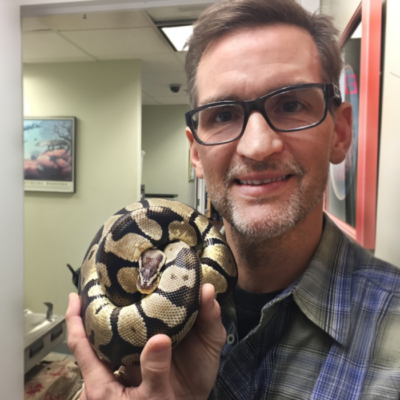 Scott Stahl is the Chief of Staff and Director at Stahl Exotic Animal Veterinary Services (SEAVS) in Fairfax, Virginia. SEAVS was founded in 2003 and relocated for expansion in 2009 to an 8,000 square foot facility. Today this large specialty practice has grown to eight full-time veterinarians providing full clinical services for exclusively avian and exotic animal patients. Additionally, SEAVS serves as a teaching facility with ongoing training for veterinary students with externships as well as veterinary internships and American Board of Veterinary Practitioners (ABVP) avian residencies. Dr. Stahl studied biology at the University of Richmond and he earned his Doctor of Veterinary Medicine from the Virginia-Maryland College of Veterinary Medicine in 1989. Scott became board certified in avian practice through ABVP in 1996.
Dr. Stahl has written over 150 scientific articles as well as chapters in various textbooks. In 2019, he co-edited and co-authored Mader’s Reptile and Amphibian Medicine and Surgery, 3rd Edition. Dr. Stahl is an active member of the Association of Reptile and Amphibian Veterinarians (ARAV) where he served on the board for 4 years and was a Past President (1998-1999). Additionally, he is a member of the Association of Avian Veterinarians and the Association of the Exotic Mammal Veterinarians. Dr. Stahl’s professional areas of interest include endoscopy, endoscopic surgical techniques, surgery and reptile theriogenology. He frequently teams up with Dr. Stephen Divers to lead exotic animal endoscopy courses all over the world.
Setting Up Your Lizard’s Home
Lizards can thrive when provided with a proper diet and an enclosure that is designed to recreate the conditions that they would encounter in the wild. The vivarium that you create should meet the minimum species-specific requirements for your species of interest, including temperature and humidity, lighting, as well as cage size and materials that meet the animal’s need to climb, burrow, or swim.
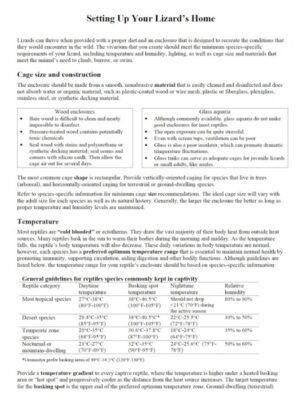
Download the PDF version of this client education handout, or modify the DOCX version for your veterinary hospital.
Tegu Basic Care
Tegus are characterized by their large size, muscular limbs, spotted pattern and long, forked tongue. Tegus can thrive in captivity when provided with a proper diet and an enclosure that is designed to recreate the conditions that they would encounter in the wild. This client education handout reviews species commonly kept in captivity, housing, diet, and behavior. In the wild, tegus are mostly ground-dwelling, burrowing lizards. Originating from the tropical rainforests of South America, their humidity requirements are high. Most tegus are omnivores. These lizards are generalists that consume a wide variety of food items in the wild. Tegus are also curious, extremely intelligent lizards. Some individuals can be tamed and trained with regular handling, especially from an early age.

Download the PDF version of this client handout, or modify the DOCX version for your veterinary hospital.
Aggressive Behavior in Captive Reptiles
This client education handout reviews aggression in captive reptiles, which is expressed as aggressive behavior between cagemates and aggressive human-reptile interactions. Underlying reasons for aggression, such as reproductive and defensive behaviors are explored and appropriate management and behavioral modification techniques are discussed.
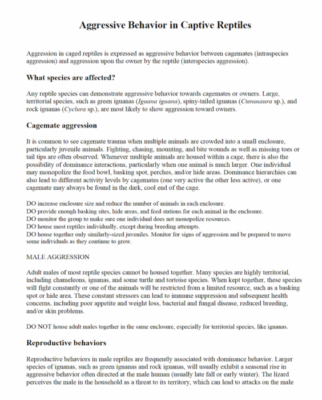
Download the PDF version of this client education handout, or modify the DOCX version for your veterinary hospital.
UVB Lighting for Reptiles Client Education Handout
This 4-page educational handout on ultraviolet lighting in reptiles is a shorter version of the complete article authored by Dr. Frances M. Baines. The handout is supplemented by two appendices as well as sections on further reading and online resources that can be included or excluded to meet individual client needs. 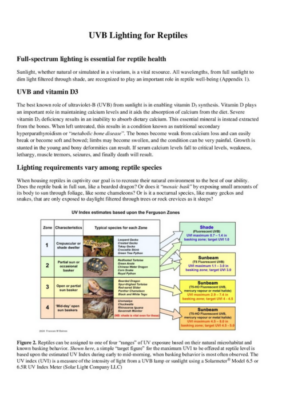 Download the PDF version of this client education handout, or modify the DOCX version for your veterinary hospital.
UVB Lighting for Reptiles
Full-spectrum lighting is essential for reptile health
Sunlight – whether natural or simulated in a vivarium – is a vital resource. For decades, the focus has been upon provision of the correct spectrum and intensity of ultraviolet-B (UVB), primarily to enable vitamin D3 synthesis in the skin. More recently, the importance of all wavelengths found in daylight – from full sunlight to dim light filtering through deep shade – is increasingly recognized (Fig 1). UVB, ultraviolet-A (UVA), visible light and short-wavelength infrared (IR-A) all play important roles.
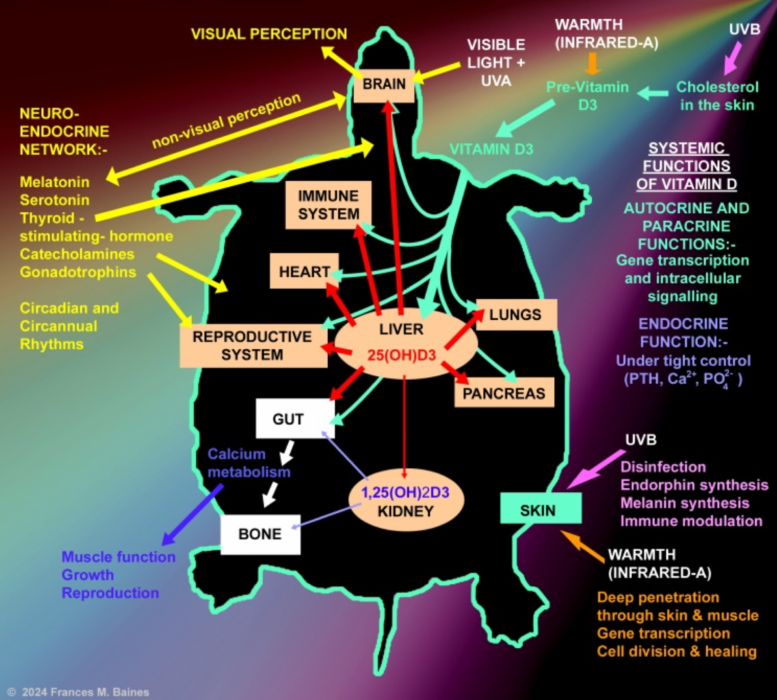
Figure 1. A summary of the primary effects of different parts of the sun’s spectrum on the reptile body. The light visible to reptiles includes ultraviolet-A (UVA), which enables full color vision in many species of reptiles. Both the spectrum and the intensity of light reaching the animal stimulate areas of the brain responsible for setting circadian rhythms and activity levels, and the pineal gland’s production of hormones regulating numerous bodily functions. Visible light and short-wavelength infrared from sunlight are responsible for its warming effect; infrared penetrates deeply and also upregulates genes controlling cell multiplication and healing processes including the immune system. Natural levels of ultraviolet-B (UVB) also have direct beneficial effects on skin, killing bacteria, fungi and viruses, modulating the skin’s immune response, stimulating endorphins (the “feel-good factor”) and increasing pigmentation. Image credit: Dr. Frances M. Baines. Click image to enlarge.
UVB and vitamin D3
The best known role of UVB from sunlight is in enabling Vitamin D3 synthesis. A cholesterol in the skin is converted to pre-D3 by UVB. Warmth converts pre-D3 to Vitamin D3. This is taken up into the bloodstream and carried to all parts of the body. In the liver, some is hydroxylated to 25–hydroxyvitamin D or 25(OH)D3, a stable “storage” form, measured in blood samples to assess vitamin D3 status. This then re-enters the bloodstream and is carried to all parts of the body.
A small amount of 25(OH)D3 is needed daily by the kidneys, which convert it to the active hormone 1,25-dihydroxyvitamin D or 1,25(OH)2 D3. This is carried in the bloodstream around the body, to maintain calcium homeostasis. It enables the cells in the gut to transfer calcium in the diet into the bloodstream, and along with parathyroid hormone (PTH), keeps blood calcium levels stable by adjusting its excretion via the kidneys and its storage in bone. This is the endocrine function of vitamin D3.
Vitamin D3 and some 25(OH)D3 are also taken up daily by the cells in other organs including the skin, brain, reproductive organs and the immune system (e.g. white blood cells). Inside the cells, Vitamin D3 and 25(OH)D3 are converted to 1,25(OH)2 D3 which, remaining within the cells, regulates over 2,000 genes and cell signalling. These are the autocrine and paracrine functions of vitamin D3. Vitamin D plays an important supportive role in most organs studied, perhaps the most vital being in the immune system, where it promotes anti-bacterial and anti-viral responses and reduces production of inflammatory cytokines and autoimmune reactions.
Although some reptiles, especially carnivorous species, obtain vitamin D3 from the bodies of their prey, most wild reptiles, like mammals and birds, are likely to obtain the majority of their vitamin D3 from cutaneous synthesis during their exposure to the natural UVB levels in daylight, a free resource.
Mild vitamin D3 deficiency causes loss of autocrine and paracrine function, but endocrine action is preserved. Severe deficiency, however, results in an inability to absorb calcium from the diet. This essential mineral is instead extracted from the bones under the influence of parathyroid hormone, in order to maintain blood calcium levels and thus normal bodily functions. If untreated, this causes overstimulation of the parathyroid gland and results in a condition known as nutritional secondary hyperparathyroidism, more commonly described as metabolic bone disease (MBD). The bones become weak from calcium loss and can easily break or become soft and bowed; limbs may become swollen, and the condition can be very painful. Young animals’ growth is stunted and bony deformities result. If serum calcium levels fall to critical levels despite the demineralization of the bones, weakness, lethargy, muscle tremors, seizures, and finally death will result.
Lighting requirements vary among reptile species
Animals are adapted to function best in the environment to which they evolved; thus when planning lighting for a species, it’s vital to know the microhabitat in which the animal lives, and its behavior within that microhabitat. Does it bask in full sun at certain times of the day, like a bearded dragon? Or “mosaic bask” by exposing small amounts of its body to sun through foliage, like some chameleons? Or does its nocturnal habit mean that its only exposure to daylight is from filtered light through the trees or rock crevices reaching its body as it sleeps, like many geckos and snakes?
Pioneering research on the daily exposure to UVB across species from very different microhabitats (Ferguson et al. 2010) led to the development of the “Ferguson Zones” concept and a UV guide developed by, and for, UK zoos (Baines et al. 2016). Each species in this guide has been allocated to one of four “ranges” of UV exposure based on their natural microhabitat and known basking behavior. The UV Index is used as a measure of the irradiance; readings from a UV Index meter, the Solarmeter® 6.5 or 6.5R (Solar Light Company LLC) can be used from both sunlight and UVB lamps.
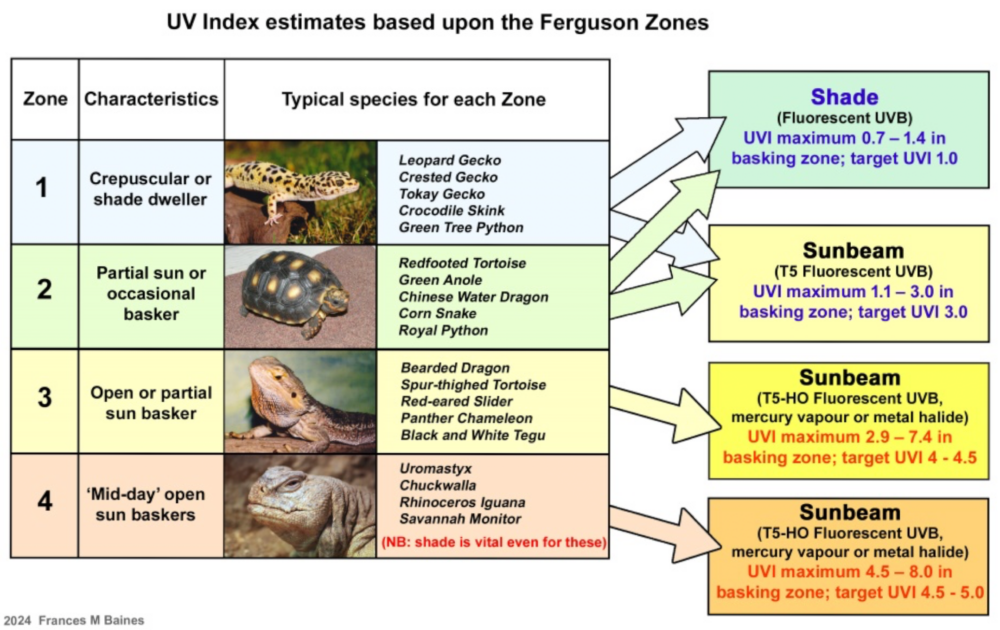
Figure 2. Reptiles can be assigned to one of four “ranges” of UV exposure based on their natural microhabitat and known basking behavior. Shown here, a simple “target figure” for the maximum UVI to be offered at reptile level is based upon the estimated UV Index during early to mid-morning, when basking behavior is most often observed. The UV index (UVI) is a measure of the intensity of light from a UVB lamp or sunlight using a Solarmeter® Model 6.5 or 6.5R UV Index Meter (Solar Light Company LLC). Image credit: Dr. Frances Baines. Click image to enlarge.
Full-spectrum lighting including species-appropriate levels of UVB is now widely recommended for all species, for health and welfare reasons. Species which consume whole prey and can utilize vitamin D3 from their diet do not appear to “need” UVB since many generations of apparently healthy animals have been reared without it, in the past. However, the amounts of vitamin D3 needed for adequate dietary supplementation are unknown, and whether animals maintained in this way have optimum vitamin D3 levels for all functions other than calcium metabolism is likewise unknown. In addition, without provision of full spectrum lighting, they are being deprived of the other benefits from natural levels of UVB and UVA.
Species-appropriate levels of visible light (including UVA) and short-wavelength infrared – the other major components of sunlight – are largely unknown. Research is urgently needed, as evidence emerges revealing the vital importance of adequate visible light for setting body clocks and activity levels, and the effects of IR-A on thermoregulation and basking behavior. In the absence of field data the most promising approach would be to match natural sunlight as closely as possible. The aim would be to replicate the spectrum, irradiance (intensity) and photoperiod appropriate to each species, within a suitably-sized “patch of sunlight” in the enclosure, giving the animals choice as to its use. Most vivarium lighting is inevitably dim when compared to direct sunlight, but “daylight” levels can be achieved. It is also vital to monitor temperatures, especially that of the basking zone surface and the ambient (air) temperature in the cool region of the enclosure. If the cool region provides a suitable retreat from the heat, and surface temperatures across the basking zone are safe, reptiles will thermoregulate effectively in a range of infrared irradiances. Preliminary studies using a power density meter to measure IR-A irradiance from lamps suggests a range between 250 – 350 W/m² IR-A may be appropriate, but further research is needed.
No single lamp can replicate the entire solar spectrum, but a combination of lamps placed close together, with overlapping beams aimed at a “basking zone” below, can create a “patch of sunlight” that reptiles will recognize as such and respond to, accordingly.
Generally this combination will consist of three types of lamp:
- UVB-emitting lamps sold for use with reptiles, such as a fluorescent UVB tube (for UVB and UVA, with some visible light);
- An incandescent lamp such as a tungsten filament reflector bulb or a halogen bulb (for “heat” – IR-A – and some visible light) and
- Either a “white” LED strip or flood bulb, or metal halide floodlight (for intense visible light). “Daylight” irradiance up to about 50,000 lux can be achieved in the basking zone in this way.
Non-light-emitting heaters such as ceramic heat emitters and “deep heat projectors” do not emit the wavelengths found in sunlight and are not suitable for use as basking lamps. This article covers only the first of the three components: UVB-emitting lamps sold for use with reptiles.
General guidelines
Lighting for captive reptiles is an ever-expanding area of research. The information provided below offers general guidelines, but we encourage every reptile owner to research their species of interest and to always ask your veterinarian if you have specific questions.
The “patch of sunlight” must be “just right”.
- The basking zone needs to be at least as big as the whole body of a lizard or chelonian, or snake loosely coiled. This ensures the heat, light and UV are spread evenly over the animal, all parts of the body irradiated simultaneously with no “hot spots” likely to cause thermal or UV burns.
- However, to ensure an adequate heat, light and UV gradient from “sun” into “shade” in a cool zone, the basking zone must not cover more than 50% of the enclosure.
The rays from the lamps must overlap and lamps must be above the reptile.
- To recreate “sunlight” the strongest UVB needs to be blending with the strongest visible light and infrared, underneath the lamps. UVB is strongest beneath the middle of a linear tube.
- To avoid glare, stress and possible eye damage, all lamps should be above the basking zone aimed downward, not angled such that they are in the reptile’s line of sight.
- Figure 3 shows three possible configurations for creating a “patch of sunlight” in a typical 1.2 m x 0.6 m x 0.6 m (4ft x 2ft x 2ft) vivarium.
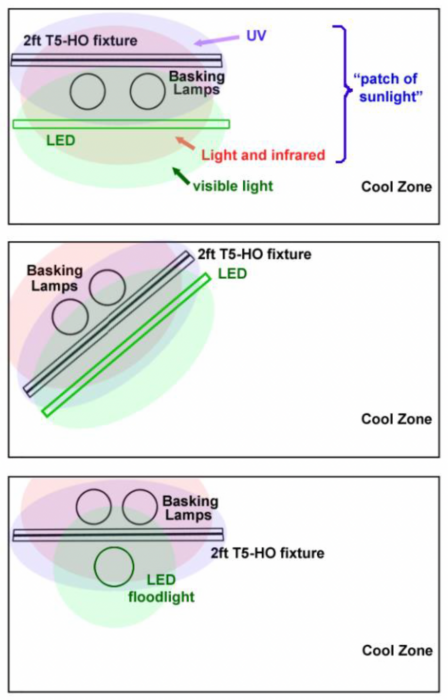
Figure 3. Three possible configurations for creating a “patch of sunlight” in a typical 1.2 m x 0.6 m x 0.6 m (4ft x 2ft x 2ft) vivarium. Image credit: Dr. Frances M. Baines. Click image to enlarge.
The strength of UVB rays decreases the further the animal is from the bulb.
- Just like any radiant source of light, UVB intensity diminishes with distance from the lamp. The irradiance at any given distance depends on the strength of the lamp and the shape of its beam.
- Just as they do for light, reflectors will gather up UV rays from all directions from a lamp and focus them into a forward-facing beam. Aluminum reflectors greatly extend the “reach” of UVB from fluorescent tubes.
- Always check manufacturer recommendations. Different types of bulbs must be placed at different distances in order for the UV Index level to be effective but not strong enough to be harmful.
- The basking area or the light may need to be raised or lowered depending on the distance needed for the bulb selected and the species kept.
UVB rays are blocked by glass or plastic.
- Normal glass used for windows and vivariums blocks all UVB. Most transparent plastics either block all UVB or a high percentage of it – and are also solarized by UV causing them to become brittle and discolored. UVB lamps should never be placed above glass or plastic sheets and cannot be used above a solid glass vivarium roof. Likewise, if a fluorescent lamp fixture or hood has a transparent plastic front cover or protective shield, remove it.
- Reptiles cannot benefit fully from sunlight reaching them through a glass window, since no UVB gets through, but light and infrared do. No glass vivarium should ever be placed where it can receive direct sunlight as the heat build-up inside can be rapidly lethal.
- UV-transmitting acrylic and glass do exist, for creation of skylights and outdoor shelters that allow some benefit from solar UV, but are expensive and hard to source. UV-transmitting acrylic (“sunbed acrylic”) is a specialist product that allows up to 80% transmission of solar UVB. Low-iron glass which allows up to 50% transmission is also available for special applications, under such brand names as Starphire® and Optiwhite®.
UVB light will be partially filtered out by passing through mesh.
- Mesh screen tops and mesh lamp guards block a percentage of the UV, light and infrared. How much is blocked is determined by the thickness of the wire (physically blocking the light) and the size of the gaps between the wires. Different brands of mesh vary in both wire thickness and gap dimensions. Current examples include:
- 0.64 cm (¼ in) wire mesh panels: 25% block
- Exo Terra® and ZooMed® screens and Arcadia LampGuardPro® tube guards: 35% block
- Dubia Reptile Enclosures® and Zen Habitats® screens: 45% block
- Owners of a UV Index Meter (Solarmeter® 6.5 or 6.5R) can simply use meter readings to adjust lamp placement above any screen. Alternatively, some charts are available showing lamp outputs at different distances for popular brands over mesh screens with varying transmission percentages, (visit the “Reptile Lighting” Facebook Group “Guides”).
UVB bulb output decreases over time.
- The UVB output from all lamps decays with use, owing to chemical changes in the phosphors and glass. After an initial drop over the first few weeks during the “settling-in” period, decay is very slow in good brands; many will provide good levels for well over a year.
- The best way to monitor output is with the UV Index Meter (Solarmeter® 6.5 or 6.5R), taking measurements at reptile level at least monthly. Although meters are expensive up front, they can save money in the long run as bulbs may last much longer than expected and may not need annual replacement!
- If you do not have a meter, replace bulbs at regular intervals even if the visible light seems unchanged. Check the manufacturers’ guidelines; annual replacement is recommended for all good well-known brands. Inexpensive products, often with unusual brand names or directly imported from China, are not recommended for use at all, owing to great variability in UVB output and lamp quality; but if they are used, they may well decay much more rapidly and might need replacing after only 3-6 months.
Lamps to AVOID
Every year many thousands of owners are sold lamps that are either totally useless or frankly dangerous for the species they keep. The following products merit a warning:
- Lamps –usually fluorescent tubes or LEDs – claiming to be “full spectrum” but with no indication that they have any UVB content. These are often sold as “plant grow lights”, “bird lamps” or for human use for seasonal affective disorder (SAD). They are only emitting a full VISIBLE spectrum, sometimes with a little UVA. All these are useless for vitamin D3 synthesis, but can be very useful in boosting ambient light!
- HAZARDOUS cheap, small halogen lamps, mainly sold direct from China, which have no protective front glass, just an unshielded halogen capsule. Many varieties are sold from Amazon and eBay, often described as “UVB+UVA 3.0” or “all-in-one”, or sold pre-installed in attractive-looking lamp holders. Unshielded halogen bulbs can emit UVC, and hazardous abnormally short-wavelength UVB, as well as focused, intense heat at close range. (Ordinary small halogen bulbs with glass front covers are perfectly fine, the glass blocks all UVB and UVC).
- POSSIBLY HAZARDOUS new products: UVB LEDs. The proposed future ban of all lamps containing mercury has led, understandably, to a rush to manufacture and sell LED lamps which emit UVB and UVA as well as visible light. It is essential that these are developed eventually, but to date, no UVB LED on sale has ever been tested as to its ability to enable vitamin D3 synthesis, or for its long-term safety. A wide range of companies, including well-known brands, are selling these at the time of writing. A theoretical analysis of their spectra (Wunderlich et al. 2023) has raised concerns that the spectrum of most, if not all of the lamps is so unlike that of sunlight that natural wavelength-sensitive processes preventing vitamin D3 overproduction in skin might be over-ridden. This could lead to vitamin D toxicity. The very strong UVB irradiance from some of the lamps tested was hazardous in itself, and some even emitted UVC. Until at least some trials measuring blood levels of vitamin D in reptiles under these lamps has been conducted, they cannot be recommended.
- Mercury vapor UVB lamps with clear glass faces, mainly sold by little-known Chinese companies, typically have extremely tightly focused UV beams. These fail to create adequate basking zones and may produce very small circles of extremely intense UVB, risking skin damage.
- Although not necessarily emitting unsuitable levels of UVB, there are many products being sold cheaply on the likes of eBay and Amazon, typically direct from China or Hong Kong, which are “copy-cat” versions of established high-quality products. Of low quality and largely untested by independent researchers, these can have a poor output and short lifespan. A typical current example is the Chinese ReptiZoo® brand’s product closely resembling the Arcadia ProT5 UVB Kits. When tested, the ReptiZoo® version had a poor quality fixture and a T5-HO tube which suffered rapid decay in its UVB output.
Choosing a UVB lamp
Some definitions and misconceptions
Manufacturers typically categorize lamps according to their output at “typical” distances (e.g. 30 cm or 12 in below the lamp) – naming them “Desert” (higher output) or “Forest” (lower output) which can give rise to a lot of confusion. Theoretically, even the most powerful UVB lamp could be used for low-level UVB if placed far enough away; and likewise a lamp with a low output at typical basking distances could provide high UVB at close range, if this was required.
Another confusing label is the “percentage of UVB” – for example, 6% UVB and 12% UVB, or 5.0 and 10.0 (representing 5% and 10% UVB). These figures don’t tell you anything about the intensity of the UVB you’ll measure at any given distance from the lamp; they tell you the percentage of the lamp’s output which is UVB; the rest being UVA and visible light. The higher the percentage, the more UVB you’ll get from a lamp of that brand, type and wattage; but that’s all. A 13 watt 12% UVB compact lamp will have a higher output than a 13 watt 6% UVB compact lamp, but a vastly lower output than a 54 watt 12% UVB T5-HO tube.
Linear UVB fluorescent tubes are the most versatile and widely-used UVB lamps sold for use with reptiles. The tubes are of two distinct types. T8 versus T5 designates the diameter of the bulb.
A T8 tube is an older style, diameter 1 inch. These produce low level, well diffused UVB in all directions. If a good aluminum reflector fixture is used, the output under the tube can be doubled; but even the 10%-12% UVB versions, in reflector fixtures, are best reserved for reptiles with low-UVB requirements unless the animal will be basking very close to the lamp, e.g. around 15 cm (6 in) distance for UVI 4.0.
T5 tubes are very slim (1.5 cm or 5/8 inch diameter) and are not compatible with T8 tubes. Two versions exist: T5-SO (Standard Output – also called T5-NO) and T5-HO (High Output). Good aluminum reflector fixtures can boost the output under T5 tubes to 3x that of a bare tube. The T5-SO tubes are low wattage, low output tubes, ideal for small terrariums and shade dwelling species. The T5-HO tubes require higher wattage fixtures and are among the most powerful UVB lamps currently available. A 14% UVB T5-HO from a good brand in a quality fixture will produce UVI 4.0 at around 18 inches distance. Multiple T5-HO tubes mounted side by side in horticultural reflector fixtures can be used to create enormous UVB coverage for large animals in zoo enclosures; for example, eight 54 watt 12% UVB tubes can produce UVI 4.0 in a basking zone 1.2 m (4 ft) wide when positioned up to 1.5 m (5 ft) above the animal’s back.
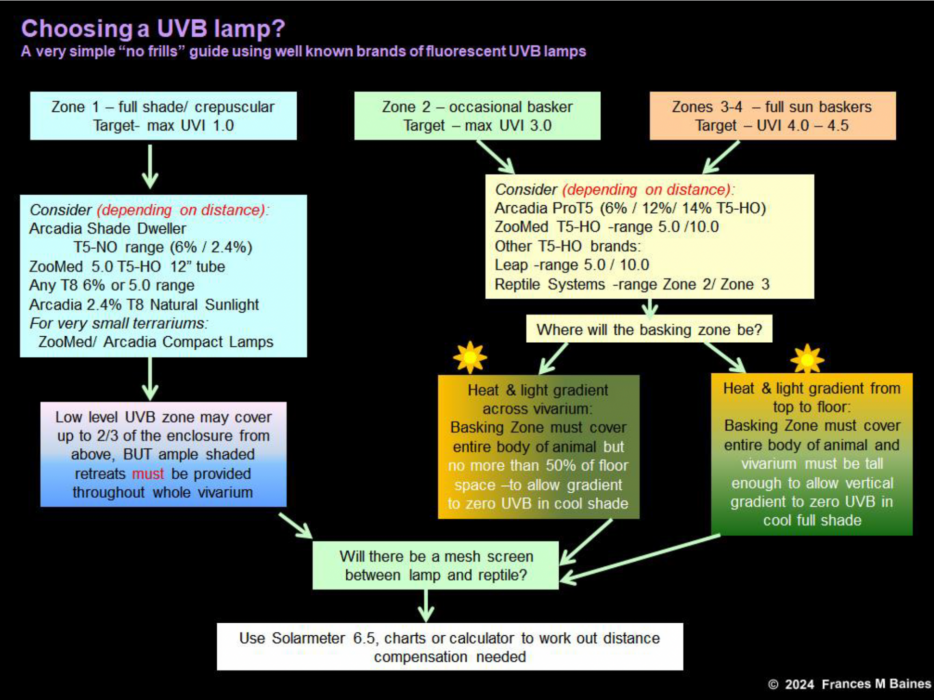
Figure 4. A simple flow chart to aid in selection of an appropriate linear fluorescent tube. Image source: Dr. Frances M. Baines. Click image to enlarge.
Compact fluorescent lamps produce UVB only in a limited zone around the lamp, with a very steep gradient and intense UV close to the bulb. They are often included in starter reptile kits but are not ideal for use with most commonly kept reptile species owing to their limited coverage. If mounted horizontally in a hood over a very small terrarium, they can provide UVB where larger bulbs cannot be accommodated; however their steep UV gradient requires access to the mesh directly under the lamp to be restricted as the UVI may be very high at such close range
Mercury vapor UVB lamps are high-intensity discharge (HID) lamps, which combine a mercury vapor arc tube with an incandescent filament to create a reflector bulb that produces a combination of UVA, UVB, visible light, and infrared. They are a very old technology, and although the concept of an “all-in-one” lamp is appealing, they have significant set-backs. The arc tube produces a spectrum very unlike sunlight, with visible light mainly in purple and greenish-yellow, resulting in very poor color rendering. They cannot be dimmed or put on a thermostat; if the lamp is turned off, the arc tube will need to cool down before it can be re-ignited. Heat output is high, so they are unsuitable for smaller vivariums or for mounting inside a vivarium.
Clear-faced versions often have narrow intense beams; those with frosted glass produce wider beams but a major concern is the extreme variability in UVB output, even between lamps of the same brand and wattage. It is rare for a lamp to produce the desired UVI and basking surface temperature at the same distance, making lamp placement difficult. Ideally, each lamp’s output should be monitored with a UV Index meter to ensure safe levels of radiation. Quality and longevity is a concern as incandescent filaments are fragile and have a limited lifespan.
Metal halide lamps are HID lamps with significant improvements over mercury vapor lamps. The arc tube contains a mixture of mercury and halides which, when vaporized by the arc, create an extremely brilliant white light with excellent color rendering, plus UVA and some UVB, although with some brands the UVB quickly decays, leaving a very high quality lamp providing exceptionally bright white light and UVA, which can last for several years. The main disadvantages are the requirement for an external ballast and good electrical wiring for a 4kV ignition pulse; lack of ability to dim or put on a thermostat, and difficulty in sourcing them. In the USA the only existing brand sold for reptiles at the time of writing is the ZooMed® Powersun HID, a PAR36 70watt lamp, and a matching ballast fixture. Commercially available non-UVB metal halides are still available and can make excellent sources of strong visible light, but like all HID lamps, they are being replaced everywhere by LEDs.
Client education handout
Visit the 4-page client education handout, available for download as both a PDF or a DOCX that can be modified to best meet the needs of your veterinary hospital.
For additional information visit:
“Reptile Lighting” Facebook Group: This online source provides a way to interact with other reptile owners and ask questions about any aspect of reptile lighting and heating. A section of the forum entitled “Guides” includes charts of the measured output of commonly-used T5 lamps, plus sets of articles covering issues such as the Ferguson Zones, UVB LEDs, and Infrared Basking Lamps, as well as links to relevant podcasts. The Admin team includes a small group of experienced reptile keepers and scientists involved in serious lighting research, as well as knowledgeable long-term keepers happy to discuss any topics that come up. With 45,000 members worldwide, questions are often about basic care, posed by newcomers to the reptile world – but challenging new ideas are also discussed in depth.
UV Guide UK: The original Reptile Lighting website with information about UV, lights, UV meters, etc. Although now 20 years old, much of the information is still applicable.
ReptiFiles website: A useful site for prospective reptile owners or new keepers, by American author Mariah Healey, who describes herself as a “reptile husbandry researcher and consultant”. Mariah has developed detailed “care guides” for some of the most popular reptile pets, which contain full descriptions of suitable lighting and heating equipment, and shorter “care sheets” for a wide range of other reptiles often kept as pets. Mariah includes “shopping lists” using affiliate links for USA readers.
Solarmeter 6.5R UV Index Meter: Solar Light Company has distributors worldwide, including online stores.
Further reading
Baines FM, Cusack LM. Environmental lighting. In: Divers SJ, Stahl SJ (eds). Mader’s Reptile and Amphibian Medicine and Surgery,, 3rd ed. 2019; St. Louis, MO: WB Saunders. Pp. 131-138.
Baines F, Chattell J, Dale J, et al. How much UV-B does my reptile need? The UV-Tool, a guide to the selection of UV lighting for reptiles and amphibians in captivity. Journal of Zoo and Aquarium Research. 2016; 4(1): 42-63. Available at https://www.jzar.org/jzar/article/download/150/89. Accessed Aug 20, 2024.
Barolet D, Christiaens F, Hamblin MR. Infrared and skin: Friend or foe. Journal of Photochemistry and Photobiology B: Biology. 2016;155:78-85. doi: doi: 10.1016/j.jphotobiol.2015.12.014.
Bertolucci C, Frigato E, Foà A. The reptilian clock system: Circadian clock, extraretinal photoreception, and clock-dependent celestial compass orientation mechanisms in reptiles. Biological Timekeeping: Clocks, Rhythms and Behaviour. 2017; 223-239. doi: 10.1007/978-81-322-3688-7_10.
Ferguson GW, Brinker AM, Gehrmann WH, et al. Voluntary exposure of some western‐hemisphere snake and lizard species to ultraviolet‐B radiation in the field: how much ultraviolet‐B should a lizard or snake receive in captivity? Zoo Biology. 2010;29(3):317-334. doi: 10.1002/zoo.20255.
Ferguson GW, Gehrmann WH, Vaughan MS, et al. (2021). Is the natural UV zone important for successful captive propagation of the Panther Chameleon (Furcifer pardalis); are different UVB irradiance exposures that generate a similar dose equally successful? Zoo Biology. 40(2):150-159. doi: 10.1002/zoo.21591.
Fleishman LJ, Loew ER, Meal M. Ultraviolet vision in lizards. Nature. 1993;365:397. doi: 10.1038/365397a0.
Hoby S, Wenker C, Robert N, et al. (2010). Nutritional metabolic bone disease in juvenile veiled chameleons (Chamaeleo calyptratus) and its prevention. The Journal of Nutrition. 2010;140(11), 1923-1931. doi: 10.3945/jn.110.120998.
Holick MF. (2016). Biological effects of sunlight, ultraviolet radiation, visible light, infrared radiation and vitamin D for health. Anticancer Research. 2016;36(3), pp.1345-1356. Available at https://ar.iiarjournals.org/content/anticanres/36/3/1345.full.pdf. Accessed Aug 20, 2024.
Karsten KB, Ferguson GW, Chen, TC, Holick MF. Panther chameleons, Furcifer pardalis, behaviorally regulate optimal exposure to UV depending on dietary vitamin D3 status. Physiol Biochem Zool. 2009;82:218–225. doi: 10.1086/597525.
Oonincx DGAB, Diehl JJE, Kik M, et al. 2020. The nocturnal leopard gecko (Eublepharis macularius) uses UVb radiation for vitamin D3 synthesis. Comparative Biochemistry and Physiology Part B: Biochemistry and Molecular Biology. 2020; 250:110506. doi: 10.1016/j.cbpb.2020.110506.
Sievert LM, Hutchison VH. Light versus heat: thermoregulatory behavior in a nocturnal lizard (Gekko gecko) Herpetologica. 1988;44(3): 266 -273 https://www.jstor.org/stable/3892340.
Tosini G. The pineal complex of reptiles: physiological and behavioral roles. Ethology Ecology & Evolution. 1997; 9(4):313-333. doi: 10.1080/08927014.1997.9522875.
Wacker M, Holick MF. Sunlight and Vitamin D: A global perspective for health. Dermato-endocrinology. 2013; 5(1):51-108. Available at https://www.tandfonline.com/doi/pdf/10.4161/derm.24494. Accessed Aug 20, 2024.
Watson, M. K., & Mitchell, M. A. (2014). Vitamin D and Ultraviolet B Radiation Considerations for Exotic Pets. Journal of Exotic Pet Medicine, 23(4), 369-379 https://www.sciencedirect.com/science/article/abs/pii/S1557506314001566
Wunderlich, S., Griffiths, T., & Baines, F. (2023). UVB-emitting LEDs for reptile lighting: Identifying the risks of nonsolar UV spectra. Zoo Biology. 2023; 43(1):61–74. doi: 10.1002/zoo.21806.
Frances M. Baines, MA, VetMB, MRCVS
 Frances Baines is a recently retired veterinarian who spent the last 19 years researching the use of specialist lighting, including ultraviolet lighting, in the husbandry of reptiles, amphibians and more recently, mammals, birds and invertebrates. Until her retirement, Frances was an appointed Advisor to the British and Irish Association of Zoos and Aquariums (BIAZA), who awarded her Honorary Membership in 2019, and the European Association of Zoos and Aquaria Animal Welfare Working Group. Frances has led training workshops in many zoos in the UK, Europe, and USA, and she has given numerous presentations to herpetological and zoological societies. Over the years, she has worked with veterinarians, zoo keepers, conservationists, herpetologists, and amateur keepers, as well as major reptile lighting manufacturers, who want to improve the lives of reptiles and other animals in captivity.
When a team at Texas Christian University developed the concept of ultraviolet index (UVI) ranges suitable for different species, Frances worked with Professor Gary Ferguson to further develop this concept into what she named the “Ferguson Zones“, which is now becoming accepted worldwide. As coordinator of a team within the BIAZA Reptile and Amphibian Working Group, Frances assisted with the production of a guide on the use of UVB in zoos. This open-access BIAZA RAWG UV-Tool was published in 2016 in the peer-reviewed Journal of Zoo and Aquarium Research. Since then, Frances has co-authored a number of scientific papers and has contributed chapters on lighting to several textbooks, including Mader’s Reptile and Amphibian Medicine and Surgery, 3rd edition.
Although Frances claims to be retired, she is still busy with various reptile-related projects and is a member of a small independent research team running the Facebook Reptile Lighting Group, a busy international forum exploring new husbandry issues and offering free advice to reptile keepers with lighting and heating queries. She lives in South Wales, United Kingdom, with 21 lizards and a long-suffering husband!
World Lizard Day
Everyone is Excited for World Lizard Day
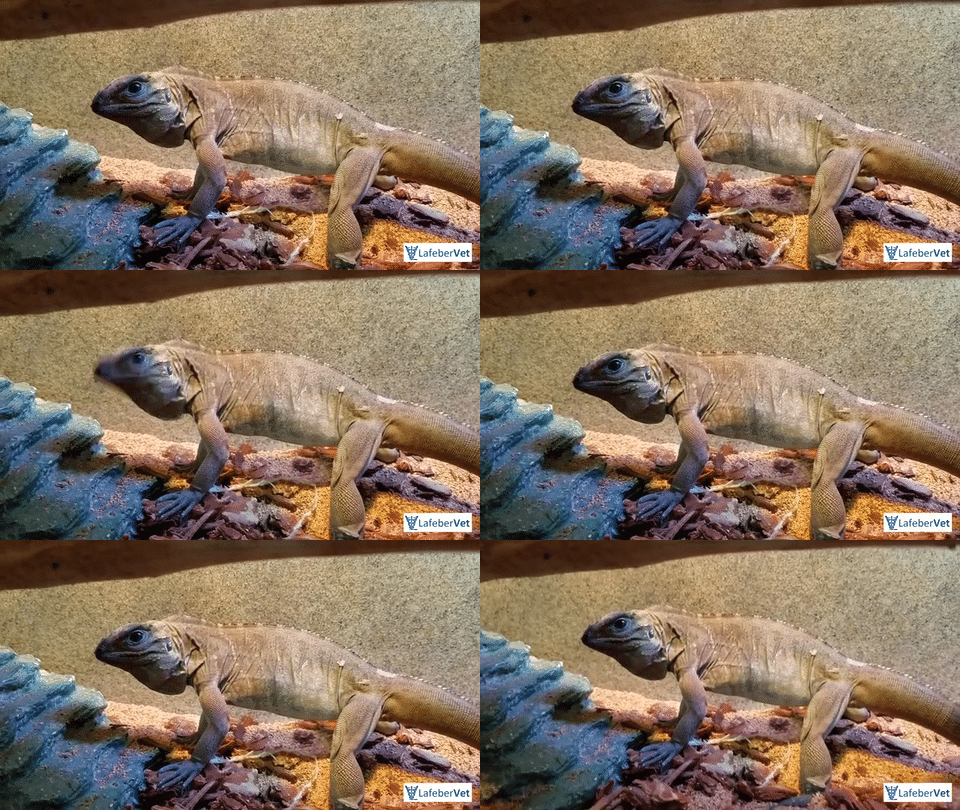
Figure 1. Learn more about what this lizard’s posture indicates in Lizard Handling & Restraint. Video credit: Erica Mede, CVT.
LafeberVet is rich in lizard-focused content. Check out our collection of client education handouts plus RACE-approved webinar recordings, teaching modules, educational videos, and informative articles
Client education handouts *
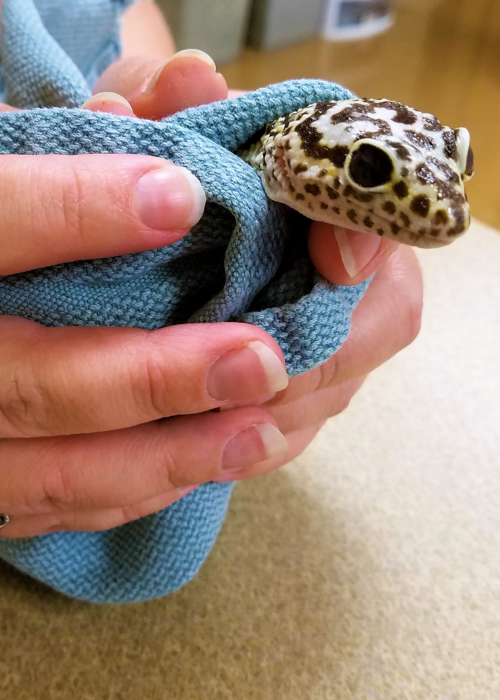
RACE-approved continuing education
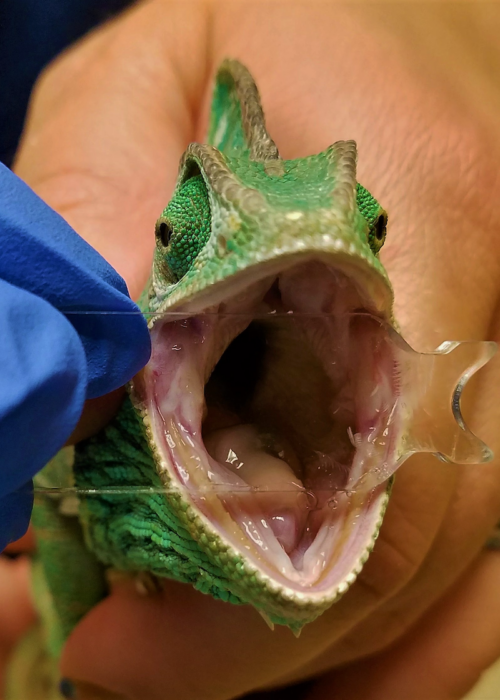
Videos
|
Photo credit: LafeberVet |
|
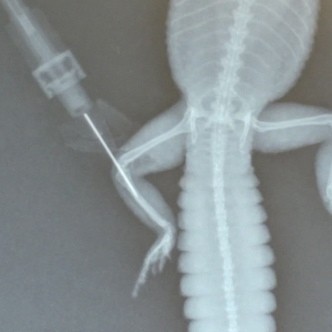
Articles
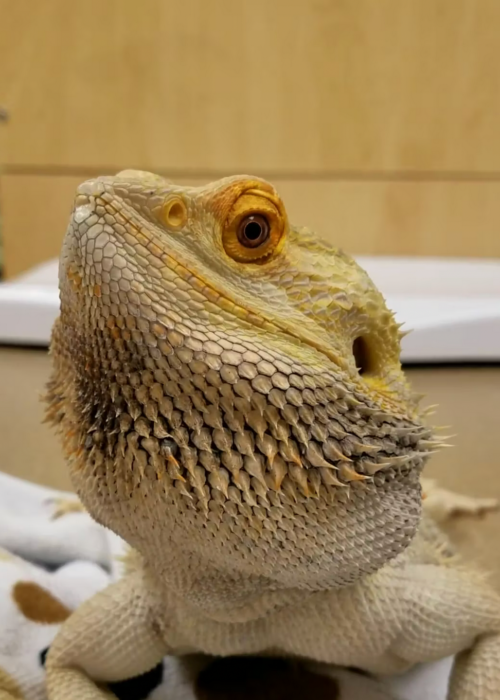
Basic information sheets
|
Photo credit: C. Lawless/Flickr Creative Commons |
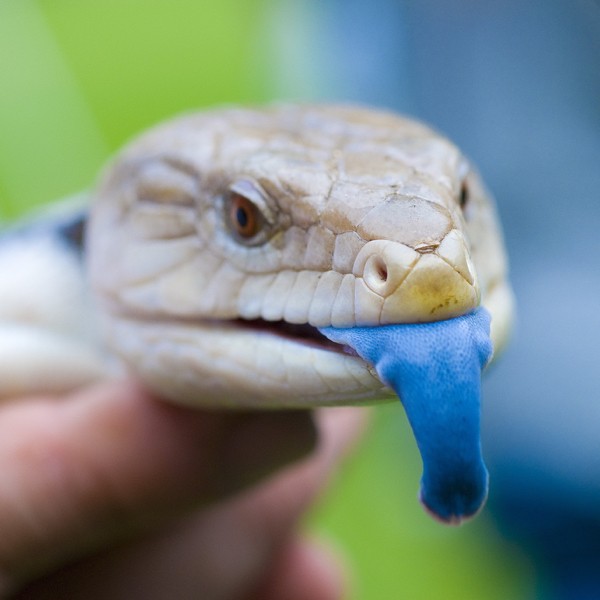
* Open access at all times
Old World Chameleon Care
There are over 150 species of Old World or true chameleons, however the veiled chameleon, panther chameleon, and Jackson’s or three-horned chameleon are three of the most common species seen in captivity. This client education handout reviews natural history, physical description and caging parameters, including temperature, humidity, visual security, substrate, as well as diet, behavior, and reproduction.
Download the 5-page PDF version (size A4) or PDF (letter size) of this client handout, or modify the 4-page DOCX version for your veterinary hospital.
2024 T.J. Lafeber Avian Practitioner of the Year
Dr. Lauren V. Powers named
Avian Practitioner of the Year
Twenty exceptional avian veterinarians from all around the world were nominated for the 2024 T.J. Lafeber Avian Practitioner of the Year Award. The independent Selection Committee narrowed this list to three finalists and the 2024 Avian Practitioner of the Year, Dr. Lauren V. Powers, was announced during the Plenary/Kickoff Session of the 45th Annual Conference of the Association of Avian Veterinarians.
Lauren V. Powers, DVM, DABVP (Avian Practice) is Specialty Service Chief of the Avian and Exotic Pet Service at Carolina Veterinary Specialists in the greater Charlotte area of North Carolina.
Past award recipients
Visit Lafeber.com to see a list of previous Award recipients.
The “Caring Hands” statuette is a bronze mold of Dr. Lafeber’s hands holding his most beloved avian patient, the budgerigar.
Did you know…?
The T.J. Lafeber Avian Practitioner of the Year is nominated and selected by their peers. The Awardee is not, and has never been, selected by Lafeber Company. The 2024 independent Award Selection Committee, consisting of Association of Avian Veterinarians members, was led by Dr. Yvonne R.A. van Zeeland.
Giraffe Fast Facts
Introduction
Celebrate World Giraffe Day LafeberVet-style with fast facts on this special species (Fig 1). Topics covered will include taxonomy, the range and conservation status of giraffes (Giraffa camelopardalis) in the wild as well as basic husbandry and common diseases of captive animals. The anatomy and physiology of the giraffe is too unique to adequately cover in this brief review, however, some interesting facts will be shared with an emphasis on the cardiovascular system.

Figure 1. World Giraffe Day was initiated by the Giraffe Conservation Foundation in 2014 to celebrate the world’s tallest animal on the longest day of the year. Photo: Donnie Ray Jones via Flickr Creative Commons. Clikc image to enlarge.
Range
The giraffe is native to the savannas and open woodlands of Africa (Fig 2). Once widespread across the continent, giraffes are now primarily found as fragmented groups within national parks or game farms in eastern and southern Africa and as scattered populations in west Africa.5,15,21 There are less than 70,000 animals in the wild.21
Figure 2. Reticulated giraffes (Giraffa camelopardalis reticulata) in Maasai Mara National Reserve, Kenya. Photo: Paul Mannix via Flickr Creative Commons. Click image to enlarge.
Taxonomy
The International Union for the Conservation of Nature (IUCN) recognizes one giraffe species with nine subspecies (Box 1)21, however, genetic analyses have identified four distinct species: G. camelopardalis, G. giraffa, G. reticulata, and G. tippelskirchi (Fig 3).6,7,11,13
| Box 1. Giraffa sp. taxonomy |
|---|
Class: Mammalia Order: Artiodactyla: even-toed ungulates or hoofstock Suborder: Ruminantia: four-chambered stomach Family: Giraffidae: giraffe and okapi |
Figure 3. Thornicroft’s giraffe (Giraffa camelopardalis thornicrofti) is a geographically isolated subspecies or species found only in northeast Zambia.12 Photo: Manuel Schwarz via Wikimedia Commons. Click image to enlarge.
Conservation status
The IUCN classifies giraffe populations as “vulnerable”, although West African giraffes (Giraffa c. peralta) and Rothschild’s giraffes (G. c. rothschildi) are categorized as “endangered” (Fig 4).21
Figure 4. The West African giraffe (Giraffa camelopardalis peralta) was historically spread across much of the Sudano-Sahel region but is now restricted to Niger.15 Photo: Roland H. via Wikimedia Commons. Click image to enlarge.
Height
The giraffe is the world’s tallest animal.21,22 Its long neck and limbs are believed to have evolved to allow better access to high foliage and to improve predator detection (Fig 5).3,22 The male giraffe or bull stands 5.7 m from the ground to the horns, reaching 3.3 m at the shoulders.18 The long neck measures approximately 2.4 m.18 Females (cows) are typically 0.7 to 1 m shorter.18 Calves measure approximately 2 meters from the ground to the shoulders.18
Figure 5. Like all members of class Mammalia, the giraffe (Giraffa spp.) possesses seven elongated cervical vertebrae. Photo: Sklmsta via Wikimedia Commons. Click image to enlarge.
Ossicones
Giraffe horns are called ossicones.18 These permanent, unbranched, bony protuberances are covered with skin and fur and are present in both males and females. Female horns are thin and tufted, while male horns are relatively thick (Fig 6, Fig 7).18 Giraffe are born with small, bony cores surrounded by cartilage that is unattached to the skull and therefore able to lie flat.16 Soon after birth, these cores begin to grow and ossify.16 By the time the giraffe reaches sexual maturity between 3-5 years, the ossicones are completely attached to the skull (Box 2).16

Figure 6. The ossicones of female giraffes (Giraffa spp.) are often relatively thin and tufted with fur. Photo: Rennett Stowe via Flickr Creative Commons. Click image to enlarge.
Figure 7. Male giraffes (Giraffa spp.) generally possess thicker ossicones. In free-ranging bulls, the top of the horn becomes bald as a result of frequent necking or sparring.16,18 In some species, bulls grow a second pair of ossicones on the back of the skull.16 Giraffes also possess a central osseous protuberance, which is more prominent in males.5,16 Photo: Stefan Kraus via Wikimedia Commons. Click image to enlarge.
| Box 2. Basic biological characteristics of Giraffa spp.5,13,18 | |
|---|---|
| Parameter | Measurement |
| Lifespan (wild) | 10-15 years |
| Lifespan (captivity) | 20-27 years (mean: 25 years) |
| Adult male BW | 850-1930 kg |
| Adult female BW | 700-1200 kg |
| Newborn BW | 50-55 kg |
| Dental formula | I0/3 C0/1 PM3/3 M3/3 = 33 |
| Puberty, age | 3-4 years (female) 4-5 years (male) |
| Estrus cycle | 14-15 days |
| Gestation | 420-468 days |
| BW: body weight | |
Physiological challenges
The giraffe’s height imposes a variety of challenges on multiple body systems, including the cardiovascular system.1,2,3 Since the heart-to-head distance in the adult giraffe exceeds 2 m, the heart must generate a blood pressure twice that of other mammals to adequately perfuse the brain.5,19,22,27 The normal systolic blood pressure in a healthy adult ranges between 200 and 300 mm Hg (mean: 200 mm Hg) at the level of the heart.1,2,5,22,24 This high arterial blood pressure is needed to maintains cerebral perfusion pressure at approximately 100 mm Hg at the entrance to the brain.2
Blood pressure may exceed 450 mm Hg in the lower limbs. Rigid, thick-walled vessels are needed in this region to withstand elevated hydrostatic pressure.2,3,5 Edema is prevented by “gravity-suit-like fascia and skin”, extensive lymphatics, as well as valve-like structures in the arteries at the stifle and elbow.1,2,5
Although the normal giraffe does not develop edematous limbs secondary to hypertension, high blood pressure does leads to hypertrophy of the giraffe’s left ventricular wall (Fig 8a, Fig 8b).2 In most mammals, hypertension-induced left ventricular thickening leads to cardiac pathologies, such as fibrosis and heart failure, however, the giraffe heart is apparently resistant to developing cellular pathology.2,22

Figure 8a. Pressure-induced concentric thickening of the left ventricle (as shown on the right, bottom arrow) is associated with excellent exercise tolerance and preserved left ventricular diastolic function in the giraffe (Giraffa spp.). Taken from the free full text: Natterson-Horowitz B, Baccouche BM, Mary J, Shivkumar T, et al. Did giraffe cardiovascular evolution solve the problem of heart failure with preserved ejection fraction? Evol Med Public Health. 2021;9(1):248-255. doi: 10.1093/emph/eoab016. PMID: 34447575; PMCID: PMC8385250.
Figure 8b. Concentric hypertrophy of the left ventricle in a normal adult giraffe (Giraffa spp.). Photo: Dr. Mads Bertelsen. Click image to enlarge.
Scientists still have an incomplete understanding of how cerebral circulation is maintained and protected when a giraffe lowers or raises its head (Fig 9).1,2,27 We do know that large, compliant jugular veins allow blood to pool when the head is lowered.2,5 Baroreceptor-based regulation of vascular tone, non-collapsible vertebral veins, and valves within the jugular veins also likely play a role.2,5

Figure 9. The vascular system of the giraffe (Giraffa spp.) is uniquely designed to mitigate the potentially calamitous changes in blood pressure that could occur when a giraffe lowers its head to drink water and then swiftly lifts its head 5-6 m in one sweeping movement.1,2,3,26 Note the blood pressures in the heads of giraffes in different positions. Taken from the free full text: Natterson-Horowitz B, Baccouche BM, Mary J, Shivkumar T, et al. Did giraffe cardiovascular evolution solve the problem of heart failure with preserved ejection fraction? Evol Med Public Health. 2021;9(1):248-255. doi: 10.1093/emph/eoab016. PMID: 34447575; PMCID: PMC8385250.
Interestingly, despite the work that must be done to pump blood vertically, the energy expenditure of the giraffe heart is similar to other mammals (relative to body weight).2 The giraffe heart also makes up the same proportion of body mass (around 0.5%) as seen in other mammals.2
Housing
Giraffes are popular exhibit animals with specialized housing needs.8,14 Giraffes are usually maintained in large paddocks outdoors. Fences do not need to be high because giraffes are reluctant to step over barricades. Indoor facilities are separated into stalls (Fig 10). Several females can be housed together, however males should be separated. Typically, only one male is kept with a herd since bulls may fight for dominance. In temperate climates, indoor facilities should be heated to 18-24ºC (65-75ºF) and outdoor access should be restricted at subzero temperatures.5 Indoor housing should also provide dry, nonslip flooring with adequate drainage.5,13 Soft flooring may promote hoof overgrowth, therefore giraffes should be encouraged to walk on abrasive surfaces, such as brushed concrete.5 Some zoos cover the floor with straw or shavings, while others use coarse gravel to provide traction and wear.5 To reduce the risk of injury from falls or entrapment of the neck or ossicones, careful consideration should be given to the placement of fencing, trees, chains or pulleys, hay racks, and enrichment items.13,14

Figure 10. Indoor giraffe (Giraffa spp.) stall at the London Zoo. Of course giraffe house doors should ideally be high. Although giraffes can learn to lower their heads to walk through doors that are only slightly higher than their withers, they often will not do so when stressed, which could lead to injury.5 Photo: Karen Roe/Flickr Creative Commons. Click image to enlarge.
Selective browsers
Giraffes preferentially select fresh leaves and buds high in protein (>20%). Free-ranging animals primarily feed on Acacia spp.5 Daily browse is a critical part of the captive diet for both nutritional and behavioral reasons (Fig 11).5,13,17 Zoo giraffes are also offered free-choice alfalfa hay and formulated foods to meet dietary requirements.5,13
Figure 11. Giraffes (Giraffa spp.) in captivity should be offered low-starch browse on a daily basis to meet both nutritional and behavioral needs. Photo: Dani-Rae Law via Flickr Creative Commons. Click image to enlarge.
Manual restraint
Giraffes are extremely agile and can kick in any direction with all four legs.5 The head can also be used as a battering ram. Chutes or squeezes can be used in conditioned giraffes for minor procedures, such as venipuncture and simple hoof trims (Fig 12).5
Figure 12. Jugular venipuncture in a giraffe (Giraffa spp) restrained in a chute. Photo: Dr. Adrian Mutlow. Click image to enlarge.
Video 1. Jugular venipuncture in a giraffe (Giraffa spp.) utilizing target training by Dr. Liza Dadone, Giraffe Veterinary Services. Video credit: Lauren Kimbro via Highpoint Haven.
Chemical restraint
“The giraffe has traditionally been considered one of the most challenging animals to anesthetize” 5 and their immobilizations are associated with more anesthetic-related complications and deaths than other members of order Artiodactyla (Fig 13).5,14 Most problems arise during induction and recovery with the primary cause of death being passive regurgitation with subsequent inhalation of rumen contents leading to rapidly fatal inhalation pneumonia.5,10,13 To reduce the risk of regurgitation and stabilize blood pressure, the head is elevated 80-150 cm above heart level.5 The neck is kept as straight as possible using a padded board or ladder and bales of straw.5
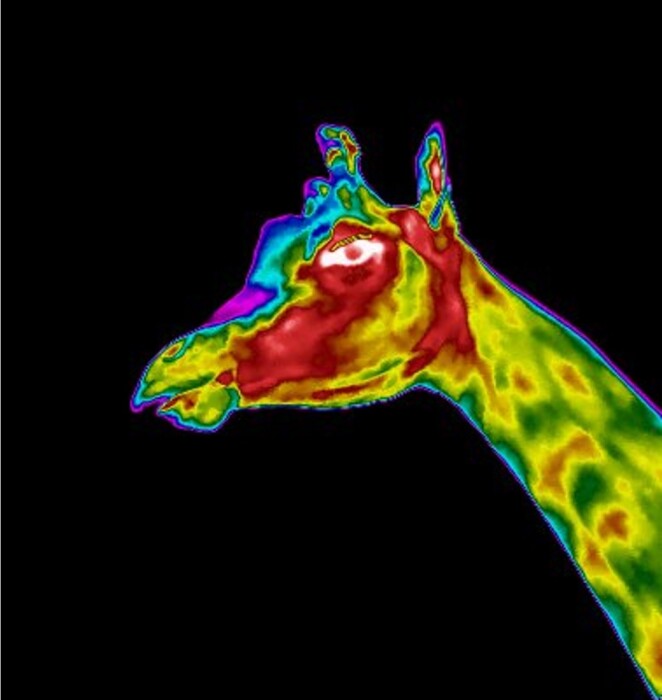
Figure 13. Like many zoo animals that are difficult to examine and challenging to anesthetize, thermography is a valuable tool in giraffes (Giraffa spp.). Photo: Dr. Liza Dadone. Click image to enlarge.
Traumatic injury, such as mandibular fractures, is another common anesthetic complication.4,13 Careful planning and induction within a well-designed restraint device are important.5,13 It is also critical to gain control of the head as soon as the giraffe becomes recumbent as most injuries occur when the groggy giraffe attempts to stand and then falls.5
Lameness
Hoof disease and chronic or intermittent lameness are common problems in adult giraffes at many zoos (Fig 14, Video 2).8,9,13,14,20 In fact, up to 80% of giraffe immobilizations are performed to address hoof lesions and musculoskeletal concerns, including hoof overgrowth, osteoarthritis, and arthropathies.13 Overgrown hooves are frequently associated with changes in weight distribution that can also lead to pedal osteitis and pedal fractures.8,13 Hoof overgrowth may begin at a relatively young age.9,14 The underlying pathogenesis is likely multifactorial, however, proposed factors include abnormal conformation, poor nutrition, insufficient exercise, hypothyroidism, unsuitable flooring, and/or trauma.8,9,13
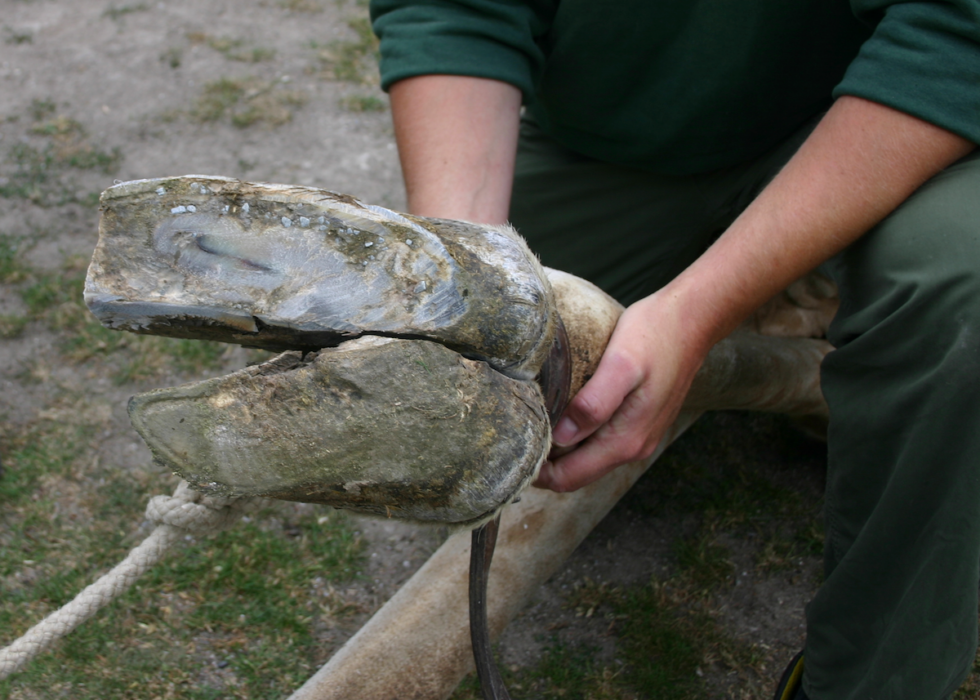
Figure 14. Hoof disease and abnormal conformation in a giraffe (Giraffa spp.). Photo: Dr. Mads Bertelsen. Click image to enlarge.
Video 2. Regular training programs are essential for the prevention or management of hoof disease. Shown here, giraffe footcare performed by Steve Foxworth of the Zoo Hoofstock Trim Program. Video credit: Lauren Kimbro via Highpoint Haven.
Trauma
Life in the wild is far from easy. Lions, leopards, hyenas, and crocodiles are all known to prey on giraffes, particularly the young or elderly.18,25 Nevertheless life in captivity can also be dangerous. Trauma is an important cause of morbidity and mortality in zoos.13,23 Falls due to improper flooring, entanglement in cage furniture, and entrapment in gaps in fencing or barn structures are all risks that have been described.13,23
Conclusion
The giraffe’s extreme height and its many modifications of form and function have intrigued scientists for centuries 2 Although we still possess an incomplete understanding of this fascinating creature, important inroads have been made in our knowledge of giraffe anatomy and physiology.
The conservation status of this special species is considered “vulnerable” in the wild, but fortunately the zoo population is considered self-sustaining.5 These popular exhibit animals require specialized management, but zoo veterinarians continue to make strides in improving giraffe husbandry and medical care.
References
Wildlife Intake and Surrender Form
This wildlife intake and surrender form was generously shared by faculty advisor, Dr. G. Lewbart, and the North Carolina State Turtle Rescue Team (TRT), a volunteer organization run by veterinary medical students at North Carolina State University College of Veterinary Medicine. The TRT provides medical care to sick and injured turtles free of charge in the hope of releasing rehabilitated chelonians back into the wild. Over 500 wild turtles, other reptiles, and amphibians are seen each year.
Download the Word version of this form and modify the sections highlighted in yellow to best meet your facility’s needs.
Turtle Physical Exam and Treatment Form
This physical examination form was generously shared by faculty advisor, Dr. G. Lewbart, and the North Carolina State Turtle Rescue Team (TRT), a volunteer organization run by veterinary medical students at North Carolina State University College of Veterinary Medicine. The TRT provides medical care to sick and injured turtles free of charge in the hope of releasing rehabilitated chelonians back into the wild. Over 500 wild turtles, other reptiles, and amphibians are seen each year.
Download the PDF version or modify the DOCX version to best meet your facility’s needs.
Disaster Preparedness Plan for Fish
Introduction
Pet fish are vulnerable and need our help to stay safe during a storm or evacuation.11 Fish owners must be prepared for power outages, particularly during natural disasters, as well as flooding, climatic extremes, and wildfires.1
Figure 1. Get ready now to care for pet fish during an accident or natural catastrophe, particularly those events that cause power loss. Photo credit: Figure 1. Get ready now to care for pet fish during an accident or natural catastrophe, particularly those events that cause power loss. Photo credit: Mascha Hesselink/Pexels. Click image to enlarge.
See the scaled-down version of this article, intended to serve as a client education handout. Download the PDF version or modify the DOCX version for your veterinary hospital.
Wildfires
Wildfires are also a serious and expanding threat in many regions of the world that can lead to dangerous changes in water quality by depleting oxygen levels.2,8,10 Wildfires also leave behind ash, black carbon, and many pollutants. Runoff can then deposit these particles into surface waters, further deteriorating water quality and potentially damaging the delicate epithelial surface of the gills 3,4,8,9 Water temperature can also be affected either directly by fire or through shading from heavy smoke causing fish to be temperature stressed.7,8,10
Flooding
Tanks should be moved to higher ground (or a higher floor) when there is risk of flooding.11 Place the relocated tanks away from windows on a solid surface, even the floor will do.11
Flooding is an even more serious concern for ponds. If a pond overflows, fish can escape the confines of their pond and become stranded on dry land when the water recedes.12 Flooding can also push runoff contaminants and debris into pond water, adversely affecting water quality.12
To reduce the runoff that enters a pond, build up the pond’s edge using rocks or bricks.12 A pond at risk of overflowing, can also be drained with a pump beforehand so there is room for rainwater.12 It is also possible to create a drainage outlet so that excess water will flow out of the pond, although it is essential that fish cannot pass through this drainage outlet.12
Storms
Climatic extremes can also adversely water quality. Water exposed to extreme heat cannot hold as much oxygen as it can during the winter months. Therefore as the temperature of water increases, dissolved oxygen levels decrease.12,13 By the same token, if the water surface completely freezes over completely for an extended period, there is no way for harmful gases to escape and under-ice dissolved oxygen levels will begin to fall.12
Power loss
Power loss frequently occurs during disaster events. It is important for pet fish owners to take measures beforehand to mitigate the sudden water-quality changes that can occur during disaster situations.8 Some ornamental species can be quite sensitive to decreases in dissolved oxygen but common pond species, such as koi and goldfish, are more tolerant of poor water quality.8
Power outages that last no more than several hours should not be a major concern.1 Nevertheless, fish should be monitored for signs of stress, such as “gaping” or “surfacing”.1,12 If signs of stress are observed, the short-term solution is to agitate the water’s surface with the use of a portable or battery-powered aerator. The movement of air within the bubbles creates a current that moves water to the surface where dissolved oxygen is absorbed.11 The use of a homemade aerator has also been described:
… fill a milk container with tank water and place it on the corner of the aquarium so it does not fall. [Poke a small hole] in one corner of the milk container…in order to create a small flow of water. This small flow of water will slowly move the water’s surface. Simply scoop more tank water and pour it into the container as needed–From Emergency Fish Care For Power Outages and Natural Disasters 1
BEFORE power loss
If you know that the power will be going out for any length of time, stop feeding your fish to reduce organic waste in the water, which can lead to potentially lethal ammonia levels.1,11 Fish are often fasted for 2-3 days prior to transport to reduce ammonia excretion and improve water quality during shipping.5 Most fish can typically go more than a week without eating in an emergency situation.1
Also perform a large (up to 50%) water change before power loss so pet fish will have the best water quality possible.11 Then stock up on aged water for future water changes using 5-gallon buckets, clean trash cans, or large plastic totes. Municipal water sources contain chlorine and chloramines and will need to be dechlorinated prior to use by adding water conditioners or by allowing chlorine to naturally evaporate in open containers in an “off-gassing” process for 24 hours.6,8 An added benefit of water conditioners is that these pond/tank formulations usually include polymer compounds to support the fish’s mucous layer and reduce external damage during handling and transport.6
It is prudent for pet fish owners to always have a supplemental tank available for quarantine or emergencies. If a temporary tank is not already set up, now is the time to do so in case fish need to be removed from the pond. Obviously an aquarium tank is ideal, but a plastic tub or even a kiddie pool will do in a pinch.12 At minimum, the container should be 30.5 cm (12 in) deep.12 Use nylon netting or mesh covering (not plastic) to put over the container to prevent escape and provide protection from predators.12
Pond owners can potentially prepare for power loss by having a gas-powered generator to run equipment.12 Also have a backup aerator and plug it in separately from other electrical components.11,12 Also ensure “all fail safes to prevent draining are activated” and “brace outdoor filtration components while making sure air can circulate”.11 If possible, also stretch nylon mesh over the entire pond surface to prevent debris from collecting.11
Fish checklist
| Spare aquarium tank, plastic tub, kiddie pool* | Nylon netting or mesh cover (to prevent escape and predation) |
| 5-gallon bucket(s), clean garbage cans, or plastic totes | Fish net** |
| Fish-safe plastic bags | Sharpie to mark bags (species/ date/time) |
| Rubber bands | Plastic aquarium tubing (for siphoning) |
| Battery-operated and/or portable air pumps*** | Backup electrical aerator(s) |
| Power adapter (to charge air pump in vehicle) | Water conditioner (dechlorinator) |
| Powder-free nitrile or neoprene wetsuit gloves**** | Hydrogen peroxide |
| Waterproof thermometer | Waterproof pH meter |
| Surge protector | Turkey baster/pipette/large syringe |
| * The container should be at least 30.5 cm (12 in) deep ** Nonabrasive nylon sock nets are ideal for handling larger fish, such as koi 8 *** Bicycle tire pumps can also be used to aerate large tanks 8 **** When handling is necessary on rare occasions, owners should wear gloves to protect both themselves and the delicate skin of fish 8 |
|
DURING power loss
When the power goes off or if the power flickers on and off, unplug electrical equipment so it will not be damaged by a power surge when it turns back on.12 Equipment can also be plugged into a surge protector strip.12
To ensure fish have adequate water quality, perform more water changes. Oxygen can also be added using a portable or battery-operated aerator as well as hydrogen peroxide, which breaks down to form water and oxygen.11
Gradually mix in 1 ml of hydrogen peroxide per 4 liters (1 gallon) of water to provide additional oxygen for approximately 24 hours.11
If pond fish must be moved to a temporary tank, use water from the home tank or pond if water quality is adequate.8 Ideally provide approximately 4 L (1 gallon) of water for every 2.5 cm (1 in) of fish.12 To reduce acclimation stress, the water in the temporary tank should be closely matched to home pond or tank water, particularly for temperature and pH.8 This smaller container will be more vulnerable to temperature changes when compared to a pond, and direct sunlight will make water temperature rise quickly.12 Therefore this temporary tank should be placed indoors or in a shaded area.12 Never mix fish from different ponds or tanks because of the risk of transmissible diseases.8 Also limit activity around temporary tanks as much as possible, especially for the first 24-48 hours, to reduce stress and prevent fish from injuring themselves.8
If you must evacuate…
Do you have safe transport and a confirmed, suitable destination ready for your fish to inhabit (i.e. NOT a hotel bathtub)? 11
Traveling with fish
Most fish can be transported in large, fish-safe, plastic bags or 5-gallon plastic buckets or some other watertight container.11,12 Large fish, like koi, should ideally be transported in opaque, dark stock tanks with appropriately fitted solid covers to reduce visual stress and the risk of fish jumping from the tank.8 Gently scoop out fish using a fish net and place as few fish as possible in each container.5,8,12
- When using plastic fish bags, fill one-third of the bag with water and two-thirds with air.11 Top off the top of the bag with 100% oxygen, if available11, then secure the bag with rubber bands for easy opening and closure.1 Load bags perpendicular to the forward motion of the vehicle so fish are less likely to suffer facial trauma during transport.11
- Buckets or other water tight containers should have a lid with a hole in it for the portable air pump that is plugged in with a power adapter or a battery-powered aerator.8,11 There should be enough water in the transport container to cover the fish completely.12 Do not add pond or tank furniture to the transport container.11
Keep transport times as short as possible to reduce the risk of a waste accumulation and drastic temperature change.8
Stressed fish will normally not eat, but once the fish are set up in their new, or temporary, home, wait at least 24 hours.8 Then offer small amounts of food gradually until fish are eating a normal amount.8
If you must leave your fish behind
Do NOT leave “extra” food and never use a vacation feeder as this will increase organic waste and reduce water quality.11 Also perform a large (up to 50%) water change.11
After the disaster event
Once the power is back on, confirm all equipment is working properly.11,12 Check the filters to ensure they do not need to be cleaned or replaced.12 Wait briefly, then test water quality.10,12 Pond water may be unbalanced due to runoff.12 Once imbalances have been corrected, fish may be gradually introduced to this new water source in floating bags.11
References
Supplies for the Avian Conservation Medicine Field Kit
Introduction
If you are planning to participate in avian conservation fieldwork, this list should serve as a starting point. Refine your own list by learning what is already available amongst other team members and in the region (Fig 1)
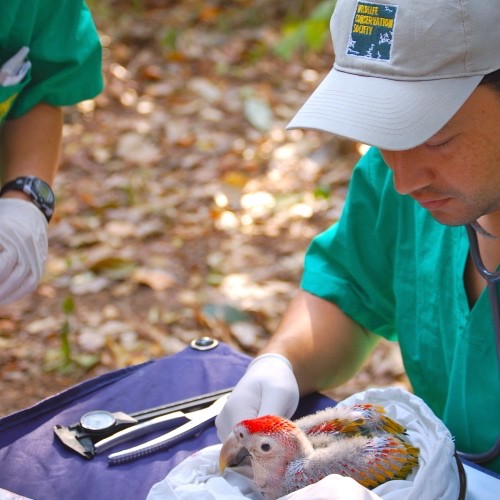
Figure 1. Wildlife Conservation Society veterinarian, Melvin Merida, examines a macaw chick in Guatemala. Click image to enlarge.
Pharmaceuticals vary greatly in other countries and the formulations and availability may not be suitable to your species or time schedule. On the other hand, some supplies are surprisingly inexpensive, and it will pay to wait until you are in country to get these items. Find out as much as possible before you go, and then bring everything that is most essential. It is better to be over-prepared than to be caught unprepared in the field. You can always donate any remaining equipment or supplies to the conservation project. Seek opportunities for donations and funding from colleagues, friends, and granting agencies to defray the costs of supplies. You can also publicize your cause on the Internet through social medium, blogs, and your clinic website. You may also want to work through one of the agencies listed in Ten Things every Avian Veterinarian Should Know About Conservation Medicine (item no. 1).
1. Physical examination equipment
A thorough physical examination is the best diagnostic tool if birds are available and suitable for handling. A quick exam does not take much time or very sophisticated equipment. Lighting conditions can be dim, so a bright light source can be critical. Document physical exam findings in writing and use a digital camera with a zoom feature that also records video and audio.
|
|
2. Emergency drugs
Birds may be inadvertently injured during handling and restraint, and human interference may also exacerbate preexisting medical conditions. You may also come across ill or injured birds in captive propagation or rehabilitation centers, or in the wild. Teach through example as you treat these birds, so other members of the conservation team can learn quickly and comprehend the variety of treatment regimens possible.
|
|
3. Supportive care supplies
Bring supplies for patient care if you are going to be handling birds or will be around nestlings. Diagnostics and sophisticated treatments are usually not an option, so supportive care may be the most that you can provide.
|
4. Antimicrobial drugs
Many free-ranging birds harbor parasites, as well as secondary bacterial and fungal infections. In many cases, it is not possible to treat more than once, as the bird must be released, unless you decide to bring it into captivity. If the bird can be recaptured, this may take up to a week’s time or longer. Therefore assume that you have one opportunity to treat.
|
5. Wound care, surgical, and necropsy supplies
The supplies listed below may be needed when birds are injured in the process of capture and handling or for sample collection antemortem or postmortem. Many of the instruments used for necropsy of eggs or birds, may also be used for field surgery when warranted.
|
6. Optics
Every conservation team needs a strong knowledge base in biology to truly understand the health status of nests, flocks, and species. While working in the field, you can offer support not only as a veterinarian but also by serving as a biologist or ecologist. For instance, with the help of binoculars, changes around a nest cavity, such as the presence of insects or bees, or marks by poachers, will help determine why a nest may not be thriving or has failed.
|
Figure 2. Dr. LoraKim Joyner wears a head loupe during a physical examination. Click image to enlarge.
7. Informational resources
You may face unusual circumstances in the field, therefore plan on being able to consult written, Internet, or telephone resources. Most countries now have Internet cafes in urban areas and even in small towns. Plan on passing these contacts or resources on to team members who might have limited access to such documents or colleagues. Also bring your smartphone as a backup and for general pictures of the process and physical exam.
|
8. Personal supplies
There is often a “macho” aspect to field work. You gain points and respect by withstanding harsh conditions with minimal equipment. It is important to not be an added burden to a field team by carrying extra equipment or pausing to apply this or arrange that. Of course, if you are sick, lost, or exhausted you will be an even greater burden. Seek a balance between being appalled about the extra gear you have brought compared to everyone else and suffering needlessly because you did not think to bring some small, but necessary item.
|
Functional clothing
|
|
9. Diagnostic equipment
Although a complete, portable laboratory in the field or a professional lab located close to the conservation site is ideal, this is also frankly impossible. Compromises revolving around cost, time, and supplies are a constant negotiation. Added data “might be nice” but is it necessary given the working conditions and restrictions? Over time protocols become clearer as data is gathered and the team gains knowledge and experience.
Minimum diagnostic equipment needed includes:
|
If regional diagnostic capabilities exist or if equipping your own field laboratory, add:
|
If time, electricity, or space permits, add:
|
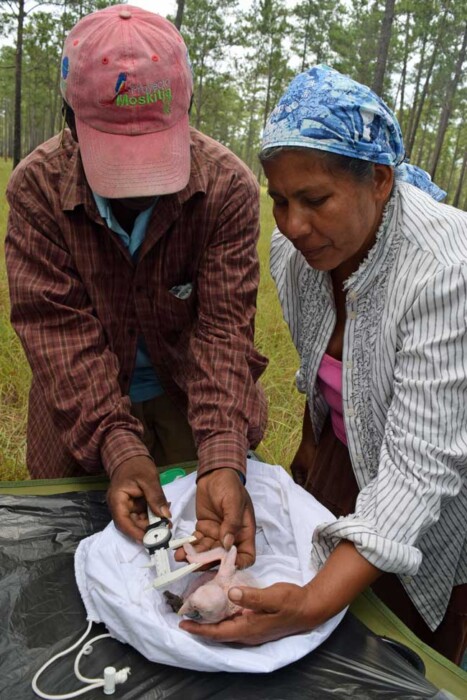
Figure 3. Calipers are used during examination of a wild chick. Photo credit: Dr. LoraKim Joyner. Click image to enlarge.
10. Gifts of gratitude
Your gifts of time, expertise, patience, support, and supplies are a wonderful boon for any conservation project. However you may find once on site that you desire to do more, especially for those not working directly with you such as children and logistical support staff (i.e. food, hotel). One of the most popular items I have used are stickers and removable tattoos for kids. T-shirts also make great gifts.
In an ideal world, care of our avian species would require taking an entire veterinary specialty hospital, library, laboratory, as well as an Internet and communication system into the field. Of course this is impossible, especially when limited by what one or two people can carry in backpacks. This is only a partial list, designed to help you ponder what might be needed in your particular circumstances. I invite you to add or refine this list by contacting me at [email protected]
Test Your Knowledge: Reptile and Amphibian Imaging
The "Reptile & Amphibian Imaging" webinar was reviewed and approved by the American Association of Veterinary State Boards (AAVSB) Registry of Approved Continuing Education (RACE) program for 1 hour of continuing education credit in jurisdictions that recognize AAVSB RACE approval. You have three chances to take this post-test and pass. With a passing grade, you will see your results and a link to your continuing education certificate . . .
Pour les vétérinaires. Par les vétérinaires.
Le site Lafervet.com est conçu pour une utilisation par les vétérinaires. Il est ouvert aux vétérinaires diplômés, aux techniciens vétérinaires diplômés, aux animaliers et aux étudiants dans ces domaines.
Créer un compte pour accéder à des articles et des ressources du site.
L'inscription est gratuite.
Para Profesionales Veterinarios. Por Profesionales Veterinarios.
El sitio Lafervet.com es para uso de los profesionales veterinarios. Está abierto a los veterinarios licenciados, técnicos veterinarios licenciados, rehabilitadores licenciados y estudiantes en estos campos.
Cree una cuenta para acceder a los artículos y recursos del sitio.
La registro es gratis.
Already a LafeberVet Member?
Please Login
Amphibian Medicine Post-Test
. . .
Pour les vétérinaires. Par les vétérinaires.
Le site Lafervet.com est conçu pour une utilisation par les vétérinaires. Il est ouvert aux vétérinaires diplômés, aux techniciens vétérinaires diplômés, aux animaliers et aux étudiants dans ces domaines.
Créer un compte pour accéder à des articles et des ressources du site.
L'inscription est gratuite.
Para Profesionales Veterinarios. Por Profesionales Veterinarios.
El sitio Lafervet.com es para uso de los profesionales veterinarios. Está abierto a los veterinarios licenciados, técnicos veterinarios licenciados, rehabilitadores licenciados y estudiantes en estos campos.
Cree una cuenta para acceder a los artículos y recursos del sitio.
La registro es gratis.
Already a LafeberVet Member?
Please Login
2024 March Mammal Madness Raffle

Photo credit: Katie Hinde/Arizona State University
The winner
Congratulations go out to Marguerite Sans, RVT, CWR of British Columbia. Marguerite was among 80 individuals who completed and passed the 2024 March Mammal Madness quiz before the deadline expired. To identify a winner, these 80 names were entered into the random name selector, Wheel of Names.
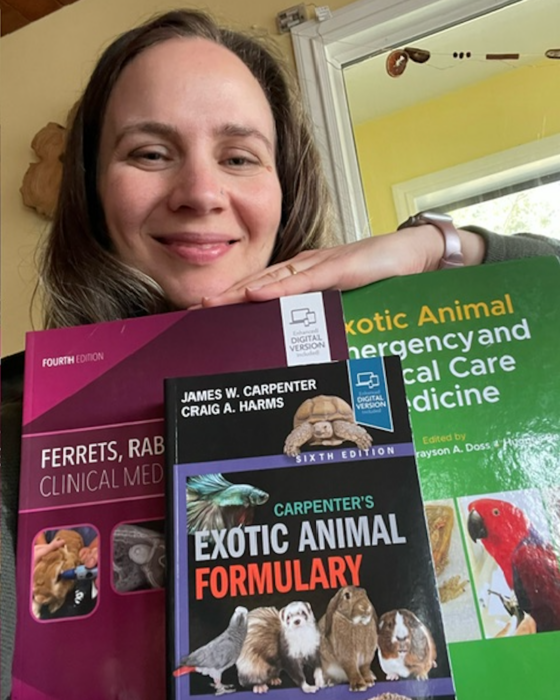
Congratulations to Marguerite Sans, winner of the 2024 March Mammal Madness Raffle
The bracket
The 2024 March Mammal Madness Quiz closed on March 26th at 12 am CT (UTC -5). The mammal-centric content featured below was featured in this “open book” quiz:
First round
|
|
Gastrointestinal Disease in the Ferret | |
|
|
1-hour webinar recording, RACE-approved for veterinary technicians |
|
|
|
||
|
Behavior Essentials: The European Rabbit
|
|
|
Final four |
||
|
|
1-hour webinar recording RACE approved for veterinarians and veterinary technicians |
|
|
|
|
|
Championship |
||
|
Pancreatic Beta Cell Tumors in the Ferret
|
|
Fast Facts on Rabbit Hemorrhagic Disease |
*RACE-approved webinar recordings
**Many LafeberVet client education handouts are available not only in PDF versions, but also DOCX versions that can be modified to best meet your hospital’s needs. Don’t see a DOCX for a handout that you would like to modify? Contact Us.
Prizes
- Carpenter’s Exotic Animal Formulary, 6th edition
- Ferrets, Rabbits, and Rodents: Clinical Medicine and Surgery, 4th edition
- Exotic Animal Emergency and Critical Care Medicine
Reptile and Amphibian Imaging
View the RACE-approved recording of this live 1-hour webinar event, presented by Elizabeth M. Rush, DVM, DACZM. Radiographs are a simple, noninvasive diagnostic tool for reptiles and amphibians. Normal radiographic anatomy is reviewed in each taxonomic group, before some common pathological conditions are discussed . . .
Pour les vétérinaires. Par les vétérinaires.
Le site Lafervet.com est conçu pour une utilisation par les vétérinaires. Il est ouvert aux vétérinaires diplômés, aux techniciens vétérinaires diplômés, aux animaliers et aux étudiants dans ces domaines.
Créer un compte pour accéder à des articles et des ressources du site.
L'inscription est gratuite.
Para Profesionales Veterinarios. Por Profesionales Veterinarios.
El sitio Lafervet.com es para uso de los profesionales veterinarios. Está abierto a los veterinarios licenciados, técnicos veterinarios licenciados, rehabilitadores licenciados y estudiantes en estos campos.
Cree una cuenta para acceder a los artículos y recursos del sitio.
La registro es gratis.
Already a LafeberVet Member?
Please Login
Elizabeth Marie Rush, DVM, DACZM
 Marie Rush has been a Diplomate of the American College of Zoological Medicine since 2013. Since 2015, she has worked in telemedicine and diagnostic imaging interpretation for Antech Imaging Services, where she specializes in zoo, wildlife, and exotic animal species. Dr. Rush has also served as an Associate Professor for St. George’s University School of Veterinary Medicine since 2009 and a senior research fellow at the Windward Islands Research & Education Foundation Institute. Marie also serves as the American Veterinary Medical Association veterinary program advisor for the Wild Sun Rescue Center in Costa Rica and the Association of Zoos and Aquariums Species Survival Plan veterinary advisor for Chinese alligators. Dr. Rush also works part-time in private practice, caring for domestic and zoo/exotic species, and as a relief veterinarian for zoo colleagues.
Marie earned a Bachelor of Science in animal and dairy science and a Doctorate of Veterinary Medicine from Auburn University. She then completed an internship at the Animal Medical Center (AMC) in New York City, followed by a residency in clinical zoo and wildlife medicine at the Wildlife Conservation Society. This residency training included focused training in advanced diagnostic imaging and interpretation at AMC. Dr. Rush then served as Director of Veterinary Services and Curator of Ectotherms at the Birmingham Zoo until 2008. Marie then entered academia in 2009, serving as an Assistant Professor at Auburn University College of Veterinary Medicine. While at Auburn, Dr. Rush also provided medical care for the Southeastern Raptor Center. She also worked with the Alabama Department of Conservation and Natural Resources/Fish and Wildlife Service on a project to repatriate Eastern indigo snakes to the southeastern United States.
The Critical Reptile Patient Post-Test
“The Critical Reptile Patient” was reviewed and approved by the American Association of Veterinary State Boards (AAVSB) Registry of Approved Continuing Education (RACE) program for 1 hour of continuing education, in jurisdictions that recognize AAVSB RACE approval. You have three chances to take this brief post-test and pass. Upon passing the quiz, you will view your results and a link for download of your continuing education certificate . . .
Pour les vétérinaires. Par les vétérinaires.
Le site Lafervet.com est conçu pour une utilisation par les vétérinaires. Il est ouvert aux vétérinaires diplômés, aux techniciens vétérinaires diplômés, aux animaliers et aux étudiants dans ces domaines.
Créer un compte pour accéder à des articles et des ressources du site.
L'inscription est gratuite.
Para Profesionales Veterinarios. Por Profesionales Veterinarios.
El sitio Lafervet.com es para uso de los profesionales veterinarios. Está abierto a los veterinarios licenciados, técnicos veterinarios licenciados, rehabilitadores licenciados y estudiantes en estos campos.
Cree una cuenta para acceder a los artículos y recursos del sitio.
La registro es gratis.
Already a LafeberVet Member?
Please Login
Amphibian Medicine
View the RACE-approved recording of this live 1-hour webinar event, presented by Gregory Lewbart, MS, VMD, DACZM, DECZM (ZHM). Amphibians are a fascinating and extremely important taxonomic group of animals. Amphibians are valued as environmental sentinels, biomedical research subjects, public display animals, private pets, and even as a human food source. Class Amphibia is divided into three orders and 75 families, containing 8,530 species. This presentation focuses on anatomic and physiologic characteristics shared by this diverse group as well as important disease conditions . . .
Pour les vétérinaires. Par les vétérinaires.
Le site Lafervet.com est conçu pour une utilisation par les vétérinaires. Il est ouvert aux vétérinaires diplômés, aux techniciens vétérinaires diplômés, aux animaliers et aux étudiants dans ces domaines.
Créer un compte pour accéder à des articles et des ressources du site.
L'inscription est gratuite.
Para Profesionales Veterinarios. Por Profesionales Veterinarios.
El sitio Lafervet.com es para uso de los profesionales veterinarios. Está abierto a los veterinarios licenciados, técnicos veterinarios licenciados, rehabilitadores licenciados y estudiantes en estos campos.
Cree una cuenta para acceder a los artículos y recursos del sitio.
La registro es gratis.
Already a LafeberVet Member?
Please Login
Gregory Lewbart, MS, VMD, DACZM, DECZM (ZHM)
 Greg Lewbart earned his Bachelor of Arts in biology from Gettysburg College in 1981, a Master of Science in biology with a concentration in marine biology from Northeastern University in 1985, and his doctorate from the University of Pennsylvania School of Veterinary Medicine in 1988. Greg worked for a large wholesaler of ornamental fishes before joining the faculty at North Carolina State University College of Veterinary Medicine in 1993, where he serves as a Professor of Aquatic, Wildlife and Zoological Medicine and an Assistant Clinical Sciences Department Head. He is a Diplomate of the American College of Zoological Medicine and the European College of Zoological Medicine in Zoo Health Management. In 2007, Greg was named the Exotic DVM of the Year by Exotic DVM Magazine. In 2012, he received the William Medway Award for Excellence in Teaching from the International Association for Aquatic Animal Medicine. Greg has authored over 200 popular and scientific articles about invertebrates, fishes, amphibians, and reptiles and he has presented locally, nationally, and internationally on these subjects. He has also authored or co-authored 30 book chapters and edited or co-edited five veterinary textbooks, including the Self-Assessment Color Review: Ornamental Fish and Aquatic Invertebrates, 2nd ed (CRC Press, 2017) and the multiple-award winning Invertebrate Medicine (Wiley-Blackwell Publishing, 2006; 2012, 2022).
2024 Spotlight on Anesthesia and Analgesia in Reptiles Post-Test
The “2024 Spotlight on Anesthesia & Analgesia in Reptiles” was reviewed and approved by the American Association of Veterinary State Boards (AAVSB) Registry of Approved Continuing Education (RACE) program for 1 hour of continuing education, in jurisdictions that recognize AAVSB RACE approval. You have three chances to take this brief post-test and pass. Upon passing the quiz, you will view your results and a link for download of your continuing education certificate . . .
Pour les vétérinaires. Par les vétérinaires.
Le site Lafervet.com est conçu pour une utilisation par les vétérinaires. Il est ouvert aux vétérinaires diplômés, aux techniciens vétérinaires diplômés, aux animaliers et aux étudiants dans ces domaines.
Créer un compte pour accéder à des articles et des ressources du site.
L'inscription est gratuite.
Para Profesionales Veterinarios. Por Profesionales Veterinarios.
El sitio Lafervet.com es para uso de los profesionales veterinarios. Está abierto a los veterinarios licenciados, técnicos veterinarios licenciados, rehabilitadores licenciados y estudiantes en estos campos.
Cree una cuenta para acceder a los artículos y recursos del sitio.
La registro es gratis.
Already a LafeberVet Member?
Please Login
The Critical Reptile Patient
View this webinar recording by Stacey Leonatti Wilkinson, DVM, DABVP (Reptile & Amphibian Practice), RACE-approved for 1 credit hour. A common misconception is that true emergencies in reptile medicine do not exist. While it is true that most emergencies are an acute manifestation of a chronic disease, by the time the owner notices a problem an emergency may exist. Some common, true, acute-onset emergencies include trauma, vomiting, prolapse, seizures, tremors, obstructive dystocia, and severe dyspnea. Proper triage is critical when treating exotic animal patients and a complete history is vital to help determine a list of differential diagnoses. A . . .
Pour les vétérinaires. Par les vétérinaires.
Le site Lafervet.com est conçu pour une utilisation par les vétérinaires. Il est ouvert aux vétérinaires diplômés, aux techniciens vétérinaires diplômés, aux animaliers et aux étudiants dans ces domaines.
Créer un compte pour accéder à des articles et des ressources du site.
L'inscription est gratuite.
Para Profesionales Veterinarios. Por Profesionales Veterinarios.
El sitio Lafervet.com es para uso de los profesionales veterinarios. Está abierto a los veterinarios licenciados, técnicos veterinarios licenciados, rehabilitadores licenciados y estudiantes en estos campos.
Cree una cuenta para acceder a los artículos y recursos del sitio.
La registro es gratis.
Already a LafeberVet Member?
Please Login
Avian Nutrition: Practical Applications
Introduction
Kara Burns, MS, MEd, LVT, VTS (Nutrition), VTS-H (Internal Medicine, Dentistry) presented this distance-learning event for the University of California at Davis School of Veterinary Medicine Avian & Exotics Club as part of the Lafeber Company Student Program.
Abstract
Diet is one of the most important factors known to influence the health of pet birds, and it is critical for veterinary health professionals to discuss nutrition with pet bird owners. Improper nutrition is the cause of many health problems and is the leading cause of death in pet birds. This non-interactive webinar recording offers an introduction to the clinical approach to companion parrot nutrition. Topics covered include common clinical findings associated with malnutrition, nutritional assessment of pet birds, as well key nutrients. This discussion concludes with a comparison all-seed and formulated diets as well as dietary conversion to a healthy diet.
Additional RACE-approved webinar recordings on avian nutrition available on LafeberVet include: Clinical Avian Nutrition for Veterinary Health Professionals and Avian Nutrition Basics.
Outline
Download of PDF of the detailed outline.
I. Introduction
- Diet plays a pivotal role in influencing both health and the development of disease
- Every species of bird has specific nutritional requirements
II. Life stage nutrition
- A practice of feeding foods that are designed to meet your bird’s optimal or best nutritional needs at a specific age or physiologic state
- Nutritional vary from neonate to adult to senior with other life stage variations in between
III. Improper nutrition
- The cause of about 90% of health problems and the leading cause of death in pet birds
- Clinical signs of improper nutrition in birds include:
-
- Tattered feathers
- Curling and splitting, especially the black or discolored wingtips
- Peeling, dry, flaky skin
- Overgrowth and flaking of the nails and beak, bleeds easily when trimmed
- Ocular discharge
- Nutritional deficiencies appear to accelerate the aging process in our avian patients, primarily through the loss of moisture and tissue elasticity
- Malnutrition > decline in the overall health > invites opportunistic pathogens, poor immune function > bacterial, fungal infections
IV. Patient assessment
- History, using open-ended questions
- Presenting complaint
- General information
- Where did they get the bird from?
- Do they have any experience with pet birds?
- If the bird is a hen…
- Has she ever laid eggs?
- How many eggs are usually in a clutch, etc.
- Housing
- Exercise? Flight?
- Medical history
- Husbandry
- Nutritional history
- What is offered? What is actually consumed?
- How is the bird’s appetite?
- Where are they fed?
- Who feeds the bird?
- A nutritional evaluation should be performed on every bird that comes in every time
- Physical exam, including…
- Body weight
- Body condition scoring
- Malnourished ≠ emaciated (obese bird)
V. Key nutrients
- Water
- All birds should have access to fresh, clean water at all times
- Water should be changed on a daily basis
- Birds typically accept the county or the town water, but it is recommended that well water be boiled before allowing the bird to drink freely.
- Well water can sometimes be contaminated by bacterial colonies in the pipes leading to the faucet
- Sanitation
- Clean dishes daily
- Disinfectant at least twice a week
- Automatic waterers
- Keep drinking and bath water separate
- Protein
- The minimum recommended protein allowance for maintenance in companion birds is ~12%
- Essential amino
- Budgerigars (glycine)
- Excess protein
- Renal disease
- Behavioral changes, such as biting or feather picking, nervousness, rejection of food and regurgitation
- Protein deficiency
- Poor growth
- Poor weight gain
- Poor feather quality, plumage color changes
- Poor reproductive performance
- Fats
- Essential fatty acids, linoleic and arachidonic are required in birds for membranes and cell organelles
- Lipogenesis place primarily takes place in the liver in birds
- High energy diet
- May lead to hepatic lipidosis, especially if exercise is restricted
- Congestive heart failure, cardiac disease, respiratory disease
- GI upset or diarrhea
- Oily feathers
- Low amounts of dietary fat
- Weight loss
- Reduced disease resistance
- Overall poor growth
- Carbohydrates
- The most important energy source for birds
- Soluble carbohydrates
- Starches, disaccharides, monosaccharides
- Lactose is a disaccharide, but it is a poor energy source due to low lactase activity
- Insoluble carbohydrates: fibers
- Psittacine birds lack cellulase and cannot digest cellulose
- Therefore fiber should be limited, not excluded, but limited in a bird’s diet.
- Inadequate dietary carbs
- Leads to utilization of glucogenic amino acids
- Problems with growth/reproduction and neurologic system problems
- Vitamins
- Vitamin A is extremely important
- Helps to maintain the health of skin
- Hypovitaminosis A
- Renal failure, excess vitamin D and vitamin A
- Vitamin B or thiamine deficiency is clinically and morphologically manifested with paralysis of limbs and muscle atrophy beginning from the flexors of the toes and ascending towards the extensors of legs and wings.
- Vitamin A is extremely important
- Minerals
- Minerals are responsible for the structural integrity of the body
- Calcium
- Essential for bone and eggshell formation
- Necessary for blood coagulation and nerve and muscle function
- Calcium should be supplemented for birds on a seed-only diet.
- High dietary phosphorus can negate adequate amounts of calcium in the diet
- Ca:P ratio should range from about 1:1 to 2:1
- Supplements are typically unnecessary if the bird is on a healthy diet
VI. All-seed diets
- Cons
- Vitamins and minerals are added to seed hull, which is then removed (not ingested) by the bird
- Can result in vitamin-mineral-protein deficiencies and excess fat
- “Seed junkies”
- Nutritional value is lost when stored
- Pros
- Easy to offer
- High acceptance rate
- Birds do love seed diets
- Keeps the tongue busy
- Less expensive than some formulated diets.
VII. Formulated foods
- Recommended to provide a complete and balanced diet
- Available in a variety of sizes; owners should select the proper size for the species and individual bird
- Pellets
- Grains, such as corn, soybean, and oat groats, are ground up
- Then vitamins, minerals, and other components are added to make a balanced food
- The food material is generally not cooked and the diet will have a longer fiber chain
- Pellets may not be as palatable as extruded diets
- Extruded
- Finely ground grains are mixed with vitamins and minerals
- The mixture is forced through an extruder under pressure and high temperatures to create a specific shape
- The different shapes and colors can be stimulating for some birds
- Whole grains products
- Whole grains and seeds are mixed with vitamins, minerals, and additional components, then the entire mixture is bound together
- Similar to pellets, but the ingredients are not ground down
- Examples: Nutri-Berries (NB), Avi-Cakes (AC)
- Can be useful for transitioning a parrot from seeds to a healthy diet
- Pros of formulated diets
- The grinding process produces a consistent pellet, which makes it difficult for birds to pick out their favorite part
- here is quality control with regards to ingredients and manufacturing
- Longer storage is possible
- Cons of formulated diets
- More expensive when compared to seed diets
VIII. Produce
- Fruit
- A necessary part of the diet for some species, such as lories
- Given the high proportion of sugar and water, should not be offered in excess to most companion parrots (< 2 times per week)
- Vegetables offer greater nutritional benefit
- Fresh or cooked, dark green, red and orange vegetables should be offered on a daily basis.
- Exception: comfrey
- This herb is popular in canary aviaries
- Can result in liver damage
- Place fruit and vegetables in separate containers
- Time restriction for soft foods (< 30 minutes) to reduce microbial growth
IX. Dietary conversion
- Conversion from an all-seed diet to a formulated diet can sometimes be challenging, but is generally not that difficult even in older birds
- Veterinary healthcare professionals must educate owners on what to look for when transitioning a bird from seed to pellets.
- Ensure the pet is ingesting the new food, not simply crushing the food
- Monitor fecal production
- Amount produced
- Color of the fecal material
Recording
Post-test
Take the brief post-test to earn 1 hour of continuing education credit. With a passing grade, you will receive a continuing education certificate in jurisdictions that recognize AAVSB RACE approval.
RACE approval
This program was reviewed and approved by the American Association of Veterinary State Boards (AAVSB) Registry of Approved Continuing Education (RACE) program for 1 hour of continuing education in jurisdictions that recognize AAVSB RACE approval.
Stacey Leonatti Wilkinson, DVM, DABVP (Reptile & Amphibian Practice)
Stacey L. Wilkinson earned her Doctor of Veterinary Medicine from the University of Tennessee College of Veterinary Medicine in 2006. She became board certified by the American Board of Veterinary Practitioners in reptile and amphibian practice in 2013. Dr. Wilkinson worked as an associate veterinarian in Raleigh, North Carolina from 2006-2015. She then left North Carolina in 2015 to found the first hospital on the Georgia coast exclusively dedicated to the care of exotic pets, the Avian & Exotic Animal Hospital of Georgia. Dr. Wilkinson is also an adjunct assistant professor at North Carolina State University College of Veterinary Medicine and she serves as treasurer for the Association of Reptilian and Amphibian Veterinarians. Stacey has published in textbooks as well as scientific and non-scientific journals, and she has also lectured nationally on exotic animal medicine.
Herptile Handling Teaching Module Quiz
The "Herptile Handling & Restraint Teaching Module" was reviewed and approved by the American Association of Veterinary State Boards (AAVSB) Registry of Approved Continuing Education (RACE) program for 1/2 hour of continuing education credit, in jurisdictions that recognize AAVSB RACE approval. You have three chances to take this post-test and pass. With a passing grade, you will see your results and a link to your continuing education certificate . . .
Pour les vétérinaires. Par les vétérinaires.
Le site Lafervet.com est conçu pour une utilisation par les vétérinaires. Il est ouvert aux vétérinaires diplômés, aux techniciens vétérinaires diplômés, aux animaliers et aux étudiants dans ces domaines.
Créer un compte pour accéder à des articles et des ressources du site.
L'inscription est gratuite.
Para Profesionales Veterinarios. Por Profesionales Veterinarios.
El sitio Lafervet.com es para uso de los profesionales veterinarios. Está abierto a los veterinarios licenciados, técnicos veterinarios licenciados, rehabilitadores licenciados y estudiantes en estos campos.
Cree una cuenta para acceder a los artículos y recursos del sitio.
La registro es gratis.
Already a LafeberVet Member?
Please Login
Herptile Handling Teaching Module

Photo credit: Erica Mede, CVT (left); Resa McLellan (right)
Objectives
This teaching module addresses handling and restraint of amphibians, chelonians, lizards, and snakes in clinical practice. Transport, defense mechanisms that may prove hazardous to veterinary health professionals, potential dangers for the patient, and specific capture, handling, and restraint techniques are reviewed. Equipment needed, including personal protective equipment, is also discussed as well as measures to reduce the risk of zoonotic disease transmission.
Syllabus

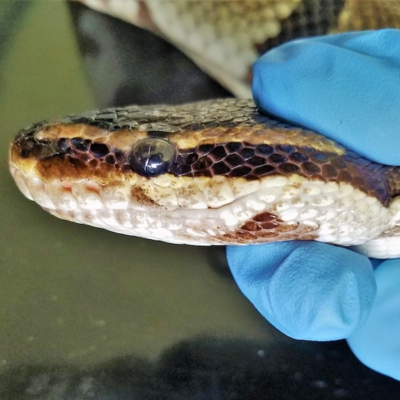
Quiz
After completing all four components of the syllabus, take the brief quiz to earn 1/2 hour of continuing education credit in jurisdictions that recognize AAVSB RACE approval. With a passing grade of 70% or higher, you will receive a continuing education certificate download.
RACE approval
This teaching module is approved for 0.5 hour of continuing education credit for veterinarians and veterinary technicians by the American Association of Veterinary State Boards (AAVSB) Registry of Approved Continuing Education (RACE). This RACE approval is for Category: Medical Program using the delivery method of Non-Interactive-Distance. This approval is valid in jurisdictions that recognize AAVSB RACE.