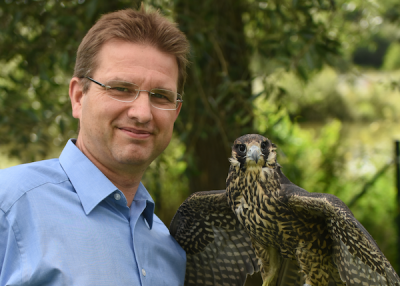
Mark Mitchell, MS, DVM, PhD, DECZM (Herpetology)


Mark Mitchell is a Professor of Zoological Medicine and Director of the Wildlife Hospital of Louisiana at Louisiana State University (LSU) School of Veterinary Medicine. Dr. Mitchell first joined the LSU faculty in 1996. He has also served as the hospital director at LSU. His research interests include wildlife epidemiology, conservation medicine, and One Health, examining how diseases move among wildlife, people, and the environment.

Mark earned his DVM in 1992 from the University of Illinois at Urbana-Champaign, and he completed a master’s degree in clinical epidemiology with an emphasis on wildlife medicine from the University of Illinois in 1997. He completed his PhD in clinical epidemiology with an emphasis on Salmonella spp. in reptiles at LSU in 2001. Dr. Mitchell has published over 1,100 book chapters, peer-reviewed manuscripts, and scientific abstracts or proceedings, and he is a Past-President of the Association of Reptile and Amphibian Veterinarians. Dr. Mitchell has also served as past co-Editor-in-Chief of the Journal of Exotic Pet Medicine and past Editor-in-Chief for the Journal of Herpetological Medicine and Surgery. He currently serves as the Editor-in-Chief of the Journal of Avian Medicine and Surgery.

Liz Wilson, CVT, CPBC

Liz WilsonLiz Wilson was a certified veterinary technician and a certified parrot behavior consultant, with over 30 years of experience specializing in avian and exotic animal care. In addition to doing in-home behavior consultations in the Philadelphia region and in areas where she traveled and lectured, Liz did phone consultations with parrot owners all over the world. She gained international recognition through extensive lecturing at avian veterinary conferences, avicultural conferences, companion parrot conferences, and bird clubs both here and in Europe. Liz also wrote extensively for Bird Talk magazine and Birds USA, numerous international publications, as well as veterinary journals and eight veterinary textbook chapters including co-authorship of three chapters in the Manual of Parrot Behavior. Liz founded the Parrot Division of the International Association of Animal Behavior Consultants and served on their Board of Directors for two and a half years.

Editor’s note: The bird community lost Liz Wilson when she passed away on April 13, 2013. Please visit our sister site, Lafeber.com/pet-birds, for additional information.

Laurie Hess, DVM, DABVP (Avian Practice)

Dr. Laurie Hess
Dr. Laurie Hess is a board-certified avian specialist and owner of Veterinary Center for Birds & Exotics in Bedford Hills, New York. Dr. Hess received her DVM from Tufts University School of Veterinary Medicine and interned at the Animal Medical Center in New York city. Dr. Hess then progressed through a residency in avian and exotic animal medicine and went on to become head of the avian and exotic pet service. Dr. Hess is a frequent speaker at both national and international veterinary educational conferences, and she has contributed to many veterinary texts and scientific literature related to exotic animal medicine. She is an associate editor of the Journal of Avian Medicine and Surgery, a member of the executive board of the Association of Avian Veterinarians (AAV), and she served as the 2009-2010 President of AAV.

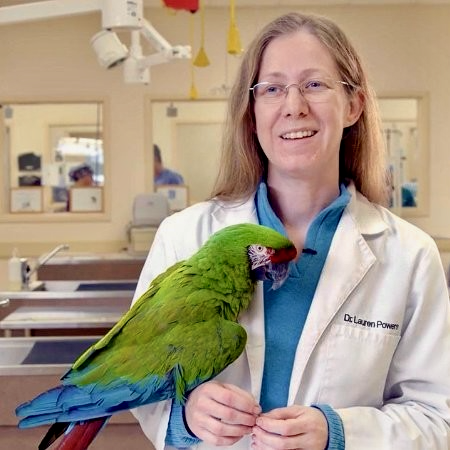
Lauren Powers, DVM, DABVP (Avian Practice)

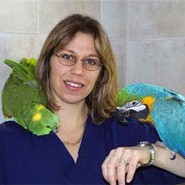
Lauren Powers with macawDr. Lauren Powers is service chief of the Avian and Exotic Pet Service at Carolina Veterinary Specialists in the greater Charlotte, North Carolina area. Dr. Powers graduated with honors from Tufts University School of Veterinary Medicine and completed a residency in avian medicine and surgery at North Carolina State University (NCSU-CVM). She has served as an adjunct assistant professor in the Department of Clinical Sciences at NCSU-CVM since 2008.  Lauren is board-certified in avian practice through the American Board of Veterinary Practitioners.  She was the 2011 and 2012 recipient of the Association of Avian Medicine (AAV) President’s Award for Outstanding Service and the 2008 recipient of the Association of Exotic Mammal Veterinarians President’s Award. Lauren has served in a number of AAV leadership roles, including auction coordinator, chairperson of the AAV Research Committee, Fundraising Committee co-chair, chairperson of the Education Committee, as well as President (2017-2018), and Conference Committee chairperson.

In 2024, Dr. Lauren Powers was named the T.J. Lafeber Avian Practitioner of the Year.

Larry Nemetz, MS, DVM

Dr. Larry NemetzDr. Larry Nemetz earned a Bachelor of Science in Zoology from the University of California at Davis and a Master’s in veterinary anatomy. He attended veterinary medical school at Purdue University in Indiana. In 1987, Dr. Nemetz returned to his home state of California and founded The BIRD Clinic as a veterinary practice limited strictly to pet bird medicine. Dr. Nemetz has given numerous lectures to veterinary organizations and bird clubs, and he has taught veterinary medical students from around the world.

Kitty Remington, DVM

Kitty Remington DVM
Kitty Remington, DVM was granted Diplomate status in the avian specialty by the American Board of Veterinary Practitioners from 2001-2010. Dr. Remington is also an aviculturist certified by the American Federation of Aviculture, and was nominated as one of Bird Talk’s Top Bird Veterinarians by Bird Channel.com readers. Dr. Remington is a graduate of Western Kentucky University with a B.S. in Agriculture Animal Science. She did post-graduate work at the University of Louisville, and obtained her doctorate from Purdue University. Dr. Remington serves as a state liaison for the Association of Avian Veterinarians. Dr. Remington runs an aviary in Monticello, Florida along with her husband and she practices at Killearn Animal Hospital and Northampton Animal Health Clinic both in Tallahassee, Florida.

Keven Flammer, DVM, DABVP (Avian Practice)

Kevin Flammer
Dr. Keven Flammer is a professor in Companion and Wild Avian Medicine at North Carolina State University College of Veterinary Medicine. Dr. Flammer is board-certified in avian practice. His research focus includes pharmacology of antimicrobial drugs and control of infectious diseases, particularly those caused by bacteria, Chlamydophila psittaci, and fungi. Dr. Flammer was named the 2010 T.J. Lafeber Avian Practitioner of the Year and he was awarded the Association of Avian Veterinarians Lifetime Achievement Award in 2008.

Kenneth Latimer, DVM, PhD, DACVP

kenneth-latimer-bio
Dr. Kenneth S. Latimer is a Professor Emeritus in the Department of Pathology at the University of Georgia College of Veterinary Medicine and a research veterinary clinical pathologist at Covance Laboratories, Inc. in Madison, Wisconsin. He is a board-certified veterinary clinical pathologist and member of the American College of Veterinary Pathologists. Dr. Latimer has over 30 years of experience in clinical pathology in academic, research, private practice, and industrial settings. Dr. Latimer is also the editor of Duncan and Prasse’s Veterinary Laboratory Medicine: Clinical Pathology, 5th edition, past editor of the Journal of Veterinary Diagnostic Investigation, and author of several well-respected manuscripts related to exotic animal cytology.

Kenneth Drobatz, DVM, MSCE, DACVIM, DACVECC

Kenneth DrobatzDr. Kenneth J. Drobatz received his veterinary degree from the University of California at Davis in 1985 and a Masters of Clinical Epidemiology from the University of Pennsylvania in 2003. He completed a residency in Emergency Medicine at the University of Pennsylvania and he is a Diplomate of the American College of Veterinary Internal Medicine and the American College of Veterinary Emergency and Critical Care. Dr. Drobatz has been Director of the Emergency Service at the Matthew J. Ryan Veterinary Hospital since 1991 and he became Chief of the Section of Critical Care in 2006. He has collaborated on numerous clinical research projects primarily involving small animal veterinary emergency conditions.

Kara Burns, MS, MEd, LVT, VTS (Nutrition), VTS-H (Internal Medicine, Dentistry)

Kara Burns

Kara Burns, LVT, Veterinary Technician Specialist (VTS) (Nutrition) is a licensed veterinary technician with master’s degrees in physiology and counseling psychology. She began her career in human medicine working as an emergency psychologist and as a poison specialist dealing with human and animal poisonings. Kara is the Founder and Past President of the Academy of Veterinary Nutrition Technicians. She teaches nutrition courses around the world. She is an independent nutritional and well-being consultant, and the Editor-in-Chief of Today’s Veterinary Nurse.

Kara holds positions on many boards in the profession, including the American Academy of Veterinary Nutrition executive board; Western Veterinary Conference Technician Education Manager, and she was the first technician on the American Association of Feline Practitioners board. She is also a Past President of the National Association of Veterinary Technicians in America (NAVTA) and the first technician to be President of the Pet Nutrition Alliance. She has authored many articles, textbooks, and textbook chapters and is an internationally invited speaker, focusing on topics of nutrition, leadership, and technician utilization. Kara and her wife, Dr. Ellen Lowery, also developed the Pet Nutrition Coach Certification Courses through the North American Veterinary Community (NAVC).

Ms. Burns was named the North American Veterinary Conference Technician Speaker of the Year in 2013, 2016, and 2021. She was granted an honorary VTS (Internal Medicine) in 2011 and an honorary VTS (Dentistry) in 2012. She was the 2010 NAVTA Veterinary Technician of the Year, as well as the 2011 Dr. Franklin Loew Lecturer. Kara has also been named the National Association of Professional Women ‘Woman of the Year’ for 2010-2011 and she was accepted into the International Women’s Leadership Association in 2012.

Julia Ponder, DVM, MPH

Dr. julia PonderJulia Ponder, DVM, MPH served as Executive Director of The Raptor Center from 2007-2021 and Associate Dean for External Partnerships and Engagement at the University of Minnesota (UMN) College of Veterinary Medicine from 2021 until she retired in 2024. Julia earned both a bachelor’s degree in biomedical science in 1982 and a doctorate in veterinary medicine in 1984 from Texas A&M University. She had 17 years of experience as a small animal practitioner before joining UMN in 2002 as a Staff Veterinarian at The Raptor Center (TRC), one of the leading programs in the world for raptor medicine. Dr. Ponder was named interim director of TRC in 2005.

Dr. Ponder’s career has advanced the knowledge and practice of avian medicine, with special focus on wild birds and conservation. She has lectured across the globe and as a leading authority in the field of avian orthopedics, she has authored many book chapters and peer-reviewed conference proceedings. Over her academic career, Dr. Ponder also implemented research projects as well as education, outreach, and training programs, primarily focused on wildlife.

In 2025, Dr. Ponder was named the T.J. Lafeber Avian Practitioner of the Year.


Jose Biascoechea, DVM, DABVP (Avian Practice)

Jose Biascoechea

Dr. Jose Biascoechea is board-certified in avian medicine and surgery. Born and raised in Puerto Rico, he proceeded with his graduate studies in Kansas State University and maintained a mobile veterinary practice for seven years before founding Birds and Exotics Animal Care in Mount Pleasant, South Carolina since July 2000. He also serves as a staff veterinarian for The Center for Birds of Prey, provides relief services for the South Carolina Aquarium, and consults for Edisto Island Serpentarium.

Jody Nugent-Deal, RVT, VTS (Anesthesia/Analgesia), VTS (Exotic Companion Animal)

Nugent-Deal with iguana cropped squareJody Nugent-Deal is a registered veterinary technician and veterinary technician specialist in anesthesia/analgesia and exotic companion animal clinical practice. She has worked for the University of California at Davis Veterinary Medical Teaching Hospital since 1999, serving in the Companion Exotics Department for 10 years and currently the Anesthesia Department, where she is the supervisor.

Jody is a founding member of the Academy of Veterinary Technicians in Clinical Practice and currently serves as the Executive Secretary for the group as well as the Appeals Committee Chair. Jody is also an active member with the Academy of Veterinary Technicians in Anesthesia and Analgesia (AVTAA) having served on the nominations, credentials, and appeals committees. Currently she serves as the President for the AVTAA as well as the Appeals Committee Chair.

Jody is passionate about teaching and life-long learning.  She recently started her own company where she provides continuing education via online webinars and in-clinic hands-on training. She also currently works as an adjunct professor for the Penn Foster Veterinary Technician Program as well lectures for the Veterinary Support Personnel Network and VetMedTeam, teaching anesthesia, analgesia, and exotic animal medicine. Jody has had the opportunity to lecture throughout North America since 2000 on anesthesia and various exotic animal topics as well as publishing numerous articles and book chapters for both canine/feline and exotic animal medicine and anesthesia topics.

Joanne Moeller, LVT

Joanne Moeller
Joanne Moeller has enjoyed working as a Licensed Veterinary Technician for over 30 years.  After receiving her bachelor’s degree in veterinary technology from Quinnipiac University in Connecticut, she earned her Master’s of Arts from Stony Brook University, New York.  In addition to being a credentialed veterinary technician, Joanne is an American Association of Laboratory Animal Science Certified Technologist (LATG). During her career, she has worked in research at Columbia University and Stony Brook University, general practice, emergency practice and is now at the Veterinary Medical Center of Long Island, an emergency and specialty referral hospital. Joanne works in Emergency/Critical Care with companion animals, exotics, and wildlife. Professionally, Joanne is currently pursuing her Veterinary Technician Specialty in Emergency and Critical Care.

Jill Murray, RVT, RLATG, VTS (Exotic Companion Animals-AVTCP)

Jill MurrayJill Murray is a registered veterinary technician, a registered laboratory animal technologist, and veterinary technician specialist in exotic companion animal medicine. Jill has spent most of her career teaching exotic animal medicine in academia, and is now providing professional consulting services. Originally from Guelph, Ontario, Canada, Jill received her education at Seneca College in Ontario. Her research interests focus on zoological medicine as well as emergency and critical care. Jill has presented and published a unique case report titled “Whole Blood Transfusion in a Duck to Correct Anemia due to Acorn Toxicosis” at the 2010 International Veterinary Emergency and Critical Care Symposium and many topics in exotic animal medicine at international conferences. She has published a number of book chapters, poster presentations and co-authored numerous professional publications and research projects.

Jeffrey Jenkins, DVM, DABVP (Avian Practice)

Dr. Jeffrey Jenkins

Dr. Jeff Jenkins has been the owner of the Avian & Exotic Animal Hospital in San Diego, California since 1987. Dr. Jenkins holds Diplomate status in the American Board of Veterinary Practitioners in Avian Practice and he has been a member since 1993 when the first group of veterinarians achieved this honor. Jeff is a past president of the Association of Avian Veterinarians (AAV) and he has been actively involved with numerous veterinary organizations. Dr. Jenkins was also instrumental in forming the San Diego Chapter of the House Rabbit Society and Ferrets Anonymous. Dr. Jenkins has lectured nationally and internationally on a variety of subjects and he has published extensively. Dr. Jenkins is also a member of the editorial review board for the Journal of Exotic Pet Medicine.

Jeffrey Applegate, DVM

Jeffrey ApplegateDr. Jeffrey Applegate is an associate veterinarian in the Avian and Exotics Department of the Oakhurst Veterinary Hospital. Dr. Applegate received his doctorate of veterinary medicine at Kansas State University and completed an internship in small animal medicine and surgery at the Animal Medical Center in New York city. Jeff was the 2010-2011 President of the Mid-Atlantic States Association of Avian Veterinarians. Dr. Applegate worked as a student representative all through veterinary school and has continued to be active with Lafeber Company since graduation.

Jeannine Miesle, MA

Jeannine Miesle

Jeannine Miesle has gained practical avian experience over the years caring for birds she has adopted and rescued. Many of these birds have been extremely ill and in horrific condition, but with the guidance of her avian veterinarian, Dr. Bob Dahlhausen, she was able to restore them to their best possible state of health. Since she began to take in rescued cockatiels in 2011, Jeannine has taken in dozens of birds. Many with serious health issues that require ongoing medications.

Her interest in avian research originated in 2006 when her cockatoo was diagnosed with avian bornaviral ganglioneuritis (ABV).  Since then, she has studied avian health and disease. She has authored research papers and articles for the Beauty of Birds website; Academia.edu; her Facebook group, The Science of Avian Health, and the International Veterinary Information Service (IVIS). Jeannine is a Certified Avian Specialist from the Pet Advocacy Network, formerly PIJAC, and has completed The Fundamentals of Aviculture courses, Levels 1 and 2, from the American Federation of Aviculture. She is also an allied professional member of the Association of Avian Veterinarians.

Jeannine holds a Master’s degree in English (MA) and a Master’s degree in Education (M.Ed) and has written, proofread, and edited for several journals and newsletters. She lectures on avian health and disease, specifically ABV, in the Greater Cincinnati area.

Jeanette Wyneken, PhD

Jeanette Wyneken, Ph.D
Jeanette Wyneken, Ph.D is a Professor of Biological Sciences at Florida Atlantic University, where she has worked since 2000. Dr. Wyneken’s focus is integrative biology, comparative anatomy, and functional morphology and she has studied sea turtles for over 30 years. Jeanette earned a Doctor of Philosophy in Biology from the University of Illinois at Urbana-Champaign in 1988. She is a member of the International Sea Turtle Society, The Society for Integrative Biology, Loggerhead Marinelife Center, and the Gumbo Limbo Nature Center.

Jay Johnson, DVM

Dr. Jay Johnson

Dr. Jay Johnson is the founder of Arizona Exotic Animal Hospital in Mesa, Arizona. He received his Bachelor’s degree from the University of Arizona in 1992 and went on to veterinary medical school at Colorado State University where he graduated in 1996. Dr. Johnson is an active member of the Association of Reptile and Amphibian Veterinarians. He served on the Board for many years and was President of the organization from 2005-2006. He continues to serve as a peer review editor for the Journal of Herpetological Medicine. Dr. Johnson also serves as an advisor to desert tortoise conservation projects with the US Fish and Wildlife Service, the US Geological Survey, and the Desert Tortoise Conservation Center.

James G. Fox, DVM

Dr. James G. Fox
Dr. James G. Fox is director and professor of the Division of Comparative Medicine and a professor in the Department of Biological Engineering at the Massachusetts Institute of Technology. He is also an adjunct professor at Tufts University School of Veterinary Medicine and the University of Pennsylvania, School of Veterinary Medicine. Dr. Fox is a diplomate and past president of the American College of Laboratory Animal Medicine, past president of the Massachusetts Society of Medical Research, past chairman of AAALAC Council, past chairman of the NCCR/NIH Comparative Medicine Study Section and past president of the American Association of Veterinary Medical Colleges. Professor Fox is the author of over 490 articles, 80 chapters, 4 patents and has edited and authored 13 texts, in the field of in vivomodel development and comparative medicine. He has lectured and consulted nationally and internationally with government, academia and industry.

Dr. Fox has received numerous scientific awards including the AVMA Charles River Prize in Comparative Medicine, the AALAS Nathan Brewer Scientific Achievement Award, the AVMA/ASLAP Excellence in Research Award, and the American Association for Laboratory Animal Science Charles A. Griffin Award. Dr. Fox is considered an international authority on the epidemiology and pathogenesis of enterohepatic helicobacters in humans and animals. He has studied infectious diseases of the gastrointestinal tract for the past 35 years and has focused on the pathogenesis of Campylobacter spp. and Helicobacter spp. infection in humans and animals. His laboratory developed the ferret as a model for both campylobacter and helicobacter associated disease as well as the first rodent model to study helicobacter associated gastric disease, including gastric cancer.

James Carpenter, MS, DVM, DACZM

James W. CarpenterJames W. Carpenter, MS, DVM, Dipl. ACZM, has been a clinical and research veterinarian for over 34 years. He has assisted in developing an internationally recognized program in zoological medicine at Kansas State University and has trained over 30 interns and residents. Dr. Carpenter is the author of over 365 publications including 136 peer-reviewed scientific papers and 25 book chapters. He is also the editor of the Exotic Animal Formulary, and co-editor of Ferrets, Rabbits and Rodents: Clinical Medicine and Surgery. Jim has also served as editor of the Journal of Zoo and Wildlife Medicine, member of the editorial board for Seminars in Avian and Exotic Pet Medicine, on the Wildlife Scientific Advisory Board of the Morris Animal Foundation. He is currently the editor-in-chief of the Journal of Avian Medicine and Surgery and a member of the editorial board of the Journal of Exotic Pet Medicine. Dr. Carpenter has served as a past- president of the American Association of Zoo Veterinarians (AAZV), the Association of Avian Veterinarians, as well as the American College of Zoological Medicine. He is also the recipient of numerous awards including Exotic DVM of the Year (2000), the AAZV Emil Dolensek Award (2004), and the 2012 T.J. Lafeber Avian Practitioner of the Year Award.

Isabelle Langlois, DVM, DABVP (Avian Practice)

Dr. Isabelle Langlois

Dr. Isabelle Langlois is a clinical instructor at the Université de Montréal in Quebec, Canada. Dr. Langlois completed an internship at the University of Saskatchewan and a residency in avian and exotic animal medicine at the University of Tennessee. She is board-certified in avian practice and chair of the American Board of Veterinary Practitioners practical examination committee.

Dr. Langlois has contributed a variety of images for use on LafeberVet as well as a video clip that illustrates dyspnea in the bird.

Ian Tizard, BVMS, PhD, DACVM

Dr. Ian Tizard
Ian Tizard, BVMS, PhD, ACVM, ScD, is a Diplomate of the American College of Veterinary Microbiologists and a Distinguished Professor of Immunology at Texas A&M University (TAMU). Dr. Tizard earned his Bachelor of Veterinary Medicine and Surgery from the University of Edinburgh, Scotland in 1965. He then completed a Bachelor of Science in Pathology and a PhD in immunology. After completing his studies, Dr. Tizard became a Post-Doctoral Fellow at the University of Guelph, where he remained on as a Professor until 1982 when he moved to TAMU. Since 1999, Dr. Tizard has been the Richard M. Schubot Chair in Exotic Bird Health at the Schubot Exotic Bird Health Center, where he has been a leader in the research of proventricular dilatation disease and avian bornavirus infection.

Ilze Berzins, DVM, PhD

Dr. Ilze Berzins
Dr. Ilze Berzins works as an aquatic health consultant through One World, One Water, One Health, LLC. She most recently served as the Executive Vice President for Animal Health, Conservation, and Research at the John G. Shedd Aquarium in Chicago. Prior to this position, she was the Vice President of Biological Operations and Veterinarian at The Florida Aquarium in Tampa, Florida for over 12 years. Research opportunities have taken Dr. Berzins around the world, and she has held several teaching positions including a current appointment with the Department of Fisheries and Aquatic Sciences at the University of Florida.

Dr. Berzins holds both a Bachelor and Masters Degree in Biology from Stanford University, a PhD in Zoology from University of California, Berkeley, and a DVM from the University of California, Davis. She completed a 3-year post-doctoral fellowship program in Comparative Pathology from The Johns Hopkins Medical Institutions in Baltimore and she is currently working on a Masters of Public Health.

Heidi Hoefer, DVM, DABVP (Avian Practice)

Heidi Hoefer
Dr. Heidi Hoefer is a 1987 graduate of Ross University School of Veterinary Medicine. She completed an internship in small animal medicine and surgery at the Animal Medical Center (AMC) in New York in 1987 and continued there in a two year residency program in avian and exotic pets. From 1990-1999, Dr. Hoefer maintained a staff appointment in the avian and exotic pet department at the AMC, and she has been board-certified in avian practice since 1993. Heidi is now the head of exotic veterinary care at Island Exotic Veterinary Care in Huntington Station, New York where her clinical practice is limited to birds, reptiles, ferrets, rabbits, rodents and other small companion mammals. She has made many literary contributions and has lectured nationally and internationally on avian and exotic pet topics.

Heather Darbo

Darbo Heather 2022 w hawkHeather Darbo is an alumni of Snead State Community College Veterinary Technology Program in Alabama with over 25 years’ experience in animal care. Heather is a veterinary nurse specializing in emergency and critical care, nutrition, behavior, and wildlife rehabilitation. Her company Dog Love, LLC was created in 2021 to provide pet taxi services to the community and local rescues, even transporting pets to their “furever” homes in other states. Dog Love, LLC also provides pet sitting and dog walking services. Through the 501(c)(3) Dog Love Foundation, Heather’s mission is to educate the community on spaying and neutering pets and providing care and assistance for homeless dogs and cats. As a consultant with Meridian Bird Removal Services, Heather also rescues birds from grocery stores, big box stores, and large hardware stores. Her experience with both native wildlife and companion avian species allows her to safely remove birds from a stressful environment and release them outside.

Gwen Flinchum, MAg, DVM, DABVP (Avian Practice)

Gwen Flinchum
Dr. Gwen Flinchum, MAg, DVM, Diplomate ABVP-Avian obtained her Bachelor of Science degrees in Poultry Science and Animal Science from North Carolina State University (NCSU). After graduating from college, Dr. Flinchum went to The University of Florida where she obtained first a Master of Agriculture in avian physiology and then her Doctor of Veterinary Medicine. After graduating from veterinary school, she was hired by Dr. Greg Harrison at The Bird Hospital, an avian exclusive practice, in Greenacres, Florida. Dr. Flinchum worked there for eight years and then started her own practice, All Bird Clinic of the Palm Beaches. Dr. Flinchum is a board certified avian specialist. She is also a full charter member of the International Veterinary Forensics Sciences Association and on the advisory board of the Wildlife Care Center in Fort Lauderdale, Florida. Dr. Flinchum has published a number of articles in avian and exotic medicine journals.

Gretchen Cole, DVM, DACZM

Dr. Gretchen Cole

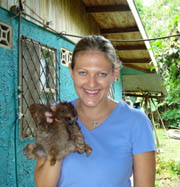
Dr. Gretchen Cole completed internships in avian and exotic animal medicine at Gulf Coast Avian and Exotics Veterinary Specialists and in zoological medicine at Kansas State University College of Veterinary Medicine. She then went onto a residency in zoological medicine and surgery at the University of Wisconsin-Madison School of Veterinary Medicine. Dr. Cole currently serves as an associate veterinarian at Oklahoma City Zoo. Shown here, Gretchen in Costa Rica holding a sloth.

Dr. Cole has donated a variety of images for LafeberVet.

Gerry Dorrestein, DVM, PhD, DECZM, Dipl Vet Pathol

Dr. Gerry M. DorresteinGerry M. Dorrestein is the director of the Dutch Research Institute for Avian and Exotic Animals (NOIVBD) and the head of its diagnostic pathology laboratory. Dr. Dorrestein also serves as a professor of avian and reptile pathology at the Clinic for Birds and Reptiles of the Veterinärmedizinische Fakultät (VMF) in Leipzig, Germany and at the University of Veterinary and Pharmaceutical Sciences in Brno, Czech Republic. Dr. Dorrestein is also an honorary professor at the Uludağ University of Bursa, Turkey. Prior to 2006, Dr. Dorrestein served as a veterinary pathologist at the University of Utrecht, The Netherlands for 30 years. For the last 15 years of his tenure at the university, he also served as the head of the Avian, Exotic Animal and Wildlife section. Dr. Dorrestein is a honorary member of the European College of Avian Medicine (ECAMS), and the author and editor of several books related to avian and exotic animal medicine. He has published over 350 scientific and veterinary papers, and he is also a well-known national and international speaker on topics related to the pathology and medicine of pet birds, zoo animals and wildlife. He also plays an active role in the coordination and rehabilitation of oil spill victims in and outside of the Netherlands.

Evelyn Ivey, DVM, DABVP (Avian Practice)

Dr. Evelyn Ivey
Dr. Evelyn Ivey practices at Four Corners Veterinary Hospital in Concord, California. She graduated magna cum laude from Cornell University and received her veterinary degree from the University of California at Davis. Following an internship in small animal medicine and surgery at the Animal Medical Center in New York City, Evelyn completed an exotic pet residency and received her ABVP board certification in avian medicine in 1999. Dr. Ivey then served as a staff veterinarian at the veterinary school of The University of Pennsylvania. Evelyn has lectured extensively and she has authored several papers on avian and exotic animal medicine.

Eric Klaphake, DVM, DACZM, DABVP (Avian Practice), DABVP (Reptile & Amphibian Practice)

Dr. Eric Klaphake
Dr. Eric Klaphake is the Associate Veterinarian at the Cheyenne Mountain Zoo in Colorado Springs, CO, after having been in exotics/small animal private practice for many years. Dr. Klaphake is involved in several wildlife research projects, including studies involving pine martens in Michigan and sagebrush songbirds in Montana. Dr. Klaphake completed a residency in avian and zoological medicine at the University of Tennessee and he is a board-certified zoo medicine (American College of Zoological Medicine), avian (American Board of Veterinary Practitioners), and reptile-amphibian specialist (American Board of Veterinary Practitioners). Dr. Klaphake is a Past-President of the Association of Reptilian and Amphibian Veterinarians, serves as the Reptile-Amphibian American Board of Veterinary Practitioners Regent, and serves as the Session Chair for the Reptile Sessions at the North American Veterinary Conference. Eric is also an associate editor of the Journal of Avian Medicine and Surgery.

Elinor Granzow, DVM

Elinor Graznow
Dr. Elinor Granzow is an associate veterinarian at Red Bank Veterinary Hospital in Tinton Falls, New Jersey. Elinor completed an internship in small medicine and surgery at Red Bank. Elinor is also the recipient of the 2007 School of Veterinary Medicine Medal for her distinguished academic achievement, clinical performance and willingness to help others through her four-year program. Elinor was a student in the zoological medicine track at the University of California at Davis.

David Vella, BSc, BVSc (Hons), DABVP (Exotic Companion Mammal Practice)

Dr. David Vella
Dr. David Vella is an Australian small mammal and reptile veterinarian. In 2009, he became the first and only Australian veterinarian to become a Diplomate of the American Board of Veterinary Practitioners in Exotic Companion Mammal Practice. David consults as a primary accession and second opinion exotic small mammal and reptile/ amphibian vet in Sydney at North Shore Specialists and Animal Referral Hospital. Dr. Vella graduated with a Bachelor of Science and a Bachelor of Veterinary Science from the University of Sydney. Currently volunteering for the Wildlife Information Rescue & Emergency Service, Dr Vella is involved in reptile and amphibian rescue. He also trains in handling, rehabilitation, foster care and rescue.

Dr. Vella has donated a variety of images to LafeberVet.

David Crossley, BVetMed, MRCVS, Fellow AVD, DEVDC

Dr. David A. CrossleyDr. David A. Crossley qualified from the Royal Veterinary College in 1978. He spent the next 9 years working as a small animal clinician in general practice. On obtaining his own practice he pursued post-graduate training in dentistry and oral surgery. In 1993 he became the second UK veterinary surgeon to be awarded a Fellowship of the Academy of Veterinary Dentistry, and in 1998 he became a European Veterinary Specialist in Dentistry. In 2002, the Royal College of Veterinary Surgeons recognized David as a specialist. In 2003 he was awarded a Ph.D. in Oral Pathology by the University of Manchester for his research on dental disease in chinchillas. David regularly lecturers in the UK and abroad, and he teaches a range of courses on veterinary dentistry and maxillofacial surgery. He provides a clinical service in veterinary orofacial medicine, dentistry, maxillofacial, ear, nose and throat surgery. Visit vetdent.eu to learn more.

Craig Harms, DVM, Dipl. ACZM

Dr. Craig Harms
Dr. Craig Harms is an Associate Professor in Aquatic, Wildlife, and Zoological Medicine at North Carolina State University (NCSU) College of Veterinary Medicine and a Diplomate of the American College of Zoological Medicine (ACZM). After earning his Doctorate from Iowa State University in 1989, Craig Harms worked for 2 years in a small animal practice before completing an internship in exotic, zoo and wildlife medicine at Kansas State University, followed by a residency in zoological medicine with an aquatics emphasis at North Carolina State University (NCSU). The residency merged into a PhD studying fish immunology and then a faculty position at NCSU starting in 1999. Dr. Harms is currently based at the Center for Marine Sciences and Technology (CMAST), where he provides clinical services to three North Carolina aquariums and the Karen Beasley Sea Turtle Rescue and Rehabilitation Center, veterinary support to researchers at NCSU CMAST, Duke Marine Laboratory (where he is Adjunct Associate Professor), and the NOAA Beaufort Laboratory, and participates in marine mammal and sea turtle stranding programs. Dr. Harms has served as President for the International Association for Aquatic Animal Medicine (IAAAM), and President of the ACZM.

Connie Kirk, DVM

Dr. Connie KirkDr. Connie Kirk is the Medical Director at VCA Animal Care Center in Norfolk, Viriginia. A graduate of Ross University School of Veterinary Medicine, Connie has been with VCA for over 5 years. Connie has a special interest in exotic animal medicine and surgery. In addition to her duties at VCA Animal Care Center, Dr. Kirk provides care for the collection of native wildlife at the Virginia Living Museum in Newport News. She is a member of the Association of Exotic Mammal Veterinarians, Association of Avian Veterinarians, and the Association of Reptile and Amphibian Veterinarians.

Christina Petzinger

Christina Petzinger
Christina Petzinger is a Master of Science student in the Intercollegiate Faculty of Nutrition at Texas A&M University. She is currently studying under Dr. J. Jill Heatley and Dr. John E. Bauer. Christina completed her Bachelor of Science Honors degree in Animal Science at Berry College.

Cheryl Greenacre, DVM, DABVP (Avian Practice), DABVP (Exotic Companion Mammal Practice)

Dr. Cheryl Greenacre
Dr. Cheryl Greenacre is a Professor of Avian and Zoological Medicine at the University of Tennessee (UT) College of Veterinary Medicine. Dr. Greenacre graduated from the University of Georgia (UGA), then she completed an internship and residency in avian and exotic animal medicine at UGA. Dr. Greenacre has been board certified in avian medicine since 1996, and in exotic companion mammals since 2009. After moving from a faculty position at UGA to join UT, Dr. Greenacre has focused on pain research in reptiles and hypothyroidism in birds.

Catherine Brown DVM, MSc, MPH

Dr. Catherine BrownDr. Catherine Brown DVM, MSc, MPH received her Doctorate of Veterinary Medicine from the University of Minnesota after which she completed a small animal medicine and surgery internship. She moved to London to earn a Master’s of Science in Wild Animal Health from the Royal Veterinary College. When she returned, she worked as a wildlife veterinarian for eight years from 1997 – 2005. She was the Staff Veterinarian for DuPage County’s Willowbrook Wildlife Center in Illinois and then moved to The Humane Society of the United State’s Cape Wildlife Center in Massachusetts. During this time, she also pursued a Master’s of Public Health from Boston University.

Following graduation, she was awarded an Applied Epidemiology Fellowship sponsored by the Center’s for Disease Control and the Council of State and Territorial Epidemiologists, with the New York State Department of Health. She has served as the State Public Health Veterinarian at the Massachusetts Department of Public Health since 2006 where she oversees surveillance and educational outreach on all zoonotic and vector-borne diseases. Since 2011 she has served as the Chair of the National Association of State Public Health Veterinarians’ Compendium of Animal Rabies Prevention and Control.

Carolyn Cray, PhD

Dr. Carolyn CrayDr. Carolyn Cray is a Professor of Clinical Pathology and holds a secondary appointment in Microbiology and Immunology at the University of Miami Miller School of Medicine. She also serves as the Associate Director of the Division of Comparative Pathology and is a member of the staff of the Avian and Wildlife Laboratory. Dr. Cray is an author of numerous publications and a frequent presenter at the annual Association of Avian Veterinarians meeting. Her clinical interests include clinical pathology and infectious diseases of avian, exotic, and wildlife species as well as the development of animal models of human disease.

Brenda Wallace-Adams

Brenda Wallace-Adams has worked for Lafeber Company since 2005, where one of her many duties is to answer Ask Lafeber questions on our sister site, Lafeber.com Pet Birds. Brenda practiced as a licensed wildlife rehabilitator in Texas for over 10 years. Brenda also attended Houston Community College (HCC) where she became a registered veterinary technician in 1988. Brenda completed internships at The Houston Zoo, two large parrot breeding facilities, the Texas A&M Macaw Project, as well as the largest bird store in Houston. Brenda then went on to teach the Avian Health Care course for the HCC Veterinary Paramedic program from 1989 to 1996. As supervisor of avian specialty certification, she led an internship at a large parrot breeding facility and clinic, where she also worked for 15 years. Brenda also co-founded the National Parrot Rescue & Preservation Foundation and Parrot Festival.

Beverly Rayman

Beverly Rayman
Beverly Rayman has been a student of biology in one form or another throughout her entire life. She has a degree in biology with an ecology concentration from Towson University in Baltimore, Maryland and has worked as an environmental biologist for the state of Maryland Water Quality Monitoring Division. After moving to Virginia, Beverly shifted her interest to animals and was employed as a Wildlife Rehabilitator for the Wildlife Center of Virginia. She is currently attending college in pursuit of a nursing degree but still maintains her license as a wildlife rehabilitator and regularly volunteers at the Wildlife Center.

Barbara Oglesbee, DVM, DABVP (Avian Practice)

Barbara Oglesbee
Dr. Barbara Oglesbee has over 20 years of experience in the clinical care of companion birds and exotic pets. Dr. Oglesbee practices at MedVet Hilliard in Columbus, Ohio. Dr. Oglesbee also serves as an associate professor of avian and exotic animal medicine at The Ohio State University (OSU) College of Veterinary Medicine. Dr. Oglesbee previously served as the head of Companion Avian and Exotic Animal clinical services for over 15 years at OSU, and she has continued to teach courses in avian, rabbit, and ferret medicine. Barbara has been board-certified in avian medicine and surgery for over 13 years, and she is the editor of the clinical textbook, Blackwell’s Five-Minute Veterinary Consult: Small Mammal, 2nd edition.

Anthony Pilny, DVM, DABVP (Avian Practice)

Pilny Anthony headshot 2022Dr. Anthony Pilny is an associate veterinarian and Director of Education at Arizona Exotic Animal Hospital in Phoenix, Arizona. Dr. Pilny completed an internship at Florida Veterinary Specialists in Tampa, Florida and a residency at The Animal Medical Center in New York. Dr. Pilny is board-certified in avian practice.


Anna Meredith, MA VetMB CertLAS DZooMed MRCVS. RCVS Recognised Specialist in Zoo and Wildlife Medicine

Dr. Anna Meredith

Dr. Anna Meredith leads the Exotic Animal and Wildlife Service in the University of Edinburgh’s Royal (Dick) School of Veterinary Studies. Anna graduated from Oxford University in 1986 and obtained her veterinary degree from Cambridge University in 1991. In 1992, Dr. Meredith single-handedly set up the Exotic Animal and Wildlife Service, and has continued to develop this program into one that now contains eight veterinarians. Anna holds the RCVS Diploma in Zoological Medicine, is an RCVS Recognised Specialist in Zoo and Wildlife Medicine, and is a recipient of the BSAVA Blaine Award for outstanding contributions to the advancement of small animal veterinary medicine or surgery. Anna lectures internationally on all aspects of exotic animal and wildlife medicine and has published widely in this field. She is an author and co-editor of the BSAVA Manual of Rodents and Ferrets, the BSAVA Manual of Rabbit Medicine and Surgery, the BSAVA Manual of Exotic Pets, and the Self-Assessment Colour Review of Rabbit Medicine and Surgery.

Anna McRee, DVM

Anna McRee

Dr. Anna McRee is the 2014-2015 Zoological Medicine Intern at Louisiana State University (LSU) School of Veterinary Medicine. Dr. McRee graduated with her DVM from the University of Tennessee in 2014, with honors in promoting the field of nondomestic animal medicine. Through her budding career she has sought opportunities to gain research experience that led to being a co-author of a study on liver pathology in exotic felids and receiving a Morris Animal Foundation grant to investigate zoonotic tick-borne diseases in feral canids in Zimbabwe. Anna was just awarded a Competitive Organized Research Program grant through the LSU School of Veterinary Medicine Veterinary Clinical Sciences Department to further investigate the avian stress response. Learning the mechanisms behind even the most delicate of life’s processes thrills her, and her ultimate professional goal is to work at the interface between clinical zoological medicine, public health, and conservation.

Adolf Maas, DVM, DABVP (Reptile & Amphibian Practice)

Adolph Maas
Dr. Adolf Maas is the founder and director of The Center for Bird and Exotic Animal Medicine in Bothell, Washington. Dr. Maas attended Seattle Pacific University for his undergraduate degree and the University of Washington and University of Wisconsin School of Veterinary Medicine for his graduate work and doctorate. Since then, he has worked at and received advanced training at a number of specialty centers, zoos and wildlife facilities around the continent. He has provided and continues consultation work for a number of zoos and public collections. Additionally, his business provides support and direction for start-up and developing veterinary practices. Over the last 15 years, Dr. Maas has co-authored research articles ranging from reproduction in the Sumatran rhinoceros to ophthalmic surgery in snakes. In 2011, he became certified through the American Board of Veterinary Practitioners as a specialist in reptile and amphibian practice.

Recent Server Error

rabbit w laptop


Dear LafeberVet Member,

Are you having trouble with login?

Due to an unfortunate server error, some user accounts were lost in early July 2018. If the system does not recognize your username, please…

  • Re-register OR
  • Contact us at [email protected]. (If you need to download or print your continuing education certificates from your lost user account, we can manually provide those documents).

Thank you for your patience.

Sean Perry, DVM

Sean Perry w lizard Sean Perry currently serves as an associate veterinarian at the Mississippi Aquarium. Dr. Perry contributed to the LafeberVet reptile venipuncture series while a Graduate Assistant and PhD candidate at Louisiana State University School of Veterinary Medicine. His dissertation topic “Can Assisted Reproductive Technologies Help Conserve 300 Million Years of Evolution? A First Attempt at Developing These Technologies for Male Reptiles”, focuses on the development of artificial reproductive technologies in captive reptiles as a translational model for endangered species. Sean completed his undergraduate work at the University of California, Santa Cruz, earning a Bachelor of Science in Neuroscience and Behavior. He earned his Doctorate of Veterinary Medicine from Western University of Health Sciences in 2013. He has authored peer reviewed journal articles and popular press articles for Reptiles Magazine; additionally, he has authored and co-authored book chapters in Veterinary Clinics of North America, Current Therapy in Exotic Pet Practice and Mader’s Reptile Medicine and Surgery. Dr. Perry has completed internships in both emergency and critical care and small animal medicine and surgery at the University of Illinois College of Veterinary Medicine. He also has several years’ experience in private practice in both emergency medicine and zoological species. His professional interests include theriogenology in zoological species, specifically reptiles and amphibians, minimally invasive imaging and surgery, emergency and critical care in exotic species, and aquatic animal medicine.

General Principles of Reptile Venipuncture

Hematology and biochemistry results serve as an important part of the minimum database for all veterinary patients. Although collection of blood samples can be a clinical challenge in reptiles, the method of patient handling, blood collection and sampling techniques are all critical for proper interpretation of laboratory results. This brief video or slideshow with still images reviews the basic principles of reptile venipuncture that should be considered before, during, and after the procedure . . .


To continue you need to be a LafeberVet.com member. (Français), (Español)

Pour continuer, vous devez être un membre LafeberVet.com

Para continuar, debe ser miembro de LafeberVet.com

Already a LafeberVet Member?

Please Login

Erik Hofmeister, DVM, MA, MS, DACVAA, DECVAA

Erik Hofmeister, DVM, MA, DACVAA, DECVAA Dr. Erik Hofmeister is a board-certified anesthesiologist, a Diplomate of the American and European Colleges of Veterinary Anesthesia and Analgesia. Originally from Los Angeles, he received his DVM degree from Washington State University in 2000. He did an internship in Small Animal Medicine and Surgery and the Veterinary Medical and Surgical Group in Ventura, California, and a Residency in Anesthesia at the University of Georgia. He was on faculty at the University of Georgia from 2004-2016 where he was the Section Chief for Surgery and earned Masters degrees in Health Promotion and Behavior and Sport Pedagogy. Dr. Hofmeister served as the Department Chair for Surgery at Midwestern University from 2016-2019. He joined Auburn University as a professor of anesthesia in February 2019. He is Deputy Editor, Veterinary Anaesthesia and Analgesia. His research interests are the scholarship of teaching and learning, evidence-based decision making, and measurement and testing.

Basic Information Sheet: Virginia Opossum

Virginia Opossum (Didelphis virginiana)

Virginia Opossum

Natural history


The Virginia opossum is the only marsupial native to North America. This New World species is correctly called an “opossum” as opposed to the Old World “possum”. 5,6,11,22,24,29

When Europeans began to settle in North America, the range of this species extended as far north as Ohio and West Virginia. Over time, and with the introduction of the opossum into California in 1910, populations now extend into British Columbia and throughout Central America. The Virginia opossum’s range extends throughout the United States, except in extremely mountainous or arid regions. 2,4,5,11,18,22,24,29

Unlike most wild animals, the opossum flourishes in urban areas, and the presence of human settlements actually serves to increase the opossum’s habitat and population size. 2,5,29,30

Virginia opossums are often seen as pests and in many states, it is illegal to keep this species as a pet. The opossum is not sold in the pet trade, and animals kept as companion animals or zoological specimens were often orphaned during infancy. 11,21,25,29


Conservation status


According to the International Union for Conservation of Nature Red List, the Virginia opossum is a species of least concern with growing and stable populations. 25


Taxonomy


Class: Mammalia

Subclass: Marsupialia

Order: Didelphimorphia

Family: Didelphidae

Genus: Didelphis

Species: virginiana


Physical description


Virginia opossums are medium-sized marsupials with a long and largely hairless, prehensile tail; large, hairless ears; and short, stumpy legs with five toes that include an opposable thumb on both the front and hind feet. Opossums possess a white face, wool-type fur with a whitish undercoat, and guard hairs of varied color. 6,10,11,29


Diet


The Virginia opossum is an omnivore. Free-ranging animals consume a varied diet that includes plant material, grasses and leaves, grains, fruits, seeds and bulbs, carrion, snails, slugs, worms, insects, rats, mice, snakes, amphibians, eggs, crayfish, and fish. Opossums are highly opportunistic and a large amount of their diet consists of scavenged food items, like carrion. 5,11,16,21,29

Offer captive opossums a balanced diet consisting of small amounts of a formulated diet (omnivore diet or low fat/low calorie cat food) supplemented with vegetables, small amounts of fruit (10-20% of the diet), and occasional (once or twice weekly) protein sources. 6,11,22  These sources of protein can include:  invertebrates, such as calcium gut-loaded crickets, superworms, or other dusted adult insects, 1 small or medium whole mice, canned salmon, 1 sardine, 1/2 hard-boiled egg or scrambled egg with the shell, 1 tablespoon yogurt, or cooked chicken liver (Kathy Duncan, written communication to author, July 5, 2018).

Note: Owners may refer to “Peter’s Food”, an adult opossum diet consisting of 1-part cat food plus 1-part blended vegetables and 0.25%-part non-fat yogurt. 14 “Peter’s Food” was developed for the National Opossum Society by Dr. Anita Henness.

In a rehabilitation setting or home with multiple animals, a diet that can be made up in large quantities may be preferable. Pacific Wildlife Care has successfully used this diet long term, and it is based on a regimen described by Gode and Ruth (Kathy Duncan, written communication to author, July 5, 2018)7

As a general rule, metabolism in a marsupial is approximately one-third that of a similarly sized placental mammal. Pairing this slower metabolic rate with the opossum’s voracious appetite, means it is easy to overfeed pet opossums. Owners should carefully monitor and control food intake while encouraging activity to minimize the risk of obesity. 6,14,31


Housing


Cage design A modified rabbit or ferret cage is often used for captive opossums. If housed outdoors, know that opossums can dig beneath fences. 11, 21
Cage size Young opossums, whether housed individually or together, require a cage at least 35 cm (1.1 ft.) high and 45 cm (1.5 ft.) wide by 75 cm (2.5 ft.) long.

Juveniles over 350-400g should ideally be housed in large, outdoor cages, either 4’x4’x 8’ or 4’x 8’x 8’ with branches for climbing (Kathy Duncan, written communication to author, July 5, 2018).

House adult opossums in “gang yards” at least 30 x 50 m. 11

Cage furniture Virginia opossums are agile climbers and the enclosure should ideally provide climbing structures. 6,11,21,31

Also provide some form of visual security, such as a cardboard or wooden box filled with newspaper pellets, shredded paper, or wood shavings. The nest box should be at least 30 x 45 x 40 cm large. 11,31

Opossums tend to select a latrine area and can be trained to use a litter box or newspapers. 6, 21

Supervision Although owners often allow pet opossums to freely roam the home, constant supervision is recommended as with other exotic pets. Fortunately, opossums do not tend to be destructive although they will attempt to nibble on houseplants. 11,14,21
Environmental temperature The ideal temperature for housing an opossum is 22°C (71.6°F), with an appropriate range of 10-30°C (50-86°F). 11,31
Humidity > 58% 11,31


Activity


Virginia opossums are agile climbers. Juveniles use their prehensile tail to swing from branches. Adult opossums are too heavy to support their body weight with the tail, however adults still use their tails to grasp bundles of leaves or bedding material. Opossums are also able to swim, dig, and even run. 6,11,21,29

Behavior


Nocturnal Free-ranging opossums are nocturnal, however pet animals can adjust to their owner’s diurnal lifestyle. 6,11,21,29
Social behavior Free-ranging opossums tend to be solitary animals and are best housed singly in captivity unless the animals were reared together as juveniles. Depending on the wildlife rehabilitation facility, single juveniles weighing less than 100-150 grams are often combined (Kathy Duncan, written communication to author, July 5, 2018).

Adult opossums can display aggression or even cannibalism if housed under crowded conditions. Also separate wounded animals, even from littermates, because of the species’ tendency towards cannibalism (Kathy Duncan, written communication to author, July 5, 2018).

Mating behavior is one of the few social behaviors displayed in the Virginia opossum.

Grooming behavior Opossums are fastidious groomers. 6,21
Elimination behavior Opossums tend to select a latrine area and can be trained to use a litter box or newspapers. 6,21
Defensive behavior If something startles an opossum, its first reaction is to flee to a place of safety, like its cage or nest box. It is also possible for a threatened adult opossum to bare teeth and stand its ground. Normal defensive behavior that can be expected in a recently trapped opossum can include lowering the lip, drooling, growling and hissing, as well as striking and attempting to bite. The animal may empty its paracloacal glands, releasing a noxious odor that resembles death and decay. In addition to hissing, other vocalizations associated with aggression include clicking, growling, and screeching. 11,21,29

“Playing possum” is a rare defensive catatonic state that occurs in response to a threat most frequently displayed in young opossums. The animal falls over and lies motionless to feign death for as little as 1 minute or up to 6 hours. 11,29  This collapse is often accompanied by a small release of odiferous glandular material from the paracloacal glands.

Reproductive behavior The breeding season varies with the population range, lasting from February to September in Northern climates and between January to August in Southern climates. Free-ranging males roam, searching and vying for reproductive females. Intact female opossums tend to be extremely restless. They will pace and drool on household objects while making a clicking sound. Mating behavior is one of the few social behaviors displayed by the Virginia opossums. During the breeding season, mates may communicate with a series of metallic clicking sounds. After mating, females resume their aggressive, solitary behavior. 11,14,29
Parental care Male opossums provide no parental care. Females with pouch young becomes very protective, frequently licking at the pouch and their offspring. Females maintain auditory contact with their young through a series of clicks, lip smacking, and bird-like sounds. Females show little interest once young leave the pouch. 29
Pet quality It is illegal to keep opossums as pets in some jurisdictions, including the state of California. Hand-raised opossums can be comfortable in captivity and bond with their caregiver, however they are relatively high-maintenance pets requiring a great deal of exercise, a special diet, and a significant time commitment from the owner. Opossums in captivity tend to be docile and can respond to their name and other verbal cues. 11,14,21  Pet opossums may seek human companionship, climbing into the owner’s lap or onto a shoulder. They may enjoy being stroked or groomed with a small, soft brush.


Normal physiologic data


Lifespan Wild opossums have a relatively short lifespan of approximately 1.5-2 years. Captive opossums normally live between 3-4 years, however up to 8-10 years has been described. 6,11,21,29
Body weight Adult female 1.9-2.1 kg 11, 29
Adult male 2.1-5 kg 11, 29
Cloacal body temperature 32.2-35°C (90-95°F) 11, 31

Cloacal temperature is lower than true body temperature, therefore tympanic temperatures readings are more likely to accurately measure core body temperature.14

Heart rate Usually between 180–240 beats per minute (bpm) with a range of 70-300 bpm reported. 8,11
Respiratory rate 25-40 breaths per minute 11


Anatomy/physiology


Dental eruption Deciduous teeth eruption is quite unique in the opossum. Incisors and canines as well as most cheek teeth begin to erupt and then are reabsorbed and replaced by adult teeth. 1,31

Permanent teeth eruption occurs between 3-11 months. 20

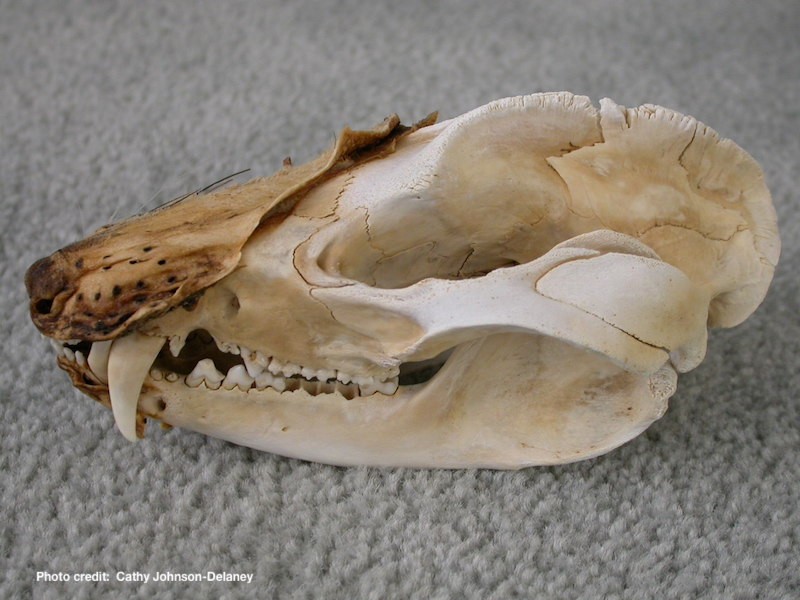
Virginia opossum skull Photo credit: Cathy Johnson-Delaney

Dental formula, adult I 5/4 C 1/1 P 3/3 M 4/4 6,11,21
GI tract Simple stomach, non-fermenting gastrointestinal tract. 6
Integumentary Opossums possess a long, mostly hairless, prehensile tail and large, hairless ears. Male opossums also possess sternal scent glands (See Sexual dimorphism below). 10,29
Musculoskeletal Like most marsupials, the opossum lacks an ossified patella. Opossums possess epipubic bones, which rest on and articulate with pelvic and pubic bones and serve as attachment surfaces for several abdominal muscles. 11,14,31
Reproduction
Puberty Females ~6 months
Males ~8 months
Breeding typically begins at ~10 months. 11,13,29
Sexual dimorphism Males possess sternal scent glands. The secretions create a musky odor and stain the fur, particularly before the onset of the breeding season (see Reproduction below). 29

Male opossums may also be slightly larger than females with larger canines.2,4

Males also possess a prominent scrotal sac on the mid-ventral abdomen. Females possess a pouch.

Female reproductive tract Opossums are polyovular and polyestrous. Each lateral uterus opens into its own vaginal canal through its own cervix. The paired lateral vaginae open separately into the urogenital sinus at the level of the urethral opening and are separated along their length by a soft tissue median septum. 11,13,31
Estrous cycle 29.5 days 29
Pouch Like many, but not all, marsupials the female opossum has a deep pouch or marsupium. The interior of the healthy pouch is sparsely haired and vascular and the surface is lightly to moderately coated with a yellow to black-brown, odorless, sebaceous secretion. The pouch contains a variable number (4-13) of teats.6,11,31  Thirteen teats are most commonly observed (Johnson-Delaney, written communication to author, April 25, 2015).
Males The male opossum possesses a forked glans or bifid penis. The scrotum is prominent, pendulous, pedunculated, and pre-penile. Male opossums also possess sternal scent glands (see Sexual dimorphism above). 13,29,31
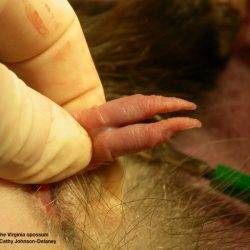
Bifid penis of the Virginia opossum Photo credit: Cathy Johnson-Delaney

The urogenital tract of marsupials is significantly different from that of eutherian mammals. In all marsupials the urinary ducts pass mesially to the genital ducts, and in placental mammals they pass laterally. This results in male eutherians having the vas deferens loops around the inside of the ureter to reach the testes, and in male marsupials this loop is absent. 13,14

Breeding season Opossums can breed year-round, but young typically emerge in the late spring. 6
Internal gestation 12-13 days 13,29
Parturition During parturition, the fetus tunnels through the connective tissue between the median vagina and the urogenital sinus to form a central vaginal canal. Unlike most marsupials in which the birth canal is transient, in opossums this central vaginal canal becomes epithelialized and remains patent as a permanent median vagina. 6,14,31
Litter size 4-25, with an average of 15, however litter survival is dependent on the number of teats. 29
Litters per year Average one litter per year in northern regions, up to three annually in warmer climates. 13,29
Birth weight 0.13-0.20 grams 29
External gestation Jellybean-like embryos possess a well-developed pectoral girdle that allows the embryo to make the grueling trek from the birth canal to the pouch. Many joeys do not survive this trip. Once young reach the pouch, the ordeal may not be over. There are usually only 13 teats and some may not be functional. The nipple swells up in the neonate’s mouth to secure attachment. The nipple also gradually elongates to provide increased security.

Neonates possess a well-developed stomach and duodenum for digesting milk, however there are only rudimentary pelvic limbs and the kidneys are unable to concentrate urine. Young remain attached to nipples for approximately 50-70 days. Females average 8 pouch young per litter, although the number of teats determines the number that will survive. 6,14,29,31

Lactation To provide optimal growth, lactation varies widely throughout pouch life. Initially, marsupial milk is dilute, to support the joey’s weak renal function, and protein and fat levels are low. Over pouch life, protein content doubles and fat levels quadruple. Mineral levels also vary in marsupial milk. High levels of copper and iron predominate early on, while calcium and phosphorus predominate at weaning. Marsupial milk contains only moderate levels of carbohydrates. The primary carbohydrate is not lactose, but an oligosaccharide. 6,31

When handfeeding juvenile opossums, select a canine formula short-term 22, then transition the joey to a commercial marsupial milk replacer (Wombaroo via Perfect Pets) (Johnson-Delaney, written communication to author, April 25, 2015).

Joey
  • Eyes open at 56-64 days (~40 grams)
  • Weaning begins at 70-84 days
  • Fully weaned between 93-105 days

Young are usually independent after weaning, although some juveniles remain in the weaning den with their mother until they are ~120 days old. Approximately 60% of weaned free-ranging young do not survive once fully independent. 29

Urinary system The path of the ureters is unique in marsupials as they pass between the median and lateral vaginae on each side. 31
Cloaca In females, the urogenital sinus and rectum open into the common vestibule or cloaca. The penis sits within the cloaca in males.

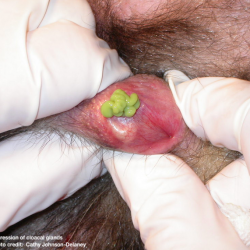
Cloacal glands are present in both sexes and secrete a potent, viscous, green fluid. 6,11,31
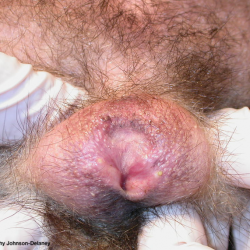
Cloacal glands in the Virginia opossum Photo credit: Cathy Johnson-Delaney

Expression of cloacal gland in Virginia opossum Photo credit: Cathy Johnson-Delaney

Special senses The retina is vascular with a tapetum lucidum. This nocturnal species has a rod to cone ratio of 50:1 (cats have 10:1). While Virginia opossums likely have keen eyesight, their ability to recognize color is limited. Opossums also possess sensitive vibrissae that assist their movement in the dark. 6,29
Endocrinology There is no thyroid function until about halfway through pouch life (see Thermoregulation below). 6,14

The adrenal glands of normal females are twice the size of male glands. Cortisol is the most abundant corticosteroid. 14

Immunity Opossums lack true immune function until mid-pouch life, but fortunately immunoglobulin levels are concentrated in marsupial milk. 6
Thermoregulation If the juvenile is removed from the pouch during the first half of pouch life, body temperature will closely reflect environmental temperature.

The ability of young marsupials to regulate body temperature coincides with the start of thyroid function about halfway through pouch life. Thermoregulation occurs through evaporative mechanisms, such as panting, sweating, and licking. 14,31

Brown adipose tissue, which is used by eutherians to generate heat, is not found in marsupials. 31

Metabolism The metabolic rate of marsupials is lower than that of placental mammals. Opossums can enter a shallow torporous state for up to 11 hours in which body temperature drops between 11°C to 28°C. 14,31
Resistance to envenomation A remarkable resistance to envenomation by venomous snakes has been reported in the Virginia opossum. 4

Restraint


The 50 teeth of the Virginia opossum can be intimidating, however opossums lunge and bite only on rare occasions (see defensive behavior above). Instead most individuals will hiss and sit still during transfer or sedation.

Most opossums can be restrained by wrapping a towel around the body or placing the animal on a flat surface with the towel draped over the head while grasping the tail base. Keep in mind that females can eject pouch young during capture and restraint.

If the opossum is aggressive, wear leather gloves. Sedation or inhalant anesthesia like isoflurane or sevoflurane, is particularly useful for fractious animals or more invasive procedures. 6,11,17,21,31

Juvenile opossums can be kept in a cloth pouch or pocket. 11


Preventive medicine


Veterinarians are permitted to provide humane veterinary care to any injured or orphaned wild animal. Further rehabilitation and eventual release of wild animals must be performed by licensed individuals. 17 Opossums that have been hand-reared, are too habituated to humans, or have permanent disabilities can be kept as pets in some cases. In many jurisdictions, this requires a permit and veterinarians should be aware of the wildlife regulations concerning the opossum in their area.

    • Proper client education is crucial. The owner should carefully manage dietary intake and encourage exercise to minimize the risk of obesity. Also design a regular program of weighing and body condition scoring. 14,31
    • Perform routine fecal parasite exams. Screen every presenting opossum for nematodes. Pet opossums should also be regularly screened for Sarcocystis spp11,14,15,31
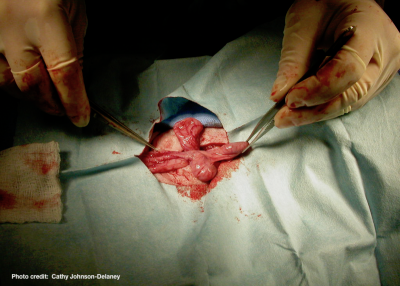
  • Spaying and neutering is recommended for companion opossums.13 Intact females display restlessness, pacing, and drooling and they are also at significantly increased risk for chronic urogenital tract infections, endometritis, and a Cushing’s-like syndrome. 6,11,13 Ovariohysterectomy of the opossum may include removal of the lateral vaginas, with care being taken to separate the ureters from the loop between the central and lateral vaginas. 6,11,13 See Therapeutics below for discussion of the midline incision.Vaginal canals in a Virginia opossum Photo credit: Cathy Johnson-DelaneyNeutering significantly reduces the incidence of scent marking. Castration of the opossum involves orchiectomy and scrotal ablation. 11,14,21


Zoonotic potential


  • Virginia opossums can shed the protozoal parasite, Sarcocystis spp. in their feces, including S. neurona, S. falcatula, and S. speeri. Based on molecular characterization of sporocysts from intestinal scrapings or feces, the prevalence of S. neurona infection ranged from 26% for opossums in Mississippi to 5.9% in central California. Fecal shedding of sporocysts was higher during the spring and early summer in the California opossums. 6,11,27
  • The opossum is also an important natural reservoir of the spirochete, Leptospira spp. 4
  • Opossums can also carry the cat flea (Ctenocephalides felis), which can transmit murine typhus, Rickettsia typhi. 4,21
  • Opossums carrying Trypanosoma cruzi (Chagas disease) have been found in Texas and the southeastern United States. 4,6,8
  • Ringworm and histoplasmosis also infect opossums. Trichophyton mentagrophytes has been described as a cause of sparse, scaly lesions. 4,14
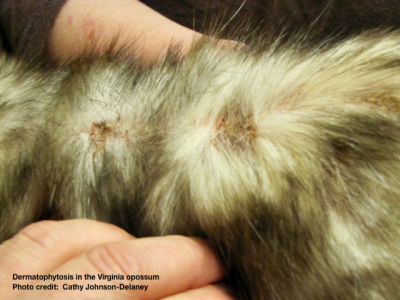
Dermatophytosis in a Virginia opossum Photo credit: Cathy Johnson-Delaney

  • Virginia opossums are also known to harbor Toxoplasma, Besnoitia, Coccidia, and Trichomonas4
  • Public health and veterinary professionals frequently have the misconception that marsupials, like the Virginia opossum, cannot contract rabies virus. Although more common rabies reservoirs, like the raccoon, skunk, fox, and bat, pose a higher risk in the United States, there can be spillover in enzootic areas into other species, including the opossum. For instance, opossums can contract rabies virus by eating infected bat carcasses. Clinical signs of rabies virus infection described in the opossum have included banging the head against a wall, growling, aggression, and other abnormal behaviors. In one case, a rabid opossum was found dead. 3,4,21


Important medical conditions


Degenerative

CARDIAC DISEASE

Most reports of cardiovascular disease in the opossum are limited to experimental models, wildlife necropsies, and anecdotal cases in obese pet animals. Both dilated and hypertrophic cardiomyopathies have been described in opossums over 2 years of age. In research settings, the opossum is used as a model for endocarditis and systemic hypertension. Heart rate as well as electrocardiogram wave configurations, intervals and amplitudes are not affected by “playing dead” in the opossum. 8,14

Nutritional

METABOLIC BONE DISEASE

Nutritional secondary hyperparathyroidism, due to a lack or improper balance of calcium and phosphorus, is common in pet opossums offered lean meat exclusive diets. Fractures, accompanied by fibrous osteodystrophy are commonly observed however caudal body paresis can also occur. 6,11,14,21,22

OBESITY

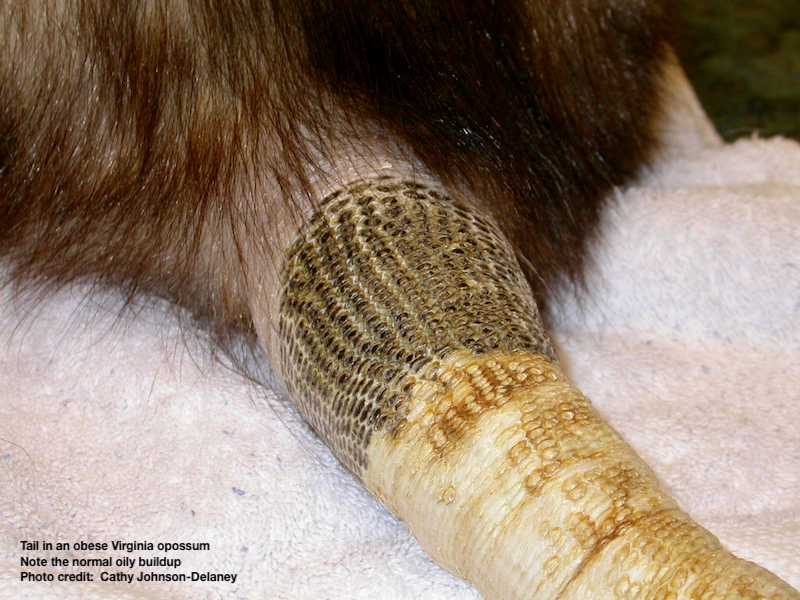
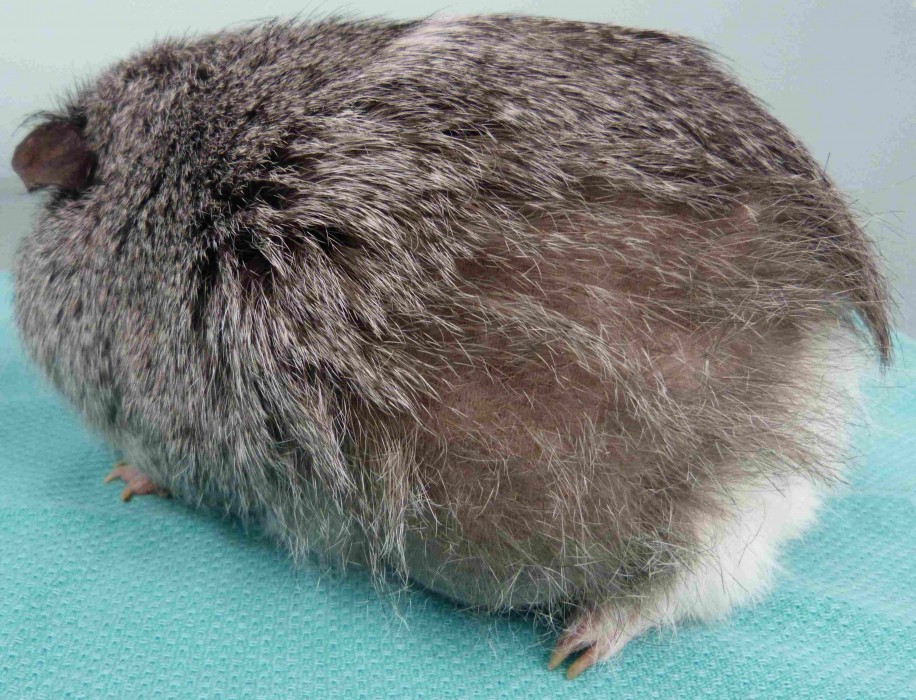
Obesity is one of the most common medical conditions seen in captive opossums. The marsupial’s basal metabolic rate (BMR) is approximately 30% that of a comparably sized placental mammal. This lower BMR creates lower maintenance requirements for energy, protein, water, and other nutrients, however captive opossums are often fed concentrated diets with a low fiber content and opossums also have voracious appetites. Obesity can occur if the animal is fed too much or able to access another animal’s food. Clinical signs of obesity in the opossum include a bulging tail base and fat protruding periorbitally. Potential sequelae for obese opossums fed concentrated, low-fiber diets include dental disease and gastrointestinal disease. 6,11,14,21,26,31
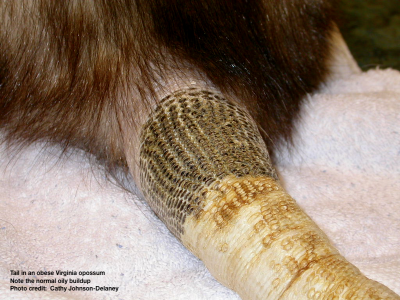
Tail in an obese Virginia opossum Photo credit: Cathy Johnson-Delaney

Infectious

ECTOPARASITES
Ectoparasites, like fleas, ticks and mites, can be found in opossums. Manually remove ectoparasites to reduce the risk of zoonotic disease transmission. Mitchell (2oo9) has used both Fipronil (Frontline®, Merial) and Imidacloprid (Advantage®, Bayer) in opossums without adverse effects. 11,15,22,31

ENDOPARASITES

Free-ranging Virginia opossums tend to be heavily parasitized because of their foraging and scavenging behavior. Three nematodes have been reported to cause significant morbidity and mortality in Virginia opossums when present in large numbers. 14,15,22,23,31

  • Physaloptera (Turgida) turgida is a common parasite of the stomach.
  • Cruzia americana attaches to the wall of the cecum and large intestine. Diarrhea is the only overt clinical sign reported in animals infected with C. americana. The organism can also cause blood loss and anemia. 15
  • Verminous pneumonia can be caused by the lungworm, Didelphostrongylus hayesi, however asymptomatic infections are more common in opossums. 6

Perform repeated fecal exams in all free-ranging opossums. Fecal centrifugation and Baermann analysis techniques are also recommended for endoparasite diagnosis and to monitor a patient’s response to treatment. Mitchell (2oo9) has recommended metronidazole for protozoa, praziquantel for cestodes, and fenbendazole or ivermectin for nematodes. 14,15,22

PYOVAGINITIS

Chronic urogenital tract infections are common in captive, intact females. 13,14,22

Inflammatory

FROST BITE

The long, hairless tail of the opossum is a common victim of frost bite. 29

Idiopathic

“CRISPY EAR”

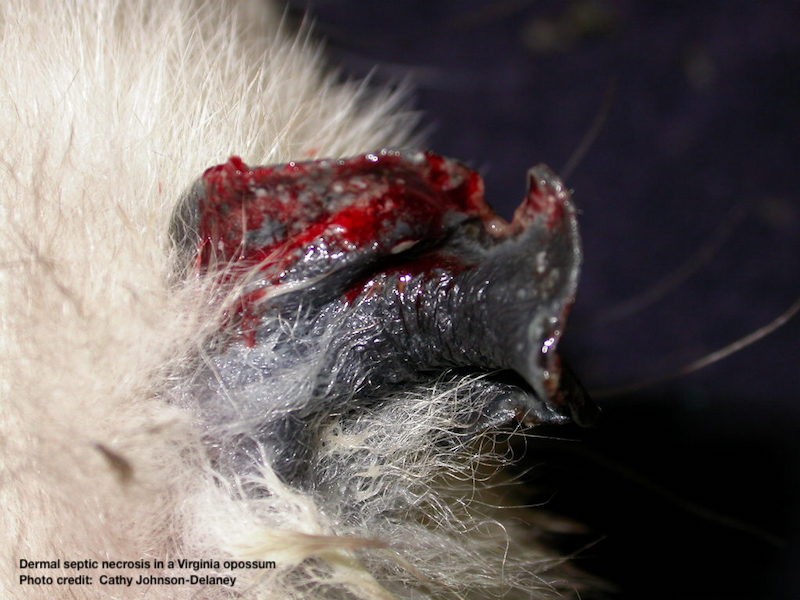
“Crispy or crusty ear”, also called dermal septic necrosis, is a syndrome involving septicemia and necrosis of the edges of the ears and tail tips. Streptococcal endocarditis and associated vasculitis should be considered in young heterothermic animals with these clinical signs. Mange has also been considered a possible underlying cause. Management includes aggressive antibiotic therapy, debridement, non-steroidal anti-inflammatory drugs (NSAIDs), and aloe vera. Laser therapy have been more successful recently in resolving the lesions, however this should be coupled with systemic antibiotics and NSAIDs (Johnson-Delaney, written communication to author, April 25, 2015). The prognosis is guarded to poor. 8,11,14
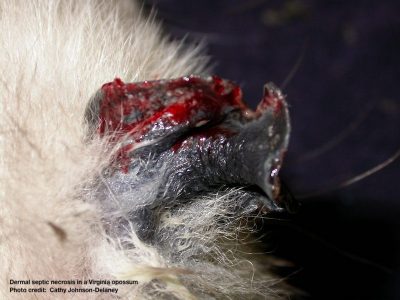
Dermal septic necrosis in a Virginia opossum Photo credit: Cathy Johnson-Delaney

Traumatic

TRAUMATIC INJURY

Trauma, both from predators and vehicles, is one of the most important causes of morbidity and mortality in free-ranging marsupials. 6,17,31 Separate wounded animals, even from littermates, because of the species’ tendency towards cannibalism (Kathy Duncan, email communication to author, July 5, 2018).

ORPHANED JOEYS

Orphaned joeys often present due to the death of the dam during vehicular trauma. Joeys still attached to the nipple have an extremely guarded prognosis for survival even in the hands of very experienced caretakers. House neonates in a plastic container with holes to maintain sufficient humidity (Kathy Duncan, email communication to author, July 5, 2018). Older, furred joeys covered in hair may survive but still present a substantial time commitment. Initiate hand-rearing once immediate supportive care for dehydration and hypothermia has been provided. Marsupials cannot thermoregulate and are not immunocompetent until about. halfway through pouch life and the neonatal marsupial is at a higher risk for septicemia when compared to the neonatal eutherian. 6,11,31

In a short-term hospital setting, select a canine formula to hand feed juvenile opossums. For optimal results, Pacific Wildlife Care uses Fox Valley Opossum Formula Day One 32/40 for neonates under 45 grams, and Day One 25/30 for juveniles over 45 grams. Tube feeding is recommended for joeys less than 25 grams (Kathy Duncan, email communication to author, July 5, 2018).


Diagnostics


ELECTROCARDIOGRAM 8

Parameter (units) Opossum 
P wave duration (second) 0.025–0.035
P wave amplitude (mV) 0.005–0.011
P–R interval (second) 0.06–0.08
QRS duration (second) 0.030–0.060
R wave amplitude (mV) 0.040–0.080
QT interval (second) 0.14–0.18
T wave amplitude (mV) 0.010–0.020
Mean electrical axis, (degrees) negative

FECAL SAMPLE OR RECTAL CULTURE

Evert the external cloaca to access the dorsal rectum. 6

URINE COLLECTION

The urethral opening in female marsupials is inaccessible for catheterization. Urine collection is routinely managed in females by cystocentesis, preferably using ultrasound guidance.

Catheterization in male marsupials should only be attempted with the animals under general anesthesia. The male urethra can be accessed in the bifid phallus at the point of the fork. 6,31

VENIPUNCTURE SITES 6,11,32

  • Ventral caudal (tail) vein at the hair-skin interface
  • Jugular vein
  • Medial or lateral saphenous vein, typically only for small volumes as this site tends to collapse or form hematomas
  • Brachial or cephalic vein (small volumes)
  • Lateral caudal vein is small, difficult to locate, and tends to collapse
  • Brachiocephalic vein should only be used by experienced personnel
  • Pouch veins can be accessed in sedated or anesthetized adult females


Therapeutics


DRUG THERAPY

Most drug dosages are extrapolated, generally from domestic cats. 6,17,28

FLUID THERAPY

Adult opossums do not tolerate intravenous catheters and fluids are usually administered by the subcutaneous route. Doses and types of fluids can be extrapolated from domestic dogs and cats. 17,28

INJECTION SITES 11

  • Intramuscular: thigh or upper arm muscle mass
  • Subcutaneous: intrascapular or flank area
  • Intravenous: cephalic or lateral tail veins
  • Intraosseous catheters: femur or tibia

LAPAROTOMY

The surgical approach must consider the presence of epipubic bones and the pouch. To access the caudal abdomen, tilt the body head down by approximately 30° when a ventral midline approach is used. To access the cranial abdomen, make a midline incision inside the pouch midway between the teats and the cranial border of the pouch, if the pouch is empty or if the pouch young are temporarily removed. It is useful to apply stay sutures to hold the pouch open. If pouch young cannot be removed, create an incision lateral to the pouch opening at the cranial end of the epipubic bone. Then reflect the skin toward midline to expose the linea alba. 31

NUTRITIONAL SUPPORT

A tube feeding diet designed for carnivores or omnivores can be offered to critical patients. For debilitated patients that are able to self-feed, the standard diet can be supplemented with live insects, cat or dog food, and other protein sources (see Diet above). 31


References and further reading

Care of the Virginia Opossum

The Virginia opossum is the only marsupial native to North America. Although veterinarians are allowed to provide humane care to any injured or orphaned wild animal, it is important to know your state laws as it is illegal to keep a pet opossum in many states. This client education handout reviews the basics of a pet opossum diet, caging, behavior, as well as health concerns.

Download the Word (32 KB) or PDF (272 KB) version of the Care of the Virginia Opossum handout.

2018 AEMV Student Case Report Contest

Ghindea Fig 1

A 3-year old intact male guinea pig (Cavia porcellus) diagnosed with pituitary-dependent hyperadrenocorticism and cholangiohepatitis. Photo credit: Hannah Ghindea, DVM Candidate Louisiana State University School of Veterinary Medicine

Lafeber Company was proud to sponsor the Association of Exotic Mammal Veterinarians (AEMV) Student Case Report Contest. Veterinary students from all over the world were encouraged to write a 2-page case report (1500 words or less) about an exotic companion mammal seen at their college of veterinary medicine or during a clinical experience.


Winners

Submissions closed April 13, 2018, and four judges from the Research Committee evaluated the 22 case reports received. These judges were blinded to the students, mentors, co-authors, and institutions at which the cases were seen. The winners are:

1st Place: Hannah Ghindea (Student – Louisiana State University, USA), Anke C. Stöhr, DVM and Thomas N. Tully, Jr., DVM, MS, DABVP (Avian Practice), DECZM (Avian) (Supervising Clinicians): Pituitary-Dependent Hyperadrenocorticism and Cholangiohepatitis in a Guinea Pig
2nd Place: Justine Oriel (Student – Alfort National Veterinary School, France), Charly Pignon, DVM, DECZM (Small Mammals) (Supervising Clinician): Gastric Dilatation and Volvulus in a Guinea Pig
3rd Place: Isabel A. Jimenez (Student – Cornell University College of Veterinary Medicine, USA), James K. Morrisey DABVP (Avian Practice) (Supervising Clinician): Budd-Chiari-Like Syndrome in a Domestic Rabbit

Honorable Mentions:

Prizes

1st Place: Carpenter JW (ed). Exotic Animal Formulary, 5th ed. Elsevier, 2017.

Quesenberry KE, Carpenter JW (eds). Ferrets, Rabbits, and Rodents: Clinical Medicine and Surgery, 3rd ed. St. Louis, MO: Elsevier Saunders; 2012

Mayer J, Donnelly TM. Clinical Veterinary Advisor: Birds and Exotic Pets. St. Louis: Saunders; 2012

Approximate value 250 U.S. dollars

2nd Place: Carpenter JW (ed). Exotic Animal Formulary, 5th ed. Elsevier, 2017.

Quesenberry KE, Carpenter JW (eds). Ferrets, Rabbits, and Rodents: Clinical Medicine and Surgery, 3rd ed. St. Louis, MO: Elsevier Saunders; 2012

Approximate value 150 U.S. dollars

3rd Place: Quesenberry KE, Carpenter JW (eds). Ferrets, Rabbits, and Rodents: Clinical Medicine and Surgery, 3rd ed. St. Louis, MO: Elsevier Saunders; 2012

Approximate value 100 U.S. dollars

Permission and privacy concerns

Permission was obtained from the supervising clinician (required) and the owner (optional depending on local privacy laws or facility standards).

Due to international privacy policies, AEMV has requested that access to all case reports be restricted on LafeberVet. Login now OR register today for quick & easy access to this content.


Learn more

Interested in learning more about Exotic Companion Mammals? Visit AEMV.org or email [email protected] for more information.
AEMV logo

AEMV-Lafeber Case Report: Pituitary-Dependent Hyperadrenocorticism and Cholangiohepatitis in a Guinea Pig

A 3-year old intact male guinea pig was presented on emergency for suspected bloat and with a history of chronic hair loss. Clinical examination revealed non-pruritic symmetric truncal alopecia, thin skin, severe cachexia, and an abdominal fluid wave. Alkaline phosphatase, alanine transaminase, aspartate aminotransferase, gamma-glutamyl transferase, leukocytes (neutrophils), bilirubin, and serum cortisol were markedly elevated. Abdominal ultrasonography revealed peritoneal effusion, cholestasis, and cholelithiasis. Hyperadrenocorticism was diagnosed based on . . .


To continue you need to be a LafeberVet.com member. (Français), (Español)

Pour continuer, vous devez être un membre LafeberVet.com

Para continuar, debe ser miembro de LafeberVet.com

Already a LafeberVet Member?

Please Login

AEMV-Lafeber Case Report: Gastric Dilatation and Volvulus in a Guinea Pig

An adult intact female guinea pig was presented with dysorexia, exhaustion and weight loss. Radiographic and ultrasound findings demonstrated a severe gas dilatation of the stomach, severe gallbladder distension, and abnormalities on the organ topography. On laparotomy, a 180-degree gastric dilatation and volvulus was noticed with a gallbladder obstruction, hepatic lipidosis, and adhesions between the bowels . . .


To continue you need to be a LafeberVet.com member. (Français), (Español)

Pour continuer, vous devez être un membre LafeberVet.com

Para continuar, debe ser miembro de LafeberVet.com

Already a LafeberVet Member?

Please Login

AEMV-Lafeber Case Report: Budd-Chiari-Like Syndrome in a Domestic Rabbit

An eleven year old male neutered rex rabbit presented with lethargy and inappetence of two days duration, and an acute episode of vestibular ataxia. Anemia and elevations in plasma alkaline phosphatase and alanine aminotransferase were evident. Abdominal ultrasound revealed questionable, diffuse hepatomegaly. Computed tomography revealed hepatic venous congestion, severe dilation of the pre-hepatic caudal vena cava, and bicavitary effusion, consistent with Budd-Chiari-like syndrome. Turbulent blood flow within the dilated segment of the caudal vena cava was present on spectral Doppler evaluation. Fine needle aspirate and cytology of the liver revealed necrosis with no evidence of infectious organisms . . .


To continue you need to be a LafeberVet.com member. (Français), (Español)

Pour continuer, vous devez être un membre LafeberVet.com

Para continuar, debe ser miembro de LafeberVet.com

Already a LafeberVet Member?

Please Login

AEMV-Lafeber Case Report: Multiple Drug Resistant Staphylococcus Infection, Post Spay in a Domestic Rabbit

A female, spayed miniature lop rabbit presented 1-week post spay with marked subcutaneous swelling along the entire length of the surgical incision. Subsequent debridement of the abscess and closure of the incision site was somewhat unsuccessful, with the patient returning for another debridement procedure, after which the wound was left open for continued flushing and debridement. Culture and sensitivity of the purulent material grew a multi-drug resistant Coagulase-positive Staphylococcus . . .


To continue you need to be a LafeberVet.com member. (Français), (Español)

Pour continuer, vous devez être un membre LafeberVet.com

Para continuar, debe ser miembro de LafeberVet.com

Already a LafeberVet Member?

Please Login

AEMV-Lafeber Case Report: Hyperthyroidism Treated with Radiation Therapy (I-131) in Two Guinea Pigs

Two guinea pigs suspected of having hyperthyroidism based on weight loss, presence of a cervical mass, and elevated total thyroxine (TT4) levels were confirmed to have active thyroid masses via scintigraphy with Technetium-99 and treated with radioactive iodine therapy (I¹³¹). Both patients responded initially with weight gain and a decrease in the TT4. The purpose of this case series is to describe the use of scintigraphy to aid in confirming a diagnosis of hyperthyroidism, as well as to show the benefits and effectiveness of using radioactive iodine therapy (I¹³¹) to treat hyperthyroidism in guinea pigs in order to provide . . .


To continue you need to be a LafeberVet.com member. (Français), (Español)

Pour continuer, vous devez être un membre LafeberVet.com

Para continuar, debe ser miembro de LafeberVet.com

Already a LafeberVet Member?

Please Login

AEMV-Lafeber Case Report: Endometrial Venous Aneurysm in a Lionhead Rabbit

A 1-year-old female intact lionhead rabbit was referred for a history of hematuria, bloody vaginal discharge, anorexia, and lethargy unresponsive to antibiotics and anti-inflammatory medications. Based upon physical examination, radiographs and abdominal ultrasonography a uterine mass was suspected. Severe regenerative anemia secondary to blood loss was diagnosed and the rabbit was administered a whole blood transfusion prior to surgical intervention. Abdominal exploratory with ovariohysterectomy revealed . . .


To continue you need to be a LafeberVet.com member. (Français), (Español)

Pour continuer, vous devez être un membre LafeberVet.com

Para continuar, debe ser miembro de LafeberVet.com

Already a LafeberVet Member?

Please Login

Capnometry in Exotic Animal Species

Capnometry measures the maximum value of carbon dioxide (CO2) obtained at the end of expiration or end-tidal carbon dioxide (ETCO2). There is good correlation between ETCO2 and arterial CO2 in birds and mammals and capnography can be used as a reliable tool to evaluate the adequacy of ventilation in these species. Capnography can only be used to identify trends in reptiles because of cardiac shunting of blood past the reptilian lungs . . .


To continue you need to be a LafeberVet.com member. (Français), (Español)

Pour continuer, vous devez être un membre LafeberVet.com

Para continuar, debe ser miembro de LafeberVet.com

Already a LafeberVet Member?

Please Login

Monitoring Vital Signs in Exotic Animal Species

Even the most steadfast and seasoned veterinary anesthetist can find themselves intimidated by exotic animal patients. Standard veterinary anesthesia monitors are not designed to read the extremely high (or extremely low) heart rates and respiratory rates of some exotic animal patients. Despite these challenges, valuable information can be gathered from monitoring tools as well as hands-on techniques. Essential vital signs, such as heart rate and rhythm, respiratory rate and depth, body temperature, and mucous membrane color should all be evaluated . . .


To continue you need to be a LafeberVet.com member. (Français), (Español)

Pour continuer, vous devez être un membre LafeberVet.com

Para continuar, debe ser miembro de LafeberVet.com

Already a LafeberVet Member?

Please Login

Blood Pressure Monitoring in Exotic Animal Species

Arterial blood pressure is a function of heart rate, blood volume, stroke volume, and arterial compliance. Indirect arterial blood pressure is most commonly measured by Doppler ultrasound or non-invasive oscillometric monitors. What are the limitations of indirect blood pressure measurements in exotic animal patients? How is this technique unique in exotic companion mammals when compared to dogs and cats? How is this technique performed in birds and can this procedure be used in reptiles . . .


To continue you need to be a LafeberVet.com member. (Français), (Español)

Pour continuer, vous devez être un membre LafeberVet.com

Para continuar, debe ser miembro de LafeberVet.com

Already a LafeberVet Member?

Please Login

Electrocardiography in Exotic Animal Species

Electrocardiography can be used to detect and diagnose arrhythmias and conduction abnormalities, particularly during long-term anesthesia. How are leads attached to exotic animal patients? And what is the normal appearance of normal electrocardiogram tracings in birds or reptiles . . .


To continue you need to be a LafeberVet.com member. (Français), (Español)

Pour continuer, vous devez être un membre LafeberVet.com

Para continuar, debe ser miembro de LafeberVet.com

Already a LafeberVet Member?

Please Login

Pulse Oximetry in Exotic Animal Species

Heart rate and oxygenation should ideally be monitored during every anesthetic event. Patient size can limit the accuracy of pulse oximetry readings in exotic companion mammals and this technique has not been validated in birds or reptiles, however trends during the course of anesthesia can still provide useful clues to patient clinical status . . .


To continue you need to be a LafeberVet.com member. (Français), (Español)

Pour continuer, vous devez être un membre LafeberVet.com

Para continuar, debe ser miembro de LafeberVet.com

Already a LafeberVet Member?

Please Login

Anesthetic Record 1

Anesthetic record 1

Created by veterinary technician specialist, Katrina Lafferty, this anesthesia monitoring record is available for download as as both a Word document and PDF.

Understanding Reptile Dental Anatomy: Clinical Applications

Reptile dentition tends to be relatively uniform with a simple, conical shape. Most reptile teeth are loosely attached with the dental attachment most superficial in acrodontic species. Tooth loss and replacement is a normal occurrence in reptile species with pleurodont dentition, which includes snakes, and many lizards. Take special care when handling reptiles with acrodont dentition as teeth will not be replaced when infected or fractured. Additionally, periodontal disease is common in captive lizards with acrodont dentition such as bearded dragons and chameleons. Periodontal disease is an insidious condition. As plaque formation builds and gingivitis worsens, many reptiles will continue . . .


To continue you need to be a LafeberVet.com member. (Français), (Español)

Pour continuer, vous devez être un membre LafeberVet.com

Para continuar, debe ser miembro de LafeberVet.com

Already a LafeberVet Member?

Please Login

Leigh Ann Clayton, DVM, DABVP (Avian), DABVP (Reptilian/Amphibian)

National Aquarium logoLeigh Ann Clayton is Vice President of Animal Care and Welfare at the National Aquarium in Baltimore, Maryland. Leigh earned an undergraduate degree in political science from Bryn Mawr College, then obtained a Doctorate of Veterinary Medicine from Tufts University in 1997. Dr. Clayton is also board certified through the American Board of Veterinary Practitioners in both avian medicine and reptilian/amphibian medicine. In addition to her work at the aquarium, Dr. Clayton owns Animal Behavior Consulting of the Chesapeake, which offers behavioral management techniques and teaches basic training and enrichment techniques. Dr. Clayton also currently serves on the Executive Board of the American Association of Zoo Veterinarians, and she is also an Executive MBA Candidate at the University of Maryland Robert H. Smith School of Business. Dr. Clayton is also a popular speaker and workshop leader at professional veterinary meetings as well as local pet, wildlife, and animal rescue groups.
Eva Strüve, DVM

Eva Strüve (née Schuster) is a veterinarian for exotic animals and is specialized on reptiles and amphibians. After her graduation from the University of veterinary medicine (foundation) she worked at the department for small mammals, reptiles and amphibians for 3,5 years. During this time she performed an internship, wrote her doctoral thesis (topic: intraocular pressure measurement in bearded dragons, Pogona vitticeps) and took part in the supervision of the education of students and graduates. Eva Strüve is an active member of the Working group of amphibian and reptile diseases which is a subgroup of the German Society of Herpetology and Herpetoculture. She is also a member of the reptiles and amphibians expert group which is a part of the German Corporation of Veterinarians and is regular attending their conferences. In this context she held several lectures and poster presentations and published the results of her researches in respective scientific journals. Eva Strüve is currently on parental leave.

Teresa Bousquet, DVM

Teresa Bousquet DVMTeresa Bousquet is an associate veterinarian at Harvest Pointe Animal Hospital in Edmonton Alberta, Canada. Originally from Saskatoon, Dr. Bousquet is a 2007 graduate of the Western College of Veterinary Medicine – University of Saskatchewan. Teresa is a member of the Board of Directors of the Association of Exotic Mammal Veterinarians (AEMV), and she has served as President of AEMV (2021-2022). Dr. Bousquet is also a member of the Association of Reptilian and Amphibian Veterinarians and the American Association of Fish Veterinarians, and she is a member of the Board of Directors for the Alberta Amphibian and Reptile Conservancy.

Ferrets and the Flu

Ferrets are susceptible to several strains of human influenza virus, which is spread through the air from coughing, sneezing, and other respiratory secretions. The virus is not only spread from human to ferret, but ferret to ferret and from ferret to human as well.

Download the PDF version of the Ferrets and the Flu client education handout, or modify the DOCX version or DOC version for your veterinary hospital.

Sara Ruane, PhD

Ruane w boa constrictorSara Ruane is an Assistant Professor at Rutgers University-Newark in the Department of Biological Sciences. Her research is primarily based in reptile systematics and evolution. The Ruane Lab seeks to simultaneously inform reptile and amphibian systematics while also answering broad, contemporary questions in evolutionary biology. Some of Dr. Ruane’s current research focuses on the phylogenetics of the Malagasy pseudoxyrhophiines, as well as examining undescribed diversity in the poorly known New Guinea snakes. While her interests in herpetology are broad, she primarily focuses on snakes, especially with respect to systematics, phylogenetics, and phylogeography.

Sylvia Parmentier, DVM, Certified Specialist in Poultry & Avian Medicine

Sylvia ParmentierSylvia Lieselotte Parmentier is a veterinarian from Frankfurt, Germany. Following four semesters in biology with a focus on marine ecology, Sylvia studied veterinary medicine at the University of Veterinary Medicine Hannover (TiHo). During her studies Sylvia was mainly interested in exotic animal medicine and worked in the clinic for small mammals, reptiles and birds as a student assistant. Sylvia’s interest in wildlife and exotic animal medicine led her to visit Africa, Central America, and the Caribbean during her studies, to learn from local veterinarians. After completing her studies, Sylvia worked for 5 years at the Clinic for Birds, Reptiles, Amphibians and Fish in Gießen and completed her veterinary specialty residency for economic, game and ornamental fowl. In Gießen, she was particularly responsible for the education of student assistants. Sylvia is an active member of the Working group of amphibian and reptile diseases which is a subgroup of the German Society of Herpetology and Herpetoculture. She is also a member of the poultry expert group which is a part of the German Corporation of Veterinarians and regularly attends their conferences. Sylvia lectures nationally and internationally, writes for specialist journals, and works for LafeberVet as a translator. She is currently on parental leave for her first daughter.

What Did You Miss in 2017?

LafeberVet is an ever-growing online exotic animal medicine library. Although some NEW content is featured in email campaigns, follow us on Twitter* to keep up on all the latest posts.

Here’s is a list of NEW content released in 2017 on LafeberVet, Emeraid.com and our sister sites, Lafeber Pet Birds and Lafeber Small Mammal, and Lafeber International.

Avian medicine

Mammals

gpig Katherine Thomas

Reptiles

Emergency medicine & critical care

Emergency medicine and critical care

Lafeber Pet Birds

Featured content on Lafeber Pet Birds in 2017 included contributions by avian veterinarian, Susan Orosz

Lafeber Company Small Mammals

Created for the exotic companion mammal owner, NEW Lafeber Company Small Mammals was launched with the release of Hey!Berries

Small Mammals

Small Mammals

Lafeber International

Updated in 2017, Lafeber International provides information on Emeraid and bird food distributors in Asia, Europe, the Middle East, and North America.

Lafeber International

* For your convenience, there is open access to all LafeberVet content featured on Twitter for a limited time

Julie DeCubellis, DVM, MS

Julie DeCubellis completed a bachelor’s degree in biology at Rhode Island College and a master’s degree in animal nutrition at North Carolina State University. Julie graduated from St. George’s University of Veterinary Medicine in 2007. She completed internships in small animal medicine and surgery and avian and exotic animal medicine from Tufts University Cummings School of Veterinary Medicine, followed by an American Board of Veterinary Practitioners dual residency program in avian medicine and exotic companion mammal medicine at Angell Animal Medical Center in Boston and Ocean State Veterinary Specialists in Rhode Island. Dr. DeCubellis was then appointed as a clinical instructor in zoological companion animal medicine at Tufts University, where she practiced in a tertiary referral center while supervising and teaching veterinary students, interns, and residents. In 2014, she relocated to the foothills of the Canadian Rockies and began working at Calgary Avian & Exotic Pet Clinic. Dr. DeCubellis is an active member of avian, small mammal and reptile veterinary societies and she has published numerous articles relating to avian and exotic animal care.

Behavior Essentials: The Guinea Pig

The guinea pig is a gentle, highly social rodent, that commonly serves as a companion animal and an experimental model in North America and Europe. Food preferences are established early in life, and a guinea pig can refuse to eat if their food type or presentation is changed. For this reason, small mammal veterinarians recommend exposing juvenile guinea pigs to a variety of chows and vegetables. Guinea pigs also do not tolerate environmental changes well. When exposed to something perceived as dangerous, the response of the guinea pig is generally to freeze, or less commonly flight . . .


To continue you need to be a LafeberVet.com member. (Français), (Español)

Pour continuer, vous devez être un membre LafeberVet.com

Para continuar, debe ser miembro de LafeberVet.com

Already a LafeberVet Member?

Please Login

Guinea Pig Reproduction Basics

 The guinea pig is a popular companion animal and a common research model. Guinea pigs are useful in reproductive studies because they share many reproductive traits with human beings. This article reviews anatomy and physiology of the guinea pig reproductive tract and summarizes some clinically significant medical problems . . .


To continue you need to be a LafeberVet.com member. (Français), (Español)

Pour continuer, vous devez être un membre LafeberVet.com

Para continuar, debe ser miembro de LafeberVet.com

Already a LafeberVet Member?

Please Login

Amanda Fisher, DVM, MSc

University of Pittsburg logo

Amanda Fisher is a senior clinical veterinarian in the University of Pittsburgh Division of Laboratory Animal Resources, where she has worked since 2012. Her clinical focus includes laboratory animal medicine and primate medicine. Dr. Fisher completed her veterinary medical education at Atlantic Veterinary College at the University of Prince Edward Island in 2009. She then completed a 3-year residency and master’s program in comparative medicine at Texas A&M University. Her thesis was in veterinary parasitology. Dr. Fisher has also served as a locum veterinarian for Banfield Pet Hospital in the Greater Pittsburgh area.

Nicole Wyre, DVM, DABVP (Avian Practice), DABVP (Exotic Companion Mammal Practice)

Nicole Wyre Nicole Wyre graduated from the Virginia-Maryland Regional College of Veterinary Medicine in 2003. She then completed a rotating small animal internship at the Regional Veterinary Referral Center in Springfield, Virginia. In 2006, she completed an Avian and Exotic residency at the Animal Medical Center in New York City, New York. Following her residency, she became an avian specialist through the American Board of Veterinary Practitioners and spent 3 years as a lecturer at the University of Pennsylvania’s School of Veterinary Medicine. Nicole then took her love of exotic companion animal medicine abroad by working at the Tai Wai Small Animal and Exotic Hospital in Hong Kong. After spending 18 months abroad, she returned to the University of Pennsylvania to become the service head of the Exotic Companion Animal Medicine and Surgery department. In 2015, Dr. Wyre received her certification as an Exotic Companion Mammal specialist though the American Board of Veterinary Practitioners. Currently, Dr. Wyre is back in Hong Kong, working as the head veterinarian at Zodiac Pet & Exotic Hospital.
Behavior Essentials: Clinical Approach to the Guinea Pig

Guinea pigs are small, docile rodents, that must be approached with great care. Accurate evaluation of patient health status requires a thorough history, careful visual examination, and a detailed physical examination. Like most prey species, the guinea pig frequently hides signs of pain and illness. To improve clinical success, take measures to minimize stress by maintaining the animal in a quiet exam room and approaching the patient in a slow, quiet manner. The hospitalized guinea pig can also benefit greatly from the presence of a bonded cage mate. Monitor appetite and eliminations carefully in the guinea pig, and offer the . . .


To continue you need to be a LafeberVet.com member. (Français), (Español)

Pour continuer, vous devez être un membre LafeberVet.com

Para continuar, debe ser miembro de LafeberVet.com

Already a LafeberVet Member?

Please Login

Gravid Guinea Pig Care

Gravid guinea pig care or proper management of the pregnant sow requires an understanding of the risk factors associated with pregnancy-related disease and an ability to recognize early signs of problems. This client education handout explains proper care of the breeding and pregnant sow and provides tips for careful monitoring.

gravid gpig handout screenshotDownload the PDF [486 KB] version to distribute to veterinary clients or modify the Word [137 KB] document for your hospital’s needs.

Mark Suckow, DVM, DACLAM

Mark Suckow, DVM, DACLAM Dr. Mark Suckow is Director of Research Animal Resources and a Professor in the Department of Veterinary Population Medicine at the University of Minnesota. Dr. Suckow is a Diplomate of the American College of Laboratory Animal Medicine with more than 25 years of experience in laboratory animal medicine, research with a variety of animal models, management of laboratory animal facilities and programs, Institutional Animal Care and Use Committee (IACUC) organization and regulatory compliance, as well as animal facility design and management. Dr. Suckow is a Past-President of the American Association for Laboratory Animal Science and the American Society of Laboratory Animal Practitioners. He has numerous professional publications and Awards to his name, including the textbook The Laboratory Rabbit, Guinea Pig, Hamster, and Other Rodents.

Dystocia in Guinea Pigs

Dystocia is defined as the inability of a sow to deliver her litter normally. In breeding colonies, maternal mortality and loss of the pup is an important and common problem in the guinea pig. This review article discusses the pathogenesis of disease, gestation and parturition, important differential diagnoses, diagnostics, therapy, prognosis, neonatal care, and prevention. There is also a brief quiz to reinforce learning . . .


To continue you need to be a LafeberVet.com member. (Français), (Español)

Pour continuer, vous devez être un membre LafeberVet.com

Para continuar, debe ser miembro de LafeberVet.com

Already a LafeberVet Member?

Please Login

Lizard Handling and Restraint

Diagnostic and therapeutic procedures cannot be administered until you and your staff can safely handle and restrain the lizard patient. This article reviews patient transport and defense mechanisms of the lizard, including tail autotomy, as well as protective gear and restraint techniques . . .


To continue you need to be a LafeberVet.com member. (Français), (Español)

Pour continuer, vous devez être un membre LafeberVet.com

Para continuar, debe ser miembro de LafeberVet.com

Already a LafeberVet Member?

Please Login

Chelonian Handling and Restraint

Diagnostic and therapeutic procedures cannot be administered until you and your staff can safely handle and restrain the turtle or tortoise patient. Many chelonian patients presented to the veterinary hospital are ill and therefore their temperament and strength level can be reduced. Normal, healthy chelonians tend to be bright, alert and very strong, making them extremely challenging to restrain. Gaining control of the head can be particularly difficult, however multiple techniques have been described . . .


To continue you need to be a LafeberVet.com member. (Français), (Español)

Pour continuer, vous devez être un membre LafeberVet.com

Para continuar, debe ser miembro de LafeberVet.com

Already a LafeberVet Member?

Please Login

Snake Handling and Restraint

Veterinary practices are often more hesitant to deal with snakes than with other pet reptiles, yet for the most part snakes are probably the easiest reptile patients to capture and restrain in clinical practice. This article reviews the defense mechanisms of snakes as well as transport, restraint techniques, and potential complications . . .


To continue you need to be a LafeberVet.com member. (Français), (Español)

Pour continuer, vous devez être un membre LafeberVet.com

Para continuar, debe ser miembro de LafeberVet.com

Already a LafeberVet Member?

Please Login