What is a raptor?
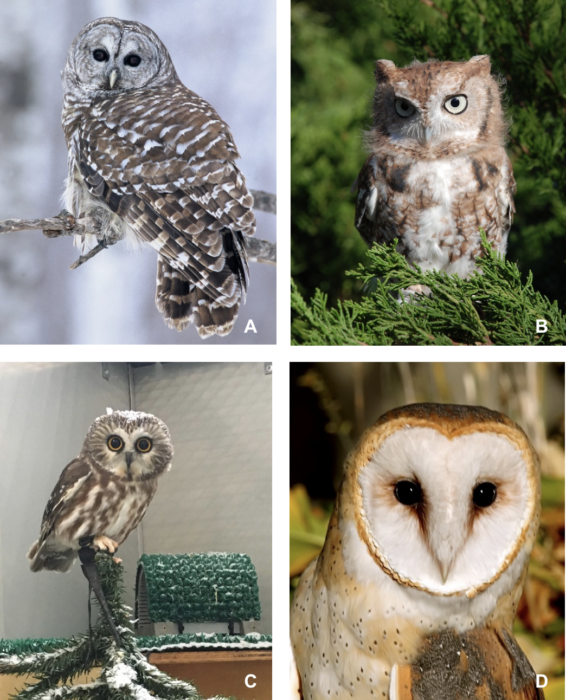
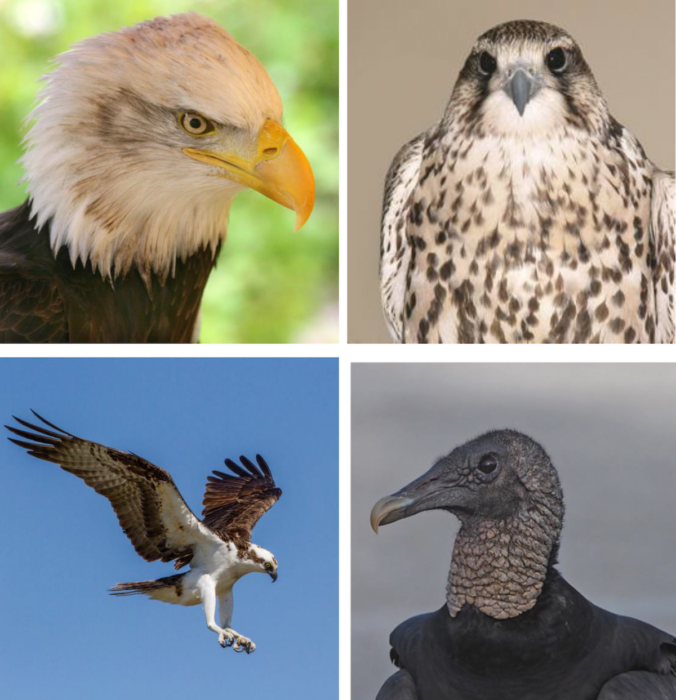
Raptors, or birds of prey, consume foods almost exclusively of animal origin and are characterized by a strong beak, curved sharp talons, and keen vision. Raptors are an extremely diverse and wide-ranging group that fall within four different taxonomic orders (Table 1). Nocturnal raptors or owls belong to order Strigiformes (Fig 1). For example, the typical owls (order Strigiformes, family Strigidae) are a large group that are found worldwide except for Antarctica and some very remote islands.9,37,49 Diurnal raptors are represented by orders Accipitriformes, Falconiformes, and Cathartiformes (Fig 2) with members of order Accipitriformes also found worldwide in almost every terrestrial habitat, from the arctic tundra to the tropical rainforest.34,37
Table 1. Taxonomic classification in birds of prey 9,10,27,37,38
Class Aves
Order Strigiformes
Family Tyonidae: barn owls
Family Strigidae: typical owls
Order Accipitriformes
Family Accipitridae: hawks, eagles, kites, harriers, Old World vultures, buzzards
Family Pandionidae: osprey
Family Sagittariidae: secretary bird
Family Cathartidae: New World vultures, condors
Order Falconiformes
Family Falconidae: falcons, kestrels, merlins, hobbies, caracaras
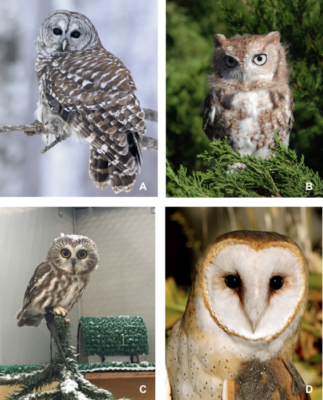
Figure 1. Owls. According to the International Ornithological Committee (IOC), there are over 200 species of “typical owls” worldwide belonging to the family Strigidae. (A) barred owl (Strix varia) (B) Eastern screech owl (Megascops asio) (C) Northern saw-whet owl (Aegolius acadicus). (D) The IOC also reports approximately 18 species in the genus Tyto of family Tytonidae. Shown here, a common barn owl (Tyto alba). Photo credit: Jeff Fischer/The Raptor Center, UMN. Click image to enlarge.
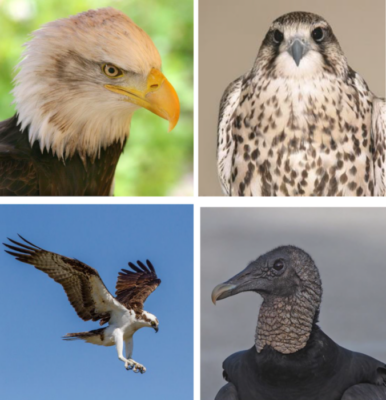
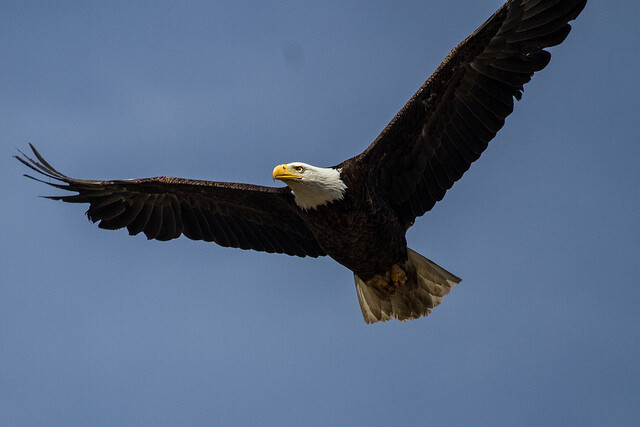
Figure 2. Examples of diurnal raptors include: (A) American bald eagle (Haliaeetus leucocephalus) Photo credit: Linda Cronin. (B) saker falcon (Falco cherrug) Photo credit: Dr. Jaime Samour. (C) osprey (Pandion haliaetus) Photo credit: Andy Morffew/Flickr Creative Commons. (D) black vulture (Coragyps atratus) Photo credit: Judy Gallagher/Flickr Creative Commons. Click image to enlarge.
Veterinary health professionals may be presented with raptors from the wild or those held for education, research, captive breeding, or falconry. If you are comfortable with the basics of avian anatomy and physiology, then you are well on your way to understanding raptors. However, this taxonomic group has many unique anatomic and physiologic adaptations that allow these birds to pursue and catch prey, including flight, beak, and talon modifications. The following collection of raptor anatomy and physiology facts should serve the reader well during physical examination, clinical care, and/or necropsy.
Integument
There are several anatomical structures derived from bird skin, such as the hard protective covering of talons and beaks, papilla on feet, feathers, and glands.
Talon sheaths
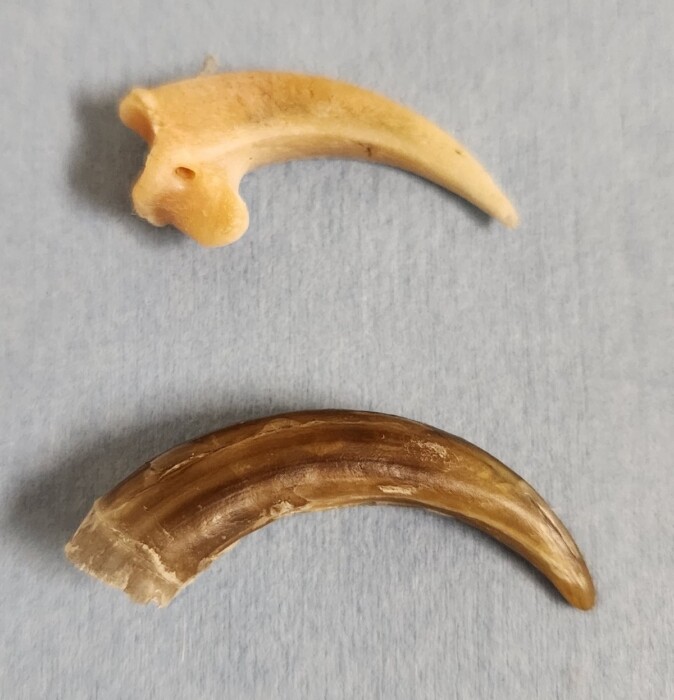
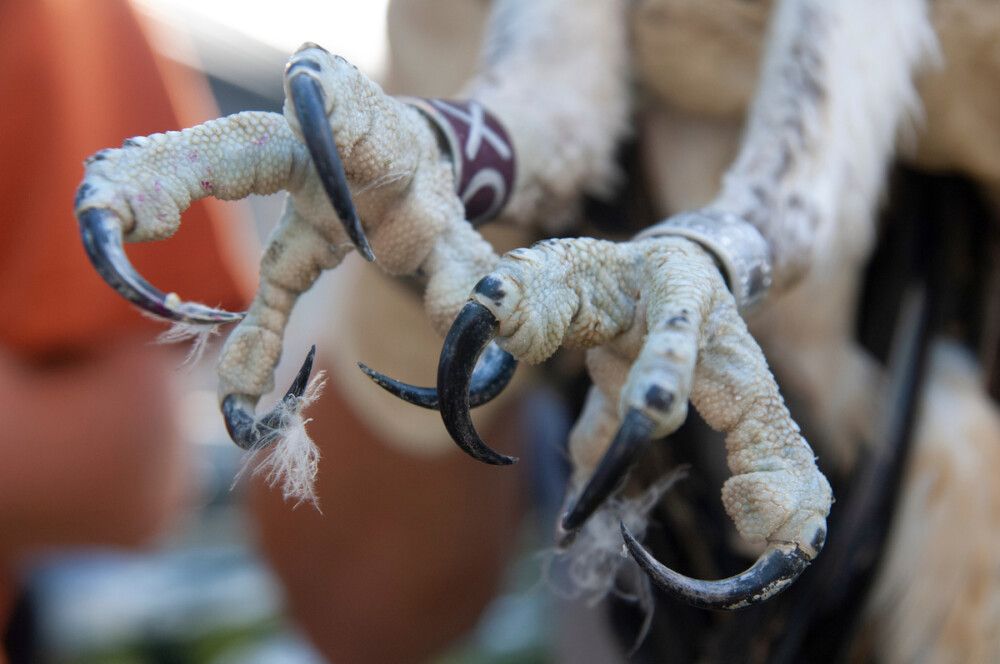
The feet of most raptors are armed with strong, needle-sharp, highly curved claws or talons. Each talon consists of a bone that is covered with a sheath made of sheets of keratin, a hard fibrous protein derived from skin (Fig. 2). Talons are used to catch, hold, and often kill prey.16,32,34,52 They are blunted in vultures since they do not need to capture live prey.34,74
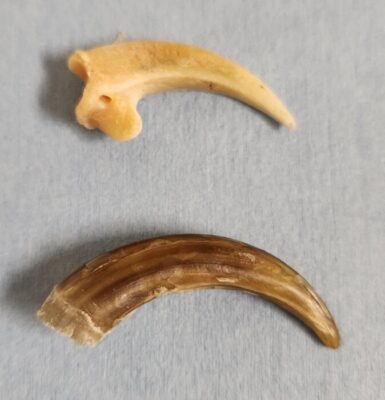
Figure 3. The talon bone (top) and protective sheath (bottom) of a bald eagle (Haliaeetus leucocephalus), Photo credit: The Raptor Center, UMN. Click image to enlarge.
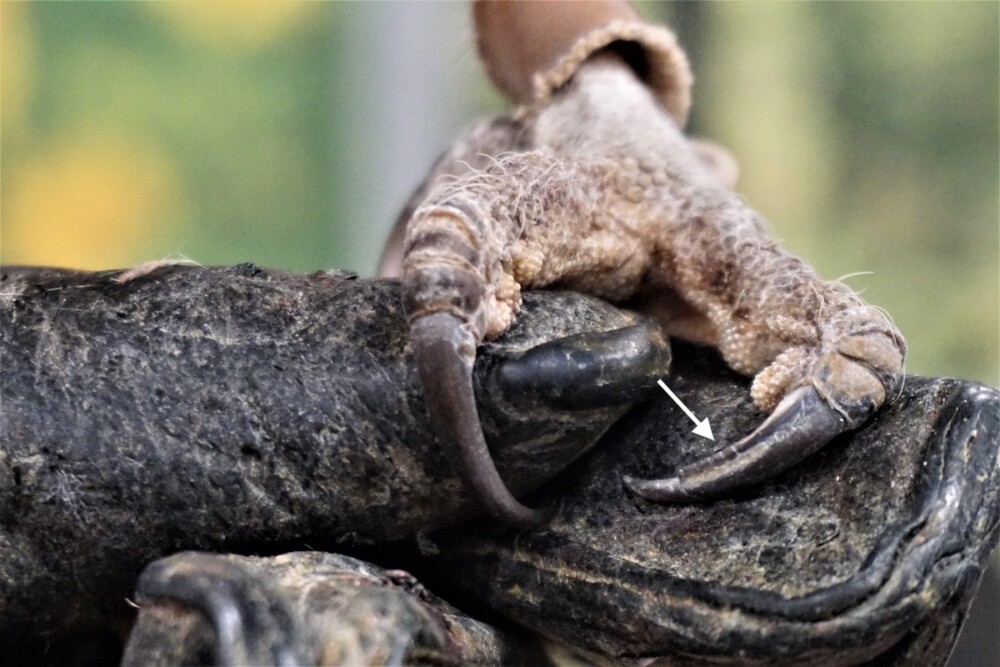
Clinical Tip: In many species, the talon of the third digit has a specialized sharp edge on its medial surface that is used for feather grooming. In some owls, like the common barn owl (Tyto alba), this edge is pectinate and sometimes referred to as a “feather comb” (Fig 4). In all species, this edge should be preserved during talon maintenance in captivity.16,30,34,37
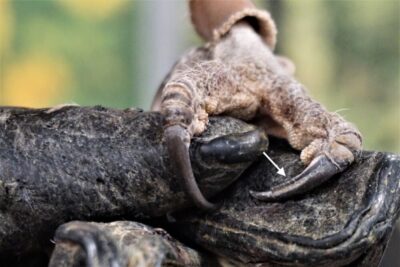
Figure 4. Feather comb on the edge of talon number 3 (arrow) in a common barn owl (Tyto alba). Photo credit: Gail Buhl/The Raptor Center, UMN
Rhamphotheca
Similar to talons, the raptor beak has a hard protective keratin covering called the rhamphotheca. As in other types of birds, the rhamphotheca in raptors continually grows and needs to be worn down to maintain a normal length and shape. In the wild, this happens naturally; in captivity, filing often has to be performed manually by caregivers in a process referred to as coping.
Clinical Tip: In captivity, raptors require regular maintenance of the keratin covering their beak and talons. If talon sheaths become too long, they can result in puncture wounds to the metatarsal pad or toes and/or uneven weight bearing that will also affect the health of the plantar foot surface. An overgrown rhamphotheca may develop chips or cracks that can extend toward the growth plates. Beak coping is often done with a rotary tool, but only experienced individuals should perform this technique in a live bird. Beak coping can be done without general anesthesia for some individuals, but is required for birds that become highly stressed.
Foot papillae
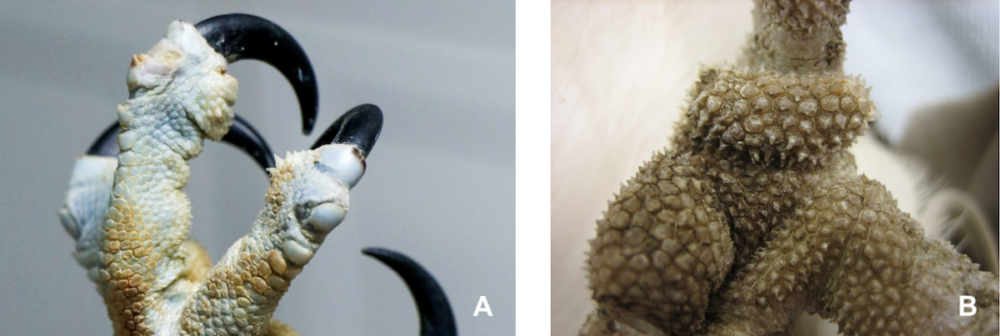
While thick scales protect the dorsal surface of the feet from injury, roughened papillae on the plantar surface assist in grasping.16,34 In some raptors that hunt birds or fish, the ventral surface of the toe pads have wart-like projections or spicules that create a sandpaper-like surface that allows them to grasp slippery prey (Fig 5).23,34
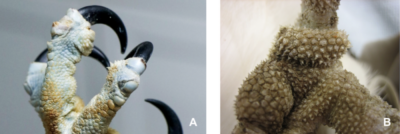
Figure 5. Spicule-like papillae on the plantar surface of an osprey (Pandion haliaetus) foot. Photo credit: (A) Illinois Raptor Center (B) The Raptor Center, UMN. Click image to enlarge.
Flight feathers
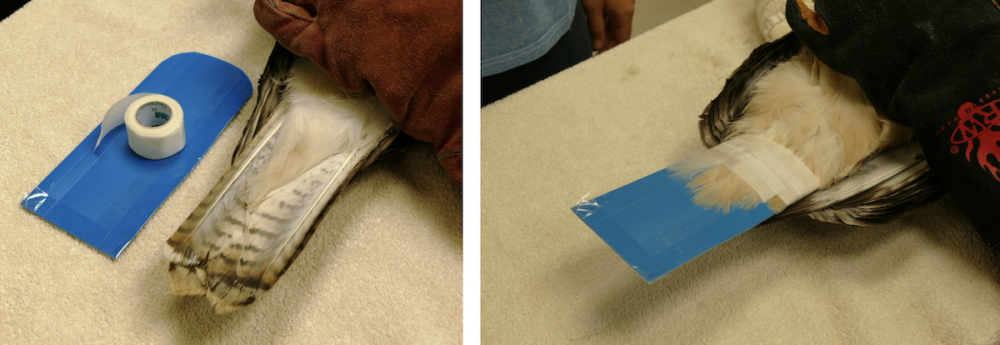
The integrity of the flight feathers is of the utmost importance for raptors destined for release.34 The tail feathers or rectrices of hospitalized raptors may be protected with a tail guard made from materials such as light but sturdy cardboard or file folders (Fig 6). The tail guard is placed over the rectrices and secured to the covert feathers with adhesive tape.
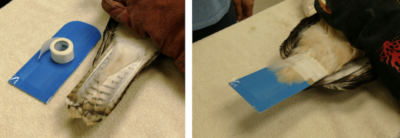
Figure 6. (A). Properly sized and (B) secured tail guard. Photo credit: The Raptor Center, UMN
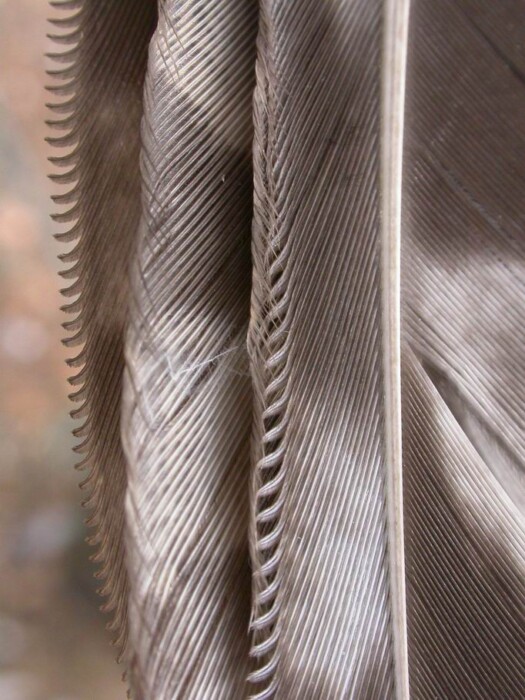
Nocturnal owls have several modifications that allow them to be remarkable, silent hunters.16,33 The leading edge of the tenth primary feather, and in some species the ninth or more, is combed or serrated rather than smooth on each wing (Fig 7).16,33,37 This modified edge has the effect of reducing air turbulence and the noise normally created during wing flapping.16,33
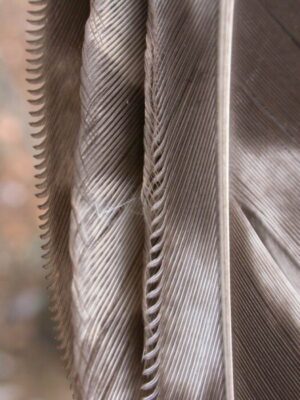
Figure 7. Close-up of flight feathers from a long-eared owl (Asio otus). Photo credit: “snowy owls”/ Wikimedia Commons. Click image to enlarge.
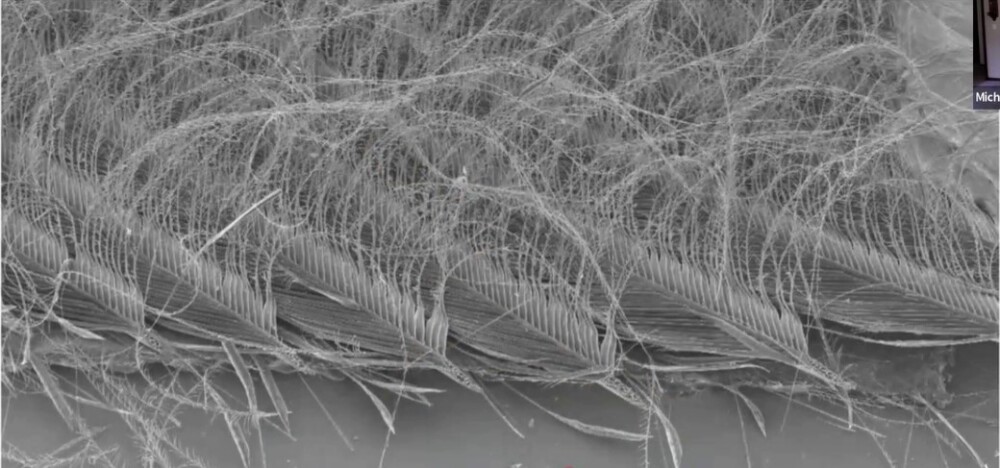
Quiet flight is further enhanced by the velvety pile on the dorsal surface of the vanes of most flight feathers. This soft, downy surface is composed of long, distal barbules that stick out from the otherwise flat surface of the feather vanes and reduce the sound of feathers over one another (Fig 8).37 The visual effect of these elongated barbules covering the pennaceous feather vanes reduces the glossiness of nocturnal owl plumage.37
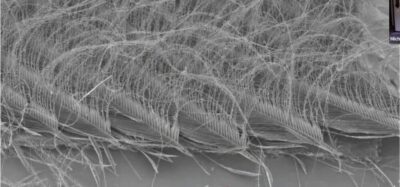
Figure 8. Electron microscopic lateral view of a flight feather of a common barn owl (Tyto alba). Photo credit: The Raptor Center, UMN. Click image to enlarge.
Head feathers
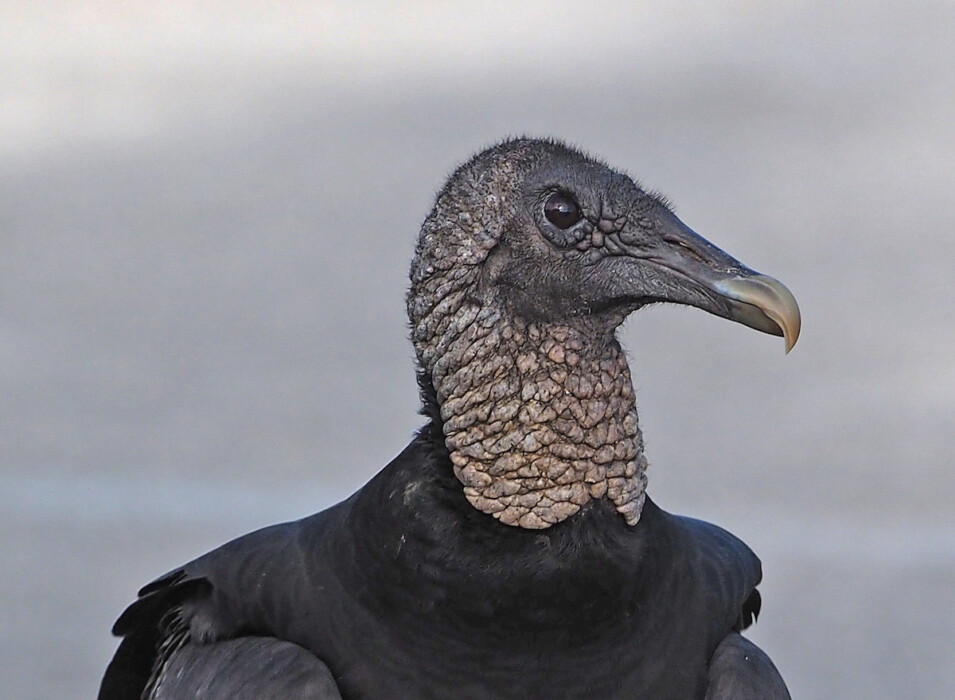
Vultures and condors routinely scavenge large carcasses and have minimal feathering on their head (Fig 9).31 This adaptation minimizes soiling of the head while the birds are consuming entrails.31
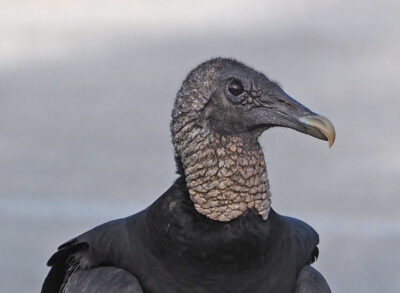
Figure 9. The heads of vultures and condors are bald to sparsely feathered, as shown in this black vulture (Coragyps atratus). Photo credit: Frank Wouters/Flickr Creative Commons. Click image to enlarge.
Molting
Molting, the process of natural feather replacement, is a gradual process that takes approximately 6 months in most raptors, although molt may last up to 2 to 3 years in Old World vultures.4,34 Most raptors molt feathers once per year in symmetrical pairs, usually after breeding.34 However, some of the smaller owls, such as the Northern pygmy owl (Glaucidium gnoma) and the burrowing owl (Athene cunicularia), molt all their rectrices at once. Some diurnal raptors molt only partially each year.34 These birds have one or more immature or subadult plumages, which allows these years to be distinguished from adult plumage (Fig 10).34,46 Once adult plumage is obtained, age cannot be determined using plumage character.
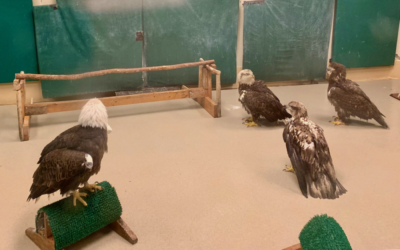
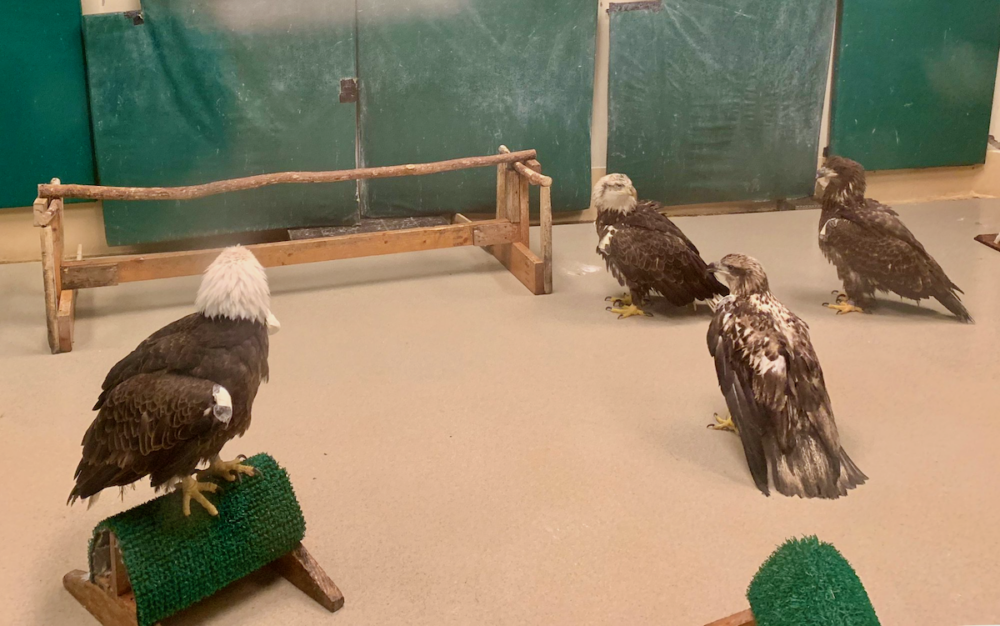
Figure 10. A few plumages in the bald eagle (Haliaeetus leucocephalus). From left to right: Adult (at least 5 years old), end of 4th year, end of second year, and first year. Photo credit: The Raptor Center, UMN. Click image to enlarge.
Uropygial gland
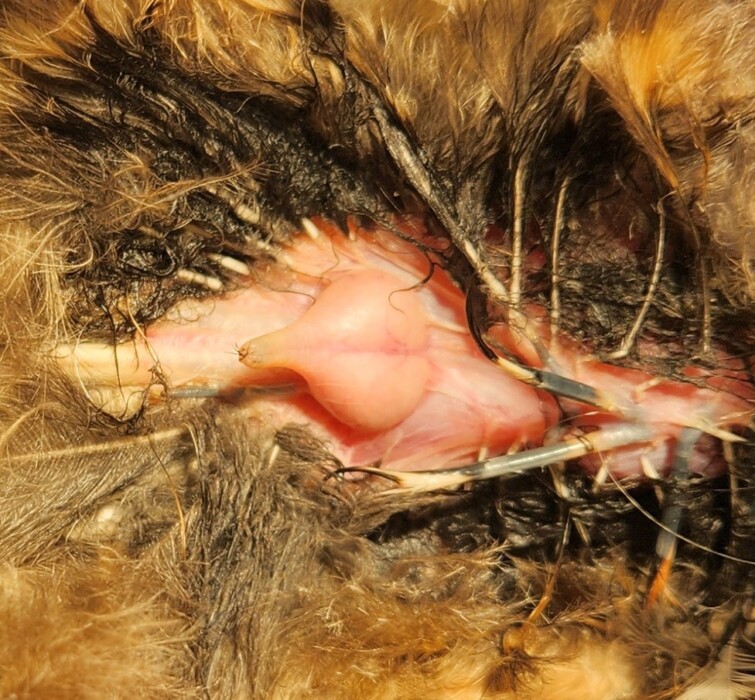
Like other birds, raptors have few glands; however, most birds of prey possess a uropygial or preen gland. The uropygial gland is located on the dorsal surface at the upper base of the tail, and varies in size with the species. When stimulated by the bird’s beak, this gland secretes an oily, fatty substance that is spread during preening to clean, waterproof, and condition the feathers (Fig 11).1
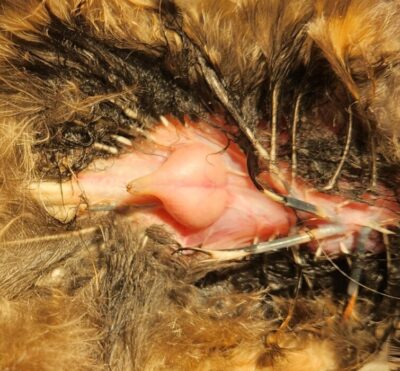
Figure 11. Uropygial gland of a barred owl (Strix varia). Photo credit: The Raptor Center, UMN. Click image to enlarge.
Musculoskeletal
Feet
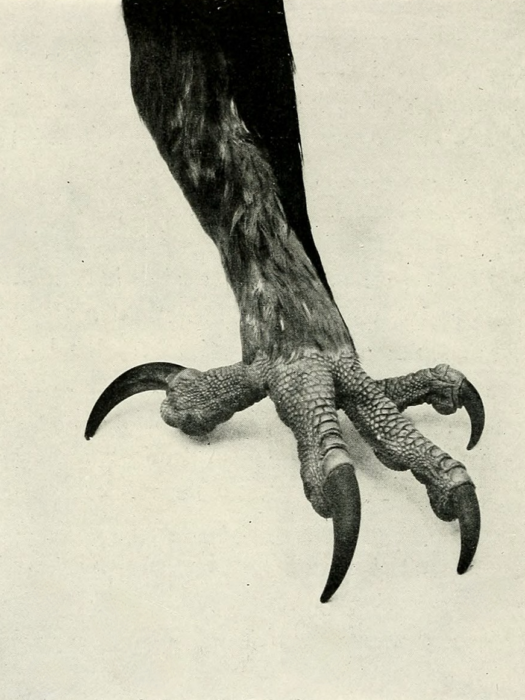
Many raptors use their feet to capture and sometimes kill prey. The classic raptorial foot is armed with sharp, strongly curved talons that form the tips of the distal phalanges (Fig 3, Fig 12).32,34,37,52 Many raptors, including owls, eagles, and hawks, capture and kill prey by stabbing and crushing with their powerful feet.32,34,74
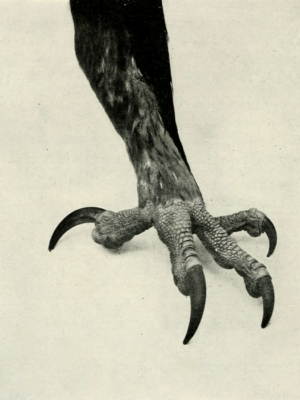
Figure 12. The anisodactyl foot of a golden eagle (Aquila chrysaetos). Photo credit: William Beebe/Wikimedia Commons. Click image to enlarge.
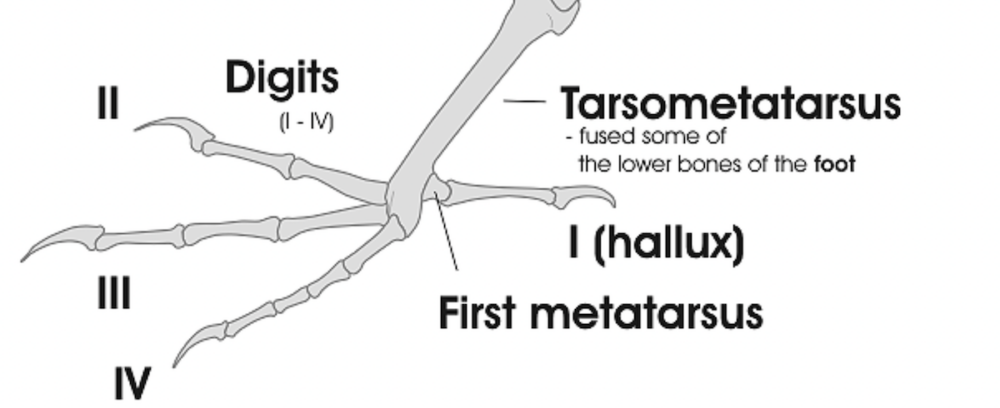
As in most birds, the raptor foot conforms to one of two basic arrangements. The anisodactyl foot of hawks, eagles, falcons, Old World vultures, and kites is adapted for perching and firmly grasping prey.23,30 The first digit, or hallux, faces backward, while digits II, III, and IV are directed forward (Fig 12, Fig 13).23,30,34 The zygodactyl foot, seen in owls and osprey allows an even stronger hold.23,30,49,52 When perched, digits II and III of the zygodactyl foot face forward and digits I and IV face backward (Fig 14). Digit IV is opposable and can be swiveled into an anterior or posterior position that allows a firm grasp on slippery or squirming prey.23,34,49
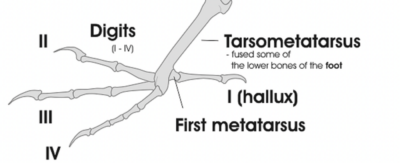
Figure 13. The hallux and digit II in many raptorial species are used together to immobilize prey and are sometimes referred to as the “killing talons” or “power toes”. The remaining digits are used for grasping. Photo credit: Darekk2 via Wikimedia Commons. Click image to enlarge.
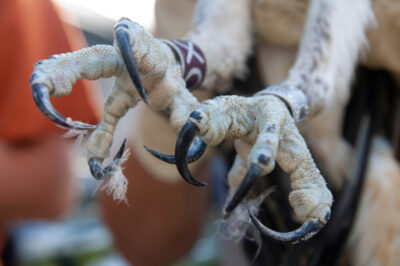
Figure 14. Zygodactyl toe placement in an osprey (Pandion haliaetus). Digits II and III face forward and digits I and IV face backward. Digit IV is opposable and can be swiveled into an anterior or posterior position to adjust the grip on squirmy prey. Photo credit: Getty Images. Click image to enlarge.
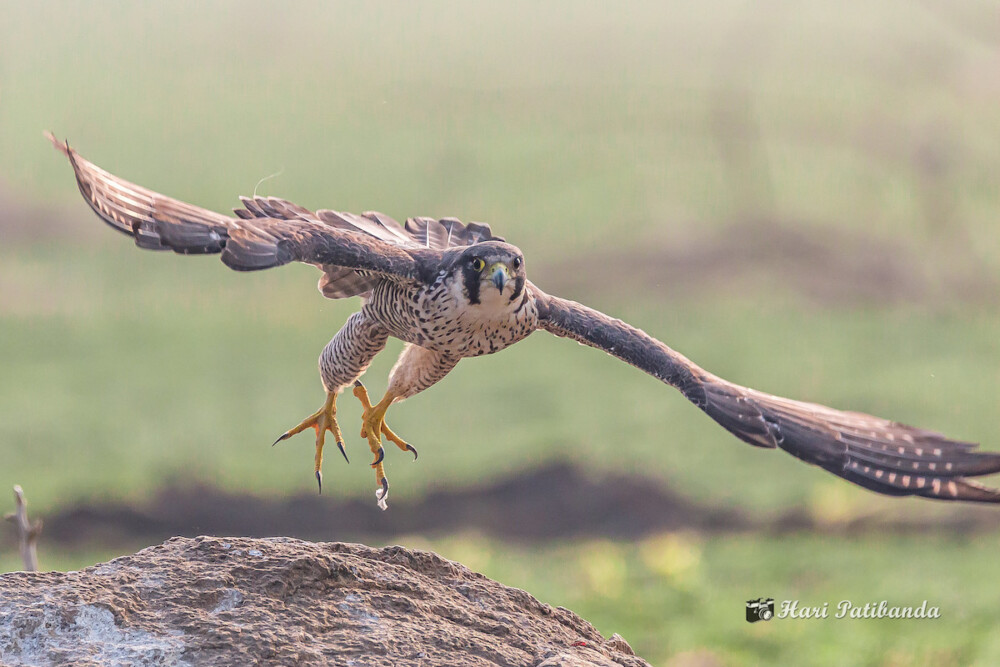
Falcons have flat feet and relatively long, thin toes (Fig 15). Unlike most raptors, whose feet are used to kill, the feet of falcons are primarily used to catch and immobilize prey. To actually kill their prey, falcons have a specialized feature on each side of their rhinotheca, a tomial tooth.32
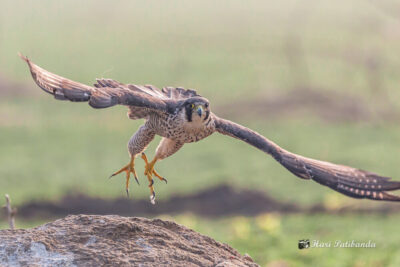
Figure 15. A peregrine falcon (Falco peregrinus) takes off in flight. Note the long, thin toes. Photo credit: Hari K. Patibanda via Flickr Creative Commons. Click image to enlarge.
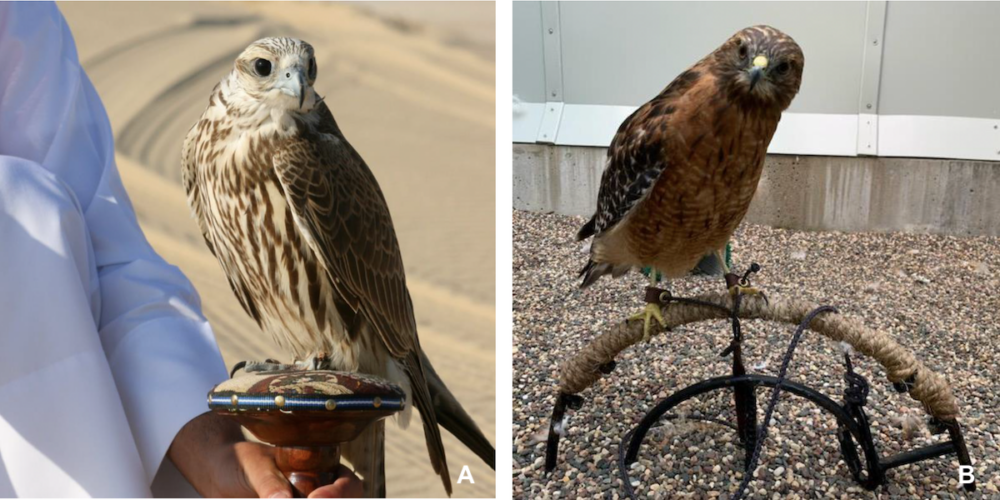
Clinical Tip: When housed in captivity, falcons require a broad, flat perch, referred to as a “block”, that is covered with padding like artificial turf. Diurnal raptors that prefer to grasp should be provided with curved, rounded perches, such as “bow” perches, wrapped with turf or a suitable type of rope (Fig 16).32,34
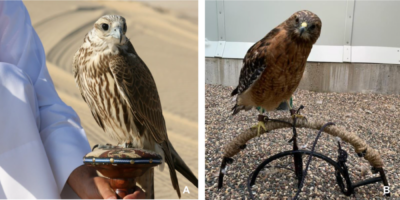
Figure 16. (A) A saker falcon (Falco cherrug) on a block perch. Photo credit: Qatar Pharoah Hound. (B) A red-shouldered hawk (Buteo lineatus) on a bow perch. Photo credit: The Raptor Center, UMN. Click image to enlarge.
New World Vultures have comparatively weak feet similar to those of chickens.59 Their feet are not useful for grasping prey but can be used to brace a cadaver while it is rended with the beak.59
Clinical Tip: Raptors possess two potentially dangerous weapons, the talons and beak. Therefore proper restraint requires training and should not be attempted without observation and supervision by others skilled in handling techniques.
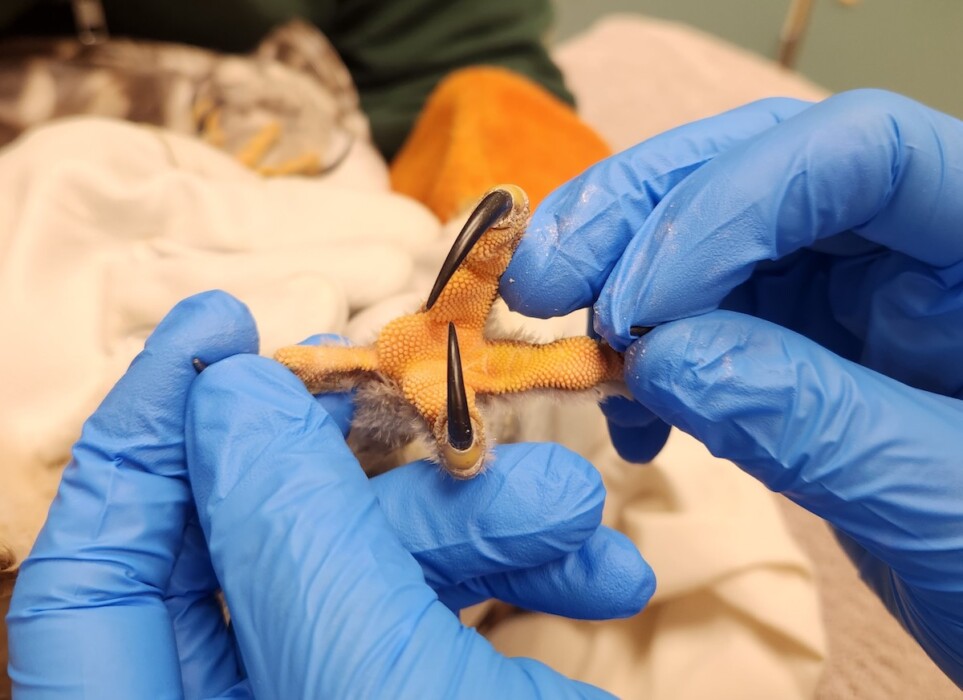
Clinical Tip; It is also incredibly difficult (and hazardous) to pry open the feet of a restrained raptor.34 This is because the digital flexor tendons have unidirectional, interlocking ratcheting mechanisms that resist digital extension when the toes are clenched.34 Straightening the leg at the ankle (hock) joint can loosen this mechanism making extending the toes easier and it is recommended to pull back on digits I and III (Fig 17).
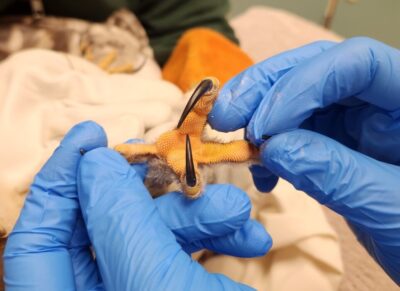
Figure 17. Extending the toes of a barred owl (Strix varia). Note the distinct papillae on the metatarsal pad and plantar surface of the toes. Photo credit: The Raptor Center, UMN. Click image to enlarge.
Pneumatic bones
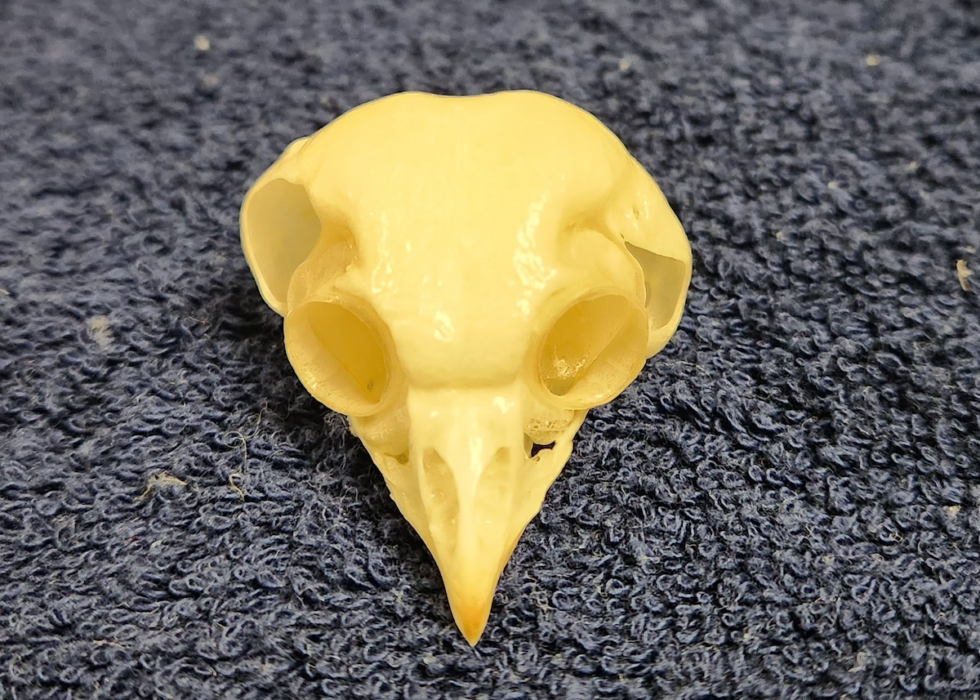
Raptors share many of the features of the unique avian respiratory system. For instance, much of the avian skeleton is pneumatized, with diverticula of the air sacs. In birds of prey, pneumatization of the skull appears to be maximally developed in large owls.30 The sternum, femur, and humerus are also frequently pneumatic bones in raptors.23,34
Wing shape
Diurnal raptors demonstrate a variety of wing shapes that are related to their preferred prey and hunting technique(s).32,58 Many diurnal raptors are capable of soaring for long distances in search of food at high altitudes up to 4,000 meters.16,32,58,74 The typical soaring wing is relatively long relative to body size (low to medium wing-loading), particularly the antebrachium and manus (Fig 18).30,58,74 Soaring is also enhanced by a broad tail.74
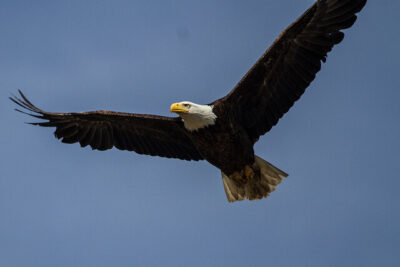
Figure 18. Separation of the tips of the primary remiges, as shown in this bald eagle (Haliaeetus leucocephalus), provides additional lift and propulsion for soaring birds.16,32 Photo credit: David Mitchell via Flickr Creative Commons. Click image to enlarge.
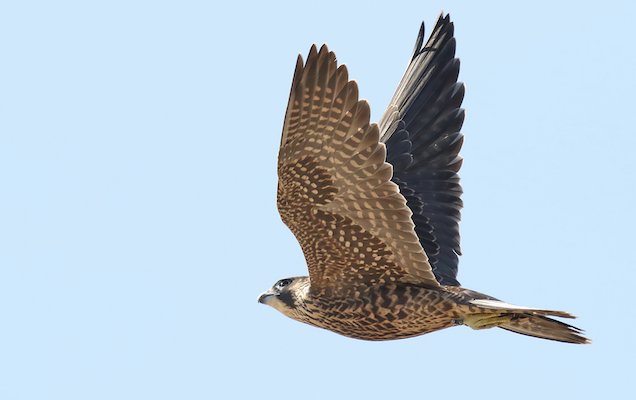
True falcons are characterized by long, pointed wings, narrow tails, and high wing-loading (Fig 19).32,58,74 Falcons are capable of rapid flight that can reach 200 km/h or more, when the birds go into a stoop or dive.32,58,74 The agility of another group of raptors, accipiters, is enhanced by relatively short wings and long tails.74
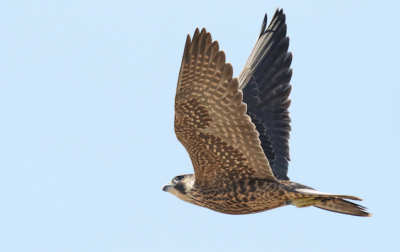
Figure 19. The peregrine falcon (Falco peregrinus) is an example of high wing-loading, with a relatively large body mass and proportionally smaller wings. Photo credit: USFWS Midwest/Flickr Creative Commons. Click image to enlarge.
Tendon ossification
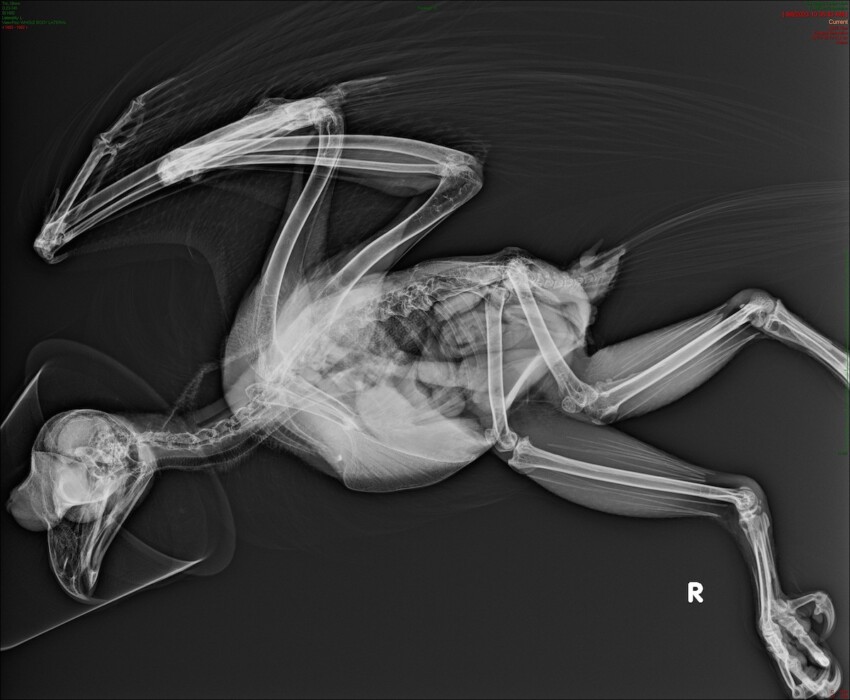
Ossification of tendons may be observed on radiographs in a variety of avian species, including raptors.3,74 The flexor tendons associated with the muscles of the tibiotarsus and toes can become calcified (Fig 20).49,74 It has been theorized that tendon ossification may confer strength and prevent stretching of flexor tendons during catch and transport of heavy prey.23,49 Some antebrachial and tarsal ligaments and cartilaginous structures also become ossified in birds of prey.23
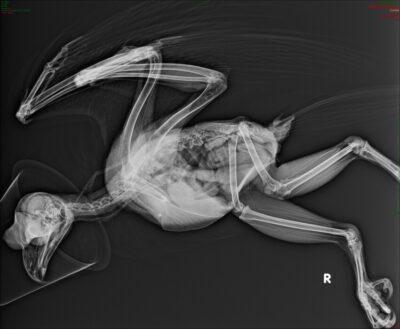
Figure 20. Lateral radiograph showing ossification of tendons associated with tibiotarsus muscles in a great horned owl (Bubo virginianus). Photo credit: The Raptor Center, UMN. Click image to enlarge.
Respiratory
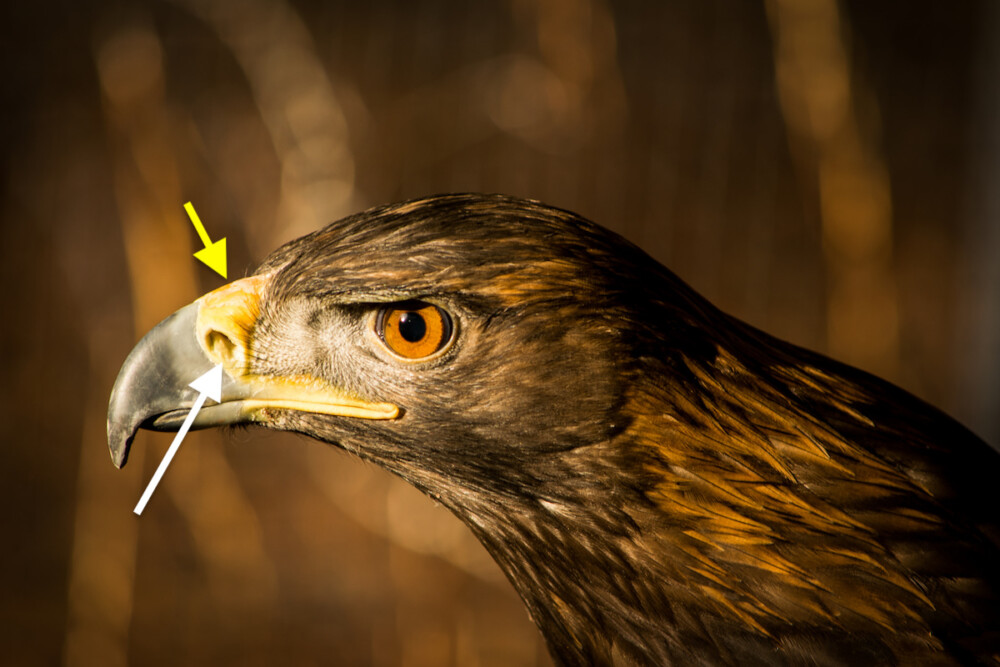
The basic design of the raptor respiratory system is consistent with that seen across class Aves. The raptor cere is often firm, waxy, and varies in color based on species and age (Fig 21, Fig 22). The nares of falcons, Buteo hawks, and eagles have a keratinized flap or operculum (Fig 21).23,30,34 In most birds there are three nasal conchae, however the caudal nasal conchae are absent in some raptors.23,30
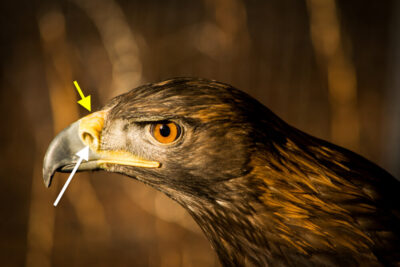
Figure 21. The base of the raptor beak is covered by the cere, a waxy membrane that reaches up to the nares (yellow arrow). Also note the operculum (white arrow) in this golden eagle (Aquila chrysaetos), which serves as a baffle, facilitating air flow in the nostrils during flight. Click image to enlarge.
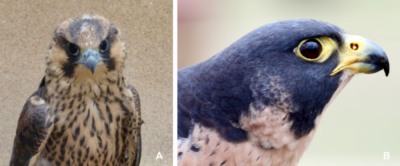
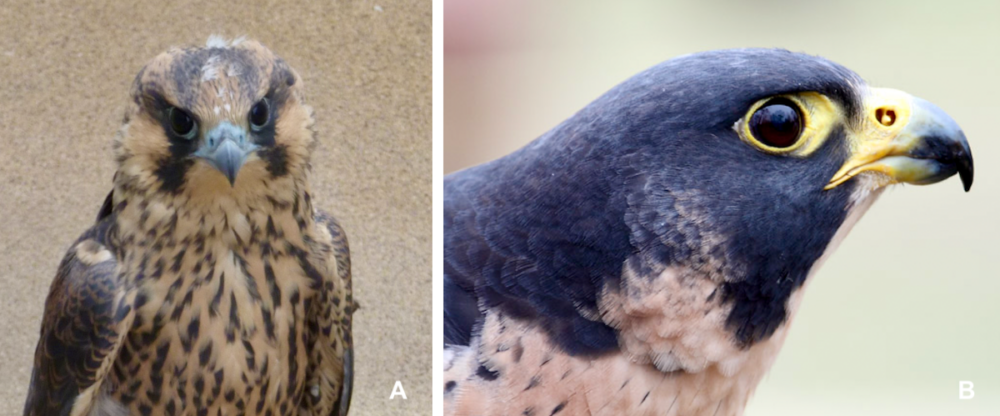
Figure 22. (A) Young peregrine falcons (Falco peregrinus) have a bluish cere which turns (B) bright yellow as they become adults. Photo credit: The Raptor Center, UMN. Click image to enlarge.
Finally, most avian species possess a tracheobronchial syrinx, however, a bronchial syrinx that consists entirely of bronchial elements has been described in owls.30
Gastrointestinal
Most raptors are carnivores that consume other birds, small mammals, reptiles, and occasionally fish.31 Some birds of prey are piscivores that eat primarily fish but may also consume some amphibians, small mammals, and birds. Many smaller species are insectivorous and will consume terrestrial invertebrates, like worms, spiders, and crustacea, as well as small vertebrate prey.11b,23 Vultures are scavengers34, although a few species, like the black vulture (Coragyps atratus) and white-headed vulture (Trigonoceps occipitalis), are known to hunt and kill prey.42 Finally, some raptors are highly specialized feeders, such as the fish-eating osprey, the hook-billed kite (Chondrohierax uncinatus), and snail kite (Rostrhamus sociabilis).16,58
Beak
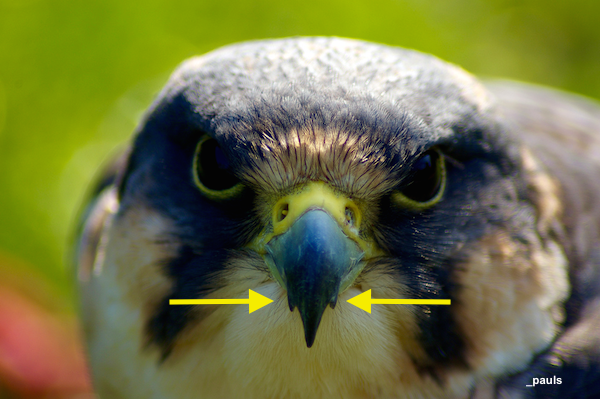
All raptors possess a sharply hooked bill or beak and sharp cutting edges, or tomia, designed for holding and tearing flesh.31,32,34,52 The “tomial tooth” is a protrusion of the maxillary beak or rhinotheca of falcons that allows them to easily sever the neck of vertebrate prey using plier-like action (Fig 23).34,52Each tomial tooth corresponds with a notch in the lower beak or gnathotheca.23
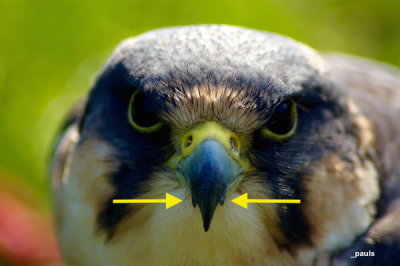
Figure 23. Tomial teeth (arrows) in a peregrine falcon (Falco peregrinus). Photo credit: _pauls. Click image to enlarge.
Clinical Tip: Attempt to preserve the tomial teeth when grooming the falcon beak.13 If there is a crack in the corner of one tomial tooth leading to delamination of the beak, the tooth will need to be ground out and debris removed. A new tomial tooth will reform as the beak grows out.
Tongue
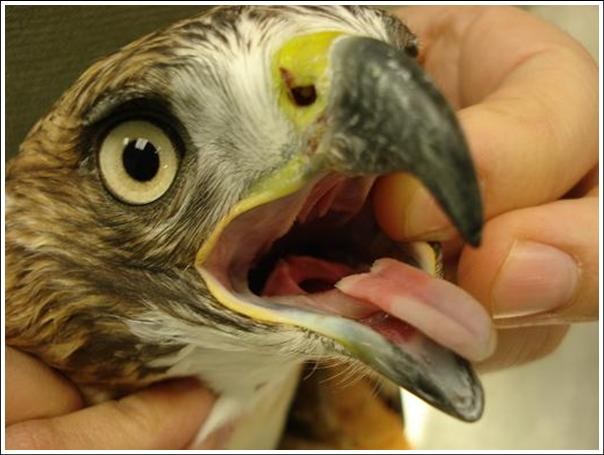
The raptor tongue is adapted for manipulation of food. Distinct highly keratinized papillae on the tip of the tongue create a tough, raspy surface that allows for greater food manipulation and rapid swallowing (Fig 24).31
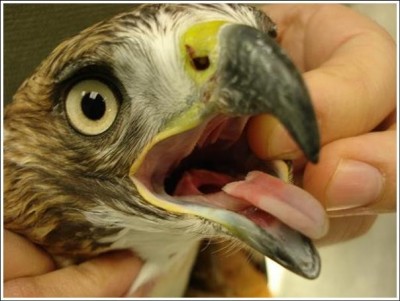
Figure 24. The raptor tongue is relatively long with a sharp-ended apex and a distinct, median groove. Photo credit: Dr. Julia Ponder/The Raptor Center, UMN. Click image to enlarge.
Esophagus
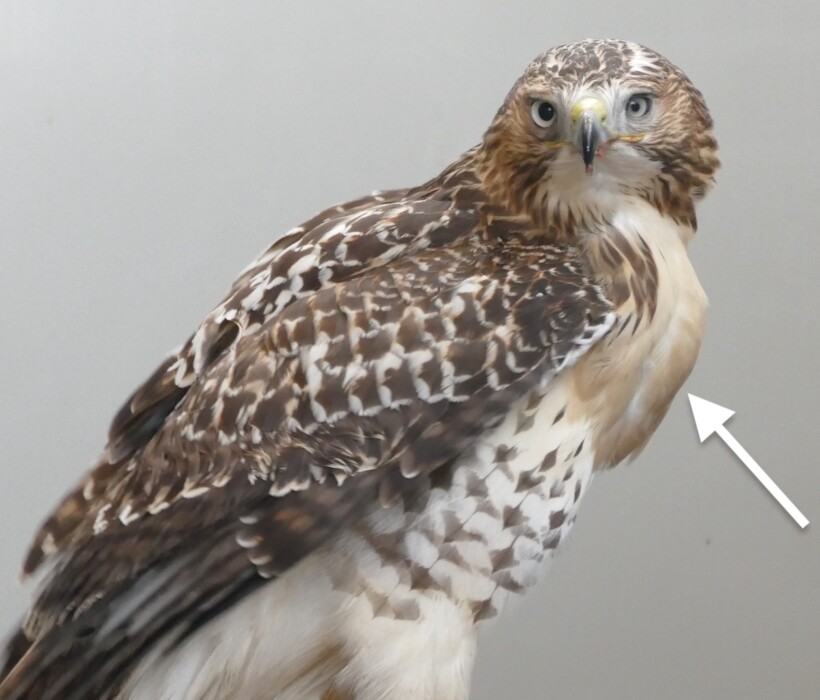
Raptors have a highly elastic esophagus that allows the passage of large food items due to its comparatively wide diameter and numerous longitudinal folds on its inner surface.30,31 Many diurnal birds of prey also have a distinct crop or ingluvies for the storage of food (Fig 25).31,34 The bearded vulture (Gypaetus barbatus) is the only vulture known to lack a crop, presumably due to a diet consisting primarily of bones which would be difficult to store.25,34 Owls do not possess a true crop, but merely a fusiform enlargement of the cervical esophagus.23,49
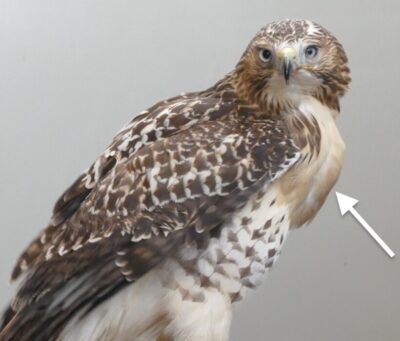
Figure 25. Diurnal raptors store food in the crop. When full, it can be seen as a large bulge over the throat region (arrow) as shown in this juvenile red-tailed hawk (Buteo jamaicensis). Photo credit: The Raptor Center UMN.
Stomach
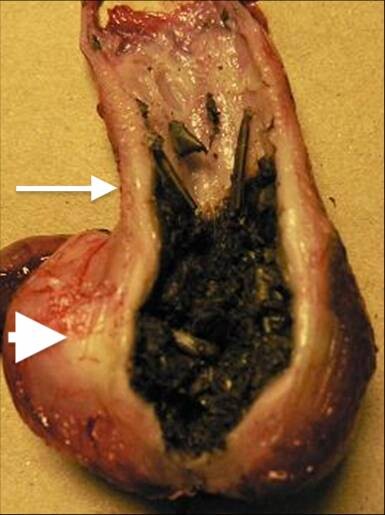
Raptors that feed on relatively large soft food items, such as meat- or fish-only diets, possess a relatively large sac-like stomach.31,34 The glandular stomach, or proventriculus, expands to accommodate large foodstuffs. The ventriculus functions to mechanically breakdown what cannot be digested chemically (Fig 26).30,34,45 The raptor stomach is relatively thin-walled and poorly muscled with a light cuticle or koilin layer that primarily serves to protect mucosa from the gastric juice produced by the proventriculus. 23,30,31,45,56 Externally, the junction between the proventriculus and ventriculus or isthmus, is often difficult to identify.45
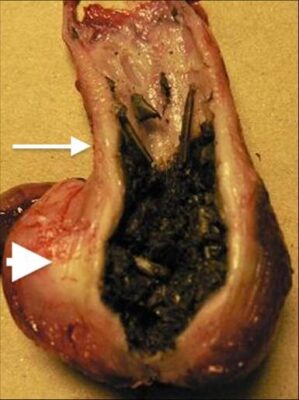
Figure 26. Sac-like stomach in the great horned owl (Bubo virginianus) consisting of the glandular stomach or proventriculus (arrow) and the muscular ventriculus (arrowhead). Photo credit: Dr. Julia Ponder/The Raptor Center, UMN. Click image to enlarge.
The proventriculi of fish and meat-eating birds secrete large quantities of gastric juice. Diurnal raptors are able to more thoroughly digest bones due to an extremely acidic stomach pH that measures approximately 1.7 prior to meals in hawks.14,31,34,74 A gastric pH of 1.0 was recorded in an African white-backed vulture (Gyps africanus) and gastric pH as low as 0.7 has been recorded in other diurnal raptors.24,25 In owls, gastric pH averages 2.2 to 2.5 which does not provide sufficient acidity to break down bone and therefore influences the composition of pellets.14,49,62,74
Intestines
Raptors generally have medium-length to short intestines when compared to other avian species.31 The intestinal tract is comparatively longer in scavenging birds.25,31 The rectum of the American kestrel (Falco sparverius) has been described as unusually long, a feature which may aid in water resorption.31
Ceca
Ceca are paired organs projecting from the proximal colon where it meets the small intestine. Among bird species, there is a great deal of variability in size, shape, and proposed function of the ceca.11 Owls possess large, paired, water-absorbing glandular ceca (Fig 27), while the ceca in diurnal birds of prey are simple, vestigial lymphatic structures or absent.
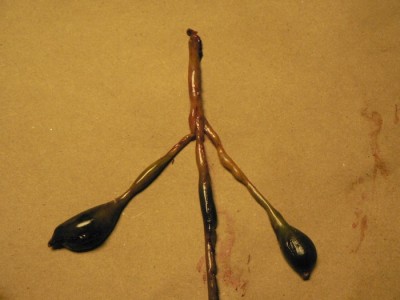
Figure 27. The distal part of the glandular ceca are enormously expanded in owls. Photo credit: Dr. Julia Ponder/The Raptor Center, UMN. Click image to enlarge
Accessory glandular structures
A well-developed gallbladder is present in most raptors.4,23,34 The pancreas is relatively small in birds of prey when compared to granivorous and herbivorous avian species, presumably due to the high digestibility of animal-origin foods.31 Among birds of prey, the pancreas is relatively large in owls, occupying approximately half of the duodenal loop (Fig 28). The pancreas is smaller in buteos, eagles, and falcons.34,74
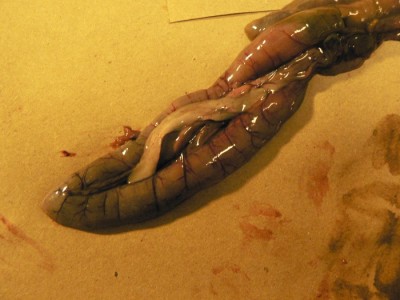
Figure 28. The pancreas is found between the ascending and descending limbs of the duodenum. Shown here, the relatively large pancreas of a barred owl (Strix varia). Photo credit: Dr. Julia Ponder/The Raptor Center, UMN. Click image to enlarge.
Pellets
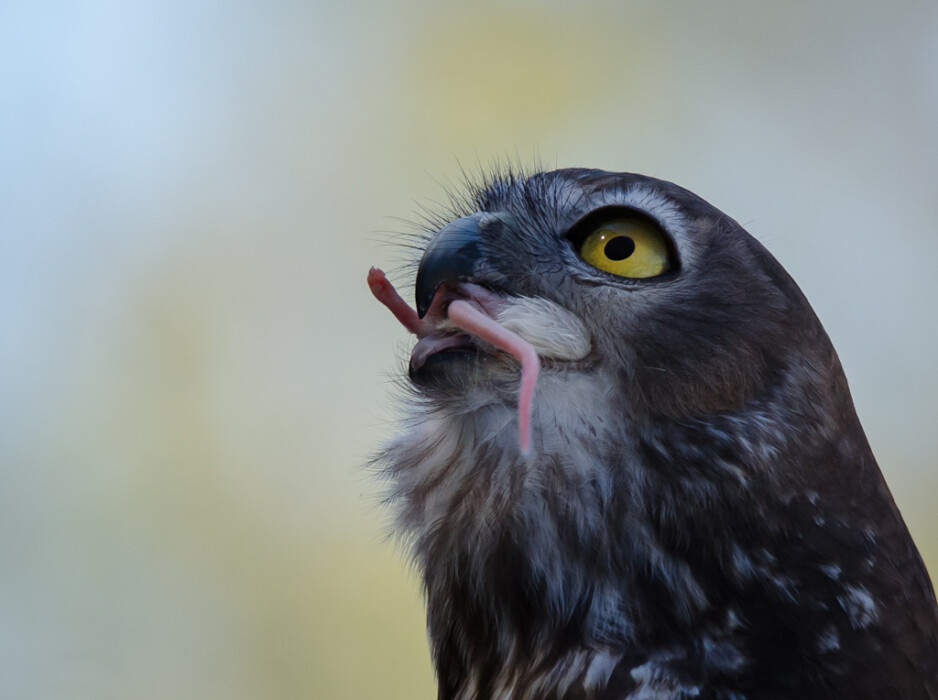
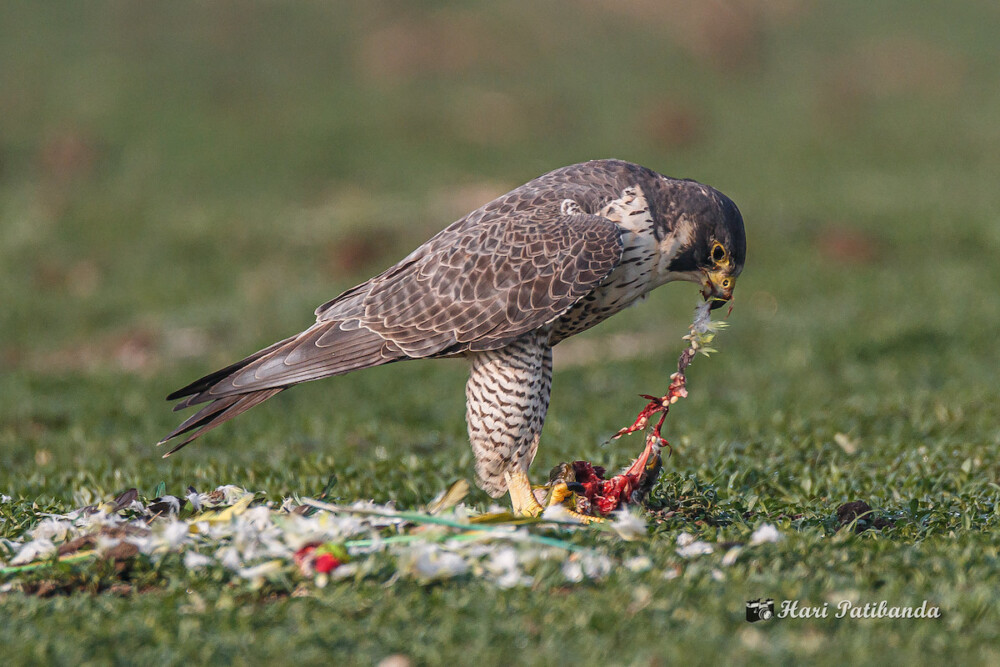
The consumption of whole animals provides complete nutrition, and small prey items are often consumed whole headfirst, especially by owls (Fig 29).31 In fact, some owls will only eat the head if food is abundant. The beak is used to tear large prey items into smaller pieces (Fig 30).31 Poorly digestible components, like the head or skin, may not be consumed.31 The gastrointestinal tract may also be discarded when an adequate food supply is available.31
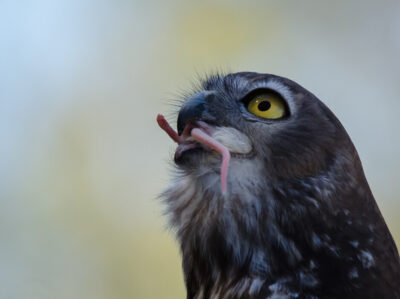
Figure 29. A barking owl (Ninox connivens) consumes a mouse whole. Photo credit: James Niland/Flickr Creative Commons. Click image to enlarge.
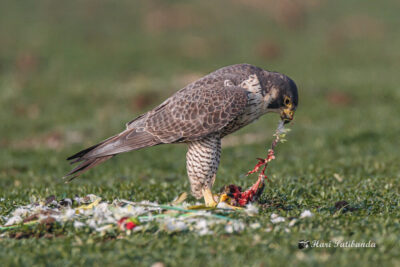
Figure 30. A peregrine falcon (Falco peregrinus) consuming a bird by ripping and tearing the flesh. Photo credit: Hari K. Patibanda/Flickr Creative Commons. Click image to enlarge.
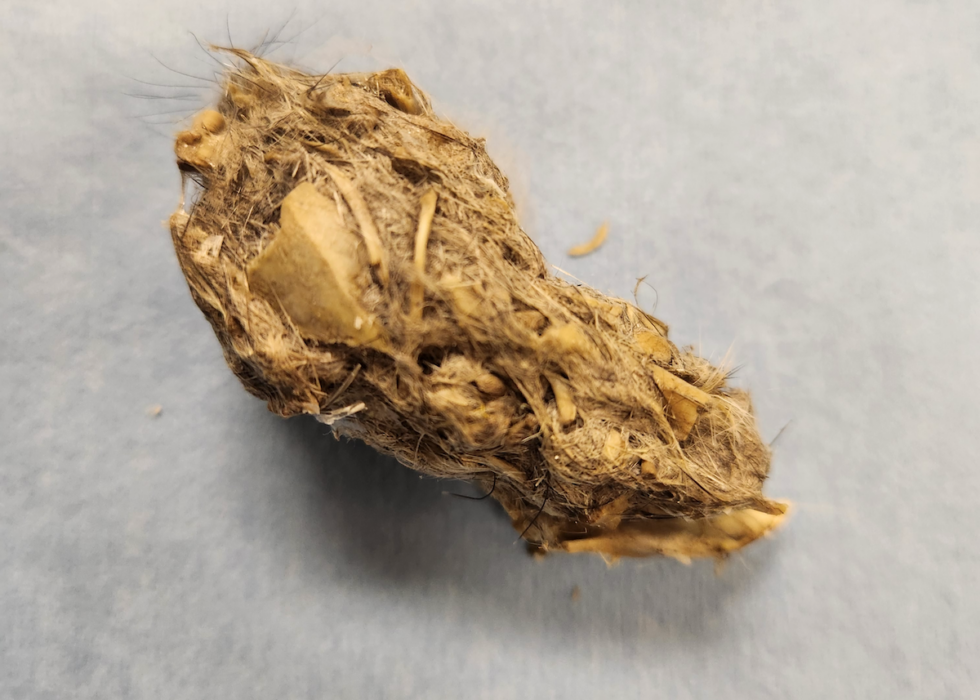
In the final phase of gastric digestion in raptors (and several other types of birds), indigestible material, such as fur, feathers, exoskeletons, fins, scales, shells, teeth, and claws, is compacted into a pellet within the ventriculus (Fig 31).31 Antiperistaltic muscular contractions move the pellet up into the lower esophagus and oropharynx.49 Oral expulsion of the pellet is called egestion or “casting”.23,34 Egestion is a unique physiologic event distinct from vomiting or regurgitation.
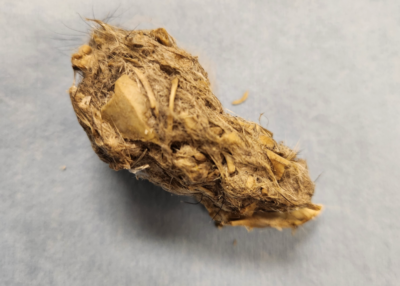
Figure 31. Compacted indigestible material or pellet collected from an owl. Photo credit: Lori Arent. Click image to enlarge.
Pellets are only egested once gastric digestion of a meal is complete. The average interval from feeding to egestion in owls ranges from 10 to 13 hours.49 The interval averages from 19.5 to 23.5 hours in hawks. Owls normally produce a pellet with each meal while hawks can eat more than one meal before casting.34 In the wild, most pellets are egested before midmorning or after killing prey, but before the first feeding of the day.
Clinical Tips: It is important for clinicians to monitor pellet egestion in a raptor patient. Failure to produce a pellet when expected can indicate gastrointestinal tract dysfunction.45
Juvenile birds may have difficulty casting some material, such as fur, and raptors should generally not be provided food with indigestible material until they are over 12 days old (>20 days in some species).23
Feces and fecal flora
Normal raptor feces tend to be soft, viscous, and depending on the bird’s diet can range in color from yellow to dark brown to dark green.32 Fecal samples normally harbor a wide variety of enteric bacteria. Large numbers of Gram-negative coliforms and clostridial organisms are part of normal gastrointestinal flora in birds of prey. Aerobic bacteria isolated from the cloaca of red-tailed hawks (Buteo jamaicensis) and Cooper’s hawks (Accipiter cooperii) include coagulase-negative Staphylococcus, coagulase-positive Staphylococcus, Micrococcus sp., Streptococcus sp., Escherichia sp., and Salmonella spp.34,35 It has also been proposed that raptors can harbor Campylobacter spp., which potentially poses a zoonotic risk.12,47
For additional information: Visit Raptor Gastrointestinal Anatomy and Physiology.
Reproduction
Sex determination
In raptors, visually distinguishing between the sexes can be challenging. However, there are a couple of easily identifiable features that help determine the sex of some species.
SIZE DIMORPHISM
Although there can be considerable overlap in body size between the sexes in some species.33,34, many raptors display reversed sexual dimorphism in which the male is approximately 30% smaller than the female.32,58,72,74 This phenomenon is most pronounced in diurnal species, especially raptors that feed on other birds, such as falcons and accipiters.32,68In fact, the falconry term “tiercel” denotes a male falcon or hawk and is derived from the Latin word for third: “tertius”.32
Male and female New World vultures and condors typically show little differences in size.16,38 If there is a difference, males tend to be larger than females although the size distinction is usually minimal.34,38 Among members of family Cathartidae, the Andean condor (Vultur gryphus) exhibits the most pronounced conventional sexual dimorphism.2
COLOR DIMORPHISM
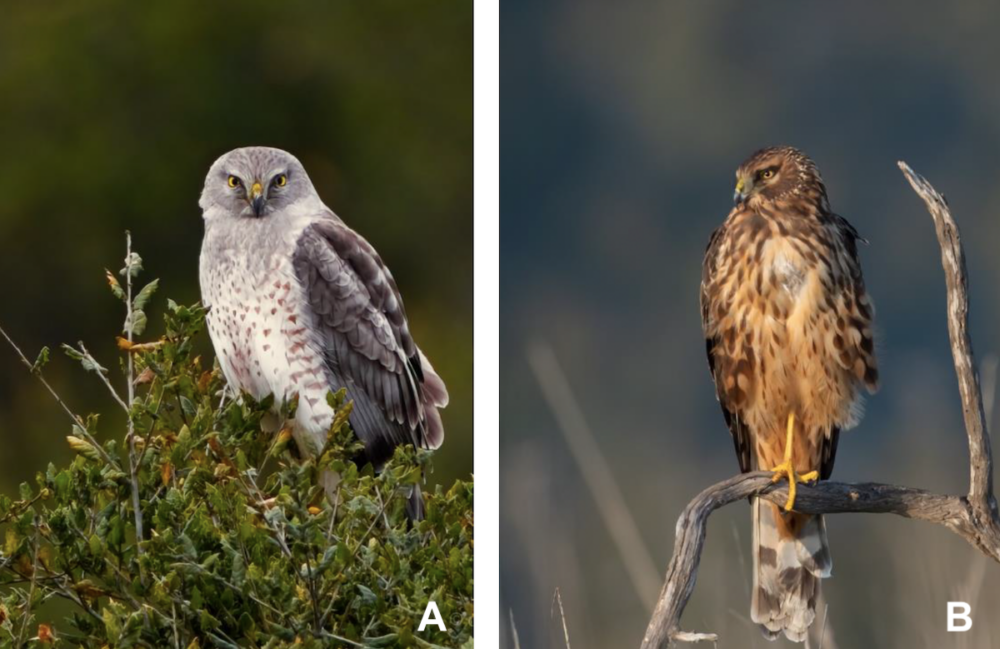
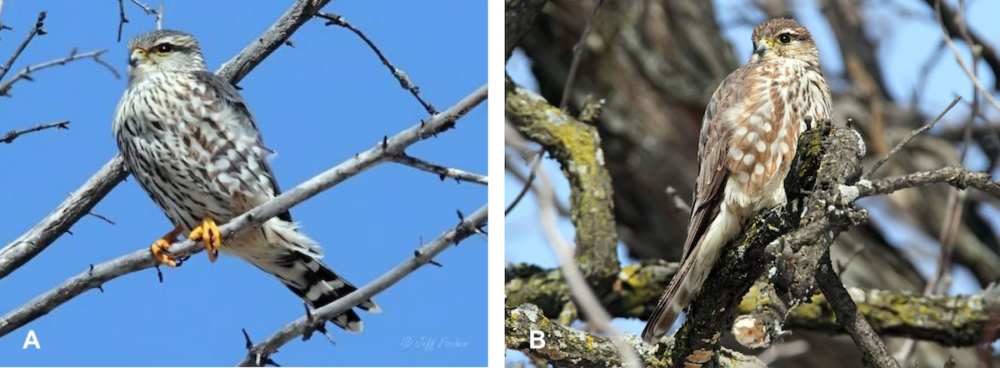
In a limited number of raptor species, plumage is dimorphic between the sexes. American kestrels, merlins (Falco columbarus), Northern harriers (Circus cyaneus), snowy owls (Bubo scandiacus), osprey, and white-headed vultures (Fig 32-Fig 34) are examples of color dimorphism.33,34,41,58
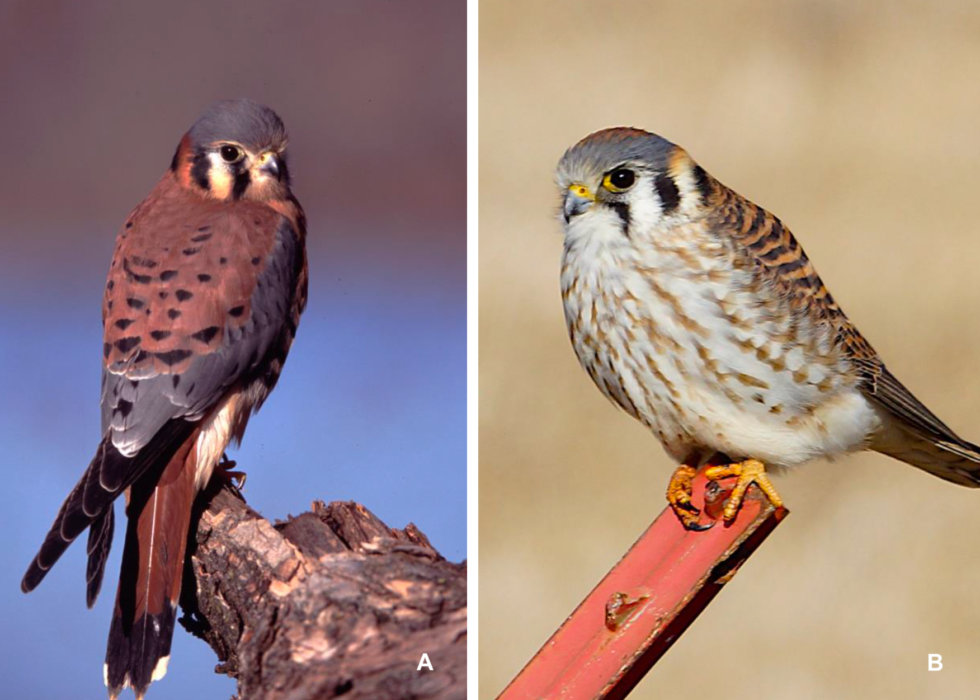
Figure 32. (A) The male American kestrel (Falco sparverius) has a blue/gray cap and wings and solid cinnamon-colored tail feathers with a dark terminal band. Photo credit: Jeff Fischer of The Raptor Center, UMN. (B) The female kestrel is more uniformly cinnamon colored, lacking the blue/gray coloring on her wings and also has a barred tail. Photo credit: John Schmoll/Flickr Creative Commons. Click image to enlarge.
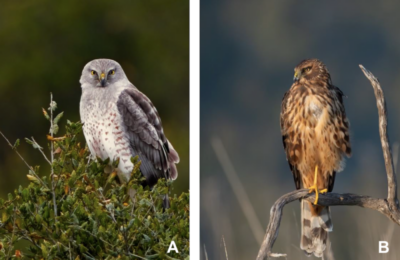
Figure 33. (A) The male Northern harrier (Circus cyaneus) is gray above and whitish below with black wingtips. (B) Females and immature harriers are brown. Photo credit: Channel City Camera Club/Flickr Creative Commons. Click image to enlarge.
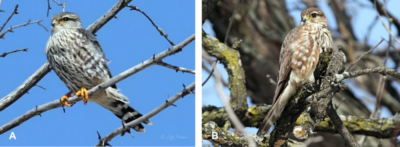
Figure 34. (A) The adult male merlin (Falco columbarius) is blue or gray, while (B) the female is brown. Photo credit: Jeff Fischer/The Raptor Center, UMN. Click image to enlarge.
Gender can be verified in sexually monomorphic species using endoscopic visualization of the gonads, DNA analysis, or intracloacal ultrasonography.22,34,64,72 Fecal steroid hormone immunoassays have also been utilized in research settings.13,34
Ovaries
Although paired ovaries and oviducts develop in the embryo, the right ovary and oviduct rapidly regress after hatch in most avian species.23,30,32,53,55 Although conventional wisdom has held that the right ovary is rarely functional 23,30,34, a study evaluating histological and immunohistochemical data in the goshawk, long-eared owl (Asio otus), common buzzard (Buteo buteo), and sparrow hawk (Accipiter nisus) suggests that folliculogenesis and ovulation may occur in the right ovary.53 In addition, in some Falconiformes, such as peregrine falcons, the right ovary has been reported to be not only present but also may be partially active.18 The right oviduct in several birds of prey has been reported to undergo involution and remain vestigial even when both gonads are functional.23,30,32,53
Breeding age and sex
Small raptors reach sexual maturity at a younger age than large raptors and in many species, male raptors tend to reach sexually maturity before females. Among diurnal species, small accipiters, small falcons, harriers, and Harris’s hawks (Parabuteo unicinctus) usually begin breeding at 1 to 2 years of age.13,46 Buteo hawks, kites, and large falcons breed at 2 to 3 years.46 Ospreys begin breeding at 3 years or more.46 Depending on the species and the individual bird, eagles begin breeding at 4 to 9 years.46 Vultures and condors may begin breeding between 6 to 12 years of age.38,46
Owls also show a similar pattern between size and breeding age. Screech owls (Megascops spp.) have been recorded to breed during their first year.67 The common barn owl (Tyto alba) also reaches sexual maturity very early in life.54 In fact, all members of family Tytonidae can reproduce in their first year, although the rare bird delays reproductive activity until their second year.13,54 The Eurasian eagle owl (Bubo bubo), a member of family Strigidae, reaches sexual maturity between 1-3 years.13
Clutch size
Several factors can influence the number of eggs laid in a clutch. First is the species and its natural history, such as the length of parental care needed post fledging. Large vultures and condors lay only one egg per clutch as their chicks can require care for up to an entire year.26,38,43,46 The smallest raptors typically lay up to 6 eggs per clutch (Table 2). Clutch sizes can also vary dramatically during any breeding season with the latitude, weather, food supply and general health of the female.21,37,60
| Table 2. An overview of eggs per clutch in raptors 21,26,36,38,43,46 |
| Species | Eggs per clutch |
| Condors, large vultures* | 1 |
| Eagles, small vultures | 1-3 |
| Large kites, Buteo hawks, caracaras, ospreys | 2-3 |
| Small kites, large falcons, large accipiters | 3-5 |
| Small falcons, small accipiters, harriers | 4-6 |
| *The Egyptian vulture (Neophron percnopterus) and bearded vulture (Gypaetus barbatus) are the only Old World vultures whose clutch usually has two eggs 21 |
Most female members of family Strigidae lay an average clutch of two to seven eggs. In times of abundance, some species may lay larger clutches.9 The great horned owl (Bubo virginianus) generally lays two to three eggs and barn owls are quite prolific, laying up to 10 eggs.54,60
Eggs are laid over several days. Although variation occurs among individuals, small raptors lay an egg once every other day, medium-sized species lay eggs every 2 to 3 days, and large species lay eggs at intervals of 2 to 5 days.36,37,46
Incubation
Most raptors begin incubation before they complete laying their clutches. Some birds, like the common barn owl and great horned owl (Bubo virginianus) will begin to incubate as soon as the first egg is laid.16,33,60,71 However, pygmy owls (genus Glaucidium) begin incubating only after the last or penultimate egg is laid.33 Diurnal raptors also begin brooding with the second or third egg (or the first with eagles and vultures).36 Incubation periods in birds of prey tend to be relatively long, ranging from 4 weeks in smaller birds to 7 or 8 weeks in larger species.46
In most raptors, the female protects the nest, eggs and young birds and broods the eggs for almost their entire incubation (Table 3).21,33,36,37,54,60 The male is primarily responsible for hunting and providing food to the brooding female.21,36,37,54 He broods the eggs only occasionally when the female preens or feeds.30,36 Both Old and New World vultures tend to share incubation between the male and female.21
| Table 3. Incubation periods and clutch sizes of selected birds of prey 13,21,36,38,46 |
| Species | | Clutch size | Interval between eggs (days) | Incubation period (days) |
| American kestrel | Falco sparverius | 4-6 | 2 | 27-31 |
| Bald eagle | Haliaeetus leucocephalus | 2-3 | - | 35-36
34-35
35-38 |
| Barn owl (common) | Tyto alba | - | - | 29-34 |
| Black kite | Milvus migrans | 3-5
2-3 | 2-3 | 31-32
31-37 |
| Black vulture | Coragyps atratus | 2 | - | 38 |
| California condor | Gymnogyps californianus | 1 | - | 56
55 |
| Cinereous vulture | Aegypius monachus | 2 | - | 50-55 |
| Common buzzard | Buteo buteo | 3-5
2-4 | 2-4 | 33-38
33-35
36 |
| Cooper’s hawk | Accipiter cooperii | 4-5 | - | 32-36 |
| Eurasian eagle owl | Bubo bubo | - | - | 31-36 |
| European sparrowhawk | Accipiter nisus | 3-6
4-6 | 2-23 | 32-35
35 |
| Golden eagle | Aquila chrysaetos | 2 | 3-4 | 43-45 |
| Griffon vulture | Gyps fulvus | 2
1 | - | 48-54
52-59 |
| Gyrfalcon | Falco rusticolus | 3-5 | 2-3 | 32-33
35 |
| Harris’ hawk | Parabuteo unicinctus | 3-5
2-4 | - | 32-34
33-36 |
| Lanner falcon | Falco biarmicus | 3-5
3-4 | - | 31-33
32-35 |
| Merlin | Falco columbarius | 3-4
3-5 | 2 | 28-30
28-32 |
| Mississippi kite | Ictinia mississippiensis | 1-2 | - | 30 |
| Northern goshawk | Accipiter gentilis | 3-5
3-4 | 2-3 | 32-34
35-38 |
| Osprey | Pandion haliaetus | 2-3 | - | 37-38 |
| Peregrine falcon | Falco peregrinus | 3-5
3-4 | 2 | 31-33
32-34
31 |
| Red kite | Milvus milvus | 3-5
1-3 | 3 | 31-32 |
| Red-shouldered hawk | Buteo lineatus | 2-4 | 2-3 | 33 |
| Red-tailed hawk | Buteo jamaicensis | 2-4 | - | 32-35 |
| Saker falcon | Falco cherrug | 3-5 | - | 31-33 |
| Turkey vulture | Cathartes aura | 2 | - | 38-41 |
| White-tailed sea eagle | Haliaeetus albicilla | 2
1-3 | 2-3 | 34-42
38 |
Most female raptors develop an incubation or brood patch during incubation.30,54,69 The brood patch develops in both sexes in species that share incubation duties, like vultures.21,69 In species where the male incubates for only short periods, the brood patch is absent or poorly developed in species.21
Asynchronous hatching
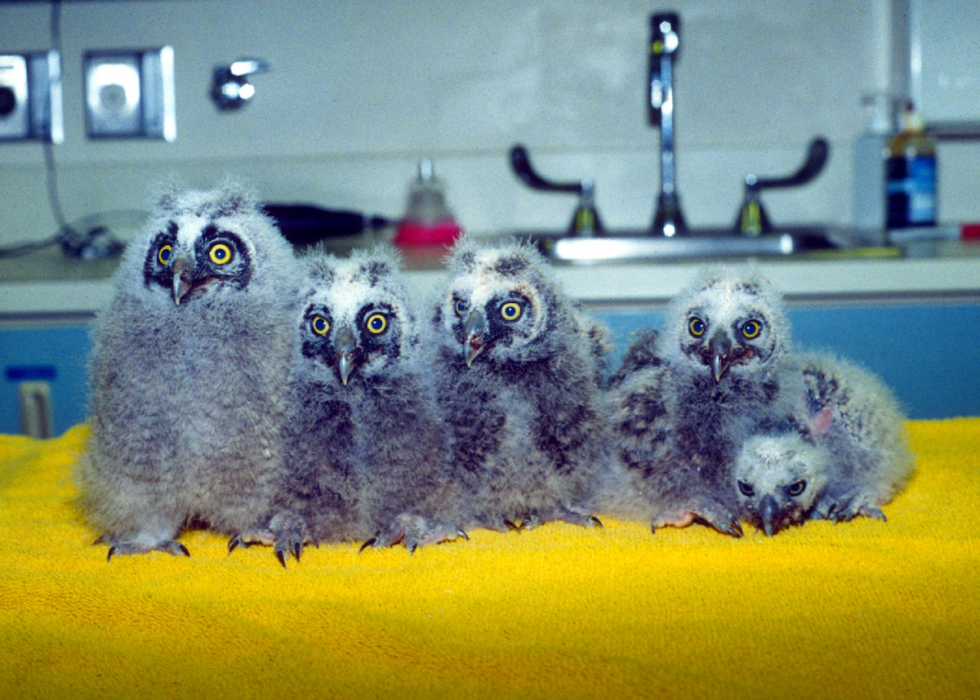
Since most raptors begin incubation before they complete their clutches, eggs hatch over an extended period and clutches can consist of chicks that are several days to a week or more apart in age (Fig 35).46,54,60In the wild, it is not unusual for the youngest nestlings to become progressively weaker from starvation, injury, and/or chilling.46,60 These chicks may die or even be killed and eaten by their older siblings.46,60 As the young grow, they become less aggressive. If the smaller chicks can survive the first few weeks, they have a good chance of fledging.46
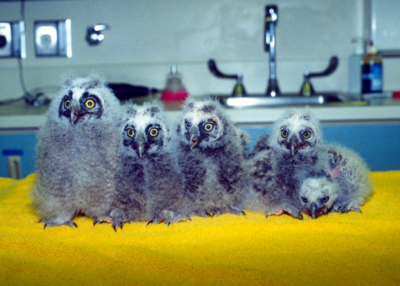
Figure 35. A brood of long-eared owls (Asio otus) demonstrating different ages due to asynchronous hatching. Photo credit: The Raptor Center, UMN
Nearly all raptors outside the tropics raise one brood each year.38,46 However, Harris’s hawks have been known to have more than one brood in resource-rich years; a few species, like the California condor (Gymnogyps californianus), lay one clutch every other year.15,38
Raptors are semi-altricial
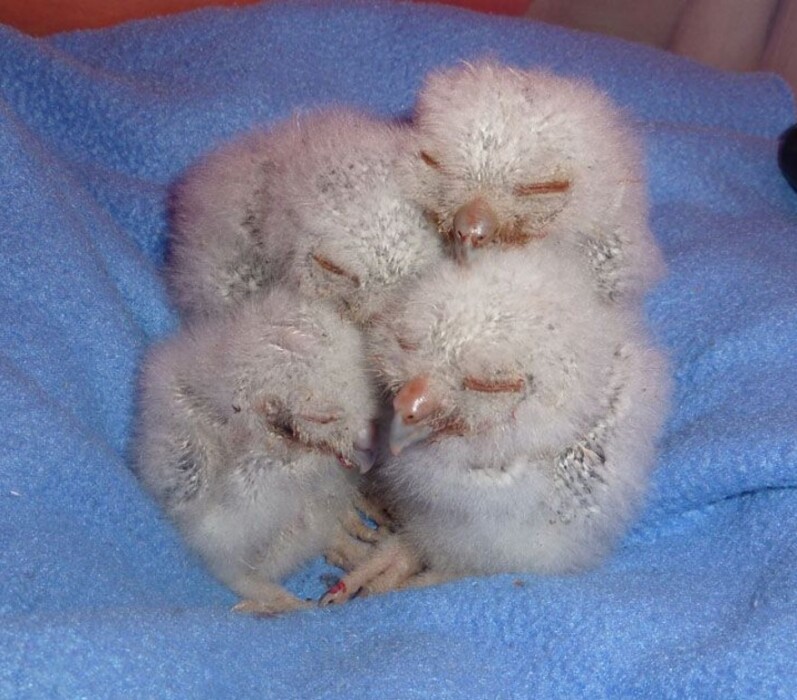
Hatchling birds of prey are weak, unable to stand or self-feed.46,60,71 Chicks are covered with an insulating layer of natal down feathers for much of their flightless period which, depending on the species, can last between 4-31 weeks (Fig 36, Fig 37).28,33,37,46 Diurnal raptors may hatch with their eyes open or closed, but usually by day 2 their eyes have begun to open.28 The eyes are fully open by day 6.28 Owls hatch with closed eyes.28,33 Their eyes begin to open at 4–6 days of age and are fully open by day 9 or 10.28,60
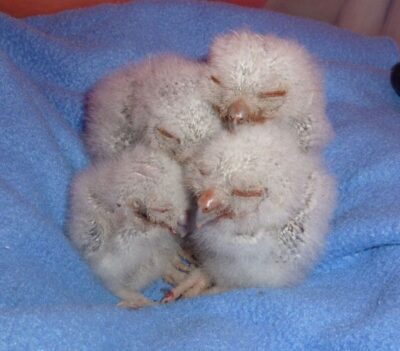
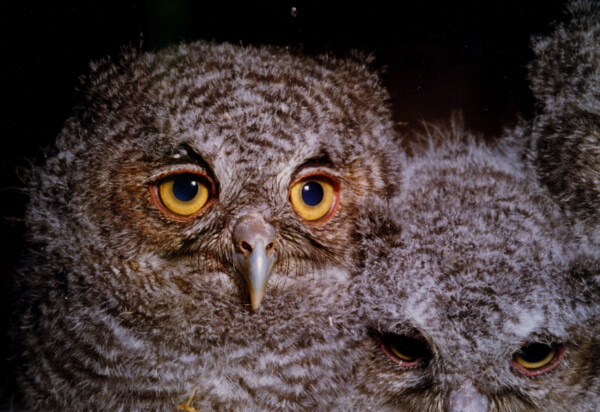
Figure 36. Owls, like these screech owls (Megascops asio), typically hatch with eyes closed and a whitish natal down. Photo credit: The Raptor Center, UMN
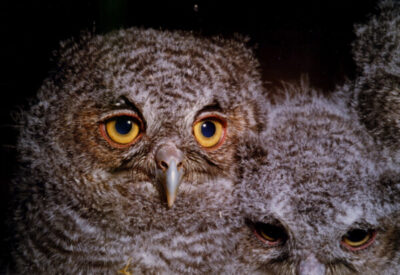
Figure 37. The second set of down feathers or mesoptile of raptor chicks is a fluffy, downy plumage that covers the head and body, while flight and tail feathers resemble those of adults.33 Shown here, screech owlets (Megascops asio). Click image to enlarge.
Life span
In the wild, the life span of birds of prey is often limited by anthropogenic causes, such as obstacles, environmental toxins, and/or human activity that reduces habitat and prey resources.5,11b In captivity, however, raptors often outlive their wild counterparts and may face geriatric conditions, such as arthritis, atherosclerosis, and ocular abnormalities.8,65 It is common that with proper care, small species can live to approximately 15 years of age, medium-sized species to their mid-20s to early 30s, and large species to their mid-30s and 40s.
Special senses
Vision
All birds have high visual acuity and relatively large eyes; however, the forward-facing eyes of raptors provides a large binocular visual field of vision and greater depth perception.29,32,49 Binocular vision is particularly well developed in predators. and this trend is most pronounced in owls. Owls possess the most rostrally-directed eyes with a wide visual field of 150 degrees reported in barn owls.32 How is the raptor eye unique?
GLOBE
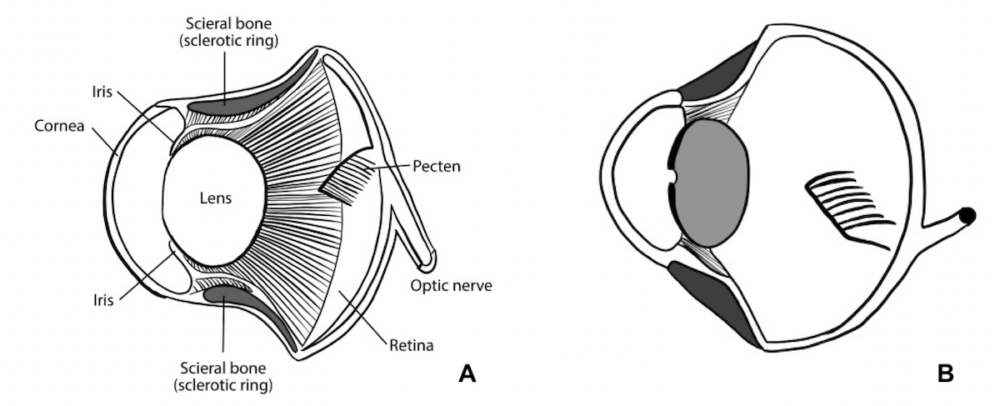
The globe is rounded in diurnal raptors and long and tubular in owls (Figure 38).29,30,49,52,70 The tubular shape of the globe gives owls telescopic vision, allowing them to pick out small shapes (like prey) from a distance.52 Extraocular muscles are reduced in all birds; however, the large size of the globe and its tight fit within the orbit, means that eye mobility is particularly limited in owls.10,29,32 Fortunately, this limitation is countered by the highly mobile cervical spine.32
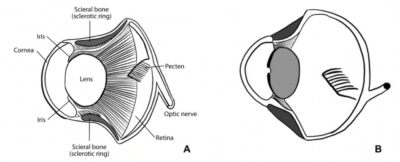
Figure 38. Globe shape in birds of prey. (A) tubular shape of owls (B) spherical shape of Accipitriformes, Cathartiformes, and Falconiformes. Photo credit: The Raptor Center, UMN. Click image to enlarge.
Scleral cartilage serves to provide some internal reinforcement of the eye.19,32 In many falcons and eagles, the scleral cartilage surrounding the optic nerve is ossified to form a U-shaped bone, the os nervi optici.19,29,30 Scleral ossicles are also particularly numerous among owls.5b,19,73
NICTITATING MEMBRANE
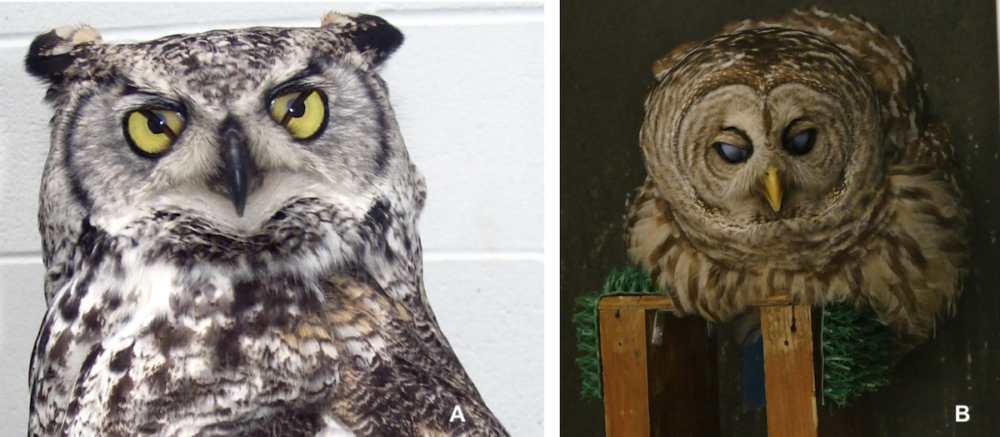
The nictitating membrane, or third eyelid, is semi-translucent in some raptors and opaque white in others, such as barred owls (Strix varia) (Fig 39).29,32 The nictitans sweeps across the cornea in a nasal to lateral direction and functions to protect the cornea and provide moisture.
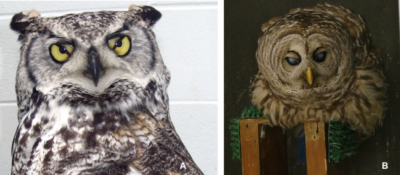
Figure 39. Nictitating membranes in (A) great horned owl (Bubo virginianus) and (B) barred owl (Strix varia). Photo credit: The Raptor Center, UMN. Click image to enlarge.
Many raptors close the nictitating membrane prior to striking their prey.23 Falcons use their nictitans as eye protection during hunting dives, while osprey close their third eyelid under water.23 Movement of the third eyelid over the cornea is typically rapid in diurnal birds, but is relatively slow in owls.29
In contrast to most birds, the upper eyelid of owls is also larger and more mobile.29,32
CORNEA
Raptors possess relatively large corneas, which allow them to gather the maximum amount of light.49 The typical bird cornea is thin; however, several exceptions have been described in diurnal birds of prey.29,32,44 The thickest portion of the golden eagle (Aquila chrysaetos) cornea is found at the limbus (1.2 μm) and the thinnest at the central cornea (0.64 μm).44
The cornea is kept moist by secretions of the gland of the nictitating membrane, as well as the lacrimal and Harderian glands in most species.29 Owls, which produce only a small volume of tears, lack a lacrimal gland.29,32
The anterior sclerocorneal muscle is largest and most developed in hawks and owls.23 This muscle pulls the corneoscleral junction posteriorly, thereby increasing the curvature of the cornea at its center.23,30
IRIS and CILIARY BODY
The avian iris is thin and contains variable amounts of striated dilator and constrictor muscles instead of smooth muscles.23 There is also striated musculature in the ciliary body.23
Clinical Tip: Pupillary light reflexes can be observed in avian patients but are complicated by the fact that birds have voluntary control over constriction and dilation. Complete decussation of the optic nerves also means that there is no true consensual pupillary light response in birds.70
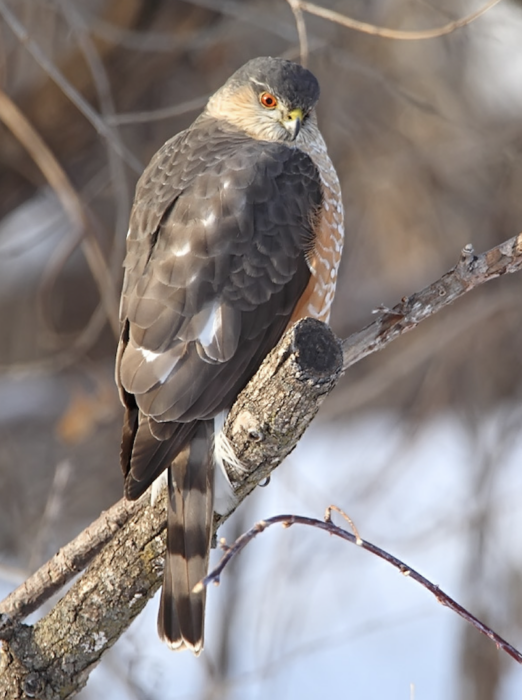
Iris color can vary between the sexes and at different ages within one species.70 For example, the iris of the juvenile red-tailed hawk is yellow and darkens with age becoming chocolate brown in the mature bird.58 The juvenile accipiter has a yellow iris that becomes ruby red in the 5-year old adult (Fig 40).58 The iris of the Northern harrier transitions from brown to yellow.16
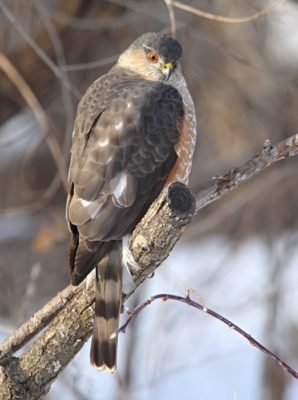
Figure 40. The accipiter iris turns ruby red at 5-years of age, as shown in this adult Cooper’s hawk (Accipiter cooperii). Photo credit: Jeff Fischer/The Raptor Center, UMN. Click image to enlarge.
LENS – ACCOMODATION
Accommodation refers to active changes in the refractive power of the lens, which is achieved by modifying lens shape. The shape of the lens is controlled by its internal elasticity as well as the force exerted by zonule fibers, which flatten the lens when stretched. The anterior surface of the lens is relatively flat in diurnal birds compared with a more spheroid shape in nocturnal species.23,30,32,70 All avian lenses are softer than in mammals, enabling quick accommodation; however, the owl lens is hard when compared to diurnal raptors.23,32 This reflects the fact that owls rely almost exclusively on corneal accommodation instead of lenticular accomodation.32 Lenticular accommodation in diurnal raptors is partially achieved by actions of the ciliary processes. The ciliary body suspends the lens by the zonular fibers and also forms the ciliary processes, which are kept in close contact with the lens by the action of ciliary muscles.29,44
The avian lens has an annular pad around its central core.29 This pad is particularly well developed in fast-flying diurnal raptors.23,32 The function of the annular pad is not completely understood, but it is believed to play an important role in using the lens to focus the eye and increase refractive power (lenticular accommodation).29,32 The annular pad is reduced in owls.23,32
RETINA
In diurnal birds of prey, the retina is heavily dominated by cone photoreceptors; rods are fewer in number and restricted to the margins in the diurnal raptor eye.32 The owl retina, on the other hand, possess a large number of densely packed rods and is thus specialized for dim-light vision.11,12,20,30,32,49 Up to 56,000 rods per millimeter square have been identified in the tawny owl (Strix alluco). Rod photoreceptors also contain high levels of rhodopsin, a light-absorbing pigment.32,49 Although rods make up to 90% of photoreceptors, owls can also see perfectly well in daylight.30,32,49
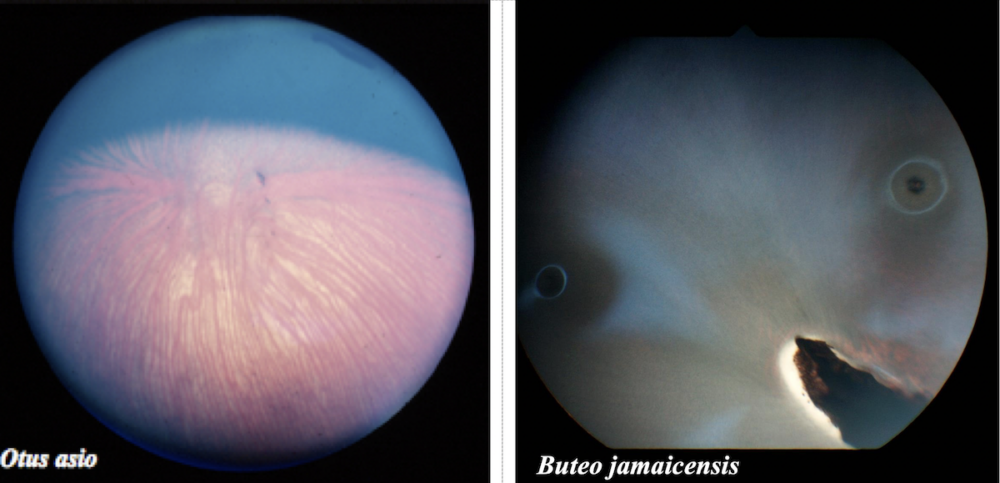
Most birds, including raptors, possess a pleated or plicated type of pecten oculi (Fig 41).29,30,34 This structure provides nourishment and oxygen to the avascular retina.10 Diurnal raptors usually have a larger pecten with more folds than nocturnal species.29,30,63 For example, the red-tailed hawk has a very large pecten with 17 to 18 folds, while the pecten in the great horned owl (Bubo virginianus) has seven or eight folds.6,7,29,44 The avascular avian retina also receives oxygenation from the choroid layer, which consists primarily of thin-walled blood vessels (Fig 42).29 In diurnal birds of prey, the choroid also contains heavily pigmented connective tissue that gives the fundus its typical gray, brown, or reddish-brown color. Little if any pigment is present in owls.32
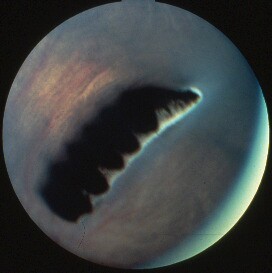
Figure 41. The pecten is a heavily pigmented, highly vascularized, pleated structure that projects into the vitreous from a base situated on the avian optic disk. Image from a great horned owl (Bubo virginianus) . Photo credit: Dennis E. Brooks, DVM PhD Dipl ACVO.
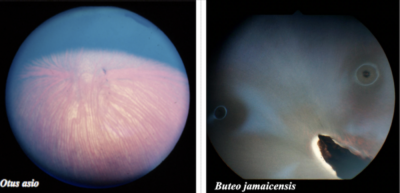
Figure 42. Choroidal vessels in an Eastern screech owl (Otus asio) (left). Choroidal vasculature is clearly visible in most young owls, which have a paucity of pigment in their retinal epithelium. Photo credit: Dr. Christopher Murphy. Choroidal vessels are more difficult to appreciate in most diurnal raptors, such as this red-tailed hawk (Buteo jamaicensis) (right). Photo credit: The Raptor Center, UMN. Click image to enlarge.
Many eagles, hawks, and falcons are bifoveate (Fig. 42).30 A fovea is a small, specialized depression within the retina where visual acuity is highest.29,66,70 The temporal or lateral fovea is dorsal and provides better binocular vision. The central fovea is located medially. Since the eyes of most diurnal raptors are located somewhat laterally in the head, the central fovea participates in lateral monocular vision and fixation of distant objects.23,29,30,32,34,66 Two foveae confer heightened perception of distance and the relative velocity of moving objects (prey) during flight.23,29,34,66,70
Owls only possess a single temporal fovea in each eye, while the Andean condor and black vulture have only a nasal fovea.29,30,32,34
For additional information: Visit the Raptor Ophthalmology series: Anatomy of the Avian Eye, The Ophthalmic Exam, and Ocular Lesions.
Hearing
All birds possess a highly developed sense of hearing, but hearing is the principle sense used for hunting in owls.52 Owls are most accomplished in their ability to localize sound.12,52 Hearing is so finely tuned in the common barn owl that prey can be located in total darkness.48,74
LARGE, ASSYMETRIC EAR OPENINGS
The large ear openings are placed asymmetrically on each side of the head to facilitate vertical location of sound in up to one third of all owl species worldwide.49 The right opening points upward and the left downward (Fig 43). This asymmetrical placement is critical for pinpointing sounds.49 Localization of sound is aided by the wide skull. Differences in intensity and the time that it takes for a sound to reach each ear helps the bird determine whether a sound comes from the right, left, or straight ahead.16,49
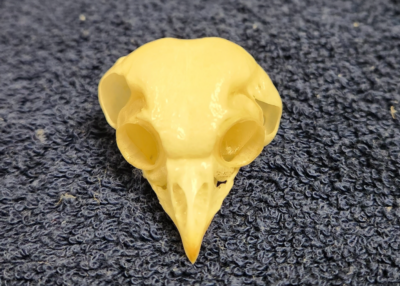
Figure 43. Asymmetrical ear placement in the boreal owl (Aegolius funereus). Photo credit: The Raptor Center, UMN. Click image to enlarge.
FACIAL DISK
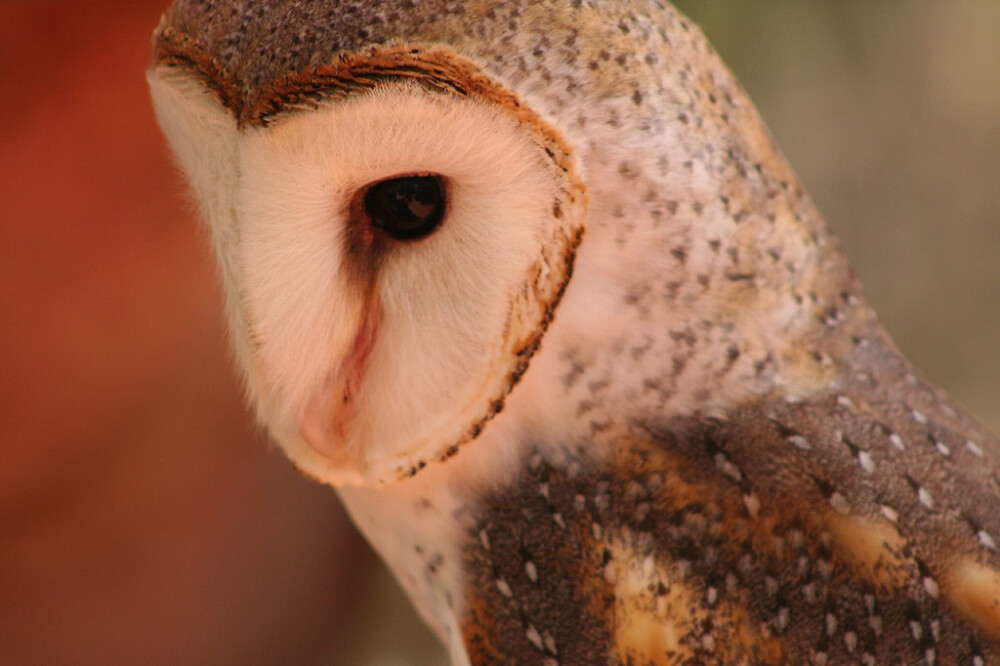
The facial disk acts like a funnel to direct sound into the ears (Fig 44). Underlying muscles allow fine positional adjustments of these funnels.32 This tight funnel is particularly prominent in owls and a few diurnal raptors, like osprey and harriers.30,74
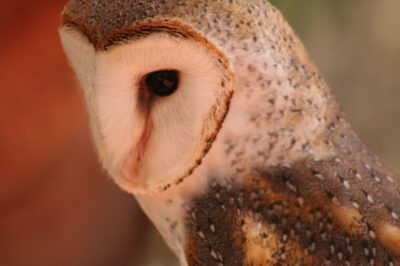
Figure 44. Concentric rings of small, curved, stiff periauricular feathers focus sound into the ear openings in this common barn owl (Tyto alba) similar to a person cupping hands behind their ears. Photo credit: Stephen Barnett. Click image to enlarge.
OPERCULUM
In many owls, the rostral border of the external meatus has a vertical skin flap or operculum that bears a row of feathers along and at right angles to its edge. Striated muscles can be used to erect the operculum, which assists in locating sound.30
EAR COVERTS
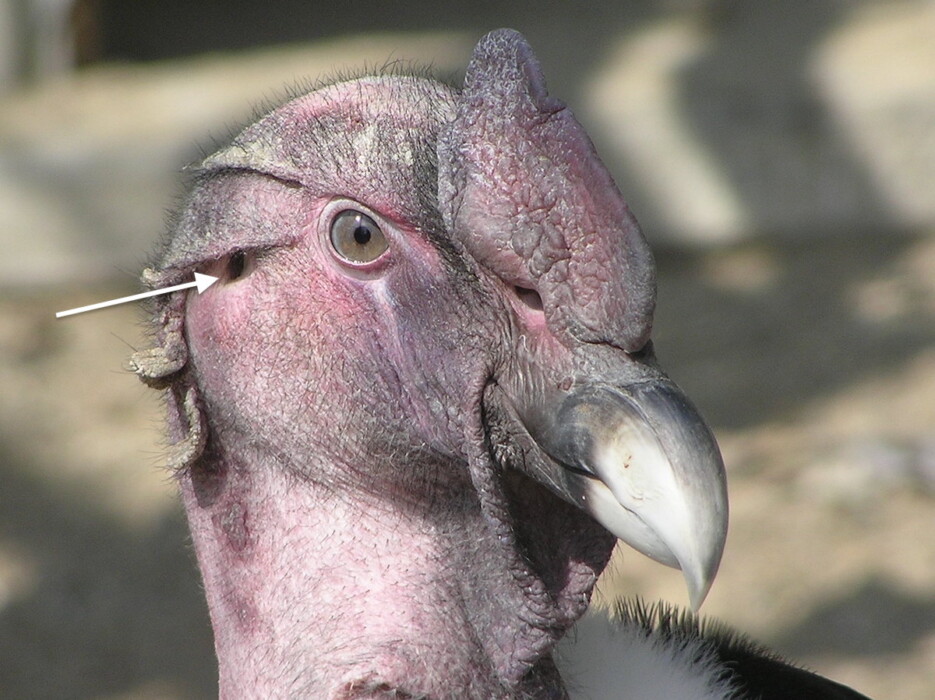
In most birds, the external acoustic meatus is covered by specialized contour feathers or ear coverts; however, this region is naked in vultures (Fig 45).
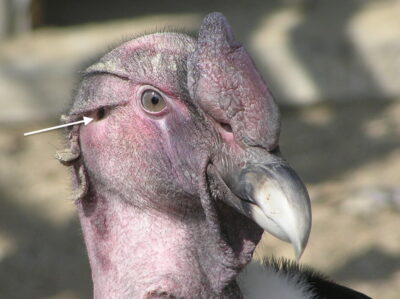
Figure 45. The external acoustic meatus (arrow) is naked in vultures and condors, as seen in this Andean condor (Vultur gryphus). Photo credit: Frank Wouters via Flickr Creative Commons. Click image to enlarge.
Olfaction
Although black vultures (Coragyps atratus) depend more on sight to locate prey, the sense of smell is highly developed in some vultures.32,52 Research has confirmed that the turkey vulture (Cathartes aura) primarily uses its sense of smell to locate carrion.20,61 Scent-guided foraging is associated with an expansion of the olfactory bulbs in vertebrates, and the turkey vulture has the largest olfactory lobes among the New World vultures.20,30,32
What is the secretary bird?
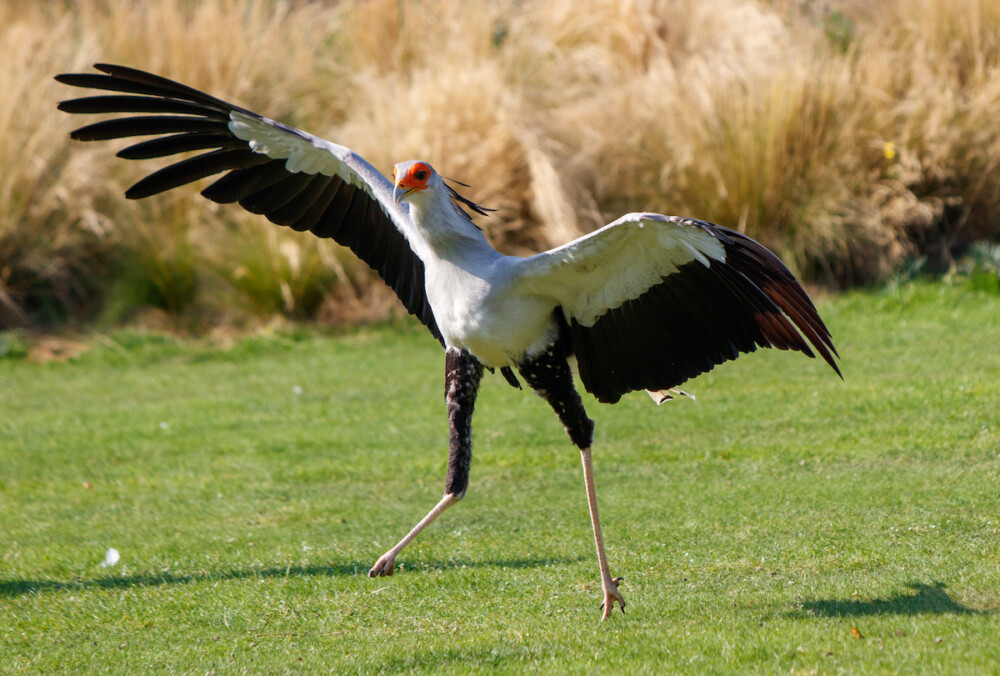
Secretary birds (Sagittarius serpentarius) are large, distinctive birds of sub-Saharan Africa that are characterized by an eagle-like head and long, crane-like legs (Fig 46).50,51 From a phylogenetic perspective, family Sagittariidae represents the deepest divergence of Accipitriformes; however molecular analyses suggests that secretary birds are most closely related to ospreys.39 Adults weigh between 2.3 to 4.27 kg and have an average lifespan of 18.6 years in captivity.57
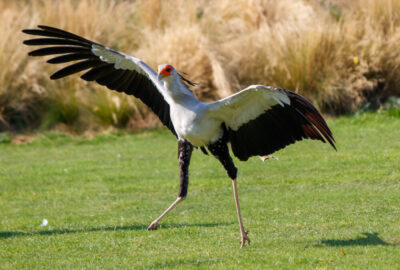
Figure 46. Secretary birds (Sagittarius serpentarius) stand between 0.9 (2.95 ft) to 1.5 m (4.9 ft) tall with a wingspan up to 2.1 m (6.9 ft).50,57 Their exceptionally long legs can be attributed to unusually long tibiotarsus and tarsometarsus bones. Photo credit: Nigel Hoult Flickr Creative Commons. Click image to enlarge.
Secretary birds sometimes kill or stun prey with forceful, lightning-quick kicks or stamps to the head. Visit Cell.com for high-speed camera footage of a secretary bird kicking a rubber snake.51
In addition to their exceptionally long legs, another unique anatomic characteristic of the secretary bird are two pairs of ceca.40 Unlike most raptors, secretary birds are also sexually monomorphic, although females may be slightly smaller than males.51,57
Summary
Raptors are also referred to as birds of prey because they consume foods almost exclusively of animal origin. They possess distinct morphological traits designed for localizing, pursuing, catching, and metabolizing a variety of prey types. These traits begin with the derivatives of the integument – the covering of their beaks and talons, the specialized skin on their foot pads, and modifications to their flight feathers – and are present in many of their major body systems. The esophagus and stomach are specially designed to accommodate large food items and quantities. In the final phase of gastric digestion, the ventriculus compacts indigestible material, such as fur, feathers, and bones (owls), into a pellet which then, through antiperistalsis, is eliminated through the mouth in a process called egestion or “casting”.
As for reproduction, size dimorphism between the sexes, with the males of many species being up to a third smaller than the females, may aid in raising a brood. This difference in size may help each sex to fulfill their primary roles throughout the breeding season.
One additional trait raptors possess is enhanced vision and hearing. The large eye is the most important sensory organ in many birds of prey. Based on the species and its natural history, it has specific features which is critical for survival in the wild. For example, owls have a wider field of binocular vision than diurnal species. The retinas also differ in the number of fovea and type of photoreceptors. Owls only have one fovea and their retinas are specialized for dim-light vision with a large number of densely packed rods. Hawks, on the other hand, are bifoveate and their retinas have a large number of cones. Owls also possess a highly developed sense of hearing due to the presence of large, asymmetric ear openings as well as structures that direct sound into the ear, such as the operculum and facial disk.
Acknowledgement
Thank you to Dr. Patrick Redig for helpful feedback.
References


 Colin McDermott lives and works in Hong Kong, where he serves as a veterinary surgeon at







 Jennifer Graham graduated from Auburn University in 1999. She completed an avian/exotic internship at the University of Georgia at Athens followed by a 3-year residency in avian/exotic animal medicine at the University of California at Davis. Dr. Graham worked at Angell Animal Medical Center in Boston from 2006-2012 and she ran the Zoological Companion Animal Medicine Service at the Cummings School of Veterinary Medicine at Tufts University from 2012-2022. Dr. Graham consults on zoological companion animal cases through
  Fawzi Mohamed is a veterinary medical officer and pathologist for the United States Department of Agriculture (USDA). Dr. Mohamed is based out of











 Lori Arent is the Assistant Director at


 Chloe McMenamin is a lecturer of Applied Animal Health in the veterinary nursing department of





 Marianne Wikdahl graduated with a Bachelor of Science with honors in Veterinary Nursing and Practice Administration from the University of Bristol (UK) in 2011. During her time at university she had the privilege to work as a student veterinary nurse in one of South West England’s largest referral hospitals. After graduation, Marianne moved to Canada where she embarked on her career as an ER/Exotics registered veterinary technician in a busy emergency hospital in Calgary, Alberta. In 2017, Marianne returned to her home country Norway, and is currently working at
 Marco Di Giuseppe currently works as freelance veterinarian in many clinics in Palermo (Italy) offering referral services in rabbit medicine. In the meantime, he is completing a program at the Italian Post-graduate Veterinary School of the Universityof Naples (Italy) to receive the title of Italian Specialist in Laboratory Animals. In 2014, Dr. Di Giuseppe obtained the title of General Practitioner Certificate in Exotic Pet Practice from the
  Anneliese Strunk
 Alyssa Scagnelli is an associate veterinarian at the
  Byron de la Navarre is chief of staff at
  Charles Cummings is a Postdoctoral Research Fellow at the




 Kevin Kazacos is Professor Emeritus of Veterinary Parasitology and former Director of Clinical Parasitology at the Purdue University College of Veterinary Medicine. Dr. Kazacos earned a BS in biology in 1971 from the State University of New York at Albany, a PhD in parasitology in 1974 from the University of Notre Dame, and a DVM in 1979 from Purdue University. He served on the faculty of Purdue University from 1979 to 2014, where he enjoyed teaching veterinary and graduate students.